https://www.lymedisease.org/powassan-study-fallon-macdonald/
Were you ever infected with Powassan? These researchers want to know.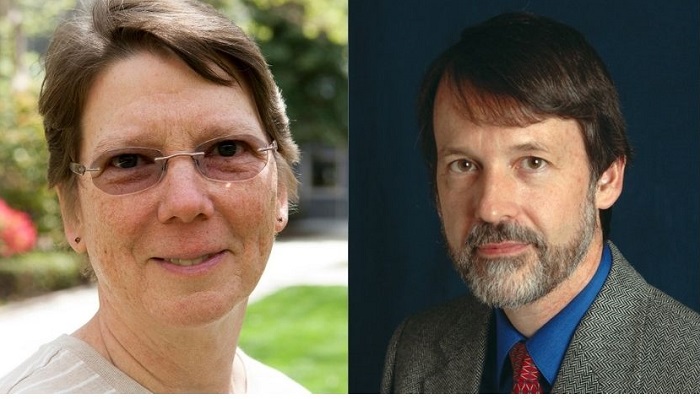
Powassan virus, a tick-borne illness, can cause serious neurological problems that are sometimes fatal. It’s transmitted to humans by Ixodes ticks—the same ones that can carry Lyme disease. But much is unknown about Powassan, something that researchers want to change.
Dr. Margaret MacDonald is a physician and researcher at Rockefeller University in New York City. She’s Principal Investigator of a study of neutralizing antibodies and Powassan virus infections. One of her collaborators is Dr. Brian Fallon, director of the Lyme and Tick-Borne Diseases Research Center at Columbia University.
In the following blog, Dr. Fallon interviews Dr. MacDonald about neutralizing antibodies, Powassan virus, and COVID-19.
If you have had Powassan virus infection, you may be able to help with this important study. See links at the end of the article for more information about how you can do that.
Dr. Fallon: Can you describe the similarities between COVID-19 and Powassan infection?
Dr. MacDonald: While the viruses that cause COVID-19 and Powassan infection are in completely different families, they do have some similarities, one of which is that they both use a molecule called ribonucleic acid (RNA) to encode their genetic material.
One property that both viruses share is that they don’t always cause obvious disease and some infected people may never know they were even infected. The Centers for Disease Control and Prevention (CDC) estimates that about 40% of SARS-CoV-2 infected individuals have no symptoms. SARS-CoV-2 was only recently identified while POWV was first discovered in North America in 1958.
Despite the fact that POWV has been around much longer than COVID-19, there is actually less information about how many people are infected each year and what percentage of them have symptoms, because unless someone has serious symptoms, they are never tested.
But we do know that in some regions of the United States about 2-3% of ticks that carry POWV infection are infected and that transmission after a tick bite can occur within 15 minutes. Although nationally cases of Powassan encephalitis have been increasing in recent years, there are still only about 20-30 reported cases each year, suggesting that there are quite a few people who have been infected but who do not develop symptoms.
SARS-CoV-2 usually presents as a respiratory illness, but we know it can affect multiple systems of the body. POWV typically starts as a nonspecific flu-like illness that progresses to an infection of the central nervous system with inflammation of the brain (encephalitis) or the fluid surrounding the brain (meningitis). SARS-CoV-2 can also cause encephalitis and meningitis, but this is not typical.
Both viruses may share similar initial symptoms including fever and chills, sore throat, headache, nausea and vomiting, diarrhea, tiredness, and muscle ache. There also can be neurological symptoms in both diseases; shared symptoms include gait disturbances, decreased level of consciousness, hallucinations and seizures. Respiratory failure can occur in either disease, although for different underlying reasons.
Can you describe the differences between COVID-19 and POWV infection?
There are a number of differences between SARS-CoV-2 and POWV. The RNA genetic material of SARS-CoV-2 is longer than POWV (~30,000 bases long compared to ~11,000) and encodes more proteins (29 compared to 10) and while still really tiny, the SARS-CoV-2 virion is about twice the size of POWV.
To start the infection, the SARS-CoV-2 spike protein binds a protein (the receptor) on the surface of your cells called angiotensin converting enzyme 2, or ACE2. Another of your proteins, abbreviated TMPRSS2, helps the spike protein, allowing the virus to gain entry to the cell. The receptor for POWV is unknown, but presumably it is not ACE2. Once inside the cell, the two viruses use very different strategies to make viral proteins and new copies of their RNA.
How these two viruses infect us is completely different! As you know, COVID-19 is spread from person to person when an infected person breathes or coughs, expelling SARS-CoV-2 that makes its way into another person through inhalation, or exposure to the mouth, nose or eyes. It is believed that virus can also survive for some time on surfaces, which if you touch the surface and then touch your mouth, nose or eyes can result in infection.
On the other hand, POWV does not spread from person to person, except in rare circumstances such as transfusion of blood originating from an infected person. Instead, POWV is spread through the bite of an infected Ixodes species tick, very much like in Lyme disease. In fact, the same tick may carry both Borreliaburgdorferi and POWV.
SARS-CoV-2 and POWV also can cause different symptoms. SARS-CoV-2 infection starts in the respiratory tract. Symptoms from SARS-CoV-2 are the result of both direct infection of cells in the body as well as the inflammation that occurs in response to the infection and effects on the coagulation system.
This later effect can result in blood clots in the smaller arteries that can affect the blood flow to and thus function of organs such as the lungs, heart and kidneys and can also cause skin rashes, strokes and heart attacks. The infection of cells in the lung combined with the inflammatory process results in respiratory distress with poor oxygenation of the blood and difficulty breathing, and mechanical ventilation can be required to support the patient.
A prominent symptom in COVID-19 is the loss of taste and/or smell, as well as congestion or runny nose. The long-term effect on the function of the affected organs is not yet known, but patients have reported continued symptoms of weakness, muscle aches, headaches, rash, shortness of breath and abnormal heart rate even weeks after recovery.
POWV infection presumably starts in the skin at the site of the tick bite. Based on what is known about other virus family members, it may replicate in lymph nodes, gain access to the blood and subsequently the brain. Powassan disease in the brain occurs after a 1-2 day flu-like illness and can present with a wide variety of neurological symptoms including paralysis or weakness of one or more limbs, or of the muscles controlling the eyes or parts of the face, tremors and twitching, inability to talk, and abnormal jerking eye movements. Confusion and varying degrees of a depressed level of consciousness including coma are common.
While these symptoms can be seen in SARS-CoV-2 infection, they are not as common. POWV doesn’t cause pneumonia, but respiratory failure due to infection of the region of the brain that controls breathing can result in the need for mechanical ventilation. Long term residual symptoms are common after Powassan encephalitis, and include memory difficulties, headache, difficulty speaking, imbalance, and weakness or paralysis of limbs or muscles of the eyes.
Most people had never heard of “neutralizing antibodies” before COVID-19. Can you explain to us what “neutralizing antibodies” are? How do they differ from the regular antibodies that the body generates to fight infection? Why are some antibodies more effective as virus killers than other antibodies?
Antibodies are proteins secreted by special immune cells called B cells. Each B cell makes its own unique antibody, which can work in different ways to fight infection. One way is for the antibody to bind the invader which then allows the early immune response cells (phagocytes) to gobble up the invader. Another way is for the antibody to bind and activate a defense program called complement, which can destroy cells containing the invading microbe. A third way antibodies work is to bind to the invader and block it from infecting your cells. This is called neutralization.
Neutralizing antibodies therefore are especially potent in fighting infection because they target and neutralize the invading microbe directly. To block infection requires that the antibody be specific for a part of the invader that is required for entry into the cell, which in the case of SARS-CoV-2, would be the spike protein. Antibodies that bind the spike protein and prevent it from interacting with the ACE2 receptor can block infection of your cells before it even gets started.
One of the big questions with vaccine research is always how long will the antibodies last in the blood that can protect us against the virus or bacterial infection? If a vaccine is developed against POWV that creates neutralizing antibodies, would these antibodies last months or years? What about with COVID-19? Will we need frequent booster shots?
This is one of those million-dollar questions and likely ultimately depends on the type of vaccine that ends up being developed. The good news is that many different approaches are being used for the SARS-CoV-2 vaccines that are in the development pipeline. It is not clear to me what makes antibodies last longer for some infections or vaccines than others. Antibody responses to the live-attenuated yellow fever virus vaccine can persist for years and that vaccine can protect you for 10 years or even longer.
Yellow fever is in the same family as POWV, so there is a chance that if a similar vaccine were developed for POWV, that the antibodies could last a long time and boosters would not be necessary. But natural infection with viruses in this family tends to result in good protection against that specific virus.
This is not necessarily true for viruses in the same family as SARS-CoV-2. We know that people can be infected with a SARS-CoV-2 relative that causes the common cold and get infected multiple times with the same virus. Antibodies in the blood after the SARS outbreak, caused by the related SARS-CoV-1, lasted 2-3 years. Early indications are that SARS-CoV-2 vaccination can induce responses that are robust, but how well and how long they protect is anyone’s guess and this will just need to be studied.
Powassan Virus can cause very serious neurologic consequences in those individuals that get encephalitis. It now seems that the coronavirus may also be causing a wide range of neurologic problems. Do you know whether they attack the nerve cells in the same way?
POWV likes to infect nerve cells so once it gains access to cells of the brain or spinal cord it can directly cause damage that results in the symptoms the patient is suffering. This damage to the nerve cells likely explains the long-term symptoms that these patients can have.
Since SARS-CoV-2 has been detected in brain tissue, it is quite possible that direct infection of the nerve cells may underlie some of the neurological symptoms of COVID-19. However, there are other mechanisms of neurologic disease currently under investigation that likely contribute to the neurological symptoms, including abnormal clotting in small vessels, reduced oxygen flow to the brain, and the damaging effects of the inflammatory process.
You are doing a Powassan virus study now and you need to find people with prior Powassan virus infection. Please tell us about this and how these individuals can help you. What do they need to do to participate?
Yes, we are looking for people who have had POWV infection. Some of these recovered individuals will still have POWV-specific B cells and neutralizing antibodies in their blood. We study the antibodies to the POWV envelope protein, which is the target of most neutralizing antibodies against viruses in this family. We will identify the antibodies that have the strongest binding and neutralizing capacity. We will then identify where the binding occurs on the virus – ie, which protein on the virus surface is the most important in triggering the production of these potent antibodies.
This information can help us design a vaccine. These antibodies also would be good candidates as a treatment to administer to someone with Powassan virus encephalitis, much like the use of SARS-CoV-2 convalescent serum that has been used for COVID-19 patients that you may have read about in the news.
Our study may lead to a critical public health breakthrough. However, we can’t study antibody responses to POWV unless we have volunteers who have been infected with POWV. If the reader of this blog has had POWV infection or knows someone who has had POWV infection, please take note of how to participate.
Interested individuals simply need to call the Rockefeller University Hospital Recruitment Office at 1-800-RU-CARES (782-2737). Or, individuals can email us at RUCARES@Rockefeller.edu or visit our website at http://clinicalstudies.rucares.org/powassan.
After the initial contact, we will ask for documentation of the prior POWV infection. We will explain the study in detail and the participant will be asked to sign a consent form that they agree to participate in our study. Then, they would fill out a medical questionnaire and would donate a volume of blood that is similar to the amount given in a blood donation, such as for the Red Cross.
The consent process and blood donation typically would occur at the Rockefeller University Hospital in New York City, but we are also open to working with volunteers from outside our area to arrange for the blood to be drawn elsewhere and shipped to us for our study.
While the COVID-19 pandemic has been a tragedy for so many throughout the world, one result of this experience is to highlight the importance of public health preparedness. While POWV infection is currently rare in the United States, the reports of human disease have been increasing over the last decade. One study documented that in 1980 less than 10% of deer in the Northeast had been infected, while in 2009 this had risen to ~90%. The rising infection rate in deer may be an early signal that POWV infection in humans may be more of a problem in the future. Our study aims to enhance POWV public health preparedness through early development of a vaccine and treatment.
As part of our mission to accelerate research of tick-borne illnesses, LymeDisease.org periodically highlights studies that seek patient participation.