https://www.lymedisease.org/tbd-working-group-feb12/

Next TBD Working Group meeting set for February 12

tbd-whole-group-300x167
The third meeting of the federal Tick-Borne Disease Working Group has been scheduled for February 12, 2018.

It will take place from noon to 4 pm, Eastern Time (9 am to 1 pm, Pacific Time), and will be livestreamed for public viewing.

According to the group’s website, “For this third meeting, the Working Group will focus on mapping out and initiating the work of the six Subcommittee Meeting Working Groups that were established on December 12, 2017.”

Here are the subcommittees and co-chairs that were announced previously:

Working Group Subcommittee Co-Chair Assignments
Working Group Subcommittee Co-Chairs

  • Disease Vectors, Surveillance and Prevention – Pat Smith and Ben Beard
  • Pathogenesis, Transmission, and Treatment – Wendy Adams and Estella Jones
  • Testing and Diagnostics – Lise E. Nigrovic and Vanila Singh
  • Access to Care Services and Support to Patients – Karen Vanderhoof-Forschner and Scott Cooper
  • Vaccine and Therapeutics – Dennis Dixon and New Working Group Public Member TBA
  • Other Tick-Borne Diseases and Co-Infections – Rich Horowitz and Allen Richards

According to the website, the members of each subcommittee will be announced before February 12.

The federal panel was established by the 21st Century Cures Act, to bring together diverse viewpoints. There is no word yet on who will replace Dr. Gary Wormser, who withdrew from the group after the Lyme community protested his major financial conflicts of interest.

Click here for more information about the Working Group.

https://www.hhs.gov/ash/advisory-committees/tickbornedisease/notices/index.html

https://entomologytoday.org/2018/01/16/up-close-look-tiny-sensory-pits-ticks-use-smell/  by Meredith Swett Walker

An Up-Close Look at the Tiny Sensory Pits That Ticks Use to Smell

Ixodes scapularis Haller's organ

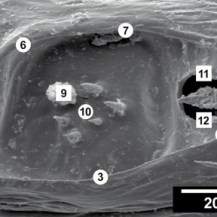
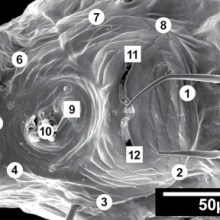
A new study in the Journal of Medical Entomology analyzes the the Haller’s organs of three tick species, including that of Ixodes scapularis, shown above. The Haller’s organ is a sensory pit on the foreleg used to detect heat and chemical odors emitted by potential hosts. “Landmarks” used in analysis of the organs are numbered. (Image originally published in Josek et al, 2017, Journal of Medical Entomology)

If you ever find a tick before it finds you—that is when it’s still hanging out on vegetation hoping you’ll brush past it—you may notice the little bloodsucker waving its “arms in the air like it just don’t care.” But ticks aren’t fans of 1980’s hip hop. They’re waving their arms because they are trying to get a whiff of you. 

While insects primarily smell with their antennae, ticks are not insects; rather, they’re arachnids, and they don’t have antennae. Instead, a tick smells using a structure on its forelegs called the Haller’s organ. The Haller’s organ is described as a tiny “sensory pit” that can detect chemicals like carbon dioxide, ammonia, or pheromones. It can even sense humidity and infrared light, which includes body heat emitted by the warm, blood-filled creatures that the tick wants to find.

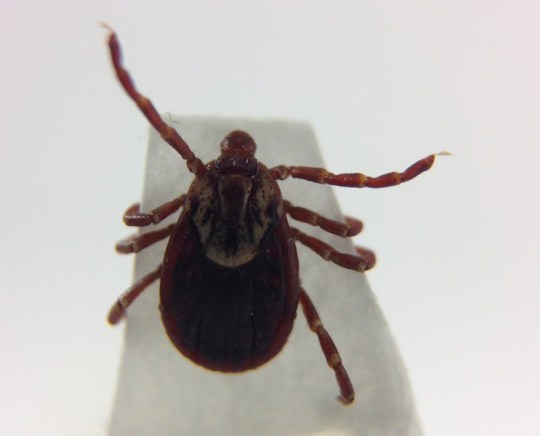
Questing-Dermacentor-varabilisWhen seeking a host, ticks such as the American dog tick (Dermacentor variabilis) wave their forelegs, in a behavior called “questing.” The ticks’ forelegs feature tiny sensory pits called Haller’s organs used to detect a passing host. (Photo credit: Tanya Josek)

Despite the importance of the Haller’s organ in tick’s ability to find hosts, it hasn’t been described in detail for many important tick species. But in research published in December in the Journal of Medical Entomology, Tanya Josek, Brian Allan, Ph.D., and Marianne Alleyne, Ph.D., of the University of Illinois examine the Haller’s organ in three medically important species of tick: the blacklegged tick (Ixodes scapularis), the lone star tick (Amblyomma americanum), and the American dog tick (Dermacentor variabilis).

Each of these species is an important disease vector: I. scapularis transmits the bacterium that causes Lyme disease, A. americanumtransmits the bacteria that cause ehrlichiosis, and D. variabilis transmits the bacterium that causes Rocky Mountain spotted fever. A better understanding of how these ticks find their hosts may aid in reducing disease transmission.

Josek-tick-collecting

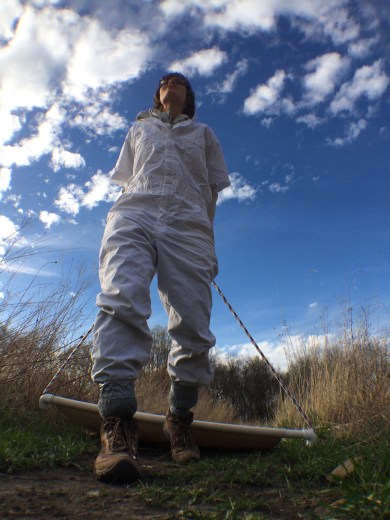
Tanya Josek, a graduate researcher at the University of Illinois, suits up in Tyvek and duct tape during tick collection. Ticks are gathered by dragging a white cloth through vegetation and then collecting ticks that attach to the cloth. (Photo credit: Tanya Josek)

Josek, a graduate student in Alleyne’s lab, was interested in arthropod sensory structures. The Haller’s organ seemed a great research topic: Relatively little was known about it, and the potential findings could have important applications in real-world tick-control efforts. The only problem? Josek had a phobia of ticks stemming from some bad experiences in childhood. “This was a complete shock to me because I have loved spiders and insects my whole life,” she says.

But Josek conquered her fear with knowledge, reading up on where you’re most likely to pick up the parasites and how long it takes them to transmit disease. She trained with Allan to learn tick collection skills. Then, arming herself with a white Tyvek suit and ample duct tape, she set out into the forests and fields of Illinois in search of ticks.

Previous studies of the Haller’s organ were mostly qualitative, which, while informative, are not useful to making quantitative comparisons between species. In addition, recent advances in scanning electron microscope technology provided an opportunity to look more closely at the tiny structure. Josek and her collaborators used environmental scanning electron microscopy (ESEM) to get high resolution images of Haller’s organs.

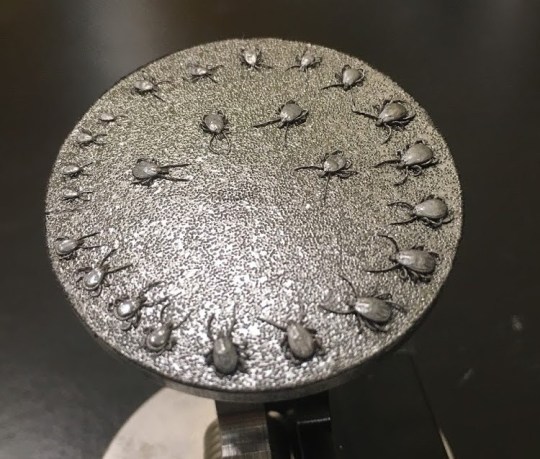
tick-sample-for-environmental-scanning-electron-microscopyWhat might look like the latest in tick inspired jewelry design is rather a set of tick samples prepared for environmental scanning electron microscopy. In this case, ticks were mounted with forelegs turned so their Haller’s organ faced upwards, and they were then coated with gold and platinum. According to entomologist Marianne Alleyne, Ph.D., “the gold/platinum mixture is an especially good electrical conductor” and helps keep the sample from being “fried” by the electron beam.  (Photo credit: Tanya Josek)

The team focused on the overall shape of the Haller’s organ in each tick species as well as the organ’s major components: the capsule aperture, anterior pit, and the number of setae and sensilla (hair-like structures) in the pit. They analyzed their images using Geometric Morphometrics Analysis, a technique that essentially translates shape measurements into data that can be used in quantitative comparisons.

They found that the structure of the Haller’s organ was significantly different in each species of tick. In one species, D. variabilis, the morphology of the Haller’s organ was significantly different between females and males. This study did not test the consequences of these differences in shape, but the detailed quantitative measurements it provides can serve as a basis for future studies in differences in function of the Haller’s organs between species.

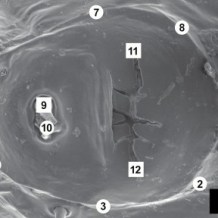
Ixodes-scapularis-Hallers-organ Amblyomma-americanum-Hallers-organ Dermacentor-variabilis-Hallers-organEnvironmental scanning electron microscopy reveals detailed close-ups of the Haller’s organs of three tick species: Ixodes scapularis (Is), Amblyomma americanum (Aa), and Dermacentor variabilis (Dv). The Haller’s organ is a sensory pit on the foreleg used to detect heat and chemical odors emitted by potential hosts. “Landmarks” used in analysis of the organs are numbered. (Image originally published in Josek et al, 2017, Journal of Medical Entomology) “

I. scapularis, A. americanum, and D. variabilis have different preferred hosts and different strategies for finding them. The differences in the structure of their Haller’s organs may reflect this. In order to understand how Haller’s organ morphology relates to tick life histories, “within-genus comparisons, as well as comparisons between ticks with different host-seeking behaviors or between ticks that have a generalist or specialist host-range,” are necessary, say the authors.

Meanwhile, Josek is working on determining the specific chemicals, infrared wavelengths, or humidity variables the Haller’s organ is sensing. Josek and Alleyne are also looking at the organ from a genomics perspective and will soon publish a paper that examines the chemoreceptors and binding proteins expressed in the Haller’s organ.

Alleyne’s main research interest is bioinspired design, and, while she’s not a huge fan of ticks, she finds inspiration in the Haller’s organ. “To think that arthropods have an exoskeleton that protects them from the environment … and yet are able to sense minute amounts of chemicals is amazing to me. The Haller’s organ is an example of a multi-functional sensor that is very sensitive yet rather simple in design, compared to a vertebrate’s nose, for instance,” she says.

If we can better understand the structure ticks use to find us (and their other hosts,) we might devise ways to elude them. This could reduce transmission of serious diseases, as well as make ticks less of a creepy problem for people who work or play outdoors. Josek has overcome her tick phobia and is now comfortable collecting and handling them, but “I still have the occasional nightmare about them,” she admits.

Meredith Swett Walker is a former avian endocrinologist who now studies the development and behavior of two juvenile humans in the high desert of western Colorado. When she is not handling her research subjects, she writes about science and nature. You can read her work on her blogs Pica Hudsonia and The Citizen Biologist or follow her on Twitter at @mswettwalker.

_______________

**Comment**

Well, I can certainly understand Josek’s phobia.  It would be interesting to know where she got her information on tick location and transmission time as those issues are hot-beds of controversy.

For more accurate info:  https://madisonarealymesupportgroup.com/2017/04/14/transmission-time-for-lymemsids-infection/  In under 6 hours after a tick bite a little girl couldn’t walk. Powassan can be transmitted in mere minutes.

http://steveclarknd.com/wp-content/uploads/2013/11/The-Confounding-Debate-Over-Lyme-Disease-in-the-South-DiscoverMagazine.com_.pdf (go to page 6 and read about Speilman’s maps which are faulty but have ruled like the Iron Curtain, and have been used to keep folks from being diagnosed and treated)

https://madisonarealymesupportgroup.com/2017/10/06/remembering-dr-masters-the-rebel-for-lyme-patients-who-took-on-the-cdc-single-handedly/  Dr. Masters argued with the “powers that be” that Lyme or a Lyme-like illness was in the South for decades to no avail. 

Do other insects transmit Lyme?  Are there other modes of transmission?
What other vectors transmit the co-infections that typically come with Lyme?
When are the “powers that be” going to admit that the interplay of Lyme and various coinfections require far more than 21 days of doxycycline?
When are the “powers that be” going to admit that this complex illness is serious and requires serious treatment?  https://madisonarealymesupportgroup.com/2017/12/14/live-bb-found-after-months-of-doxy/
Does the antihistamine Loratadine actually work?  https://www.dovepress.com/borreliacidal-activity-of-borrelia-metal-transporter-a-bmta-binding-sm-peer-reviewed-fulltext-article-DDDT  According to the Bay Area Lyme Foundation, clinical trials are expensive so there hasn’t been one to date – there is only anecdotal evidence.  How about the working group allocate some money to that?
Does ELQ cure Babesia or not? (would more money speed up research?)
We all want Stevia to work but specifics are taking forever – is it a money issue?  https://madisonarealymesupportgroup.com/2017/08/11/stevia-clinical-trial-underway/
And what about Alzheimer’s and Lyme?  Researchers like Alan McDonald are in their basements using their own microscopes!  
Once again, proving a science cabal exists, Moir recounts how at a Korean conference, attendees were asked to raised hands if they thought infections played a part in AD and a majority of hands went up.
“Ten years ago, it would have been four guys in a corner, all huddled together, not talking to anyone else,” Moir says. 
https://madisonarealymesupportgroup.com/2016/08/09/dr-paul-duray-research-fellowship-foundation-some-great-research-being-done-on-lyme-disease/  Microbiologist Tom Greer states:  “Virtually no funding in any country has been put into Borrelia pathology.” He also states, “There are more than a dozen species of Borrelia that cause Lyme disease, many of which can penetrate any tissue, and add a couple Relapsing Fevers that tag along for the ride, and it becomes clear that the Lyme disease blood tests based on Borrelia burgdorferi detection that have been used for 30+ years have become pretty much useless.”


I could go on an on to infinity, but the point is that this emphasis on ticks shouldn’t be the end-all as so many other factors are involved.  Please understand, I’m thankful for all research but don’t stop with ticks!  Researchers need to pretty much scrap everything they thought they knew about Lyme/MSIDS and start over with an open mind.  

Until then we are living in a fantasy.


Approx. 38 Min.  Jan 16, 2018

Public Tick IPM Working Group: Dr. Paskewitz presentation on the Upper Midwest

She states we have at least a three fold increase of tick borne disease in Wisconsin since the 1990’s.  Anaplasmosis has increased as well.
She also states hardly anything has been done about tick control in Wisconsin and that they must rely on East Coast tick control research – which is unfortunate as there may be significant differences in a host of issues.
Work by others has shown invasives such as honeysuckle (lone star), Japanese Barberry (I.scapulars), https://madisonarealymesupportgroup.com/2015/09/30/barberry-friend-or-foe/
and unpublished data on Buckthorn (I. scapulars) are related to tick abundance.  
Tick tubes have shown conflicting results.

For more on Paskewitz:  http://labs.russell.wisc.edu/paskewitz/

More on Wisconsin Ticks and Tick borne illnesses:  http://labs.russell.wisc.edu/wisconsin-ticks/

More on Ticks:

https://rawlsmd.com/webinars/demystifying-lyme-detox/?

Join Dr. Bill Rawls for a live webinar on Wednesday, January 24th at 8PM (EST) as he shares his knowledge and research on the the myths and truths of Lyme Detox.

Topics include:

How toxins enter the body
Misconceptions about detoxification
Toxic and cleansing foods
Herbs to support detoxification>
And more!

As always, a live Q&A session with Dr. Rawls follows to answer your detox questions.

Reserve Your Seat Now »  https://rawlsmd.com/webinars/demystifying-lyme-detox/?

P.S. If you have any questions about the webinar call 800-951-2414.


https://articles.mercola.com/sites/articles/archive/2018/01/18/chemical-imbalance-theory-for-depression.aspx?

Depression Not Caused by Chemical Imbalance  

depression

January 18, 2018

Story at-a-glance

  • Many people believe depression is caused by a chemical imbalance in the brain; this chemical imbalance theory has been widely promoted by drug companies and psychiatrists alike — without evidence to back it up
  • Pharmaceutical companies were instrumental in bringing the chemical imbalance theory to the mainstream, heavily promoting it as a marketing gimmick to sell antidepressant drugs
  • Studies have repeatedly shown antidepressants work no better than placebo for mild to moderate depression, yet carry a significant risk of side effects
  • Depression is likely the result of multiple environmental and biological factors, including faulty mood regulation by the brain, genetic vulnerability, stressful life events, nutrition, medications and medical problems, among others

By Dr. Mercola

Do you know what causes depression? Many people would respond that it’s due to a chemical imbalance in the brain. This chemical imbalance theory has been widely promoted by drug companies and psychiatrists alike, to the extent that it’s accepted as fact. The glaring problem is that the chemical imbalance theory is just that — a theory — and worse still, it’s a theory that has been largely discredited.

The theory was first proposed by scientists in the 1960s after it appeared certain antidepressant drugs worked by altering brain chemicals, but it was stated that “the findings are inconclusive.”1 Yet, the theory was proposed at a time when treating mental illness via psychoanalysis was falling out of favor while viewing it as tied to a physical or biological mechanism was in vogue.

The idea quickly spread, becoming the medical dogma for depression, despite concrete evidence proving its worth. “The fact that practicing physicians and leaders of science bought that idea, to me, is so disturbing,” Steve Hyman, director of the Stanley Center for Psychiatric Research at the Broad Institute of MIT and Harvard, told Quartz.2 The news outlet continued:

“It’s not hard to see why the theory caught on: It suited psychiatrists’ newfound attempt to create a system of mental health that mirrored diagnostic models used in other fields of medicine. The focus on a clear biological cause for depression gave practicing physicians an easily understandable theory to tell patients about how their disease was being treated.”3

Prozac, Zoloft Bring Chemical Imbalance Theory for Depression to the Mainstream

The release of the antidepressant Prozac (fluoxetine) in the late 1980s was a game changer for depression treatment in that the drug’s maker, Eli Lilly, heavily promoted the chemical balance theory as a marketing gimmick to sell the drug. With fewer side effects than some of the earlier antidepressants, Prozac became a blockbuster drug and the poster child for the selective serotonin reuptake inhibitor (SSRI) class of antidepressants, which target the neurotransmitter serotonin.

“There was, of course, no demonstrable evidence showing that depressed patients had any imbalance, but Lilly ran with it,” Psychology Today noted. “Before long, psychiatrists and psychiatric patients alike came to identify with the idea that mental disorders are caused by chemical imbalances in the brain.”4

Zoloft (sertraline), another SSRI, was another major player in spreading and perpetuating the chemical balance theory, with their television ads going so far as to say, “While the causes are unknown, depression may be related to an imbalance of natural chemicals between nerve cells in the brain. Prescription Zoloft works to correct this imbalance.”5

It’s important to note that in the time since Prozac flooded the market, depression still remains poorly treated, despite a plethora of new antidepressant options to choose from. SSRIs work by preventing the reuptake (movement back into the nerve endings) of the neurotransmitter serotonin.

This makes more serotonin available for use in your brain, which is thought to improve your mood since low serotonin levels are said to lead to depression. Yet, as written in the Handbook of Experimental Pharmacology, it’s a largely disproven theory:6

“Antidepressants are supposed to work by fixing a chemical imbalance, specifically, a lack of serotonin in the brain. Indeed their supposed effectiveness is the primary evidence for the chemical imbalance theory. But analyses of the published data and the unpublished data that were hidden by the drug companies reveal that most (if not all) of the benefits are due to the placebo effect.

Some antidepressants increase serotonin levels, some decrease it, and some have no effect at all on serotonin … The serotonin theory is as close to any theory in the history of science having been proved wrong.”

Harvard: Depression ‘More Complex’ Than a Brain Chemical Imbalance

It’s quite possible that people who are depressed may have an imbalance of certain chemicals in their brain. But to speculate that that imbalance is the cause of their symptoms is overly simplistic. For instance, it’s known that psychological stress can cause biological changes in the brain, including a reduction in the size of the hippocampus, which is used for learning and memory.7 In turn, it’s known that some people with depression have a smaller-than-average hippocampus.8

“Evidence of biological changes correlating with environmental stressors is vastly different from evidence that mental illnesses are ‘caused’ by biological deficits,” scientists wrote in a 2008 report on the chemical imbalance theory,9 and this is an important point. Even Harvard Medical School acknowledges that while brain chemicals may play a role in your mood, it is not accurate to suggest that one being too high or too low is at the root of depression. They state:10

“Research suggests that depression doesn’t spring from simply having too much or too little of certain brain chemicals. Rather, there are many possible causes of depression, including faulty mood regulation by the brain, genetic vulnerability, stressful life events, medications, and medical problems.

It’s believed that several of these forces interact to bring on depression … There are millions, even billions, of chemical reactions that make up the dynamic system that is responsible for your mood, perceptions, and how you experience life.”

One theory posits, for instance, that stress could be a major contributor to depression because it suppresses the production of new neurons in the hippocampus. In order to feel better, people with depression may need to increase neurogenesis (the generation of new neurons), which takes weeks.

This would explain why many people who take antidepressants don’t notice any improvement for several weeks.11 If the action was really on neurotransmitters, the patient should feel better right away when levels increase. Instead, triggering the growth of neurons could be the secret, which is a process that can be triggered naturally via exercise.

Believing Depression Is Caused by Chemical Imbalance Worsens Outcomes

Aside from the serious implications of prescribing drugs under a false premise, the chemical balance theory is also dangerous in that it takes away ownership from the patient. If a person feels a chemical imbalance in their brain is to blame for their depression, they may believe taking medications is the only option to feel better. According to Todd Kashdan, professor of psychology at George Mason University in Virginia, upon “buying into a biomedical explanation for their depression:”12

“They become pessimistic that recovery is possible. They become less confident that they can manage and regulate negative moods that arise (and they always do). The notion that depression is their brain’s fault does not lessen the stigma or self-blame one bit.

And they no longer believe that psychotherapy is a credible or useful strategy for treating their depression and instead, are ready to be dispensed a pill cure. Essentially, they become less flexible in their options for treating depression and less confident that they will escape its clutches.”

Indeed, a 2014 study published in Behavior Research and Therapy revealed just that — attributing depressive symptoms to a chemical imbalance made people more pessimistic about their prognosis and led them to believe that drugs would be more effective than psychotherapy.13 At the same time, they still felt the same amount of self-blame. It’s important to note that –

feeling depressed is not anyone’s fault, nor should they feel blamed for or ashamed of their feelings.

However, pinning its cause on a chemical imbalance is likely to worsen outcomes rather than improve them. It’s a vicious cycle as well, because the chemical imbalance theory makes people assume that medications are the best course of treatment. But here again research has shown that people with depression who are treated with medication have poorer long-term outcomes compared to those who are not.14

Antidepressants Work No Better Than Placebo

Nearly 7 percent of U.S adults suffered from a depressive episode in the past year15 while, worldwide, 350 million people suffer from depression, making it a leading cause of disability.16 Despite this, only about one-third of Americans with depression get treated,17 which puts the remaining two-thirds left untreated at increased risk of suicide and with a lower quality of life.

That said, the antidepressant drugs that are supposed to work by fixing a chemical imbalance in the brain are largely ineffective, which means that even when some people attempt to get treatment, they’re left suffering. Studies have repeatedly shown antidepressants work no better than placebo for mild to moderate depression.18

Irving Kirsch, associate director of the Program in Placebo Studies at Harvard Medical School, has conducted meta-analyses of antidepressants in comparison to placebo and has concluded that there’s virtually no difference in their effectiveness, noting, “The difference is so small, it’s not of any clinical importance.”19 What is different, however, is the potential for side effects, which is far greater among antidepressants than placebos.

For instance, antidepressant users have an increased risk of developing Type 2 diabetes,20 even after adjusting for other risk factors, like body mass index (BMI).21 Antidepressant use has also been linked to thicker arteries, which could contribute to the risk of heart disease and stroke.

The results of a study of 513 twin veterans, presented at the American College of Cardiology meeting in New Orleans in 2011, found that antidepressant use resulted in greater carotid intima-media thickness (the lining of the main arteries in your neck that feed blood to your brain).22

This was true both for SSRIs and antidepressants that affect other brain chemicals. Further, the use of antidepressants is also associated with an increased risk of heart attack, specifically for users of tricyclic antidepressants, who have a 36 percent increased risk of heart attack.23

Meanwhile, the drugs are also linked to dementia, with researchers noting “treatment with SSRIs, MAOIs, heterocyclic antidepressants, and other antidepressants was associated with an increased risk of dementia,” and as the dose increased, so too did the risk.24

The drugs are also known to deplete various nutrients from your body, including coenzyme Q10 and vitamin B12 — in the case of tricyclic antidepressants — which are needed for proper mitochondrial function. SSRIs may deplete iodine and folate,25 and you’re even more likely to relapse if you’re treated with antidepressants than if you’re treated via other methods, including placebo or exercise.26,27Given the lack of effectiveness and the risks involved, Kirsch and colleagues concluded:28

“When different treatments are equally effective, choice should be based on risk and harm, and of all of these treatments, antidepressant drugs are the riskiest and most harmful. If they are to be used at all, it should be as a last resort, when depression is extremely severe and all other treatment alternatives have been tried and failed.”

Alternative Treatments for Depression

If the chemical imbalance theory is false, the case for choosing antidepressants as a first-line treatment for depression is incredibly weak. Fortunately, there are many alternatives to drugs for treating depression, including nutritional interventions, light therapy, exercise and more. If you’re struggling with depression, you needn’t suffer in silence. Seek help, from a counselor, a holistic psychiatrist or another natural health practitioner to start the journey toward healing.

That said, if you are feeling desperate or have any thoughts of suicide, please call the National Suicide Prevention Lifeline, a toll-free number: 1-800-273-TALK (8255), call 911, or simply go to your nearest hospital emergency department. You cannot make long-term plans for lifestyle changes when you are in the middle of a crisis. If you’re in a place where you feel you can begin to make positive changes, here are some of the top alternative treatments for depression to consider:

Exercise. Those who didn’t exercise were 44 percent more likely to become depressed compared to those who did so for at least one to two hours a week.29
Light therapy. Light therapy alone and placebo were both more effective than Prozac for the treatment of moderate to severe depression in an eight-week-long study.30
Omega-3 fats, which have been shown to lead to improvements in major depressive disorder.31 Make sure you’re getting enough omega-3s in your diet, either from wild Alaskan salmon, sardines, herring, mackerel and anchovies, or a high-quality animal-based omega-3 supplement.
Optimize your vitamin D levels, another factor linked to depression32
Magnesium. Magnesium supplements led to improvements in mild-to-moderate depression in adults, with beneficial effects occurring within two weeks of treatment.33
B vitamins. Low levels of B vitamins are common in patients with depression, while vitamin B supplements have been shown to improve symptoms.34
Mindfulness meditation35 and the Emotional Freedom Techniques (EFT). In a study of 30 moderately to severely depressed college students, the depressed students were given four 90-minute EFT sessions. Students who received EFT showed significantly less depression than the control group when evaluated three weeks later.36
Cognitive behavioral therapy, which works as well as antidepressants and may reduce your risk of relapse even after it’s stopped.37
Limit sugar. Men consuming more than 67 grams of sugar per day were 23 percent more likely to develop anxiety or depression over the course of five years than those whose sugar consumption was less than 40 grams per day.38
 _____________
**Comment**
A very helpful article for Lyme/MSIDS patients as we nearly always at some point suffer with depression.  
Some of you might be on antidepressants and this article has left you floundering.  Take a deep breath and decide you are going to take this information, study it, and talk to your practitioner before deciding upon any course of action.
Please seek help if you need it.  If possible find at least a “Lyme friendly” practitioner as the last thing you need is to be abused by another health professional when you are at your lowest.  Hopefully the word is getting out on the psychiatric manifestations of Lyme/MSIDS.  Start by going to your local Lyme support group and ask around for a good, reputable, understanding, and hopefully experienced practitioner.
For those of you in the trenches, I want to encourage you that this too shall pass.  I found my depression while in treatment for Lyme/MSIDS was directly aligned to how I felt physically.  The worse I felt physically the worse I felt emotionally.  I’ve said this before, but the best advice I ever received from someone who made it to the other side of health was, “Don’t get depressed about feeling depressed.”  Give yourself permission to feel lousy.  Your body is in a battle of epic proportions – you’re bound to feel like crap.
Treating for Lyme/MSIDS is unlike most other treatments that have linear improvement.  You are going to have starts and stops, good days and bad, and down right horribly miserable days.  You are going to have days where you beg to have it all end.
Persevere.  Don’t quit.  Better days are coming.  Do not give in to the moment.  
When I got really low I read books where others had it worse than me.  I watched cartoons, anything to get my mind off the pain and hopelessness.  For a long time I didn’t read anything about treatment outcomes, because frankly I couldn’t have handled the truth.  That’s OK.  You don’t need to know how the watch works when you are at your lowest.  There will come a day when you can handle all that information, but for today, take a nice bath.  Listen to your favorite music.  Read your favorite books.  Call an understanding friend.  Whatever it takes to get through this day, minute, and second.

There has been researching showing that probiotics help with depression as well:  http://www.spring.org.uk/2017/03/probiotics-depression.phpThe scientists found that when mice in the study were put under stress, they developed a reduction in Lactobacillus through the metabolite kynurenine, which is somehow involved with inflammation and was linked to depressed behavior.  Feeding them Lactobacillus almost completely stopped their depressive behaviors.  

All Lyme/MSIDS patients should be on good pro and prebiotics and doing all they can to lower inflammation.  Read here about the microbiome and MSM’s ability to lower inflammation & help heal the gut:  https://madisonarealymesupportgroup.com/2018/01/03/the-invisible-universe-of-the-human-microbiome-msm/

If the depression hangs on, seek help.  Also, if you need to take medication short-term – so be it.  No judgement here.  We are all different and take different things to make it to the other side of health.  But, I encourage you to get to the bottom of things rather than mask it with a pill.  

My experience has shown me that treatment for pathogens is just one prong of our healing journey, and while important, isn’t the end-all.  We must detox.  We must address diet and sleep.  We must learn everything we can about our personal imbalances and weaknesses and seriously address them.  We must address our mental health and all that entails – from lowering our stress to ditching harmful relationships.
Thank you to all the mental health practitioners and patients out there writing about your experiences with Lyme/MSIDS psychiatric issues.  We need to hear what you have to say!