Archive for the ‘Treatment’ Category

Busting Lyme Myths – NYC

Senator Sue Serino’s Lyme and Tick Borne Disease Forum 2017

NYC Senator, Sue Serino of the 41st District, is the Chair of the Senate’s Task Force on Lyme and TBIs.  Task Force members and state leaders in New York are holding awareness events across the state.  One event was a public forum, in the video above, busting prevalent myths surrounding all things TBI related.

Microbiologist Holly Ahern speaks first and educates the public on common Lyme and TBI myths.  Then Dr. Matt Frye, Integrative Pest Management IPM specialist, speaks on myths about ticks.

https://a.pgtb.me/tgZFPJ  Take a Bite Out of Lyme Disease website with more info.

**This is a fantastic talk full of great and accurate information.

My only possible disagreement is that Frye states ticks can not fall & bite from trees.  I’ve heard many patients swear (including the recent video I posted of TV anchor Mike Schneider) they were bit as they sat under a tree on a patio.  https://madisonarealymesupportgroup.com/2017/07/13/tv-anchor-speaks-out-about-lyme-disease/

Besides loving Japanese Barberries (shrub), https://madisonarealymesupportgroup.com/2015/09/30/barberry-friend-or-foe/  ticks at least here in Wisconsin love certain pine trees and I personally know of a family that would hang their laundry on a line outside where the clothes would gather ticks quite possibly from the pine trees that hung over top the line.  They would find the ticks when they dumped the laundry onto the bed.  Both the husband and wife become infected this way.

https://madisonarealymesupportgroup.com/2017/03/13/ticks-found-on-rocks/  This link reveals that ticks can show up in unexpected places like on top of rocks, under picnic tables, and on picnic benches.

As to trees and using logic, if birds and small rodents travel up and down trees 24/7, it only makes sense some are going to drop off and find a blood meal.


Mycoplasma and Other Intracellular Bacterial Infections in Rheumatic Diseases: Comorbid Condition or Cause?

https://www.peertechz.com/articles/mycoplasma-and-other-intracellular-bacterial-infections-in-rheumatic-diseases-comorbid-condition-or-cause.pdf  by Garth Nicolson, May, 2017  Open Journal of Tropical Medicine

Letter to the Editor

Although the causes of rheumatic diseases have remained relatively unknown, systemic intracellular bacterial infections are commonly found in rheumatic disease patients [1-4]. Because of this, certain infections have been confused with comorbid conditions.

Often patients with rheumatic diseases have co-morbidities, and some authors have concluded that this can include chronic infections. “Infections continue to be a significant cause of morbidity and mortality in patients with rheumatic diseases, and, consequently, early diagnosis and treatment of infection is critical to the successful medical management of these patients” [5].

A link between certain types of infections and rheumatic diseases has been seen by a number of authors. For example, infections with Mycoplasma species, Borrelia species and other intracellular bacteria have been linked to various forms of rheumatic disease [1-4, 6-13]. In addition, animal models of rheumatic disease have been established by infection with Mycoplasma species [13-15]. In one of these contributions experimental arthritis was induced by a clinical isolate from M. fermentans injected into the joints of rabbits [15]. Outbreaks of rheumatic disease, such as polyarthritis, have been traced to infections by Mycoplasma species [16]. Arthritis in animals caused by Mycoplasma species infections closely resemble the signs and symptoms found in patients with rheumatoid arthritis [17]. In addition, reactive arthritis following M. pneumonia infection has been seen in patients [18]. Mycoplasma infections have also been found in the joints of patients with rheumatic disease [19-21]. In a case-control study the presence of antibodies against Mycoplasma pneumoniae have been statistically correlated to the clinical features of rheumatoid arthritis (p<0.001) [21]. Furthermore, genetic analyses and transmission in animals indicate that arthritis is not directly linked to genetic abnormalities [22]. The pathogenesis of rheumatoid arthritis appears to be linked to immunological features of infection(s) involving host recognition of foreign antigens that mimic host antigens or host antigens that are incorporated into microorganism structures and the presence of localized immune complexes and the influences of environmental conditions [22].

Standard treatments of chronic infections like mycoplasma often employ long-term antibiotics, such as but not limited to tetracyclines and other antibiotics [23-26]. The U.S. National Institutes of Health sponsored a double-blind, placebocontrolled, long-term clinical trial that showed that the antibiotic minocycline was safe and effective for the treatment of rheumatoid arthritis. The antibiotic-treated patients showed greater improvements in joint swelling and tenderness (p<0.02), and the treatment group also had better improvements in hematocrit, SED rate, platelet counts and rheumatoid factor with no serious toxicity [27, 28]. A 4-year follow-up indicated that the minocycline-treated patients had fewer relapses and less frequent need for immune-suppressive drugs to control their RA (p<0.02) [29]. Although treatment of arthritis with antibiotics was effective and safe, treatment failures can, just as in any treatment for arthritis, be due to therapeutic failures, resistance and/or mutation of the microorganism [30].

Part of the reason that most rheumatic disease patients do not receive antibiotic treatment may have more to do with the enormous pressure from the marketing and sales of various drugs that do little to address the underlying causes of rheumatic diseases than the effectiveness of various treatments.

In summary, intracellular bacteria are commonly linked to rheumatic diseases, especially rheumatoid arthritis and similar conditions, and these infections can be successfully treated with antibiotics. Treatment often but not always resulted in significant reductions in rheumatic signs and symptoms. Thus chronic infections, such as intracellular bacterial infections, do not appear to be simply co-morbid conditions in rheumatic disease patients. Although there is circumstantial evidence, such as the animal transmission experiments discussed above, that infections like Mycoplasma species may be the cause of rheumatic diseases like rheumatoid arthritis, this has still not been conclusively proven in clinical cases.

References

1. Ford D (1991) The microbial causes of rheumatoid arthritis. J Rheumatol 18: 1441-1442. Link: https://goo.gl/NfKEJT

2. Krause A, Kamradt T, Burnmester GR (1996) Potential infectious agents in the induction of arthritides. Curr Opin Rheumatol 8: 203-209. Link: https://goo.gl/VNKX6m

3. Hyrich KL, Inman RD (2001) Infectious agents in chronic rheumatic diseases. Curr Opin Rheumatol 13: 300-304. Link: https://goo.gl/DekK3X

4. Horowitz S, Evinson B, Borer H, Horowitz J (2000) Mycoplasma fermentans in rheumatoid arthritis and other inflammatory arthritides. J Rheumatol 27: 2747-2753. Link: https://goo.gl/ysRguP

5. Segal BH, Sneller, MC (1997) Infectious complications of immunosuppressive therapy in patients with rheumatic diseases. Rheum Dis Clin North Amer 23: 219-237. Link: https://goo.gl/voNcLe

6. Ponka A (1979) Arthritis associated with Mycoplasma pneumoniae infection. Scand J Rheumato 8: 27-32. Link: https://goo.gl/G6iSdx

7. Schaeverbeke T, Vernhes JP, Lequen L, Bannwarth B, Bébéar C, et al. (1997) Mycoplasmas and arthritides. Rev Rheumatol Engl 64: 120-128. Link: https://goo.gl/bvdg2J

8. Schaeverbeke T, Gilroy CB, Bebear C, Dehais J, Taylor-Robinson D, et al. (1996) Mycoplasma fermentans but not M. penetrans detected by PCR in synovium from patients rheumatoid arthritis and other rheumatic disorders. J Clin Pathol 49: 824-828. Link: https://goo.gl/N6h76a

9. Hoffman RW, O’Sullivan FX, Schafermeyer KR, Moore TL, Roussell D, et al. (1997) Mycoplasma infection and rheumatoid arthritis analysis of their relationship using immunoblotting and an ultra-sensitive polymerase chain reaction detection method. Arthritis Rheumatol 40: 1219-1228. Link: https://goo.gl/YKeX8s

10. Haier J, Nasralla M, Franco AR, Nicolson GL (1999) Detection of mycoplasmal infections in blood of patients with rheumatoid arthritis. Rheumatol 1999; 38: 504-509. Link: https://goo.gl/dgh5qA

11. Lünemann JD, Zarmas S, Priem S, Franz, J, Zschenderlein R, et al. (2001) Rapid typing of Borrelia burgdorferr sensu lato species in specimens from patients with different manifestations of Lyme Borreliosis. J Clin Microbiol 39: 1130-1133. Link: https://goo.gl/fDmCLr

12. Ford DK (1979) Yersinia-induced arthritis and Reiter’s syndrome. Ann Rheum Dis 38: 127-128. Link: https://goo.gl/d9xr2M

13. Cole BC, Griffi th MM (1993) Triggering and exacerbation of autoimmune arthritis by the Mycoplasma arthritidis super-antigen MAM. Arthritis Rheumatol 36: 994-1002. Link: https://goo.gl/SXre62

14. Mu HH, Nourian MM, Jiang HH, Justin WT, barry CC, et al. (2014) Mycoplasma super-antigen initiates a TLR4-dependent Th17 cascade that enhances arthritis after blocking B7-1 in Mycoplasma arthritidis-infected mice. Cell Microbiol 16: 896-911. Link: https://goo.gl/TzyHdX

15. Rivera A, Yanez A, Leon TG, Silvia G, Eduardo B, et al. (2002) Experimental arthritis induced by a clinical Mycoplasma fermentans isolate. BMC Musculoskelet Disord. Link: https://goo.gl/EQyzcM

16. Agnello S, Chetta M, Vicari Mancuso R, Manno C, Console A, et al. (2012) Severe outbreaks of polyarthritis in kids caused by Mycoplasma mycoides subspecies. Vet Rec. Link: https://goo.gl/x5mu4j

17. Jansson E, Backman A, Kakkarainen K, Miettinen A, Seniusová B (1983) Mycoplasmas and arthritis. Zeit Rheumatol 42: 315-319. Link: https://goo.gl/AYYBDt

18. Alvarez LB, Ceballos, BI, Alonso JL (2002) Reactive arthritis following a Mycoplasma infection. Med Clin (Barc).

19. Gilroy CB, Keat A, Taylor-Robinson D (2001) The prevalence of Mycoplasma fermentans in patients with infl ammatory arthritides. Rheumatol 40: 1355- 1358. Link: https://goo.gl/t6Vmgv

20. Ataee RA, Golmohammadi R, Alishiri GH, Esmaeili D, JonaidiJ, et al. (2015) Simultaneous detection of M. pneumoniae, M. hominis and M. arthritidis in snovial fl uid of patients with rheumatoid arthritis by multiplex PCR. Arch Iran Med 18: 345-350. Link: https://goo.gl/FQXsh3

21. Ramirez AS, Rosas A, Hernandez-Rerain JA, orengo JC, Saavedra P, et al. (2005) Relationship between rheumatoid arthritis and Mycoplasma pneumonia: a case-control study. Rheumatol 44: 912-914. Link: https://goo.gl/u9yq1Y

22. Ford DK (1969) Current views on the pathogenesis and etiology of rheumatoid arthritis. Canad Med Assoc 101: 147-151. Link: https://goo.gl/w2h9if

23. Nicolson GL, Nasralla M, Nicolson NL (1999) The pathogenesis and treatment of mycoplasma infections. Antimicrob Infect Dis Newsl 17: 81-88. Link: https://goo.gl/fGZz1S

24. Nicolson GL, Nasralla M, Franco AR, A. Robert F, Nancy LN, et al. (2000) Diagnosis and integrative treatment of intracellular bacterial infections in chronic fatigue and fi bromyalgia syndrome, Gulf War illness, rheumatoid arthritis and other chronic illnesses. Clin Pract Alt Med 1: 92-102. Link: https://goo.gl/YsX1mN

25. Baseman JB, Tully JG (1997) Mycoplasmas: sophisticated, reemerging and burdened by their notoriety. Emerg Infect Dis 3: 21-32. Link: https://goo.gl/rbHHgB

26. Couldwell DL, Lewis DA (2015) Mycoplasma genitalium infection: current treatment options, therapeutic failure and resistance-associated mutations. Infect Drug Resist 8: 147-161. Link: https://goo.gl/MxKQu8

27. Tilley BC, Alarcon GS, Heyse SP, David ET, Rosemarie N, et al. (1995) Minocycline in rheumatoid arthritis. A 48-week, double-blind, placebocontrolled trial. MIRA Trial Group. Ann Intern Med 122: 81-89. Link: https://goo.gl/Hbh5jV

28. Pillemer SR, Fowler SE, Tilley BC, Graciela SA, Stephen P, et al. (1997) Meaningful improvement criteria sets in a rheumatoid arthritis clinical trial. MRIA Trial Group. Minocycline in rheumatoid arthritis. Arthritis Rheumatol 40: 419-425. Link: https://goo.gl/s8DXbf

29. O’Dell JR, Paulsen G, Haire CE, Kent B, William P, et al. (1999) Treatment of early sero-positive rheumatoid arthritis with minocycline: four year follow-up of a double-blind, placebo-controlled trial. Arthritis Rheumatol 42: 1691-1695. Link: https://goo.gl/G1jd4i

30. Razin S, Yogev D, Naot Y (1998) Molecular biology and pathogenicity of mycoplasmas. Microbiol Mol Biol Rev 62: 1094-1136. Link: https://goo.gl/tZBnMS

For more on Mycoplasma see: https://madisonarealymesupportgroup.com/2016/02/07/mycoplasma-treatment/

https://madisonarealymesupportgroup.com/2015/08/12/connecting-dots-mycoplasma/

https://madisonarealymesupportgroup.com/2017/07/14/clinical-association-lyme-disease-and-guillain-barre/

More on Minocycline:  https://madisonarealymesupportgroup.com/2017/06/04/minocycline-for-ms-and-much-more/

https://madisonarealymesupportgroup.com/2017/07/14/bells-palsy-despite-treatment/

Bell’s Palsy Despite Treatment

http://www.ijidonline.com/article/S1201-9712(17)30182-0/pdf

Progression of Lyme disease to Bell’s Palsy despite treatment with doxycycline

Luis A. Marcos, Zengmin Yan

International Journal of Infectious Diseases, online first July 10, 2017

Highlights

* Treatment of choice for Lyme disease remains controversial.
* Bell’s palsy developed despite being on doxycycline.
* Progression of disease may be related to a strong host immune response.
* Prompt clinical response to minocycline needs further investigation.

Abstract

A 54 year-old healthy woman presented to the emergency department with a right sided facial paralysis. About 3 weeks ago, she woke up and noticed an attached engorged tick in her right lower extremity. A week later, she noticed a mild to moderate right jaw pain which progressed to a severe right facial pain so she visited her doctor. On physical, II to XII cranial nerve examination was unremarkable.

Doppler ultrasound did not show any vascular abnormalities in temporal artery. Her inflammatory markers were within normal limits (C-reactive protein:0.3 mg/dL; sedimentation rate:6 mm/h). Further brain imaging by MRI reveled no abnormalities. Lyme serology (antibodies against purified VlsE-1 and PepC10 antigens) was negative (index value 0.6; ≤ 0.90 negative). Complete blood count and metabolic panel were within normal limits. Only objective physical finding was a right erythematous ear canal (red and inflamed) so the patient was prescribed a 7-day course of amoxicillin/clavulonic acid.

Two days later, the rash in right leg increase in size. It was described as 4 cm rash circular with erythematous edges, clearing and central erythema consistent with erythema migrans (EM) (bull’s eye). She was prescribed doxycycline 100 mg orally twice a day. Five days later went to see a neurologist due to worsening right facial shooting pain. Patient had minimal gastrointestinal side effects from the antibiotic and continued taking it every 12 hours without interruption. Physical exam revealed face symmetric, numbness in right chin in nerve distribution. She was diagnosed with possible Lyme cranial neuritis. Doxycycline was continued and pregabalin was started.

On day #10 of doxycycline, she woke up and noticed that her right face was paralyzed and unable to close the right eye so she went to the local emergency department. The EM was improved from 4 to 2 cm residual rash. Because of her headaches, a lumbar puncture and brain MRI were recommended. Cerebrospinal spinal fluid analysis revealed only 3 WBCs, protein 30.2 g/dL, glucose 62 mg/L, Lyme serology pair CSF fluid O.D. = 0.114 (borderline), serum Lyme serology pair O.D. = 0.409 (reactive), serum IgM western blot was positive (bands present: 23 and 41 kDa), serum IgG western blot was indeterminate (bands: 41,58 and 93 kDa), CRP remained less than 0.1 mg/dL. MRI of brain showed new increased enhancement involving right facial nerve.

She was discharged on minocycline 100 mg orally twice a day for 21 days. Two days later, her right side headaches improved significantly. The facial paralysis completely resolved after 1 week. At 3 months follow-up, she recovered completely without any complications.

**Lessons Learned**

*If you are bit by a tick, DO NOT WAIT AROUND!  Even the CDC is NOW stating suspected Tick borne illness to be treated empirically:  https://madisonarealymesupportgroup.com/2017/07/12/start-treatment-if-tbis-are-suspected/  That NEW official word has not reached the public or many main stream doctors so it’s up to you to educate people.

*The ER folks and her doctor had their heads in the sand.  When she presented with facial palsy and told them she was bit by a tick – BOOM – treatment should have started that very minute.  Do NOT wait around for lab results!

*Mainstream doctors will prescribe antibiotics for a possible ear infection, but they take a “wait and see” approach with Lyme disease.  Unfortunately amoxicillin isn’t a great drug for LD so it didn’t help this patient.  Few die of ear infections.  Many die of TBI’s.

*Doctors still follow the CDC’s ludicrous and arbitrary EM measurement.

*LD can progress to stage 3 (central nervous system involvement) quickly.  Here’s another case that literally went to stage 3 within hours:  https://madisonarealymesupportgroup.com/2016/12/07/igenex-presentation/

*Minocycline is a fantastic antibiotic that crosses the blood brain barrier:  https://madisonarealymesupportgroup.com/2017/06/04/minocycline-for-ms-and-much-more/

*Had the doctor and the ER treated her empirically, doxycycline probably would have done the job.

*This shows why doxy alone often doesn’t work.  Time is of the essence. 

*Hopefully this patient was not co-infected.  There is also the possibility of the non-cell wall form of borrelia to lie dormant to reemerge later.  The patient needs follow-up.

For more on Lyme disease treatment:  https://madisonarealymesupportgroup.com/2016/02/13/lyme-disease-treatment/


Start Treatment if TBI’s are Suspected

http://www.mdedge.com/ccjm/article/141387/dermatology/tickborne-diseases-other-lyme-united-states  Cleveland Clinic Journal of Medicine. 2017 July;84(7):555-567

KEY POINTS

  • Tickborne illnesses should be considered in patients with known or potential tick exposure presenting with fever or vague constitutional symptoms in tick-endemic regions.
  • Given that tick-bite history is commonly unknown, absence of a known tick bite does not exclude the diagnosis of a tick-borne illness.
  • Starting empiric treatment is usually warranted before the diagnosis of tickborne illness is confirmed.
  • Tick avoidance is the most effective measure for preventing tickborne infections.

____________________________________________________________________________

The article delineates symptoms, transmission, reservoirs, testing, and treatment of the following TBI’s:  Rocky Mountain Spotted Fever, Rickettsiosis, Ehrlichioses, Babesiosis, Tickborne relapsing fever, Borrelia miyamotoi, Southern Tick-associated Rash illness, Tularemia, and Tickborne viral infections.

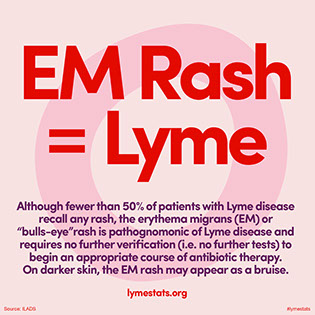
101_emrash316x316

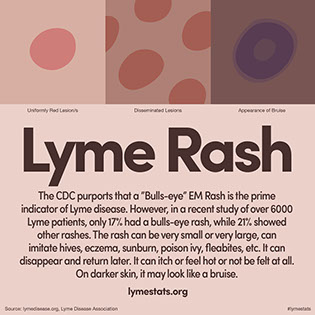
47_rash316x316

I need to address the following statements at the end of the article:

“Knowledge of the geographic locations of potential exposure is paramount to determining which tickborne infections to consider, and the absence of a tick bite history should not exclude the diagnosis in the correct clinical presentation.

Clinicians need to tread carefully here.  Many patients have been denied testing and treatment due to a map.  These maps should be viewed with the same suspicion as the testing.  

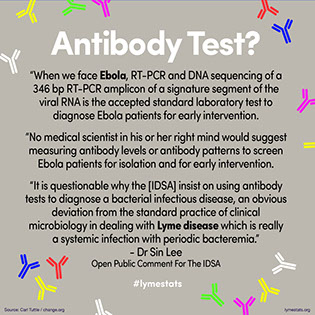
25_antibody316x316

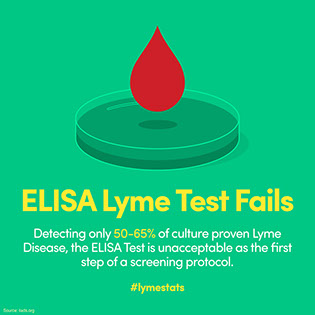
01_test_petri316x316

38_sensitive316x316

Until you tell the fox, squirrel, bird, deer, lizards, and hundreds of other reservoirs to stay put, ticks will be traveling everywhere along with the pathogens they carry.  Since Lyme Disease (borrelia) has been found in every continent except for Antarctia (it will be found there too), you can assume that means ticks are there too.  

I’m glad the authors stated this:

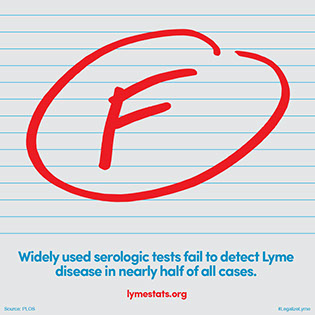
In addition, it is important to recognize the limitations of diagnostic testing for many tickborne infections; empiric treatment is most often warranted before confirming the diagnosis.”132_fail316x316

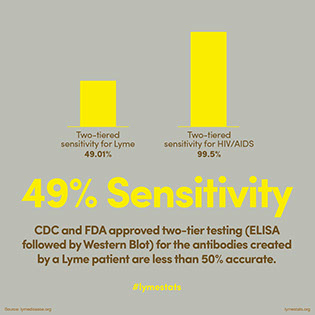
For those of us in this war, this “empiric treatment” by mainstream medicine is new.  Patient after patient has had to wait for test results before doctors will treat them.  Often, since the testing is so poor, it comes back negative and the patient is sent packing, even if the patient has every symptom in the book.  The next step is for authorities to admit and acknowledge that diagnosis of Tick borne infections is a clinical one.  This means doctors need to learn a whole lot more.  For docs willing to learn, please see:  https://www.lymecme.info

Even the CDC admits the tests suck: https://madisonarealymesupportgroup.com/2017/07/01/good-morning-america-cdc-advises-multiple-lyme-tests-due-to-false-negative-results/ CDC spokesperson at end of video.

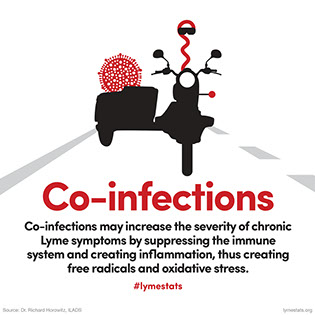
Another very important point needs to be made.  The CDC has pushed this one pathogen for one tick mantra for too long.  Many patients are co-infected making cases infinitely more complex and challenging to treat.  Lyme literate doctors trained by ILADS understand this and treat accordingly.  Until mainstream medicine realizes and admits people can have numerous pathogens, and treat for them, people will not get better.  This is why all the doxycycline in the world will not help some patients.

32_co316x316

One last point is that mycoplasma, Bartonella, and other pathogens are not included here but are quite common in patients.  Many of these pathogens are persistent and are adept at surviving.  More research needs to be done on these co-infections.

Please see:

https://madisonarealymesupportgroup.com/2017/05/01/co-infection-of-ticks-the-rule-rather-than-the-exception/  If ticks are co-infected, so are patients.

https://madisonarealymesupportgroup.com/2017/07/01/one-tick-bite-could-put-you-at-risk-for-at-least-6-different-diseases/

https://madisonarealymesupportgroup.com/2016/03/20/why-we-cant-get-better/


2600% Increase in Babesia in 12 Years in Wisconsin

CDC Reports 2600% Increase in Tick-Borne Babesiosis Infections in Wisconsin in 12 Years

It is not just a bad summer for ticks — it has been a bad decade for the spread of tick-borne infections. New surveillance from the CDC reports rapid expansion and increase in cases of babesiosis, a sometimes life-threatening disease, in Wisconsin.The CDC compiled the new report from surveillance conducted every three years during the period between 2001 through 2015. During that time, electronic surveillance came online to provide faster, more thorough, case reports. While a boost in case counts as monitoring methods improve is sometimes due to under-reporting, the CDC says the increase in Wisconsin is due to an actual uptick in cases — not just better reporting.

Total confirmed babesiosis case counts (N = 294) initially reported directly and electronically through the Wisconsin Electronic Disease Surveillance System (WEDSS),* Electronic Laboratory Report (ELR) — Wisconsin, 2001–2015.Image via MMWR

What Is Babesiosis and Why Should You Be Concerned?

The black-legged tick Ixodes scapularis transmits the Babesiosis bacteria. This is the same tick that spreads Lyme disease, anaplasmosis, and recently the more immediately deadly Powassan virus.

These ”black-legged ticks”, Ixodes scapularis, are capable of spreading babesiosis, Lyme disease, anaplasmosis, and Powassan disease, this small arthropod packs powerful poison.Image by Jim Gathany/CDC

Babesia microti, a relative of the parasite that causes malaria, causes the babesiosis infection. While some people have no symptoms when infected, in others, the illness can be fatal. Symptoms of babesiosis include fatigue and weakness, nausea, diarrhea, and often a high fever. More severe complications include kidney damage and heart failure.

Because babesiosis is spread by I. scapularis, the geographic range of the infection is expanding along with the tick. While ticks are the agent, or “vector,” that spreads the bacteria, rodents like white-footed mice are the reservoir culprits who carry the disease. Ticks are infected when they feed on mice, and in turn, ticks infect white-tailed deer, that then become the primary hosts for tickborne infections carried by black-legged ticks.

The blacklegged tick (Ixodes scapularis) is widely distributed in the northeastern and upper midwestern United States.Image via CDC

Here are some of the findings of the new babesiosis report:

  • The length of time between infection to symptoms can be about two weeks, with 96% of cases reported between April and October.
  • Between 2001 and 2015, there were 430 cases reported in Wisconsin. Of those, laboratory testing confirmed 68%. For the victims with confirmed cases, 158, or 65%, were hospitalized, and three people died as a result of the infection.
  • Of the 108 patients with probable babesiosis, 24% were hospitalized, and none died.
  • Wisconsin did not begin screening its blood supply for the babesiosis parasite until 2016. Before that, three cases of the infection spread through transfusion with contaminated blood.

The threat is rising. Between the years of 2001–2003 and 2004–2006, there was a 400% increase in the mean annual incidence of babesiosis cases. The rate rose incrementally after that until it jumped again between 2007–2009 and 2010–2012 with a 235% increase.

Overall, the incidence rose 2600% between 2001–2003 (o.03 mean annual incidence) and 2013–2015 (0.80 mean annual incidence).

Number and incidence of reported confirmed babesiosis cases by 3-year interval and percentage confirmed using polymerase chain reaction (PCR) — Wisconsin, 2001–2015. Mean annual incidence is the average number of cases per 100,000 residents in a single year.Image by MMWR, July 7, 2017/66(26);687–691

The number of counties reporting the incidence of babesiosis rose from 20 to 46 between 2011 and 2015.

Geographic distribution of confirmed cases of babesiosis per 100,000 residents by county of residence — Wisconsin, 2001–2005, 2006–2010, and 2011–2015.Image by MMWR, July 7, 2017/66(26);687–691

This report and physical observations of ticks on hunter-harvested deer, support the finding that the range of the black-legged tick has expanded rapidly, and will continue to do so with a warming climate and clearance of forest stands. As essential the ticks, so go the infections they transmit to humans.

Study authors write: “Babesiosis cases in Wisconsin are increasing in number and geographic range. These trends might be occurring in other states with endemic disease, similar suburbanization, and forest fragmentation patterns, and warming average temperatures.”

If you have reason to believe a tick could have bitten you, and experience symptoms, contact your doctor. Prompt treatment is important. The best defense to tick infection is offense — use repellent containing DEET, stay clear of tick territory, wear long sleeves, and pants — and most important, shower and check for ticks each time you return from time in the wild — or just your backyard.

With warming temperatures, ticks are getting worse — readiness is the best way for you, and family members, to avoid infection.


**For more on Babesia:  https://madisonarealymesupportgroup.com/2016/01/16/babesia-treatment/

https://madisonarealymesupportgroup.com/2011/09/25/the-babesia-checklist-copyrighted-2011-james-schaller-md-mar-version-20/

https://madisonarealymesupportgroup.com/2016/12/15/blood-screening-for-babesia/

https://madisonarealymesupportgroup.com/2016/06/17/babesia-cure/

https://madisonarealymesupportgroup.com/2016/12/05/babesia-cure-update/

https://madisonarealymesupportgroup.com/2016/10/31/the-gift-that-keeps-giving-wisconsin-organ-donor-gives-babesiosis-to-two-recipients/