Archive for the ‘Treatment’ Category

Lorraine Johnson Interview on CDC MMWR Article

http://outbreaknewstoday.com/lyme-advocate-discusses-cdc-mmwr-chronic-lyme-article-58978/  (Listen here)  Approx. 42 min.

Lyme advocate discusses CDC MMWR Chronic Lyme article  by ROBERT HERRIMAN

June 23, 2017 Outbreak News Interviews

Last week, the Centers for Disease Control and Prevention (CDC) published an article in the Morbidity and Mortality Weekly Report (MMWR) titled “Serious Bacterial Infections Acquired During Treatment of Patients Given a Diagnosis of Chronic Lyme Disease — United States”

This article received a lot of attention in the media. However, not everyone was thrilled with the publication.

The Chief Executive Officer of LymeDisease.org, Lorraine Johnson, JD, MBA joined me to discuss the issues she has with the report–both scientific and ethical. In addition, Ms. Johnson discussed issues concerning chronic Lyme to include treatment and diagnosis–two issues that divide Lyme advocates and the CDC and the Infectious Diseases Society of America (IDSA).

She also discussed the big data project, MyLymeData:  https://www.mylymedata.org

.

Important Example of IV Antibiotics for Lyme/MSIDS

http://www.jewishworldreview.com/0617/dementia_mystery.php3  By Sandra G. Boodman The Washington Post Published June 23, 2017

Richard McGhee and his family believed the worst was behind them.

McGhee, a retired case officer at the Defense Intelligence Agency who lives near Annapolis, Md., had spent six months battling leukemia as part of a clinical trial at MD Anderson Cancer Center in Houston. The experimental chemotherapy regimen he was given had worked spectacularly, driving his blood cancer into a complete remission. But less than nine months after his treatment ended, McGhee abruptly fell apart.

He became moody, confused and delusional – even childish – a jarring contrast with the even-keeled, highly competent person he had been. He developed tremors in his arms, had trouble walking and became incontinent.

“I was really a mess,” he recalled.

Doctors suspected he had developed a rapidly progressive and fatal dementia, possibly a particularly aggressive form of Alzheimer’s disease. If that was the case, his family was told, his life span would be measured in months.

Luckily, the cause of McGhee’s precipitous decline proved to be much more treatable – and prosaic – than doctors initially feared.

“It’s really a pleasure to see somebody get better so rapidly,” said Michael A. Williams, a professor of neurology and neurosurgery at the University of Washington School of Medicine in Seattle. Until recently, Williams was affiliated with Baltimore’s Sinai Hospital, where he treated McGhee in 2010. “This was a diagnosis waiting to be found.”

McGhee isn’t so sure. He wonders what might have happened to him had Williams not ordered a test that proved to be essential in discovering the reason for his dramatic deterioration. 

“It happened really fast,” recalled McGhee’s only child, Melinda, a Defense Department contractor who lives in Northern Virginia. In July 2010, she spent a week at her parents’ house while relatives visited from Arizona.

Soon after their departure, her father’s behavior changed markedly. He began writing odd notes that he affixed to the refrigerator door. When he didn’t like what his wife had made for dinner one night, he left a note on the table that said, “Don’t make this again.”

“We thought maybe he was upset about something” Melinda recalled, adding that she and her mother initially shrugged it off.

McGhee remembers little other than a feeling of overwhelming exhaustion. “I just wanted to sleep all the time,” he said.

Within days, Melinda McGhee said, her father began acting “like a 2-year-old.” He was cranky. He could not remember why he had gone into a room or if he had just eaten. He confused day and night.

“It was scary,” she recalled. “He’d want to drive, and we had to hide the car keys.” She began spending as much time as possible with her parents. Her mother, born in Japan,does not drive or speak English well. So it was their daughter who communicated with doctors, drove her parents to medical appointments and acted as her father’s advocate, trying with her mother to make sense of what was happening.

In late July, braced by his wife and daughter because he was too weak to stand unassisted, McGhee was escorted into the office of his internist.

Alarmed by his condition, the internist – who had seen McGhee the previous month for a sinus infection – sent him straight to a local emergency room.

A CT scan was performed to check for a head injury or a stroke, along with an MRI scan of McGhee’s brain. Based on his symptoms, doctors suspected he might have normal pressure hydrocephalus, an accumulation of cerebrospinal fluid in the brain that causes confusion and movement problems and can mimic dementia.

The internist, who had ordered numerous blood tests, found little of significance. Because hydrocephalus was high on the list of possible diagnoses, McGhee was referred to Williams, who was then director of the hydrocephalus center at Sinai Hospital.

Williams, who saw McGhee in mid-August, noted that his MRI showed atrophy in some areas of the brain suggestive of dementia. Hydrocephalus remained a possibility, but a form of rapidly progressive dementia, particularly Creutzfeldt-Jakob disease, seemed more likely.

Creutzfeldt-Jakob is a rare, devastating neurological disease that typically strikes people between the ages of 60 and 65. About 300 cases are diagnosed annually in the United States. Few victims live longer than a year after the onset of symptoms, which include rapid deterioration in memory, judgment and coordination.

The disease occurs when the normal structure of prion protein, which is found throughout the body, goes awry, destroying brain cells. Scientists do not know why this process occurs, and no treatment has been found to retard the disease. (One variant form of it, popularly known as “mad cow disease,” occurred in England in the 1990s possibly as a result of the consumption of diseased cattle. The classic, dominant form of CJD is not linked to meat.)

“I have seen patients [with Creutzfeldt-Jakob] and it can indeed go that fast,” Williams said of McGhee’s precipitous decline. Other possibilities, he thought, included frontotemporal dementia, a disease that destroys the brain’s frontal and temporal lobes, which govern personality and language, and rapidly progressive Alzheimer’s. Hydrocephalus seemed less likely to Williams: McGhee lacked some of the telltale neurological signs, and the tremors in his arms and legs were not typical of it.

But there was no doubt that McGhee was confused and disoriented. He could not spell any words backward or perform “serial 7s” – counting backward from 100 subtracting by 7 – tasks that are part of a mental status exam and would have been easy for him only weeks earlier. He did not know the date – or even the year.

Concerned that McGhee’s cancer might have recurred, Williams ordered a new round of tests. He also scheduled a spinal tap to check for infection and an EEG to rule out a seizure disorder.

“It’s important to cast a wide net,” Williams said, but not to order tests indiscriminately. “Premature diagnosis is how we often make errors. That’s a reason we consider the differential diagnosis process,” a cornerstone in medicine, in which doctors systematically weigh the possibility of one disease against others based on symptoms and test results.

When Williams saw McGhee a few weeks later, he was worse. McGhee needed a wheelchair and told Williams he thought he was at Travis Air Force Base in California or in Tokyo – places he had been in the past.

“When you see families” in such a situation, Williams noted, “they are scared” witless.

Around the same time, results of the blood tests Williams ordered had come back. Most were unremarkable, except for the Lyme disease screens. McGhee had elevated antibodies to Borrelia burgdorferi, the bacteria that causes Lyme. A Western blot test, which can confirm the diagnosis, was strongly positive.

Whatever else might be wrong, Williams decided, it was clear that McGhee had Lyme disease and would need treatment with IV antibiotics.

McGhee’s spinal tap did yield some positive news: There was no indication of Creutzfeldt-Jakob disease, though there was evidence of an infection or inflammation. That did not rule out another form of dementia or other serious illnesses, including a recurrence of his cancer.

Because Williams was scheduled to be away for two weeks, a colleague temporarily took over McGhee’s case and oversaw three days of inpatient testing.

In the hospital, Melinda McGhee said, doctors told her they were fairly certain that her father’s confusion and other symptoms were the result of dementia.

“It just didn’t make any sense,” she recalled. How, in a matter of weeks, could he go from a man adept at managing his finances to someone who couldn’t find his checkbook?

Doctors, she said, told her that while his deterioration looked sudden, it wasn’t. “They would say things like, ‘Your dad is a really smart guy, and he’s been hiding it from you. It’s been going on for a really long time.’ ”

But more tests revealed little.

Once home, McGhee, who had begun receiving two weeks of IV antibiotics, seemed to be getting better. His confusion began to clear, his short-term memory improved and his tremors abated. “I could feel myself recovering,” he recalled.

On Sept. 29, he went back to see Williams, who was heartened by the improvement.

“He looked 1,000 percent better than when I last saw him,” Williams noted. After reviewing the test results, he concluded that McGhee had been suffering not from dementia but from Lyme meningoencephalitis, a rare bacterial infection of the nervous system that typically occurs several weeks, or even months, after Lyme exposure.

“Spring and summer is when these teeny, tiny ticks come out, and 20 percent of people who are bitten don’t have a bull’s-eye rash,” Williams noted. “And Lyme is on the list of the causes of rapidly progressive dementia,” although it is unusual.

McGhee said he was unaware of any tick bite. He wonders if the disease might have taken hold because his immune system was suppressed by the chemo he underwent to treat his leukemia.

Williams said he doesn’t think so, because McGhee’s treatment had ended months earlier. “He just happened to get two bad things: cancer and Lyme disease,” the neurologist said.

McGhee, now 82, made a full recovery and has had no problems since. He wonders where he might have wound up had Williams not ordered tests for Lyme disease.

“I really worry about other people,” he said. “Would they just be put in some kind of facility and just waste away? I’m just so grateful that everything turned out so well and to Dr. Williams for making the diagnosis.”

Williams said he believes that other doctors would have figured out what was wrong.

McGhee’s case, he said, is gratifying. He was delighted to hear from his former patient after six years and to learn that “he’s alive and kicking and doing quite well.”

“That’s part of the joy of medicine,” he added.

**Comments

  1. Other doctors most probably would NOT have figured out what was wrong.  They are typically Lyme denialists of the worst sort and look for anything and everything but Tick Borne Illness – particularly when there is no EM rash or joint pain.
  2. McGee is right is worrying about other people.  Thousands fall through the cracks and are labeled with everything from MUS (medially unexplained symptoms – which they interpret to mean psychosomatic), depression, Munshen’s, MS, ALS, Lupus, Chronic Fatigue, and many more.  One doctor told her infected son to get a “good haircut.” https://madisonarealymesupportgroup.com/2017/06/10/the-coming-pandemic-of-lyme-dementia/  Dr. Garrett aptly predicts a pandemic of Lyme dementia.
  3. Despite the doctor’s opinion, suppressing the immune system has been known to trigger a latent Lyme/MSIDS infection. Also, doctors who mistakenly prescribe cortico-steroids for inflammation could worsen the disease(s). http://www.lyme-disease-research-database.com/chronic-lyme-disease.html
  4. This idea that any form of Lyme is “rare” is completely out of touch.  Again, McGee was a lucky one.  Many are not so lucky.
  5. McGee is not alone.  Kris Kristofferson also was diagnosed with dementia and had Lyme Disease:  https://madisonarealymesupportgroup.com/2017/01/04/aluminum-alzheimers-ld/
  6. For more information on the link between Lyme and Dementia/Alzheimer’s:  https://madisonarealymesupportgroup.com/2016/04/10/bugs-causing-alzheimers/ Two Astounding Quotes from the documentary “Under Our Skin”: “I extracted DNA from 10 Alzheimer brains that came from the Harvard University brain bank. Using molecular methods I was able to find the DNA of the Spirochete which causes Lyme disease in 7 out of 10 of the Alzheimer specimens that I received from Harvard.” – Dr. Alan B. MacDonald and “We never had, in the last 5 years, a single Alzheimer Disease, Lou Gehrig’s Disease / ALS, Parkinson’s Disease, Multiple Sclerosis / MS patient who did not test positive for Borrelia Burgdorferi (Lyme Disease bacteria), not a single one.“ – Dr. Dietrich Klinghardt

Iowan, Jack Gordon, is a case discovery of 2 diseases NEVER found together before on 11.22.2015: Lewy Body Dementia, causing violent hallucinations, and Lyme Disease/MSIDS. Using his medical files, he was bitten by a tick 35 yrs. ago, but the doctors never acknowledged it by diagnosing or treating him.
You may recognize Lewy Body Dementia as what Robin Williams’ autopsy revealed. https://madisonarealymesupportgroup.wordpress.com/2016/03/28/did-robin-williams-have-lyme/

https://jneuroinflammation.biomedcentral.com/articles/10.1186/1742-2094-8-90

https://www.ncbi.nlm.nih.gov/pmc/articles/PMC3551238/

https://www.ncbi.nlm.nih.gov/pmc/articles/PMC4399390/

https://www.scientificamerican.com/article/controversial-new-push-to-tie-microbes-to-alzheimer-s-disease/


LLMD Daniel Cameron Disciplined by NY Medical Authorities

Lyme patients, please do not read this if you can’t handle stress today.  I believe this is a targeted attack that conveniently happened after the infamous MMRC article by the CDC in which the lead author had to go fishing for 5 cases of folks who had IV complications in their Lyme/MSIDS treatment.  According to Lyme Disease Association there are nearing 400,000 cases of Lyme Disease each year.  You’d think there would be hundreds of such patients with IV complications.  But there aren’t.  I believe this is a concerted effort leading to the new IDSA guidelines. They are discrediting their opposition systematically before they release the guidelines so that they will be embraced without question.  Dirty politics and certainly not science-based.

For those just tuning in – here are articles explaining the MMWR article in which the CDC paints a very dark picture for IV treatments for Lyme/MSIDS patients:

https://madisonarealymesupportgroup.com/2017/06/23/no-bias-in-mmwr-for-any-other-infectious-disease-requiring-iv-antibiotics-except-for-lyme/

https://madisonarealymesupportgroup.com/2017/06/23/cdc-slams-long-term-antibiotics-for-lyme-disease/

https://madisonarealymesupportgroup.com/2017/06/21/ilads-rebuttal-to-mmwr-article/

https://madisonarealymesupportgroup.com/2017/06/16/who-controls-the-fake-lyme-disease-news/

____________________________________________________________________________________________

“Chronic Lyme” VIP Daniel Cameron Discipled by New York Medical Authorities by Jann Bellamy on June 22,2017

https://sciencebasedmedicine.org/chronic-lyme-vip-daniel-cameron-disciplined-by-new-york-medical-authorities/

The medical practice of “Lyme literate” guru Daniel Cameron, MD, will be closely supervised by the authorities during a three-year probation imposed last week by the New York State Board for Professional Medical Conduct (BPMC). The order was based on professional misconduct charges filed against Cameron earlier this year.

Cameron agreed to the imposition of sanctions during administrative proceedings on the charges and a consent order was entered by the BPMC based on his concession. He stipulated that

he could not successfully defend against at least one of the acts of misconduct alleged. Those allegations included practicing the profession of medicine with negligence on more than one occasion, incompetence on more than one occasion, gross negligence, gross incompetence, and/or failing to maintain accurate patient medical records.

Who is Daniel Cameron, MD?

Cameron is a solo practitioner in Mt. Kisco, NY, and board certified in internal medicine, but not fellowship-trained in infectious diseases and not board-certified in that sub-specialty. He also holds an MPH and describes himself as epidemiologist. According to his website, he:

is a nationally recognized leader for his expertise in the diagnosis and treatment of Lyme disease and other tick-borne illnesses.

That is partially true. He is a “recognized leader” among those who consider “chronic Lyme” a real disease and who treat it with long-term antibiotics, sometimes for months to years. He is not a “recognized leader” among board-certified infectious diseases doctors and other experts who agree that “chronic Lyme” is not a real disease and who rely on well-conducted trials showing that long-term antibiotics do not substantially improve the outcome for patients diagnosed with so-called “chronic Lyme.” Long-term antibiotics can, in fact, result in serious harm, including death, a subject our good friend Orac covered just yesterday over on Respectful Insolence. The CDC, the Infectious Diseases Society of America (IDSA), the American Academy of Pediatrics, the American College of Physicians, the Medical Letter and the American Academy of Neurology all reject the notion that “chronic Lyme” exists and that long-term antibiotics are an appropriate treatment.

(Orac’s post nicely summarizes the differences between real Lyme disease and “chronic Lyme,” “a prototypical fake medical diagnosis,” and the dangers of long-term antibiotics, as have posts on SBM, here, here, here, and here.)

That has not stopped “Lyme literate” doctors from banding together to form the International Lyme and Associated Diseases Society (ILADS) and issuing their own guidelines for the diagnosis and treatment of “chronic Lyme,” guidelines based on very low levels of evidence that are accepted only by themselves and, in contrast to the IDSA guidelines, no other professional medical organization. ILADS teaches physicians and other practitioners how to become “Lyme literate,” although there is precious little information about the courses on the ILADS website. ILADS, again in contrast to IDSA, is not an ACCME-accredited provider of continuing medical education and, to my knowledge, none of its courses qualify for continuing medical education credit. Nor are ILADS guidelines taught as appropriate in any medical school, residency or fellowship program.

Unfortunately, according to Cameron,

ILADS healthcare providers currently serve more than 100,000 patients with Lyme and associated tick-borne diseases in the USA and around the world.

Cameron is a leading light among the “Lyme literate.” He is the past president of ILADS and is the lead author of both the original ILADS guidelines and its 2014 update. He has testified before several state legislatures promoting the protection of “Lyme literate” doctors from prosecution by state medical boards, including the legislature in New York, where such a bill became law. He also makes presentations to Lyme support groups, spreading the gospel of “chronic Lyme.”

He has written a number of articles in the medical literature promoting the notion that “chronic Lyme” exists and that long-term antibiotics are an appropriate treatment, including two in the bottom-feeder journal, Medical Hypotheses, known for its publication of pseudoscientific papers.

His bibliography includes a letter to the editor of the New England Journal of Medicine, complaining about an article by infectious diseases experts rejecting “chronic Lyme” as a valid diagnosis and its “treatment” with long-term antibiotics. The evidence, Cameron claimed, is actually in “clinical equipoise.” This drew a sharp rebuke from the article’s authors:

The term ‘clinical equipoise,’ used by Cameron, is difficult to justify in view of the published reports of five double-blind, randomized, placebo-controlled clinical trials that have convincingly demonstrated that antibiotic treatment of post–Lyme disease symptoms is not in the best interests of patients. Our article summarizes the consensus among clinicians who practice evidence-based medicine . . .

The direct implication being, of course, that Cameron is not one “among clinicians who practice evidence-based medicine.”

Cameron, for his part, brushes off the expert opinion of infectious diseases doctors versus “chronic Lyme” pseudoscience manufactroversy as simply “different points of view:”

Only by airing these different points of view will the medical and scientific community reach a better understanding of controversial topics such as treatment of chronic Lyme disease. Meanwhile, physicians must be able to exercise their clinical judgment and patients should be provided with treatment options.

With that, let’s turn to how, in the view of the New York state medical authorities, Cameron exercised his “clinical judgment” and provided patients with “treatment options.”

“Clinical judgment” and “treatment options”

Apparently, New York’s medical misconduct procedures do not require the physician charged to stipulate to any particular acts of misconduct as a condition of settling his case. Rather, as noted, Cameron simply stated he was unable to “successfully defend against at least one of the acts of misconduct alleged” and agreed to the imposition of sanctions. This means the allegations in the state’s Statement of Charges were never proven, as it was unnecessary to reach a decision on the factual issues once Cameron decided to settle. However, per the Office of Professional Medical Conduct’s (OPMC) standard procedures, the allegations in the Statement of Charges were based on expert review of Cameron’s patients’ records and they remain uncontested by Cameron.

The state’s allegations were based on Cameron’s care of seven patients. According to the Statement of Charges, some of his more egregious actions include:

  • Continuing to prescribe narcotics to a patient diagnosed with bipolar disorder and narcotic abuse for two years after the patient had moved to another state.
  • Failing to follow up on previous diagnostic tests and symptoms indicative of multiple sclerosis, “thereby depriving the patient of an accurate diagnosis and years of effective therapy for her progressive disease.”
  • Failing to appropriately and timely evaluate a patient, who suffered from Parkinson’s disease, when she complained of pain associated with a PICC line inserted at Cameron’s direction for parenteral antibiotics, which itself was done without an appropriate physical examination or “clinical re-assessments for consideration of any alternative diagnoses and/or treatment.”
  • Failing to consider “other infections or inflammatory processes” in a patient with a recent termination of pregnancy and diverticulitis, who had abnormal lab results, including abnormal liver function tests and an elevated sedimentation rate, and failure to order a CT scan of the abdomen and pelvis as well as additional blood testing.

The state wisely avoided specifically challenging Cameron’s diagnosis of his patients with “chronic Lyme” or his treating “chronic Lyme” with long-term antibiotics. In fact, the term is never mentioned. In doing so, it circumvented the quagmire of arguing over “different points of view” and concentrated on the fact that Cameron quite simply failed his patients by giving them substandard care, “chronic Lyme” or no “chronic Lyme.” This strategy also avoided any shield which might have been provided by New York’s foolish law aimed at protecting “Lyme literate” doctors.

Yet the fingerprints of “chronic Lyme” diagnosis and treatment show through loud and clear in the state’s case. For each and every patient, Cameron was charged with:

  • Repeatedly failing to take and/or note an adequate history of present illness.
  • Repeatedly failing to perform and/or note an appropriate physical examination.
  • Failing to appropriately construct a differential diagnosis and pursue a through diagnostic evaluation.
  • Failing to maintain records accurately reflecting care and treatment rendered to the patient.

For six of the seven, he was charged with:

Treating patients inappropriately with an ongoing and escalating antibiotic regimen without appropriate sequential physical examinations and clinical reassessments for consideration of any alternative diagnoses and/or treatment.

And for four of them, according to the state, Cameron failed to follow up in a timely fashion when the patient developed possible adverse reactions to therapy.

Two of the patients who presented with complaints of fatigue and pain had previous diagnoses and treatment for Lyme disease, 9 and 16 years earlier, fitting the “Lyme literate” notion that their current complaints are most certainly sequelae to inadequately-treated Lyme and cannot be attributed to other causes.

Reading between the lines, Cameron had only one tool, a hammer, so he saw every problem as a nail. The possibility that the patient might be suffering from something other than “chronic Lyme” was tossed aside via inadequate physical exams and medical records, failing to consider other diagnoses, and bulldozing ahead with inappropriate long-term antibiotics, adverse consequences be damned.

Of course, if you think about it, substandard care and “Lyme literacy” would appear to go hand-in-hand. It is hard to imagine the “Lyme literate” doctor, who routinely ignores medical science in favor of unvalidated testing, makes repeated diagnoses of a fake disease, and orders unwarranted long-term antibiotics, otherwise delivering standard-of-care medical practice. As with the Cameron case, this offers a way forward to state medical boards hamstrung by laws designed to protect the misconduct that is “chronic Lyme” from disciplinary action.

Terms of three-year probation

In entering into his probationary period, Cameron is in the company of other “Lyme literate” doctors who have had their medical practices questioned by their peers, up to and including discipline imposed by medical regulators (also, here and here).

Hopefully, Cameron will be hard-pressed to continue his usual M.O. under the terms of the Board’s Consent Order. He has agreed to practice medicine only when monitored by a licensed physician (a “practice monitor”) who must be “board certified in an appropriate specialty considering [Cameron’s] specialty of practice, who is familiar with the diagnostic and treatment modalities practiced and offered by [him].”

The practice monitor can see all of Cameron’s records and must visit his office “on a random unannounced basis at least monthly” and examine no fewer than 20 records. The monitor’s review is to determine whether Cameron’s medical practice “is prudent and competent.” Any perceived deviation from prudent care or refusal to cooperate must be reported to the OPMC within 24 hours. The monitor must also report to the OPMC quarterly and Cameron must pay the expenses of monitoring.

Cameron gets to propose his own monitor to the OPMC. This, coupled with the language about familiarity with Cameron’s “diagnostic and treatment modalities,” leaves some concern that a fellow traveler would be put in charge. The fact that the OPMC must approve the monitor, plus the broad authority given to the OPMC in the Consent Order to look at his records and otherwise investigate what he is up to, somewhat allays those concerns.

He must also, among other things:

  • Obtain written informed consent from each patient “specifically addressing all aspects of treatment” and provide the OPMC with copies of his consent forms.
  • Fully document all discussions with patients concerning his evaluation and treatment “and of the patient’s need to pursue conventional medical care elsewhere, if indicated.” This is of some concern as well, as it implies Cameron is free to provide unconventional medical care as long as he tells the patient she needs the conventional kind.
  • Obtain and review medical records from physicians who previously or are currently treating his patients and refer patients to other physicians for further evaluation and treatment “where medically warranted and beyond the scope of [Cameron’s] role with regard to the patient.”
  • Maintain at least $2 million per occurrence/$6 million per policy year limit medical malpractice insurance.
  • Complete CME courses as directed by OPMC.

But, Legislative Alchemy

Whether Cameron’s case will prove to be a cautionary tale for other “Lyme literate” doctors remains to be seen. Even as one branch of state government successfully prosecutes a “Lyme literate” doctor, another branch, the legislature, is considering forcing insurers to cover treatment of “chronic Lyme,” the subject of no less than three bills now pending. (Assembly Bill 114, Senate Bill 4713, Senate Bill 670). Three other bills are sympathetic to the cause in that they will give “chronic Lyme” advocates yet another venue to argue for insurance coverage. (Assembly Bill 4863, Senate Bill 2168, Assembly Bill 6927). Pseudoscience, it seems, is endemic in the state of New York.

Official Citation:  https://apps.health.ny.gov/pubdoh/professionals/doctors/conduct/factions/PhysicianDetailsAction.action?finalActionId=8470

**Proof of borrelia Persistence: https://madisonarealymesupportgroup.com/2015/09/19/proof-of-borrelia-persistence/

https://madisonarealymesupportgroup.com/2017/05/10/body-of-research-showing-borrelia-persists/

https://madisonarealymesupportgroup.com/2017/06/20/move-lyme-disease-to-highest-alert-level/  700 peer-reviewed articles showing Bb persistence.

**For stats on the abysmal testing.  Scroll down to my comment:  https://madisonarealymesupportgroup.com/2017/06/23/cdc-slams-long-term-antibiotics-for-lyme-disease/

No Bias in MMWR for Any Other Infectious Disease Requiring IV Antibiotics Except For Lyme

http://www.timesunion.com/news/article/Report-on-dangers-of-antibiotic-treatments-for-11231166.php

Report on dangers of antibiotic use for Lyme disease sparks controversy


ALBANY — Dangerous bacterial infections have resulted from long-term antibiotic treatments prescribed for chronic Lyme disease, a new report states.

The report, published last week by the U.S. Centers for Disease Control and Prevention, includes accounts of five patients whose complications from the unproven treatments included septic shock, colitis, spinal disc infection, abscess and death.

A Capital Region advocate for further research and improved treatment for chronic Lyme disease, however, believes medical politics are behind the study’s publication.  

Holly Ahern, a microbiologist at SUNY Adirondack in Queensbury, said some of the report’s authors are also engaged in updating Lyme disease treatment guidelines for the Infectious Disease Society of America, or IDSA. The influential doctors’ group does not acknowledge chronic Lyme disease as a legitimate diagnosis.  

The authors looked for patients whose cases would confirm what they already believed, Ahern said.

“They are simply trying to prop up the 30-year-old studies by rewriting it and publishing is as a ‘new study,’ so that it can then be cited as ‘evidence’ in their ‘evidence-based’ treatment guidelines,” she said.

The CDC estimates there are 300,000 cases of Lyme disease each year, most in the Northeast and Midwest where the ticks that carry the disease are most plentiful.

It is no surprise that a report on chronic Lyme disease is creating controversy. A battle has raged for decades over whether it even exists and, if it does, how it should be treated.

Chronic Lyme disease is a term used for a constellation of symptoms that can occur after an acute case of Lyme disease, which is caused by bacteria transmitted from a tick bite. Chronic Lyme is the exception rather than the rule: In most cases, Lyme disease that is caught early can be treated effectively with antibiotics.

But in 10 percent to 20 percent of patients, symptoms like headaches, joint and nerve pain, dizziness and fatigue can endure for months and even years. That’s undisputed.

It’s the cause of those persistent symptoms that’s at the heart of the debate.

IDSA sees these lingering symptoms as an aftereffect of infection. But doctors who diagnose patients with chronic Lyme disease believe the bacteria that causes the infection remains in the body, though it is not detected by standard tests. These doctors therefore use antibiotics, which combat bacteria, to fight it, usually by infusing the drugs through intravenous lines over extended periods.

The risk, however, is that antibiotics attack not only the bacteria that makes people sick, but also the bacteria that helps fight infection, explained Timothy Sellati, a former Albany-based immunologist who is now chair of the Department of Infectious Diseases at Southern Research in Alabama. Infections can also form at the site of the IV lines if they are not kept sterile.

For both those reasons, extended use of IV antibiotics should usually be avoided, Sellati said.

Doctors, public health officials and patients have contacted CDC with reports of serious bacterial infections resulting from such unproven treatment, according to the CDC report. The five stories in last week’s report highlighted these.

One patient was treated with two four-week courses of antibiotics after tests determined that she had Lyme disease. But two years later, with continued fatigue and trouble thinking, she was diagnosed with chronic Lyme and received a year’s worth of IV antibiotic treatments. A year after that, another month’s worth of antibiotics was delivered through a catheter.

She was admitted to a hospital after developing back pain and shortness of breath. Doctors found that her spine was infected by bacteria found at the catheter tip.

“That is a whole long time on antibiotics,” Sellati said of the case. “I would ask that physician: What were you expecting to happen? Where do you think this bacteria is hiding from this assault?”

Ahern, on the other hand, questioned the CDC’s use of five extreme examples amid thousands of people treated with IV antibiotics for chronic Lyme disease. Lymedisease.org, a California-based group that advocates for patients with chronic Lyme disease, filed an ethics complaint three years ago against the research that led to the report.

One of the report’s authors, a CDC epidemiologist, allegedly solicited IDSA doctors for evidence of harm from IV antibiotic treatments, offering co-authorship of the report if anecdotes were used, according to a blog post by Lymedisease.org’s vice president. No such solicitation was made for IV treatment success stories, according to the advocacy group.

Ahern sees that as a prime example of bias in the study, published in the CDC’s Morbidity and Mortality Weekly Report.

“If you search the MMWR archives, there are no other examples of this sort of bias for ANY OTHER infectious disease requiring IV treatments,” Ahern wrote in an email. “None.”

CDC Slams Long-term antibiotics for Lyme Disease

http://www.mvtimes.com/2017/06/21/cdc-study-slams-lyme-disease-treatment-long-term-antibiotics/

CDC study slams Lyme disease treatment with long-term antibiotics

Last Friday, the Centers for Disease Control (CDC) released a report which is adding fuel to the fire in the debate about the existence, and treatment, of “chronic Lyme Disease.”

CDC Morbidity and Mortality Weekly report, “Serious Bacterial Infections Acquired During Treatment of Patients Given a Diagnosis of Chronic Lyme Disease,” states that “chronic Lyme disease” is not a scientifically verifiable illness, and that treatments of prolonged antibiotic therapy are ineffective at best, and at worst, potentially fatal.

“Clinicians, health departments, and patients have contacted CDC with reports of serious bacterial infections resulting from treatment of persons who have received a diagnosis of chronic Lyme disease,” the report states.

The study highlights case histories of five patients who were treated for chronic Lyme disease with long-term antibiotics. Complications included septic shock, Clostridium difficile colitis, osteodiscitis, abscess, and in two cases, death.

“These cases highlight the severity and scope of adverse effects that can be caused by the use of unproven treatments for chronic Lyme disease,” the report states. “In addition to the dangers associated with inappropriate antibiotic use, such as selection of antibiotic-resistant bacteria, these treatments can lead to injuries related to unnecessary procedures … and missed opportunities to diagnose and treat the actual underlying cause of the patient’s symptoms.”

Patients in the study were treated with intravenous antibiotics with a PICC (peripherally inserted central catheter). The surgically inserted line injects the antibiotic directly into the bloodstream on the theory that oral antibiotics don’t work as well because they don’t break the blood-brain barrier. The new study took a dim view of PICCs, stating that they were consistently a source of infection.

Regarding the scope of the three-year study, a CDC spokesperson told The Times in an email, “CDC has periodically heard from state health departments and clinicians about patients who have acquired serious bacterial infections during treatments for what is sometimes referred to as ‘chronic Lyme disease.’ We have heard of many cases, but limited the report to five examples.”

Test questioned

The blood tests currently used to detect the presence of Borrelia burgdorferi bacteria, which cause Lyme disease, are the enzyme-linked immunosorbent assay (ELISA), and the Western blot test, which can confirm the results of an ELISA test.

Chronic Lyme disease advocates believe that current testing methods are inaccurate, and a major source of their concern. Last week’s CDC report also addresses this: “There is a belief among persons who support the diagnosis and treatment of chronic Lyme disease that Borrelia burgdorferi can cause disabling symptoms even when standard testing is negative, despite evidence that the recommended two-tiered serologic testing is actually more sensitive the longer Borrelia burgdorferi infection has been present. Some practitioners use tests or testing criteria that have not been validated for the diagnosis of Lyme disease. A significant concern is that after the diagnosis of chronic Lyme disease is made, the actual cause of a patient’s symptoms might remain undiagnosed and untreated.”

According to a CDC spokesperson, “You may have heard that the blood test for Lyme disease is correctly positive only 65 percent of the time or less — this is misleading information. As with serologic tests for other infectious diseases, the accuracy of the test depends upon the stage of disease. During the first few weeks of infection, the test is expected to be negative. Several weeks after infection, currently available two-tier testing has very good sensitivity … Antibodies against Lyme disease bacteria usually take a few weeks to develop, so tests performed before this time may be negative even if the person is infected. It is not until 4 to 6 weeks have passed that the test is likely to be positive. This does not mean that the test is bad, only that it needs to be used correctly.”  (Please see comment at end of article)

Sam Telford, an expert on tick-borne diseases and professor of infectious disease and global health at Tufts University, former MV Times columnist, and chronic Lyme disease skeptic, told The Times that the new CDC report is “yet more evidence” that people should question a chronic Lyme disease diagnosis if the traditional tests show no trace of Borrelia burgdorferi. “When the evidence for a diagnosis rests on testing by a handful of specialty laboratories, in the face of evidence from well-validated tests that have been in use for 30 years, it seems to me that they are limiting their chances for a different diagnosis and treatment to improve life … I think that to the detriment of their health, some people with true illness embrace a faith-based diagnosis instead of an evidence-based [scientific] diagnosis. The CDC report shows what can happen … very tragic. There are many possible diagnoses for the signs and symptoms experienced by those who undergo such extreme treatment regimens.”

Theories behind lingering Lyme

Most people infected with Lyme disease are cured with a two- to four-week regimen of strong antibiotics, most often doxycycline. However, roughly 10 percent of those infected experience long-term symptoms that include muscle ache, joint pain, fevers, cognitive impairment, and extreme fatigue.  (See comment at end of article)

The Centers for Disease Control (CDC) calls this condition post-treatment Lyme disease syndrome (PTLDS), and unlike chronic Lyme disease, the industry-standard blood tests confirm the presence of the Borrelia burgdorferi bacterium.

“The good news is that patients with PTLDS almost always get better with time; the bad news is that it can take months to feel completely well,” the CDC website states. The CDC does not recommend use of long-term antibiotics for PTLDS. “Regardless of the cause of PTLDS, studies have not shown that patients who received prolonged courses of antibiotics do better in the long run than patients treated with placebo.”

There is a growing faction that believes chronic Lyme disease exists irrespective of CDC studies, and that people presenting with persistent Lyme disease symptoms should be treated with long-term antibiotics.

On a visit to Martha’s Vineyard Hospital last summer, Dr. Nevena Zubcevik, attending physician at Harvard Medical School and co-director of Dean Center for Tick Borne Illness at Spaulding Rehabilitation Hospital in Charlestown, said she believes the current testing methods are inadequate.

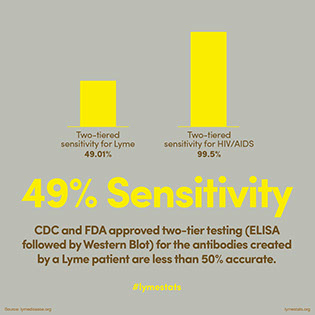
She cited information from a researcher at the CDC: “Barbara Johnson, an expert with the CDC Lyme program, reveals that the current two-tier method is positive in only 31 percent of those with erythema migrans (the bull’s-eye rash associated with Lyme disease) and in only 63 percent of those with acute neuroborreliosis or carditis due to Lyme disease. This means that out of 100 patients who have Lyme disease, we might misdiagnose 69 of them, leaving their infections untreated … Given the current urgent state of affairs, we should be racing to find better testing strategies that will identify all of the Borrelia species and associated co-infections, and to find better antibiotic regimens that will cure our patients.”

Dr. Zubcevik suggested that the correct antibiotics aren’t being used to treat the long-term symptoms of Lyme disease. She diagnoses this condition as “persistent symptoms related to Lyme disease,” not chronic Lyme disease. “The drugs we are using might be contributing to persistent bacteria, and may not be fully clearing infections,” she wrote in an email to The Times last year.

Dr. Zubcevik did not respond to The Times’ request for comment on the new study.

Though her stance is controversial, it resonated on Beacon Hill. Last July, the House of Representatives, overriding Governor Baker’s veto, passed a bill requiring health insurance providers to cover the cost of long-term antibiotics. Massachusetts was also one of the first states to enact a bill protecting doctors who prescribed long-term antibiotics, when Governor Deval Patrick signed it into law in June 2011.

Enid Haller works as a patient advocate at the Dean Lyme Center, where a number of Vineyarders, and people from all over the country, go for treatment. Ms. Haller also runs the Lyme Center of Martha’s Vineyard, described on her website as a walk-in information service for Lyme and tick-borne diseases, on Panhandle Road in West Tisbury.

Ms. Haller told The Times she believes the CDC, and Mr. Telford, are wrong about the accuracy of the ELISA and Western blot tests. She said she suffered the long-term effects of Lyme disease for more than 10 years, and never tested positive for Lyme disease with the traditional tests given at Martha’s Vineyard Hospital. “The Igenex test is essentially a better implemented Western blot test,” she said. “I came back very positive for Lyme [disease] with the Igenex test.” Ms Haller said the Igenex test should be the standard test for the Cape and Islands, including Martha’s Vineyard Hospital. She said the Dean Lyme Center at Spaulding Hospital in Charlestown uses the Igenex test, and her treatment there has been the breakthrough she’d sought for more than a decade. She said getting the antibiotics intravenously, through a PICC line, was the key.

“It worked incredibly well,” she said. “I had my PICC line removed last November because you have to take it out after a year, because the tubing starts to deteriorate. After the holidays, the symptoms slowly started to come back, the joint pain, the brain fog; I had trouble walking. But a month ago I had a PICC line put back in, and I started feeling better in 48 hours. The pressure in my head just went away.”

Ms. Haller said she feels well enough to join four other Spaulding patients who are traveling to Germany in three weeks for “hyperthermia treatment,” a process where the body temperature is raised enough to kill Borrelia burgdorferi. “I’ve spoken to a lot of people who’ve gotten better from it. I know I can’t be on antibiotics forever,” she said.

Conspiracy theorized

Ms. Haller said she thinks last week’s release of the CDC report was in response to an “uprising,” spearheaded by four people from Lyme Cryme, a chronic Lyme Disease advocacy group, who traveled to Washington, D.C., two weeks ago to lobby congressmen. Lyme Cryme members allege that there has been a coverup orchestrated by the CDC, and that the agency has long advocated ELISA and Western blot tests, knowing that they don’t work. “They’re starting a class-action lawsuit against the CDC, so it doesn’t surprise me the CDC came out with the article last week,” Ms. Haller said.

A 249-page treatise by the $ociety for the Advancement of $cientific Hermeneutics ($A$H), titled “Descrambling the Centers for Disease Control and Prevention’s (CDC’s) For-Profit scientific nonsense,” also alleges CDC perfidy, with an underlying profit motive. “We don’t test positive on the stupid test because it was designed to fail. It was designed to market a vaccine, not diagnose Lyme disease. A core group of doctors with financial interests in the Lymerix vaccine have intentionally misled the medical community about them … At some point, it was decided by CDC officers that they should commercialize Lyme and other emerging tick-borne diseases by patenting vaccines and test kits … Their plan: Make Lyme only 15 percent detectable so that the Cabal would be guaranteed to have an at least 85 percent ‘effective’ vaccine. If they maliciously discredited the people who became ill as a result of the ‘vaccine’ itself (septic shock) or vaccine failure (Lyme), then the vaccine would be ‘safe,’ too. We call both the crime of falsifying the testing and the resultant — and current — bogus testing criteria, ‘Dearborn.’”

Ms. Haller alleged Mr. Telford is also involved in the deception. “Sam owns part of the vaccine,” she said. “Whenever he speaks on the Vineyard, he’s always pushing the vaccine. I always wondered why. I would be interested to know the other doctors who own the vaccine, because they stand to make a lot of money. This is getting exposed now, and I think that’s why Sam gets so mad when we discuss this.”

Ms. Haller said she knows people who have gotten sick from Lymerix, which was introduced in 1998 and withdrawn three years later amid a class-action lawsuit alleging it caused arthritis-like symptoms. “I know people who have dementia because of the Lymerix vaccine, and Sam refuses to acknowledge that. The veterinarians use it, but I know many people on the Vineyard who have given it to their dogs or cats or horses, and they have terrible reactions to the vaccine. They’re probably still making millions and millions of dollars from that.”

In an email to The Times, Mr. Telford dismissed the CDC conspiracy as “ravings,” and stated he has no financial interest or motives with Lymerix. “In 1991, I co-discovered the mode of action of the vaccine … that is all. I did not make the vaccine. I own no patents, never did, received no funding other than to help run the Phase II clinical trial back in the mid-1990s, receive no funding now, and am not pushing it for any financial gain. I hope to revive Lymerix under a nonprofit structure … vaccines for the people by the people. I am pushing for this because I am outraged that Lyme incidence keeps going up and up, and something I helped develop as a younger scientist might have prevented hundreds of thousands of cases over the past decade … and could do so in the decade to come.”

Prevention remains the key

Prevention is paramount when it comes to fighting the spread of Lyme disease and other virulent tick-borne diseases — babesiosis, spotted fever, Rocky Mountain spotted fever, tularemia, Powassan virus, and ehrlichiosis — by wearing permethrin-treated clothes when working or playing outdoors, and making daily tick checks.

This is especially crucial in the months May through early July, when the vast majority of infections will take place.

More information on tick-borne disease prevention can be found on the Martha’s Vineyard Boards of Health Tick-Borne Disease webpage.


**Comment:  https://madisonarealymesupportgroup.com/2017/04/12/comparing-lyme-testing-with-hiv-testing/  The probability of a false-negative test for LD with a single test for early-stage disease was high at 66.8%, increasing to 74.9% for two-tier testing.  For late-stage LD, the two-tier test generated 16.7% false negatives.  Using clinically representative LD test sensitivities, the two-tier test generated over 500 times more false-negative results than two-stage HIV testing.

https://madisonarealymesupportgroup.com/2017/06/09/medicine-is-behind-the-times-when-it-comes-to-treating-lyme/  There is no test for active Lyme disease infection, and test interpretation, especially the use of specific bands in the WB (IgM 2/3; IgG 5/10), developed at the 1994 CDC/Association of State and Territorial Public Health Laboratory Directors Dearborn meeting,6 is problematic. Some doctors and researchers believe those bands were selected only to protect the then-in-development Lyme disease vaccine (subsequently licensed and withdrawn over 4 years). Furthermore, the Lyme ELISA used for screening may not react with serum antibodies if at least a month has not elapsed between the tick bite and the test. If antibodies do develop, research in the Journal of the American Medical Association7 has shown that the antigen and the antibody produced by the patient can form a complex. Current commercial tests can only test for a free antibody, not an antibody in a complex, so patients can remain undiagnosed despite having produced antibodies.

Perhaps most noteworthy is that FDA-cleared commercial serological tests are based on one strain of Borrelia burgdorferi bacteria in contrast, for example, to a 2-strain Lyme test developed by one independent Clinical Laboratory Improvement Amendments-approved lab. The recent discovery by Mayo Clinic/CDC of the Borrelia mayonii species in the Midwest, which can also cause Lyme, and the acknowledgement that Borrelia miyamotoi, a spirochete closely related to the relapsing fever bacteria and more distantly related to the Lyme bacteria, causes a Lyme-like disease in the United States, means Ixodes scapularis ticks transmit all three of those bacteria, further clouding the diagnostic picture.  (And, isn’t picked up at all with current CDC testing)

https://www.lymedisease.org/lyme-sci-testing/  Please read this fantastic article about the abysmal testing by Lonnie Marcum of Lymedisease.org.

Lonnie-chart

Also, what the Lyme denialists fail to comprehend is that borrelia can move quickly into the Central Nervous System.  While they advocate a “wait and see” approach, the spirochetes are having a hey-day infiltrating every organ.  They advocate a catch-22 telling everyone Lyme is cured by being treated quickly but then they sit on their laurels waiting for a optimal test result that may take up to a month.  Makes absolutely no sense.