
Lyme Disease Has Arrived. Why Hasn’t a Reliable Treatment?
Lyme disease has arrived. Why hasn’t a reliable treatment?
/arc-anglerfish-tgam-prod-tgam.s3.amazonaws.com/public/YRPGTV2EIVGR5NE4N4DGZFBHL4.jpg%7D)
Until we know better how to diagnose and cure, we must do battle with ticks. GETTY IMAGES/GETTY IMAGES
Mary Beth Pfeiffer, an investigative journalist from New York State, is author of Lyme: The First Epidemic of Climate Change.
Like soldiers in an advancing front, blacklegged ticks are today marching across Canada armed chiefly, but not solely, with a pathogen that indiscriminately sickens and disables: Lyme disease.
In 1990, ticks that carried the infection were found only in Long Point in far southern Ontario. But hitched to birds and enabled by a warmer climate, these blood-sucking arachnids have found a new and rich frontier across vast tracts of the country. They are in Ontario’s provincial parks, in Quebec’s Montérégie region, where temperatures have risen 0.8 degrees Celsius since 1970, along Manitoba’s Lake of the Woods, and in many parts of Nova Scotia, New Brunswick and British Columbia.
The upshot: Canada is well into an epidemic that has exploded in the United States since the disease emerged in a small coastal town in Connecticut in the late 1970s. Today, these ticks reside in half of the continental United States’ 3,000 counties, twice the number of two decades ago. Evidence suggests that “case numbers will increase rapidly in the coming years in Canada as I. scapularis” – the blacklegged tick – “invades the most heavily populated southern parts of Canada,” according to a 2015 article in the journal Applied and Environmental Microbiology.
Of paramount concern amid this invasion is that the standard treatment for Lyme disease used in Canada and other countries – a short course of antibiotics – leaves a significant share of patients ill for weeks, months and sometimes years. This treatment is based on care guidelines developed in the United States that new research suggests are flawed. Until the medical establishment stops denying a problem exists, more people will suffer.
In the United States, authorities estimate that reported Lyme disease cases – 36,000 in 2016 – are one-10th of the actual number. Canada’s official disease count, which grew nearly sevenfold from 144 in 2009 to 992 in 2016, is also likely far below the real number. In a recent visit to Nova Scotia, the hardest-hit province, I frequently encountered people in restaurants and shops who shared stories of Lyme disease, suggesting the disease is more common than the 326 cases reported in 2016.
At this crucial juncture, Canadians would do well to learn from the mistakes of the U.S. model of Lyme disease care, which has cost patients dearly in delayed diagnoses and inadequate treatments. Since 2000, when the first treatment guidelines were issued in the United States, Lyme disease has been framed as an infection that is straightforward to both diagnose and treat. It is not.
Science has repeatedly found that the standard Lyme test fails to diagnose many infections – especially early in the disease, but later as well – leading to illness that is more difficult to treat. Moreover, some 10 per cent to 20 per cent of treated patients go on to suffer what American medicine calls “posttreatment Lyme disease syndrome,” a condition called “severe” in a recent Johns Hopkins University study. Symptoms may include muscle, bone and joint pain, memory and sleep disorders, fatigue, depression and neurological problems including numbness and tingling in hands and feet.
Beyond its early rash and flu-like symptoms, Lyme disease has also been linked to problems of balance, sight and cognition, facial palsy, meningitis, arthritic symptoms and, when the pathogen invades heart tissue, Lyme carditis.
In Canada, Britain, the Netherlands, Sweden, Germany and many other countries with Lyme disease, the U.S. guidelines have set the standard for – have essentially dictated – management of this epidemic. Yet, at least 20 scientific publications since 2012 have reported that the way Lyme disease is treated, with 10 to 28 days of antibiotics, may not be working. The pathogen survived in infected monkeys and mice and in test tubes when exposed to an array of antibiotics used in people.
Mainstream medicine has been slow to acknowledge and accept these new findings, clinging to dogma that a bottle of antibiotics cures. Extended antibiotic courses don’t always resolve advanced cases of Lyme disease. The problem is that medicine rejects the notion that Lyme lingers, so has done little to find treatments that work.
In research for a book on the global spread of ticks, I met patients who travelled across oceans and borders in search of care for intractable Lyme disease. I spoke to a woman from Thunder Bay, Ont., who drove 14 hours to bring her son to a doctor in New York State. Others included a British man who flew to California, a young Swedish woman who went to England and a Dutch woman who went to Belgium.
These are the patients whose tests failed to diagnose them; who did not get or see the variable reddish rash that signals infection; or who were inadequately treated. To be sure, a significant share of early treated patients recover. These are the patients around whom the dogma of Lyme treatment has been fashioned.
But thousands of other patients in hundreds of Lyme disease support groups around the world are testament to the failure of a faulty model of care. Canada should listen to them.
Medicine does not have a handle on this epidemic. What is controlling it now, to a far greater extent, are the environmental forces wrought by human influence over the planet.
Until we know better how to diagnose and cure, we must do battle with ticks. Be vigilant to check our children after spending time outdoors; avoid tall grasses and leaf litter, and even consider chemical repellents and clothing treatments. We must recognize our role in enabling an eight-legged menace and a single-celled pathogen that for eons existed quietly in nature but that today wreak havoc for many.
_______________
**Comment**
A few things to ponder:
- Ticks have been all over the place for decades but authorities have refused to believe & recognize it. Sick patients & the doctors who dare to treat them are the proof in the pudding, but these sick people have repeatedly been denied diagnosis and treatment by mainstream medicine based on ancient, faulty testing and faulty maps supposedly showing where ticks are.
Ticks are all over the place: https://madisonarealymesupportgroup.com/2017/10/06/remembering-dr-masters-the-rebel-for-lyme-patients-who-took-on-the-cdc-single-handedly/ This expose’ by Pam Weintraub shows Dr. Masters has been screaming bloody murder about a Lyme-like illness in the South for decades. Crickets…..
https://madisonarealymesupportgroup.com/2016/09/24/arkansas-kids-denied-lyme-treatment/ It’s in Arkansas….crickets.
https://madisonarealymesupportgroup.com/2016/11/03/ld-not-in-australia-here-we-go-again/ A Lyme-like illness is in Australia……crickets.
https://madisonarealymesupportgroup.com/2018/02/06/lyme-in-the-southern-hemisphere-sexual-transmission/ It’s clearly in the Southern Hemisphere…..crickets.
- According to independent, Canadian tick expert, John Scott, climate change has ZIPPO to do with this modern-day plague: https://madisonarealymesupportgroup.com/2017/08/14/canadian-tick-expert-climate-change-is-not-behind-lyme-disease/ According to Scott, the climate change range expansion model is a huge cover-up and red-herring to divert attention away from the lack of attention and progress being made medically. It’s also being used as a “schtick” to obtain research dollars due to the popularity of the climate change issue; however, any research on it has been inconclusive and without validity. Ticks are ecoadaptive and will be the last species on the planet.
- Someone needs to deal with the issue of the wide spread nature of this illness. Serious, unbiased research needs to delve into the possibility of sexual transmission, which would help explain the epidemic. I do not believe for a minute that the black-legged tick is the sole perp: https://madisonarealymesupportgroup.com/2018/02/06/lyme-in-the-southern-hemisphere-sexual-transmission/ and https://madisonarealymesupportgroup.com/2017/02/24/pcos-lyme-my-story/ A study was done in 2014 showing spirochetes in semen and vaginal secretions……crickets…..
- The issues of congenital transmission, birth defects, transmission via breast milk, and outright deaths needs to be studied: https://madisonarealymesupportgroup.com/2017/10/15/pregnancy-in-lyme-dr-ann-corson/ and https://madisonarealymesupportgroup.com/2018/02/26/transplacental-transmission-fetal-damage-with-lyme-disease/ and https://madisonarealymesupportgroup.com/2018/04/13/chronic-lyme-post-mortem-study-needed-to-end-the-lyme-wars/
- Serious, unbiased research needs to consider the ability of other insects to transmit. The work on this topic is so old there’s an inch of dust on it. Even when research showed mosquitos to carry borrelia…….crickets: https://madisonarealymesupportgroup.com/2018/03/01/strides-in-lyme-research-links-to-mosquitos-as-carriers/ (please read my comment at end of article). Research also needs to continue on ticks….particularly the ability of ALL ticks to transmit. Open minds need to prevail as old dogma regarding ticks currently rules the world.
- Research on tick borne illness and the connection and frequent misdiagnosis of dementia, Alzheimer’s, ALS, MS, fibromyalgia, and other autoimmune illnesses, when they have Lyme/MSIDS is desperately needed: https://madisonarealymesupportgroup.com/2016/08/09/dr-paul-duray-research-fellowship-foundation-some-great-research-being-done-on-lyme-disease/ and https://madisonarealymesupportgroup.com/2018/03/25/a-brief-history-of-neuroborreliosis-research-dementia-an-inside-look-at-two-researchers/ and https://madisonarealymesupportgroup.com/2016/06/03/borrelia-hiding-in-worms-causing-chronic-brain-diseases/ and https://madisonarealymesupportgroup.com/2017/06/10/the-coming-pandemic-of-lyme-dementia/ and https://madisonarealymesupportgroup.com/2018/04/23/lyme-dementia-code-icd-11/
- The persistence & pleomorphism of Lyme (borrelia) and persistence of other pathogens needs to be accepted and treated accordingly: https://madisonarealymesupportgroup.com/2015/09/19/proof-of-borrelia-persistence/ and https://madisonarealymesupportgroup.com/2017/08/25/sleeper-cells-the-stringent-response-and-persistence-in-the-borreliella-burgdorferi-enzootic-cycle/ and https://madisonarealymesupportgroup.com/2017/08/18/drexel-prof-lyme-persists/ and https://madisonarealymesupportgroup.com/2018/04/13/chronic-lyme-post-mortem-study-needed-to-end-the-lyme-wars/ and https://madisonarealymesupportgroup.com/2018/04/17/persistent-borrelia-infection-in-patients-with-ongoing-symptoms-of-lyme-disease/ This is important from the standpoint of length & type of treatment. As it stands, the current accepted CDC/IDSA/NIH stance is 21 days of the mono-therapy of doxycycline will cure this plague. Nothing could be further from the truth. The science has shown otherwise as well as the outcomes of thousands of thousands of patients. Pleomorphism and biofilm needs to be studied as researcher Eva Sapi has discovered that doxycycline throws the spirochetal form into the non cell wall form to lurk about in the body only to reactivate at an opportune time. This is possibly the reason for Lyme/MSIDS caused or exacerbated demential/Alzheimer’s issue. Related to this is duration of treatment. Thousands of patients have improved on extended antibiotic therapy – both oral and IV. Lives have been saved for those who receive treatment outside the CDC’s outdated and unscientific guidelines which are in reality mandates. As it stands, insurance companies hide behind these CDC mandates and refuse to pay for anything beyond 21 days of doxy. This must end. People are dying.
- Research on the involvement of other pathogens besides Lyme (borrelia) is desperately needed as this involvement complicates cases exponentially and necessitates other drugs: https://madisonarealymesupportgroup.com/2017/07/01/one-tick-bite-could-put-you-at-risk-for-at-least-6-different-diseases/ Until this happens, mainstream medicine will continue to treat a single pathogen with a single drug – doxycycline, and cause untold damage to patients who are often infected with numerous things – things doxy won’t touch with a 10-foot pole.
- Related to this pathogen involvement and the abysmal two-tiered testing, doctors need to be educated in how to clinically diagnose this plague: https://madisonarealymesupportgroup.com/2017/09/05/empirical-validation-of-the-horowitz-questionnaire-for-suspected-lyme-disease/
- The CDC states lifesaving IV therapy is too dangerous for Lyme/MSIDS due to 5-case reports, which means insurance companies will refuse to pay: https://madisonarealymesupportgroup.com/2017/06/23/no-bias-in-mmwr-for-any-other-infectious-disease-requiring-iv-antibiotics-except-for-lyme/ To say this type of treatment has saved lives would be an understatement: https://madisonarealymesupportgroup.com/2017/07/22/how-long-term-iv-antibiotics-saved-a-family/ and https://madisonarealymesupportgroup.com/2017/07/09/idsa-founder-used-potent-iv-antibiotics-for-chronic-lyme/ and https://madisonarealymesupportgroup.com/2017/06/26/important-example-of-iv-antibiotics-for-lymemsids/
- The sick-shaming, mistreatment, & denial of Lyme/MSIDS patients must end. Frankly, these patients should have recourse for this mistreatment. Many have suffered and died due to a medical practitioner announcing they are psychosomatic and making it all up. This is happening everywhere: https://madisonarealymesupportgroup.com/2017/06/30/child-with-lymemsidspans-told-by-doctors-she-made-it-all-up/ and https://madisonarealymesupportgroup.com/2017/01/11/sick-shaming-of-lymemsids-patients/ and https://madisonarealymesupportgroup.com/2018/04/07/youre-not-crazy-you-have-lyme/ and https://madisonarealymesupportgroup.com/2018/02/24/expert-on-tbi-working-group-states-lyme-patients-simply-choose-to-get-better/ and https://madisonarealymesupportgroup.com/2018/05/07/gender-lyme-is-tick-borne-disease-different-for-women/
- Lyme/MSIDS needs acceptance from the medical community & researchers and then insurance companies which have been denying coverage will follow. People can not afford treatment and are going without. This is a travesty of the worst kind.
- And lastly, there’s the issue of justice. There needs to be seriously, unbiased, independent inquiries into the mismanagement of all things Lyme/MSIDS related, from the faulty research, to the collusion and fraud at the CDC, IDSA, and NIH. The mismanagement of this has been going on unabated for over 40 years. Time for change: https://madisonarealymesupportgroup.com/2017/08/19/dr-liegner-guidelines-used-by-managed-care-causing-lyme-deaths/ and https://madisonarealymesupportgroup.com/2018/03/17/nice-lyme-guidelines-human-rights-of-lyme-patients/ and https://madisonarealymesupportgroup.com/2017/06/29/british-lord-says-cdcidsa-lyme-guidelines-not-fit-for-purpose/ and https://madisonarealymesupportgroup.com/2017/11/15/lyme-patients-file-lawsuit-against-idsa-and-insurers-over-treatment-denials/ and https://madisonarealymesupportgroup.com/2017/10/13/1st-officially-recognized-report-on-violations-of-lyme-patients-human-rights-is-released-updating-borreliosis-diagnostic-codes/ and https://madisonarealymesupportgroup.com/2018/04/28/new-lyme-vaccine-pushed-same-vaccine-corruption-revealed/ and https://madisonarealymesupportgroup.com/2018/04/03/cdc-deliberately-avoids-direct-detection-testing-methods-for-ld/ and
- https://madisonarealymesupportgroup.com/2018/01/16/2-tier-lyme-testing-missed-85-7-of-patients-milford-hospital/
As you can clearly see, this is about WAY MORE than testing and treatment. It’s a collective disgrace that makes Pandora’s Box look like a cookie jar.
Time to roll up the sleeves and get to work because there’s a lot to do.

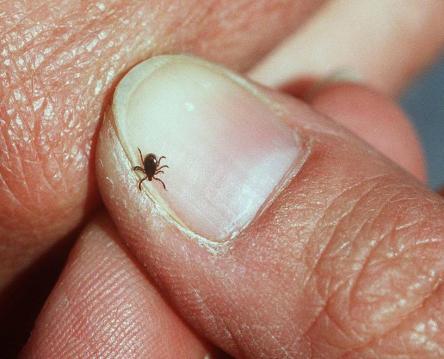 An adult deer tick. MARK WILSON/GLOBE STAFF/FILE
 Madison Area Lyme Support Group
Written
on May 10, 2018