Archive for the ‘Ticks’ Category

A Strange Itch, Trouble Breathing, Then Anaphylactic Shock

https://www.nytimes.com/2018/01/04/magazine/a-strange-itch-trouble-breathing-then-anaphylactic-shock.html?_r=1

A Strange Itch, Trouble Breathing, Then Anaphylactic Shock

By LISA SANDERS, M.D. JAN. 4, 2018

“I can’t breathe,” the woman panted, her voice a husky monotone. Her sister looked anxiously at the clerk at the triage desk at the University of Iowa hospital emergency room. The woman’s breath was rapid and coarse. Her chest heaved with the work of simply breathing. She pulled at the neck of her sweatshirt — suddenly it was too tight. She pulled it over her head and dropped it to the floor. She was naked beneath the top; she had been in bed when this attack came on.

The 54-year-old woman was helped into a wheelchair and whisked into the inner sanctum of the E.R. What followed was a blur of concerned faces, needles and medical data. Her blood pressure was dangerously low; her heart was racing. She was given epinephrine and steroids, but it was hours before she could explain what had happened that night.

She was staying at her mother’s house in rural Iowa, she told the doctors. Just as she was going to bed, she felt a sudden tingling in the palms of her hands. She recognized the sensation immediately: Twice in the past eight years, she had felt the same strange itch on her hands and sometimes her feet. Each time it was quickly followed by a terrifying sense of her throat closing.

Anaphylactic Shock

She had driven herself to her sister’s house, several miles away, and her sister drove her the rest of the way to the hospital. She opened the car window to let in the frigid winter night air. She struggled to breathe. Black spots swam before her eyes, but she willed herself not to pass out.

She had had this kind of allergic reaction twice before but never as severely. She knew from her own research that this was anaphylactic shock — a potentially deadly allergic reaction. After she got the medications, the woman’s symptoms resolved. She stayed in the hospital overnight, and when it was clear that the episode was over, she went back to her mother’s house. She made an appointment to see a local allergy specialist right away.

A Mystified Allergist

The specialist spent nearly two hours going over everything the woman had been exposed to — food, plants, toxins, anything that might have triggered this nearly fatal allergic reaction. There were no new exposures that day, nothing she hadn’t eaten or touched many times before and after this latest attack. The most common cause of severe allergic reactions in adults is food, but the allergist couldn’t identify any likely suspects. He was mystified. He asked her to share her diagnosis when she got one.

For months after returning to her home on Long Island, the woman was anxious about everything she ate, and she worried every night when she went to bed. She always kept a bottle of Benadryl and an EpiPen with her, but still she was terrified about what might happen if she was too far from a hospital the next time.

‘I Need a Nurse!’

When her next attack happened — just 10 months later — she was already in Brookhaven Memorial Hospital in East Patchogue, N.Y. She was being treated with antibiotics for a devastating case of gastroenteritis due to salmonella. Her first meal, after days of nothing but clear liquids, was beef brisket with potatoes and carrots. It smelled good, but she had no appetite. She made herself eat a few bites anyway, knowing it was her first step toward going home.

A couple of hours later, she felt a strange itch on the top of her head. She scratched reflexively. Then the recognition hit her like a slap: Not now, she thought. She grabbed the IV pole, still dripping fluids into her system, and ran out into the hallway. “I need a nurse,” she shouted. Her heart was pounding, and she knew what was coming next. Hospital staffers in scrubs descended on her. Was she having a panic attack? No, an allergy attack, she told them.

They helped her back into bed and gave her oxygen, Benadryl and steroids. “What happened?” someone asked. She told the whole story, plus something she now realized — every one of her attacks seemed to come a few hours after she ate beef. She didn’t go through this every time she had a hamburger or steak; meat was a regular and much-loved part of her diet. But she was pretty sure that she had steak — or beef brisket, this time — before each episode.

Her doctors were dubious. New food allergies — especially severe ones like hers — are uncommon in adults. This was much more likely to be an allergic response to one of the antibiotics they were giving her. The patient, though, found that theory hard to swallow. It might explain this episode, but what about the earlier ones? She hadn’t been on antibiotics then. The doctors had no answer.

Was a Tick to Blame?

A nurse had a different theory about what happened, one the patient had heard before but never believed. There was some kind of tick, the nurse told her, whose bite could make you allergic to meat. She didn’t know much about it. But, the nurse suggested, she should check it out.

The woman had been bitten by ticks before — who on Long Island hasn’t? But was it really possible for a bite to produce this crazy reaction? Indeed it was, she discovered, when she got home and began doing some research. The bite of the lone star tick — named for a white spot shaped like Texas on the arachnid’s back — could cause an allergic reaction to mammalian meat. The trigger was a sugar, identified as galactose-α-1,3-galactose and more casually known as alpha-gal, a carbohydrate found in the flesh of all nonprimate mammals.

How the tick bite triggers this allergy is not yet known. The link between the tick — whose range extends from southern Florida to Maine and as far west as Iowa — and the resulting alpha-gal allergy was first described in 2009 by Thomas Platts-Mills, a professor at the University of Virginia, who himself developed the disorder. Unlike most food allergies, in which symptoms occur within minutes of consuming the allergen, the alpha-gal reaction is delayed. The symptoms — ranging from a rash to nausea to shortness of breath and even anaphylaxis — can appear four to six hours after a meal containing meat. Stranger still, the reaction doesn’t occur after every exposure.

A Diet Changed Forever

The diagnosis of mammalian meat allergy (M.M.A.) can be confirmed with a blood test that identifies antibodies to alpha-gal. The patient contacted Diane Cymerman, an allergist she had seen years earlier for seasonal allergies. Cymerman asked her to list all the foods she consumed before her last episode in the hospital and had her blood tested for antibodies to everything on the list, down to the black pepper and parsley seasoning. And to alpha-gal.

The first results came back the following week: She had a moderate allergy to beef, but everything else was normal. The following month, the test results for alpha-gal antibodies came back. She was wildly allergic to galactose-α-1,3-galactose. Cymerman called the patient with the news. She had to avoid eating meat from mammals — and everything derived from them, including Jell-O and other foods and medications made from gelatin. Even safe foods cooked on a grill that has also been used for meat can be contaminated with enough alpha-gal to trigger a reaction.

The patient contacted the allergist back in Iowa and told him what she had. He was amazed. He had only recently heard a lecture on this phenomenon. He had never seen it before her case.

It hasn’t been easy for this Iowa transplant to give up beef and other meat that comes from mammals. Some days, she tells me, just thinking about a juicy hamburger or steak makes her stomach growl. But she remembers her terror and that long drive to the Iowa hospital and sticks to chicken, fish and vegetables.

Lisa Sanders, M.D., is a contributing writer for the magazine and the author of “Every Patient Tells a Story: Medical Mysteries and the Art of Diagnosis.” If you have a solved case to share with Dr. Sanders, write her at Lisa.Sandersmd@gmail.com.

________________

**Comment**

For more on Alpha-Gal:  http://alpha-gal.org

https://madisonarealymesupportgroup.com/2017/01/12/tick-related-red-meat-allergy-found-in-minnesota-wisconsin/

Approx. 5 Min.

Great video by Dr. Greger at nutritionfacts.org on tick bites, meat allergies, and chronic urticaria

https://madisonarealymesupportgroup.com/2016/02/05/paralysis-tick-the-immune-system/  Australian allergy specialist Sheryl van Nunen got her red meat allergy mystery solved when there was a surge in allergic reactions in the U.S. to a drug, Cetuximab, used to treat colorectal cancer developed using a mouse cell line, also containing alpha-gal.

Pause

If you haven’t read the articles on vaccines, please do.
https://madisonarealymesupportgroup.wordpress.com/2015/06/19/a-word-on-vaccines/ and https://madisonarealymesupportgroup.wordpress.com/2015/07/15/vaccines-continued/
Some vaccines used to be run through mouse brains. This is important to know as mice are one of the biggest reservoirs for borrelia, the causative agent known to cause Lyme Disease.

More damning evidence of the mouse/vaccine connection:  https://madisonarealymesupportgroup.com/2017/10/15/vaccines-and-retroviruses-a-whistleblower-reveals-what-the-government-is-hiding/


Developing New Tests to Identify ALL Bacteria in Ticks – Drexel University

https://www.lymedisease.org/drexel-new-tick-testing/

LYME SCI: Developing new tests to identify ALL bacteria in ticks

by Lonnie Marcum

Researchers at Philadelphia’s Drexel University College of Medicine have joined the fight against tick-borne diseases and are asking citizens throughout the US to send them ticks.

Drexel’s Center for Advanced Microbial Processing (CAMP) has developed a state-of-the-art facility using comprehensive high-resolution testing able to detect all bacteria inside of ticks—not just Lyme disease and its better-known co-infections.

The goal of CAMP is to identify emerging pathogens and use that information to find targeted therapies to cure infection and illness.

Garth Ehrlich, PhD, holds professorships in two departments at Drexel—Microbiology & Immunology, and Otolaryngology. He’s also Executive Director of CAMP. He first thought of testing ticks while working on a different project a couple years ago.

Dr. Ehrlich knew about Lyme disease at the time, and started thinking his “Pan Domain Test” might be useful to identify the many different bacteria that are carried by ticks. After looking further, he realized most tick testing done in the past was limited to just a few common pathogens.

The Pan Domain test is unique. It uses “next-generation sequencing” to look for specific genetic markers and is able to detect every bacterium known to science—in just one test. This is different from PCR or ELISA testing, which require a separate test for each suspected pathogen.

In the end, Dr. Ehrlich hopes to have a comprehensive picture of exactly what diseases are carried by ticks in the U.S. Along the same lines, a recent study in France found that 45% of ticks carried five different pathogens. See:  https://www.lymedisease.org/lyme-sci-coinfections/

Current tick testing at CAMP is only set up to detect bacteria. The second phase of the study will look for parasites and fungi found in the same ticks. At this time, the researchers want as many ticks as they can get from diverse parts of the country. This information will give a clearer picture of which tick-borne diseases are the biggest risks in different regions.

Dr. Ehrlich’s goal is to bring the test to the public for human testing. He says that if all goes as planned, the bacterial assay could be available in 2018, with the parasite/fungi test about three to six months behind that. He estimates that his Pan Domain testing will cost significantly less than traditional testing for each pathogen. Not only is it cheaper, but the Pan Domain test can detect emerging bacteria, for which there currently are no standard tests.

I talked to Dr. Jaroslaw (Jarek) Krol when I was at ILADS in November. Jarek is the lab manager for CAMP and is deeply involved in the development of the genetic sequencing and analysis of the tick-testing project. He told me that preliminary tick testing has detected up to 60 different bacteria in northeastern ticks. Since co-infections compound illness and complicate treatment, the ability to rapidly detect many infections at once would be invaluable.

Dr. Krol says ticks can be sent in dead or alive. However, if you are going to send in more than one tick, please bag them separately. Ticks can share germs, he says, which can skew test results.

Click here to download the instructions and form for sending your ticks to CAMP:  http://drexel.edu/medicine/about/departments/institute-for-molecular-medicine-infectious-disease/Research-Centers-of-Excellence/center-for-advanced-microbial-processing/microbiome-testing-on-ticks/

Important note: CAMP testing is for research only. You will not be sent results of the testing. If you have been bitten by a tick and want to know what pathogens you were exposed to, you can send it to the University of Massachusetts’ TickReport. You should receive results within three business days.  https://www.tickreport.com

LymeSci is written by Lonnie Marcum, a Licensed Physical Therapist and mother of a daughter with Lyme. Follow her on Twitter: @LonnieRhea Email her at: lmarcum@lymedisease.org.


Risk of Ticks and LD a Year-round Issue in New Brunswick (and everywhere else)

https://globalnews.ca/news/3883133/risk-of-ticks-and-lyme-disease/

Risk of ticks and Lyme disease a year-round issue in New Brunswick

A New Brunswick tick research expert and a Fredericton man are warning New Brunswickers to check themselves and their loved ones for ticks throughout the winter to prevent Lyme disease. Ticks can strike at any time, even if there’s snow on the ground. Global’s Adrienne South reports.

Research biologists are warning New Brunswickers to be extra cautious when it comes to checking themselves, their loved ones and pets for ticks this winter in an effort to combat Lyme disease.

Dr. Vett Lloyd, a biologist at Mount Allison University biologist, told Global News that the risk of infection is just as prevalent in the winter as any other time of the year.

“We’re seeing more ticks every year and that’s true of ticks in the winter as well,” Lloyd said.

“It’s worse this year than it was last year.  The ticks are not going away.”

READ MORE: New blacklegged tick risk areas identified in New Brunswick

Lloyd said it’s essential for New Brunswickers to check themselves for ticks.

Experts I spoke with confirmed ticks are a problem any time of the year and are warning New Brunswickers to check for ticks after spending time outside in wooded areas @Global_NB

 Lloyd said even when there’s snow on the ground the sun can warm parts of the ground where the ticks are hiding just under the surface of the soil.  She said when areas of snow melt the ticks can come up and will be hungry and looking for people or animals to feed from.

“There’s no real off-season any more,” Lloyd said.

“Saying there are less [ticks] than in the spring and the fall doesn’t really help you if the one that was out there found you.  If you’ve been outside you absolutely have to check yourself and make sure there are no ticks hitching a ride in on you.”

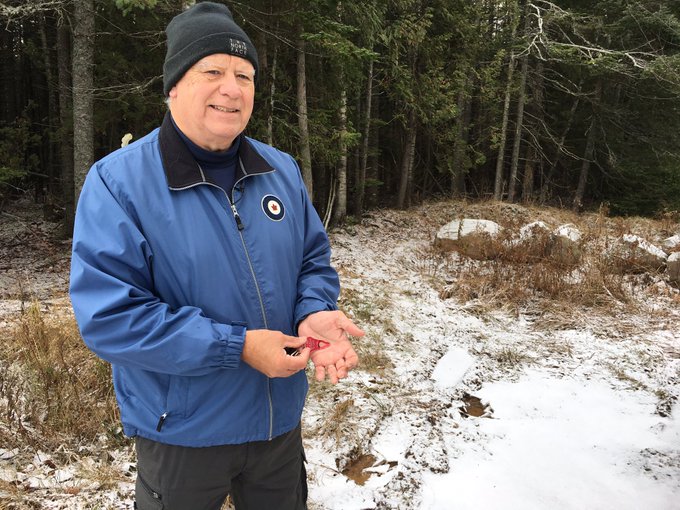
Brian McEwing of Fredericton said he was out geocaching on on a mid-November day in 2011 when he was bit by a tick that tested positive for Lyme disease.

McEwing said he was only about a hundred metres into a woodlot area in Fredericton, close to major roadways, when it happened.  Although he didn’t notice it at the time because he was wearing heavy winter clothes, he said the next morning he found that tick half-way burrowed into his left arm.

View image on TwitterView image on Twitter
 

A Fredericton man wants New Brunswickers to be sure to check themselves for ticks year-round, even if there’s snow on the ground @Global_NB

 After removing most of the tick, McEwing said he visited his doctor who prescribed him a ten-day dose of antibiotics and sent the tick away to a lab for testing.

McEwan said he did some research that suggested 30-days of antibiotics was more effective in treating Lyme and asked his doctor for more antibiotics.  He said he was fortunate to have noticed the tick early and has never displayed any signs or symptoms of the disease.

He said he was surprised to realize that ticks could survive outdoors with snow on the ground.

View image on Twitter
 

Brian McEwing says he was out for a walk in November 2011 in Fredericton when he was bit by a tick that later tested positive for Lyme disease @Global_NB

“I thought they’d die or hibernate or something, so I was quite surprised,” McEwing said.  “I was shocked.  I just thought once you had snow on the ground…that the chances of picking up a tick would be next to zero, but I found out since [then] they can be active year round.”


McEwing said that while the province has announced there are five high risk regions in New Brunswick with denser populations of black legged ticks in the province, he said ticks can be anywhere and people need to be alert.

“I don’t put a lot into this hot spot thing, I think the message really to get out to people is really that you can pick up a tick anywhere.  Whether it’s a hot spot area or not, I think they’re literally everywhere in the province.”

Dr. Lloyd said Lyme disease can also be harder to diagnose in winter  because the symptoms are always “non-specific” and can easily be confused with the flu.

“Certainly if you come down with flu symptoms in the winter, the first thing you are going to think, and probably the first thing your doctor will think is the flu.  That’s unfortunate, we have to get used to the fact that you can get ticks and there’s a risk of Lyme disease year-round,” Lloyd said.

_____________

**Comment**

Great, candid article, and frankly an example of what should be circulating about ticks and LD rather than the typical, “Ah, don’t worry, it’s just out East,” or “Ah, it’s winter, ticks aren’t active.”

Ticks will be the last living thing on planet earth.

For more on ticks in cold weather:  https://madisonarealymesupportgroup.com/2016/01/20/polar-vorticks/ (great video)

Ticks in general:  https://madisonarealymesupportgroup.com/2017/10/27/israeli-kids-get-lyme-disease-from-ticks-in-caves/

https://madisonarealymesupportgroup.com/2017/07/30/ticks-found-on-eyeball-buttocks-and-penis/

https://madisonarealymesupportgroup.com/2017/03/13/ticks-found-on-rocks/

https://madisonarealymesupportgroup.com/2017/08/17/of-birds-and-ticks/

https://madisonarealymesupportgroup.com/2017/12/03/biologists-at-sf-state-dig-into-ticks-and-ld/

https://madisonarealymesupportgroup.com/2017/10/21/mom-got-rocky-mountain-spotted-fever-while-picking-pumpkins/


Lyme Disease Laid Bare

https://www.nature.com/articles/d41586-017-08442-8 Dec. 2017

Lyme disease laid bare

James G. Logan hails a study of the controversial tick-borne condition.
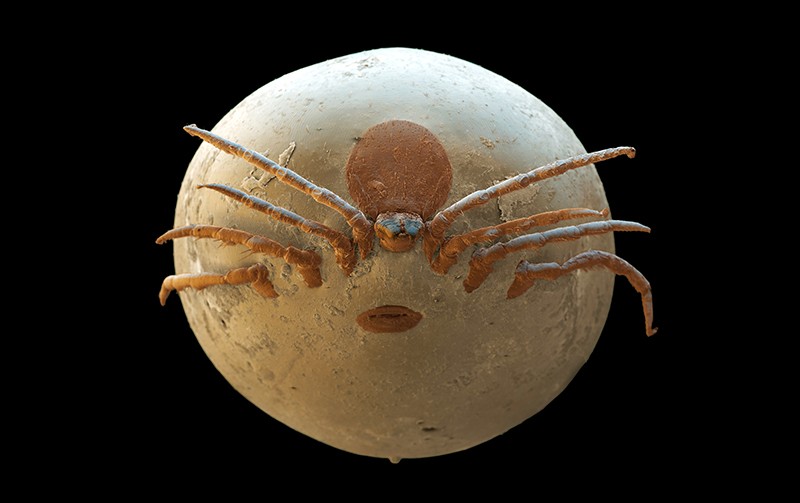
Blood filled sheep tick, SEM.

Ixodes ticks spread Lyme disease.Credit: Eye of Science/SPL.

Conquering Lyme Disease: Science Bridges the Great Divide Brian A. Fallon & Jennifer Sotsky Columbia University Press: 2017.

It occurs in more than 80 countries and is the most commonly reported vector-borne disease in the Northern Hemisphere. In the United States alone, it spawns 300,000 new cases each year. Yet Lyme disease — caused by species of Borrelia bacteria carried by ticks of the Ixodesgenus — remains one of the most poorly understood infections. It has divided researchers, clinicians and patients, and triggered intense public suspicion and confusion.

So what is science’s role in turning the corner on what some have labelled a “public health failure”? Physicians Brian Fallon and Jennifer Sotsky tackle this question in their insightful study Conquering Lyme Disease, in which they journey beyond the history, biology and symptoms of the illness. Their greatest accomplishment, by far, is delivering multiple viewpoints with minimal bias and great sensitivity: the clinician’s, the researcher’s and, particularly, the patient’s.

Although recent headlines make Lyme disease seem new, probably the first recorded case was in 1909: the Swedish dermatologist Arvid Afzelius associated a patient’s expanding rash (later named erythema migrans) with a tick bite. In the 1970s, a link was made to bacteria by rheumatologist Allen Steere; in 1981, the biologist Willy Burgdorfer discovered that the disease was caused by a type of bacterium called a spirochaete. The species complex was named Borrelia burgdorferi in his honour. But it was not until the 1990s that US cases were properly reported, through a surveillance system set up by the Centers for Disease Control and Prevention in Atlanta, Georgia.

Since that decade, the global incidence has increased and reporting has improved, as Fallon and Sotsky describe; in the United States alone, known cases have tripled since 1992. There is currently no human vaccine, and research on the disease has struggled to keep up.

The many presentations of an illness known as the “great imitator”, and its inherent complexities, are why medical communities have often failed to find common ground on diagnosis and treatment, as the authors explore. The manifestations range from no symptoms, or mild influenza-like ones, to severe complications such as inflammation in joints or the brain and persistent neurological problems.

One of the reasons Lyme is difficult to diagnose is that some non-infectious conditions, including fibromyalgia and Alzheimer’s disease, present with similar symptoms. The situation is further complicated because Ixodes ticks transmit a host of other pathogens, such as Rickettsia, other bacteria, viruses and protozoa, leading to diseases including typhus, relapsing fever, babesiosis and meningoencephalitis. Misdiagnosis is thus all too common.

Treatment is also far from straightforward. Although antibiotics can clear infection in some cases, Fallon and Sotsky describe how genetic differences in Borrelia bacteria found on different continents make treatment difficult. There are, for instance, three different species in the complex in Europe. The authors note that each can cause different symptoms in people with Lyme disease who develop neurological complications. So a treatment that works for one species of the bacterium may not work for another.

And spirochaetes can remain in the body even after courses of antibiotics (E. Hodzic et al. Antimicrob. Agents Chemother. 52, 1728–1736; 2008). Fallon and Sotsky hypothesize that they may “hide” inside human cells, for instance. A big question is whether the spirochaetes that hang on in this way can replicate and cause disease.

Whatever the mechanism, proof of the existence of persistent symptoms will pave the way for better diagnostics, treatment and care. Some patients have spent years trying to convince medical doctors that their symptoms remain after treatment. Fallon and Sotsky strikingly convey these people’s difficulties and frustrations. Clinicians, for instance, might fail to ask the right questions. People with chronic Lyme disease can feel abandoned, and even suicidal. That has led to protests and court hearings, notably in the United States. But these people, the authors argue, have played a significant part in moving understanding beyond conventional thinking, and ultimately driving research forward. Clinicians are now beginning to acknowledge both the complexity of Lyme disease and patients’ needs. Fallon and Sotsky end on a firmly positive note, reviewing avenues for new research across many disciplines, from diagnostics to vaccines and treatments. What’s particularly pressing is the need for a definitive test to detect the spirochaetes that cause this devastating disease.

 ______________

Bb Infected Ticks in Iowa

Range Expansion and Increasing Borrelia burgdorferi Infection of the Tick Ixodes scapularis (Acari: Ixodidae) in Iowa, 1990-2013.

Oliver JD, Bennett SW, Beati L, Bartholomay LC.
Journal of Medical Entomology. 2017 Nov 7;54(6):1727-1734.

https://doi.org/10.1093/jme/tjx121

Abstract

A passive surveillance program monitored ticks submitted by the public in Iowa from 1990–2013. Submitted ticks were identified to species and life stage, and Ixodes scapularis Say nymphs and adults were tested for the presence of Borrelia burgdorferi.

An average of 2.6 of Iowa’s 99 counties submitted first reports of I. scapularis per year over the surveillance period, indicating expansion of this tick species across the state. The proportion of vector ticks infected by B. burgdorferi increased over time between 1998 and 2013.

In 2013, 23.5% of nymphal and adult I. scapularis were infected with B. burgdorferi, the highest proportion of any year. Active surveillance was performed at selected sites from 2007–2009. Ixodes scapularis nymphs collected at these sites were tested for the presence of B. burgdorferi, Anaplasma phagocytophilum, and spotted fever group Rickettsia spp. (likely representing Rickettsia buchneri).

Nymphs tested were 17.3% positive for B. burgdorferi, 28.9% for A. phagocytophilum, and 67.3% for Rickettsia spp. The results of these surveillance programs indicate an increasing risk of disease transmission by I. scapularis in Iowa.

______________

For more:  https://madisonarealymesupportgroup.com/2017/08/17/of-birds-and-ticks/

https://madisonarealymesupportgroup.com/2017/12/03/biologists-at-sf-state-dig-into-ticks-and-ld/

https://madisonarealymesupportgroup.com/2017/10/06/remembering-dr-masters-the-rebel-for-lyme-patients-who-took-on-the-cdc-single-handedly/  “Go here: http://steveclarknd.com/wp-content/uploads/2013/11/The-Confounding-Debate-Over-Lyme-Disease-in-the-South-DiscoverMagazine.com_.pdf for a great article on how Andrew Spielman’s tick maps ruled Lyme Land like the iron curtain, and frankly still do, dictating where Lyme is and is not. https://madisonarealymesupportgroup.com/2017/08/24/canine-maps-better-than-the-cdcs-in-predicting-lyme-disease/ (nothing’s changed)”