Archive for the ‘Ticks’ Category

Forget Ebola, Sars and Zika: Ticks are the Next Global Health Threat

https://www.theguardian.com/science/blog/2018/jan/25/forget-ebola-sars-and-zika-ticks-are-the-next-global-health-threat

Forget Ebola, Sars and Zika: ticks are the next global health threat

Ticks carry a wide array of pathogens – and environmental changes mean they are spreading
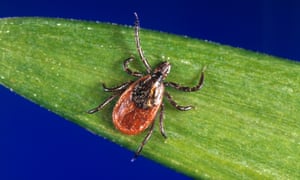
A blacklegged tick - also known as a deer tick.

Since the beginning of our species we have been at war. It’s a continuous, neverending fight against the smallest of adversaries: armies of pathogens and parasites. As we have developed new ways to survive and stop them, they have evolved ever more complex and ingenious methods to thwart our efforts.

Humans have faced numerous attempts to challenge our dominance on planet Earth and from the Black Death to the Spanish flu, we have weathered them all. However, since the start of the 21st century, with its trend towards global interconnectedness, these onslaughts are ever-increasing. In the past 17 years we have battled Sars, the Ebola virus, Mers, and more recently the mysterious mosquito-borne Zika virus. These diseases seeming to appear from nowhere and rapidly ravage our populations. One commonality is that they almost always originate in animals before jumping across to people, and few parasites are as good at jumping between animals and people as the tick.

Ticks could be best described as the used syringes of the natural world due to their promiscuous feeding habits. Most ticks go through three stages in their lives and feed on a different host at each stage, whilst simultaneously collecting hitchhiking microbes in their blood meals. Ticks also have one of the widest distributions of any vector on Earth – they can be found on every continent, including frigid Antarctica. This combination of ubiquity and a bad habit for accumulating pathogenic microbes make ticks some of the most dangerous vectors on the planet.

So why ticks? And why now?

Partly, it’s because ticks have been understudied for so long that only recently have we begun to realise just how much they affect our health. It took until 1975 for the infamous Lyme disease even to be formally described, and today the list of microbes found within ticks grows ever larger every year as numerous new species are discovered.
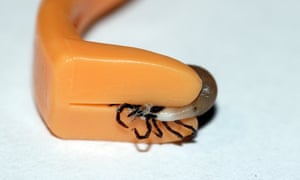
An engorged tick removed from a host.
An engorged tick removed from a host. Photograph: Astrid860/Getty Images/iStockphoto

Changing ecosystems are also forcing ticks into closer contact with humans. Perhaps the most immediate changes are being driven by land clearing, which is forcing wildlife into closer contact with humans; with wildlife come ticks and the diseases they carry. Climate change has also been implicated: as the climate gets warmer, some ticks are expanding their ranges into places where cool winter temperatures previously limited their distribution. Geographical boundaries are also being eroded as rapid transport links environments which were previously isolated from one another. This presents easy opportunity for ticks to cross borders and spread to new habitats they may not have previously occupied.

In short, our manipulation of the environment has set the stage for a tick-driven health crisis.

Ticks can carry an extremely wide array of human pathogens, including bacteria, viruses, and protozoa. Within the long list of human ailments caused by ticks, several dangerous diseases stand out.

https://interactive.guim.co.uk/uploader/embed/2017/08/ticks_lyme_disease/giv-3902DdVd63hb2z2v/

While the recognition of Lyme disease has led to a greater study of the bacteria which cause it and more frequent testing for patients, it has been a double-edged sword, as its notoriety has overshadowed equally important diseases like tick-borne rickettsiosis (TBR). TBR is caused by a number of different bacteria distributed across the globe. Unfortunately, TBR often presents with signs and symptoms similar to Lyme disease, such as rashes, joint and muscle pain, and fatigue. Although deaths are rare when TBR is treated with antibiotics like doxycycline, when the disease is incorrectly diagnosed or adequate medical infrastructure is lacking, mortalities can still occur.

Babesiosis is an emerging tick-borne disease caused by a protozoan called Babesia, a species related to the microbe which causes malaria. The disease is rarely tested for by doctors and the global levels of human infection are unknown, although some researchers believe that they may be much higher than present rates of diagnosis indicate. Infections can be highly variable, with about a quarter of infected adults showing no signs of the disease, while others will die from the infection. In truth the disease is still poorly understood in humans, which is compounded by the fact that several species of Babesia cause the disease and the signs and symptoms can be wide-ranging and often include fever, fatigue, anaemia, and nausea – all common features of other illnesses.
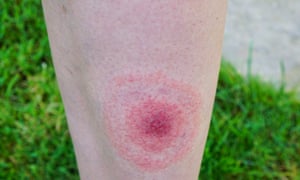
The distinctive “bullseye” marking caused by a bite from a deer tick.
The distinctive “bullseye” marking caused by a bite from a deer tick. Photograph: anakopa/Getty Images/iStockphoto

Crimean-Congo haemorrhagic fever (CCHF) is perhaps the most terrifying disease spread by ticks, as there are no treatments available, and mortality rates can be as high as 40% in infected humans. To put it into perspective, that mortality rate is similar to untreated cases of Ebola or the bubonic plague. The World Health Organisation views CCHF virus as having a high chance of causing human disease epidemics and has accordingly directed considerable funding towards finding a treatment, although to date none have been developed. The wide distribution of tick vectors capable of spreading the disease coupled with the ability of common domestic animals such as sheep and cattle to maintain the CCHF virus in their blood at high levels means the potential for CCHF to expand into new regions like Europe is highly probable.

While only discovered in 2009, SFTS virus (severe fever with thrombocytopenia syndrome) has sparked widespread fear through much of Asia, especially in Japan where 57 people have died of the disease since 2013. Signs of the disease can range in severity from relatively mild, like fever and diarrhoea, to severe, which can include multiple organ failure. The fact that the epidemiology of the disease is so poorly known makes predicting and controlling its spread difficult. It is also known to be carried by at least two cosmopolitan tick species which are spread throughout the world from the UK, to the US, and even Australia. That might sounds bad enough, but things are even worse: although the disease typically gets to humans via a tick, from there it can spread to other humans or their pets and back again into ticks who feed on infected hosts.

Ticks are ubiquitous, dangerous, and are coming into ever greater contact with us. We must recognise that the next public health crisis may come from our backyards rather than a remote equatorial jungle in Africa or Asia.

_____________

**Comment**

I’m thankful the article points out that other pathogens are involved.  For those with Lyme as well as these other pathogens (which is common), they typically have more severe cases and require longer and more extensive treatment.  

Ticks carry many viruses, and tick bites as well as vaccines can ignite dormant viruses in the body:  https://madisonarealymesupportgroup.com/2017/12/02/scottish-doctor-gives-insight-on-lyme-msids/

https://madisonarealymesupportgroup.com/2017/11/04/24514/  Many Lyme/MSIDS patients have reactivated Epstein Bar Virus (EBV).

https://madisonarealymesupportgroup.com/2018/01/16/a-strange-itch-trouble-breathing-then-anaphylactic-shock/

The Cabal still denies ticks transmit Bart; however, many feel otherwise.  This is why all the research in the world put out by the Cabal will never touch Bart.  It doesn’t fit the narrative.  The fly in the ointment is similar to sexual transmission for Lyme, the organisms have been found but there isn’t conclusive proof of transmission.  Many of these pathogens are fastidious and hard to study in a lab.  All case studies are ignored.

I’m always fascinated that Bartonella and Mycoplasma are rarely mentioned in regards to coinfections by mainstream news – as according to experts Dr. Nicholson and Dr. Breitshwerdt, they are probably the TOP coinfections with Lyme.  

More on Bartonella:  

https://www.northcarolinahealthnews.org/2013/12/05/bartonella-is-everywhere-so-why-dont-we-know-more-about-it/  Bartonella is a bacteria transmitted by fleas, ticks, animals, even spiders, but few people know about it.

https://madisonarealymesupportgroup.com/2016/01/03/bartonella-treatment/

https://madisonarealymesupportgroup.com/2017/11/03/first-report-of-bartonella-quintana-immune-reconstitution-inflammatory-syndrome-complicated-by-jarisch-herxheimer-reaction/

https://madisonarealymesupportgroup.com/2017/10/23/opthalmic-manifestations-of-bartonella-infection/

More on Myco:  https://madisonarealymesupportgroup.com/2016/02/07/mycoplasma-treatment/

https://madisonarealymesupportgroup.com/2015/08/12/connecting-dots-mycoplasma/

https://wwwnc.cdc.gov/eid/article/3/1/97-0103_article  This 1997 article even implicates Myco with Gulf War Syndrome, despite the CDC denying, denying, denying it.

https://madisonarealymesupportgroup.com/2017/08/26/interstitial-cystitis-and-lyme-disease/


PGA Golfer’s Wife Now Has Lyme

https://www.pgatour.com/news/2018/01/04/jimmy-walker-wife-has-lyme-disease.html

Walker’s wife Erin also has Lyme Disease

January 05, 2018

 Jimmy Walker celebrates his 2016 PGA Championship with his wife Erin and son Beckett. (Drew Hallowell/Getty Images)Jimmy Walker celebrates his 2016 PGA Championship with his wife Erin and son Beckett. (Drew Hallowell/Getty Images)


KAPALUA, Hawaii – Jimmy Walker spent most of last season battling the effects of Lyme disease and now his wife Erin must also fight the good fight.

Erin revealed in her blog on Thursday that after ironically spending the good part of nine months trying to raise awareness for the disease that had her six-time PGA TOUR winning husband wrecked with fatigue – she had also been diagnosed.  

In an in-depth essay about Jimmy’s problems throughout 2017 Erin said she was diagnosed on December 15 last year and is now undergoing treatment. She is hopeful the early detection will ensure a quick recovery, unlike her husband.

Since winning the 2016 PGA Championship Jimmy has struggled with his game, mainly due to the effects of the disease.

Neither know how they contracted the illness which is non-transferable from human-to-human but comes from tick bites.  (Please read my comment below)

They believe Jimmy may have caught it on a hunting trip while Erin could have picked up a bite walking a golf course – but neither saw a tick or the associated bull’s-eye rash that follows a bite.

Erin revealed her husband went through bouts of depression after getting flu-like sickness several times throughout the year and also began to have “brain fog.”

He actually tested positive for Lyme, Mono, two different types of pneumonia, West Nile Virus and a virus common to children called CMV.

“He had good days, and bad days. Good hours and bad hours. His mood continued to decline and in hindsight he has said he was possibly depressed. We still aren’t sure if the Lyme caused the depression and mood issues, or if it was the fact that he felt awful all of the time,” Erin wrote.

“Jimmy had no energy to practice, so his golf suffered. He didn’t have energy to play with the kids or help in normal activities around the house. Getting up to go to the golf course for his tournament rounds was the only energy he could muster and most days he felt like sitting down on the tee boxes in-between holes.”

“One of the biggest symptoms he was experiencing was brain fog. From difficulty to remembering simple tasks such as, leaving tickets for friends and family, to putting on a pot of water to boil and then leaving the house, he was experiencing these types of symptoms on a daily basis.”

Jimmy is hoping to resume his PGA TOUR season later this month while Erin is hoping to continue her competitive horseback riding despite the diagnosis and re-evaluate the situation after a month of treatment.

You can read her full blog here: https://tourwifetravels.com/lyme-disease/

 ______________
**Comment**
While this is a sad story, we need to learn from it.  The CDC states emphatically that Lyme is NOT a STD, yet so many couples are infected.
There is pitiful research on the topic – which is pretty sad when you consider Lyme to be the top vector borne disease and the sheer numbers of folks infected each and every year.
And while I appreciate all the tick research being done, nobody is truly digging into the STD potential as well as other modes of transmission such as bodily fluids.
Willy Burgdorfer was infected in a lab with infected rabbit urine.  Urine is a common way dogs are infected with leptospirosis, a spirochete similar to Bb in both symptoms and treatment:  http://buhnerhealinglyme.com/co-infections/leptospirosis/
Research led by the Cabal has remained steadfast in its avoidance of such issues.  Instead we are learning how ticks smell us  https://madisonarealymesupportgroup.com/2018/01/19/how-ticks-find-you/, how ticks enjoy certain invasive shrubs  https://madisonarealymesupportgroup.com/2018/01/20/manage-barberry-lower-ticks/, the deer tick is spreading and is a health concern (duh)  https://madisonarealymesupportgroup.com/2018/01/21/blacklegged-tick-increasing-public-health-concern/, and that tick saliva may make a good medical adhesive:  https://madisonarealymesupportgroup.com/2018/01/20/potential-medical-adhesive-tick-saliva/
Again, don’t get me wrong, all this is quite interesting, but shouldn’t we be investigating issues like transmission?  Not only modes and means but ditching the myth that it takes 24-48 hours to contract it when there are cases of the inability to walk in about 6-8 hours?  https://madisonarealymesupportgroup.com/2016/12/07/igenex-presentation/
We also need to study the transmission of all the coinfections that typically come with Bb:  https://madisonarealymesupportgroup.com/2017/07/01/one-tick-bite-could-put-you-at-risk-for-at-least-6-different-diseases/
Call me nuts, but inquiring minds want to know about the STD issue as that will affect our choices.
All I can tell you from personal experience is ALL my symptoms were in the pelvis initially.  I had NO idea of the probability of it being a STD so didn’t even consider it.  I’m not alone.  This is how people are thinking due to the assurance by groups like the CDC/IDSA/NIH that we are safe.
Now I know better.  And you do too.
My husband and I meet with infected couples upon request as there is a lot to navigate in these shark infested waters.  You think being infected is bad?  Try both partners once.
Talk about crazyville!

New Powassan Test – 89% Sensitive

Development and Validation of a Serologic Test Panel for Detection of Powassan Virus Infection in U.S. Patients Residing in Regions Where Lyme
Disease Is Endemic

Thomm AM, Schotthoefer AM, Dupuis AP II, Kramer LD, Frost HM, Fritsche
TR, Harrington YA, Knox KK, Kehl SC.
/mSphere/. 2018 Jan 10;3(1). pii: e00467-17. eCollection 2018 Jan-Feb.

https://doi.org/10.1128/mSphere.00467-17

Abstract

Powassan virus (POWV) is an emerging tick-borne arbovirus presenting a
public health threat in North America. POWV lineage II, also known as
deer tick virus, is the strain of the virus most frequently found in
/Ixodes scapularis/ ticks and is implicated in most cases of POWV
encephalitis in the United States. Currently, no commercial tests are
available to detect POWV exposure in tick-borne disease (TBD) patients.

We describe here the development and analytical validation of a
serologic test panel to detect POWV infections. The panel uses an
indirect enzyme immunoassay (EIA) to screen. EIA-positive samples reflex
to a laboratory-developed, POWV-specific immunofluorescence assay (IFA).

The analytical sensitivity of the test panel was 89%, and the limit of
detection was a plaque reduction neutralization test (PRNT) titer of
1:20. The analytical specificity was 100% for the IgM assay and 65% for
the IgG assay when heterologous-flavivirus-positive samples were tested.

On samples collected from regions where Lyme disease is endemic,
seroprevalence for POWV in TBD samples was 9.4% (10 of 106) versus 2%
when tested with non-TBD samples (2 of 100, /P/ = 0.034). No evidence of
POWV infection was seen in samples collected from a region where Lyme
disease was not endemic (0 of 22).

This test panel provides a sensitive and specific platform for detecting
a serologic response to POWV early in the course of infection when
neutralizing antibodies may not be detectable. Combined with clinical
history, the panel is an effective tool for identifying acute POWV
infection.

*Importance*
Approximately 100 cases of POWV disease were reported in the United
States over the past 10 years. Most cases have occurred in the Northeast
(52) and Great Lakes (45) regions
(https://www.cdc.gov/powassan/statistics.html). The prevalence of POWV
in ticks and mammals is increasing, and POWV poses an increasing threat
in a greater geographical range.

In areas of the Northeast and Midwest where Lyme disease is endemic,
POWV testing is recommended for patients with a recent tick bite,
patients with Lyme disease who have been treated with antibiotics, or
patients with a tick exposure who have tested negative for Lyme disease
or other tick-borne illnesses and have persistent symptoms consistent
with posttreatment Lyme disease. Testing could also benefit patients
with tick exposure and unexplained neurologic symptoms and chronic
fatigue syndrome (CFS) patients with known tick exposure.

Until now, diagnostic testing for Powassan virus has not been
commercially available and has been limited to patients presenting with
severe, neurologic complications. The lack of routine testing for
Powassan virus in patients with suspected tick-borne disease means that
little information is available regarding the overall prevalence of the
virus and the full spectrum of clinical symptoms associated with
infection. As /Ixodes scapularis/ is the tick vector for Powassan virus
and multiple other tick-borne pathogens, including the Lyme disease
bacterium, /Borrelia burgdorferi/, the clinical presentations and
long-term outcomes of Powassan virus infection and concurrent infection
with other tick-borne disease pathogens remain unknown.

_______________

More on Powassan:  https://madisonarealymesupportgroup.com/2017/06/28/powassan-can-kill/

https://madisonarealymesupportgroup.com/2017/05/05/powassan-another-reason-to-avoid-ticks/

https://madisonarealymesupportgroup.com/2017/05/18/powassan-and-bb-infection-in-wisconsin-and-u-s-tick-populations/

https://madisonarealymesupportgroup.com/2017/04/29/more-powassan-in-maine/


Blacklegged Tick – Increasing Public Health Concern

  • The blacklegged tick, Ixodes scapularis, is becoming more widespread in the eastern United States.
  • The number of I. scapularis-borne microorganisms recognized to be pathogenic in humans is increasing.
  • The incidence of I. scapularis-borne disease cases continues to increase.

The geographic distribution of human cases of I. scapularis-borne diseases is expanding.

There is a critical need for control approaches with proven capacity to reverse the growing public health problem imposed by I. scapularis.

In the United States, the blacklegged tick, Ixodes scapularis, is a vector of seven human pathogens, including those causing Lyme disease, anaplasmosis, babesiosis, Borrelia miyamotoi disease, Powassan virus disease, and ehrlichiosis associated with Ehrlichia muris eauclarensis.

In addition to an accelerated rate of discovery of I. scapularis-borne pathogens over the past two decades, the geographic range of the tick, and incidence and range of I. scapularis-borne disease cases, have increased. Despite knowledge of when and where humans are most at risk of exposure to infected ticks, control of I. scapularis-borne diseases remains a challenge. Human vaccines are not available, and we lack solid evidence for other prevention and control methods to reduce human disease. The way forward is discussed.

______________

**Comment**

Hopefully this memo is getting out to practitioners so that long-gone are the days where a patient is told, “It can’t be Lyme because there isn’t any Lyme here.”  

https://madisonarealymesupportgroup.com/2016/09/24/arkansas-kids-denied-lyme-treatment/

https://madisonarealymesupportgroup.com/2017/10/24/no-lyme-in-oklahoma-yeah-right/

https://madisonarealymesupportgroup.com/2016/11/03/ld-not-in-australia-here-we-go-again/

Feel free to copy this article and show it to health practitioners.  They NEED to know what we all have known for decades.

See the blue link in the beginning of the article for graphs and images.  For some reason I wasn’t able to upload them here.  Again, all data needs to be viewed with skepticism for a myriad of reasons, the main one being that everything regarding TBI’s is underreported and even the CDC acknowledges this – which demonstrates how severe the problem truly is.

https://madisonarealymesupportgroup.com/2017/08/24/canine-maps-better-than-the-cdcs-in-predicting-lyme-disease/

https://madisonarealymesupportgroup.com/2017/10/12/the-cdc-needs-a-good-dictionary/

Promising research testing for ALL bacteria in ticks:  https://madisonarealymesupportgroup.com/2018/01/15/developing-new-tests-to-identify-all-bacteria-in-ticks-drexel-university/

We need to know:

Bb Persistence, if it’s a STD, it can be spread congenitally, via breast milk, urine and body fluids, other possible vectors such as mosquitoes and spiders, how to kill these suckers without killing ourselves and pets, and many other issues that have either been ignored completely or the science is so old is has dust on it.


Manage Barberry – Lower Ticks

Long-Term Effects of Berberis thunbergii(Ranunculales: Berberidaceae) Management on Ixodes scapularis (Acari: Ixodidae) Abundance and Borrelia burgdorferi (Spirochaetales: Spirochaetaceae) Prevalence in Connecticut, USA

Environmental Entomology, Volume 46, Issue 6, 8 December 2017, Pages 1329–1338, https://doi.org/10.1093/ee/nvx146

Abstract

Japanese barberry (Berberis thunbergii de Candolle; Ranunculales: Berberidaceae) is an exotic invasive shrub that escaped cultivation in the United States and is now permanently established in many eastern and midwestern states. This study examined the long-term impacts of Japanese barberry management on blacklegged tick (Ixodes scapularis Say; Acari: Ixodidae) abundances and associated prevalence of Borrelia burgdorferi (Johnson, Schmid, Hyde, Steigerwalt, and Brenner; Spirochaetales: Spirochaetaceae), the etiologic agent of Lyme disease.

At six locations across Connecticut, adult I. scapularis were sampled for up to 10 yr. At each location, we sampled an area where barberry infestations were unmanipulated, adjacent areas where barberry was virtually nonexistent, and areas where barberry was managed utilizing a variety of techniques.

Barberry management reduced B. burgdorferi-infected adult I. scapularis (BBIAIS) abundances (191/ha ± 64 SE) over 6 yr to statistically indifferent from that of no barberry areas (140/ha ± 47 SE; P = 0.080) and significantly less than intact barberry stands (458/ha ± 80 SE; P = 0.026). Over 9 yr, BBIAIS abundances in managed barberry remained lower than intact barberry stands (P = 0.037), but increased to be significantly greater than no barberry areas (P = 0.007) as cover increased over time.

Longer-term data further document that Japanese barberry infestations are favorable habitat for I. scapularis. Control of Japanese barberry and other invasives should be at least on a 5-yr rotation to maintain low levels of invasive cover and eliminate humidity refugia to expose juvenile I. scapularis to more hostile environmental conditions in the interest of public health.

For more on the Japanese Barberry:  https://madisonarealymesupportgroup.com/2015/09/30/barberry-friend-or-foe/

https://madisonarealymesupportgroup.com/2017/10/27/lyme-wars-part-4/

https://madisonarealymesupportgroup.com/2018/01/18/presentation-on-wisconsin-tick-control-dr-paskewitz/  Work by others has shown invasives such as honeysuckle (lone star), Japanese Barberry (I. scapulars), and unpublished data on Buckthorn (I. scapulars) are related to tick abundance.