Archive for the ‘Ticks’ Category

Ticks From U.S. Cats: Patterns of Infestation & Infection With Pathogens

https://www.sciencedirect.com/science/article/pii/S0304401718301596?via%3Dihub

Ticks from cats in the United States: patterns of infestation and infection with pathogens

Under a Creative Commons license
open access

Highlights

Tick infestations were documented on 332 cats from 18 states in the United States.

Adult and immature stages of IxodesAmblyomma, and Dermacentor were recovered.

Molecular assays documented infection with at least one pathogen in 17.1% of ticks.

One in 5 cats with ticks spent ≤30% time outdoors; 10 were reportedly indoor only.

Results show cats at risk of tick infestation and exposure to tick-borne pathogens.

Abstract

Ticks are an important but under recognized parasitic threat to cats in many areas of the United States. To characterize the species and stages of ticks most commonly recovered from cats and determine the prevalence of disease agents in the ticks, we conducted a survey of ticks removed from cats at veterinary practices in 18 states from April 2016 – June 2017.

A total of 796 ticks were submitted from 332 cats from 41 different veterinary practices. A single tick was submitted from the majority of cats, with a mean infestation intensity of 2.4 (range 1–46). The most common tick was Ixodes scapularis, accounting for 422/796 (53.0%) ticks submitted, followed by Amblyomma americanum (224/796; 28.1%) and Dermacentor variabilis (131/796; 16.5%); a few I. pacificusI. banksiD. occidentalisA. maculatumRhipicephalus sanguineus, and Otobius megnini were also submitted.

A majority of ticks were adults (593/796; 74.5%); females predominated in all adult tick submissions including I. scapularis (277/327; 84.7% female), A. americanum(66/128; 51.6% female), and D. variabilis (75/126; 59.5% female). Immature ticks included 186 nymphs and 17 larvae and were primarily I. scapularis and A. americanum.

Adult I. scapularis were most reported to be attached to the dorsal head and neck; A. americanum to the abdomen and perianal region; and D. variabilis to the back and ear. Ticks were collected in every month; the largest number of submissions were in May and June (42.5% of ticks) and October and November (35.9% of ticks). Adults of I. scapularis were most commonly submitted October through DecemberA. americanum March through June, and D. variabilis May through July.

Cats with ticks were predominantly male (58.8%) and altered (76.2%), and most reportedly spent >30% of time outdoors, although 64/294 (21.8%) for which lifestyle estimates were provided were reported to live primarily (≤30% of time outside; n = 54) or entirely (100%; n = 10) indoors.

Assay of ticks removed from cats revealed I. scapularis were infected with Borrelia burgdorferi (25.7%) and Anaplasma phagocytophilum(4.4%); A. americanum were infected with Ehrlichia chaffeensis (1.3%); and D. variabilis were infected with spotted fever group Rickettsia spp. (3.1%). No ticks in this study tested positive for Cytauxzoon felis.

Pet cats, including those that live primarily indoors, are at risk of tick infestation, potentially exposed to tick-borne disease agents, and would benefit from routine tick control.

_______________

**Comment**

Some interesting points:

  1. Ticks were found on cats year-round
  2. The majority of ticks were ADULTS
  3. This study points out we need to essentially throw out the idea you can only get a tick bite in the spring and fall.  It also points out that adult ticks are to be taken just as seriously as nymphs.
  4. According to the study, molecular assays were used and the following pathogens found.  It says nothing of Bartonella, which is unfortunate.  We really need to determine why so many humans are infected with it.

Table 4. Pathogens detected in adult ticks recovered from cats.

Tick Pathogen % positive (No. positive/No. tested)
Ixodes scapularis Anaplasma phagocytophilum 4.4% (12/272)
Borrelia burgdorferi 25.7% (70/272)
Amblyomma americanum Cytauxzoon felis 0% (0/121)
Ehrlichia chaffeensis 1.7% (2/121)
Ehrlichia ewingii 0% (0/121)
Dermacentor variabilis Cytauxzoon felis 0% (0/123)
Rickettsia spp. 3.1% (4/123)

Lyme Disease Has Arrived. Why Hasn’t a Reliable Treatment?

https://www.theglobeandmail.com/opinion/article-lyme-disease-has-arrived-why-hasnt-a-reliable-treatment/

Until we know better how to diagnose and cure, we must do battle with ticks.  GETTY IMAGES/GETTY IMAGES

Mary Beth Pfeiffer, an investigative journalist from New York State, is author of Lyme: The First Epidemic of Climate Change.

Like soldiers in an advancing front, blacklegged ticks are today marching across Canada armed chiefly, but not solely, with a pathogen that indiscriminately sickens and disables: Lyme disease.

In 1990, ticks that carried the infection were found only in Long Point in far southern Ontario. But hitched to birds and enabled by a warmer climate, these blood-sucking arachnids have found a new and rich frontier across vast tracts of the country. They are in Ontario’s provincial parks, in Quebec’s Montérégie region, where temperatures have risen 0.8 degrees Celsius since 1970, along Manitoba’s Lake of the Woods, and in many parts of Nova Scotia, New Brunswick and British Columbia.

Climate change did not cause this scourge but it is surely abetting it. In Canada, white-footed mice that infect baby ticks when they take their first blood meal are also moving north, further setting the stage for the disease to grow.


The upshot: Canada is well into an epidemic that has exploded in the United States since the disease emerged in a small coastal town in Connecticut in the late 1970s. Today, these ticks reside in half of the continental United States’ 3,000 counties, twice the number of two decades ago. Evidence suggests that “case numbers will increase rapidly in the coming years in Canada as I. scapularis” – the blacklegged tick – “invades the most heavily populated southern parts of Canada,” according to a 2015 article in the journal Applied and Environmental Microbiology.

Of paramount concern amid this invasion is that the standard treatment for Lyme disease used in Canada and other countries – a short course of antibiotics – leaves a significant share of patients ill for weeks, months and sometimes years. This treatment is based on care guidelines developed in the United States that new research suggests are flawed. Until the medical establishment stops denying a problem exists, more people will suffer.

In the United States, authorities estimate that reported Lyme disease cases – 36,000 in 2016 – are one-10th of the actual number. Canada’s official disease count, which grew nearly sevenfold from 144 in 2009 to 992 in 2016, is also likely far below the real number. In a recent visit to Nova Scotia, the hardest-hit province, I frequently encountered people in restaurants and shops who shared stories of Lyme disease, suggesting the disease is more common than the 326 cases reported in 2016.

At this crucial juncture, Canadians would do well to learn from the mistakes of the U.S. model of Lyme disease care, which has cost patients dearly in delayed diagnoses and inadequate treatments. Since 2000, when the first treatment guidelines were issued in the United States, Lyme disease has been framed as an infection that is straightforward to both diagnose and treat. It is not.

Science has repeatedly found that the standard Lyme test fails to diagnose many infections – especially early in the disease, but later as well – leading to illness that is more difficult to treat. Moreover, some 10 per cent to 20 per cent of treated patients go on to suffer what American medicine calls “posttreatment Lyme disease syndrome,” a condition called “severe” in a recent Johns Hopkins University study. Symptoms may include muscle, bone and joint pain, memory and sleep disorders, fatigue, depression and neurological problems including numbness and tingling in hands and feet.

Beyond its early rash and flu-like symptoms, Lyme disease has also been linked to problems of balance, sight and cognition, facial palsy, meningitis, arthritic symptoms and, when the pathogen invades heart tissue, Lyme carditis.

In Canada, Britain, the Netherlands, Sweden, Germany and many other countries with Lyme disease, the U.S. guidelines have set the standard for – have essentially dictated – management of this epidemic. Yet, at least 20 scientific publications since 2012 have reported that the way Lyme disease is treated, with 10 to 28 days of antibiotics, may not be working. The pathogen survived in infected monkeys and mice and in test tubes when exposed to an array of antibiotics used in people.

Mainstream medicine has been slow to acknowledge and accept these new findings, clinging to dogma that a bottle of antibiotics cures. Extended antibiotic courses don’t always resolve advanced cases of Lyme disease. The problem is that medicine rejects the notion that Lyme lingers, so has done little to find treatments that work.

In research for a book on the global spread of ticks, I met patients who travelled across oceans and borders in search of care for intractable Lyme disease. I spoke to a woman from Thunder Bay, Ont., who drove 14 hours to bring her son to a doctor in New York State. Others included a British man who flew to California, a young Swedish woman who went to England and a Dutch woman who went to Belgium.

These are the patients whose tests failed to diagnose them; who did not get or see the variable reddish rash that signals infection; or who were inadequately treated. To be sure, a significant share of early treated patients recover. These are the patients around whom the dogma of Lyme treatment has been fashioned.

But thousands of other patients in hundreds of Lyme disease support groups around the world are testament to the failure of a faulty model of care. Canada should listen to them.

Medicine does not have a handle on this epidemic. What is controlling it now, to a far greater extent, are the environmental forces wrought by human influence over the planet.

As temperatures rise, ticks have moved poleward – into Scandinavia, Russia, China, even Siberia and Australia. There and here, they lurk where children play and outdoor laborers work and hikers brush against the edges of trails.


Until we know better how to diagnose and cure, we must do battle with ticks. Be vigilant to check our children after spending time outdoors; avoid tall grasses and leaf litter, and even consider chemical repellents and clothing treatments. We must recognize our role in enabling an eight-legged menace and a single-celled pathogen that for eons existed quietly in nature but that today wreak havoc for many.

_______________

**Comment**

A few things to ponder:

  • Ticks have been all over the place for decades but authorities have refused to believe & recognize it.  Sick patients & the doctors who dare to treat them are the proof in the pudding, but these sick people have repeatedly been denied diagnosis and treatment by mainstream medicine based on ancient, faulty testing and faulty maps supposedly showing where ticks are.

Ticks are all over the place:  https://madisonarealymesupportgroup.com/2017/10/06/remembering-dr-masters-the-rebel-for-lyme-patients-who-took-on-the-cdc-single-handedly/  This expose’ by Pam Weintraub shows Dr. Masters has been screaming bloody murder about a Lyme-like illness in the South for decades.  Crickets…..

https://madisonarealymesupportgroup.com/2016/09/24/arkansas-kids-denied-lyme-treatment/  It’s in Arkansas….crickets.

https://madisonarealymesupportgroup.com/2016/11/03/ld-not-in-australia-here-we-go-again/  A Lyme-like illness is in Australia……crickets.

https://madisonarealymesupportgroup.com/2018/02/06/lyme-in-the-southern-hemisphere-sexual-transmission/  It’s clearly in the Southern Hemisphere…..crickets.

As you can clearly see, this is about WAY MORE than testing and treatment.  It’s a collective disgrace that makes Pandora’s Box look like a cookie jar.

Time to roll up the sleeves and get to work because there’s a lot to do.

Image

Lyme & Other TBI’s – 3rd Rocky Mountain Forum – May 19, 2018

SaveTheDate2018

Rheumatological Presentation of Bartonella Koehlerae & Henselae: A Case Report – Chiropractors Please Read!

https://journals.lww.com/mdjournal/Fulltext/2018/04270/Rheumatological_presentation_of_Bartonella.32.aspx

Rheumatological presentation of Bartonella koehlerae and Bartonella henselae bacteremias: A case report

Mozayeni, Bobak, Robert, MDa; Maggi, Ricardo, Guillermo, PhDb; Bradley, Julie, Meredith, BSb; Breitschwerdt, Edward, Bealmear, DVMb,*

Medicine: April 2018 – Volume 97 – Issue 17 – p e0465
doi: 10.1097/MD.0000000000010465
Research Article: Clinical Case Report

Abstract

Introduction: Systemic Bartonella spp. infections are being increasingly reported in association with complex medical presentations. Individuals with frequent arthropod exposures or animal contact appear to be at risk for acquiring long standing infections with Bartonella spp.

Case report: This case report describes infections with Bartonella koehlerae and Bartonella henselae in a female veterinarian whose symptoms were predominantly rheumatologic in nature. Infection was confirmed by serology, polymerase chain reaction (PCR), enrichment blood culture, and DNA sequencing of amplified B koehlerae and B henselae DNA. Long-term medical management with antibiotics was required to achieve elimination of these infections and was accompanied by resolution of the patient’s symptoms. Interestingly, the patient experienced substantial improvement in the acquired joint hypermobility mimicking Ehlers–Danlos Syndrome (EDS) type III.

Conclusion: To facilitate early and directed medical interventions, systemic bartonellosis should potentially be considered as a differential diagnosis in patients with incalcitrant rheumatological symptoms and frequent arthropod exposures or extensive animal contact.

____________

**Comment**

Bartonella isn’t even on most GP’s radars regarding tick borne illness, and in fact many deny ticks can even transmit it, yet here we see that those with arthropod exposure and/or animal contact need to consider it.  Isn’t that just about everyone under the sun?

You need to know this for yourself, friends and family.  Educate the doctors!

This poor female veterinarian was put on clindamycin & rifampin but had to discontinue after becoming pregnant.  She had a thousand symptoms:  axillary lymphadenopathy from cat scratch disease (CSD) at 12 years of age, a tibial sesamoid bone fracture, plantar fasciitis, generalized muscle/joint pain, muscle weakness, headaches, tingling, and fatigue, cervical lymph node enlargement, extremity edema, ligamentous laxity, tenosynovitis, shoulder and elbow subluxations, elbow joint crepitus, progressively worsening joint hypermobility (Beighton score 7/9), multiple joint subluxations daily, and breast cysts, meeting criteria for benign classification.

Please note the joint popping with each articulation and continual joint subluxation issue.  

Chiropractors need to be told about this.  Please educate!  Send them this article.

I too had this bizarre popping of the joints with a lot of instability in the knees.  Treatment completely ameliorated this issue so treatment is primo important.

For more on Bartonella:  https://madisonarealymesupportgroup.com/2016/01/03/bartonella-treatment/

https://madisonarealymesupportgroup.com/2018/05/07/fox-news-bartonella-is-the-new-lyme-disease/  (Tons more links on Bart after this article)


Tens of Thousands Likely to Get TBD in Massachusetts This Year

https://www.bostonglobe.com/metro/2018/05/07/state-expert-tens-thousands-likely-will-get-tick-borne-disease-mass-this-year

Tens of thousands likely to get tick-borne disease in Mass. this year

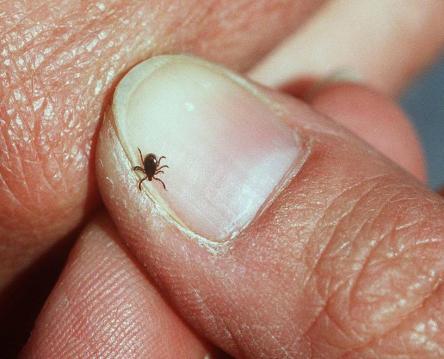
06252007_25tick-5985597An adult deer tick.  MARK WILSON/GLOBE STAFF/FILE

By Felice J. Freyer and Martin Finucane GLOBE STAFF MAY 07, 2018

Few experiences are creepier than finding a tick attached to your body — except, perhaps, pondering the harmful germs the eight-legged critter may be injecting.

But ponder no more: If you send a tick to the University of Massachusetts Amherst, you can find out exactly what manner of microbe may have infected it — and possibly, you. Lyme disease is the most prevalent, but ticks carry several other viruses, parasites, and bacteria.

People who find a tick on their body can put it in a plastic bag — dead or alive — and mail it to the UMass lab. For a fee, confidential results come by e-mail within three days.

The germs ticks carry are a matter of growing concern: Last week, the Centers for Disease Control and Prevention said that reported illnesses from mosquito, tick, and flea bites more than tripled from 2004 to 2016.

In Massachusetts in 2017, some 8,692 people tested positive for Lyme disease, up from 5,829 four years earlier. But most cases are not reported, so Dr. Catherine M. Brown, deputy state epidemiologist, estimates that about 87,000 people a year are getting Lyme disease in the state.

Anaplasmosis/ehrlichiosis, the second most common tick-borne disease, was reported 341 times in 2013, and rose to 1,226 in 2017. That’s a 260 percent increase.

“So many people in Massachusetts are being impacted by at least one of these diseases,” Brown said. “It’s increasing dramatically.”

Stephen Rich, a microbiology professor and director of the Laboratory of Medical Zoology at UMass Amherst, said the increases probably reflect both more illness and more awareness. The biggest changes are in areas, such as upstate New York, where ticks are just starting to move in, he said.

In Massachusetts, ticks are always abundant statewide, so fluctuations in the tick population have little meaning, he said. People need to think of protecting themselves from bites in the same way they put on sunscreen at the beach — a necessary precaution, every year. To avoid tick bites, wear clothing treated with permethrin, apply DEET to the skin, check for ticks after being outside, and treat your yard and pets.

The TickReport program at UMass, which Rich runs, tested 14,000 ticks last year and expects to see many more in 2018. The program, which has received ticks from all 50 states, demonstrates the power of crowdsourcing, by gathering a wealth of information on the location of different tick species and the disease-causing microbes they carry, he said.

The only other way to track ticks is to drag a cloth over bushes and test the ticks that stick to it, he said. But that just gives a snapshot of a limited area on a given day. “That doesn’t reflect the ticks that are biting people,” Rich said.

TickReport goes directly to the source — the ticks’ human targets.

People who send a tick pay $50, $100, or $200, depending on how many microbes are being tested for.

A $100,000 federal grant announced Monday will subsidize those tests for Massachusetts residents. The goal is to get a better idea of the prevalence of the 23 potentially disease-causing microorganisms that ticks can carry.

Along with a discount added by the laboratory, the federal grant will lower the cost of the $100 test to $15 for the first 1,000 ticks the lab receives; then it will lower the $50 test to $15 for the next 1,500 ticks.

TickReport has been testing ticks since 2006. About 43 percent come from Massachusetts but not evenly across the state. Rich hopes to get more ticks from underrepresented areas, particularly the North Shore, the Berkshires, and Worcester County.

The tests don’t diagnose a person but they provide information that can guide medical decisions, Rich said.

TickReport has a partnership with another crowdsourcing project — TickSpotters at the University of Rhode Island, which is free:  http://www.tickencounter.org/tickspotters

With TickSpotters, people e-mail photos of bugs they think are ticks and provide basic information such as how long each was attached. The URI group identifies the species of tick and describes the risk of illness. Often the bugs pictured aren’t even ticks — the program has received photos of weevils and lice, said Thomas N. Mather, director of URI’s TickEncounter Resource Center:  http://www.tickencounter.org

Once participants get the basics from TickSpotters, those who want to know more are urged to send the tick to TickReport to find out if it was infected.

For example, a Rhode Island woman recently sent TickSpotters a photo of a tick that had been attached to her for less than a day, Mather said. The program identified it as an adult, female, black-legged tick, and advised that the risk of infection was low because the tick hadn’t been attached long enough to transmit illness. Still concerned, the woman sent the tick to UMass, where it was found to be infected with Lyme disease.

That doesn’t mean the woman has Lyme disease. A tick must feed for 36 to 48 hours before it transmits Lyme disease. (Please see my comment below)

“If I were her, I would just be alert for symptoms. But we try to stay out of it at this point,” Mather said. The rest is up to the woman and her physician.

After years of trying to educate the public about ticks and the risk of illness, and finding that misinformation remains rampant, Mather has found TickSpotters to be a useful educational tool.

“I don’t think there’s anyone more engaged in learning about ticks than someone who has had a tick on them,” he said. “We’re personalizing education, approaching people at their most needy and receptive.”

TickSpotters, which started in 2014, has received nearly 46,000 submissions, collecting a wealth of data about locations of different species of ticks nationwide — data no one has had time to analyze, Mather said.

_____________

**Comment**

While I love the work going on here a huge faux pax has been made regarding transmission times – and it’s a big deal:  https://madisonarealymesupportgroup.com/2017/04/14/transmission-time-for-lymemsids-infection/  

Transmission Time: Only one study done on Mice. At 24 hours every tick had transmitted borrelia to the mice; however, animal studies have proven that transmission can occur in under 16 hours and it occurs frequently in under 24 hours. No human studies have been done and https://www.dovepress.com/lyme-borreliosis-a-review-of-data-on-transmission-time-after-tick-atta-peer-reviewed-article-IJGM no studies have determined the minimum time it takes for transmission.
There’s also the issue of partially fed ticks transmitting more quickly: http://iai.asm.org/content/61/6/2396.full.pdf Ticks can spontaneously detach – and the authors of this study found that they did so 15% of the time in mice. They also state that about a tenth of questing nymphs appear distended with partially fed sub-adult ticks being common. This quicker transmission is due to spirochetes presiding in the salivary glands rather than the mid-gut.

https://madisonarealymesupportgroup.wordpress.com/2016/12/07/igenex Bob Giguere of IGeneX states a case of a little girl who went outside to play about 8:30a.m. and came inside at 10:30 with an attached tick above her right eye. By 2 o’clock, she had developed the facial palsy. At the hospital she was told it couldn’t be Lyme as the tick hadn’t been attached long enough. They offered a neuro-consult…..By 4pm she couldn’t walk or talk.
A Lyme literate doctor trained by ILADS met the family in his office on a Saturday, gave her an intramuscular injection of antibiotics and within 2 hours the palsy was gone. He continued her treatment for approximately 4 weeks.

Do NOT take a “wait and see” approach when it comes to this plague.  Get on it and get on it now.  The longer you wait the greater the potential for it to embed deep within the body including the brain.  Every SINGLE attached tick should be taken as seriously as a heart attack.  Please spread the word about this.  The myths must END!