https://lymediseaseassociation.org/images/NewDirectory/Government/2018_SMITNJ_bill_081_xml.pdf
115TH CONGRESS 2D SESSION
H. R. 5878
To provide for a national strategy to address and overcome Lyme disease and other tick-borne diseases, and for other purposes.
IN THE HOUSE OF REPRESENTATIVES
Mr Smith of New Jersey introduced the following bill; which was referred to the Committee on __________________
A Bill
To provide for a national strategy to address and overcome Lyme disease and other tick-boune diseases, and for other purposes.
1 Be it enacted by the Senate and House of Representa-
2 tives of the United States of America in Congress assembled,
3 SECTION 1. SHORT TITLE.
4 This Act may be cited as the ‘‘National Lyme and
5 Tick-Borne Diseases Control and Accountability Act of
6 2018’’.
2
1 SEC. 2. OFFICE OF OVERSIGHT AND COORDINATION FOR
2 TICK-BORNE DISEASES.
3 (a) ESTABLISHMENT.—The Secretary of Health and
4 Human Services shall establish in the Office of the Sec
5 retary the Office of Oversight and Coordination for Tick
6 Borne Diseases, to be headed by a director appointed by
7 the Secretary—
8 (1) to oversee the creation and updating of an
9 integrated national strategy to overcome Lyme dis
10 ease and other tick-borne diseases; and
11 (2) to oversee and coordinate Lyme disease and
12 other tick-borne disease programs and activities
13 across the agencies and offices of the Department of
14 Health and Human Services.
15 (b) OBJECTIVE OF OFFICE.—In carrying out sub
16 section (a), the Director of the Office shall facilitate and
17 work to ensure accomplishment of the following activities:
18 (1) Expansion and enhancement of epidemiolog-
19 ical research and basic, translational, and clinical bi-
20 ological and biomedical research.
21 (2) Expansion and improvement of the surveil-
22 lance and reporting of Lyme disease and other tick-
23 borne disease, including coinfections with agents of
24 more than one tick-borne disease.
25 (3) Development of effective diagnostic tests to
26 accurately and timely diagnose Lyme disease and
3
1 other tick-borne disease, including direct detention
2 tests.
3 (4) Development of treatments to cure or im-
4 prove the lives of those who are infected with Lyme
5 disease or other tick-borne disease or who suffer
6 from a tick-induced disorder.
7 (5) Design and conduct of clinical trials of suf-
8 ficient size and duration to support clinical rec-
9 ommendations.
10 (6) Development and maintenance of one or
11 more registries of patients and their experiences re-
12 lating to exposure to, diagnosis for, and treatment
13 of tick-borne disease, including outcomes, which reg-
14 istries shall protect the confidentiality and safety of
15 patient data.
16 (7) Systematic documentation of the experi-
17 ences of health care professionals in diagnosing and
18 treating tick-borne disease, including diagnostic and
19 treatment outcomes.
20 (8) Inclusion individuals with chronic Lyme dis-
21 ease in clinical, research, and service efforts.
22 (9) Coordination with international bodies to in
23 tegrate and inform the fight against Lyme disease
24 and tick-borne disease globally.
4
1 (c) INTEGRATION OF TICK-BORNE DISEASE WORK-
2 ING GROUP FINDINGS AND RECOMMENDATIONS.—In car-
3 rying out this section, the Director of the Office shall, as
4 directed by the Secretary, with any modifications made by
5 and as otherwise determined appropriate by the Secretary,
6 oversee and coordinate integration and implementation,
7 into the activities of the Office and the activities and pro-
8 grams of the agencies and offices of the Department of
9 Health and Human Services, of the recommendations to
10 the Secretary and the findings and conclusions in the lat-
11 est report of the Tick-Borne Disease Working Group sub-
12 mitted to the Secretary and congressional committees.
13 (d) PRIORITY BASED ON DISEASE BURDEN.—In car-
14 rying out this section, the Director of the Office shall give
15 priority to Lyme disease and other tick-borne disease
16 based on assessments of disease burden in the United
17 States.
18 SEC. 3. NATIONAL STRATEGY.
19 (a) IN GENERAL.—The Secretary, in coordination
20 with the Director of the Office, and in consultation with
21 the Tick-Borne Disease Working Group, the agencies and
22 offices of the Department of Health and Human Services,
23 and other Federal agencies outside of the Department of
24 Health and Human Services as appropriate, shall—
5
1 (1) not later than 2 years after the date of en-
2 actment of this Act, develop and submit to the Con-
3 gress a national strategy for the conduct and sup-
4 port of Lyme disease and other tick-borne disease or
5 disorder programs and activities; and
6 (2) not less than every 2 years thereafter, up
7 date such strategy.
8 (b) CONTENTS.—The strategy under subsection (a)
9 shall include—
10 (1) proposed budgetary requirements;
11 (2) an assessment of all federally funded pro-
12 grams and activities related to surveillance, diag
13 nosis, treatment, education, or prevention with re-
14 spect to Lyme disease or other tick-borne disease, an
15 evaluation of progress and performance based on
16 mission and purpose, and a description of significant
17 challenges or barriers to performance, including an
18 assessment of Federal grants awarded;
19 (3) a strategy for improving diagnosis, treat-
20 ment, and prevention, including increasing the im-
21 pact of grants awarded by the National Institutes of
22 Health, the Centers for Disease Control and Preven-
23 tion, and other agencies and offices of the Depart-
24 ment of Health and Human Services;
6
1 (4) a strategy for improving outcomes of indi-
2 viduals with Lyme disease or another tick-borne dis-
3 ease or disorder, including progress related to chron-
4 ic or persistent symptoms and chronic or persistent
5 infection and coinfections, including plans for evalu-
6 ating the potential value of and supporting the con-
7 duct of observational studies, comparative effective-
8 ness research, patient-centered outcomes research,
9 or other real world evidence;
10 (5) the appropriate benchmarks to measure
11 progress in achieving the improvements described in
12 paragraphs (3) and (4);
13 (6) a strategy for improving interactions, co-
14 ordination, and partnerships with other Federal
15 agencies, State and local governments, and global
16 entities; and
17 (7) the latest recommendations of the Tick-
18 Borne Disease Working Group and the steps taken
19 by the agencies and offices of the Department of
20 Health and Human Services to implement those rec-
21 ommendations.
7
1 SEC. 4. FEDERAL ACTIVITIES RELATED TO THE DIAGNOSIS,
2 SURVEILLANCE, AND PREVENTION OF, AND
3 RESEARCH ON, LYME DISEASE AND OTHER
4 TICK-BORNE DISEASES AND DISORDERS.
5 (a) IN GENERAL.—The Secretary, in coordination
6 with the Director of the Office, acting as the Secretary
7 determines appropriate through the Director of the Cen-
8 ters for Disease Control and Prevention, the Director of
9 the National Institutes of Health, the Commissioner of
10 Food and Drugs, the Director of the Agency for
11 Healthcare Research and Quality, the Administrator of
12 the Health Resources and Services Administration, the Di-
13 rector of the Indian Health Service, and the heads of other
14 Federal agencies, and in consultation with the Tick-Borne-
15 Disease Working Group, shall provide for—
16 (1) the conduct or support of the activities de-
17 scribed in paragraphs (1) through (8) of subsection
18 (b); and
19 (2) the coordination of all programs and activi-
20 ties of the Department of Health and Human Serv-
21 ices related to Lyme disease and other tick-borne
22 diseases and disorders and Bartonella.
23 (b) ACTIVITIES.—The activities to be conducted or
24 supported under subsection (a)(1) consist of the following:
25 (1) EXPANSION AND ENHANCEMENT OF RE-
26 SEARCH.—
8
1 (A) IN GENERAL.—The Secretary shall ex-
2 pand and intensify epidemiological, basic,
3 translational, and clinical research regarding
4 Lyme disease and other tick-borne disease and
5 disorders and bartonellosis to better under-
6 stand—
7 (i) the pathophysiology of Borrelia-
8 burgdorferi and other tick-borne microorga-
9 nisms that are human pathogens and of
10 Bartonella;
11 (ii) pathophysiological changes over
12 time, including pathogen persistence pro-
13 files for patients with differing treatment
14 histories;
15 (iii) activation and deactivation of im-
16 mune system processes; and
17 (iv) whether, and what species of,
18 Bartonella are transmitted by ticks.
19 (B) CLINICAL OUTCOMES RESEARCH.—The
20 Secretary shall conduct or support clinical out-
21 comes research to—
22 (i) establish epidemiological research
23 objectives to determine the long-term
24 course of illness for Lyme disease and
25 other tick-borne diseases and disorders;
9
1 (ii) establish patient-centered treat-
2 ment outcome objectives to allow for the
3 comparative effectiveness of different treat-
4 ment modalities; and
5 (iii) establish patient-centered re-
6 search objectives to help elucidate prom-
7 ising treatment protocols for individuals
8 suspected of harboring coinfections with
9 more than one tick-transmitted pathogen.
10 (C) COLLABORATIVE, MULTIDISCIPLINARY
11 RESEARCH.—The Secretary shall encourage the
12 solicitation of proposals for collaborative, multi-
13 disciplinary research that would—
14 (i) result in innovative approaches to
15 study emerging scientific opportunities or
16 eliminate gaps in research to improve the
17 research portfolio, including application of
18 successful and promising advances in the
19 study of other types of diseases, such as
20 upregulating or downregulating immune
21 system cells or processes;
22 (ii) outline key research questions,
23 methodologies, and knowledge gaps;
24 (iii) expand the number of research
25 proposals that involve collaboration be-
10
1 tween 2 or more national research insti-
2 tutes or national centers of the National
3 Institutes of Health, including proposals
4 for research through the Common Fund
5 pursuant to section 402(b)(7) of the Public
6 Health Service Act (42 U.S.C. 282(b)(7))
7 to improve the research portfolio;
8 (iv) expand the number of collabo-
9 rative multi-institutional research grants
10 related to tick-borne disease; and
11 (v) involve additional national re-
12 search institutes and national centers of
13 the National Institutes of Health in intra-
14 mural and extramural research on tick
15 borne disease, such as the National Insti-
16 tute of Neurological Disorders and Stroke
17 conducting or sponsoring research on
18 neurologic Lyme disease.
19 (D) EVALUATION.—Not later than 2 years
20 after the date of enactment of this Act, the Sec
21 retary shall evaluate and make findings on—
22 (i) the feasibility and potential value
23 to the research community of establishing
24 a deidentified human subjects database for
11
1 Lyme disease and other tick-borne diseases
2 and disorders;
3 (ii) existing government or private
4 biorepositories for Lyme disease and other
5 tick-borne diseases and disorders and
6 whether—
7 (I) specimens and samples are
8 adequate and available to meet re-
9 searcher needs; or
10 (II) there are problems or chal-
11 lenges for researcher acquisition of
12 samples and specimens; and
13 (iii) the scope and use of specimens
14 and samples from cadavers, the questions
15 and answers such research may provide,
16 and the need for additional support of re-
17 searchers using cadaver specimens.
18 (E) PRIORITY.—In carrying out this para-
19 graph, the Secretary shall make it a priority to
20 determine the extent of post treatment persist-
21 ence of Borrelia burgdorferi and the clinical sig-
22 nificance of such persistence.
23 (2) DEVELOPMENT OF NEW AND IMPROVED DI-
24 AGNOSTIC TESTS.—
12
1 (A) IN GENERAL.—The Secretary, in co-
2 operation with the Director of the Office, and
3 acting through the Directors of the Centers for
4 Disease Control and Prevention and the Direc
5 tor of the National Institutes of Health, shall
6 conduct and support research to—
7 (i) provide for the timely evaluation of
8 promising new and improved diagnostic
9 methods, including direct-detection tests,
10 antibody-based tests, and tests based on
11 biosignature and biomarker profiles to
12 make a specific diagnosis or aid in dif-
13 ferential diagnoses;
14 (ii) improve the sensitivity of Lyme
15 disease tests at all stages of disease pro-
16 gression;
17 (iii) develop a Lyme disease test capa-
18 ble of distinguishing between past and ac-
19 tive infections;
20 (iv) improve timely, sensitive, and spe-
21 cific diagnostic tools and tests for Rocky
22 Mountain spotted fever; and
23 (v) improve the performance (timeli-
24 ness and accuracy) of tools and tests for
13
1 other tick-borne diseases found in the
2 United States.
3 (B) STRATEGIES FOR EXPEDITING CLEAR-
4 ANCE.—The Secretary shall direct the Commis-
5 sioner of Food and Drugs to design and pro-
6 pose or implement, as appropriate within the
7 authorities and public health priorities vested in
8 the Secretary by other provisions of law, strate-
9 gies for facilitating and expediting the clearance
10 or approval of improved diagnostic tests for
11 Lyme disease and other tick-borne disease, par-
12 ticularly where—
13 (i) there are no cleared diagnostic
14 tests; or
15 (ii) cleared diagnostic tests lack a
16 high level of specificity or sensitivity or are
17 unable to confirm the presence or absence
18 of active infection.
19 (3) ENSURING SAFETY AND EFFICACY OF VAC-
20 CINES.—The Secretary shall—
21 (A) ensure the safety and efficacy of any
22 new, renewed, or modified human vaccine for
23 Lyme disease, other tick-borne disease, or a
24 combination of such diseases; and
14
1 (B) require the Commissioner of Food and
2 Drugs to submit to the Secretary prior to final
3 approval of the vaccine being reviewed, a report,
4 with appropriate provisions for commercial con
5 fidentiality, detailing the safety of the vaccine
6 and contrasting its safety profile based on its
7 mechanisms of action to safety concerns ex-
8 pressed to the Food and Drug Administration
9 regarding the human vaccine withdrawn from
10 the market in 2002 and how those concerns
11 with the withdrawn vaccine have been addressed
12 or why they are not relevant.
13 (4) MONITORING AND UNDERSTANDING HUMAN
14 CASES OF LYME DISEASE AND OTHER TICK-BORNE
15 DISEASES.—
16 (A) IN GENERAL.—The Secretary shall—
17 (i) establish and maintain a statis-
18 tically sound, scientifically credible surveil-
19 lance system to be known as the National
20 Tick-Borne Disease Surveillance System;
21 (ii) enhance and expand infrastructure
22 and activities to track the epidemiology of
23 Lyme disease and other tick-borne diseases
24 and disorders; and
15
1 (iii) incorporate information obtained
2 through such activities into the National
3 Tick-Borne Disease Surveillance System.
4 (B) RESEARCH.—The Secretary shall en-
5 sure that the National Tick-Borne Disease Sur-
6 veillance System is designed in a manner that
7 facilitates further research on Lyme disease and
8 other tick-borne diseases and disorders.
9 (C) CONTENT.—In carrying out subpara-
10 graph (A), the Secretary—
11 (i) shall provide for the collection and
12 storage of information on the incidence
13 and prevalence of tick-borne disease in the
14 United States—
15 (I) while continuing to support
16 activities in the 14 States with the
17 highest number of reported cases of
18 Lyme disease, and intensifying efforts
19 in other States where Lyme disease
20 has been reported and where all re-
21 ported cases cannot be affirmatively
22 associated with out-of-State travel in
23 order to better determine where the
24 disease is emerging;
16
1 (II) working with the States and
2 treating physicians, in consultation
3 with the Council of State and Terri-
4 torial Epidemiologists (in this clause
5 referred to as the ‘‘CSTE’’), to im-
6 prove evaluation of the feasibility of
7 capturing data on cases that do not
8 meet surveillance criteria of the CSTE
9 and the Centers for Disease Control
10 and Prevention;
11 (III) in consultation with the
12 CSTE, working with States that are
13 using averaging or similar techniques
14 to estimate case reports to ensure that
15 data produced by that process are
16 able to be reported out by the Centers
17 for Disease Control and Prevention;
18 (IV) in consultation with the
19 CSTE, working with the States to en-
20 courage and improve laboratory re-
21 porting of Lyme disease and other
22 tick-borne diseases, and evaluate the
23 feasibility of creating a national uni-
24 form reporting system including man-
17
1 datory reporting by States and physi
2 cians and laboratories in each State;
3 (V) including in the surveillance
4 system bartonellosis transmitted by
5 any vector and, if it is known, by the
6 vector of transmission; and
7 (VI) tracking incidence and prev-
8 alence data for tick-borne disorders;
9 (ii) to the extent practicable, shall
10 provide for the collection and storage of
11 other available information on Lyme dis-
12 ease and other tick-borne diseases and dis-
13 orders, including information related to
14 persons who have been diagnosed with and
15 treated for tick-borne disease who choose
16 to participate, such as—
17 (I) demographics, such as age,
18 race, sex, geographic location, and
19 other information, as appropriate;
20 (II) family history and experience
21 with tick-borne disease or tick induced
22 disorder;
23 (III) history of exposure and
24 known tick bites;
18
1 (IV) progression of signs and
2 symptoms;
3 (V) diagnostic and treatment his-
4 tory and outcomes; and
5 (VI) additional screening con-
6 ducted and related data, such as bio-
7 logical markers.
8 (D) CONSULTATION.—In carrying out this
9 paragraph, the Secretary shall consult with in-
10 dividuals with appropriate expertise, which may
11 include—
12 (i) epidemiologists with experience in
13 disease surveillance or registries;
14 (ii) representatives of national patient
15 advocacy and research organizations that
16 focus on tick-borne disease and have dem-
17 onstrated experience in research, data col-
18 lection, or patient access to care;
19 (iii) health information technology ex-
20 perts or other information management
21 specialists;
22 (iv) clinicians with expertise in Lyme
23 disease or other tick-borne diseases or dis-
24 orders; and
19
1 (v) research scientists with experience
2 conducting translational research or uti-
3 lizing surveillance systems for scientific re-
4 search purposes.
5 (E) GRANTS.—The Secretary may award
6 grants to, or enter into contracts or cooperative
7 agreements with, public or private nonprofit en-
8 tities to carry out activities under this para-
9 graph.
10 (F) COORDINATION WITH FEDERAL,
11 STATE, AND LOCAL AGENCIES.—Subject to sub-
12 paragraph (H), the Secretary shall—
13 (i) establish agreements and mecha-
14 nisms, as appropriate, for improved col-
15 lecting and reporting of tick-borne disease
16 surveillance data under subparagraphs (A),
17 (B), and clause (i) of subparagraph (C)
18 and other available information under
19 clause (ii) of subparagraph (C) from com-
20 munity health centers funded by the
21 Health Resources and Services Administra-
22 tion and medical facilities of the Indian
23 Health Service;
24 (ii) establish formal agreements, as
25 appropriate and may be worked out, to
20
1 provide for improved collection and report-
2 ing of surveillance data under subpara-
3 graphs (A), (B) or clause (i) of subpara-
4 graph (C) and other available information
5 under clause (ii) of subparagraph (C), ob-
6 tained from hospitals and medical clinics
7 run by other Federal departments and
8 agencies;
9 (iii) make information and analysis in
10 the National Tick-Borne Disease Surveil-
11 lance System available, as appropriate, to
12 all components of the Department of
13 Health and Human Services, to other Fed-
14 eral agencies, and to State and local agen-
15 cies; and
16 (iv) identify, build upon, leverage, and
17 coordinate among existing data and sur-
18 veillance systems, surveys, registries, and
19 other Federal public health infrastructure,
20 wherever practicable.
21 (G) PUBLIC ACCESS.—Subject to subpara-
22 graph (H), the Secretary shall ensure that in
23 formation and analysis in the National Tick-
24 Borne Disease Surveillance System are avail-
25 able, as appropriate, to the public and other in-
21 1 terested parties on the website of the Depart-
2 ment of Health and Human Services.
3 (H) PRIVACY.—The Secretary shall ensure
4 that information and analysis in the National
5 Tick-Borne Disease Surveillance System are
6 made available only to the extent permitted by
7 applicable Federal and State law, and in a
8 manner that protects personal privacy, to the
9 extent required by applicable Federal and State
10 privacy law, at a minimum.
11 (5) EDUCATION AND PREVENTION.—
12 (A) CONSUMER AND COMMUNITY EDU-
13 CATION.—The Secretary shall increase public
14 education related to Lyme disease and other
15 tick-borne diseases and disorders through the
16 expansion of the community-based education
17 programs of the Centers for Disease Control
18 and Prevention to include development and
19 publication of a consumer tick disease pam-
20 phlet, available online and by hard copy, ad-
21 dressing— 22 (i) ticks and tick-borne diseases com-
23 mon to the geographic area, tick-borne dis-
24 ease that could be acquired while on do-
25 mestic or international travel, and ticks
22
1 that, while not common to the geographic
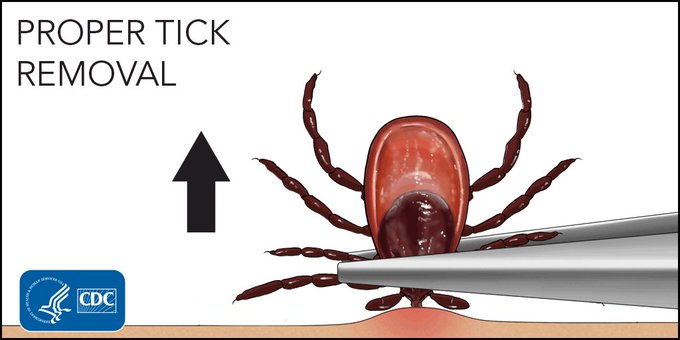
2 area, could migrate to the area;
3 (ii) signs and symptoms of such tick-
4 borne disease;
5 (iii) tick removal instructions;
6 (iv) the most effective actions individ-
7 uals can take to reduce risk of exposure to
8 ticks and risk of disease transmission; and
9 (v) additional community-based ac-
10 tions to reduce risk of exposure to ticks.
11 (B) COORDINATION.—In carrying out sub-
12 paragraph (A), the Secretary, acting through
13 the Director of the Centers for Disease Control
14 and Prevention, shall coordinate with legally in
15 corporated Lyme disease or other tick-borne
16 disease organizations.
17 (C) DISSEMINATION.—The Administrator
18 of the Health Resources and Services Adminis-
19 tration and the Director of the Indian Health
20 Service shall make available in rural health cen-
21 ters and clinics which they operate or fund—
22 (i) the consumer tick disease pam-
23 phlets developed under subparagraph (A);
24 or
23
1 (ii) such other appropriate consumer
2 tick disease pamphlets as the Administra-
3 tion or Service may develop or acquire.
4 (D) PHYSICIAN EDUCATION.—The Sec-
5 retary shall carry out a physician education
6 program that addresses the full spectrum of sci-
7 entific research related to Lyme disease and
8 other tick-borne diseases and disorders, includ-
9 ing—
10 (i) the role of clinical diagnosis;
11 (ii) the limitations of serological diag-
12 nostic tests;
13 (iii) enhanced, validated diagnostics
14 available from laboratories certified under
15 section 353 of the Public Health Service
16 Act (42 U.S.C. 263a) that may aid the
17 physician;
18 (iv) guidelines available on the Na-
19 tional Guideline Clearinghouse;
20 (v) the voluntary nature of clinical
21 practice guidelines;
22 (vi) the complexities presented by co-
23 infections relating to symptomology, diag
24 nosis, and treatment, including prudently
24
1 acting in the patient’s interest in non- or
2 low-incidence States; and
3 (vii) the identification of significant
4 research gaps most impacting diagnosis
5 and treatment, and significant research
6 being conducted to address those gaps.
7 (E) PROCESS FOR DEVELOPING PHYSICIAN
8 EDUCATION PROGRAM.—The Secretary of
9 Health and Human Services shall—
10 (i) conduct a public meeting to solicit
11 input for the design of the physician edu-
12 cation program under subparagraph (D);
13 (ii) give the public notice of such
14 meeting at least 45 days in advance;
15 (iii) also solicit input on the design of
16 the physician education program from the
17 Tick-Borne Disease Working Group;
18 (iv) publish a proposed syllabus for
19 the physician education program not more
20 than 120 days after the public meeting;
21 (v) allow for a 60-day public comment
22 period before publishing such syllabus in
23 final form; and
24 (vi) publish on the public website of
25 the Department of Health and Human
25
1 Services a summary of the comments re-
2 ceived from the public under this subpara-
3 graph before conducting the first training
4 program under subparagraph (D).
5 (6) MONITORING, UNDERSTANDING, AND CON-
6 TROLLING VECTORS AND ANIMAL RESERVOIRS OF
7 LYME DISEASE AND OTHER TICK-BORNE DISEASE.—
8 (A) TICK SURVEILLANCE AND TESTING.—
9 The Secretary, in coordination with the Direc-
10 tor of the Office, acting through the Director of
11 the Centers for Disease Control and Prevention
12 and other agencies and offices of the Depart-
13 ment of Health and Human Services as appro-
14 priate, shall—
15 (i) not later than 180 days after the
16 date of enactment of this Act, provide a re-
17 port to the Congress describing the tick
18 surveillance and pathogen testing activities
19 of the Department and entities funded by
20 the Department, including—
21 (I) a detailed description of the
22 tick surveillance and tick pathogen
23 testing activities and planned activi-
24 ties of the Vector-Borne Disease Re-
25 gional Centers of Excellence as estab-
26
1 lished under Funding Opportunity
2 Announcement RFA–CK–17–005,
3 Catalog of Federal Domestic Assist-
4 ance Number 93.084; and
5 (II) within such description, the
6 roles of participating academic, gov-
7 ernmental, and private institutions;
8 (ii) not later than 2 years after the
9 date of enactment of this Act, in consulta-
10 tion and coordination with other Federal
11 agencies and State and local government
12 agencies, as appropriate, and established
13 academic or nonprofit tick-testing centers,
14 develop a framework and an implementa-
15 tion plan for a comprehensive nationwide
16 strategy for the surveillance and testing of
17 ticks for human pathogens and microorga-
18 nisms with unknown pathogenicity, includ-
19 ing a plan for a network of tick identifica-
20 tion and testing laboratories;
21 (iii) not later than 2 years after the
22 date of enactment of this Act, establish
23 agreements and procedures for sharing
24 data on surveillance and testing of ticks
27
1 with other Federal departments and agen-
2 cies engaged in such activities; and
3 (iv) consult and coordinate with the
4 American Veterinary Medical Association
5 and the Companion Animal Parasite Coun-
6 cil on obtaining and sharing data on the
7 surveillance and testing of ticks and tick
8 borne pathogens, including geographic in
9 formation from veterinary encounters.
10 (B) INVESTIGATION.—In carrying out sub-
11 paragraph (A), the Secretary, in coordination
12 with the Director of the Office, acting through
13 the Director of the Centers for Disease Control
14 and Prevention, in consultation and coordina-
15 tion with other Federal agencies that conduct
16 or support tick surveillance or testing activities,
17 as appropriate, and public and private labora-
18 tories, shall—
19 (i) investigate and, where appropriate,
20 promote the use of advanced new tech-
21 nologies, such as tools to discover all
22 known and all previously unidentified
23 microorganisms in a vector; and
24 (ii) while being informed by previous
25 surveillance studies, allow for the possi-
28
1 bility of rapid geographic migration of tick
2 vectors and pathogens and unexpected
3 findings.
4 (C) TICK CONTROL AND PREVENTION.—
5 The Secretary, in coordination with the Direc-
6 tor of the Office, acting through the Director of
7 the Centers for Disease Control and Prevention
8 and the Director of the National Institutes of
9 Health, shall, as appropriate and pursuant to
10 authorities vested in the Secretary by other pro-
11 visions of law, support activities of and coordi-
12 nate and share, information with other Federal,
13 State, and local government agencies, involved
14 or interested in tick prevention and control ac-
15 tivities on—
16 (i) the development of safer and more
17 effective tick repellents, both natural and
18 chemical;
19 (ii) the use of acaricides or other
20 chemical interventions;
21 (iii) nonchemical environmental meas-
22 ures to lessen human exposure to ticks;
23 (iv) genetic therapies for vectors or
24 animal hosts to interfere with the life cycle
25 of pathogens; and
29
1 (v) the development of vector or res-
2 ervoir host vaccines.
3 (D) Leveraging existing tick management
4 resources.—In carrying out this paragraph, the
5 Secretary, in coordination with the Director of
6 the Office, acting through the Director of the
7 Centers for Disease Control and Prevention,
8 shall identify, build upon, leverage, and coordi-
9 nate among existing tick surveillance, testing,
10 and management resources and infrastructure
11 wherever practicable.
12 (E) Public access to data.—In carrying out
13 this paragraph, the Secretary, in coordination
14 with the Director of the Office, acting through
15 the Director of the Centers for Disease Control
16 and Prevention, in coordination and consulta-
17 tion with other Federal agencies and State and
18 local agencies as appropriate, make data on tick
19 surveillance, testing, control and prevention
20 available to the public on the website of the De-
21 partment of Health and Human Services.
22 (7) CONFERENCES, SYMPOSIA, SEMINARS, AND
23 OTHER PUBLIC MEETINGS.—
24 (A) SENSE OF CONGRESS.—It is the sense
25 of the Congress that public meetings, con-
30
1 ferences, symposia, and seminars (including
2 webinars) sponsored by the Federal Govern-
3 ment are a valuable input to strategic and oper-
4 ational programmatic planning within Federal
5 agencies and to the work of the Tick-Borne
6 Disease Working Group.
7 (B) REQUIREMENTS.—The Secretary and
8 the Director of the Office, in cooperation with
9 the Director of the Centers for Disease Control
10 and Prevention, the Director of the National
11 Institutes of Health, and the Tick-Borne Dis-
12 ease Working Group, shall—
13 (i) no later than 24 months after the
14 date of enactment of this Act, sponsor a
15 state-of-the-science conference on Lyme
16 disease and other tick-borne disease includ-
17 ing identification of research gaps and top
18 research priorities;
19 (ii) for any scientific or medical con-
20 ference on Lyme disease or other tick
21 borne disease that is organized, sponsored,
22 or paid for by the Department of Health
23 and Human Services, ensure that a con-
24 trolling statement of work and significant
25 modifications thereto, whether in the con
31
1 tract or as a separate document, issued to
2 the vendor organizing or conducting the
3 conference are in writing and made avail-
4 able to the public prior to the conference;
5 (iii) not later than 120 days after the
6 conclusion of the conference under clause
7 (i), make available a final report on the
8 conference to the Tick-Borne Disease
9 Working Group and to the public;
10 (iv) not later than 18 months after
11 the date of enactment of this Act, working
12 through the Director of the Agency for
13 Healthcare Research and Quality, sponsor
14 a symposium on the use of real-world evi-
15 dence (meaning data from sources other
16 than randomized clinical trials, such as ob-
17 servational studies, comparative effective-
18 ness and patient-centered outcomes re-
19 search, and patient clinical data or human
20 subject data), including the standards and
21 methodologies for collection and analysis of
22 real-world evidence in managing Lyme dis-
23 ease and other tick-borne disease;
24 (v) include in such symposium identi-
25 fication and analysis of existing data
32
1 sources, such as patient registries and
2 human subjects’ databases;
3 (vi) sponsor a researcher workshop on
4 challenges and solutions for clinical trial
5 design and implementation for Lyme dis-
6 ease to be held no later than 24 months
7 after the date of enactment of this Act,
8 which workshop may consider other tick
9 borne disease or coinfections with more
10 than one tick-borne pathogen as may be
11 feasible and practicable;
12 (vii) not later than 9 months after the
13 date of enactment of this Act, in consulta-
14 tion with the Tick-Borne Disease Working
15 Group, design a survey instrument or in-
16 struments targeted to patients and patient
17 advocates, physicians and health care pro-
18 viders, and researchers regarding rec-
19 ommended subjects and agendas for feder-
20 ally sponsored meetings, conferences, and
21 seminars, including webinars, on Lyme dis-
22 ease and other tick-borne disease;
23 (viii) not later than 6 months after
24 the conduct of the survey, provide an anal-
25 ysis of the results of the survey to the
33
1 Tick-Borne Disease Working Group and
2 publish such results in the Federal Reg-
3 ister for a 60-day public comment period;
4 and
5 (ix) provide a final analysis and a pro-
6 posed schedule and agenda for public
7 meetings, conferences, and seminars, in
8 cluding webinars, for incorporation into the
9 national strategy under section 3 as appro-
10 priate and to the Tick-Borne Disease
11 Working Group.
12 (8) COMMON RESEARCH BIBLIOGRAPHY.—The
13 Secretary, in coordination with the Director of the
14 Office, shall direct the Director of the Agency for
15 Healthcare Research and Quality to assemble a bib-
16 liography of peer-reviewed literature of tick-borne
17 diseases and disorders in the United States, as well
18 as for bartonellosis from whatever cause, appro-
19 priately organized for use by the scientific commu-
20 nity, treating physicians, and the public. The bibliog-
21 raphy should include literature relating to possible
22 mechanisms of persistent infection with Borrelia
23 burgdorferi or other types of Borrelia.
24 (c) PRIORITY BASED ON DISEASE BURDEN.—In con-
25 ducting and supporting activities under this section, the
34
1 Secretary shall give priority to Lyme disease and other
2 tick-borne diseases based on assessments of disease bur-
3 den in the United States.
4 SEC. 5. BIENNIAL REPORTS.
5 (a) IN GENERAL.—Not later than 24 months after
6 the date of the enactment of this Act, and biennially there-
7 after, the Secretary shall submit to the Congress a report
8 on the activities carried out under this Act and the activi-
9 ties of the Tick-Borne Disease Working Group.
10 (b) CONTENT.—Reports under subsection (a) shall
11 contain—
12 (1) a scientifically qualified assessment of Lyme
13 disease and other tick-borne disease, including a
14 summary of prevalence, geography, important expo-
15 sure characteristics, disease stages and manifesta-
16 tions or symptoms of those stages, based on a syn-
17 thesis of the broad spectrum of empirical evidence of
18 treating physicians, as well as published peer-re-
19 viewed data, to include for each tick-borne disease a
20 state-of-the-science diagnosis and treatment;
21 (2) a description of all programs and activities
22 funded by the Department of Health and Human
23 Services that are related to the surveillance, diag-
24 nosis, treatment, education, or prevention of Lyme
25 disease or other tick-borne disease, and an evalua
35
1 tion of progress and performance based on mission
2 and purpose, and discussion of significant challenges
3 or barriers to performance, to include—
4 (A) for the initial report under this section,
5 a description of the intramural and extramural
6 research portfolios of the Centers for Disease
7 Control and Prevention, the National Institutes
8 of Health, and other agencies and offices of the
9 Department of Health and Human Services
10 which conducted or contracted for research
11 projects related to Lyme disease or on other
12 tick-borne disease or disorder, including infor-
13 mation on— 14 (i) the award amount, institution, pri-
15 mary investigator, principal investigative
16 question or questions, and significant con-
17 clusions; and
18 (ii) studies that received Federal
19 funds and were terminated, in progress, or
20 initiated in the fiscal year including the
21 date of enactment of this Act and the 5
22 prior fiscal years;
23 (B) for reports in subsequent years, all of
24 the information described in subparagraph (A),
25 except the reference in subparagraph (A)(ii) to
36
1 Federal funds terminated, in progress, or
2 awarded in the 6 prior fiscal years shall be
3 treated as reference to such funds in the 2 prior
4 fiscal years;
5 (C) a status and summary report on the
6 National Tick-Borne Disease Surveillance Sys-
7 tem, including—
8 (i) the type of information collected
9 and stored in the System;
10 (ii) the use, distribution, and avail-
11 ability of such information, including
12 guidelines for such use; and
13 (iii) the use and coordination of sur-
14 veillance and patient information data-
15 bases; and
16 (D) information on agreements, partner-
17 ships, cooperation, coordination, and data shar-
18 ing with external entities, such as State and
19 local governments, other Federal agencies,
20 working groups, and global entities;
21 (3) a description of major externally funded re-
22 search, surveillance, education, or other programs
23 and initiatives impacting the management or science
24 of tick-borne disease;
37
1 (4) recommendations for addressing research
2 gaps in scientific understanding of Lyme disease and
3 other tick-borne diseases and disorders and relevant
4 to development of effective diagnostic tools and
5 treatment protocols for Lyme disease and other tick-
6 borne diseases and disorders;
7 (5) a description of clinical practice guidelines
8 for any tick-borne disease published on the National
9 Guideline Clearinghouse;
10 (6) recommendations for addressing research
11 gaps in tick biology and tick management;
12 (7) a description of activities for the promotion
13 of public awareness and physician education initia-
14 tives to improve the knowledge of health care pro
15 viders and the public in support of clinical and be-
16 havioral decision making in relationship to Lyme
17 disease and other tick-borne disease; and
18 (8) a copy of the most recent annual report
19 issued by the Tick-Borne Disease Working Group
20 and an assessment of progress in achieving rec-
21 ommendations of that Working Group.
22 (c) BIENNIAL REPORTS OF NIH.—The Secretary
23 shall ensure that each biennial report under title III of
24 the Public Health Service Act (42 U.S.C. 241 et seq.) or
25 each triennial report under section 403 of such Act (42
38
1 U.S.C. 283) includes information on actions undertaken
2 by the National Institutes of Health to carry out research
3 with respect to Lyme disease and other tick-borne disease.
4 SEC. 6. DEFINITIONS.
5 In this Act: 6 (1) BARTONELLOSIS.—The term
7 ‘‘bartonellosis’’ means disease caused by Bartonella
8 infection from any vector or source, unless otherwise
9 specified.
10 (2) DISORDER.—The term ‘‘disorder’’ means a
11 disorder caused by ticks, but not inducing human in-
12 fection, such as tick paralysis and Alpha-Gal meat
13 allergy.
14 (3) OFFICE.—The term ‘‘Office’’ means the Of-
15 fice of Oversight and Coordination for Tick-Borne
16 Diseases established under section 2.
17 (4) OTHER FEDERAL AGENCY.—Other Federal
18 agency means a Federal Department, agency or of
19 fice outside of the U.S. Department of Health and
20 Human Services.
21 (5) SECRETARY.—The term ‘‘Secretary’’ means
22 the Secretary of Health and Human Services.
23 (6) TICK-BORNE DISEASE.—The term ‘‘tick
24 borne disease’’ means a disease that is known to be
25 transmitted by ticks in the United States, unless
39
1 otherwise specified, or that may be discovered to be
2 transmitted by ticks in the United States.
3 (7) TICK-BORNE DISEASE WORKING GROUP.—
4 The term ‘‘Tick-Borne Disease Working Group’’
5 means the Tick-Borne Disease Working Group es-
6 tablished under section 2062 of the 21st Century
7 Cures Act (42 U.S.C. 284s).