Archive for the ‘Testing’ Category

Case Report: ALS or Lyme Disease?

https://danielcameronmd.com/als-mimicked-by-lyme-disease/  Podcast here

CASE REPORT: ALS OR LYME DISEASE?
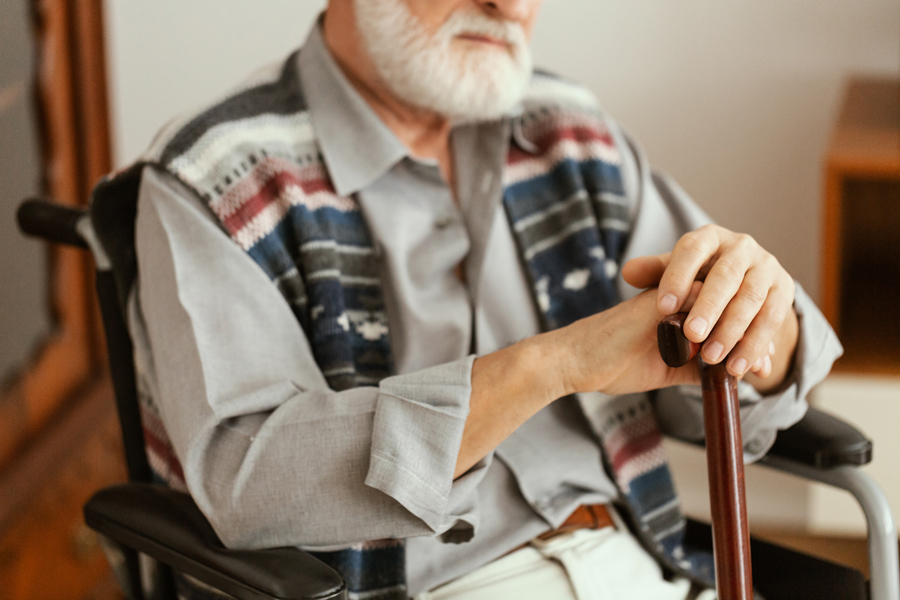
ALS-mimicked-lyme-disease

Hello, and welcome to another Inside Lyme Podcast. I am your host Dr. Daniel Cameron. In this episode, I will be discussing the case involving a 63-year-old man with ALS mimicked by Lyme disease.

I first read about this case by Wirsching and colleagues in the journal Clinical Case Reports. [1]

Amyotrophic Lateral Sclerosis (ALS), also known as Lou Gehrig’s disease, is a progressive motor neuron disease.

The 63-year-old man developed bilateral atrophic arm paresis with preserved reflexes and met the criteria for probable ALS. However, he also tested positive for Lyme disease by spinal tap.

In the year prior to developing ALS symptoms, the patient reportedly had a tick bite without a rash.

“In July 2018, that is, within six months, he developed paraparesis of both arms and also suffered from cramps in the shoulder girdle and hand muscles,” wrote the authors. “By August 2018, the patient was severely impaired in everyday life activities.”

His spinal tap revealed pleocytosis (an elevated white count) and elevated protein. The spinal fluid was positive for IgM and IgG titers for Lyme disease. His blood test was positive by ELISA and IgG Western blot tests. The antibody index was higher in the spinal tap than the blood by IgM but not IgG.

He was prescribed a three-week course of intravenous ceftriaxone but his symptoms did not improve.

“Hence, it is unlikely that neuroborreliosis was the main cause of symptoms in our patient,” wrote the authors.

Instead, the authors concluded that the patient’s ALS mimicked by Lyme disease.

Considering Lyme disease in differential diagnosis

The authors of another study, suggested that Lyme disease should be considered in patients presenting with ALS. “There appears to be a statistically significant association between ALS and immunoreactivity to B burgdorferi.” [2] Subsequent larger studies did not show an association.

Although the association between these two diseases remains controversial, Wirsching et al. highlighted the importance of considering Lyme disease in an ALS workup.

“It is vital to exclude potentially treatable diseases in the differential diagnostic work-up of all patients not to miss seldom, but treatable differential diagnoses such as neuroborreliosis,” the authors concluded.

The following questions are addressed this podcast:

  1. What is ALS?
  2. What is the difference between motor and sensory nerve disease?
  3. Why was Lyme disease considered?
  4. What is the significance of the positive spinal tap for Lyme disease?
  5. Were there any other tick-borne infections discussed?
  6. Was a single 3-week course of IV antibiotics sufficient?
  7. Why is it important to consider reversible causes of ALS?
  8. Have you seen cases of motor nerve disease in your practice?

Editor’s note:

Harvey and Martz described the case of a patient with motor nerve disease (ALS) who improved with antibiotic therapy.[3]

I have had Lyme disease patients with motor neuron disease who have improved with antibiotic treatment and others who have failed. I continue to encourage research in this area.

    1. Thanks for listening to another Inside Lyme Podcast. You can read more about these cases in my show notes and on my website @DanielCameronMD.com. As always, it is your likes, comments, reviews, and shares that help spread the word about Lyme disease. Until next time on Inside Lyme.

Please remember that the advice given is general and not intended as specific advice as to any particular patient. If you require specific advice, then please seek that advice from an experienced professional.

Inside Lyme Podcast Series

This Inside Lyme case series will be discussed on my Facebook and made available on podcast and YouTube.  As always, it is your likes, comments, and shares that help spread the word about this series and our work. If you can, please leave a review on iTunes or wherever else you get your podcasts.

References:
  1. Wirsching I, Ort N, Uceyler N. ALS or ALS mimic by neuroborreliosis-A case report. Clin Case Rep. Jan 2020;8(1):86-91. doi:10.1002/ccr3.2569
  2. Halperin JJ, Kaplan GP, Brazinsky S, et al. Immunologic reactivity against Borrelia burgdorferi in patients with motor neuron disease. Arch Neurol. 1990;47(5):586-594.
  3. Harvey WT, Martz D. Motor neuron disease recovery associated with IV ceftriaxone and anti-Babesia therapy. Acta Neurol Scand. Feb 2007;115(2):129-31. doi:10.1111/j.1600-0404.2006.00727.x

For more:

Human Tacheng Tick Virus 2 Detected in China

https://wwwnc.cdc.gov/eid/article/27/2/19-1486_article

Volume 27, Number 2—February 2021
Dispatch

Human Tacheng Tick Virus 2 Infection, China, 2019

Zhihui Dong1, Meihua Yang1, Zedong Wang1, Shuo Zhao, Songsong Xie, Yicheng Yang, Gang Liu, Shanshan Zhao, Jing Xie, Quan LiuComments to Author , and Yuanzhi WangComments to Author 
Author affiliations: Shihezi University, Shihezi, China (Z. Dong, M. Yang, Shuo Zhao, Y. Yang, G. Liu, Shanshan Zhao, Y. Wang); Foshan University, Foshan, China (Z. Wang, Q. Liu); First Affiliated Hospital of Shihezi University, Shihezi (S. Xie, J. Xie); Shihezi People’s Hospital, Shihezi (Y. Yang)

Abstract

We used metagenomic analysis to identify Tacheng tick virus 2 infection in a patient with a history of tick bite in northwestern China. We confirmed the virus with reverse transcription-PCR, virus isolation, and genomic analysis. We detected viral RNA in 9.6% of ticks collected from the same region.

Important excerpt:

Emerging pathogenic tickborne viruses have attracted much attention because of the increasing incidence of tickborne viral diseases and their effects on human health (14). In 2015, high-throughput sequencing of samples from ticks in China revealed several novel phleboviruses, including

  • Tacheng tick virus 2 (TcTV-2)
  • Changping tick virus 1
  • Bole tick virus 1 (BlTV-1)
  • Lihan tick virus
  • Yongjia tick virus 1
  • Dabieshan tick virus (5)

However, the risk for human infection from these viruses is not yet known.

The 38-year old Chinese man who had frequent contact with horses and sheep removed a tick from his arm and had the following symptoms: chills, severe fatigue, headache, anorexia, nausea, vomiting, fever, erythema at the bite site and neck stiffness. 

The researchers further gathered nearly 350 ticks from the patient’s geographical area and found nearly 10% carried the virus.  The sequences from the ticks closely related the isolate in the patient.

______________________

**Comment**

Despite the fact the authors stated this particular virus didn’t show growth in numerous media, a human contracted the virus.  This is important to remember.  All the statistics in the world don’t matter a tittle when you are the sorry sucker who becomes ill, despite everyone around you saying it’s ‘rare’! 

Phleboviruses can cause severe fever with thrombocytopenia syndrome, and multiple organ damage, including to the liver and kidneys.

For more:  https://madisonarealymesupportgroup.com/2018/08/20/first-identification-in-china-of-guertu-virus-from-ticks/  SFTS explained within – of which the Asian Longhorned tick is often the culprit, which is spreading through the U.S right now.

WHO’s New PCR Rules Guarantee COVID Cases Will Drop Making it Look Like The ‘Vaccine’ is Working

The World Health Organization initiated new rules regarding the PCR assays used for testing for COVID-19.  The WHO previously recommended 45 amplification cycles to determine if someone was infected with COVID.  They now state:

“Careful interpretation of weak positive results is needed (1). The cycle threshold (Ct) needed to detect virus is inversely proportional to the patient’s viral load. Where test results do not correspond with the clinical presentation, a new specimen should be taken and retested using the same or different NAT technology.

WHO reminds IVD users that disease prevalence alters the predictive value of test results; as disease prevalence decreases, the risk of false positive increases (2). This means that the probability that a person who has a positive result (SARS-CoV-2 detected) is truly infected with SARS-CoV-2 decreases as prevalence decreases, irrespective of the claimed specificity.

Most PCR assays are indicated as an aid for diagnosis, therefore, health care providers must consider any result in combination with timing of sampling, specimen type, assay specifics, clinical observations, patient history, confirmed status of any contacts, and epidemiological information.  Source.

It is widely known that anything over 30 cycles magnifies the samples so much that even insignificant viral DNA sequences end up showing up positive even if viral load is extremely low or the virus is inactive and poses no threat.

COVID PCR tests don’t detect a virus, but identify a piece of RNA presumed to be from a virus.
Also, PCR tests can’t distinguish between inactive viruses and infectious viruses.

Now, with the WHO’s lower PCR thresholds, it’s practically guaranteed that COVID “case” numbers will drop dramatically around the world.

We’ve been warned about this tinkering with cycles to give whatever message our ‘authorities’ want us to believe. Previously they need high case numbers to justify draconian lockdowns, so they instituted a high cycle threshold. Now they desperately need us to believe their lucrative vaccines are working so they need case numbers to drop – hence the lowered PCR cycles.

For more on PCR tests:

COVID-19 would barely be a blip on the radar screen if the WHO hadn’t changed the definition of a ‘pandemic’.

The WHO also eliminated the pre-COVID consensus that herd immunity could be achieved by allowing a virus to spread through a population, and insists that that it comes solely from vaccines.  

Hopefully their agenda is becoming crystal clear to everyone.

Dr. Kinderlehrer’s Experience With Tick-borne Illness & His New Book

https://www.lymedisease.org/kinderlehrer-book-intro-excerpt/

“If the cure doesn’t work, it means you don’t have Lyme disease” (NOT!)

Jan. 13, 2021

New Hampshire Right-to-Know Law & the Lyme Study Commission

https://www.change.org/p/the-us-senate-calling-for-a-congressional-investigation-of-the-cdc-idsa-and-aldf

New Hampshire Right-to-Know Law and the Lyme Study Commission

JAN 13, 2021 — 

As a result of NH House Bill 490 a committee was established to study the limitations of serological diagnostic tests in determining the presence or absence of Lyme and other tick-borne diseases and the development of appropriate methods to educate physicians and the public with respect to the inconclusive nature of prevailing test methods.

I made the following statement in the December Zoom meeting:

“Current FDA approved testing is no better than a coin toss”

We will present documentation in ongoing meetings to support this claim.

Below is a 15yr old example: (Aucott was past Chair of the TBDWG and Auwaerter was past president of the IDSA)

Two-Year Evaluation of Borrelia burgdorferi Culture and Supplemental Tests for Definitive Diagnosis of Lyme Diseasehttps://jcm.asm.org/content/43/10/5080
Peggy Coulter,  Clara Lema,  Diane Flayhart,  Amy S. Linhardt,  John N. Aucott,  Paul G. Auwaerter, and  J. Stephen Dumler

Published 2005

Comparisons with qualitative clinical assessments

“Overall, initial serologic tests agreed with possible or probable clinical Lyme disease diagnosis in only 50% (40/80) of cases.” [COIN TOSS]

Lyme Study Committee Home Page:http://www.gencourt.state.nh.us/statstudcomm/details.aspx?id=1515&rbl=1&txtbillnumber=hb490

Under the New Hampshire Right-to-Know Law, documents shared with the Lyme Study Committee members must be made public.

The following list of documents have been posted to the Committee Website.

The first two letters below are extremely disturbing and should be shared widely:

1. Dr. Richard Shulik’s 2010 testimony for House Bill 1326 (passed as HB 295)
http://www.gencourt.state.nh.us/statstudcomm/committees/1515/documents/Dr.%20Richard%20Shulik’s%202010%20testimony%20for%20House%20Bill%201326%20(passed%20as%20HB%20295).msg.pdf

Ten years ago, Dr. Richard Shulik (Clinical psychologist) reported on the experiences of Lyme patients from his practice in Londonderry and the difficulties obtaining treatment. Dr. Shulik’s comment: “To say the least, these are nightmarish experiences which I would not wish upon anyone.”

2. Registered Complaint to the NH Dept of Health
http://www.gencourt.state.nh.us/statstudcomm/committees/1515/documents/Registered%20Complaint.pdf

I sent this registered letter to Dr. Jose Montero, past Director of the NH Department of Health in 2010 and coordinated an onsite meeting which included Dr. Lynn Durand, currently a member of our study commission. The letter identifies five cases where a negative Elisa led to patient harm. These cases were summarized by a Lyme treating clinician here in New Hampshire.

3. LYME DISEASE BILL BECOMES LAW
http://www.gencourt.state.nh.us/statstudcomm/committees/1515/documents/LYME%20DISEASE%20BILL%20BECOMES%20LAW.pdf

House Bill 295 (Passed in 2011) protects physicians’ rights to determine the most appropriate treatment protocol for their patients..

4. 10 Things you Should Know About New IDSA Guidelines
http://www.gencourt.state.nh.us/statstudcomm/committees/1515/documents/10%20Things%20you%20Should%20Know%20About%20New%20IDSA%20Guidelines.pdf

A reposting of the article from Lorraine Johnson, CEO of lymedisease.org

5. Letter Regarding Testimony Submitted
http://www.gencourt.state.nh.us/statstudcomm/committees/1515/documents/Letter%20Regarding%20Testimony%20Submitted.pdf

Notice of my letter to the editor of the BMJ published June 2020 (Evidence of persistent infection after extensive antibiotic treatment)

6. NH DHHS Health Alert
http://www.gencourt.state.nh.us/statstudcomm/committees/1515/documents/NH%20DHHS%20Health%20Alert.pdf

DHHS is instructing the physician not to run the Western blot after a negative Elisa. So how do we rule out a false negative Elisa?????

7. Galaxy Diagnostics Launches the Most Sensitive Test Available for Direct Detection of Lyme Disease
http://www.gencourt.state.nh.us/statstudcomm/committees/1515/documents/Galaxy%20Diagnostics%20Launches%20the%20Most%20Sensitive%20Test%20Available%20for%20Direct%20Detection%20of%20Lyme%20Disease.pdf

“Galaxy validation data (unpublished) shows that the Nanotrap® Urine Test will often confirm active infection in patients with negative TTT (Two-Tiered Testing) results.”

8. Written Public Comment
http://www.gencourt.state.nh.us/statstudcomm/committees/1515/documents/Written%20Public%20Comment.pdf

Patient testimony across America is describing an experience that doesn’t resemble anything that our public health officials are telling us about Lyme disease. The truth about this life-altering/life-threatening infection remains well hidden from the public through an elaborate racketeering scheme now on trial in Texas District Court.

9. TBDWG Meeting Nov 17 9am Online
http://www.gencourt.state.nh.us/statstudcomm/committees/1515/documents/TBDWG%20Meeting%20Nov%2017%209am%20Online.pdf

Written public comment directed to Dr. David Walker, Co-Chair of the Tick-Borne Disease Working Group. During the July 8th meeting he was recorded saying that persistent infection is a “religious belief.”

10. TBDWG October 27, 2020 – Written Public Comment
http://www.gencourt.state.nh.us/statstudcomm/committees/1515/documents/TBDWG%20October%2027,%202020%20-%20Written%20Public%20Comment.pdf

The CDC’s refusal to acknowledge persistent infection has left hundreds of thousands (if not millions worldwide) in a debilitated state as the disease has been misclassified decades ago as a low-risk and non-urgent health threat. (Hard to catch and easily treated) Failure to recognize this pathogen as an antibiotic resistant/tolerant superbug leaves everyone in our state of New Hampshire vulnerable to its incapacitating outcome.

11. HB490 included a section on available treatment protocols
http://www.gencourt.state.nh.us/statstudcomm/committees/1515/documents/HB490%20included%20a%20section%20on%20available%20treatment%20protocols.pdf

Indirect serologic testing as you know is looking for elevated antibodies to the pathogen in question. Since humans do not produce antibodies against Borrelia (the causative agent of Lyme disease) for 4-6 weeks after a tick bite, relying on antibody production misses early detection. Antibody tests cannot be used to gauge treatment failure or success.

12. Tuttle directs pointed questions to TBD Working Group member Shapiro
http://www.gencourt.state.nh.us/statstudcomm/committees/1515/documents/Tuttle%20directs%20pointed%20questions%20to%20TBD%20Working%20Group%20member%20Shapiro.pdf

Carl Tuttle, a long-time Lyme activist from New Hampshire, gave the following remarks by telephone to the Tick-Borne Disease Working Group on Sept. 15.

13. House Bill 363 and the NH DHHS
http://www.gencourt.state.nh.us/statstudcomm/committees/1515/documents/House%20Bill%20363%20and%20the%20NH%20DHHS.pdf

In 2015 House Bill 363 required the NH DHHS to include a link to the International Lyme and Associated Diseases Society on its Internet website. Although the DOH adhered to those requirements, they do not have any references to ILADS in their official Health Alert going out to our medical community.

14. New Hampshire State House Hearing of 01.28.2010
http://www.gencourt.state.nh.us/statstudcomm/committees/1515/documents/New%20Hampshire%20State%20House%20Hearing%20of%2001.28.2010.pdf

Dr. Shulik’s testimony followed by a letter to the Editor-in-Chief of The New England Journal of Medicine. What we have here is collusion to deny a chronic disease; a disease that has spiraled out of control into a 21st century plague. The medical establishment has been led to believe that “chronic Lyme” is a fictitious disease and hundreds of thousands perhaps millions of patients around the globe are left untreated/undertreated and suffering.

15. limitations of serological diagnostic tests Rep Woods letter Oct 2020
http://www.gencourt.state.nh.us/statstudcomm/committees/1515/documents/limitations%20of%20serological%20diagnostic%20tests%20Rep%20Woods%20letter%20Oct%202020.pdf

The letter calls attention to a partial list of studies identifying treatment failure through direct detection methods with some of these references dating back thirty years.

16. 2010 Letter Jose T. Montero, MD, Director
http://www.gencourt.state.nh.us/statstudcomm/committees/1515/documents/2010%20Letter%20Jose%20T.%20Montero,%20MD,%20Director.pdf

Official registered complaint filed with the NH Dept of Health. Here we are ten years later!

17. Antibiotic treatment duration for Lyme disease
http://www.gencourt.state.nh.us/statstudcomm/committees/1515/documents/Antibiotic%20treatment%20duration%20for%20Lyme%20disease.msg.pdf

“…longer treatment durations were associated with better treatment response—with most high responders and well patients reporting treatment durations of four or more months and many reported durations exceeding a year. As the chart below reveals, those treated for less than a month were unlikely to report improvement.”

18. DDD CT, antibiotics-Oct 2020, 09-00725
http://www.gencourt.state.nh.us/statstudcomm/committees/1515/documents/DDD%20CT,%20antibiotics-Oct%202020,%2009-00725.pdf

Efficacy of Double‐Dose Dapsone Combination Therapy in the Treatment of Chronic Lyme Disease/Post‐Treatment Lyme Disease Syndrome (PTLDS) and Associated Co‐infections: A Report of Three Cases and Retrospective Chart Review

19. 2009 Letter to Quest Diagnostics
http://www.gencourt.state.nh.us/statstudcomm/committees/1515/documents/2009%20Letter%20to%20Quest%20Diagnostics.pdf

Could you please tell me why Quest Labs’ Western blot Lyme test doesn’t include band 31 and 34? Is it possible that your exclusion of these bands is missing many Lyme cases since band 31 and 34 are highly specific to Borrelia burgdorferi and were originally chosen for vaccine development?

20. EvidenceofPersistence-V2
http://www.gencourt.state.nh.us/statstudcomm/committees/1515/documents/EvidenceofPersistence-V2.pdf

The following is a list of over 700 peer reviewed articles that support the evidence of persistence of Lyme and other tick-borne diseases. It is organized into different categories—general, psychiatric, dementia, autism and congenital transmission.

21. Treatment Delays and the Increase Risk of Persistent Illness in Lyme Disease
http://www.gencourt.state.nh.us/statstudcomm/committees/1515/documents/Treatment%20Delays%20and%20the%20Increase%20Riskof%20Persistent%20Illness%20in%20Lyme%20Disease.pdf

From the Johns Hopkins study:

“One-third of Lyme disease patients report delayed treatment of greater than 30 days

Carl Tuttle’s comment: Humans do not produce antibodies to Lyme disease for 4-6 weeks after a tick bite so serology has always been the wrong diagnostic tool.

22. The Staggering Cost of Lyme Disease and Other Tick-Borne Illnesses
http://www.gencourt.state.nh.us/statstudcomm/committees/1515/documents/The%20Staggering%20Cost%20of%20Lyme%20Disease%20and%20Other%20Tick-Borne%20Illnesses.pdf

From the IgeneX survey:

Lyme disease has been detected in all 50 states. The high cost of Tick-Borne Disease misdiagnosis.

According to the survey:

· 45% of patients needed more than three years to obtain the proper diagnosis

· 65% of patients were forced to quit a job or cut back on their hours due to their symptoms

· 24% of patients saw more than ten doctors before receiving a proper diagnosis

· 86% of patients suffer from long-term side effects from not having been diagnosed sooner

_______________________

For more:  https://madisonarealymesupportgroup.com/2020/09/25/why-should-we-care-about-lyme-disease-a-colorful-tale-of-government-conflicts-of-interest-probable-bioweaponization-and-pathogen-complexity/

https://madisonarealymesupportgroup.com/2020/04/26/cdc-playbook-learning-from-lyme/

https://madisonarealymesupportgroup.com/2020/07/30/how-the-cdc-uses-their-own-guidelines-to-rig-the-system/

https://madisonarealymesupportgroup.com/2018/03/17/nice-lyme-guidelines-human-rights-of-lyme-patients/