Archive for the ‘PANS’ Category

Brain on Fire: Neuropsychiatric Disorders in Children

https://www.lymedisease.org/alain-mass-brain-on-fire/

Brain on fire: neuropsychiatric disorders in children

By Alain Mass, MD

2/13/24

Nearly one in six children between the ages of 2 and 6 years old (17.4%) has a diagnosed mental, behavioral or developmental disorder.

More than 17 million children in the United States have or have had a diagnosable mental illness.

Mental disorders are either primary or secondary. Primary mental illnesses are rather treatable than curable and the treatment is most of the time lifelong.  If you ignore that behind the well-made diagnosis, there may be a deeper reason for the symptoms, you accept the fate of what a primary mental health disorder is about.

The expression “brain on fire” means that the child has only a brain inflammation as opposed to having a true psychiatric disorder, where the psychiatric disorder is only a symptom and not the disease.

The causes of neuroinflammation are numerous and often combined with each other. Many extra-psychiatric conditions may cause psychiatric disorders. The most common ones are infections, auto-immune encephalitis, toxicity including but not limited to mold, heavy metals, or pesticides.  Metabolic or nutritional factors may also contribute to mental disorders.

Lyme disease and neuropsychiatric disorders in children

Children develop more central nervous system symptoms while adults develop more symptoms from the peripheral nervous system.

The most common manifestations of Lyme disease in children are emotional, cognitive and behavioral. The change of personality is definitely the number one symptom of Lyme disease in children.

Lyme disease may be responsible, according to Robert Bransfield, M.D, psychiatrist, for a wide spectrum of neuropsychiatric symptoms. These may include: developmental disorders, autism spectrum disorders, schizoaffective disorders, bipolar disorder, depression, anxiety disorders (panic disorder, social anxiety disorder, generalized anxiety disorder, OCD), intrusive thoughts, eating disorders, sleep disorders, addiction, cognitive impairment, brain fog, seizure disorders, suicide, violence, social withdrawal, depersonalization, dissociative episodes, and derealization. 20-25% of autistic children in the US have been shown to have Lyme disease.

Children may have difficulty with attention and concentration, speed and efficacy of processing information, learning and memory, auditory processing and language expression. Sleep disorder is common or return to bedwetting or loss of daytime bladder control.

Teenagers may have mood swings, depression, suicidal thoughts, personality changes, sleep problems, poor concentration, cognitive disorder, a loss of interest in school and school activities and interest in family values.

Most children who present with cognitive or psychiatric disorders do not remember a tick bite. They are already in the late phase of the disease. The initial phase may be missing.

The symptoms and severity of symptoms can vary from day to day. A child may feel well enough to go to school one day, but not the next. A psychiatric disorder may be the only symptom. Brian Fallon, M.D, Director of the Lyme and Tick-Borne Diseases Research Center at Columbia University, writes, “Psychiatrists who work in endemic areas need to include Lyme disease in the differential diagnosis of any atypical psychiatric disorder.”

Basal ganglia autoimmune encephalitis (PANDAS/PANS)

Auto-immune encephalitis is characterized by an abrupt onset, often from one day to the next and by the correlation in time between the evidence of an infection and a sudden and acute new onset of a neuropsychiatric disorder.

PANDAS refers to encephalitis due to streptococcal infections, whereas PANS to other infections. The diagnostic criteria of PANDAS/ PANS are to have an abrupt, dramatic onset or recurrence of OCD, acute onset of anorexia and/or severe restrictive eating disorders with at least two of the following symptoms.

  • Anxiety, including new onset of separation anxiety, or hyper-alertness.
  • Behavioral regression (baby talk, tantrums),
  • Emotional lability including suicidal depression, hallucination,
  • Irritability, aggression, raging, severe oppositional behaviors.
  • Hypersensitivity to light, noise, or touch. The child may not tolerate his/her clothing
  • Tics, involuntary movements.
  • Handwriting change
  • Deterioration in school performance and cognitive changes, (difficulty focusing)
  • Sleep disturbances (difficulty falling asleep, night terrors, refusal to sleep alone)
  • Urinary frequency or urgency, new onset of bedwetting

Toxicity

Heavy metals (such as mercury and lead), mycotoxins released by mold, and other environmental toxicants are neurotoxic and may also be responsible for neuropsychiatric disorders.

Post COVID 

Anxiety and depression may be common six months after COVID-19 recovery.

Nutritional and metabolic factors

Glutamate, GABA, histamine, oxalate, copper, zinc, selenium, vitamin Bs in excessive or insufficient amounts, the inability to process folic acid as seen in those who have MTHFR mutations,  have also been associated with mental disorders.

Gut inflammation

The gut-brain axis (GBA) consists of bidirectional communication between the central and the enteric nervous system, linking emotional and cognitive centers of the brain with peripheral intestinal functions. Gut inflammation can cause cognitive and mental health disorders, too.

Conclusion

Wondering whether a mental disorder is either primary or secondary, even when the disorder is well categorized as well known mental disease is the only way to give a chance to convert a lifelong, treatable but not curable, mental illness into a curable disease, to relieve from the social and medical burden of a psychiatric illness.

Dr. Alain Mass is board-certified in family medicine, with a practice in Suffern, New York. He is a member of the International Lyme and Associated Diseases Society (ILADS), the International Society of Environmentally Acquired Illnesses (ISEAI), and the PANDAS Physician Network (PPN). His website is massfunctionalmd.com.

For more:

She’s Battling Lyme, Bartonella, Babesia, Anaplasmosis, and PANS

Eileen Clossick opens up about her Lyme disease, Bartonella, Babesia, and Anaplasmosis, and PANS in an effort to help others and spread awareness.

The puzzle pieces are finally starting to come together after going through what I now recognize was the perfect storm this past year: getting the Covid vaccine (& subsequently developing paresthesia in my legs), contracting Covid, going through an emotional stressor, and then being exposed to mold (and later finding out I have mold toxicity, or “mycotoxicity”). The floodgates were opened, and my body could no longer suppress the viral load it was carrying.

Experiencing Symptoms

I was experiencing such severe insomnia that I would go days without sleeping, even after taking four or five Benadryl at a time. I was having heart palpitations, night terrors, such severe brain fog that I couldn’t plan my days off of work without ending up in tears, tingling in my head as well as my legs, intrusive thoughts, dizzy spells, tinnitus, and neck stiffness. I was seeing black dots, snowflakes, and stars. I had weird neuro symptoms like dropping things all the time and mixing up left and right. I would wake up at night with shaking episodes because I couldn’t regulate my body temperature. And worst of all, I was experiencing a darkness and spiral in my mind that I have yet to figure out how to explain in words. By nature, I am a very joyful, energetic, and enthusiastic person, so I knew that this was not me, and something was deeply wrong. I was afraid to hurt a patient at work due to my exhaustion caused by severe insomnia, so I started calling out of shifts.

After a boatload of research, and visiting and calling multiple doctors and clinics, I finally got into a Lyme Literate doctor. I explained my story to her, all the way back to the onset of symptoms at 5 years old. She looked at me and said, “this is classic Bartonella,1 I’ll be shocked if it isn’t.” I instantly burst into tears in her office, and the only thing I could repeat was “no one should ever be told they’re just anxious for 20 years.”

Pediatric Acute-onset Neuropsychiatric Syndrome (PANS)

If it hadn’t been for the flare up this past year, I may have never gotten the answers I needed. I was forced to ask the deeper question of what was really going on.

At the age of five, I had a sudden onset of severe anxiety, OCD symptoms, destructive behavior, night terrors, and sensory issues. It escalated to the point that I needed to be admitted to a children’s psych hospital for a little over a week. My doctors tested me for Strep (for a PANDAS diagnosis), which was negative. Unfortunately, they did not have the knowledge of tick borne illnesses or PANS (Pediatric Acute-onset Neuropsychiatric Syndrome). So, I was seen as a psych case, told I had a “delay in my neurological development” and prescribed psych meds at a young age. Over the years, I led a normal life, but always dealt with what I believed was an anxiety disorder. So I attributed other strange symptoms to anxiety throughout my life. There have been periods when it was worse than others, but overall, I tried incredibly hard to hide it from most people, because I hated that I struggled with it. If it hadn’t been for the flare up this past year, I may have never gotten the answers I needed. I was forced to ask the deeper question of what was really going on.

Multiple Tick-borne Diseases

thumbnail_image2 (1)-2-1When the full Tick Borne Panel came back, my doctor was correct in her assumption. I was diagnosed with Lyme, Bartonella, Babesia, and Anaplasma. Along with these tick borne illnesses, I also had the Neural Zoomer Plus test done which identified blood brain barrier disruption2 and demyelination. With that, I was diagnosed with PANS. Along with those diagnoses, I was also diagnosed with 9 new food sensitivities and mycotoxicity. My doctor looked at me and said “you’re one tough cookie for walking around with all of this.”
Surprisingly, with each new diagnosis came a sense of relief. I finally had proof that everything I was experiencing was real. This illness can be dangerously misleading, and oftentimes cause me to doubt my own experiences, as I look normal from the outside and I have good moments and days when I feel like myself. Because a lot of what I endure is not outwardly visible to others, I have been challenged to put into words what I am experiencing, so I can let others in, especially those closest to me.

My Most Recent Flare

This past spring, I was having flashbacks to my childhood, and experiencing odd bouts of deja vu. My body was trying to tell me I was experiencing a flare, but I couldn’t read the signs. I was begging the Lord to give me sleep, fighting for rest in any way I could: putting my phone away 2 hours before bed, creating a nighttime routine, etc, all to no avail. Even when I did fall asleep, I was awoken by night terrors, pinprick sensations, or shaking episodes and required even more sleep aides to get back to sleep. I didn’t know if I was doing something wrong. All I knew was that I was struggling and needed help, badly. I didn’t know exactly what was going on at the time, but I knew that I was done taking the band aid approach offered to me. I didn’t want to just take more pills; I wanted to know why I was experiencing all of these random symptoms.

Unfortunately, when these tick borne illnesses and other infections have crossed the blood brain barrier and gone systemic after being in the body for years, antibiotics alone do not work. These bugs are quite intelligent. They create a biofilm to protect themselves. So, while I will most likely be on antibiotics and anti-parasitic drugs long-term, the road to recovery involves so much more than just antibiotics. I have yet to meet a single person who healed from long-term Lyme/coinfections with antibiotics alone. In fact, I experienced some of the worst die-off symptoms (herxing) after starting some of the herbal regimens prescribed by my ILADS doctor. From someone coming from healthcare and working with pharmaceuticals, I had no idea how potent and effective some of these herbs could be.

The Healing Process

thumbnail_image0-1In addition to medications and supplements, there are other supportive therapies to help my body and mind heal. Since this has gone undiagnosed for so long and crossed the blood-brain barrier, I will be undergoing treatment for the next couple of years. There are numerous routes to take, so treatment may look different at different points in time over the next couple of years. Because my immune system has been suppressed for years, I need to do everything I can to help boost it. I am currently taking Immunoglobulins. There are many diet and lifestyle changes to make as well to help boost my immune system and decrease the inflammation in my body and brain.

For me, I’ve found that the best medicine of all is being with people. It’s often seeing others and socializing that pulls me out of the never ending darkness or mental spiral that I can’t escape alone.

And, since my body has been stuck in a fight or flight mode (sympathetic state) for so long fighting infection without me knowing, I have to help my body learn how to re-enter the parasympathetic state (or, rest and digest state). For me, I’ve found that the best medicine of all is being with people. It’s often seeing others and socializing that pulls me out of the never ending darkness or mental spiral that I can’t escape alone. When I was a kid, nothing worked, so I am thankful that I have found something that does work. There are other simple things I’ve found effective such as laughter, music, prayer, and being in nature. There are also certain therapies like cold-water exposure, craniosacral therapy, EMDR therapy, & neurofeedback, that help my body shift from the sympathetic to the parasympathetic state. Our bodies heal best in the parasympathetic state. I could create a whole other blog post just on all the treatment and therapies involved. Keeping track of it all is a full time job in and of itself!

And as I mentioned, there is something called the Jarisch-Herxheimer reaction (or “herxing”). I don’t have a worst enemy, but even if I did, I would not wish this on him or her. Basically, as the bacteria die off, they release toxins, so all of the symptoms you’ve experienced come to a head and get worse before they get better. But, as people have told me, even though it’s a living hell, it’s something to celebrate, because you know you’re hitting the nail on the head. Since most of the symptoms I have experienced have been neuro and psychiatric, and because these bacteria have crossed the blood brain barrier and caused PANS, most of the herxing involves worsening of the neuro and psychiatric symptoms. “In PANS and PANDAS, autoantibodies target healthy proteins or receptors in the brain, principally in the basal ganglia, a region of the brain responsible for motor movements, learning, cognition, and emotion.”3 Because I’ve had this for so many years without knowing, there will be a lot of bacteria that need to die off, and lots of herxing to go through, but I am determined to go through whatever I need to in order to get to the other side. It’s taken me years to arrive at this point; I can’t expect to heal in a month or two. As I begin to experience some days in between herxing where I feel like myself again, I am hopeful for complete healing in time and better days ahead.

There is also the issue of mycotoxicity. Who knew mold could wreak such havoc on your brain and nervous system? When not excreted from the body, it gets stored in fatty tissues, including the brain, which explains why everything got worse when I had a new mold exposure. For whatever reason, people with Lyme & co-infections don’t flush out toxins from their body like the average person (many of these people also have an MTHFR gene mutation).

Due to the ups and downs of these illnesses, many weekly appointments, and the financial burden that comes along with all of this, I made the decision to move home to Rhode Island and go ‘all in’ on my healing journey. Although this has felt like rock bottom all around, I am challenging myself to view this situation in a new light. What if this is an opportunity to give my body the rest, space, and time it needs to heal? What if the “falling apart” of my old life, is actually a new path falling together? What if I can use this as an opportunity to spread awareness, and therefore alleviate the suffering of others? What if I can heal completely, and then get back out there, further my degree, and work with the kiddos (& their families) who battle PANS/PANDAS?

Earlier diagnosis = earlier treatment, and therefore, better outcomes.

thumbnail_image3As I’ve mentioned before, I am open about my journey, in order to spread awareness, and to one day fight alongside and achieve victories for others, so that no one will ever go misdiagnosed for so long like I did. Earlier diagnosis = earlier treatment, and therefore, better outcomes. Because of the frequent mental spiral I experience, especially during this past year, I have doubted many of my decisions. However, since I discovered all of this, I have not for one second doubted that I was handed this cross so that I can one day help others with a similar cross. They say people who battle long term Lyme & co-infections with a purpose and reason to get through it, have better outcomes than those without a purpose, and I have most definitely found mine. No one should go misdiagnosed for 20 years, and then have to fight so hard just for a diagnosis. No one should have to go to therapy to process 1) the trauma that comes along with PANS, and 2) the shock of going misdiagnosed for so long. No one should have to pay thousands of dollars out of pocket to regain their health after it was the medical field that missed the bigger picture.  No one should be treated as though they are crazy by certain doctors who have not been trained in or educated themselves on tick borne illnesses (as well as PANS, molecular mimicry, etc), because it’s often a complicated and “controversial” topic.

As passionate as I am about this, I am also realizing there are emotional, spiritual, & mental components to work through as well. I could also write a whole blog post (or book, truthfully) just on those aspects alone. I am learning that I can’t expect to heal while holding onto anger and resentment towards all those who couldn’t help me more when I was a kid, or even this past year. I am also learning to be patient with myself as I process the aftershocks, all the emotions that come with it, and some of the painful memories.

It was only when I came to a place of deep acceptance, that I achieved a sense of peace.

For more GLA blogs, click here.

Endnotes

All About Kids With Lyme, PANS, & Mold Illness

https://vimeo.com/765481249  Video Here (Approx. 1 hour 30 Min)

Ticktective with Dana Parish: All About Kids with Lyme, PANS, Mold Illness

Learn about the signs of Lyme and co-infections in children in this installment of Bay Area Lyme Foundation’s TICKTECTIVE podcast.

Dana Parish, co-author of the book CHRONIC, interviews Charlotte Mao, MD, MPH, a Harvard-trained pediatric infectious diseases physician and Invisible International’s curriculum director.

In this discussion, Dr. Mao reviews Lyme testing, Pediatric Acute-onset Neuropsychiatric symptoms (PANS) triggered by Bartonella, and how mold toxins can complicate the course of illness.

For more:

Tick Week News Coverage From Maine TV Station

https://www.lymedisease.org/tick-week-news-center-maine-2022/

“Tick Week” news coverage from Maine TV station

July 11-15 was “Tick Week” at News Center Maine, an NBC-affiliated TV station in Portland, Maine.

Reporter Vivian Leigh filed daily stories related to such topics as Pfizer’s Lyme disease vaccine, a proposed preventative shot for Lyme, a Maine family’s challenges dealing with Lyme-related PANS, and how winter ticks are causing the demise of many moose in the state.

Monday, July 11:

Two vaccines against Lyme inch closer to reality

Tuesday, July 12:

Preventative shot against Lyme could hit the market in 2024

Wednesday, July 13

‘It was like my child disappeared’: Tick bite triggers PANS in 7-year-old girl

Thursday, July 14

Winter ticks are a growing threat to moose calves in Maine

Friday, July 15

“We are getting a positive Lyme test every day”: Maine experts see spike in dog infections

When Parents are Unjustly Accused of Harming Their Sick Child

https://www.lymedisease.org/parents-unjustly-accused/

TOUCHED BY LYME: When parents are unjustly accused of harming their sick child

If your child has chronic Lyme disease, PANS/PANDAS, mast cell activation syndrome, POTS, or any number of other “medically complex conditions” – you have probably experienced being disbelieved by many people.

You may be a decent, well-intentioned parent doing everything you can to figure out your child’s puzzling medical problems.

You may scour the internet to learn more about the child’s condition, track the ups and downs of his or her symptoms, and carry binders full of medical records to appointments with various specialists—many of them far from your home.

But, in a cruelly ironic twist, those very activities can get you in trouble.

Physicians who have little experience with your child’s medically complex condition may feel you are “overmedicalizing” your child.

School officials may think you’re intentionally keeping your child out of class for reasons they consider invalid.

Neighbors and even family members may believe you’re exaggerating your child’s health problems—and, in their opinion, going about things the wrong way.

And, unfortunately, any one of these people might report you to Child Protection Services. And then your problems will escalate dramatically.

Now, it goes without saying that sometimes children ARE abused by parents, and there is, of course, a legitimate role for CPS investigations.

But medically complex conditions are fraught with issues that can unfairly entangle parents—and the more they fight to free themselves, the more tied up in legal knots they may become.

For an idea of how bad things can get, consider what happened to then-teenager Justina Pelletier and her family. In 2013, her parents lost custody of their daughter after Boston Children’s Hospital disagreed with how she was being treated at a different medical center. (Read more about Justina’s situation here.)

What to do?

Beth Alison Maloney, Attorney/Author

According to Beth Alison Maloney, there are things you can do now to minimize the possibility of running afoul of CPS in the future. And, if you’re already caught up in the system, there are things you can do to get out of it.

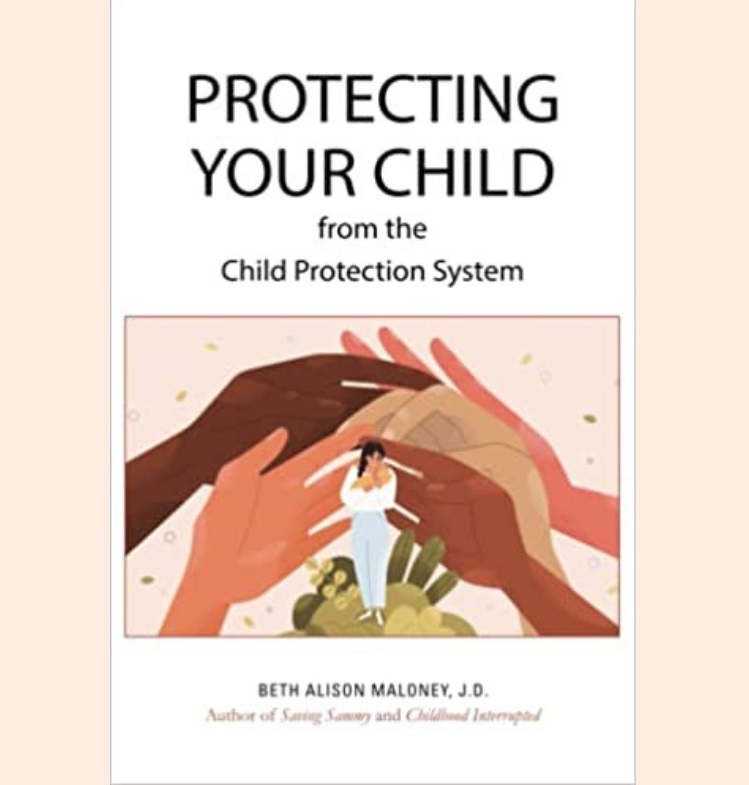
Her thorough and well-researched advice on this subject is laid out in a new book called Protecting Your Child from the Child Protection System.

Maloney is an attorney and the mother of a child who suffered from the strep-caused autoimmune condition known as PANDAS—back before practically anybody even knew what that was.

Theirs was a complicated journey. But her son finally got better and now is a well-functioning adult. She wrote their family’s story in her 2009 book, Saving Sammy: Curing the Boy Who Caught OCD.

In 2013, she wrote another instructive book, called Childhood Interrupted: The Complete Guide to PANDAS and PANS. It primarily focuses on the medical information you need to help your child recover from these conditions.

Over the past two decades, Maloney has worked as a lawyer, guardian ad litem, and nationwide consultant in the field of child protection laws. She has seen firsthand how innocent families are sometimes presumed guilty of all manner of abuse. She has seen the rise of “child abuse pediatricians”–specialists that she believes sometimes jump to unwarranted conclusions, to the detriment of the families involved.

She wrote this book so parents of sick children can understand what they are potentially up against and how they can help themselves. As she states in the introduction, “Too much is at stake for you to plunge in without being informed.”

(Please go to top link for an excerpt from the book)

Maloney’s book is divided into six parts:

  1. An overview of the Child Protection System and how it functions.
  2. How to navigate the maze and what to do if you find yourself accused
  3. The special challenges facing parents of medically complex children
  4. Building a team—lawyer, family, friends
  5. A deeper dive into the court system
  6. Rebuilding your lives after being falsely accused of abusing your child.

No parent wants to think about the possibility of losing custody of their child–especially when that child is seriously ill. But parents of medically complex children should familiarize themselves with the issues involved and take steps to head off trouble.

Knowledge is power. And if you’re falsely accused of abusing your child, you need all the power you can get.

For more information, see Beth Alison Maloney’s website.

TOUCHED BY LYME is written by Dorothy Kupcha Leland, LymeDisease.org’s Vice-president and Director of Communications. She is co-author of When Your Child Has Lyme Disease: A Parent’s Survival Guide. Contact her at dleland@lymedisease.org.

_________________

**Comment**

Very important information within this article, and book.  I highly advise any parent, grandparent, or concerned person who knows of a family struggling with Lyme to get this book to be educated. This is a wonderful resource and would make an excellent gift as well.

For more: