Author Archive

16-Year-Old Boy With Lyme Disease Presenting as Depression

https://danielcameronmd.com/16-year-old-boy-lyme-disease-presenting-depression/

16-YEAR-OLD BOY WITH LYME DISEASE PRESENTING AS DEPRESSION

Adolescent with Lyme disease and depression holding his head

There has been increasing research linking COVID-19 with the development of neuropsychiatric symptoms, including depression and anxiety. But multiple studies have already found an association between other infections, such as Lyme disease, and the onset of depression.

 

One study found a high prevalence of depression in Lyme disease patients. Between January 2008 and December 2014, 1 in 5 patients treated at the Lyme Center Apeldoorn in the Netherlands was diagnosed with depression and Lyme disease. ¹

Meanwhile, Dr. Robert Bransfield, a psychiatrist specializing in the diagnosis and treatment of tick-borne illnesses, reports “In my database, depression is the most common psychiatric syndrome associated with late-stage Lyme dis­ease.”

“I estimate that there are at least 1,200 people per year who commit suicide as the result of Lyme disease,”  Bransfield writes in his article “Suicide, Lyme and Associated Diseases.” ²

Borrelia burgdorferi, the causative agent of Lyme disease, “may be diagnosed as a persistent infection with immune suppressant and evasive capabilities or there may be a postinfectious process,” Bransfield writes. “In either case, the psychiatric symptoms are associated with an immune-mediated process.”

Brian Fallon, MD, director of the Lyme and Tick-Borne Diseases Research Center at Columbia University, describes the case of a 16-year-old adolescent who presented with long-standing depression, which suddenly worsened.³

Neuropsychiatric symptoms

He reported anger, frustration, insomnia, poor appetite, mild weight loss, and passive suicidal ideation. He would say, “I wish I could just die in my sleep.”

The boy complained of brain fog and had a steep decline in cognitive abilities. His symptoms were initially presumed to be caused by “either laziness or mild depression.” He suffered from ongoing knee pain and was forced to quit sports.

His grades dropped from “A’s” in 7th grade to nearly failing by 10th grade. He suffered from fatigue and forgetfulness. “He appeared lazy because he found it hard to get out of bed in the morning,” Fallon writes.

The boy’s symptoms were extensive and included:

• severe headaches
• facial fasciculations, myalgias
• stiff neck
• hyperacusis
• episodic paresthesias of his face and hands
• sudden sweating
• painful joints
• sore throats
• palpitations
• electric shock-like pains
• word-finding problems, such that it was hard to finish sentences
• semantic paraphasias
• short-term memory problems, such that he could not recall conversations
• testicular pain

Since he reported having embedded ticks in the past, Lyme disease was clinically diagnosed “given the suspicious clinical history.”

His Lyme ELISA results were negative twice in the prior 3 months, but his IgG Western blot revealed 4 of the 5 requisite CDC specific bands. A brain SPECT revealed findings consistent with encephalitis, vasculitis, and Lyme disease.

Treatment response

The boy was diagnosed with probable Lyme encephalopathy and treated with 12 weeks of intravenous ceftriaxone.

He improved on sleep, appetite, headaches, joint pains, numbness, distractibility, short-term memory, and emotional behavior. His depression cleared without the need for antidepressant medications. His IQ improved by 22 points, and his school performance markedly improved.

References:
  1. Zomer, T.P., et al., Depressive Symptoms in Patients Referred to a Tertiary Lyme Center: High Prevalence in Those Without Evidence of Lyme Borreliosis. Clin Infect Dis, 2017. 65(10): p. 1689-1694.
  2. Bransfield RC. Suicide and Lyme and associated diseases. Neuropsychiatr Dis Treat. 2017;13:1575-1587. Published 2017 Jun 16. doi:10.2147/NDT.S136137.
  3. Fallon BA, Kochevar JM, Gaito A, Nields JA. The underdiagnosis of neuropsychiatric Lyme disease in children and adults. Psychiatr Clin North Am. 1998;21(3):693-703, viii.

____________________

**Comment**

If there was ever a great example of the importance of Lyme/MSIDS being clinically diagnosed, this is it!

This poor teenager would have continued spiraling down until he might just have achieved his wish of dying.  

This study points out a number of things parents and doctors should be considering:

  1. The plethora of symptoms that suggest a systemic infection(s)
  2. The drop in grades
  3. The stiff neck (few things cause this – but it’s hallmark for Lyme)
  4. The fact antibiotics helped so many of the symptoms – including the depression – without any antidepressants
  5. He was seronegative – and so many are.  Doctors have to stop relying upon testing to diagnose this and must become more educated on tick-borne illness.
The CDC just upped numbers again from 300,000 to 476,000 new cases of Lyme diseases per year – highlighting the fact this plague is serious, isn’t going away, and something needs to be done about it.

For more:

We can be thankful he fell into the hands of Dr. Fallon or this young man would most probably not had a favorable outcome.

Contain and Eliminate: The American Medical Association’s Conspiracy To Destroy Chiropractic

Lyme/MSIDS patients often benefit from Chiropractic care.  Chiropractors need to be educated on tick-borne illnesses as they are often the first health practitioners sought after as many patients will not attribute their joint pain & other physical ailments to tick-borne illness.

This case report  demonstrates this as a patient seeing a chiropractor with joint popping with each articulation and a continual joint subluxation issue, was found to be infected with two strains of Bartonella.  I also had these symptoms in my knee.

Many are unaware that the first two years of chiropractic education is exactly the same as medical doctor education.
Many are also unaware of the history of collusion within the American Medical Association in attempting to destroy the chiropractic profession.

This is important history to know as the AMA is an extremely powerful organization with a ongoing history of vilifying anything considered competition (compounding pharmacies, naturopaths, homeopathy, herbalists, etc).  The saying, “Those who do not learn from history are doomed to repeat it,” comes to mind.  

https://www.dynamicchiropractic.com/webcasts/20210218/archive_20210218.mp4  Webinar Here

https://www.dynamicchiropractic.com/mpacms/dc/o2.php?f_id=34  Book info here & to purchase

Finally – the Whole Truth about the AMA’s campaign to Contain and Eliminate Chiropractic
Contain and EliminateIn 1975, a whistleblower, who called himself “Sore Throat,” fed information about how the AMA’s Committee on Quackery was aiming to “contain and eliminate” a competing profession, chiropractic.
The new book, “Contain and Eliminate: The American Medical Association’s Conspiracy To Destroy Chiropractic,” answers previously unanswered questions about conspiracies within conspiracies involving the Church of Scientology v. the AMA and the AMA v. chiropractors in one of the longest antitrust cases in U.S. history.
 
This story has never been told in its entirety.

Louis Sportelli“CONTAIN AND ELIMINATE is a story that needs to be told not for revenge but for restoration and rehabilitation to the image of chiropractic which was disparaged and destroyed resulting in millions of patients who would never seek the services of a doctor of chiropractic because the image of the profession was so tarnished by the ACTIVITIES of the American Medical Association.” Who should get a copy of the book CONTAIN AND ELIMINATE? Everyone who has been either positively or negatively impacted by the decades of illegal activity of the American Medical Association.
From your interested patients, to your medical physician friends to your attorney and especially your library, this story needs to be shared with those who may never have understood the plight of the chiropractic profession and your struggle to survive.

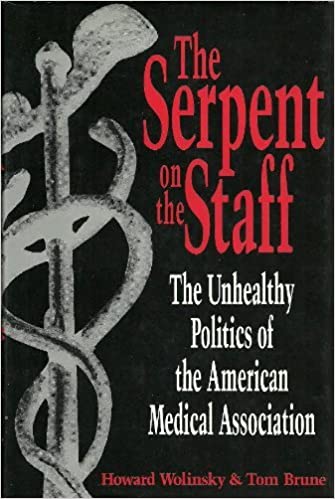
Another book written by Wolinsky and worth checking out is The Serpent on the Staff: The Unhealthy Politics of the American Medical Association

CDC Disaster Highlight

http://  Approx. 14 Min.

CDC Disaster Highlight – Dr. James Lyons-Weiler

Watch the entire panel interview here now: https://youtu.be/on_p-sKxjGc​
Download the peer reviewed research paper highlighting the CDC’s controversial conduct and learn more about the speakers here: https://www.standforhealthfreedom.com…​
Tune in to learn:
  • Why we should be concerned about death certificate data.
  • Why accuracy, integrity and transparency are so important during a public health crisis.
  • How the CDC set the stage for widespread devastation — physical, psychological and economic.
  • What we can do so that incidents of this magnitude never happen again.

http://www.standforhealthfreedom.com Facebook and Instagram: @standforhealthfreedom Twitter: @standforhealth1

___________________

For more:  

February Lyme Warrior Q & A

https://globallymealliance.org/dear-lyme-warriorhelp-16/

blog_Lyme-Warrior-Q-A_Jennifer-Crystal_3

by Jennifer Crystal

Every few months, Jennifer Crystal devotes a column to answering your questions. Do you have a question for Jennifer? If so, email her at lymewarriorjennifercrystal@gmail.com.

Do steroids make Lyme disease worse?

Yes. I learned this the hard way. Twice before I was accurately diagnosed with Lyme disease, I was prescribed steroids. The first time was in 2002, five years after my tick bite, and three years before I started treatment for Lyme disease, babesiosis, and ehrlichiosis. I was prescribed steroids to treat systemic hives that, unbeknownst to me or my dermatologist at the time, were caused by Lyme. After being on that round of steroids, I was stricken with my usual on-and-off flu for several weeks.

I was prescribed steroids again in 2003 when I had a bad case of mononucleosis. Ironically, I begged my primary care physician for that prescription, so that I could speed up my recovery and get on to my summer job as a camp counselor. The steroids did clear up my sore throat and swollen glands very quickly, and while I was on them, I felt like I had energy. I went to camp, which was a mistake. My energy levels soon crashed, and the mono slipped into chronic Epstein-Barr virus. Two bedridden years later, I discovered that the Epstein-Barr was not improving because I had underlying tick-borne infections. Those infections probably would have come to the forefront anyway while I had mono, but the steroids certainly didn’t help.

Why do steroids impact Lyme disease patients so negatively? In his blog post “Steroid Use Can Lead to Long-Term Treatment Failure for Lyme Disease Patients”, Daniel Cameron, MD explains, “An association of steroid use with an increased failure rate or worsening of disease is understandable in view of the well-known effects of these agents on the inflammatory and immune responses.” Dr. Cameron points to several studies that tie steroid use to Lyme disease treatment failure.

My Lyme Literate Medical Doctor (LLMD) has told me that the response to oral steroids is different than inhaled steroids. I have been on inhaled steroids for sinusitis (nasal spray) and for post-COVID-19 lung inflammation (inhaler) and have not had any issues with those, but of course the best thing is to always check with your LLMD about the way your own body might respond to any medications.

I have babesiosis and am starting to get back into exercise. Should I go until I feel air hunger, push beyond it, or stop before I feel it?

This question comes in response to my post “What is Air Hunger, Anyway?”, which describes a common symptom of babesiosis. Babesia is a parasite that eats the oxygen in the red blood cells, making the body feel hungry for oxygen. For me, that feels like molasses weighing my body down. Sometimes it feels like my arms and limbs are “gasping,” my cells craving air the way your stomach might grumble for food when you’re starving. I feel lightheaded, and experience low blood sugar reactions. I often get a headache.

These symptoms usually come on post-exertion. I started physical therapy while I was still in treatment for Lyme disease and babesiosis, and that was a bad idea; thirty seconds on a stationary bike caused such bad air hunger that I was in bed for a week. While trainers will often tell a healthy individual to press through fatigue and push their bodies just a little further with each workout, this advice is detrimental for a babesiosis patient. Even now that I am in remission, pushing doesn’t make me stronger; it sets me back. I have learned that I need to stop and rest before I feel air hunger. I need to pace myself. Even if I’m not yet tired, it’s better to take breaks, or even call it a day, so that my body is able to keep going the next day. With babesiosis, slow and steady definitely wins the race.

Will you give an update once you get the COVID-19 vaccine?

Yes! I have written four blog posts about my experience with COVID-19, which I had from March to June 2020. As I explained in my post “I Have Lyme Disease. Should I Get the COVID-19 Vaccine?”, the decision whether to get the vaccine is a personal choice that depends on risk-benefit analysis for each patient. Considerations should include where you are in Lyme treatment, how your immune system is doing, etc. For me personally, my doctors and I have determined that the benefits of the vaccine outweigh the risks, so I will be getting the vaccine once I become eligible. I anticipate some kind of immune response, and hope it will not last too long, but I will write an updated post after receiving both doses of the shot.

GLA is offering a free webinar, “COVID-19 Vaccines and Lyme Patients: What You Need to Know” on March 3rd at 6:00 p.m. You can register here.

For more blogs, click here


jennifer crystal_2

Opinions expressed by contributors are their own.

Jennifer Crystal is a writer and educator in Boston. Her memoir about her medical journey is forthcoming. Contact her at lymewarriorjennifercrystal@gmail.com.

______________________

**Comment**

A few points for consideration:

  1. There are many types of steroids including: anabolic (building up) steroids and catabolic (immune suppressive – often called corticosteroids).  Only the catabolic steroids are of concern to the Lyme/MSIDS patient due to their ability to depress the immune system, and even then they can be used in specific cases, but according to experts, always in tandem with antimicrobials so infections are kept at bay and not allowed to proliferate.  So saying “steroids” are bad is like saying all plants are bad when there are certainly poisonous ones to avoid but many other plants that are healthy.
  2. Since Lyme/MSIDS is parasitic in nature, hosting off of us and depriving us of many nutrients, minerals, and yes – hormones – supplementing with the things we are deprived of will build our bodies up and make us tougher targets for disease and actually helps us fight disease.  The body is a complicated machine and there are many issues involved in health.  Again, what’s good for one patient may not be good for another.  My husband and I have been on steroids for years including vitamin D (yes, it’s a hormone), testosterone, various thyroid hormones, and I’ve been on 7-Keto DHEA as well as progesterone – all of which have helped us immensely.  Steroids are hormones that our bodies make and need.  Also, there are times a person requires synthetic steroids (not bioidentical).  My daughter is one such case as she has severe endometriosis.  The reason this is important is similarly to there being a concerted effort by mainstream medicine in denying persistent Lyme/MSIDS and long-term antibiotics as a treatment, there is a concerted effort to vilify steroids.  From everything I’ve experienced and learned from experts, steroids could replace many expensive pharmacuticals – making them a competitor to pharmaceuticals, and THAT is the reason they are vilified.  They work and are cheap.  
  3. Oversimplifying the exercise question is similar to oversimplifying the steroid question.  There are a million ways to exercise – one of which is right in your bed!  Pick a type of exercise that you can do without making yourself feel worse.  Do something you enjoy and will continue. This could be simple stretches on the floor.  Lifting canned goods a few repetitions, or doing Yoga.  Some love to swim and feel refreshed afterward.  Some love riding their bike or taking a walk.  If you are exhausted after walking to your mailbox, well, start there and feel good about it!  One must be creative and open-minded with Lyme/MSIDS.  Your body does need to move but move it in a way that builds you up – rather than tears you down.  Start small and see where it can go.  No guilt!
  4. From everything I’ve read and studied, there is a prolific and checkered history of public ‘authorities’ hiding the truth about vaccines risks, and the fact they are not safe for everyone.  Mainstream medicine is guilty of trying to put everyone into the same box when individual health matters greatly.  This is one reason Lyme/MSIDS is in the state it’s in.  It doesn’t fit the one-germ, one-drug allopathic germ theory.   I believe strongly in the right to choose and taking your individual health into account as well as the risks present for you.  So far I’m not seeing anything convincing, productive, or worth the risk about this experimental, fast-tracked COVID injection, that isn’t a vaccine and that doesn’t stop transmission or prevent infection. There are numerous issues that have yet to be addressed and the media/’authorities‘ are doing all within their power to downplay serious reactions and deaths.  Antibody dependent enhancement (ADE) is very real, and there are many testing positive and getting sick after the injection.  This “must see” video reveals those getting this injection are getting far more than they bargained for. (Dr. Lee Merrit is past president of the Association of American Physicians & Surgeons)
Lastly, every single Lyme/MSIDS patient I’ve worked with has suffered a relapse after getting vaccinated.

Tick-Borne Disease & COVID-19: Nutritional Strategies For a Compounding Problem

Presents:
Dr. Joseph J. Burrascano, Jr. & Dr. Debby Hamilton

An in-depth discussion

Tick-Borne Disease & COVID-19:

Nutritional strategies for a compounding problem
Joseph J. Burrascano, Jr., MD
Dr. Burrascano presents possible connections between COVID “Long Haulers” and tick-borne disease, and testing strategies to distinguish between the two. He will also review what is currently known about the available COVID vaccines.
Debby Hamilton, MD, MPH
Doctor Hamilton will  expand on Dr. Burrascano’s discussion and add nutritional support strategies for vaccination, including immune and detox support pre- and post-vaccination.

Key insights:

  • Up to 67% of COVID tests provide false negative when taken 1 day prior to symptoms
  • COVID “Long Haulers” may actually be a reactivation of tick-borne disease
  • Targeted Nutritional support may provide healthy pre- and post-vaccination response
Full presentation Summary & Speaker Biography’s

Join us Wednesday, March 10th  3PM or  6PM PST

(lecture will be presented at two different times for your convenience)
Register for 3PM PST
Register for 6PM PST

For more: