Tesla CEO Elon Musk tweeted the news of the team-up early Thursday. (rawpixel)
German vaccine maker CureVac has lost some shine in the race for a COVID-19 shot after other mRNA-based hopefuls have captured regulators’ attention. Even so, CureVac has reportedly snared a big partner to help build its game-changing RNA “printers” that could turn global interest back in its favor.
Tesla CEO Elon Musk tweeted Thursday that the electric carmaker had signed on with CureVac to make portable molecular RNA printers—what Musk appeared to refer to as “RNA microfactories”—to help produce doses of the German vaccine maker’s COVID-19 shot candidate.
Musk said his company was working on the printers as a “side project” and could take on additional partners in the future.
CureVac has previously touted its work on portable “printers” for its mRNA-based vaccines, which would allow the company to produce shots at scale in farflung locations without the standard logistical concerns. (See link for article)
______________
**Comment**
Despite some positive actions and rhetoric by Musk, he’s either a technocratic globalist at heart and/or is a NGO masquerading as a philanthropist (much like Bill Gates) that gets richer and more powerful by swinging all kinds of deals with the government despite environmental and human health risk.
Sometimes you lie to deceive people. Sometimes you lie because you need the lie to become the truth. – Rick Riordan
There is much coming out on how geoengineering can be used to funnel people into and out of certain locations due to vested interests of a global cabal including lucrative lithium mines. Musk needs these lithium mines for car batteries, but they also are needed for laptops, cell phones, and other devices. It’s used in the special glassware used for microwave ovens and it is used as a scavenger element for the removal of impurities in the refining of many metals, and for the silicon nano-welding technique used in electronic components. Thermonuclear weapons also utilize lithium hydrides containing Lithium-6 as fuel for fusion reaction, and complex hydrides of lithium such as Li[AlH4] are used as solid fuels as well as high energy additives for rocket propellants.
To say lithium is big business is an understatement.
It’s important to understand that unelected technocrats are all aglow about using this frightening technology for surveillance to consolidate and monopolize massive amount of data for many reasons often under the auspice of public health and national security, that is far-reaching and has been innocuously coined “One Health.”
How Red Light Therapy Benefits Neuropathy, Myopathy and More
Analysis by Dr. Joseph Mercola
November 18, 2024
Story At-A Glance
Photobiomodulation, using specific wavelengths of red and near-infrared light, shows promise in treating neuropathy, myopathy and myopia by reducing inflammation, improving cellular function and slowing eye elongation
Red light therapy has demonstrated effectiveness in slowing myopia progression in children, with studies showing reduced axial eye elongation and improved vision compared to conventional treatments
Photobiomodulation therapy alleviates neuropathic pain by boosting mitochondrial function and reducing oxidative stress. It’s particularly effective when combined with other treatments like exercise or electrical stimulation
The optical window for light therapy ranges from 600 to 900 nanometers, with nearinfrared light (around 800 to 810 nm) being especially beneficial for deep tissue penetration and mitochondrial health
Red and near-infrared light exposure stimulates ATP and melatonin production in mitochondria, improving overall health. A general dosage guideline is 25 joules, typically achieved through 20-minute sessions
Red light therapy, also known as low-level light therapy (LLLT) or photobiomodulation, is a non-invasive treatment that uses specific wavelengths of red and near-infrared light to stimulate cellular function. This therapy has gained attention for its ability to promote healing, reduce inflammation and alleviate pain in various conditions.
The benefits of red-light therapy extend to several areas of health. For neuropathy, it helps reduce pain and improve nerve function by increasing blood flow and reducing inflammation. In cases of myopathy, red light therapy shows promise in enhancing muscle recovery and reducing muscle fatigue. Additionally, research suggests it may have positive effects on skin health, myopia, cognitive function and more.
Low-Level Red-Light Therapy: A Promising Approach for Myopia
Myopia, commonly known as nearsightedness, is becoming increasingly prevalent worldwide, especially among children. A study published in the British Medical Journal (BMJ) highlights the alarming rise in myopia rates (1). According to the research, the global prevalence of myopia has steadily increased from 24.32% in 1990 to 35.81% in 2023. Even more concerning, projections suggest this number could reach 39.80% by 2050.
This trend is particularly pronounced in certain demographics. East Asian populations show a higher prevalence at 35.22%, while urban areas see rates of 28.55%. Adolescents are especially affected, with a staggering 47% prevalence rate. These statistics underscore the urgent need for effective interventions to manage and prevent myopia progression in children. This is where innovative approaches like low-level red light therapy come into play.
Low-level red-light therapy (LLRL) offers a gentle approach that may be particularly suitable for children. A meta-analysis of several studies, published in Clinics and involving 685 patients with a mean age of 9.7 years, found that LLRL therapy was associated with better outcomes in two key measures of myopia progression: spherical equivalent refraction (SER) and axial length (AL) change (2).
Compared to control groups, children receiving LLRL therapy showed a mean difference of 0.58 diopters in SER change and -0.33 mm in AL change. These numbers might seem small, but in the context of myopia progression, they represent significant improvements that could make a substantial difference in long-term eye health.
A comprehensive review of multiple studies also found that red light therapy, using wavelengths between 635 to 650 nanometers (nm) — a unit of measurement used to describe wavelengths of light — effectively reduces axial elongation of the eye and slows the increase in myopic spherical equivalent refraction, suggesting the nearsightedness is progressing more slowly (3).
What’s particularly exciting is that these benefits were observed in treatments ranging from just four weeks up to 24 months.
A Bright Solution for the Growing Problem of Myopia
Additional studies have found that repeated low-level red light (RLRL) therapy significantly slows down the elongation of the eye, which causes myopia, and improves vision compared to just wearing glasses(4). The treatment is simple: children look into a red-light device for three minutes, twice a day, five days a week. It’s easy to do at home, and parents monitor their child’s progress through an app.
Best of all, it doesn’t have the side effects associated with other myopia treatments like atropine eye drops or orthokeratology lenses. The secret to red light’s profound effects on vision lies in how it interacts with your eyes at a cellular level.
Red-light therapy works by stimulating the production of dopamine in your retina, which acts as a “stop signal” for eye growth. It also increases blood flow to the choroid, the layer of blood vessels that nourishes your retina (5). A thicker choroid is associated with better eye health and less myopia progression.
Additionally, red light therapy reduces oxidative stress and inflammation in the eye, both of which are thought to play a role in myopia progression. By addressing these underlying factors, red light therapy doesn’t just mask the symptoms of myopia — it helps to slow down or even halt its progression. This is a crucial difference from conventional treatments that only correct vision without addressing the underlying cause of myopia.
In several clinical trials, children who received red light therapy showed significantly less myopia progression than those who only wore glasses. On average, children treated with red light L had about 0.3 millimeters less eye elongation after 12 months compared to those who only wore glasses (6).
Importantly, these studies found no serious side effects from the RLRL treatment. This safety profile, combined with its effectiveness, makes RLRL therapy an attractive option for parents concerned about their child’s worsening myopia.
Photobiomodulation Offers Hope for Neuropathy Sufferers
If you’re struggling with neuropathy, photobiomodulation (PBM) therapy, which refers to the therapeutic use of specific wavelengths of light, including red and near-infrared light, to stimulate biological processes in cells, may provide relief.
Recent research has shown that PBM is particularly effective when combined with other therapies, offering a powerful tool in managing neuropathic pain. The therapy works by boosting mitochondrial function, improving adenosine triphosphate (ATP) synthesis and reducing oxidative stress and inflammation.
These effects are especially beneficial for those dealing with peripheral neuropathy, where nerve damage causes pain, numbness and tingling sensations. Studies have demonstrated that PBM therapy helps alleviate these symptoms, offering you a drugfree alternative or complement to conventional treatments. The wavelengths used in PBM therapy, typically ranging from red to near-infrared light, target the affected nerves and promote healing at a cellular level (8).
Integrating PBM with treatments like exercise or ultrasound therapy yields superior results compared to using these therapies alone. For instance, combining PBM with transcutaneous electrical nerve stimulation (TENS) has been found to significantly reduce pain scores and improve nerve function in carpal tunnel syndrome, a common form of neuropathy (9).
Another study revealed that using PBM alongside wrist splinting led to reduced pain, enhanced hand grip strength and improved functional status in carpal tunnel patients (10). These combination therapies work synergistically to promote healing and restore function.
Beyond Neuropathy: PBM’s Wide-Ranging Benefits for Neurological Health
While neuropathy relief is a significant benefit of PBM therapy, its potential extends far beyond peripheral nerve issues. Research has shown promising results in various neurological and neuropsychiatric disorders. For instance, PBM has demonstrated positive effects in managing symptoms of neurodegenerative diseases like Alzheimer’s and Parkinson’s (11).
When combined with exercise, PBM therapy has shown promise in slowing disease progression and improving motor function in these conditions. In regard to mental health, PBM reduces anxiety and depressive behaviors when used alongside conventional treatments or environmental enrichment strategies (12).
For stroke patients, combining PBM with other therapies like neuromuscular electrical stimulation led to improvements in cognitive function and mobility (13). This suggests PBM could be a valuable addition to your treatment plan if you’re dealing with a range of neurological issues, not just neuropathy.
PBM Is a Powerful Health Optimization Tool
Indeed, PBM stands out as one of the most powerful health optimization tools available through modern technology. It’s crucial to understand a fundamental truth about human biology: your body requires regular exposure to red and infrared radiation, ideally on a daily basis. Nature designed us to receive this through sunlight on exposed skin, but modern lifestyles and seasonal changes often make this challenging.
Far infrared saunas offer an excellent alternative, providing both the necessary infrared radiation and valuable detoxification benefits. However, don’t make the mistake of thinking this replaces your need for movement. Daily walking, targeting 8,000 to 10,000 steps, remains essential for optimal health. If you’ve been free from vegetable oils for at least six months, performing these walks with minimal clothing around solar noon amplifies the benefits tremendously.
During winter months or poor weather, combining regular walking with infrared sauna sessions ensures you meet your body’s daily infrared requirements.
While saunas and sunshine provide invaluable full-body exposure to infrared radiation, PBM devices offer unique advantages for targeting specific areas needing therapeutic attention. This targeted approach proves particularly valuable when dealing with injuries or requiring focused treatment. The beauty of PBM lies in its precision — delivering optimal wavelengths at the therapeutic energy range where they are needed.
I’m particularly excited to share that we’re in the final stages of developing what I believe will be one of the world’s finest PBM devices, scheduled for launch in 2025. This device will incorporate cutting-edge technology while addressing the limitations of current devices on the market. Our focus has been on creating a tool that delivers precise, therapeutic wavelengths while maintaining the highest standards of safety and effectiveness.
Understanding the Optical Window
More than half the wavelengths that come from the sun — 53% — are red, near-, mid- and far-infrared. Each of these wavelengths has important health benefits. Solar rays can be divided into three categories:
Ultraviolet (UVA, UVB and UVC), which account for 7% of the solar spectrum
Visible light (violet, indigo, blue, green, yellow, orange, red), ranging from 400 to 700 nanometers, which account for 39% of the spectrum
Invisible infrared (near-, mid- and far-infrared) light, ranging from 700 to 10,000 nanometers, which account for 54% of the spectrum
There’s a term in biophysics called the optical window, which ranges from approximately 600 nanometers to 1,100 nanometers; 600 nanometers is red-orange. Around 700 nanometers you get into near-infrared, which becomes invisible and tops out roughly at 1,500 nanometers.
The ideal optical window is about halfway through the near-infrared range, between 600 to 900 nanometers. Within this optical window, the wavelengths are long enough to penetrate into the body and reach deep into the tissues, but they’re not readily absorbed by hemoglobin, melanin and water.
Below 600 nanometers, the rays don’t penetrate very deep, and what does get into the body gets absorbed by hemoglobin and melanin. The optical window sweet spot is around 800 to 810 nanometers, which is classic near-infrared.
Near-Infrared Light Is Also Beneficial
One of the primary mechanisms behind the benefits of infrared exposure is the increase in ATP production in your mitochondria. Any cell that has mitochondria benefits from exposure to red and near-infrared light.
Another fantastic benefit of near-infrared exposure is melatonin production — 95% of melatonin is produced in your mitochondria in response to near-infrared light. The melatonin released by your pineal gland accounts for just 5% of the melatonin in your body.
Mitochondria are tiny organelles found in most of your cells responsible for cellular energy production, and mitochondrial dysfunction is a root cause of most chronic disease. Melatonin, meanwhile, is a very powerful antioxidant that reduces oxidative stress in your mitochondria. By mopping up free radicals created through normal cellular metabolism, melatonin reduces damage right where it’s needed the most — in the mitochondria — and helps them work optimally.
Melatonin also helps increase glutathione, which is a major detoxification agent. Importantly, none of the oral melatonin you take will ever make its way into your mitochondria. Oral melatonin helps regulate sleep, when taken at the appropriate time (in the evening, shortly before bed), but it will not do anything for the oxidative stress in your mitochondria. The only thing that will trigger that is near-infrared light on your bare skin.
In addition to increasing energy and melatonin production, other benefits of nearinfrared exposure include triggering conversion of retinol (vitamin A) into retinoids, which your body needs for vitamin D production and the hemoglobin process, and boosting nitric oxide (NO) release, which increases blood circulation and vasodilation.
Dosing Suggestions
Spending time outdoors provides natural near-infrared exposure, but many people don’t get outside on a regular basis. Red and near-infrared therapy has also been shown to improve athletic performance and recovery, and for this effect, a PBM device is far more effective than sunshine, as the wavelengths are more targeted. This is also the case for targeting health conditions like myopathy and neuropathy.
For general health, you’re looking for the Goldilocks amount of red, near- and infrared light. With too little, you don’t get a biological effect. With too much, you get into an inhibitory zone. So, what’s an ideal dose, in terms of an individual session? Most of the scientific literature uses anywhere from 5 joules to 50 joules. (Joule is a measurement of the energy delivered to the body in watts per second.)
As a general guidance, get as much full-spectrum sunlight from the outdoors as you can, and then use a dose of 25 joules, and take a day off every now and then. With a large panel, that would equate to 10 minutes on the front and 10 minutes on the back, for a total of 20 minutes.
There are no hard rules to go by when it comes to selecting a device, but in general, red is not going to penetrate as deep, and is typically more for skin disorders. Near-infrared will penetrate deeper, which is ideal for muscle recovery and cognitive enhancement. A mixed device gives you the best of both worlds, but you’ll need to spend about 50% more time using it, compared to a pure near-infrared device.
The effectiveness of PBM varies depending on factors such as wavelength, power density and treatment duration. When considering PBM for your neuropathy or other health concerns, consult with a health care provider experienced in this therapy. They can help determine the most appropriate parameters for your specific condition and guide you on how to integrate PBM for the best results.
As you explore PBM as a treatment option, keep in mind that it’s typically most effective as part of a comprehensive approach to your health. Combining PBM with lifestyle modifications, such as a balanced diet and regular exercise, may enhance its benefits and your overall health.
Sources and References
British Journal of Ophthalmology September 24, 2024
Clinics (Sao Paulo). 2024 May 9;79:100375 1 2
Transl Vis Sci Technol. 2024 Aug 21;13(8):31
5. 6 BMC Ophthalmol. 2024 Feb 20;24:78; 7. 8. 9. 10. 11. 12. 13. BMC Neurol. 2024 Mar 19;24:101
Natural light is an essential nutrient many of us do not have enough of within our bodies. Because of this, when ultraviolet light is added to the bloodstream, phenomenal health benefits emerge.
Once ultraviolet blood irradiation (UVBI) was discovered in the 1930s, it produced miraculous results for patients on the verge of death and was quickly adopted by hospitals throughout America. There, it demonstrated remarkable efficacy for a wide range of diseases, and the doctors who pioneered its use compiled a large body of research.
To neutralize this competition, the American Medical Association published a small doctored study that “debunked” UVBI, and before long it became a forgotten side of medicine. The Russians and Germans however recognized the value of it, and for decades have produced research showing UBVI’s remarkable utility for a variety of challenging medical conditions both within and outside the hospital. However, in America, UVBI is primarily used by integrative practitioners who need effective tools to treat complex illnesses (e.g., Lyme disease, Chronic fatigue syndrome, spike protein injuries, or migraine disorders).
In this article we will review the hundreds of studies showing UVBI’s utility for a wide range of medical conditions (e.g., cardiovascular diseases, infertility, preventing miscarriages, many autoimmune disorders, preventing complications from surgery, and treating a myriad of challenging bacterial and viral infections), explain how UVBI works, and provide the resources for those wishing to best utilize this therapy.
In this publication, I have attempted to make the case that we are routinely denied vital knowledge, treatment, and care, in order to protect the interests of the medical industrial complex (as you can only sell costly but abysmal therapeutics to people if no alternatives exist). As that is a rather extreme allegation to make, I’ve tried to show piece by piece how this is indeed the case. For example:
I’ve highlighted how many unsafe and ineffective pharmaceuticals make it to market (and sometimes are even mandated) because the panels that approved them were stacked with people taking money from the manufacturer (which I recently argued was a tactic Anthony Fauci weaponized against America).
I’ve discussed how in the early 1900s, the American Medical Association was taken over by a group of unscrupulous businessmen who decided to fund the association by unconditionally promoting anything they were paid to (which amongst other things is why there were so many AMA advertisements of doctors promoting smoking) while simultaneously using the government to outlaw each competing therapy that refused to sell out to them.
I’ve shown how American society has been methodically separated from the fundamental requirements for good health (e.g., sleep or sunlight), how damaging losing each of those is, and just how far the marketing industry often goes to ensure we never reclaim those basic requirements for health.
Assuming the first three are indeed true, it then suggests that a variety of remarkable medical innovations exist that have been buried. In this article, I will discuss one of those, ultraviolet blood irradiation (UVBI), both because there is a vast body of evidence for its use and because, unlike many of the other lost medical technologies, it’s still relatively accessible.
The Importance of Sunlight
A widely held view now exists that sunlight (particularly its ultraviolet component) is dangerous and something we must avoid and shield ourselves from. In a recent article, I showed how this came from a 1980s public relations campaign that the struggling dermatology profession used to rebrand themselves as cancer fighters.Treating skin cancer (by cutting it out) is both easy and incredibly lucrative, hence making dermatology the most desired specialty in medicine.
Note: to illustrate the importance of sunlight, a 20 year prospective study of 29,518 Swedish women found that those who avoided sunlight were 130% more likely to die than women who had regular sunlight exposure, and much more likely to develop a variety of medical conditions (e.g., they were twice as likely to get cancer).
In the first half of this series (which provides critical context for this article), I thus attempted to shine a light on the critical benefits we receive from sunlight, how many different illnesses result from artificial lighting and lack of sunlight, and that the same changes observed in plants and animals from unhealthy lighting are also observed in humans. Some of the key points I covered there included:
•Unhealthy light causes and exacerbates a wide range of cancers.
•Unhealthy light significantly increases the risk of a variety of infections (particularly within livestock).
•Unhealthy light contributes to a variety of behavioral disorders (e.g., ADHD or animals attacking each other).
•Healthy lighting significantly increases the health, fertility, and productivity of domesticated animals.
•The normal growth cycle of many plants and animals is dependent upon healthy light from the environment. Likewise, the circadian rhythm (which regulates sleep and healing) is heavily disrupted by unnatural lighting.
•Many organisms are extraordinarily sensitive to unnatural lighting. Additionally, many biological structures are highly sensitive to specific wavelengths of light, which is problematic because artificial lighting typically has a few narrow bands of light, rather than a complete spectrum.
•Light plays a critical role in generating circulation throughout the body and protecting the blood vessels from damage.
•Ultraviolet light is particularly critical for health. In turn, the most dramatic benefits of using light therapies are seen when appropriate amounts of UV light are administered to the body.
•Glass blocks UV light, so since much of the sunlight we are exposed to is filtered through glass, modern life prevents us from having access to that light, and hence there is a widespread deficiency of UV light in our society.
•Since the skin has difficulty absorbing UV light, we instead receive much of the light which enters our body through the eyes. In turn, when individuals where glasses that block sunlight from entering their eyes, a wide variety of health problems can ensue that resolve once the glasses are addressed.
The major challenge with light therapies is getting the light inside the body. Fortunately, methods have been developed to do just that, and for over a century, they have produced truly remarkable results.
Note: conversely, since sunlight is “free” and has no lobbyists to promote it, there was little incentive not to make it a scapegoat for every health problem in America.
Before long, the medical field concluded part of the value of sunlight was that the ultraviolet within it was a sterilizing agent, and a variety of UV devices were developed to sterilize things. For example, one of the most effective ways to prevent people from catching COVID-19 indoors was to expose the air to UV light and likewise, one of the promising approaches which was explored for treating COVID-19 was to safely put UV light inside the respiratory tract to sterilize the viral particles there (which was what Trump was actually describing during his infamous remark about putting disinfectants inside the body).
Since blood borne infections (septicemia) were a major problem, in 1927, Emmett K. Knott (who was not a doctor) decided to try sterilizing the blood by extracting it, exposing it to UV light, and then returning it to the body. Initially, when tried doing this (by infecting dogs with a lethal bacteria), he found that while the treated dogs (unlike the untreated dogs) did not have the bacteria in the blood at their time of death, they still died after about a week (from a physiologic depression and respiratory slow down).
Eventually, in 1928 an accident happened and Knott dramatically under-dosed a septic dog (he’d been irradiating their entire blood volume), after which the dog had a dramatic recovery—leading Knott to realize only a small amount of the blood should be irradiated for the treatment to work. Shortly after, Knott received a request from a doctor (and friend) whose sister was on the verge of dying from septicemia (due to an abortion) for blood irradiation. Knott consented because her infection was the same as the bacteria he’d infected the dogs with, the UVBI worked, and the woman had a complete recovery.
For the next 5 years, Knott then refined his method but did not try it on any human beings, likely due to the difficulty of finding a doctor willing to try an unorthodox therapy and the economy being in a tailspin (due to the Great Depression). Eventually, in 1933, another Seattle doctor with a septic patient on the verge of death reached out to Knott, and again UVBI resulted in a dramatic recovery.
Knott then began traveling the country with his massive machine to promote the therapy, and beginning in 1937, successfully convinced doctors at hospitals around the country (who were highly skeptical of “quacks promoting miracle cures”) to use UVBI. As the therapy, proved itself, more adopted it, and by the 1940s, a few pioneering physicians who tested it on hundreds of patients found UVBI consistently treated a wide range of conditions such as sepsis, pneumonia (including viral pneumonias—an area which conventional medicine still struggles with), kidney disorders (e.g. nephritis), asthma, polio, botulism, rheumatic fever, and viral hepatitis. (See link for article)
_______________
**Comment**
Once again we owe A Midwestern Doctor a debt of gratitude for underscoring the importance of LIGHT for health.
Years ago my amazing holistic doctor (RIP) introduced me to the work of photobiologist John Ott and his work experimenting with light. This information changed me fundamentally and I’ve never looked at light the same.
Sign Up for the November Lyme Q&A Series Through LymeUNITED
We’ve Moved. Conversations with Marty Ross MD is located inside the LymeUNITED membership support community. LymeUNITED is now FREE. But you will need to join LymeUNITED and then RSVP to participate in the Wednesday webinar.
Step 1. Join LymeUNITED for Free
Step 2. Click “Dr. Ross Q&A Webinar” in the left column navigation menu
Step 3. Click on the title of the event you want to attend to RSVP and to learn all about Conversations with Marty Ross MD using the live Zoom Room through LymeUNITED.
You have two options to watch Conversations with Marty Ross, MD Recordings.
With Recording Headings and Time Stamp. In LymeUNITED you can watch the recording which includes time stamps and headings to find what you are looking for more easily. Once you are in LymeUNITED go to the “Zoom Event Recordings” located in the left hand navigation menu. Watch on LymeUNITED.
(Note: if you are not a member, you will need to join first to watch from the video link above. Join LymeUNITED Now.)
No Headings or Time Stamps. Watch on YouTube. This version does not require you sign up for a Free LymeUNITED membership. But, it does not include time stamps or section headings. Watch on YouTube.
Get Help and Support
If you have questions, there are three ways that we can help you.
Join LymeUNITED: A Community Powering Health for FREE. This is our online support community hosted by Marty Ross, MD with an active group of supporting members. You don’t have to do it alone.
Former White House COVID Czar Warns of an Impending Age of Bioweapons and Pandemics
Ashish Jha claims “lots of people” are creating bioweapons, calls for vaccines against pathogens that don’t exist, and urges a “responsibility” to combat vaccine ‘misinformation’.
A few days ago, he presented to students and faculty at the University of Michigan School of Public Health. The headliner video of this post only contains the highlights from his speech. The full video can be viewed here. (See link for article and short video)
_______________
**Comment**
In the creepy dystopian video, Jha states WHO has a list of 17 potential pandemic pathogens that are ‘top priorities for global vaccine development.’ They include:
Group A streptococcus
Hepatitis C
HIV-1
Klebsiella pneumoniae
influenza
Cytomegalovirus
Leishmania
non-typhoidal Salmonella
Norovirus
Plasmodium falciparum (malaria)
Shigella
Staphylococcus aureus
Dengue virus
Group B streptococcus
extra-intestinal pathogenic E. coli
Mycobacterium tuberculosis
Respiratory Syncytial Virus (RSV)
Please note that Lyme disease and H5N1 are not on the list despite former CDC director Robert Redfield, MD, warning of an imminent bird flu pandemic, describing it as a matter of “when, not if.” Please note that Lyme disease only makes headlines when a new ‘vaccine’ is in the pipeline. Otherwise, it’s a non-issue to ‘the powers that be.’ The only money to be had is in a Lyme ‘vaccine,’ so that’s all they care about.
Jha then lowers the boom by stating we all need to be doing a better job at spreading ‘good information.’ What he means by this is any information questioning vaccines is ‘bad’ information that shouldn’t be shared. Vaccinators are also now injecting the clot shot anywhere on the body to counter any stigmatization of a mark on the arm.
And don’t kid yourself. They mean business.
Recently, a nurse is warning that forced flu shots are happening in U.S. hospitals.
“…When you go to the hospital…you need a surgery…first they gonna ask you if you’ve had the vaccines. You gonna say no, then they gonna say that you need to sign this consent. In the consent is a word “Biogenics”.
If you sign the consent saying I consent for you to give me “Biogenics”, that basically means that they can give you anything that they deem necessary including vaccines.
So if you say you did not get a flu shot, it’s “flu season”, and you signed the consent that say I agree to “Biogenics”, they will give you a vaccine even if you under anesthesia…Unless you go and get your medical record, you will not know that you got a flu vaccine…”
Most U.S. healthcare workers have rejected the COVID booster this year, and a former Michigan Blue Cross Blue Shield employee was awarded $12 million after being fired for refusing the experimental gene therapy. Tanja Benton, another remote employee of Blue Cross Blue Shield was also recently awarded $700,000 by a federal court in Tennessee after being fired by the insurance company for refusing to comply with their COVID shot mandate due to her religious beliefs. Attorney Jon Marko shared that he is representing 170 other plaintiffs in wrongful termination cases against Blue Cross Blue Shield Michigan. And that’s just the tip of the ice-berg of those maimed after being forced into taking an experimental gene-therapy to keep their job.
New Hampshire legislature special committee issues scathing report that eviscerates the federal and state COVID response
This new state government report points out that state and federal officials saw nothing wrong, yet nearly everyone they interviewed outside of government had nothing good to say.
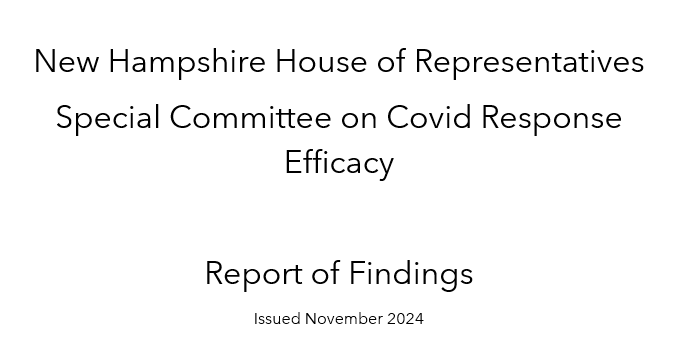
The New Hampshire House of Representatives is about to publish a 38-page report created by a bipartisan committee of NH state legislators entitled, “Special Committee on Covid Response Efficacy: Report of Findings.”
I got an advance copy that I can share with you.
It’s glorious.
In this article I summarize the highlights.
In a nutshell:
If you worked for the state or federal government, everything was done right.
If you didn’t work for the government, everything was a disaster.
It was an interesting seeing how different people can view the same evidence in totally opposite ways.
Here is the minority report. It’s only really one page (with a large attachment).
They basically disagreed…..
Key messages of the 38-page report
Here are some of the key messages in the Summary of Findings section.
I quote the key statement and then provide a handy English translation to make it easier for you to understand what they are saying.
My personal favorite is #12. (See link for article, particularly the key messages)
_______________
**Comment**
When will the world wake up?
Sadly, this report is highly bipartisan. Health should transcend party politics, but sadly it doesn’t.
Kirsch’s translation of the report is hilarious but true. NONE of the COVID measures put forth by public health did anything productive and only caused harm.
It’s ironic to the core that the state motto of New Hampshire is ‘Live Free or Die.’ I guess a portion of the state has chosen death.
A House committee report revealed the U.S. Department of Health and Human Services’ $900 million“We Can Do This” COVID campaign was flawed and claimed COVID shots prevented transmission despite FDA stating there was no such evidence
CDC’s shifting mask guidelines and reversals on recommendations damaged public trust, with changes appearing politically motivatedrather than based on scientific evidence
The government aggressively promoted COVID shots for children despite low risk levels, using emotional manipulation and fear-based messaging through the Fors Marsh Group PR firm
Clinical trial studies showed significant bias in measuring COVID shot effectiveness, with case-counting window bias making ineffective shots appear 50% to 70% effective
Pfizer and Moderna vaccine trials revealed higher risks of serious adverse events than initially reported, with Pfizer showing 36% higher risk compared to placebo groups
The U.S. House of Representatives Energy and Commerce committee released an assessment of the U.S. Department of Health and Human Services’ (HHS) COVID-19 public health campaign, revealing it was fraught with miscalculations that set the stage for widespread public distrust.1
In December 2020, the U.S. Food and Drug Administration (FDA) granted Emergency Use Authorization (EUA) to the first COVID-19 shots, yet these authorizations clearly stated there was no evidence the shots prevented viral transmission. Despite this, the administration launched the “We Can Do This” Campaign, spending over $900 million to promote vaccine uptake and public health measures.
However, foundational issues plagued the campaign from the beginning. Past contracts and fiscal mismanagement within HHS raised red flags about the effectiveness and integrity of their public relations efforts. As the campaign aimed to shape public behavior around masking, social distancing and vaccination, the reliance on flawed Centers for Disease Control and Prevention (CDC) guidance undermined its credibility.
By allowing CDC recommendations to drive public messaging, the administration sowed confusion and mistrust. These early failures were not isolated incidents but part of a broader pattern of inconsistent and politically influenced public health strategies that ultimately eroded the very trust needed to effectively manage a public health crisis.
Shifting Mask Guidelines Undermined Public Trust
Initially, masks were deemed unnecessary for the general public, with prominent figures like Dr. Anthony Fauci advocating against their widespread use. However, by April 2020, the CDC had completely reversed its stance, recommending masks for everyone outside the home. This flip-flop was not just confusing but also seemed politically motivated, influenced by factors such as teachers’ unions pushing for prolonged school closures.2
The subsequent inconsistent messaging continued, with masks being recommended, then downplayed again as the shots rolled out. Each reversal rightfully fostered skepticism and resistance, while undermining the credibility of public health institutions. This erosion of trust was further exacerbated when breakthrough infections and variants like Delta emerged, proving that earlier mask guidance had been incorrect.
Overstating COVID-19 Shot Efficacy — A Critical Misstep
When COVID-19 shots were introduced, Americans were told to believe they were not only preventing illness but also halting the virus’ transmission. However, this narrative quickly unraveled, as there was no evidence that vaccines prevented transmission. Despite this, the CDC and the “We Can Do This” campaign promoted the idea that only vaccinated individuals could safely forego masks and social distancing.
This overstated efficacy became a significant issue as breakthrough infections began to rise, especially with the emergence of more transmissible variants like Delta. The administration’s insistence that vaccines stopped transmission contradicted the FDA’s original EUA terms and created a false sense of security.
When real-world data began to show that vaccinated individuals could still spread the virus, the CDC was forced to retract and revise its messaging, further damaging its credibility. This disconnect between official statements and emerging evidence betrayed the public’s trust.
Meanwhile, the report highlights how vaccine mandates became a contentious tool in the government’s strategy to control the pandemic.3 You saw federal, state and private employers enforcing COVID-19 shot requirements, often without clear, evidence-based justification. These shot mandates targeted millions, demonstrating the extent of overreach and coercion.
The resignation of top FDA officials over booster shot policies underscored the internal conflict and raised questions about the government’s motives. Even vaccine proponents like Dr. Paul Offit criticized the mandates as politically driven rather than grounded in solid public health needs. The mandates disproportionately affected younger populations who were already at lower risk of severe illness and represented an infringement on personal autonomy.
Targeting Children with Fearmongering and Misinformation
One of the most alarming aspects of the COVID-19 response was the aggressive push to vaccinate children, despite mounting evidence that COVID-19 posed minimal risk to this age group.4
The CDC and HHS launched extensive campaigns targeting parents, using emotionally charged messaging to persuade them to get COVID-19 injections for their young children. Ads featuring celebrity parents and medical professionals painted a dire picture of COVID-19’s impact on children, despite studies showing that severe illness and death in this demographic were exceedingly rare.5
By emphasizing the need for COVID-19 shots to keep schools open and protect community health, the government leveraged fear and misinformation to drive vaccine uptake. This approach not only misrepresented the actual risk but also disregarded the developmental and social impacts of prolonged masking and school closures on children.
Parents were left feeling manipulated, as the narrative suggested that vaccination was the only way to ensure their children’s safety, ignoring the broader context of low transmission and minimal severe outcomes in young populations, along with the unknown side effects of the experimental shots.
The Fors Marsh Group Was Hired to Orchestrate the Propaganda Campaign
Behind the scenes of the HHS’ public health messaging was the Fors Marsh Group (FMG), a PR firm contracted to manage the “We Can Do This” campaign. Engaging FMG, HHS aimed to craft a nationwide multimedia propaganda effort to shape public perception and behavior regarding COVID-19.6
FMG deployed a strategic mix of paid and earned media, leveraging influencers, celebrities and targeted advertisements to promote vaccination, mask-wearing and social distancing. This partnership raised significant concerns about the politicization of public health messaging. Past contracts with FMG had already been scrutinized for fiscal mismanagement, and this massive investment in a single campaign further highlighted conflicts of interest and inefficiencies. [Speaking of influencers: they are dropping like flies with many others severely maimed.]
FMG’s approach relied heavily on emotional manipulation and fearmongering, often overstating the risks of COVID-19 to justify stringent public health measures. By prioritizing persuasive messaging over transparent, evidence-based communication, FMG and HHS effectively prioritized political agendas over scientific integrity.
This collaboration not only amplified mixed messages but also deepened public distrust as the true motives behind the campaign became increasingly opaque. The use of a private PR firm to drive national health policies exemplified a troubling shift toward prioritizing image over substance, undermining the credibility of public health institutions tasked with presenting accurate information.
Data Manipulation Included Overcounting Deaths
The final blow to public trust came when the CDC admitted to overcounting COVID-19 deaths due to a faulty algorithm.7 This admission affected all age groups, including children, and exposed significant flaws in the data tracking system. The recalculation led to a 24% decrease in reported pediatric deaths, revealing that the initial numbers had been significantly inflated.
This revelation shattered any remaining credibility the CDC had, as it became clear that the pandemic response was built on inaccurate data. The CDC’s admission that 80% of reported errors exaggerated the severity of the COVID-19 situation further eroded trust. This manipulation of data undermined the entire public health narrative.
Overall, the report underscores a troubling pattern of inconsistent messaging, overstated claims and data mismanagement by key public health authorities during the COVID-19 pandemic.
Based on a study published in the Journal of Evaluation in Clinical Practice, case-counting window bias dramatically distorted COVID-19 shot effectiveness estimates.8 In randomized controlled trials (RCTs), both vaccine and placebo groups have synchronized case-counting windows, ensuring a fair comparison. However, in real-world observational studies, this window often applies only to the vaccinated group.
This asymmetry means that cases occurring shortly after vaccination in the unvaccinated group are counted, while similar cases in the vaccinated group are excluded. Consequently, an entirely ineffective vaccine could misleadingly appear to have substantial effectiveness — sometimes showing 50% to 70% efficacy when, in reality, the vaccine has zero effectiveness.9
This bias arises because the early post-vaccination period, when individuals are not yet fully protected, is treated differently between groups. Understanding this flaw is crucial for interpreting vaccine effectiveness accurately and recognizing that observational studies may overstate the true benefits of vaccination due to methodological inconsistencies.
The study also highlighted the impact of age bias on COVID-19 effectiveness estimates. In observational studies, vaccinated individuals are often older and may be less healthy than their unvaccinated counterparts because vaccines were prioritized for those at higher risk. This imbalance skews results, making vaccines appear more effective than they truly are.
The study also sheds light on background infection rate bias, which significantly misrepresents the true impact of vaccines. During periods when overall COVID-19 infection rates are declining, vaccinated individuals may appear to have lower infection rates simply because they received the injection during a peak period.
Conversely, if infection rates rise, unvaccinated individuals might show higher rates not necessarily due to lack of protection but because they were exposed during a surge. This temporal mismatch creates a misleading picture of COVID-19 shot effectiveness. For instance, a decline in cases might be attributed to vaccination when, in fact, it could be due to other factors like natural immunity.
COVID Shot Safety Overstated in Observational Studies
A separate study published in the Journal of Evaluation in Clinical Practice further revealed how adverse effect counting windows significantly distorted the perceived safety of COVID-19 shots in observational studies.10 This study highlights that methodological flaws, such as limited counting windows, lead to an underestimation of shot-related adverse events.
For instance, by excluding adverse effects occurring within the first two weeks post-shot, observational studies overlook critical data points, including severe reactions like anaphylaxis. This exclusion creates a skewed safety profile, making the shots appear safer than they actually are.
Moreover, the study points out that even when considering longer follow-up periods, the reliance on unsolicited adverse event reporting misses subtle yet significant health impacts. As a result, the true risk associated with vaccines, especially serious conditions like myocarditis, remains obscured. Myocarditis, an inflammation of the heart muscle, was linked to mRNA vaccines, especially in young males.
Within just three weeks post-vaccination, there was a noticeable uptick in myocarditis cases among this demographic. However, due to the limited adverse effect counting windows in both observational studies and clinical trials, many of these cases went unreported or were misclassified. Furthermore, rapid unblinding of trials compromises the ability to monitor long-term safety outcomes, leaving many important questions unanswered.
Excess Serious Adverse Events in Pfizer and Moderna Shot Trials
Research published in the journal Vaccine also uncovered alarming discrepancies in the safety profiles of Pfizer and Moderna mRNA COVID-19 shots.11 The analysis revealed that both shots were associated with an excess risk of serious adverse events of special interest (AESIs) compared to their placebo groups.
Specifically, Pfizer’s shot showed a 36% higher risk of serious adverse events, translating to 18 additional events per 10,000 vaccinated individuals. Moderna’s vaccine exhibited a 6% higher risk, equating to seven additional events per 10,000. When combined, the mRNA vaccines presented a 16% higher risk of serious AESIs, with a risk difference of 13.2 per 10,000 vaccinated participants.
These findings are particularly concerning because they show the shots carry more serious risks than initially reported. There was also a stark contrast between its findings and the FDA’s official safety reviews. While the study identified a significant excess risk of serious adverse events in the Pfizer trial, the FDA concluded that serious adverse events were “balanced between treatment groups.”12
This discrepancy arises primarily from differences in data analysis methodologies. The FDA focused on the incidence of participants experiencing any serious adverse event, effectively masking the higher number of multiple adverse events in the shot group. In contrast, the study accounted for the total number of adverse events, revealing a more nuanced and concerning risk profile.
In short, the official narratives provided by regulatory bodies did not fully capture the true extent of shot-related risks.13
Other research published in Social Science & Medicine unveiled the profound impact of government-sponsored disinformation on the severity of respiratory infection epidemics, including COVID-19.14 The research analyzed data from 149 countries between 2001 and 2020, revealing a significant positive association between disinformation campaigns and the incidence of respiratory infections.
Specifically, countries with higher levels of government-driven misinformation experienced more severe outbreaks of COVID-19. This correlation underscores how deliberate dissemination of false information seriously undermines public health efforts, leading to increased transmission rates and higher case numbers.
The study also highlights the detrimental effects of internet censorship on the reporting and management of respiratory infections. Governments that actively censor information limit the public’s access to accurate health data,15 worsening outcomes as occurred during the pandemic. As Dr. Robert Malone put it, “Both the background summary and the study findings are prophetic, and almost completely aligned with the Energy and Commerce committee report.”16
The Path Forward — Ensuring Transparency and Trust in Public Health
It’s evident that the COVID-19 public health campaign was fraught with hidden dangers and systemic challenges. In the aftermath of these revelations, the need to advocate for transparency, accountability and evidence-based policies is clear. Only by addressing these foundational issues will we ensure more effective responses in future health emergencies.
The lessons learned from these failures should drive a fundamental rethinking of how public health campaigns are managed and communicated, prioritizing scientific data over propaganda to better serve and protect the public.



 Madison Area Lyme Support Group