Archive for July, 2019

Coinfection of Many Types of Borrelia, Rickettsia, Babesia, Bartonella, & Anaplasma in French Castor Bean Ticks

https://www.ncbi.nlm.nih.gov/pubmed/31279737/

2019 Jun 8. pii: S1877-959X(18)30483-7. doi: 10.1016/j.ttbdis.2019.06.001. [Epub ahead of print]

Co-infection of bacteria and protozoan parasites in Ixodes ricinus nymphs collected in the Alsace region, France.

Abstract

Fifty nymphal Ixodes ricinus ticks collected in Alsace, France, identified by morphological criteria and using MALDI-TOF MS, were tested by PCR to detect tick-associated bacteria and protozoan parasites. Seventy percent (35/50) of ticks contained at least one microorganism; 26% (9/35) contained two or more species. Several human pathogens were identified including Borrelia burgdorferi s.s. (4%), Borrelia afzelii (2%), Borrelia garinii (2%), Borrelia valaisiana (4%), Borrelia miyamotoi (2%), Rickettsia helvetica (6%) and “Babesia venatorum” (2%). Bartonella spp. (10%) and a Wolbachia spp. (8%) were also detected. The most common co-infections involved Anaplasmataceae with Borrelia spp. (4%), Anaplasmataceae with Bartonella spp. (6%) and Anaplasmataceae with Rickettsia spp. (6%). Co-infection involving three different groups of bacteria was seen between bacteria of the family Anaplasmataceae, Borrelia spp. and Bartonella spp. (2%). Results highlight the panel of infectious agents carried by Ixodes ricinus. Co-infection suggests the possibility of transmission of more than one pathogen to human and animals during tick blood feeding.

_________________

**Comment**

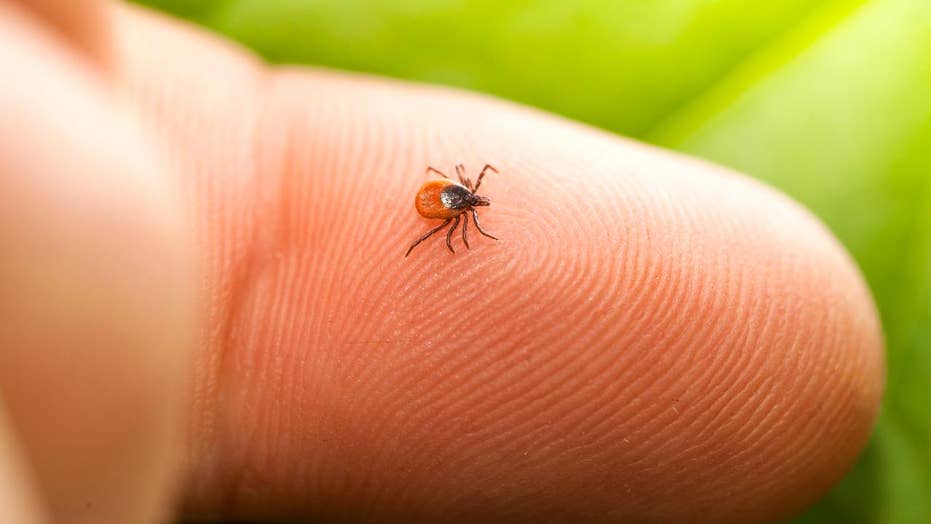
Ixodes ricinus, commonly known as the castor bean tick, sheep tick, or deer tick, transmits numerous pathogens of medical and veterinary importance including Borrelia burgdorferi s.l. causing Lyme borreliosis, tick-borne encephalitis virus, Anaplasma phagocytophilum causing human granulocytic ehrlichiosis, Francisella tularensis causing Tularaemia, Rickettsia helvetica and Rickettsia monacensis, Babesia divergens and Babesia microti responsible for Babesiosis, Louping ill virus and Tribec virus.  https://ecdc.europa.eu/en/disease-vectors/facts/tick-factsheets/ixodes-ricinus

https://madisonarealymesupportgroup.com/2019/04/26/three-strains-of-borrelia-other-pathogens-found-in-salivary-glands-of-ixodes-ticks-suggesting-quicker-transmission-time/ Numerous pathogens identified plus the fact many were located IN the tick’s salivary glands indicating faster transmission time for infection.

For decades we’ve been told by the CDC that it takes a minimum of 36-48-hours for a tick to transmit Lyme to a human. Then, in 2013 we were told they needed to be embedded for 24 hours or more:  https://www.nhregister.com/columns/article/DR-KATZ-Of-Lyme-disease-and-lemonade-11412658.php

Then, microbiologist Holly Ahern came out with a fantastic video revealing that research on minimum attachment times have NEVER been done:  https://madisonarealymesupportgroup.com/2017/04/14/transmission-time-for-lymemsids-infection/

Transmission Time:  Only one study done on Mice. At 24 hours every tick had transmitted borrelia to the mice; however, animal studies have proven that transmission can occur in under 16 hours and it occurs frequently in under 24 hours.  No human studies have been done and https://www.dovepress.com/lyme-borreliosis-a-review-of-data-on-transmission-time-after-tick-atta-peer-reviewed-article-IJGM  no studies have determined the minimum time it takes for transmission.

YET, “AUTHORITIES” CONTINUE TO PROPAGATE THIS LONGER WINDOW, DESPITE LYME/MSIDS BEING A TRUE 21ST CENTURY PANDEMIC & PLAGUE.

This study once again supports the fact that patients are often coinfected with many pathogens transmitted from the same tick and that the CDC/IDSA myopic viewpoint of a singular disease is a joke that the mono-therapy of doxycycline won’t touch in a million years:  https://madisonarealymesupportgroup.com/2018/10/30/study-shows-lyme-msids-patients-infected-with-many-pathogens-and-explains-why-we-are-so-sick/

Maine Resident Contracts Rare Tick-borne Illness That Can Cause Brain Infections, Death, State CDC Says (But it’s Not Rare)

https://www.foxnews.com/health/maine-resident-rare-tick-illness-powassan

Maine resident contracts rare tick-borne illness that can cause brain infections, death, state CDC says Fox

Madeline Farber is a Reporter for Fox News. You can follow her on Twitter @MaddieFarberUDK.News’ Alexandria Hein contributed to this report.

A Maine resident has been infected with a rare but typically severe tick-borne illness that can cause brain infections and meningitis and, in some cases, lead to death.

The Maine Center for Disease Control and Prevention (CDC) announced in a Wednesday news release that the resident, who has not been identified, showed symptoms of human Powassan encephalitis disease — more commonly referred to as Powassan virus — in late June and was hospitalized. The state CDC did not say whether or not the resident recovered.

NEW JERSEY VETERAN TESTED POSITIVE FOR RARE TICK-BORNE VIRUS BEFORE DEATH, DAUGHTER SAYS

Powassan virus — which “belongs to a group of viruses that can cause infection of the brain (encephalitis) or the membranes around the brain and spinal cord (meningitis), per the Centers for Disease Control and Prevention—  is typically spread to humans after they’re bitten by an infected woodchuck or deer tick. The federal agency says those who live or work near brushy or woody areas are more likely to be exposed to potentially infected ticks.

Most cases of Powassan virus — which was first discovered in Powassan, Ontario in 1958, according to the Maine CDC — have occurred in the northeast and Great Lakes areas of the U.S.

Those infected with the virus typically experience fever, headache, vomiting, weakness, confusion, seizures and memory loss, per the Maine CDC, which also noted: “long-term neurologic problems may occur.”

“Symptoms can begin anytime from one week to one month after the tick bite. There is no specific treatment, but people with severe Powassan virus illness often need to be hospitalized,” it added.

Patients typically need support breathing and to treat swelling around the brain, but there is no medicine to treat the virus, nor is there a vaccine to prevent it, and about 10 percent of cases result in death, according to the federal health agency.

Powassan virus is rare, with an average of seven cases reported cases each year in the U.S. In Maine, 11 cases of Powassan virus have occurred since 2000, state health officials said.

_________________

**Comment**

Here we go again. Powassan ISN’T RARE.

http://www.coppelabs.com/blog/why-is-powassan-virus-infection-still-described-as-rare-and-mysterious/  Please read the following excerpt by Coppe Lab here in Wisconsin,

For the last two years, Coppe Laboratories has dedicated a significant amount of time and resources to dispelling the myth that infection with Powassan virus, a virus transmitted by tick bite, is rare. The Centers for Disease Prevention and Control (CDC) reports only 100 cases of Powassan virus infection in the United States in the last 10 years. Indeed, that statistic gives the illusion that Powassan infection is rare. However, did you know that the only infections reported to CDC are those that are life-threatening, particularly cases causing severe inflammation of the brain like the case reported in LiveScience? Coppe has published three new papers in the last year that clearly show Powassan virus infection is not rare are at all,and until testing for this virus is included as part of tick-borne disease screening panels infections will continue to be underreported. Coppe’s Powassan Guide, which can be downloaded from the website, summarizes the findings from both tick and human Powassan prevalence studies, as well as defining the patient populations that would benefit most from Powassan testing.

COPPE LABORATORIES OFFERS THE FIRST COMMERCIAL PANEL DESIGNED TO DETECT EXPOSURE TO POWASSAN VIRUS THROUGHOUT ALL STAGES OF INFECTION.

Powassan can be transmitted in 15 minutes, so all the comforting words by the CDC on the emphasis that transmission of Lyme takes anywhere from 24-72 hours falls flat regarding Powassan. Also, to my knowledge, no work has been done on transmission time when multiple pathogens are being transmitted concurrently, or what happens when a person perhaps gets bitten, obtains Powassan but doesn’t have symptoms, and then in the future gets another tick bite and perhaps gets Lyme with that one.

Does that second bite activate a latent virus infection with Powassan?

THESE QUESTIONS HAVE NEVER BEEN BROACHED BY THE CDC.

The virus can be worse in those with “other medical conditions.”

Nobody really has a clue what a concurrent infection with Powassan looks like, but I would label that another medical condition. What if someone has Powassan and Lyme?  Or, in my case, what if you have Lyme, Bartonella, Babesia, and then Powassan on top of that?

THIS IS THE FLY IN THE OINTMENT THAT CURRENT RESEARCH IS NOT ADDRESSING.

In this article Coppe Lab, right here in Wisconsin has uncovered some interesting findings:  https://madisonarealymesupportgroup.com/2016/08/31/wi-coppe-lab-in-the-news/  A study completed in May, 2016 of 106 patients with suspected acute tick borne disease showed 10.4 % had Powassan.  Nearly 17% of the patients with positive Lyme results also tested positive for POWV exposure. The authors concluded,

“Infection with POWV may be underdiagnosed and may contribute to the persistent symptoms often associated with Lyme diseasediagnosis.”16

They postulate:

In both studies, the percentage of Lyme patients co-infected with POWV was about 17%, coinciding with the 10 – 20% of patients treated for Lyme that develop lingering symptoms attributed to post-treatment Lyme disease syndrome.

One thing’s for sure.  The CDC is not getting the memo because every single article I read on Powassan calls it “rare.”  
QUESTION TO PONDER:  HOW MANY HAVE TO DIE BEFORE SOMETHING IS NO LONGER RARE?

https://madisonarealymesupportgroup.com/2019/03/04/powassan-virus-on-the-up-tick/


Ticks Spread Plenty More For You to Worry About Beyond Lyme Disease

https://theconversation.com/ticks-spread-plenty-more-for-you-to-worry-about-beyond-lyme-disease-118102

Ticks spread plenty more for you to worry about beyond Lyme disease

When it comes to problems caused by ticks, Lyme disease hogs a lot of the limelight. But various tick species carry and transmit a collection of other pathogens, some of which cause serious, even fatal, conditions.

In fact, the number of tick-borne disease cases is on the rise in the United States. The range where various species of ticks live in North America may be expanding due to climate change. Researchers continue to discover new pathogens that live in ticks. And new, invasive tick specieskeep turning up.

In my career as a public health entomologist, I’ve been amazed at the ability of ticks to bounce back from all the ways people try to control them, including with pesticides. Ticks excel at finding new ecological niches for survival. So people and ticks frequently cross paths, exposing us to their bites and the diseases they carry.

Here are some of the lesser-known, but growing, threats from ticks.

Ticks can spread bacterial diseases

Certain very small species of bacteria that can cause human diseases, such as rickettsia, ehrlichia and anaplasma, live in ticks. Ticks ingest these bacteria when they drink animals’ blood. Then when the ticks take a subsequent blood meal, they pass the bacteria along to the next animal or person they feed on.

Probably the most well known of these bacterial diseases is Rocky Mountain spotted fever, the most frequently reported rickettsial disease in the U.S., with about 6,000 cases each year. The number of diagnoses seems to be increasing nationwide, especially among Native Americans, probably due to exposure on reservations to free-roaming dogs that can carry ticks.

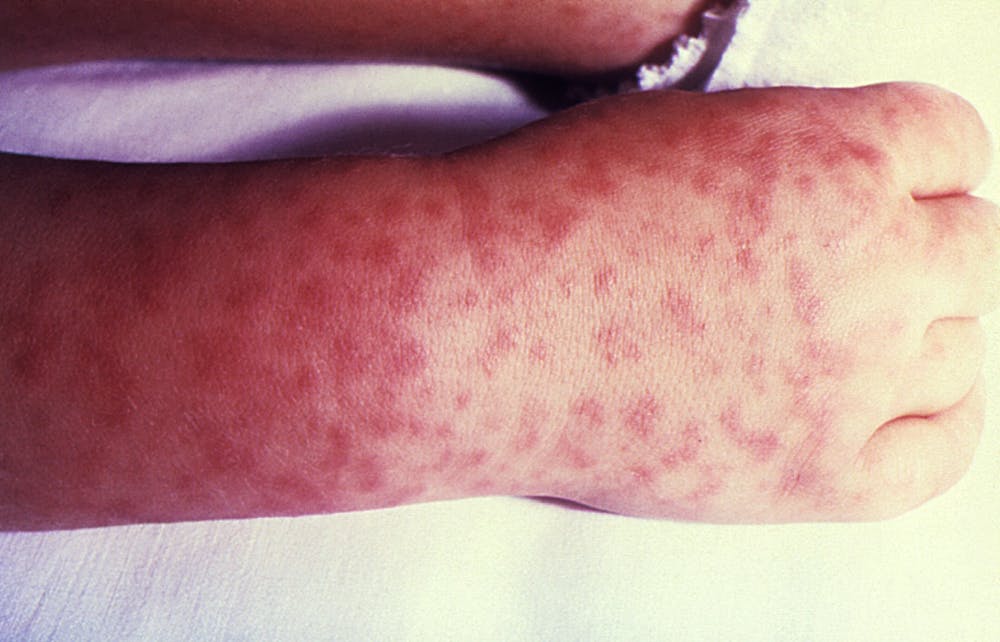
Rocky Mountain spotted fever usually comes with a rash, as on this child. Centers for Disease Control and Prevention, National Center for Immunization and Respiratory Diseases (NCIRD), CC BY

When people get sick with Rocky Mountain spotted fever, they usually come to a clinic with three things: fever, rash and history of tick bite. They may also report severe headache, chills and muscle pains, and gastrointestinal symptoms such as abdominal pain and diarrhea. A skin rash is usually present after a few days, but not always. Mental confusion, coma and death can occur in severe cases. Untreated, the mortality rate is about 20%; and even with treatment, 4% of those infected die.

Not all tick species are effective transmitters of the rickettsia bacteria. Even within the vector species, often only 1% to 5% of ticks in an area are infected. So getting bitten by a tick that passes rickettsia bacteria on to you is like getting stuck with a needle in a haystack. The primary carriers are the American dog tick in the eastern U.S. and Rocky Mountain wood tick in the West. The brown dog tick has also recently been shown to be a vector.

In most tick-borne diseases, the tick needs to feed for some amount of time before any pathogens it’s carrying are transmitted to the animal whose blood it’s eating. Rocky Mountain spotted fever organisms generally take between one and three hours for transmission to occur, so attached ticks need to be removed quickly. Doctors usually prescribe the antibiotic doxycycline to treat Rocky Mountain spotted fever, which works quite well if the disease is recognized early.

Ehrlichiosis is another bacterial disease transmitted from ticks to people. In the U.S. it’s most commonly caused by Ehrlichia chaffeensis bacteria, carried by lone star ticks which are common in the eastern U.S. Ehrlichia bacteria infect a type of blood cell called leukocytes. Human monocytic ehrlichiosis occurs mostly in the southern and south-central U.S.; 1,642 cases were reported to the CDC in 2017.

Ehrlichiosis patients usually have fever, headache, muscle aches and a progressive low white blood cell count. As opposed to Rocky Mountain spotted fever, people get a rash only about 20% to 40% of the time. Doctors usually treat ehrlichiosis with doxycycline.

Another tick-borne bacterial disease to worry about is human granulocytic anaplasmosis. In human granulocytic anaplasmosis, Anaplasma phagocytophilum bacteria infects a type of white blood cell called granulocytes. It mostly occurs in the upper midwestern and northeastern U.S., and the incidence is increasing, with 5,762 cases of human granulocytic anaplasmosis reported to the CDC in 2017.

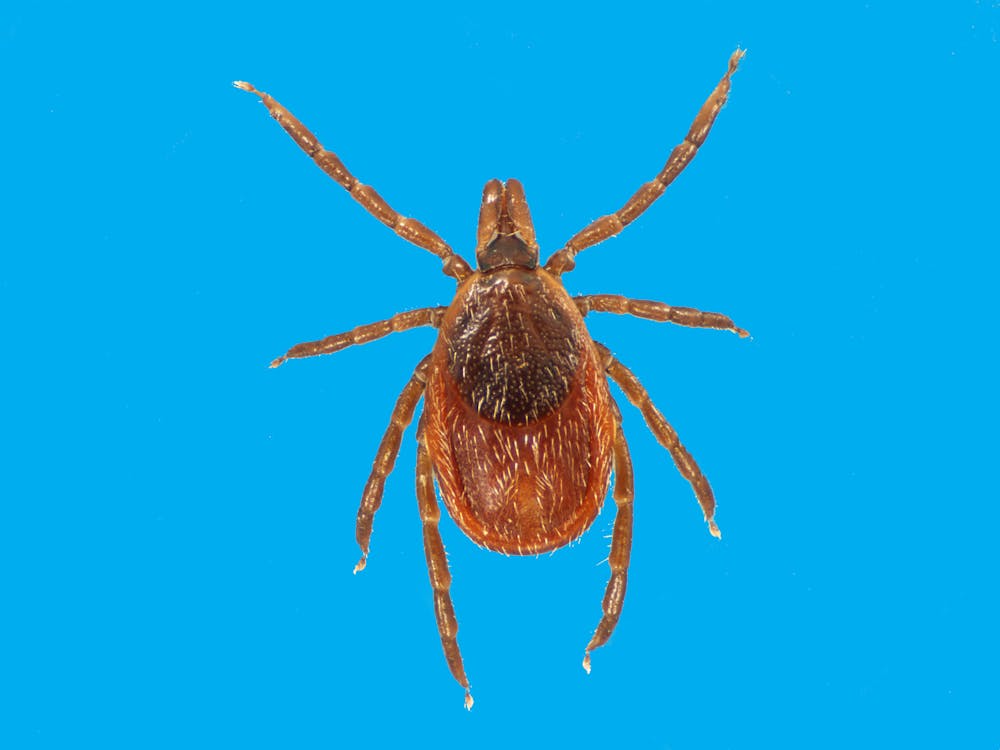
A female Ixodes scapularis tick. Dr. Blake Layton, MSU, CC BY-ND

Symptoms include fever, headache, muscle aches and progressive low white blood cell count. It’s the deer tick Ixodes scapularis – famously also responsible for Lyme disease – that transmits the Anaplasma bacteria to humans. There’s the unlucky chance that a bite from a deer tick could infect you with both diseases. Again, recommended therapy is doxycycline.

Ticks can carry viruses, too

People usually think of mosquitoes when they think of insect-transmitted viruses – dengue, Zika or West Nile garner a lot of headlines. But ticks can transmit viruses, too.

Scientists have historically grouped tick-borne viral diseases into two categories. One is diseases similar to dengue fever. The main dengue-like viral disease transmitted by ticks in the U.S. is Colorado tick fever, which occurs in mountainous areas of the West.

The other group of tick-borne diseases resemble mosquito-borne encephalitis. Most of these illnesses, characterized by brain inflammation, are not found in the U.S. Powassan encephalitis is the one that is, occurring in the northeastern U.S. and adjacent regions of Canada.

Powassan is a relatively rare but serious human disease, characterized by sudden onset of fever with temperature up to 104 degrees Fahrenheit, along with convulsions. Brain inflammation is usually severe, with vomiting, respiratory distress and prolonged fever.

Fewer than 100 cases of Powassan have been reported in North America, with about half of them fatal. Its incidence seems to be increasing; there were 34 cases of Powassan reported during 2017. POW is maintained in a natural cycle when ticks – primarily Ixodes cookei – infect animals with the virus via their bites. Then these infected animals may serve as what scientists call disease reservoirs, infecting new ticks when they feed on their blood.

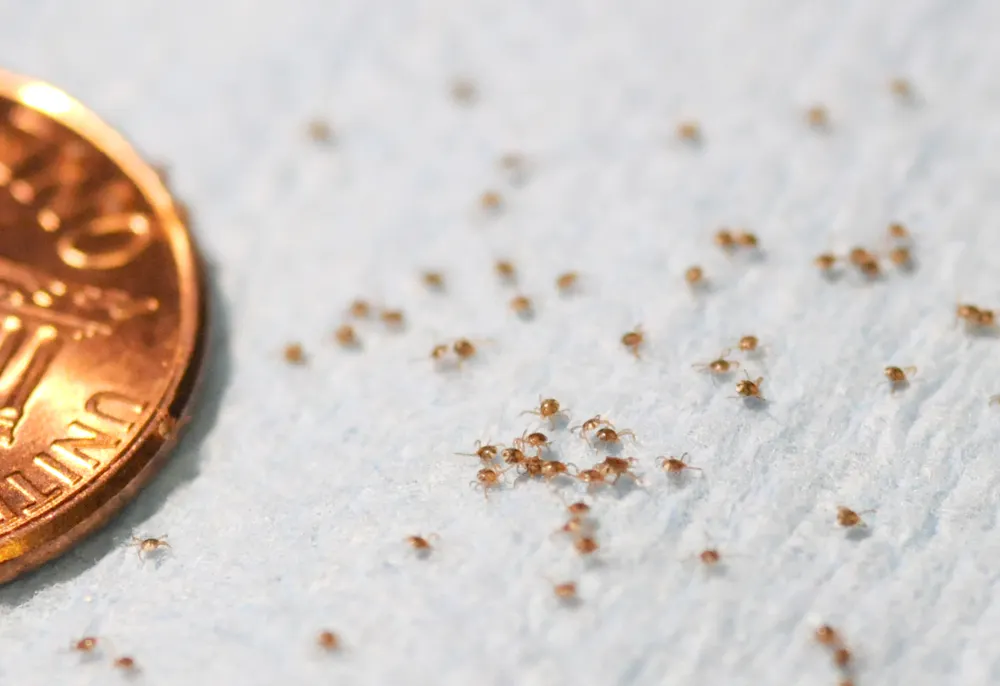
Tiny larval lone star ticks next to a penny. Jerome Goddard

In the last decade, researchers have found additional new tick-borne viruses in the U.S. About 30 cases of Heartland virus have thus far been identified. It’s associated with the lone star tick and has been recognized in Missouri, Oklahoma, Kentucky and Tennessee.

A few cases of a new Thogotovirus called Bourbon virus have been identified in the Midwest and southern U.S. The lone star tick may be the vector of Bourbon virus as well.

A food allergy triggered by a tick bite

Maybe the most bizarre threat from ticks is the “red meat allergy” scientists have recently traced back to tick bites. People can become allergic to eating meat when a tick’s saliva passes on the carbohydrate galactose-α-1.3-galactose it had previously picked up in a blood meal from an animal. If prone to allergies, the person can get sensitized to that alpha-gal molecule that’s found in animal blood and other tissues.

Then days or weeks later, he or she may develop hives, swollen skin and lips, or even life-threatening anaphylactic shock three to six hours after eating red meat. Meats containing alpha-gal include beef, pork, lamb, squirrel, rabbit, horse, goat, deer, kangaroo, seal and whale. People who become sensitized to alpha-gal may still eat chicken, turkey and fish.

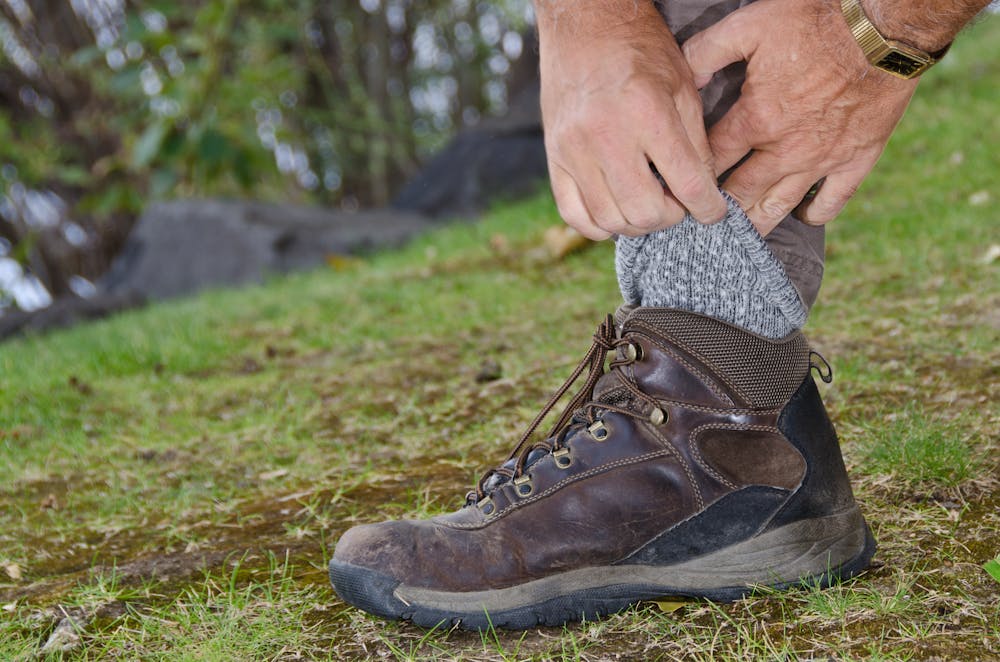
Take precautions, like tucking pants into socks, when you’re in tick territory. rck_953/Shutterstock.com

Overall, people should be aware of what tick-borne diseases are present in their area and use personal protection techniques whenever outdoors in tick-infested areas. Remember that ticks often come into close contact with people via pet dogs or cats. It’s a good idea to inspect yourself for ticks after being outdoors in tick-infested areas. Reducing the number of tick bites and the amount of time ticks remain attached can go a long way to protecting you from tick-borne diseases.

Disclosure statement

Jerome Goddard does not work for, consult, own shares in or receive funding from any company or organization that would benefit from this article, and has disclosed no relevant affiliations beyond their academic appointment.

Partners

Mississippi State Universityprovides funding as a member of The Conversation US.

Republish this articleRepublish our articles for free, online or in print, under Creative Commons license._________________**Comment**

Why people continue to downplay this thing is beyond my understanding.

Compare this:

So getting bitten by a tick that passes rickettsia bacteria on to you is like getting stuck with a needle in a haystack.” Gerome Goddard – 2019 – (Extension Professor of Biochemistry, Molecular Biology, Entomology and Plant Pathology) 

With this:

A lot of tick pathogens are rickettsia and rickettsial diseases. Every time I go to my local physician and I have some strange illness that they don’t know what it is, he says it is probably a rickettsia—an idiopathic condition.I’ve tested negatively for rickettsia, but the symptoms [suggest it] could be.”  – James Oliver – 2016 (international expert in medical entomology and acarology, especially the biology and cytogenetics of pathogen-transmitting ticks and parasitic mites)  https://academic.oup.com/ae/article/62/4/206/2712469

Regarding Powassan being “rare,” please see:

http://www.coppelabs.com/blog/why-is-powassan-virus-infection-still-described-as-rare-and-mysterious/  Please read the following excerpt by Coppe Lab here in Wisconsin,

For the last two years, Coppe Laboratories has dedicated a significant amount of time and resources to dispelling the myth that infection with Powassan virus, a virus transmitted by tick bite, is rare. The Centers for Disease Prevention and Control (CDC) reports only 100 cases of Powassan virus infection in the United States in the last 10 years. Indeed, that statistic gives the illusion that Powassan infection is rare. However, did you know that the only infections reported to CDC are those that are life-threatening, particularly cases causing severe inflammation of the brain like the case reported in LiveScience? Coppe has published three new papers in the last year that clearly show Powassan virus infection is not rare are at all,and until testing for this virus is included as part of tick-borne disease screening panels infections will continue to be underreported. Coppe’s Powassan Guide, which can be downloaded from the website, summarizes the findings from both tick and human Powassan prevalence studies, as well as defining the patient populations that would benefit most from Powassan testing.


Yet Another Highly Unethical & Socially Irresponsible “Genes-Only” Study Fails to Show That Autism is 80% “Genetic”

https://jameslyonsweiler.com/2019/07/18/yet-another-highly-unethical-and-socially-irresponsible-genes-only-study-fails-to-show-that-autism-is-80-genetic/

Yet Another Highly Unethical and Socially Irresponsible “Genes-Only” Study Fails to Show that Autism is 80% “Genetic”

by jameslyonsweiler

In a WebMD article, the results from a large genetic-factor-only study gleefully reports that the newest, highest-ever estimate of the for percent liability of autism risk that can be attributed to “genetics” is 80%, leaving the remaining 20% to environmental factors.

The article also claims that this new, highest estimate is reported by the study authors to be “…roughly in line with those from prior, smaller studies on the issue, further bolstering their validity“.

Consistent Results From Invalid Methodology Does not Make Those Results “Valid”.  It Makes Them “Consistent”.

The “roughly in line with” is an appeal to consistency.  But the Liability Threshold Models differ from other approaches methodologically. Previous studies, one of which was conducted by the same group of researchers, had estimates that ranged from 0 to 99% heritability.  The average, until this group started using liability-threshold models, was around 40% attribution to genetics. Their studies increased the average, but it still hovered around 50% liability.  Only the liability threshold models, used by this group, show results around 80% liability.  So their method is consistent with itself.  No surprise there. But that’s nowhere near “roughly in line” with all prior studies.

6.jpg

One of those studies is discussed in the article “Non-genetic factors play surprisingly large role in determining autism, says study by group“.

Why Autism is Not “Genetic”

The article skips over the fact that the newest, latest study, like the prior studies, fails to actually measure the contribution of a single environmental factor.  While the article rails against “anti-vaxxers”, the study ignores the vaccination status of those involved in the study.  The mantra of so many studies never showing association has be tempered with a mature, responsible and realstic interpretation in the context of how those studies were conducted: restricted to one vaccine (MMR), and then there is this:

4.jpg

Assumptions Without Measurement Lead to Assumptions as Conclusions

Their entire methodology is based on familial correlations. In the current study under consideration, no exposure levels to pesticides, medical exposures in utero, smoking history, nothing environmental was measured.  And yet somehow the study authors pretend they can estimate the % liability from environmental factors.  How do they pretend to achieve such a feat?

The first problem is that they have not measured any interaction between genetics and environmental factors.  There is, in fact, established knowledge of special risk of autism that involves combined risk of specific genes and specific environmental factors.  (Check out, for example, Bowers and Erickson (2014):2

Their Liability Threshold Model Approach is Both Under- and Mis-Specified

You really have to understand population genetics a bit to get this next part, so I apologize to the lay public, but please take what understanding you can from this:

Their model (generically represented) is

ASD risk  =  “Genetics” + e

where = measurement error, leaving whatever variation appears to be unexplained to Environment.  That’s unusal because the usual interpretation of such unexplained variation is “Error” and “Unknown Variation”.   In technical terms, their model is underspecified.  Environmental variation is not “Error” in a genetic model, it’s “Environmental Variation”.

If they HAD measured environmental factors, say, vaccination exposure, their model form would be

ASD risk = “Genetics” + “Environment” + e

but this model would still be underspecified.

The more fully specified model would be

ASD risk = “Genetics” + “Environment“+ “(Genetics x Environment)” + e

And if the interaction term “(Genetics + Environment)” is more highly significant than “Genetics” or “Environment“, a reasonable interpretation would be that we cannot interpret genetics in a vacuum, that the significance of many ADK risk alleles must be modified by environmental factors.  If during model selection, G or E is significant, but then in the full model G x E is significant, we attribute liability to both G and E working together.

Instead of this standard approach to studying genetic and environmental contribution to phenotypic variation (ASD phenotype), they do something very odd.

In the Supplementary Material, they report that they made assumptions about environmental factors.  Non-specified “Shared Environmental” effects are ASSUMED to be 1.0 for siblings and 0 for cousins.  Families quite often stop vaccinating after an older sibling experiences seizures.  The study authors also EQUATE “Non-Shared Environmental Factors” with “residual errors”, which is patently absurd.  That’s “e“, which is unspecified variation (error), not designated environmental factors.

If I had conducted an analysis of environmental factors and their contribution to ASD, and used their methodology, I would be able to attribute any unexplained variation to “Genetics” after allowing “Environmental Factors” to consume most of the variation.  I might arbitrarily add in some assumptions, such as assuming that risk from dominant alleles were 1.0 (which they are not, if the impact of those alleles are modified by environmental factors) and all recessive risk alleles contributed zero risk, which would be, as described, arbitary.  Their conclusions draw directly from their assumptions.

Evidence? What Evidence?

The WebMD article cites the entire team of researchers as saying “the current study results provide the strongest evidence to our knowledge to date that the majority of risk for autism spectrum disorders is from genetic factors,” [‘said a team led by Sven Sandin, an epidemiological researcher at the Karolinska Institute in Stockholm, Sweden’] – as quoted by WebMD.

Evidence?  What evidence? If you assume no contribution of environment, measure no environment, and conclude no contribution, there is no evidence.

There are over 850 genes that have been determined to contribute to ASD risk – and not one of them explain >1% of ASD risk individually.  Most of these are Common Variants – meaning they are ancient – as in, they pre-date both the ASD epidemic (and yes, there is an epidemic) and vaccination.  Here’s a figure from my book, which reviews all of the genetic and environmental studies published to mid-2016:


1

This explains why ASD pedigrees look like humanity dipping its toes into a toxic soup:

pedigree

The study also does not explain why >20% of children with ASD have higher copy number variation – de novo genetic variation – compared to the rest of the population, nor why people with ASD – and their mothers – have anti-brain protein antibodies – nor why people with ASD have strange mis-folded proteins, lifelong microglial activation, why studies of replacing the microbiome show a reduction in the severity of autism traits by 50%… a feat for a diagnosis that is allegedly 80% “genetic”… and so on, and so on.

Then There is Phenomimicry

The study ignores the fact that environmental factors can impact genes, proteins and biological pathways in a manner that is identical to the effects of genetic variation. This is called Phenomimicry – a term so cool I wish I had invented it.  Examples of Phenomimicry are known in science relevant to ASD.

3

“Guess What? Being Human is Heritable”

It’s worth pointing out that thousands of human “traits” are heritable, and that includes traits that contribute to sociality, language ability, intellect, and even perhap tendancy toward repetitive motion.  That means that genetic studies must subtract the heritability of these traits in the non-ASD population from the estimate of heritability in their contribution to ASD.

5.jpg

The WebMD article, and the article itself, lauds the study for involving over 2 million people from five countries.  This is not impressive because the study falls into the category of “Science-Like Activities“.

No More YAHUGS

It is highly unethical – and socially irresponsible  – for “Genes-only” studies to be conducted that claim to rule out environmental factors.  All “Yet Another Highly Unethical Genes-only Study”s – YAHUGS – should be replaced with fully and correctly specified models – that means measuring and studying both vaccination patterns and genetics.

WebMD article on archive.is

James Lyons-Weiler

Allison Park, PA

Note: A layman’s example will help.  Let’s say you want to understand thumb injuries among carpenters,and you specify a model

Risk of Injury = Hammer Size

You SHOULD also include Length of Nail, i.e.,

Risk of Injury = Hammer Size + Length of Nail

but it is socially unacceptable to conduct science on the Length of Nail.  So you leave it out.  You then model

Risk of Injury = Hammer Size + e

and incorrectly attribute variation in the “Length of Nails” to “e“.

You SHOULD specify

Risk of Injury = Hammer Size + Length of Nail + (Hammer Size x Length of Nail) + e

But that pesky social pressure to ignore Length of Nail goes a long way.

So you don’t know “(Hammer Size x Length of Nail)“because you do not know Length of Nail.

So you attribute everything to “Hammer Size”, totally ignorant of any direct or interactive effect of the “Length of Nail“and “Hammer Size“.

So you conclude “Hammer Size explains more than Length of Nails” when you should publish

“We Do Not Know the Effect of Length of Nails in Isolation nor with Interaction with Hammer Size”.

You can support me in my initiatives – going live in the fall with the WWDNYK Studios – join on Patreon where these and other pressing issues will be discussed with live guests.

For more:  https://madisonarealymesupportgroup.com/2017/10/26/clinical-trial-shows-most-kids-with-autism-are-not-born-with-it/

Lyme & Biowarfare – 4 Video Series

http://

Approx. 9 Min. (2012)

Created by Jerry Leonard

(Sound is a bit soft. Make sure and turn it up)

All 4 videos:

Connecting the Dots: Lyme Disease and Biowarfare The medical, financial and historical context of the man-made Lyme disease epidemic Part 1: http://www.youtube.com/watch?v=HEQ62i…

Tuskegee Experiment Update, Lyme Disease as “Tuskegee, Phase II Part 2: http://www.youtube.com/watch?v=cK6rNX…

Connecting the Dots: Tuskegee Experimentation Continued Through National Security Infrastructure Part 3: http://www.youtube.com/watch?v=20dr1E…

How to Practice Medicine and Kill People Without a License: A Step-By-Step Description of the Process Part 4: http://www.youtube.com/watch?v=TRA6HH… The CDC’s “Smoking Gun” Vaccine-Marketing Blueprint for Perpetuating Lyme Disease

Jerry Leonard is an industrial physicist for over 25 years in the micro-electronics, micro-optics industry.  He is the author of 3 books on unethical medical experimentation. He was a tick-borne disease victim who “recovered” under long-term antibiotics treatment  and who’s doctor was put out of business by the NC medical boards.  Leonard states that,

“long-term treatment is under full-scale assault by: “profit-oriented interests in a “3rd-party” strategy creating the appearance of a scientific consensus carried out through the national security infrastructure.” 

________________

For more: https://madisonarealymesupportgroup.com/2019/07/19/biological-warfare-experiment-on-american-citizens-results-in-spreading-pandemic/

https://madisonarealymesupportgroup.com/2019/07/24/lyme-disease-expert-champions-investigation-into-pentagon-weaponizing-ticks-its-a-courageous-move/

https://madisonarealymesupportgroup.com/2019/07/21/got-15-minutes-the-officially-ignored-link-between-lyme-plum-island/

https://madisonarealymesupportgroup.com/2019/05/01/interview-with-kris-newby-bitten-the-secret-history-of-lyme-disease-biological-weapons/

https://madisonarealymesupportgroup.com/2019/07/16/house-orders-pentagon-to-say-if-it-weaponized-ticks-and-released-them/

https://madisonarealymesupportgroup.com/2018/12/19/its-1984/