Vaccines Summit Ohio 2021 March 1-3, 2021 Ohio, USA
G. Vanden Bossche, DVM, PhD Independent Vaccine Research Consultant (formerly employed at GAVI and The Bill & Melinda Gates Foundaton)
When one follows the science, and nothing but the science, it becomes extremely difficult to not label ongoing mass vaccination campaigns as a crime, not only to public health but also to individual health.
The more we use these vaccines for immunizing people in the midst of a pandemic, the more infectious the virus will become. With increasing infectiousness comes an increased likelihood of viral resistance to the vaccines. It’s not exactly rocket science, it’s a basic principle taught in a student’s first vaccinology class: One shouldn’t use a prophylactic vaccine in populations exposed to high infectious pressure (which is now certainly the case as multiple highly infectious variants are currently circulating in many parts of the world).
I am beyond worried about the disastrous impact this would have on our human ‘race’. Not only would people lose vaccine-mediated protection but also their precious, variant-nonspecific (!), innate immunity will be gone (this is because vaccinal antibodies outcompete natural antibodies for binding to Covid-19, even when their affinity for the viral variant is relatively low). Dr. Bossche
In an open letter to the World Health Organization (WHO), Bossche wrote that “we are currently turning vaccinees into asymptomatic carriers shedding infectious variants.”
Further, according to this, the government incorrectly assumed asymptomatic spread, and continues to deny science which shows long-lasting immunity from infection – treating one-third of the population as “ticking time bombs.”
A new comprehensive study from Harvard Medical School and Boston University researchers should put this latest myth to rest.
There has been much discussion over whether the vaccine confers immunity against the new variants, but the more important fact is that previous infection confers such immunity, as is the case with nearly every virus. Indeed, cases have plummeted in South Africa and England precisely since the new variants have been discovered, which would be difficult without natural immunityfrom the prior waves working against the new variants.Source
**UPDATE**
In this rebuttal, Rosemary Frei, MSc, outlines what she says are “a few of the dozens of clues” suggesting that Bossche’s argument “is a continuation of the overall COVID deception,” and unproven hypotheses built upon “high-profile modeling paper authors who use theoretical frameworks to inflame fears about the supposed dangerousness of the new variants.”
Frei also points out Bossche has clear conflicts of interest as a vaccine developer who is focusing on vaccines that “educate the immune system in ways that are to some extent more efficient than we do right now with our conventional vaccines.” (Read Frei’s rebuttal in full in the link above.)
Firstly, it was wrong to claim that this virus was novel.
Secondly, It was even more wrong to claim that the population would not already have some immunity against this virus.
Thirdly, it was the crowning of stupidity to claim that someone could have Covid-19 without any symptoms at all or even to pass the disease along without showing any symptoms whatsoever.
Comments Off on Immediate Cancellation of COVID Mass Vaccination Campaigns Should Become THE Most Acute Health Emergency of International Concern States Independent Vaccine Research Consultant
PhD student Austin Rau analyzed the cases of three serious — but lesser-known — tick-borne diseases in Wisconsin and found that they are increasing, moving, and varying over time across the state.
CHARLIE PLAIN | SEPTEMBER 22, 2020
Lyme disease is easily the most well-known type of tick-borne infection, but there are others that make people sick as well. Recently, a new study from the School of Public Health analyzed the cases of three other serious — but lesser-known — tick-borne diseases in Wisconsin and found that they are increasing, moving, and varying over time.
Study lead author and PhD student Austin Rau
“Compared to Lyme disease, less research has been completed on non-Lyme tick-borne infections and awareness of these diseases is lower,” says lead author and PhD student Austin Rau. “If you ask most people, they couldn’t name what the second most-common tick-borne disease is.”
For the study, Rau and his team examined patient data from the Marshfield Clinic Healthcare System, which serves north and central Wisconsin. They analyzed patient electronic medical records for the period of 2000-2016 for clinic laboratory results confirming or supporting cases of three non-Lyme diseases from ticks: anaplasmosis, babesiosis, and ehrlichiosis. All three diseases are bacterial or parasitic infections from the bite of deer ticks and can be difficult to diagnose. In most cases, the infections produce on-going flu-like symptoms.
Rau used his specialized training in geographical information systems and spatial analysis to map where the nearly 3,000 patients diagnosed with the diseases lived in order to determine the risk of having a positive laboratory test result in those areas.
Anaplasmosis
2,728 cases of anaplasmosis were identified.
People in northern Wisconsin were at greatest risk for having a positive laboratory test result.
The risk area for anaplasmosis shifted from west to east the study years.
The years of greatest risk were 2010-2016.
June to August were found to be peak months for positive laboratory test results, with a five times greater risk compared to other months.
Babesiosis
213 cases of babesiosis were identified.
People in northwest Wisconsin were at greatest risk for having a positive laboratory test result.
The area of greatest risk was in the southern part of the clinic’s territory at the start of the study period before shifting north and then west over time.
The years of greatest risk were 2011-2013.
July to August were peak months for positive laboratory test results, raising the risk for babesiosis by seven times compared to other months.
Ehrlichiosis
Only 15 cases of ehrlichiosis were identified.
The number of cases were too small to determine any significant trends.
“It’s interesting to see that the two diseases — anaplasmosis and babesiosis — had differentgeographic patterns of risk — why is that,” asks Rau. “It could be due to a difference in infection prevalence among the ticks for these two diseases. It could also be because of the movement of ticks and animals they attach onto, such as white-tailed deer.”
According to the researchers, the behaviors of people likely are an important factor as well, and activities, such as hiking and hunting, could increase their risk of being infected by a tick.
Rau says the study’s methods and findings can help healthcare providers in Wisconsin and other regions where ticks live to determine potential hot spots and better prepare for tick season.
“It’s helpful for physicians and public health workers to know the months and geographic areas that pose the highest risk so that they can expect and be on the lookout for cases,” says Rau. “It’s also good for people to know when and where their risk of possible infection is higher so they can take appropriate measures to prevent tick bites.”
_______________________
**Comment**
Updates:
Warmer temperatures mean that adult deer ticks are now active. Be sure to start tick checks whenever you have been outside.
**Warning** There are a number of inaccuracies within the article.
Excerpt:
With peak tick season imminent in the upper Midwest, researchers at the University of Wisconsin-Madison are hopeful more people will download and use a free smartphone app that helps track and identify the tiny blood-sucking arachnids.
The Tick App launched in Wisconsin in time for the 2018 tick season, and more than 600 people in the state have downloaded it so far. The app is part of a behavioral study being carried out by researchers at UW-Madison and Columbia University in New York who are seeking to better understand where and how people encounter ticks. They’re particularly interested in finding out what activities people are doing (and where they’re doing them) when they encounter black-legged (or deer) ticks (Ixodes scapularis), which often carry the bacterium that causes Lyme disease.
A SUMMARY OF 3 LYME ARTHRITIS STUDIES AND HOW OUR IMMUNE SYSTEM CAN FAIL TO SHUT OFF WHEN THERE’S AN INFECTION.
by Mayla Hsu, Ph.D., Director of Research and Science, GLA
Arthritis is one of the most common symptoms of Lyme disease, commonly presenting as swelling and pain in the joints.Borrelia burgdorferi bacteria, which cause Lyme disease, migrate to the joints and create the arthritic symptoms. However, growing evidence implicates not only the bacteria, but the immune system itself as playing a key role in the disease. It’s an example of how something that should protect us can also be harmful.
Our immune system has evolved to help us get rid of pathogens like B. burgdorferi. But if it’s working like a finely tuned machine, the immune system should turn off when the job is done. Instead, research has shown multiple ways that the immune system may be failing to stop the inflammatory response after infection, thus prolonging symptoms that can be very debilitating. To study this in Lyme arthritis, synovial fluid surrounding the joints can be collected from patients. It is then analyzed for the presence of immune cells and cytokines, the chemical messengers produced by cells to help kill pathogens.
Some Lyme arthritis patients have symptoms that do not improve after antibiotic therapy, known as antibiotic-refractory Lyme arthritis. Synovial fluid from these patients has been previously studied for the presence of regulatory T cells (Tregs). These immune cells, which are a subset of specialized T cells, were counted because they act as an “off switch” for inflammation. It was suspected that one pathway to long-term Lyme arthritis may be through insufficient or malfunctioning Tregs.
In the synovial fluid of antibiotic-refractory arthritis patients, an average of 5% of activated T cells were Tregs, as compared to antibiotic-responsive arthritis patients, who had 12%. Those with fewer Tregs were less responsive to anti-rheumatic medications, their arthritis took longer to resolve, and a number of them required synovectomies, or surgical removal of inflamed joint tissues, to resolve their symptoms.
A limitation of this early study was that the amount of Tregs found in the patients before and during early B. burgdorferi infection could not be analyzed, since the patients were only identified after Lyme arthritis was well underway. Might higher pre-existing Tregs be associated with quicker recovery from arthritis? If so, the number of these cells could be used as a possible prognostic marker to help with treatment decisions.
One way to determine this would be to assess Treg cells before and after experimentally infecting animals with B. burgdorferi, since such an experiment could not be done in humans. A new study in mice used an engineered mouse strain called C57BL/6 DEREG to address this question. In these mice, Treg cells can be depleted when animals are administered minute, nontoxic doses of diphtheria toxin. This was done either before or after infecting mice, and results were compared to nondepleted mice.
The researchers found that depletion of Tregs before infection with B. burgdorferi caused earlier tibiotarsal joint swelling (day 10 after infection) than in non-depleted mice (day 16 after infection). Additionally, the Treg-depleted mice had significantly more joint swelling than control mice, and in fact, had a second wave of swelling that peaked at day 22 after infection.
The contribution of Tregs after B. burgdorferi infection was studied by depleting mice one to three weeks post-infection, and then comparing joint swelling with nondepleted mice. Although these Treg-depleted mice did have increased joint swelling compared to non-depleted animals, the difference in swelling did not achieve statistical significance and was less than in mice depleted before infection.
When the joints were examined for evidence of pathology, all of the mice whose Tregs were depleted prior to infection had lymphocyte infiltration into the joints and surrounding soft tissues, indicating the presence of immune cells homing to a site of inflammation. However, only a single mouse in the nondepleted group had a mild degree of immune cell infiltration on the surface of the joint. For mice whose Tregs were depleted one to three weeks after infection, there were no inflammatory pathological changes observed in the joint tissues.
Together, the mouse studies suggest that joint swelling and pathology were more dependent on the amount of Tregs before, rather than after infection by B. burgdorferi. But Treg function, not just abundance, may also be important. In other words, what do Tregs actually do to reduce arthritis?
Experiments that assess Treg function often focus on their ability to regulate, or suppress the proliferation of other immune cells. Tregs are also studied for their inhibition of inflammatory cytokine production. In one study of a limited number of Lyme patients, T cells, of which Tregs were a subset, were collectively cultured from the synovial fluid of either antibiotic-responsive or antibiotic-refractory arthritis patients. Tregs from the refractory patients were less able to suppress the production of inflammatory cytokines like interferon gamma (IFNγ) and tumor necrosis factor alpha (TNFα) than those from the antibiotic-responsive patients.
These findings suggest that both the lower amount of Tregs, and the loss of their suppressive functions, may be why some patients have antibiotic-refractory arthritis. The study of Treg depletion in mice showed this tendency too. More studies are needed to explain how other cytokines may be involved in promoting an infection environment that ultimately, resolves or continues inflammation.
And, why some people have lower Tregs to begin with is also not yet understood – whether it is genetically determined or occurs in response to infection. But what is obvious is that the interplay between B. burgdorferi and the host immune response is complicated, depending on switches to turn inflammation on and off. More research will help us understand this regulation, and how host protection can possibly turn into harm.
Sleep is the one thing that humans are unable to give up for any length of time. Even more so than water or food, our body simply shuts down when deprived of it. Yet, according to the American Academy of Sleep Medicine (AASM), “more than 100 million Americans of all ages […] regularly fail to get a good night’s sleep” for one reason or another, leading to “a lowered quality of life and reduced personal health.”
Sleep is essential for tissue and cell repair, detoxification, and replenishing energy. Yet, while seemingly at rest, it also allows us to sort and store our memories and experiences, and somehow contributes to enhanced learning and mental performance. The growing field of research is beginning to uncover the details of what happens when we are “at rest,” and we still have much to discover about how it “works” to restore our bodies and minds. (See link for article)
One of the most effective ways to optimize your energy and combat fatigue is to implement time-restricted eating (TRE), as it improves your mitochondrial health and metabolic flexibility
TRE is a form of intermittent fasting in which you restrict all of your food intake to a certain number of consecutive hours each day. Keeping your eating to a window of six to eight hours a day is an achievable goal for most people
Your food intake, which impacts the circadian rhythm of your gut microbiome, and other circadian rhythms are intricately connected, and the more you can realign these circadian rhythms, the better your whole body will function, including your mitochondria
You also need to remove dietary and lifestyle factors that cause the energy depletion in the first place. Electromagnetic field exposure is one environmental factor. Leaky gut, caused by lectins in your diet, is another factor that needs to be addressed
When food particles are able to cross your gut lining, they cause chronic inflammation that requires a lot of energy to combat, thus causing fatigue and general malaise
For those of you unfamiliar with Dr. Gundry, he believes lectins in plants are killing us. One must always question ideas that fly in the face of thousands of years of history. Please see this article for a balanced review of this premise. (Most lectins are neutralized by cooking) As always: discuss these issues with your practitioner as there may be a good reason for you to avoid them – or not. Diet, is extremely individual and you need to do what’s best for your body.
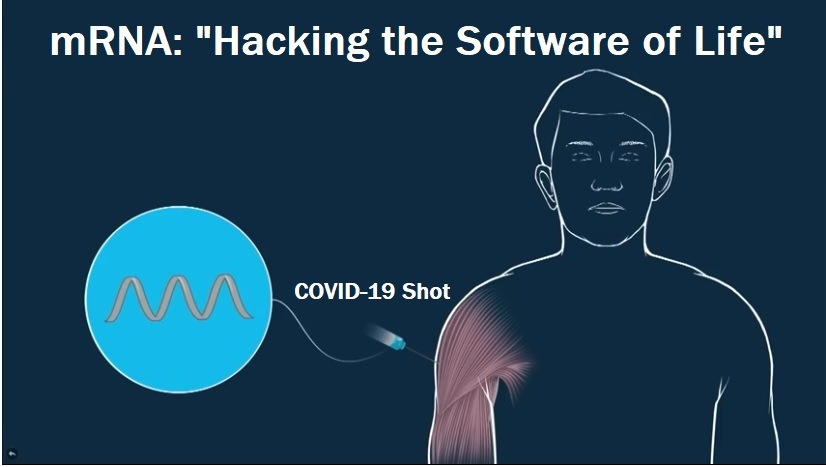
Moderna’s Top Scientist on mRNA Technology in COVID Shots: “We are Actually Hacking the Software of Life”
Comments by Brian Shilhavy Editor, Health Impact News
Veteran investigative reporter Leo Hohmann has discovered a 2017 Ted Talk presentation by Dr. Tal Zaks, the chief medical officer at Moderna Inc., where he clearly explains in layperson’s language just what the mRNA technology does in vaccines. (Thanks to Patrick Wood of Technocracy News for publishing this.)
As Dr. Zaks clearly states, they are:
“hacking the software of life,” by injecting their own genetic code into humans.
What we are witnessing in this new class of “vaccines” is clearly the wedding together of digital technology born out of the computer age, with Darwinian biology and medicine.
In short, the new technocrats of medicine actually believe they can improve the design plan of human beings, replacing God.
This is not a conspiracy theory, as they are very arrogant and very open about just what they dream about achieving.
This is first and foremost a belief system, with very little to no science involved to back up their claims.
We are quickly moving from the realm of science fiction and entertainment, as we see in Hollywood presentations such as Star Trek, where humans can be disassembled and transported (beamed) through space and miraculously put back together instantly, or food can be “replicated” at the push of a button, to real life experiments based on these beliefs by Billionaire psychopaths who have nothing better to do with their wealth other than try to improve upon the human race.
Welcome to the brave new world of post-COVID, and the transhumanist agenda. The software engineers of yesterday, who cannot even create a virus-free computer operating system, are now in charge of the “software of life” and working together with the Big Pharma criminal cartel. They also fund and control what is broadcast in the corporate media.
What could possibly go wrong?
Moderna’s top scientist: ‘We are actually hacking the software of life’
Dr. Tal Zaks, the chief medical officer at Moderna Inc., explained in a 2017 TED talk how the company’s mRNA vaccine was designed to work.
Over the last 30 years, he said,
“we’ve been living this phenomenal digital scientific revolution, and I’m here today to tell you, that we are actually hacking the software of life, and that it’s changing the way we think about prevention and treatment of disease.”
He went on to explain [see video below] that the human body is made up of organs and organs are made up of cells.
In every cell there’s this thing called messenger RNA or mRNA for short, that transmits the critical information from the DNA in our genes to the protein, which is really the stuff we’re all made out of. This is the critical information that determines what the cell will do. So we think about it as an operating system.
So if you could change that, if you could introduce a line of code, or change a line of code, it turns out, that has profound implications for everything, from the flu to cancer.
I reported on Feb. 4 that Moderna describes its new vaccine as “a computer operating system” but I was not aware at that time that Zaks had spoken three years ago about this, totally debunking the establishment media’s lie that mRNA vaccines don’t alter your genetic code.
He could not be more clear when he said “We are actually hacking the software of life.”
Zaks stressed that in 2017 his company was working on a vaccine that would not act like any previous vaccine ever created.
“Imagine if instead of giving [the patient] the protein of a virus, we gave them the instructions on how to make the protein, how the body can make its own vaccine,” he said.
Zaks said it took decades to sequence the human genome, which was accomplished in 2003, “And now we can do it in a week.”
He proceeded to reveal, in 2017, his company’s plans to make individual cancer vaccines, tailored to the needs of individual cancer patients, “because every cancer is different.”
Interestingly, one of the most potentially catastrophic side effects of the mRNA vaccine is its interaction with cancer cells. According to a study at New York City-based Sloan Kettering Cancer Center, the mRNA has a tendency to inactivate tumor-suppressing proteins, meaning it can promote the growth of cancer cells.
Both the Moderna and Pfizer injections are experimental mRNA vaccines. The FDA has only granted these injections Emergency Use Authorization [EUA] and they will remain in trials through 2023, yet the government, media and corporations are all promoting them as though they are guaranteed safe.
This systemic deception will, in my opinion, end up being judged in the rear-view mirror of history as one of the most reckless acts of medical treachery ever committed against the human race.
If this so-called vaccine does cause more people to get cancer, think of the possibilities from a purely business point of view.
Based on the predictions of Dr. Zaks, who oversaw the creation of the vaccine now being given to millions of people worldwide, the same Big Pharma companies that could potentially give people cancer with one vaccine could step forward later with another vaccine offering the cure for cancer. If you are the CEO of a mega pharmaceutical who answers to profit-driven Wall Street shareholders, that’s a brilliant strategy!
But is it ethical from a medical point of view? That’s a question nobody is asking.
As I listen to Dr. Zaks lay out the achievements of his company in creating the mRNA vaccine, I cannot help but think of how incredibly arrogant it sounds. That scientists think they can rewrite the genetic code [his words not mine for all you out there who still don’t believe these mRNA vaccines change the genetic code just because some ‘fact checker’ says they don’t], believing they can improve on a person’s God-given genetic makeup is entering dangerous territory.
Who’s to say they won’t correct one problem and create something far worse?
Zaks wrapped up his 2017 speech with the following words.
“If you think about what it is we’re trying to do. We’ve taken information and our understanding of that information and how that information is transmitted in a cell, and we’ve taken our understanding of medicine and how to make drugs, and we’re fusing the two. We think of it as information therapy.”
Information therapy. Just like a computer software code.
These scientists truly believe that the human body is nothing more than a machine that can be hacked into and reordered according to some programmer’s instructions.
The same ground-breaking nature of this research that excites some, is what horrifies others.
A person’s genetic makeup is, as Dr. Zak said, “the software of life.”
If this is true, then who should be the ultimate authority over each human being’s genetic software code? If we truly live in a free society, wouldn’t it stand to reason that we would want to have an energetic debate over how to answer that question? Shouldn’t it be the number-one issue being debated in Congress and the media?
Instead, nobody is allowed to even ask these questions without being threatened, censored, rebuked, deplatformed. Members of the corporate media who dare broach the question get fired.
Contrary to what some scientists believe, we are not machines. We are human beings with bodies, souls and free wills. Anyone who tries to mandate the acceptance of an experimental gene-altering treatment is going against the international Nuremberg Codes, which require informed consent of any experimental treatment.
Dear readers: Please do not allow your employer, your government, your family, your friends or anyone else to intimidate you, or in any way try to persuade you, to accept this experimental treatment if you do not want it.
You are your own health authority, period. If your employer threatens you with termination for rejecting this injection, please contact an attorney.
Leo Hohmann is a veteran investigative reporter and author whose recent book, “Stealth Invasion” spent the majority of 2017 among Amazon.com’s top 10 books about immigration policy. He has spent decades researching and writing about education, immigration, crime, politics and religion. His articles have appeared at WND.com, FrontPage Magazine, Jihad Watch, the Drudge Report, Canon 212, Technocracy News, TheReligionOfPeace.com and many other websites and publications. Hohmann has been interviewed by dozens of local and national radio hosts including Laura Ingraham of Fox News, Daniel Horowitz of Conservative Review, Larry Elder, George Noory of Coast to Coast, John B. Wells of Caravan to Midnight and Jan Markell of Olive Tree Ministries. His mission has always been to fearlessly report truths about the great issues of our time and connect the dots, wherever they may lead. He also seeks to report issues in historical context so his readers can grasp the greater meaning of the day’s news.