https://danielcameronmd.com/can-a-tick-bite-make-me-sick-years-later/

long-term complications of Lyme disease

Can a tick bite make me sick years later?

This is one of the most common — and most difficult —questions patients ask.

It often follows a long period of good health before the gradual or sudden onset of fatigue, joint pain, cognitive changes, neurologic symptoms, or unexplained inflammation. In many cases, patients never noticed a tick bite or it is recalled years later, once symptoms begin.

Questions about whether a tick bite can cause illness years later come up because tick-borne diseases don’t always follow a clear or predictable timeline. Unlike infections that cause sudden, obvious symptoms, illnesses like Lyme disease can develop slowly, come and go, or appear in stages.

Understanding this means looking at how the disease can progress over time, rather than focusing on a single tick bite or moment of exposure.


Tick-Borne Illness Timelines Are Confusing

After a tick bite, many people do experience symptoms within days or weeks. Fever, rash, fatigue, and musculoskeletal pain are common early manifestations, and when treatment occurs at this stage, recovery is often straightforward. This familiar pattern is what most people expect when they think about tick-borne illness.

However, not everyone follows this course. Some individuals never develop noticeable early symptoms, while others experience mild or nonspecific complaints that resolve and are quickly forgotten. When health problems surface years later, patients understandably revisit the question of whether a past tick bite could be relevant. At that point, the concern is no longer theoretical—it is personal.


Identifying When Illness Began

In typical cases, early infection is recognized and treated, and symptoms resolve. This reinforces the belief that tick-borne illness always presents quickly and clearly.

Yet clinical experience shows that timelines can vary widely, and absence of early symptoms does not always mean absence of infection.

When symptoms appear later, patients and clinicians struggle to reconstruct when the illness truly began. This uncertainty fuels the question of whether a tick bite could explain illness years later.


How a Tick Bite Can Be Linked to Illness Years Later

One explanation is that early infection was never recognized or treated. When Lyme disease is missed in its initial stages, it may later involve the joints, nervous system, or other organ systems. In these cases, symptoms can develop slowly and appear long after the original exposure.

Another possibility is that early symptoms were subtle and self-limited. Flu-like illness, headaches, fatigue, or migratory aches are often attributed to stress or viral infections. When these symptoms resolve, the connection to a tick bite is lost, only to resurface later when more persistent problems develop.

Immune and inflammatory effects may also evolve over time. Even after an initial infection, immune system activity can persist or shift, contributing to delayed or fluctuating symptoms involving cognition, energy levels, autonomic function, or pain perception. This helps explain how a tick bite can make someone sick years later without a dramatic early illness.


Triggers That Unmask Symptoms

Many patients report that symptoms became noticeable only after a triggering event such as another infection, major stress, surgery, trauma, or hormonal change. These events do not necessarily cause disease themselves, but they can reveal an underlying vulnerability that had previously been compensated for.

When this happens, it may feel as though illness appeared suddenly, even though the groundwork was laid years earlier.


Does a Tick Bite Making You Sick Years Later Mean Active Infection?

Not necessarily. When patients ask whether a tick bite made them sick years later, they are often asking two separate questions: whether an early infection was missed, and whether a past infection can lead to delayed or long-term effects.

Clinical guidelines recognize Lyme disease as a multisystem illness and emphasize careful evaluation of persistent or late-emerging symptoms while also stressing the importance of ruling out alternative diagnoses. Symptoms appearing long after exposure do not automatically prove ongoing infection, but they do warrant thoughtful assessment.


Why Clinicians Disagree About Tick-Bite Timelines

There is broad agreement that Lyme disease can affect multiple organ systems over time. Disagreement arises when symptoms appear well outside expected timelines. Some clinicians emphasize the possibility of persistent infection, while others focus on post-infectious or immune-mediated mechanisms.

Regardless of interpretation, symptoms that do not follow a classic pattern should not be dismissed simply because they are complex.


Clinical Takeaway

A tick bite can be linked to illness years later, but rarely in a simple or linear way. Delayed symptoms may reflect missed early infection, subtle initial illness, evolving immune or inflammatory effects, or life events that unmask disease. Understanding timelines helps reduce confusion and supports individualized care.


Resources
  1. New England Journal of Medicine. (1990) Chronic neurologic manifestations of Lyme disease.
  2. Current Infectious Disease Reports. (2011) Neurologic manifestations of Lyme disease.
  3. Dr. Daniel Cameron: Lyme Science Blog. Tick Bite Treatment Options: Wait or Treat?
  4. Dr. Daniel Cameron: Lyme Science Blog. Only a minority of children with Lyme disease recall a tick bite.
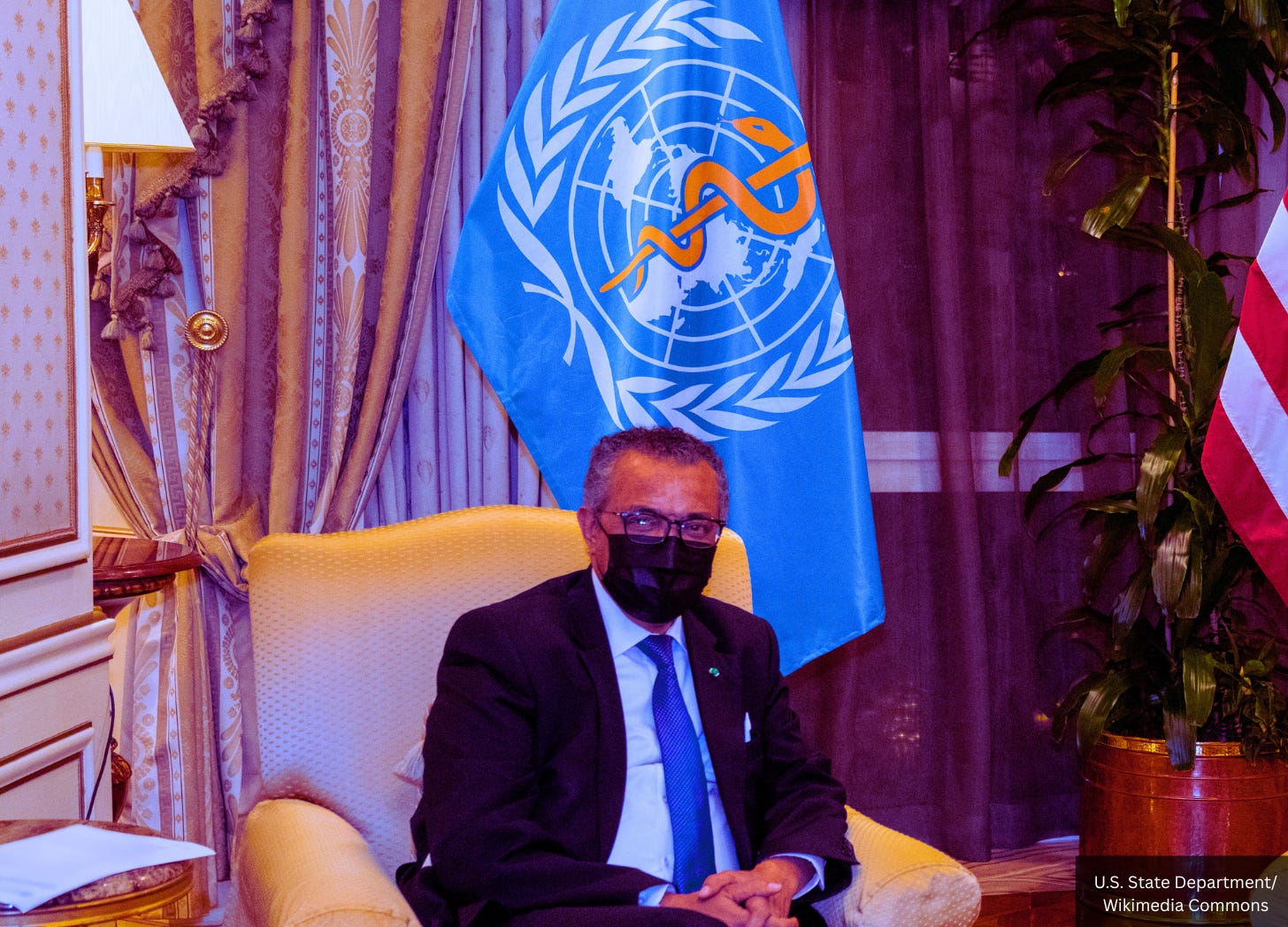
https://jonfleetwood.substack.com/p/who-convenes-global-session-to-dictate?

WHO Convenes Global Session to Dictate How the Coming Influenza Pandemic Will Be Run

Foreign pandemic governance cartel is “[p]reparing for and responding to an influenza pandemic.”

World Health Organization Director-General Dr. Tedros Adhanom Ghebreyesus in Kuwait City, Kuwait on July 28, 2021 (State Department photo by Ron Przysucha/ Public Domain/Wikimedia Commons).

The World Health Organization will convene an online international pandemic control session on Wednesday, March 18, centered on the unelected globalist group’s Pandemic Influenza Preparedness (PIP) Framework, according to a WHO press release.

PIP is the international structure through which the WHO, a foreign syndicate, dictates how influenza virus samples are transferred worldwide, and how pandemic vaccines, antivirals, and diagnostics are allocated once an influenza pandemic response is activated.

The new pandemic control session, organized through the WHO’s Epidemics and Pandemics Information Network (EPI-WIN), will decree how governments, laboratories participating in the WHO influenza surveillance network, and pharmaceutical manufacturers operate under the framework during an influenza pandemic response.

The United States is still participating in WHO pandemic surveillance networks (here)—including the organization’s CoViNet sentinel surveillance system, which now spans 45 reference laboratories worldwide—through institutions such as Emory University, Ohio State University, and the CDC, despite President Donald Trump’s executive order publicly withdrawing the country from the organization earlier this year.  (See link for article)

______________

Important quote:

With the WHO now activating its influenza pandemic command framework, the infrastructure that governed the COVID-19 response is already being positioned to run the next pandemic cycle.

For more:

Originally, the flu vaccine was a measure to protect the elderly, but go here for a blast from the past when four scientists researching the Flu vaccine during the 1960s found it to be ineffective and refused to give it to their own families.  The scientists state they were prevented from publishing their negative findings.

Despite this, the ineffective and dangerous vaccine has increasingly been pushed on everyone 6 months old and up, including pregnant women despite the fact the flu vaccine is linked to increased risk of miscarriage.

Now a recent Japanese study shows NO BENEFIT on hard outcomes: hospitalization and death. Another perfect example of how the massive push to vaccinate people for the flu has been a waste of time and effort.  Do not expect to read about this in the news.

Further demonstrating the diabolical history behind vaccines, the military mandated the Adenovirus vaccine for ‘cold-like symptoms’:

”…when it was shown that the vaccine contained a contaminant which caused cancer in laboratory animals, it was taken off the market, but that was 3 years after the division’s scientists have pointed out the danger…”

The Adenovirus vaccine (which contains live adenovirus Type 4 and type 7 can be shed in stool and and breast milk and infect contacts – particularly children, pregnant women, and those with immune system problems, as well as harming the unborn) is still available for United States military personnel.  It is not available to the general public.


https://sayerji.substack.com/p/the-dnc-called-it-a-chemtrail-conspiracy?

Politicians Called It a ‘Chemtrail Conspiracy.’ The CIA’s Own Files Just Proved Them Wrong.

From WikiLeaks mockery to Daily Mail headlines and RFK Jr.’s podium — the arc of vindication is complete.
Conspiracy theorists have claimed that airliners have been pouring various chemicals into the atmosphere for years for nefarious reasons including population control and mind control

“CIA accused of ‘poisoning the sky’ with toxins as files expose secret weather control agenda”

The Daily Mail: declassified 1965 documents reveal federal funding for weather modification was set to quadruple by 1967 — the same year the U.S. began seeding clouds over the Ho Chi Minh Trail. President Johnson’s personal letter praising the program is part of the same 18-page report now making global headlines.

Today, one of the most-read news outlets on earth put on its front page what independent researchers, concerned citizens, and this publication have been documenting for over a decade: the United States government ran covert atmospheric modification programs, used toxic compounds including lead iodide as a weapon of warand had the personal blessing of a sitting president to do it.

The CIA files are not new. They were quietly declassified in 2003. What is new is that the mainstream media can no longer afford to pretend they do not exist.

But before I explain why today matters, I need to take you back to a document far fewer people know about — one that reveals exactly why this information was suppressed for so long, and exactly who was doing the suppressing(See link for article)

____________

Important excerpt:

The 18-page CIA report making global headlines today has been in the public record since 2003. What it reveals is not speculation. It is the operational history of the United States government’s own atmospheric modification programs, in their own words.

“He who controls the weather will control the world.”

— Lyndon B. Johnson, commencement address, Southwest Texas State University, May 1962

Mar 17, 2026

The Daily Mail runs the CIA weather modification files as front-page news. The same documents independent researchers cited for a decade are now mainstream headlines. The decade-long suppression strategy has collapsed.

Go here to stop taxpayer funding for dangerous atmospheric geoengineering

For more:

http://

Understanding Tick-Borne Disease Testing in 2026

IGeneX Inc.

Tick-borne diseases continue to be among the most complex and misunderstood conditions in modern medicine. As the landscape of diagnostics evolves rapidly, clinicians and healthcare professionals face increasing challenges—and opportunities—in accurately identifying infections, co-infections, and immune responses that directly impact patient outcomes.
 
In this forward-looking IGeneX webinar, learn how advances in laboratory science, expanded pathogen detection, and improved testing methodologies are reshaping the way tick-borne diseases are evaluated and managed. Attendees will gain a clear, practical understanding of how modern diagnostics are addressing longstanding limitations in sensitivity, specificity, and clinical interpretation.
 
This session will examine:
  • The current and emerging challenges in tick-borne disease testing, including evolving pathogens, regional variability, and complex clinical presentations
  • Advances in diagnostic technologies, such as enhanced immunoblots, cellular immune assays, and expanded multi-species detection
  • How testing has evolved beyond single-pathogen models to better identify co-infections and immune dysfunction
  • The role of clinical context in test interpretation, and how modern diagnostics support more informed decision-making
  • What to expect in 2026 and beyond, including trends in test development, regulatory considerations, and data-driven diagnostics

Designed for physicians, nurse practitioners, physician assistants, and other healthcare professionals involved in diagnosing and managing tick-borne diseases, this webinar bridges the gap between laboratory innovation and real-world clinical practice. Whether you are new to advanced tick-borne testing or looking to stay ahead of emerging diagnostic trends, this session will provide actionable insights to support more confident testing strategies and improved patient care.

For more:


https://www.newsweek.com/us-northeast-warned-rise-multiple-disease-bearing-ticks

Scientists Issue Warning Over Rise of Ticks Carrying Multiple Diseases

By 

Ticks capable of carrying and transmitting more than one potentially fatal disease at the same time are becoming increasingly common in the northeastern U.S., according to a new long-term analysis that raises fresh public health concerns for the region.

The research found that a growing share of blacklegged ticks—also known as deer ticks—are infected with multiple disease-causing pathogens. The study was led by Cary Institute of Ecosystem Studies disease ecologist Shannon LaDeau and conducted in partnership with the SUNY Center for Vector-Borne Diseases at Upstate Medical University.

The findings come from nearly a decade of tick surveillance and point to a more complex and potentially dangerous tick-borne disease landscape, particularly because different infections require different treatments.

“Healthcare workers should be on the lookout for rising co-infection risks,” LaDeau said in a statement. “And for people spending time outdoors in the Northeast, as a general rule, if the ground is not freezing, it’s a good idea to take precautions to avoid tick bites. Prevention is key.”  (See link for article)

_____________

Findings:

  • 1 in10 nymphs tested positive for at least two pathogens: Borrelia burgdorferi (19.3%) and Babesia microti (21%) were the most common followed by Anaplasma phagocytophilum (5.8%) and Borrelia miyamotoi (2%)
  • by the end of the study period 11% of sampled ticks had coinfections
  • coinfection rate has been increasing over time
  • 38% of nymphs were capable of transmitting at least one disease to humans

For more: