
Kay Hagan Tick Act Reauthorized: What It Means for Lyme Disease
by Admin at Global Lyme Alliance on October 1, 2026
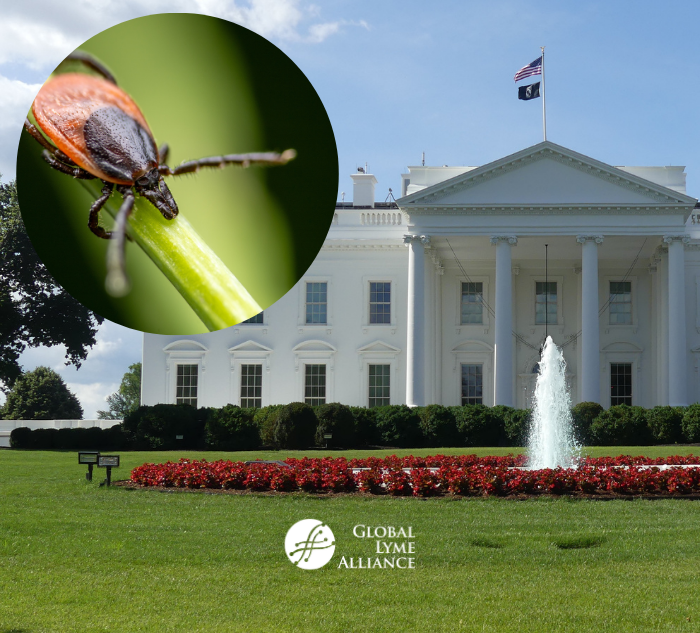
On September 30, 2026, The Kay Hagan Tick Reauthorization Act was signed into law, extending federal funding for tick-borne diseases until 2030. Here’s what it means:
“With the Kay Hagan Tick Act now law, we have an important opportunity to build on the progress made in addressing Lyme and other tick-borne diseases,” says Jennifer Katritos, Chief Executive Officer of Global Lyme Alliance.
“Sustained federal investment in surveillance, research, and state and local public health efforts is critical to advancing the science and building the foundation for meaningful breakthroughs. Global Lyme Alliance is grateful to the bipartisan leaders who championed this legislation, and we stand ready to support these efforts while continuing to advance the research that can lead to earlier and more accurate diagnoses, better treatments, and ultimately, fewer people impacted by these diseases.”
Named for the former Senator Kay Hagan of North Carolina, who died following complications from Powassan virus encephalitis, a rare tick-borne disease, the original Kay Hagan Tick Act was signed into law in 2019.
What will the Kay Hagan Tick Reauthorization Act do:
- Reauthorize Regional Centers of Excellence in Vector-Borne Diseases for five years. These university-based hubs at the University of Massachusetts Amherst, University of California, Davis, University of Florida, and the University of Wisconsin-Madison conduct research on ways to prevent tick and mosquito bites, or suppress populations of regionally important ticks and mosquitoes and their associated human disease pathogens. The centers also provide training for public health entomologists to serve as experts in vector-borne diseases, and spearheaded the creation of regional vector surveillance systems for centralized data tracking.
- Reauthorize Centers for Disease Control and Prevention (CDC) grants to state health departments to strengthen data collection and analysis, support early detection, improve treatment, and increase public education and partnerships addressing Lyme disease and other vector-borne diseases.
- Continue implementing and updating the U.S. Department of Health and Human Services’ National Public Health Strategy to Prevent and Control Vector-Borne Diseases in People. These efforts have been key in expanding research into tick-borne diseases, improving testing and diagnostics, and coordinating efforts across the federal government.
Sources:
________________
**Comment**
Willy Burgdorfer said it correctly when he stated that the money continues to go to the same people with the same results: which is NOTHING.
Bingo.
Don’t be fooled into thinking this “Tick Act” will do anything for patients. It will only continue to line the pockets of sold out researchers who follow a narrative. The research done in Lymeland has always been extremely biased and protective of the very agencies setting all the ‘guidelines’ which hamstring doctors into following a faulty paradigm, with testing that misses 90% or more of cases and completely dismisses the sickest ones who will never test positive on a test that is a complete joke.
The only progress we have made is when independent researchers do the work. They are not beholden to government grants and agencies who superimpose a faulty agenda upon the populace, mainly that Lyme is is caused by one organism which is cured by one drug in a short period of time. Research and reality show otherwise. Time to call a spade a spade.
- A Sept. 2026 study showed that nearly 1 in 3 patients with suspected Lyme disease are co-positive for other tick-borne pathogens.
- Co-infections may increase disease severity, prolong symptom duration, and contribute to atypical or overlapping clinical presentations, thereby complicating diagnosis and management. Source
- Further, metamorphose of Lyme disease spirochetes into forms that persist continues to be denied by mainstream research.
- A literature review has shown long-term infection in animal models and humans despite antibiotic therapy, yet the brief mono therapy is the only offer mainstream medicine offers making it easier to obtain medically assisted death than treatment for chronic Lyme disease.
For more:
- https://madisonarealymesupportgroup.com/2020/09/25/why-should-we-care-about-lyme-disease-a-colorful-tale-of-government-conflicts-of-interest-probable-bioweaponization-and-pathogen-complexity/
- https://madisonarealymesupportgroup.com/2019/02/22/why-mainstream-lyme-msids-research-remains-in-the-dark-ages/
- https://madisonarealymesupportgroup.com/2026/03/06/declassified-docs-link-bioweapon-program-to-lyme-disease/

