Archive for the ‘Uncategorized’ Category

When Parents are Unjustly Accused of Harming Their Sick Child

https://www.lymedisease.org/parents-unjustly-accused/

TOUCHED BY LYME: When parents are unjustly accused of harming their sick child
If your child has chronic Lyme disease, PANS/PANDAS, mast cell activation syndrome, POTS, or any number of other “medically complex conditions” – you have probably experienced being disbelieved by many people.

You may be a decent, well-intentioned parent doing everything you can to figure out your child’s puzzling medical problems.

You may scour the internet to learn more about the child’s condition, track the ups and downs of his or her symptoms, and carry binders full of medical records to appointments with various specialists—many of them far from your home.

But, in a cruelly ironic twist, those very activities can get you in trouble.

Physicians who have little experience with your child’s medically complex condition may feel you are “overmedicalizing” your child.

School officials may think you’re intentionally keeping your child out of class for reasons they consider invalid.

Neighbors and even family members may believe you’re exaggerating your child’s health problems—and, in their opinion, going about things the wrong way.

And, unfortunately, any one of these people might report you to Child Protection Services. And then your problems will escalate dramatically.

Now, it goes without saying that sometimes children ARE abused by parents, and there is, of course, a legitimate role for CPS investigations.

But medically complex conditions are fraught with issues that can unfairly entangle parents—and the more they fight to free themselves, the more tied up in legal knots they may become.

For an idea of how bad things can get, consider what happened to then-teenager Justina Pelletier and her family. In 2013, her parents lost custody of their daughter after Boston Children’s Hospital disagreed with how she was being treated at a different medical center. (Read more about Justina’s situation here.)

What to do?
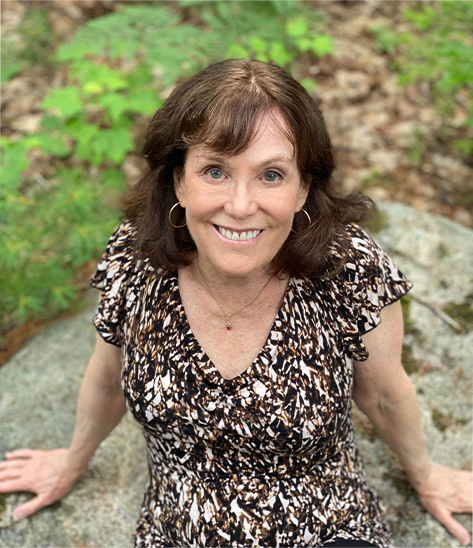
Beth Alison Maloney, Attorney/Author

According to Beth Alison Maloney, there are things you can do now to minimize the possibility of running afoul of CPS in the future. And, if you’re already caught up in the system, there are things you can do to get out of it.

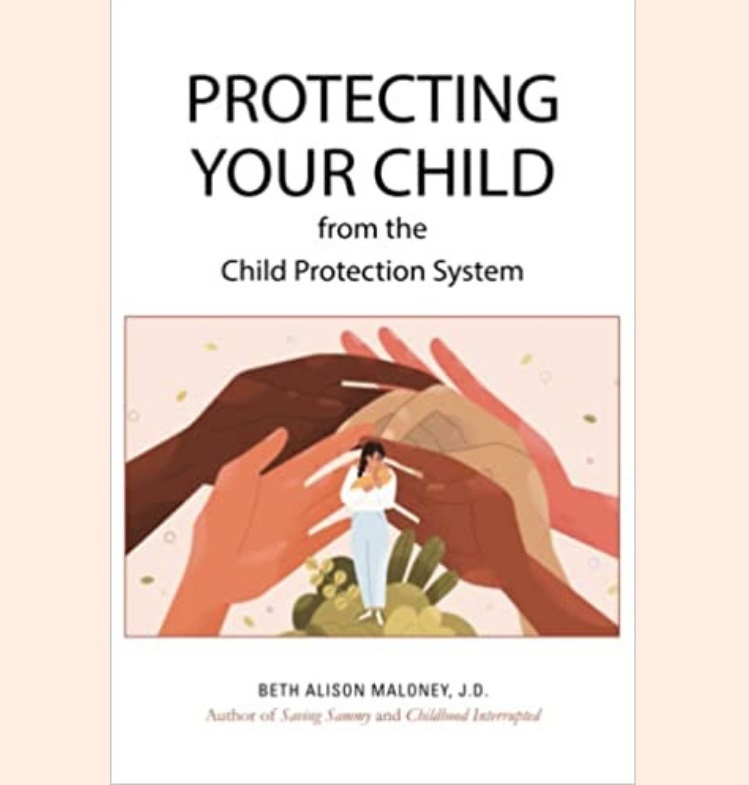
Her thorough and well-researched advice on this subject is laid out in a new book called Protecting Your Child from the Child Protection System.

Maloney is an attorney and the mother of a child who suffered from the strep-caused autoimmune condition known as PANDAS—back before practically anybody even knew what that was.

Theirs was a complicated journey. But her son finally got better and now is a well-functioning adult. She wrote their family’s story in her 2009 book, Saving Sammy: Curing the Boy Who Caught OCD.

In 2013, she wrote another instructive book, called Childhood Interrupted: The Complete Guide to PANDAS and PANS. It primarily focuses on the medical information you need to help your child recover from these conditions.

Over the past two decades, Maloney has worked as a lawyer, guardian ad litem, and nationwide consultant in the field of child protection laws. She has seen firsthand how innocent families are sometimes presumed guilty of all manner of abuse. She has seen the rise of “child abuse pediatricians”–specialists that she believes sometimes jump to unwarranted conclusions, to the detriment of the families involved.

She wrote this book so parents of sick children can understand what they are potentially up against and how they can help themselves. As she states in the introduction, “Too much is at stake for you to plunge in without being informed.”

(Please go to top link for an excerpt from the book)

Maloney’s book is divided into six parts:

  1. An overview of the Child Protection System and how it functions.
  2. How to navigate the maze and what to do if you find yourself accused
  3. The special challenges facing parents of medically complex children
  4. Building a team—lawyer, family, friends
  5. A deeper dive into the court system
  6. Rebuilding your lives after being falsely accused of abusing your child.

No parent wants to think about the possibility of losing custody of their child–especially when that child is seriously ill. But parents of medically complex children should familiarize themselves with the issues involved and take steps to head off trouble.

Knowledge is power. And if you’re falsely accused of abusing your child, you need all the power you can get.

For more information, see Beth Alison Maloney’s website.

TOUCHED BY LYME is written by Dorothy Kupcha Leland, LymeDisease.org’s Vice-president and Director of Communications. She is co-author of When Your Child Has Lyme Disease: A Parent’s Survival Guide. Contact her at dleland@lymedisease.org.

_________________

**Comment**

Very important information within this article, and book.  I highly advise any parent, grandparent, or concerned person who knows of a family struggling with Lyme to get this book to be educated. This is a wonderful resource and would make an excellent gift as well.

For more:

Live Webinar & Q&A: Lyme, EBV, & More

https://rawlsmd.com/webinars/lyme-ebv-more/

Live Webinar + Q&A: Lyme, EBV, & More

Enduring chronic Lyme disease is bad enough. Add to that a viral coinfection such as Epstein-Barr virus (EBV), cytomegalovirus, or another, and your illness becomes even more severe, plus recovery can take significantly longer. And while viruses like EBV tend to pop up periodically during Lyme treatment, overcoming them is possible — and you don’t have to do it all alone.

Join a live webinar with Dr. Bill Rawls, author of the best-selling book Unlocking Lyme, who knows firsthand what it’s like to struggle with chronic Lyme disease and the viral coinfections that can go hand in hand with it. You’ll discover what really matters when it comes to diagnosing EBV and other viruses, plus the best natural and conventional remedies for easing symptoms and restoring your health.

Since his recovery more than a decade ago, Dr. Rawls has helped thousands of patients find their path to healing from Lyme disease and coinfections. Now, he’d like to help you. Come with your questions, and he’ll answer as many of them as possible. PLUS: Don’t miss an exclusive gift for those who attend the live webinar.

In this webinar, Dr. Rawls will discuss:

What are the telltale signs of EBV?

• Do you need to know which viral coinfection(s) you have before seeking treatment?

• Are there reliable testing methods for EBV and other viruses?

• What are the best herbal and natural remedies for EBV?

• How can you tell for certain when EBV is gone?

• Numerous other insights and answers on EBV and viruses throughout the live Q&A with Dr. Rawls

RESERVE MY SEAT »

GLA Interview With Ross Douthat, NY Times Columnist & Author of “The Deep Places”

https://www.globallymealliance.org/blog/global-lyme-alliance-interview-with-ross-douthat-new-york-times-columnist-and-author-of-the-deep-places?

Global Lyme Alliance (GLA) and Ross Douthat, New York Times Columnist, discuss his journey with Lyme disease and the publication of his new book.
GLA: Can you briefly summarize your experience with Lyme disease?

RD: I first got sick in the summer of 2015, when I was moving with my family from Washington DC to what we thought was our dream house in the Connecticut countryside; I was almost certainly tick-bitten while we were doing the inspection on the house, and I unwisely wandered down into the meadows. But we were still in Washington when I fell apart: It started with a red spot on my neck, which was diagnosed as a boil; them came neck stiffness and headaches, and then a full-body collapse, with terrible migratory pain, insomnia, phantom heart attack, the works. And the doctors in D.C. couldn’t see anything wrong in my bloodwork – my first Lyme tests were negative – and they had no idea what was wrong with me, so they prescribed Xanax and sleeping pills and sent me to a psychiatrist (who, to his credit, told me I probably had a physical illness).

Only when we actually managed to make the move to the northeast, when I had been sick for months, did I see doctors who knew something about Lyme and prescribed a trial of antibiotics. That stabilized me: I was able to sleep and eat again, I stopped going to the ER. But the illness didn’t go away: I was still in pain all of the time, with constantly shifting symptoms all around my body. So at that point I entered the strange world of chronic-Lyme treatment, shuttling between doctors and treatment protocols until – after about eighteen months of simple misery – I finally found one that helped me start to make progress, very slowly, toward the health that now six years later I mostly, but not completely, regained.

GLA: Tell us about your new book. What can others with Lyme & chronic illness hope to get out of reading it? How about those without?

RD: It’s a memoir of the experiences described above, with some details on the history of the Lyme disease debate worked in: It’s partially a medical odyssey, partially a family drama, partially a real-estate horror story with our dream house playing the role of Hill House or the Overlook, and partially a psychological and sometimes spiritual story about what it’s like to live with a disease that official medicine isn’t even sure exists. To people with chronic illness, I hope that it offers a mixture of recognition – meaning that they’ll be able to see their own experiences mirrored in some of my mine – and encouragement, evidence that it’s actually possible to make real progress against even the most intractable-seeming disease. To people outside this world, I hope its testimony will make it possible to see a little more clearly just how serious these mysterious chronic illnesses can be: Whether or not they’re fully convinced of the reality of Chronic Lyme specifically, I want them to be convinced that these kind of illnesses aren’t just a matter of a few aches and pains blown out proportion, that they can really steal your life away, and that they deserve an attention from official medicine that they do not currently receive.

GLA: When and where can we buy it?

RD: Anywhere and everywhere (hopefully), from Amazon to your local bookstore.

GLA: What made you speak out and share your story?

RD: Well, I write for a living, so having something this interesting and harrowing happen to me was natural fodder for my work. They say that you should write what you know, and I now know more about this subject than I ever expected, and it’s one of those stories that you just feel like you have to tell – indeed it’s kind of a relief to have it finally out in the world, after I’ve lived inside it for so long.

So that’s the personal side. And then more practically I felt that the only way that our understanding and treatment of these kind of conditions will get better is if people speak out and describe what it’s like to actually go through it, what chronic Lyme is like from the inside – so I hope I’ve helped with that kind of public understanding, even a little bit, by putting my story out in public. And then finally, regardless of what happens with the medical establishment or the culture, I hope that people who are going through the experience themselves will be able to take a certain kind of help and solidarity from my story, and feel a little more encouraged, a little less alone.

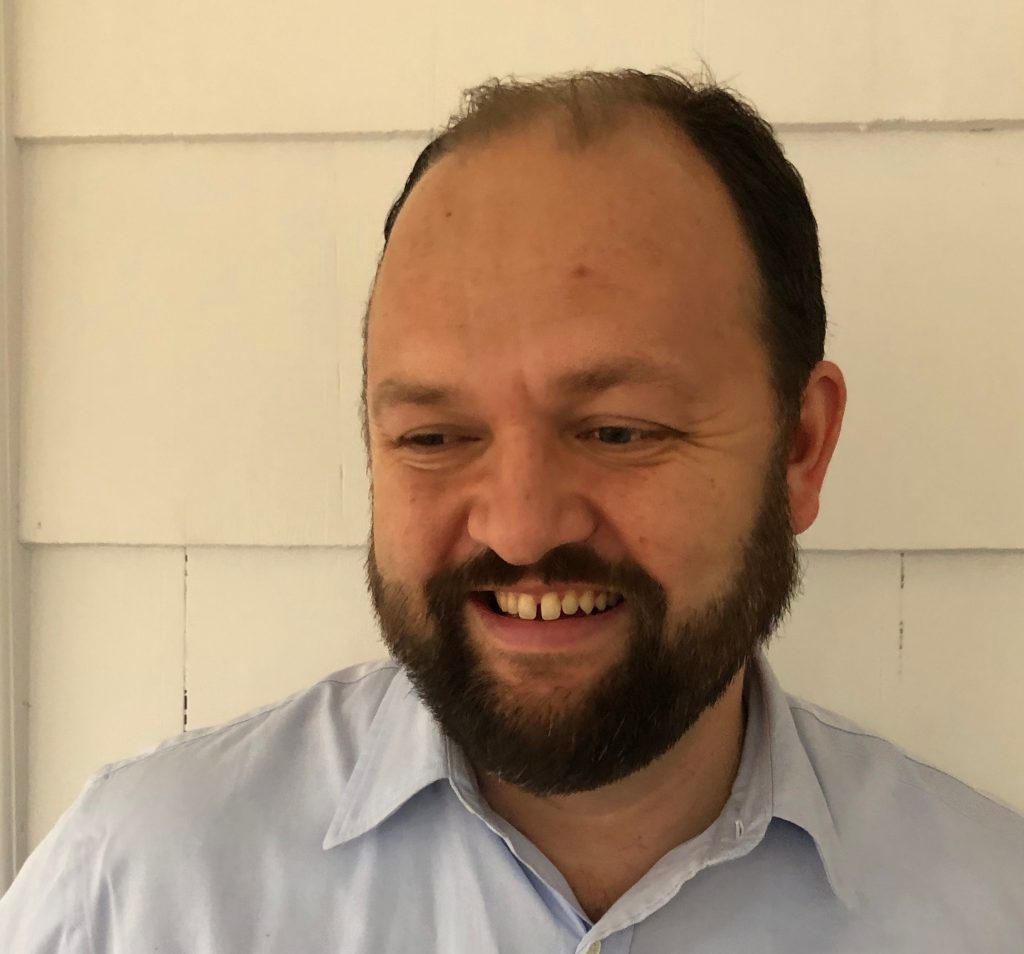
~Ross Douthat (C) Abigail Douthat
GLA: How did your experience with Lyme change you? How did your family and friends act during this time?

RD: My friends and family acted as well as anyone could be reasonably expected to act, confronted with a mysterious and medically-controversial illness that for months and years I couldn’t figure out how to treat. Which is to say that people who have to live with the chronically ill have their own kind of challenges, and in the cases of spouses and family, their own particular afflictions, the burden of which needs to be taken seriously in thinking about the scope of suffering caused by this kind of disease.

As for how it changed me – well, at my best I would say that it has made me more appreciative of the ordinary graces of life, the kind of simple things that you take for granted until they’re taken from you. I would also say that it’s made me considerably more open-minded about the sheer weirdness and mystery inherent in reality, all the things that still fall outside, or on the fringes, of what the current scientific consensus understands. Which is not to say that I’ve become anti-science; most of the things that helped me get better were, in their own way, scientific, the results of research or experimentation or both. But I have a new appreciation, shall we say, for the ways in which actual science and the current scientific consensus aren’t always one and the same.

GLA: Were you surprised about the reaction to the recent op-ed and the amount of attention it received?

RD: No, not really: These kind of conditions are extremely common, hard to talk about, and surrounded by clouds of skepticism, so I took it for granted that once I wrote about the full weirdness of my experience I would get some kind of strong reaction – and I wasn’t disappointed!

GLA: What if any recommendation do you have for convincing the NIH, CDC, and IDSA that Lyme and tick-borne diseases are chronic in nature and constitute a major, growing epidemic in the United States?

RD: The simplest answer is that they should consider funding tests of antibiotic treatment for chronic Lyme symptoms that actually follow the methods that doctors who have had success treating chronic patients. Doing this is difficult, as I write in my book, because the treatment protocols are so complex, so tailored to the individual patient, and take so long to really work that it’s hard to design a normal controlled study. But I think we can do better than the current alleged “gold standard” studies, which have looked at the effects of taking a single antibiotic for an extra 4-11 weeks. We need studies that look at the effects of multiple antibiotics, over longer periods of time, which “pulsing” and other mechanisms worked in, and with coinfection diagnosis and appropriate treatment included as well. Those would take work and effort and funding, but it should be possible to set them up. From what I’ve seen and read and experienced, it’s no surprise that studies that just give chronic patient an extra few weeks of antibiotics, even IV antibiotics, don’t show results, because for doctors who treat long term, that’s not what usually *gets* results.

GLA: Will you make any changes in your lifestyle or behavior now that you’ve been through this?

RD: You mean, besides showering more often after going in the woods? I think the biggest changes I’ve tried to make are psychological – trying to sustain the feeling of gratitude and appreciation that I get from ordinary experience on the days when I’m feeling a lot better.  Of course I try to eat healthier and get more exercise, but I’m not sure I’m that much more successful at either now than before. I do think – or hope, at least – that in addition to being more open-minded than I used to be, I’m also somewhat more charitable: Because the cliché, that you never know what someone is going through in secret, is really, really true.

GLA: Ultimately, these advances will allow us to find a cure for Lyme disease and other tick-borne illnesses. How would you encourage patients embarking upon their Lyme journey? What do you wish you had known when you first started out?

RD: Honestly I hesitate with this kind of question because if I’d known when I started out exactly how hard the road back toward would health would be, it would have been the opposite of encouraging! But I suppose the best thing to say is that you need to be realistic and optimistic at the same time. If you get very sick before you get diagnosed, it really can be difficult to get better, and nobody should sugar-coat that for you. At the same time, you really *can* get better, which on the worst days can be impossible to believe. So being able to keep going over a long haul of recovery – months when you hope for weeks, years when you hope for months – is really essential, and one of the things that you should keep you going is the knowledge that so many other people have made this journey, or are making it right now, and their experiences prove that progress is possible, recovery is possible, and everything that you need to do and try in order to get there will seem worth it, eventually, in the future that’s waiting for you even now.

For more: https://madisonarealymesupportgroup.com/2021/12/07/deep-places-explores-one-mans-lyme-fight/

“Deep Places” Explores One Man’s Lyme Fight

https://www.lymedisease.org/deep-places-ross-douthat-lyme/

TOUCHED BY LYME: “Deep Places” explores one man’s Lyme fight

Dorothy Kupcha Leland

Dec. 1, 2021

Ross Douthat was a busy man.

In addition to his regular opinion column in the New York Times, he wrote books, gave speeches, traveled, interviewed people, and was often interviewed himself.

In 2015, he and his wife had two kids and another on the way. They decided to leave Washington DC and relocate to Connecticut, where they had both grown up and still had family.

They found a rambling old country house that they fell in love with. After walking through the dwelling and briefly strolling around the property surrounding it, they made an offer which was accepted. Then, they returned to DC to prepare for the move.

And that’s when Douthat’s life changed dramatically.

It started with a stiff neck and an enlarged lymph node. (“Nothing to worry about,” said an internist.) It progressed to migrating pain that moved from his head to his spine to his chest to his arms and legs. (“Maybe drink more Gatorade–for the electrolytes,” suggested a neurologist.) Other specialists prescribed sleeping pills and antidepressants. (“Stress,” they declared. “Too much going on in your life.”)

The reason or the symptom?

“I did feel stressed,” Douthat remembers. “But the illness felt like the reason rather than the symptom.”

He was tested for Lyme disease a couple of times, with negative results.

Meanwhile, the bizarre symptoms continued. Before he and his family left Washington, crushing chest pain sent him to the emergency room on two different occasions. Doctors there found nothing wrong with him. He followed up with various specialists, who theorized that his symptoms were psychosomatic.

As one infectious diseases doctor put it: “Look, I know it’s hard to see, but you should feel happy. It’s a good thing not to have a disease, you know…. And, if you need a mental health referral, we can definitely help with that.”

Caught in the middle

In his recently published book, The Deep Places: A Memoir of Illness and Discovery, Douthat writes about being caught between what he was feeling in his body and what the doctors confidently proclaimed didn’t exist.

By this point, I was deep into self-doubt about the reality of my experience. On the one hand, there was the pain, the burning, the vibrations, the feeling of invasion; I knew I’d never felt anything like this before. But what were mere feelings set against the certainties of so many doctors, the repeated negative readings of my blood?

The family moved to the big country house, Douthat’s condition continued to deteriorate, and he consulted new doctors in Connecticut.

First stop was a psychiatrist, who listened, took notes, and then surprised Douthat by saying, “I’m pretty sure you have a tick-borne disease, Ross.” (Had a tick nailed him during his initial inspection of the Connecticut property? The timing certainly seemed right.)

This sent him in search of Lyme specialists and to dig even deeper into learning about the illness: the problematic testing, difficulty of diagnosis, controversial treatments, and how mainstream medicine looks at Lyme with a mixture of disdain and denial.

Frustrating illogic

He notes the frustrating illogic that Lyme patients face:

If you were a positive case with lingering, persistent symptoms after treatment, then your Lyme officially belonged to the past, and you no longer had a CDC-recognized disease. Instead, you had something called Post-Treatment Lyme Disease Syndrome (PTLDS), and the CDC’s advice for anyone suffering through it was to basically keep on suffering.

And he wonders:

If someone has an illness, takes a drug to treat it, and afterward retains exactly the same symptoms, why wouldn’t you assume that they have simply continued to have the same disease? Why invent a mysterious “post-disease syndrome” to explain what is experienced by the patient as one continuous sickness?

Douthat consulted different Lyme specialists that prescribed various antibiotic combinations. Some helped in some ways—but nothing got to the heart of the matter. He was still desperately ill.

At that point, Douthat started branching out into more alternative realms such as muscle testing, magnets, and a Rife machine—along with continuous heavy-duty prayer—and by the close of 2019, he was doing much better. “2020, I told myself, is going to be a good year.”

Then he and other family members got nasty cases of COVID. And he writes:

The coronavirus era soon came to feel like a shattered mirror of the tick-borne epidemic and its controversies, with different pieces of the Lyme wars reflected and refracted in different aspects of the world-wide COVID crisis.

In the following excerpt of The Deep Places, Douthat expands on this comparison between Lyme disease and COVID-19.  (See top link for book excerpt)

Prominent deniers of chronic Lyme

Douthat recently published three articles in the New York Times that drew on the experiences chronicled in this book.

How I Became a Sick Person (Oct. 24)

How I Became a Science Experiment (Oct. 31) and

How I Became Extremely Open-Minded (Nov. 7)

On November 27, the newspaper published seven letters to the editor in response to Douthat’s trio of articles. Three of the letter writers are prominent IDSA members, all well known deniers of chronic Lyme. Another one consults for Big Pharma. Any guesses about what those guys had to say about Douthat’s columns?

I’ve read and reviewed a lot of books about Lyme disease. Douthat’s book is one of the best. I highly recommend it.  Click here for information about ordering this book.

Readers react to Ross Douthat’s account of his health travails and the exotic treatments he tried.

Happy Thanksgiving 2021 & Next Support Group Meeting in December

Next Support Group Meeting

When: December 11, 2021

Time: 2:30

Purpose: Support

Where: The Sparrow’s Nest at the Abbey: https://sparrowsnest-abbey.com/, 17304 Havenwood Road, Sparta, Wisconsin.  Questions about accommodations:  Call Lori or Tom Graber:  (661) 400-2318 or (661) 406-1721  (Map for directions is on the website).  Once you get off the interstate, and are on highway 16, you turn onto Havenwood and just keep driving (maybe 2 miles?) until Havenwood ends.  Park your car, enter the building, and turn left into the hallway.  Going down about half way, on the right is a room connected to the kitchen where we will meet.  There are circular tables and chairs and a restroom close by.

What: Bring your questions, frustrations, and anything you want to share with the group. Can’t wait to catch up and see how you are all doing!