Diagnosing Lyme Disease: Dr. Klinghardt
https://www.bitchute.com/video/IcgYf2AZGfyu/ Video Here (Approx. 1 hour 30 min)
Diagnosing Lyme Disease
Interview with Dr. Dietrich Klinghardt
First published April 2022
For more:

https://www.bitchute.com/video/IcgYf2AZGfyu/ Video Here (Approx. 1 hour 30 min)
Interview with Dr. Dietrich Klinghardt
First published April 2022
For more:
**UPDATE**
Please watch this insightful and informative 10 minute interview with Dr. Peter McCullough, cardiologist and author of the study below in which he delineates the data from autopsies performed on those who got the COVID shot showing definitive proof the shots are causing death.
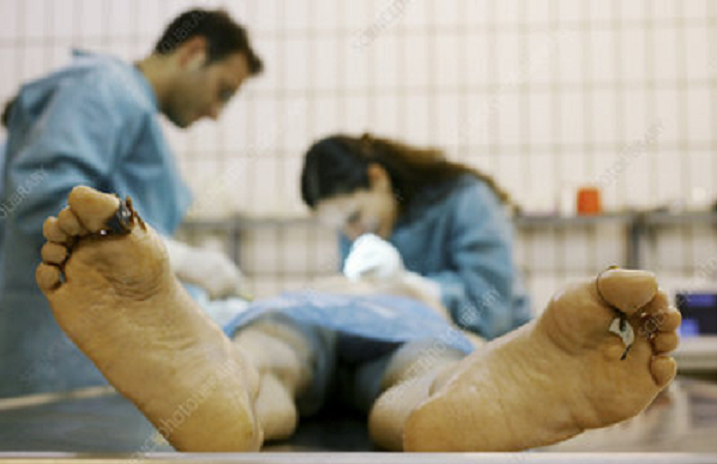
An independent meta review of autopsies on people who died after COVID-19 vaccination, published as a preprint in The Lancet online on July 5, 2023, found that 74 percent of the deaths were causally related to the shots. The review included 44 published papers that contained 325 autopsy cases and one necropsy case. According to one of the study’s co-authors, cardiologist Peter McCullough, MD, MPH of the Wellness Company, the review is the “final retort” to, “you cannot prove the vaccine caused the death.”1
Other co-authors of the study include doctors from Alberta (Canada) Health Services, the University of Michigan School of Public Health, Yale University School of Public Health and the Wellness Company, as well as a former senior COVID pandemic advisor to the U.S. Secretary of Health and Human Services (HHS).1
The most implicated organ system in COVID vaccine-associated death was the cardiovascular system (53 percent), followed by the hematological (blood) system (17 percent), the respiratory system (8 percent) and multiple organ systems (7 percent). The mean time from vaccination to death was 14.3 days, with most deaths occurring within a week from last administration of a shot.1
Most of the deaths occurred among individuals who received Pfizer/BioNTech’s Comirnaty COVID shot (41 percent), followed by Sinovac Biotech’s CoronaVac (37 percent), AstraZeneca/Oxford University’s Vaxzevria (13 percent), Moderna/NIAID’s Spikevax (7 percent), Johnson & Johnson/Janssen’s Ad26.COV2.S (1 percent) and Sinopharm’s BBIBP-CorV (1 percent).1
The study’s authors suggest there is a high likelihood of a causal link between COVID shots and the deaths that occurred soon afterward in most cases and that “further urgent investigation is required aimed at confirming our results and further elucidating the mechanisms underlying the described fatal outcomes with the goal of risk mitigation for the large numbers of individuals who have taken one or more COVID-19 vaccines.”1
More than 70 percent of the population of United States is considered to have been “fully vaccinated” for COVID. The U.S. Centers for Disease Control and Prevention (CDC) recommends the shots for anyone over six months old. The agency also recommends COVID shots for pregnant women.2 3
Dr. McCullough stated:
Going forward in response to sudden unexplained deaths reported in the press, it is reasonable to conclude the cause of death is a fatal covid-19 vaccine injury until proven otherwise. Proof the decedent is unvaccinated or an alternative diagnosis is now required for the vaccine to be exonerated. In the absence of this information, medical examiners, coroners, physicians, and government officials should attribute the death to COVID-19 vaccination.4
The preprint of the study was removed from The Lancet less than 24 hours after it was published—prior to the initiation of an anticipated peer review. It was removed with the sole explanation that “the study’s conclusions are not supported by the study methodology.” Dr. McCullough said that the study was removed “after large volume download” from The Lancet’s preprint server.4
Will Jones of The Daily Sceptic wrote:
Without further detail from the Preprints with the Lancet staff who removed the paper it is hard to know what substance the claim that the conclusions are not supported by the methodology really has. A number of the authors of the paper are at the top of their fields so it is hard to imagine that the methodology of their review was really so poor that it warranted removal at initial screening rather than being subject to full critical appraisal. It smacks instead of raw censorship of a paper that failed to toe the official line.5
Clare Craig, BM, BCh, FRCPath, a diagnostic pathologist and co-chair of the HART (Health Advisory & Recovery Team) pandemic advisory group in the United Kingdom, noted:
It is important that attempts are made to quantify the risk of harm and censorship of these attempts, rather than open scientific critique, does nothing to help reassure people.
The VAERS system [of vaccine adverse event reporting] is designed to alert to potential harms without necessarily being the best way of measuring the extent of those harms. Quantifying the impact of deaths can be done by looking at overall mortality rates in a country, but that is an imperfect system with dubious accuracy.
The alternative approach of auditing deaths through autopsy is sound.5
References
1 Hulscher N, Alexander P et.al. A Systematic Review of Autopsy Findings in Deaths After Covid-19 Vaccination. (available at SSRN) July 5, 2023
2 What’s the nation’s progress on vaccinations? USAFacts.org May 10, 2023.
3 U.S. Centers for Disease Control and Prevention. COVID-19 Vaccines for People Who Would Like to Have a Baby July 14, 2022.
4 McCullough P. COVID-19 Vaccine is the Culprit in Majority Found Dead after Injection. Substack July 5, 2023.
5 Jones W. Lancet Study on Covid Vaccine Autopsies Finds 74% Were Caused by Vaccine—Journal Removes Study Within 24 Hours. The Daily Sceptic July 6, 2023.
______________
**Comment**
The above article only corroborates the current VAERS tally, but ‘the powers that be’ simply don’t care. Vaers only has about a 1% capture rate so the numbers are horrifically low:
Fauci, aka Dr. Evil, told the government to tell people not to do autopsies. Now, finally, a pre-print is attempting to answer the question of why the “vaccinated” are dying within 15 days of COVID infection. According to Dr. Denis Rancourt, the clot shots have caused the death of 13 million people globally which equates to 1 death for every 2,000 injections. They are also producing “cancer without tumors,” due to the Spike Protein inducing the Warburg Effect in cells, causing them to overproduce proteins, “clogging” the cell, which in turn causes cancer.
https://thevaccinereaction.org/2023/07/one-in-three-pfizer-vaccine-shots-may-have-been-a-placebo/ Go Here for Video

https://www.lymedisease.org/microdosing-psychedelics-lyme/
By Daniel A Kinderlehrer, MD
Those of us dealing with Lyme disease are well aware that most symptoms reside in the musculoskeletal and nervous systems. And for many of us, the worst symptoms in the nervous system are neuropsychiatric. The severity of anxiety, panic attacks, depression, irritability and rage can be overwhelming.
Chronic tick-borne infections can also cause bipolar disease, addiction syndromes, eating disorders, obsessive compulsive disorder and psychosis.1-8 And of course, it is all compounded by impaired sleep, brain fog, fatigue and chronic pain, not to mention physician ignorance.
It turns out that these mental health symptoms are primarily caused by inflammation from infection outside the nervous system.9
For example, kids with PANS—Pediatric Acute-onset Neuropsychiatric Syndrome—have infections in which antibodies to different microbes cross the blood brain barrier and attack the brain, resulting in severe mood and behavioral disturbances.10 A similar process occurs in adults with neuropsychiatric Lyme disease.11-13
There is increasing recognition that many mood disorders are linked to infections and autoimmune disorders, and the common link is neuroinflammation—brain on fire.14
It is no surprise that people with neuropsychiatric Lyme disease have elevated levels of inflammatory mediators including antineuronal antibodies, cytokines, chemokines and inflammatory lipoproteins.9 Think of neuropsychiatric Lyme disease as autoimmune inflammation of the brain. The primary legs of treatment are antimicrobials, psychotropic medications and anti-inflammatory agents. Ideally, an anti-inflammatory agent will decrease inflammation but not suppress immune function.
In March 2023, I published a report describing a patient with long standing Lyme disease, Babesia and Bartonella infections in which the primary symptoms were neuropsychiatric.15 He experienced anxiety with panic attacks, depression with suicidal ideation and sleeplessness.
These symptoms gradually came under control with appropriate treatment, but a change in his regimen resulted in a severe relapse. He could no longer tolerate even low dose antimicrobials without Herxheimer reactions, Zoloft was not helping and he could not tolerate Ativan for anxiety. In fact, any benzodiazepine increased his suicidality. That is when his daughter suggested he try microdosing.
This is from the case study that I published:
After a 40-year prohibition in the US of lysergic acid diethylamide (LSD) and psilocybin, there has been renewed interest in their potential for therapeutic benefit. The preponderance of research in the past two decades has been in controlled clinical settings in which subjects are administered a single high dose of a hallucinogen while under the supervision of a therapist/guide. In 2018 the US Food and Drug Administration categorized psilocybin as ‘a breakthrough therapy’ in the treatment of depression, a designation the agency applies to drugs that in early trials demonstrate substantial improvement over existing treatments.16
There is compelling evidence that psilocybin has potential value in the treatment of some mental health conditions. Multiple studies have documented its effectiveness in patients with depression, anxiety syndromes, end of life anxiety, and suggested benefit in OCD and addiction disorders.17-23
Microdosing is the practice of consuming very low, sub-hallucinogenic doses of a psychedelic substance on a regular basis. The intention of microdosing is to offer similar benefits to full dose psychedelic therapy, but without perceptual distortions, the need for clinical oversight, or the risk of a bad trip.” 24
Microdosing has become increasingly popular. In one online microdosing forum that was begun in 2013, the number of subscribers rose to 40,000 in 2018 and 219,000 in October 2022.25 LSD and psilocybin continue to be listed as schedule I controlled substances, meaning legally they have no accepted therapeutic value. Nevertheless, possession of psilocybin has been decriminalized in many US cities and is on the ballot of many states to be legalized in clinical therapeutic settings; Oregon and Colorado have already done so.26
The subject of my case history began microdosing three times weekly at doses one-fiftieth of a typical hallucinogenic journey. Within two days he was no longer suicidal and within two weeks he felt well. He continues to microdose and feels well three years later.
No wonder they call psilocybin magic mushrooms. It is a potent stimulator of serotonin and may also have some influence on dopamine.27 But what may be more crucial is its anti-inflammatory action. It significantly inhibits pro-inflammatory cytokines such as tumor necrosis factor-alpha, interleukins IL-1b, and IL-6, and cyclooxygenase-2 concentrations in human macrophage cells.28-30
It turns out that most mental health disorders are caused by neuroinflammation. That’s right: most patients with anxiety, depression, bipolar disorder and even psychosis have inflammation in their brains driving their mood disorders.31
Neuroinflammation in these patients may be caused by undiagnosed tick-borne infections, but there are multiple other drivers of inflammation. Autoimmune diseases such as lupus, Sjögrens syndrome, rheumatoid arthritis and multiple sclerosis are well documented causes of neuropsychiatric illness.32-37 Stress by itself can result in inflammatory conditions.38 People with childhood histories of adverse events such as physical or sexual abuse have an increased risk of autoimmune problems.39
Patients with PTSD—Post Traumatic Stress Disorder—don’t just have hypervigilance and anxiety disorders. They develop the same nervous, immune and endocrine system dysregulation as patients with persistent tick-borne infections and neuropsychiatric disease.40
Meanwhile, genetics plays a significant role in the development of autoimmune conditions. Add to this epigenetic transmission that alters gene expression without changing the underlying DNA expression, and allows for trauma to be handed down from one generation to the next41—just ask children and grandchildren of Holocaust survivors.
Microdosing psilocybin holds the potential to help patients suffering from these mental health issues. Numerous studies suggest that microdosing is effective in the treatment of anxiety and depression.42-46 Unfortunately, these studies are not controlled and are reliant on subject reporting—it is impossible to separate benefits from placebo effect. We clearly need better research on microdosing.
Presently Johns Hopkins University is recruiting for a study in which patients with PTLDS—Post Treatment Lyme Disease Syndrome—are treated with full hallucinogenic doses of psilocybin under the supervision of a therapist/guide.47 These ‘journeys’ last four or more hours in controlled settings. I hope this research finds positive benefits of treatment, but full dose psilocybin treatment demands excessive resources that will never be available to most patients with Lyme.
Those of us with “Chronic Lyme” know that PTLDS is actually persistent infection with Borrelia burgdorferi complicated by the existence of co-infections resulting in systemic inflammation—it is an autoimmune illness.48 In a review of the physiological effects of psychedelics, the authors Caitlin Thompson and Attila Szabo “…propose that psychedelics hold the potential to attenuate or even resolve autoimmunity.”
The bottom line is that microdosed psilocybin may be an important adjunct to the treatment of mental illness. It is time that we find the resources to perform properly controlled double-blind investigations into the impact of microdosed psilocybin on patients with neuropsychiatric Lyme disease as well as those suffering from the ever-increasing numbers suffering from mental health disorders.
Click here to read the entire case report.
Dr. Daniel Kinderlehrer is an internal medicine physician in Denver, Colorado, with a practice devoted to treating patients with tick-borne illness. He is the author of Recovery From Lyme Disease: The Integrative Medicine Guide to the Diagnosis and Treatment of Tick-Borne Illness.
http:// Approx. 5 Min
PBS NewsHour
According to the Centers for Disease Control, as many as 476,000 people in the U.S. contract Lyme disease every year. Climate change and human encroachment into wilderness areas means ticks and the disease-causing bacteria they carry are becoming more common. Dr. Linden Hu, an immunology professor and co-director of the Lyme Disease Initiative at Tufts University, joins John Yang to discuss.
________________
**Comment**
Same old myths regurgitated due to either Hu’s ignorance (hard to believe), and/or conflicts of interest because he needs to obtain research grants from the government which continues to push a 40-year old false narrative.
For more:
https://danielcameronmd.com/lyme-neuroborreliosis-triggers-multiple-strokes/

Lyme disease can trigger neurological complications. But neurovascular manifestations are far less common. In this case report, the authors describe a 58-year-old man who suffered multiple strokes due to Lyme neuroborreliosis.
In their article, “A case report of unilateral cerebral vasculitis in adults: keep in mind Lyme neuroborreliosis,” Riescher and colleagues examine the case of a 58-year-old man “with recurrent strokes in the same vascular territory without CSF pleocytosis, reflecting an unusual first manifestation of [Lyme neuroborreliosis].”¹
The authors point out that cerebral vasculitis is reported in only 0.3–1% of all Lyme neuroborreliosis cases, and unilateral or focal vasculitis have only rarely been described, almost exclusively in children.
In this case report, the patient, who had no medical history or cardiovascular risk factors, was admitted to the hospital with sudden right brachiofacial weakness. According to the authors, “He recovered partially, but facial palsy persisted.”
He was referred to the stroke unit but a neurological and general examination was normal.
“Cervical and intracranial CT angiography did not show any abnormalities such as stenosis, occlusion, or dilatation,” the authors wrote.
The man was diagnosed with cryptogenic stroke and prescribed aspirin (160 mg), atorvastatin (80 mg), and perindopril at 2 mg daily.
Two months later, the man exhibited sudden aphasia.
“Burgdorferi-induced cerebral vasculitis is thought to be a very rare manifestation of [Lyme neuroborreliosis]. But it must nonetheless be considered in the differential diagnosis of unexplained recurrent and/or multiple strokes.”
“MRI revealed a new and recent ischemic lesion in the left MCA territory visible on DWI, and another older lesion in the anterior cerebral artery (ACA) territory,” the authors wrote.
The patient was prescribed an oral anticoagulant and a cardiac monitor was inserted.
Over the next several months, the patient developed new symptoms including paresthesia (tingling sensation) in the right hand and foot, headaches, extreme weakness and lack of energy, psychomotor retardation, and unsteadiness.
Thirteen months after his first symptom appeared, he developed paresis (muscle weakness) in his right leg.
“A brain MRI showed a new recent ischemic lesion in the left cingulate cortex on DWI in the left ACA territory as well as other new lesions in the left MCA territory (in the frontal lobe),” the authors wrote.
Additional neurological testing was normal. However, Lyme disease testing was “highly positive” on ELISA and confirmed by Western blot.
The man was successfully treated with a one-month course of doxycycline.
“In the following weeks, the patient reported dramatic improvement, with disappearance of his asthenia, dizziness, and right arm paresthesia,” the authors wrote.
The patient later reported that he had a tick bite 2 years prior to his first stroke, along with an erythema migrans rash but he never developed arthritis or pain.
Authors Conclude:
__________________
**Comment**
I’ve stated this before but it’s worth repeating: many Lyme/MSIDS patients improve by taking blood thinners or anti-coagulants like heparin, systemic enzymes, and things like serrapeptase, nattokinase & lumbrokinase which have a blood thinning effect. Considering that many pathogens form biofilm, thinning and thereby cleaning the blood seems a logical step in helping treatment be more effective.

