Archive for the ‘Treatment’ Category

Case Series Shows Wide Range of Babesia Symptoms & Presentations

https://danielcameronmd.com/case-series-shows-wide-range-babesia-symptoms-presentations/

CASE SERIES SHOWS WIDE RANGE OF BABESIA SYMPTOMS AND PRESENTATIONS

babesia-symptoms

Babesia can be a serious tick-borne illness in some patients. A case series published in the Nurse Practitioner Journal demonstrates the difficulty in diagnosing the disease, as it can cause a wide range of clinical presentations. The authors focus on five cases which occurred in southeastern New Jersey, an area endemic for Babesia. All of the patients were hospitalized.

This case series describes a broad range of Babesia symptoms in elderly patients, making the diagnosis particularly challenging.

Case 1: A 78-year-old white female was admitted with fever, chills, lethargy, fatigue, and marked changes in sensorium. “She had a maximum temperature of 100.6° F (38.1° C); sepsis was considered for this patient,” writes Paparone, a Nurse Practitioner (NP) from the Atlantic County Health Department in Northfield, New Jersey. A tick-borne illness was considered, in part due to multiple tick bites, abnormal liver function tests, anemia, and thrombocythemia. “Peripheral smear was positive for Babesia, and she had a Babesiaimmunoglobulin M (IgM) of 1:160 and Anaplasma (previously referred to as Ehrlichia) IgM of 1:320.” [1]

The woman’s mentation and lethargy dramatically improved when treated with a combination of doxycycline, atovaquone and zithromax.

Case 2: A 90-year-old white female was admitted for rectal bleeding with a hemoglobin of 7.6 g/dL and low platelet count of 103 × 109/L. The bleeding resolved with an octreotide infusion. The woman also had fever spikes to 100° F and a positive smear for Babesia. Her illness resolved with azithromycin and atovaquone.

Case 3: A 57-year-old white male was admitted with fever, malaise, and chills. His temperature had risen to 101° F during his 5-day hospital stay. Anaplasmosis was suspected due to his elevated liver enzymes, leukopenia, and thrombocytopenia. Intravenous doxycycline, oral clindamycin and quinine were prescribed. But he tested positive for Babesia. His hospital course was complicated by acute hearing deterioration. Quinine was stopped and his treatment was changed to oral azithromycin and oral atovaquone.

Case 4: An 81-year-old white male was admitted with increasing lethargy, weakness, chills, and blurred vision. Babesia was diagnosed on peripheral smear. Anaplasmosis was suspected based on anemia and thrombocytopenia.

Subsequently, serologic studies demonstrated an Anaplasmosis IgG of 1:256, Babesia IgM and IgG of 1:320. He was discharged after a 10-day combination of azithromycin and doxycycline. There was no evidence Babesia was treated during the hospitalization.

“At discharge on day 10, [he] was switched to clindamycin orally three times a day and quinine orally three times a day because of intolerance to azithromycin, and he completed a 14-day course of therapy,” writes Paparone.

Case 5: An 85-year-old white male was admitted with intermittent recurring fevers and chills. “He had a history of hairy cell leukemia, splenectomy, atrioventricular block (pacemaker), gouty arthritis, prostatic hypertrophy, and polymyalgia rheumatica,” writes Paparone. Babesia was diagnosed with 10.4% of his red blood cells infected. He was prescribed oral azithromycin and atovaquone. Doxycycline was added due to the possibility of a concurrent tick-borne infection.

He was discharged on day 8 only to be readmitted with an inability to ambulate and generalized weakness. His peripheral smear was positive for Babesia. “Due to the persistence of parasitemia despite adequate therapy, he was changed to clindamycin,” according to Paparone. His treatment was changed back to azithromycin and atovaquone due to gastric distress and a generalized erythematous coalescing rash. A peripheral smear for Babesia was negative at 5.5 weeks.

Each of the five cases presented differently: 

  1. Fever, chills, lethargy, fatigue, and marked changes in sensorium
  2. GI bleed
  3. Fever, malaise, and chills
  4. Increasing lethargy, weakness, chills, and blurred vision
  5. Intermittent recurring fevers and chills

Co-infections 

Three of the five cases with babesia symptoms were treated for co-infections without confirmatory serologic tests. Two of three cases were treated for Anaplasmosis without serologic confirmation.

Treatment tolerance

Zithromax and atovaquone were well tolerated in a population of patients with babesia symptoms that included 4 elderly patients ranging from 78 to 90 years old. Quinine was stopped due to hearing loss in one subject. Clindamycin and quinine were stopped in a second subject due to gastric distress and a generalized erythematous coalescing rash.

There was no evidence any of the 5 subjects babesia symptoms required blood transfusions despite their anemia and thrombocytopenia. This suggests that prompt recognition of Babesia in the hospital setting might avoid the transfusions described in the literature.

Babesia was successfully treated even in their immunocompromised patient, who was treated with exchange transfusion due to persistent parasitemia. “Red blood cell exchange transfusions are recommended for cases of severe babesiosis in patients with parasitemia of 10% or greater, severe anemia (hemoglobin less than 10 g/dL), or pulmonary, kidney or liver impairment,” writes Paparone. “Exchange transfusions are used to rapidly decrease parasitemia, correct anemia, and help remove toxic byproducts produced by the infection.”

Authors’ recommendations  

“This case series illustrates the need for the NP to appreciate the variable clinical presentations of babesiosis to facilitate prompt diagnosis, provide proper therapeutic management, and avoid the poor outcomes associated with this disease.” [1]

• It is important for the NP to understand that infected patients may not recall a tick bite and that clinical presentations may not only be variable but also nonspecific, ranging from subclinical to severe.

• The possibility of co-infection with other tick-borne illnesses (Lyme disease and anaplasmosis) must be considered.

• Furthermore, the NP needs to assume an active role in patient education to affect babesiosis awareness and prevention.

References:
  1. Paparone, P. and P.W. Paparone, Variable clinical presentations of babesiosis: A case series. Nurse Pract, 2017. 42(11): p. 1-7.

_________________________

For more:

Removing Ticks: The Right Way & The Wrong Way

https://www.gundersenhealth.org/health-wellness/be-well/how-to-remove-an-embedded-tick/?

Removing ticks: The right way and the wrong way

Removing ticks: The right way and the wrong way

Tick season is here! While most tick bites are harmless, some ticks can carry diseases, such as Lyme disease. Knowing what steps to take following a tick bite can reduce your risk of infection.

Remove the embedded tick as soon as possible. The longer a tick is attached, the higher the risk of transmitting tick-borne illnesses.

Follow these steps:

  • Gently pull the tick out with tweezers by grasping its head as close to the skin as possible.
  • If the head remains, try to remove with a sterile needle.
  • Wash the bite site with soap and water. Rubbing alcohol may be used to disinfect the area.
  • Apply an ice pack to reduce pain.

Avoid the following:

  • Do not grab the tick at the rear of the body
  • Do not twist or jerk tick while pulling it out
  • Do not use alternative methods to remove it; such as fingernail polish, alcohol, petroleum products, or a hot match.

Identify the tick. Take note of the size and color of the tick, whether it was attached to the skin (ticks must bite you to spread their germs), if it was engorged (full of blood) and about how long it was attached. A healthcare provider may ask you these questions if you begin to experience symptoms.

Watch for symptoms. If signs of infection, rash or flu-like symptoms occur within 30 days of the tick bite, seek medical attention.

Remember, a tick that is crawling on you but has not attached to your skin cannot infect you. However, if you find one tick, there could be more. Check your body carefully and use these tips to prevent future bites. Prevention is the best medicine.

If you have questions regarding tick bites or bug bites, contact our 24/7 Nurse Advisor Line at (608) 775-4454.

_____________________

**Comment**

A few points:

  • The statement “Most tick bites are harmless” is completely false.  Who could possibly estimate this risk?  Another great example of mainstream medicine downplaying a serious problem.
  • While it’s true that the longer a tick is attached, the greater the risk of infection, it must be reiterated that minimum attachment time for transmission has never been determined.  Please treat each and every tick bite as seriously as a heart attack.Research has shown partially fed ticks that drop off transmit diseases much more quickly.
  • Identifying the tick is always smart but a tick is a tick is a tick, and all to my knowledge all have the potential of transmitting disease to you (they exchange fluids with you).  Mainstream medicine is woefully behind the 8-ball on this and doesn’t even consider the multitude of other pathogens transmitted by ticks.  To date there are 19+ pathogens transmitted by ticks. All of them are serious.
  • The statement, “watch for symptoms,” is horrible advice.  This “wait and see” approach has been dooming patients to misery for decades.  ILADS recommends prophylactic treatment for each and every black-legged tick bite.  
  • While the article doesn’t mention getting tested, many don’t understand that testing for tick-borne illness is abysmal, and often gives negative results when people are infected.
  • While some doctors will treat early with doxycycline if you are bitten by a black-legged tick and have the bullseye rash, I’ve had multiple patients report to me they were sent home empty-handed.  My advice is to pound the pavement until you find someone willing to treat you.  Time is of the essence.
  • I can’t emphasize the importance of Lyme literate doctors, who are trained by ILADS and diagnose patients clinically as they understand and appreciate the limits of serology testing.  ILADS recommends:
    • Based on animal studies, ILADS recommends that known blacklegged tick bites be treated with 20 days of doxycycline (barring any contraindications).
    • Given the low success rates in trials treating EM rashes for 20 or fewer days, ILADS recommends: that patients receive 4-6 weeks of doxycycline, amoxicillin or cefuroxime. A minimum of 21 days of azithromycin is also acceptable, especially in Europe. All patients should be reassessed at the end of their initial therapy and, when necessary, antibiotic therapy should be extended.
    • ILADS recommends that patients with persistent symptoms and signs of Lyme disease be evaluated for other potential causes before instituting additional antibiotic therapy.
    • ILADS recommends antibiotic retreatment when a chronic Lyme infection is judged to be a possible cause of the ongoing manifestations and the patient has an impaired quality of life.

For more on prevention:  https://madisonarealymesupportgroup.com/2019/04/12/tick-prevention-2019/

Remember, in Wisconsin, ticks are found in every county in the state. Researchers are also finding them in bright, open, mowed lawns.

3 Reasons Why COVID-19 Can Cause Silent Hypoxia

https://blogs.mercola.com/sites/vitalvotes/archive/2021/04/25/three-reasons-why-covid19-can-cause-silent-hypoxia.aspx

Three Reasons Why COVID-19 Can Cause Silent Hypoxia

Summary by Cindy Olmstead
April 25, 2021

Many people with severe COVID-19 and dangerously low oxygen levels do not have difficulty breathing or shortness of breath, thus the condition was dubbed “silent” hypoxia. To learn what causes silent hypoxia — abnormally low — researchers tested three different scenarios.

  1. As reported by Science Daily, the researchers first looked at how COVID-19 impacts the lungs’ ability to regulate where blood is directed, causing the lungs of some patients to lose the ability to restrict blood flow to already damaged tissue. For blood oxygen levels to drop to the levels observed in COVID-19 patients, blood flow needs to be much higher than normal in areas of the lungs that can no longer gather oxygen — which contributes to low oxygen levels throughout the entire body, researchers said.
  2. Secondly, they looked at how blood clotting impacts blood flow in different areas of the lung. They noted that when the lining of blood vessels get inflamed from COVID-19 infection, tiny blood clots too small to be seen on medical scans may form inside the lungs. Researchers found that the tiny blood clots could incite silent hypoxia, but determined that condition alone is not likely to cause oxygen levels to drop as low as the levels seen in documented COVID-19 cases.
  3. Last, the team wanted to find out if COVID-19 interferes with the normal ratio of air-to-blood flow that the lungs need to function normally. The study suggests that for this to be a cause of silent hypoxia, the mismatch must be happening in parts of the lung that don’t appear injured or abnormal on lung scans.

SOURCE: ScienceDaily November 19, 2020

______________________

For more:  **Disclaimer**

Anything written about treatments is for educational purposes only.  Please discuss any and all treatments with your physician.  

  • RapidVirusRecovery
  • Nebulized hydrogen peroxide
  • (This safe, cheap treatment can be used any time symptoms start.  You simply need a nebulizer, distilled water, 12% food grade hydrogen peroxide, himalayan sea salt, and a glass storage bottle that seals properly.  Store in the refrigerator until needed.  The final solution is a 3% hydrogen peroxide treatment.  Details in link on how to use.)
  • According to Dr. Lee Merritt, patients should be taking the following supplements:  vitamins D,C, NAC, zinc, quercetin, and selenium.
  • I personally had this spike protein illness.  It wasn’t fun.  I was flat on my back for 12 days with an unstoppable fever, aches, and eventually nausea that prohibited me from eating.  It all began in my chest (pressure and tickling dry cough).  I was weakening by the day.  What turned me around were two treatments of blood ozone, 25gms of IV C, and IVERMECTIN.  
  • You must take Ivermectin on a full stomach to get it into the cells where the spike protein is (unlike when you take it as a dewormer).  I’m happy to report that both my husband and I beat this with the appropriate treatment.  The COVID injection, BTW, turns your body into a spike protein manufacturing machine.  They don’t know if this spike protein manufacturing ever stops.  Food for thought.  Also, more and more reports are coming out that those who received the injection(s) are making those around them ill with the spike protein illness.  Many doctors are calling for those who received the injections to be quarantined and are prohibiting them from their office due to fears of the unknown on pregnancy and the developing fetus.

Medical Journal Calls For Ivermectin to be ‘Globally & Systemically Deployed’

https://www.lifesitenews.com/news/medical-journal-calls-for-ivermectin-to-be-globally-systematically-deployed

Medical journal calls for Ivermectin to be ‘globally & systematically deployed’

The study’s authors found large, statistically significant reductions in mortality and recovery time in addition to ‘significantly reduced risks of contracting COVID-19 with the regular use of ivermectin.’
Thu May 6, 2021 
Featured Image

May 6, 2021 (LifeSiteNews) –– The American Journal of Therapeutics has published a research paper calling for ivermectin — a drug which has been maligned and suppressed as a coronavirus treatment — to be “globally & systematically deployed” as a treatment for COVID-19.

This comes as welcome news as local jurisdictions and governments worldwide seek to establish policies which would enforce mandatory vaccinations in order for citizens to participate fully in society. Many have wondered if perhaps governments and Big Pharma have an agenda to push the vaccine while eliminating cheaper, more effective ways of treating the coronavirus.

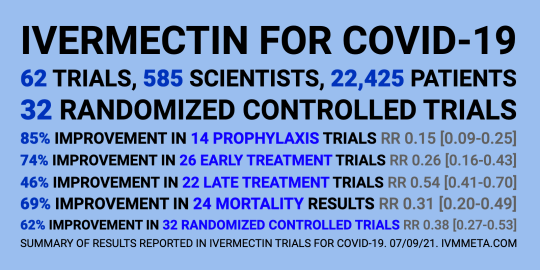
In an article titled “Review of the Emerging Evidence Demonstrating the Efficacy of Ivermectin in the Prophylaxis and Treatment of COVID-19,” the study’s authors found large, statistically significant reductions in mortality and recovery time in addition to “significantly reduced risks of contracting COVID-19 with the regular use of ivermectin.”

They also cite many examples of “ivermectin distribution campaigns leading to rapid population-wide decreases in morbidity and mortality,” prompting them to conclude that as an oral agent, ivermectin is “effective in all phases of COVID-19.”  (See link for article)

_______________________

**Comment**

The study authors are far from alone. More doctors and economists state tens of thousands of lives could have been saved if research on COVID treatments hadn’t been suppressed.

The full-frontal attack on cheap effective treatments for COVID-19 is mind-blowing.

Lyme/MSIDS patients shouldn’t be shocked since the same thing has been going on in Lyme-land for over 40 years. 

The Associated Press, FDA, NIH, CDC, Medscape, and therefore most doctors, continue to malign Ivermectin as well as any other successful treatments except the expensive drug Remdesivir, that doesn’t even work for COVID, that our public ‘authorities’ have a vested interest in.

The article does a great job of giving the vast evidence for Ivermectin including the fact it’s on the WHO’s “list of essential medicines.” 

It also mentions YouTube’s censorship of a Senate hearing because it defied the accepted narrative.  In that hearing, Dr. Pierre Kory passionately explained how he and an international group of doctors (Front Line COVID-19 Critical Care Alliance or FLCCC) discovered and successfully use Ivermectin in every phase of COVID-19 illness.  They found it led to up to a 83% lower than average death rate in hospitals.

The group found Ivermectin to not only be anti-parasitic (it’s commonly used for worms), but anti-viral, and anti-inflammatory – all issues related to COVID-19.

And importantly, there is now data from over 20 well designed clinical studies – 10 of which are randomized, controlled trials detailing significant benefits in:

  • reducing transmission rates
  • shortening recovery times
  • decreasing hospitalizations
  • reducing deaths

Our government has been complicit in this information war by funding fraudulent research on HCQ, and suppressing or even banning effective treatments for COVID-19.

Recently 120 doctors have asked JAMA to retract a misleading study on Ivermectin.  The study authors all had conflicts of interest – primarily with large pharmaceutical companies manufacturing vaccines and competing drugs.

Under the disingenuously named “COVID-19 Consumer Protection Act” — part of the 2021 Consolidated Appropriations Act signed into law by then-President Trump in late December — the U.S. Department of Justice is actively pursuing enforcement actions against healthcare providers who encourage use of supplements such as zinc and vitamin D to treat or prevent COVID.

While our conflict riddled public health ‘authorities’ malign any test or drug that competes with their own lucrative products, there is a growing by the day group of health professionals speaking out at great personal cost – yet these experts, are also being maligned,censored and charged as criminals at an unprecedented rate.

How to Co-Exist With Wisconsin’s Ticks

https://mywisconsinwoods.org/2020/05/27/how-to-co-exist-with-wisconsins-ticks/

By Denise Thornton

If you plan to be out in the woods or live next to woods, don’t be too quick to trade long pants and long sleeves for shorts and a tee shirt as the weather warms. You need to protect yourself from the ticks that are starting to emerge. Tick bites are possible year-round, but ticks are most active April through September.

Many types of ticks never feed on people. In Wisconsin, the two most common ticks that do are the wood tick, which is not a health concern here, and the black-legged tick (Ixodes scapularis), commonly known as the deer tick, which can transmit several serious diseases including Lyme disease and, more recently, anaplasmosis, which can start with symptoms like fever and nausea and in some cases, progress to organ failure.

Deer tick (left) and Wood tick (right). Photo courtesy of prevention.com

Wisconsin is Tick Heaven

The Upper Midwest and the northeastern states are hardest hit by Lyme disease, and the numbers in Wisconsin are rising. According to the Wisconsin Department of Health Services, Wisconsin had 3,105 estimated cases in 2018.

Once considered to be a north woods hazard, deer ticks are now found in every county of the state. Deer are an important blood source for adult ticks, and in 2018 overwinter deer densities in the state varied from three to over 60 per square mile. The abundant woodlands interspersed with agriculture throughout much of central and southwestern Wisconsin creates high quality deer habitat.

“There’s been a change in the past 25 years,” says Dr. Susan Paskewitz, chair of the UW-Madison Department of Entomology. Ticks thrive in moist, shady forested environments, and love our increasingly mild winters. “We find them in pine forests, mixed forests and deciduous forests.”

Paskewitz has sampled along the woody edges and out into the yard in neighborhoods in Eau Claire and near Delton.

“Of 90 houses tested, by the end of June, 80 percent of them had at least one deer tick in the area we were sampling. Most were within three to six feet of the woods,” Paskewitz continued, “but a few were found in bright, open, mowed lawn. I don’t think they live long there, but they were making their way out there, so if you are walking out to get your mail without your shoes on, you might pick up that particular tick.”  (See link for article)

____________________

**Comment**

They say a picture‘s worth a thousand words.  The picture of this tick in the gum line in the mouth of a dog shows how durable and tenacious ticks are.

A few points for consideration:

  • Migrating birds, rodents, deer, lizards, and human movement are transporting ticks everywhere.  For far too long doctors have been looking at maps to diagnose people.  Trust me, ticks are virtually everywhere and adapt to weather conditions quite easily.
  • If I’ve written this once, I’ve written it 1,000 times – many people never see the tick or the rash and research shows the rash is highly variable – certainly not a sure thing.  
  • For more on tick prevention:  https://madisonarealymesupportgroup.com/2019/04/12/tick-prevention-2019/  I’m happy to report I saw some controlled burning in ditches as I was driving North today.  This has proven to reduce tick populations significantly.  I wish more of this was happening.
  • Regarding the section on if you find a tick bite: while it’s true that removing the tick as soon as possible is step #1, step #2 is getting prompt treatment as the “wait and see” approach has doomed patients to decades of suffering.  Demand immediate prophylactic treatment for each and every tick bite.  Trust me – whatever mild side effects and inconvenience a month or two’s worth of doxycycline can cause is nothing compared to the pain and suffering of a chronic, relapsing infection.
  • Testing for all tick-borne illnesses is abysmal.  Lyme is just the tip of the spear.  Ticks are literal garbage cans full of numerous pathogens they can transmit in just one bite.  The only infections listed in this article were Lyme disease, Anaplasmosis, and Babesia, when there are 19 and counting infections ticks can transmit.  Research has shown being infected with more than one pathogen causes more severe illness for a longer duration.  It is imperative that treatment includes medications that focus on each pathogen.  For the mounting list of tick-borne pathogens:
    • Babesiosis
    • Bartonellosis
    • Borrelia miyamotoi
    • Bourbon Virus
    • Colorado Tick Fever
    • Crimean-Congo hemorrhagic Fever
    • Ehrlichiosis/Anaplasmosis
    • Heartland Virus
    • Meat Allergy/Alpha Gal
    • Pacific Coast Tick Fever: Richettsia philipii
    • Powassan Encephalitis
    • Q Fever
    • Rickettsia parkeri Richettsiosis
    • Rocky Mountain Spotted Fever (RMSF)
    • SFTS: Severe Fever with Thrombocytopenia Syndrome
    • STARI: Southern Tick-Associated Rash Illness
    • Tickborne meningoencephalitis
    • Tick Paralysis
    • Tularemia
  • While the wood tick and deer tick are the most common ticks in Wisconsin, they are hardly the only ticks we must be concerned about.  Go here for more on the various types of ticks and the diseases they carry. The Lone Star tick has been found in Wisconsin and one allergist in MN states he diagnoses approximately 1 patient per month with Alpha-gal allergy – some patients hailing from WI.  Wisconsin is a hot-spot for Powassan virus, and we recently had our first death due to Rocky Mountain Spotted Fever. It would be a huge mistake to believe you only have to worry about Lyme, Anaplasmosis, and Babesia in Wisconsin.  Nearly every patient I work with also has Bartonella – a tenacious pathogen that isn’t even on most doctors’ radars, and Mycoplasma is very common.
  • Most articles such as these don’t tell you what to do once you’ve become infected. Optimally, you would be prepared before this ever happened by finding the Lyme literate doctors (LLMD) in your state.  The best way to do this is to contact your local Lyme support group. There is also a tab on the right side of this website called, “Find a Lyme Support Group.”  There is also another tab slightly down from that in which you can contact ILADS directly for doctors in your area.  Read this if you don’t know what a LLMD is.  LLMDs are specially trained in tick-borne illness and know how to diagnose patients clinically.  This is crucial because current 2-tiered CDC testing misses anywhere from 70-85% of cases or more.  You truly can not trust testing.  They also know how to treat this complex illness that typically is far more than just Lyme.