Archive for the ‘Transmission’ Category

RMSF Rare in NJ But Spreading Elsewhere

https://www.sciencedaily.com/releases/2020/06/200625124939.htm

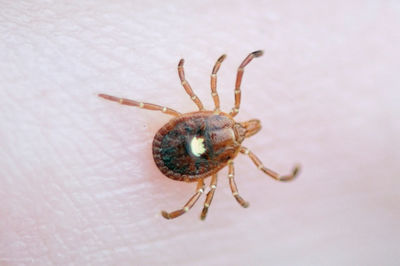
Dangerous tick-borne bacterium extremely rare in New Jersey

The mystery behind the rise in spotted fever cases continues

Date:  June 25, 2020
Source:  Rutgers University
Summary:
There’s some good news in New Jersey about a potentially deadly tick-borne bacterium. Researchers examined more than 3,000 ticks in the Garden State and found only one carrying Rickettsia rickettsii, the bacterium that causes Rocky Mountain spotted fever. But cases of tick-borne spotted fevers have increased east of the Mississippi River, and more research is needed to understand why.  (See link for article)

______________________

**Comment**

Important quote:  

“CDC researchers recently found that the invasive Asian longhorned tick, like the American dog tick and lone star tick, is an efficient vector of Rickettsia rickettsii in the lab,” said senior author Dina M. Fonseca.

I’m surprised they didn’t mention that the brown dog tick has outbreaks in Mexico.

This is worrisome because the brown dog tick is more likely to bite people and it adapts easily to living in a house.. Researchers worry it may be spreading to California and the Southern U.S.  It also appears to transmit a more virulent form of RMSF: https://madisonarealymesupportgroup.com/2018/08/16/new-tick-causes-epidemic-of-rmsf/

For more:  https://madisonarealymesupportgroup.com/2020/05/05/asian-longhorned-tick-able-to-transmit-rmsf-in-lab-setting-also-transmitted-within-ticks-through-ova/

https://madisonarealymesupportgroup.com/2019/07/25/kentucky-more-than-two-dozen-rocky-mountain-spotted-fever-cases-reported-in-grayson-county/

https://madisonarealymesupportgroup.com/2020/06/30/rocky-mountain-spotted-fever-can-be-deadly-how-to-prevent-diagnose-treat-it/

Bourbon Virus? New Tick-borne Disease May Be in North Carolina

https://www.journalnow.com/news/local/bourbon-virus-new-tick-borne-disease-may-be-in-north-carolina/article_

Bourbon virus? New tick-borne disease may be in North Carolina

HCQ Breakthrough: ICMR Finds It’s Effective in Preventing Coronavirus, Expands Its Use

https://theprint.in/health/hcq-breakthrough-icmr-finds-its-effective-in-preventing-coronavirus-expands-its-use

HCQ breakthrough: ICMR finds it’s effective in preventing coronavirus, expands its use

Three studies find that hydroxychloroquine reduces chances of contracting Covid, so ICMR allows more frontline workers to take it as a preventive drug.

22 May, 2020 

New Delhi: The Indian Council of Medical Research (ICMR), the country’s apex body in the field, has found that consuming the drug hydroxychloroquine reduces the chances of getting infected with Covid-19.

As a result, ICMR released an advisory Friday to expand the usage of HCQ — an anti-malarial drug — as a preventive treatment against the novel coronavirus.

The conclusion has been drawn on the basis of three studies conducted by the ICMR.

The advisory suggests surveillance workers, paramilitary and police personnel, as well as medical staff working in non-Covid hospitals and blocks to start consuming the pill as “preventive therapy”.  (See link for article)

____________________

For more:  https://madisonarealymesupportgroup.com/2020/06/06/fraudulent-hcq-covid-19-study-in-lancet-exposed/

https://madisonarealymesupportgroup.com/2020/06/01/rebuttal-on-huge-hcq-study-in-lancet/

https://madisonarealymesupportgroup.com/2020/05/22/new-study-hcq-zinc-greatly-reduces-covid-19-health-risk/

https://madisonarealymesupportgroup.com/2020/04/24/dr-oz-interviews-dr-didier-raoult-on-hydroxychloroquine-study-for-covid-19/

https://madisonarealymesupportgroup.com/2020/05/11/podcast-evidence-supporting-hcq-azithromycin-for-covid-19/

https://madisonarealymesupportgroup.com/2020/03/27/the-truth-about-hydroxychloroquine-plaquenil-in-the-treatment-of-covid-19/

Emerging Tick-Borne Diseases & Blood Safety: Summary of a Public Workshop

https://pubmed.ncbi.nlm.nih.gov/32208532/

. 2020 Mar 24.

doi: 10.1111/trf.15752. Online ahead of print.

Emerging Tick-Borne Diseases and Blood Safety: Summary of a Public Workshop

Affiliations expand

Abstract

Tick-borne agents of disease continue to emerge and subsequently expand their geographic distribution. The threat to blood safety by tick-borne agents is ever increasing and requires constant surveillance concomitant with implementation of appropriate intervention methods. In April 2017, the Food and Drug Administration organized a public workshop on emerging tick-borne pathogens (excluding Babesia microti and Lyme disease) designed to provide updates on the current understanding of emerging tick-borne diseases, thereby allowing for extended discussions to determine if decisions regarding mitigation strategies need to be made proactively. Subject matter experts and other stakeholders participated in this workshop to discuss issues of biology, epidemiology, and clinical burden of tick-borne agents, risk of transfusion-transmission, surveillance, and considerations for decision making in implementing safety interventions. Herein, we summarize the scientific presentations, panel discussions, and considerations going forward.

____________________

**Comment**

I only had access to the abstract, but Dr. Cameron writes more fully on the workshop here:  https://danielcameronmd.com/babesia-infection-transmitted-blood-supply/

Interestingly, according to the abstract, they excluded Babesia and Lyme, which are arguably two of the largest problems. It was pointed out that 200 cases of Babesia were transmitted through blood transfusions at the time of the workshop and that Anaplasma is next with increasing clinical cases.

Evidently there have been no reported cases of Lyme transmitted through the blood supply.


Other tick-borne pathogens have been transmitted through donated blood, but these occurrences are rare. (Or rarely reported)

  • 11 cases: A. phagocytophilum, responsible for Anaplasmosis (transmitted by the Ixodes ticks)
  • 2 cases: Tick-borne encephalitis virus complex (TBEV, Powassan virus, DTV), (transmitted by the Ixodes ticks)
  • 1 case: Colorado tick-fever virus (transmitted by Rocky Mountain wood ticks)
  • 1 case: Rickettsia rickettsii, the agent of Rocky Mountain Spotted Fever (transmitted by the Lone Star tick)
  • 1 case: Ehrlichia ewingii (transmitted by the Lone Star tick)

In addition, “two emerging [tick-borne agents] − B. miyamotoi and Powassan virus were discussed − for B. miyamotoi,cases have steadily increased since 2014.”

For more:  https://madisonarealymesupportgroup.com/2019/07/28/tick-borne-infection-risk-in-blood-transfusion/

https://madisonarealymesupportgroup.com/2018/10/11/transfusion-transmitted-babesiosis-one-states-experience/

https://madisonarealymesupportgroup.com/2017/08/08/transfusion-transmitted-babesiosis-in-nonendemic-areas/

https://madisonarealymesupportgroup.com/2019/05/26/fda-recommends-testing-for-tick-borne-illness-in-donated-blood-a-big-duh/

https://madisonarealymesupportgroup.com/2016/06/02/study-showing-results-testing-babesia-microti/


Asian Longhorned Tick Able to Transmit RMSF in Lab Setting (Also Transmitted Within Ticks Through Ova)

https://pubmed.ncbi.nlm.nih.gov/32338290/

The Ability of the Invasive Asian Longhorned Tick Haemaphysalis Longicornis (Acari: Ixodidae) to Acquire and Transmit Rickettsia Rickettsii (Rickettsiales: Rickettsiaceae), the Agent of Rocky Mountain Spotted Fever, Under Laboratory Conditions

2020 Apr 27;tjaa076.
doi: 10.1093/jme/tjaa076. Online ahead of print.
  • PMID: 32338290

Abstract

The invasive Asian longhorned tick, Haemaphysalis longicornis Neumann, was first detected in the United States in 2017. It has since been found in 12 states, and there is concern that the tick’s parthenogenetic ability and wide variety of host species may allow for broader dissemination. Of the tick-borne diseases endemic to the United States, Rocky Mountain spotted fever (RMSF), a rapidly progressive and potentially fatal disease caused by Rickettsia rickettsii, is the most severe. There is considerable geographical overlap between spotted fever rickettsioses cases, which include RMSF, and the currently known distribution of H. longicornis, providing the potential for this tick to encounter this pathogen.

We have evaluated the ability of H. longicornis to acquire and transmit R. rickettsii under laboratory conditions. Haemaphysalis longicornis as larvae and nymphs acquired the pathogen while feeding on infected guinea pigs. The infection persisted through every life stage, all of which were able to transmit R. rickettsii to naïve hosts. The pathogen was also transmitted at a low frequency between generations of H. longicornis through the ova. While H. longicornis was demonstrated to be a competent vector for R. rickettsii under laboratory conditions, the probability of its involvement in the maintenance and transmission of this pathogen in nature, as well as its potential impact on human health, requires further study.

___________________

**Comment**

The Asian Long-horned tick used to be known as pretty much just a livestock pest.  Obviously, researchers are changing their tune.  What makes this tick particularly unique and equally terrifying is its ability to reproduce through cloning – making a literal infestation very quickly. It is traipsing through the entire U.S. – having been found in at least 12 states.

Here we see it can also transmit Lyme (although they say “minimally” – whatever that means)  https://madisonarealymesupportgroup.com/2019/10/26/researchers-conclude-asian-longhorned-tick-contributes-minimally-to-lyme-disease-in-the-u-s/

The pressing question is what all do they transmit?  We know this so far:  

It spreads SFTS (sever fever with thrombocytopenia syndrome), “an emerging hemorrhagic fever,” causing fever, fatigue, headache, nausea, muscle pain, diarrhea, vomiting, abdominal pain, disease of the lymph nodes, and conjunctival congestion, but the potential impact of this tick on tickborne illness is not yet known. In other parts of the world, this Longhorned tick, also called the East Asian or bush tick, has been associated with several tickborne diseases, such as spotted fever rickettsioses, Anaplasma, Ehrlichia, and Borrelia, the causative agent of Lyme Disease.  https://madisonarealymesupportgroup.com/2018/06/12/first-longhorned-tick-confirmed-in-arkansas/

For a 2016 literature review on SFTS: http://infectious-diseases-and-treatment.imedpub.com/research-advances-on-epidemiology-of-severefever-with-thrombocytopenia-syndrome-asystematic-review-of-the-literature.php?aid=17986
Although the clinical symptoms of SFTS and HGA are similar to each other, but the treatment methods of the two diseases are totally different. Doctors notice that the biggest difference between the clinical symptom of SFTS and HGA is that SFTS patients generally without skin rash, the dermorrhagia is also not seriously, and few massive hemorrhage cases were reported [23]. It is also reported that SFTS patients had gastrointestinal symptoms, such as nausea, vomiting, and diarrhea, which are rarely observed in HGA patients [2]. So these differences can be used as the auxiliary basis of differential diagnosis.
At present, there is still no specific vaccine or antiviral therapy for SFTSV infection. Supportive treatment, including plasma, platelet, granulocyte colony stimulating factor (GCSF), recombinant human interleukin 11, and gamma globulin is the most essential part of case treatment [44]. Meanwhile, some measures were taken to maintain water, electrolyte balance and treat complications are also very important.
Ribavirin is reported to be effective for treating Crimean-Congo Hemorrhagic Fever (CCHF) infections and hemorrhagic fever with renal syndrome, but it is still inadequate to judge the effect of ribavirin on SFTS patients because of the study limitation without adequate parameters were investigated [45]. Host immune responses play an important role in determining the severity and clinical outcome in patients with infection by SFTSV.
For Viral treatment options:  https://madisonarealymesupportgroup.com/2016/03/28/combating-viruses/

And lastly, please know ticks parasitize one another, potentially spreading all manner of diseases to humans.  This fact also shoots holes in the regurgitated mantra that only certain ticks carry certain pathogens.  If they are feasting on one another, they can potentially infect each other and then us:  https://madisonarealymesupportgroup.com/2018/03/07/tick-bites-tick-hyperparasitism/

https://madisonarealymesupportgroup.com/2018/07/19/rutgers-racing-to-contain-asian-longhorned-tick/

And now it appears to have the ability at least in a lab setting to transmit RMSF.  For more:  https://madisonarealymesupportgroup.com/2018/09/14/rocky-mountain-spotted-fever-rmsf/

https://madisonarealymesupportgroup.com/2019/07/25/kentucky-more-than-two-dozen-rocky-mountain-spotted-fever-cases-reported-in-grayson-county/

https://madisonarealymesupportgroup.com/2017/10/21/mom-got-rocky-mountain-spotted-fever-while-picking-pumpkins/

https://madisonarealymesupportgroup.com/2015/08/13/severe-case-of-rmsf-had-to-remove-patients-arms-and-legs/

https://madisonarealymesupportgroup.com/2018/08/16/new-tick-causes-epidemic-of-rmsf/