Archive for the ‘Ticks’ Category

Study Looks At Deet & Natural Tick Repellents

https://danielcameronmd.com/deet-and-natural-tick-repellents/

STUDY LOOKS AT DEET AND NATURAL TICK REPELLENTS

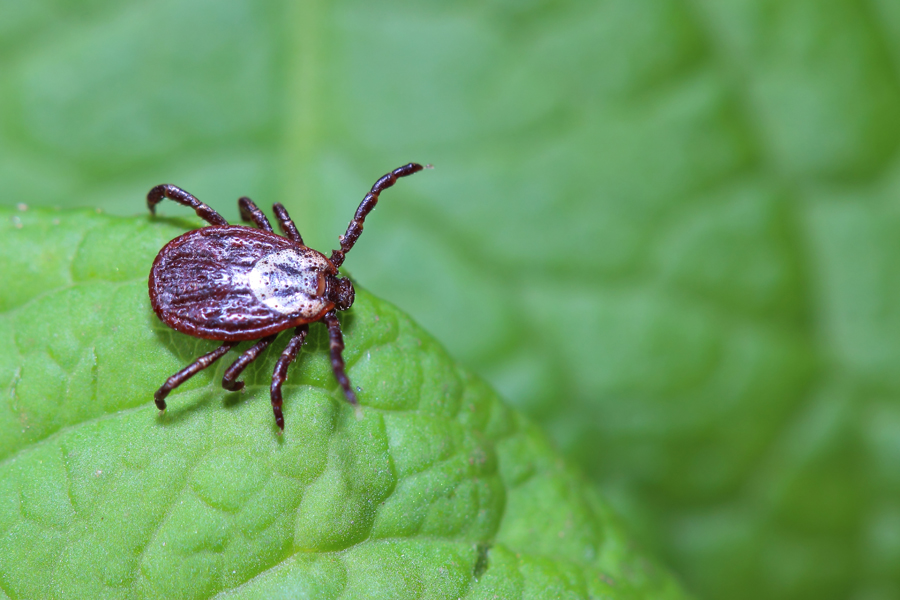
Ticks patiently hold on to blades of grass and shrubs in a position known as “questing” as they await their next meal or host. “Almost blind, ticks rely on chemosensation to identify and locate hosts for a successful blood meal,” write the authors of “Behavioral responses of Ixodes scapularis tick to natural products: development of novel repellents.”¹

As the number of tick-borne diseases grows and the geographical spread of ticks continues, there is increasing interest in what repellents are effective, safe and environmentally friendly. But little is known about how exactly ticks detect odors and what smells repel them.

“Improving our understanding of tick olfactory mechanisms and odor driven behaviors is key to enabling development of new repellents,” writes Faraone.

Given the health concerns over DEET, researchers are turning their attention to plant-based repellents. “Plant-derived essential oils are natural products that exhibit insecticidal and repellent activities and represent a promising alternative to synthetic repellants,” Faraone writes.

Lemongrass essential oil

“In behavioral bioassays we reported that lemongrass essential oil and its main chemical constituents (such as geraniol, β-citronellol and citral), as well as PEA [phenethyl alcohol], were significantly repellent to I. scapularis nymphs,” writes Faraone.

However, “the efficacy of lemongrass essential oil was dose-related, and was effective in repelling up to 76% of I.scapularis nymphs after 10 minutes when applied at the highest tested concentration.”

The substance was more effective at higher concentrations in repelling ticks. But, the effect declined after 2 hours from the first application to 62.5% compared to a DEET-based product of 87.7%.

The authors did not report on the repellent effects outside the lab. And given that the formulation was proprietary, its ingredients were not disclosed.

However, they found that “PEA- and geraniol-based formulas exerted an effective repellent action representing a valid natural alternative to synthetic repellents already available on the market.”

DEET

DEET (diethyltoluamide) repels ticks but its use raises environmental and health concerns. The concentration of DEET also affects its ability to repel ticks, as shown below:

0% of DEET = 8.5% repelled
5% of DEET = 16.6% repelled
10% of DEET = 30.4% repelled
20% of DEET = 68.9% repelled
40% of DEET = 88% repelled

Interestingly, 0% DEET repelled 8.5% of ticks at 10 minutes. This is similar to the placebo effect.

The actual concentration of DEET from the manufacturer is 25% to 30%. The actual concentration on the skin for DEET or the proprietary products was not described in the study.

Most importantly, the study was completed on a paper filter. It remains to be seen how DEET or the natural-based products will work on people.

References:
  1. Faraone N, MacPherson S, Hillier NK. Behavioral responses of Ixodes scapularis tick to natural products: development of novel repellents. Exp Appl Acarol. 2019 Sep 28.

_________________

**Comment**

Dr. Cameron’s astute comments point out the limitations of this study and we must continue to be careful in our zeal to get answers. Studies have been done on natural products such as stevia and essential oils; however, they are done within a lab with set parameters which may not equate out in the human body and in reality.  Lemon EO oil is in the same camp and caution must be used.

A great point is that most people spend more than 10 minutes outside and we aren’t told what the exact dose is.  How lemongrass EO works after that point isn’t known but we are told effectiveness diminishes.

Most research such as this remains much of a mystery as the authors are hoping for a proprietary formula they can market. All efforts are for that specific outcome.

For more:  https://madisonarealymesupportgroup.com/2019/04/12/tick-prevention-2019/

One inexpensive tick killer is fire:  https://madisonarealymesupportgroup.com/2019/07/18/frequent-prescribed-fires-can-reduce-risk-of-tick-borne-diseases/

Bartonella Infection Everywhere, But We Don’t Know About It

http://www.thecharlottepost.com/news/2020/02/01/health/bartonella-infection-everywhere-but-we-don-t-know-about-it/

Bartonella infection everywhere, but we don’t know about it

Bacteria spread by fleas, ticks, animals, spiders
Published Saturday, February 1, 2020 10:31 pm

by Stephanie Soucheray | North Carolina Health New

CENTERS FOR DISEASE CONTROL AND PREVENTION
Bartonella bacteria, which is found in animals, ticks, mosquitoes and humans, is mostly unknown as a cause of neurological, inflammatory and chronic diseases in people.

A North Carolina State University professor says Bartonella infection is one of the most important untold medical stories.

Ed Breitschwerdt, a professor of veterinary sciences at North Carolina State University, keeps waiting for the tipping point. For the last 30 years, Breitschwerdt has been studying Bartonella, a genus of bacteria found in animals, ticks and humans.

“It’s frustrating,” said Breitschwerdt. “I believed we would hit a tipping point two years ago with this.”

Laura Hopper’s tipping point came in 2006, when she was 15 years old. The Raleigh teen lost her peripheral vision. She next began to suffer bouts of joint and muscle pain and numbness in her hands. Then came the headaches, memory loss and hallucinations.

“As a mother, it’s so hard to watch your child have all these symptoms,” said Maria Hopper. “It was a couple years of going to all kinds of doctors.”

But no neurologist, rheumatologist or psychiatrist could explain all of Laura’s symptoms. And it wasn’t until 2008, when the Hoppers read a news article about Bartonella and Breitschwerdt’s work, that a lightbulb went off in their heads.

Though people have known of cat scratch disease – the most public of the human diseases caused by Bartonella infection – for more than 100 years, Breitschwerdt said he’s convinced that Bartonella is the stealth cause of many neurological, inflammatory and chronic diseases in humans.

And, unlike Lyme disease, another tick-borne illness that can cause an array of distressing symptoms, Bartonella is right in the backyard of most North Carolinians.

“It’s a medically important bacteria in animals and humans in the state. If you took every stray cat along the coast of North Carolina, three quarters of them would have Bartonella,” said Breitschwerdt. “That’s because the bacteria is commonly transmitted to animals by fleas.”

He said that, historically, vets have considered common cat flea a nuisance but have under-appreciated it as a disease vector. For several years, Breitschwerdt has seen all sorts of animals and mites, ticks, fleas and even spiders test positive for Bartonella.

“Animals are the primary reservoir for the Bartonella species,” he said.

Breitschwerdt has worked with the One Health Commission, a collective that looks at the links between environmental, human and animal health. Though his professional and personal life has been guided by his care for animals, his most recent work is geared towards detecting and treating Bartonella infection in humans.

The recovery process
The Hoppers contacted Breitschwerdt at a fortunate time: He was developing new human diagnostic method for Bartonella. Laura tested positive, and after three courses of months-long antibiotic treatments, her symptoms have all but disappeared.

“By the end of the first cycle [of antibiotics], the feeling in her hands came back,” said Maria. “By the end of the second cycle, hallucinations stopped.” Though Laura still suffers some muscle pain, she considers herself 80 to 90 percent healed.

If the bacteria is positively detected, treating Bartonella infection is a daunting task for even otherwise healthy patients

You cannot float humans or horses in enough Doxycycline to kill this bacteria,” said Breitschwerdt. Treatment, such as Laura’s, requires weeks of multi-antibiotic therapies.

Laura was also lucky in that she tested positive for Bartonella immediately.

A patient infected can have a negative test on a Monday and positive test by Wednesday.

“People are tested several times, but Bartonella can hide in the body,” Breitschwerdt said.

That’s because an animal scratch or bug bite (or a vet’s needle stick) results in Bartonella infection in red blood cells and endothelial cells, which line blood vessels. The bacteria can “hide out” for many infectious cycles, causing symptoms and eventually affecting every organ system in the body.

Most people can clear Bartonella from their bloodstreams effectively. But among the subset of people who can’t eliminate the bacteria, help in mainstream medicine will be difficult to come by.

“I often talk with veterinarians who have these vague complaints – who say they’ve been sick for weeks or months,” said Breitschwerdt.

Many of the vets receive diagnoses of Lyme disease, chronic fatigue, rheumatoid arthritis, or are sent to a psychiatrist and told their symptoms are untreated depression. But Breitschwerdt cautions them to get tested for Bartonella.

Breitschwerdt has ventured into industry with Galaxy Diagnostics, a company he founded to offer Bartonella testing kits to doctors. The company launched into human testing two years ago, and has received orders from 300 doctors across the country.

At this stage, said Amanda Elam, Galaxy’s president, the company’s goal is to educate people about Bartonella.

“We’re dong continuing medical education courses, working with people in public health and doing education with veterinarians,” she said. “I’d really like the medical community to keep an open mind about this.”

While Breitschwerdt waits for the public tipping point for Bartonella, he said he too is focused on disease education.

“It takes 10 years before something added to the medical textbooks gets widely spread in practice,” he said. “We’re working on changing those textbooks.”

This article first appeared on North Carolina Health News and is republished here under a Creative Commons license.

__________________

For more:  https://madisonarealymesupportgroup.com/2019/04/24/human-bartonellosis-an-underappreciated-public-health-problem/

https://madisonarealymesupportgroup.com/2020/02/07/one-health-trio-dr-breitschwerdts-three-publications-about-vector-borne-pathogens-and-his-family/

https://madisonarealymesupportgroup.com/category/bartonella-treatment/

https://madisonarealymesupportgroup.com/2019/03/24/cat-scratch-disease-caused-teens-schizophrenia-like-symptoms-report-says/

https://madisonarealymesupportgroup.com/2019/01/02/bartonella-in-entire-canadian-family/

Is Exposure to Fleas and Ticks Possible During The Winter?

https://www.galaxydx.com/fleas-and-tick-prevention-in-the-winter/

Is Exposure to Fleas and Ticks Possible During The Winter?

Experts Harvest Ticks Along American River Parkway (CA)

https://www.kcra.com/article/experts-harvest-ticks-along-american-river-parkway-test-lyme-disease/30734749# Article and numerous videos here

The American River Parkway is more than 30 miles of trails and draws over 10 million visitors each year.

But Sacramento’s backyard jewel is also a popular destination for ticks.

Peak tick season runs from December to May, according to Sacramento-Yolo Mosquito Vector Control District….(See link for article)

___________________

**Comment**

Here we see a tick in the middle of the sidewalk on a blade of grass – also in CA:  https://madisonarealymesupportgroup.com/2019/05/17/video-showing-questing-ticks-in-the-middle-of-the-sidewalk/

Ticks are in unlikely places:  https://madisonarealymesupportgroup.com/2018/06/07/ticks-on-beaches/ (see comment section)

https://madisonarealymesupportgroup.com/2019/06/19/a-creepy-bed-time-story-from-stephen-king/

Ticks have been found:

Borrelia Prevalence & Species Distribution in Ticks Removed From Humans in Germany

https://www.ncbi.nlm.nih.gov/pubmed/31987819

2020 Mar;11(2):101363. doi: 10.1016/j.ttbdis.2019.101363. Epub 2019 Dec 23.

Borrelia prevalence and species distribution in ticks removed from humans in Germany, 2013-2017.

Abstract

Lyme borreliosis caused by spirochaetes of the Borrelia burgdorferi sensu lato (s.l.) complex is the most common tick-borne disease in Europe. In addition, the relapsing-fever spirochaete Borrelia miyamotoi, which has been associated with febrile illness and meningoencephalitis in immunocompromised persons, is present in Europe. This study investigated Borrelia prevalence and species distribution in ticks removed from humans and sent as diagnostic material to the Institute for Parasitology, University of Veterinary Medicine Hannover, in 2013-2017. A probe-based real-time PCR was carried out and Borrelia-positive samples were subjected to species determination by reverse line blot (RLB), including a B. miyamotoi-specific probe.

  • The overall Borrelia-infection rate as determined by real-time PCR was 20.02% (510/2547, 95 % CI: 18.48-21.63 %), with annual prevalences ranging from 17.17 % (90/524, 95 % CI: 14.04-20.68 %) in 2014 to 24.12 % (96/398, 95 % CI: 19.99-28.63 %) in 2015.
  • In total, 271/475 (57.1 %) positive samples available for RLB were successfully differentiated
  • Borrelia afzelii was detected in 30.53 % of cases (145/475, 95 % CI: 26.41-34.89)
  • B. garinii/B. bavariensis (13.26 % [63/475], 95 % CI: 10.34-16.65)
  • Borrelia valaisiana  (5.89 % (28/475, 95 % CI: 3.95-8.41)
  • B. spielmanii (4.63 % (22/475, 95 % CI: 2.93-6.93),
  • B. burgdorferi sensu stricto (s.s.)/B. carolinensis (2.32 % (11/475, 95 % CI: 1.16-4.11)
  • B. lusitaniae (0.63 % (3/475, 95 % CI: 0.13-1.83)
  • B. bisettiae (0.42 % (2/475, 95 % CI: 0.05-1.51) of positive ticks
  • Borrelia kurtenbachii was not detected
  • B. miyamotoi (7.37 % (35/475, 95 % CI: 5.19-10.10) of real-time PCR-positive samples

Sanger sequencing of B. garinii/B. bavariensis-positive ticks revealed that the majority were B. garinii-infections (50/52 successfully amplified samples), while only 2 ticks were infected with B. bavariensis. Furthermore, 6/12 B. burgdorferi s.s./B. carolinensis-positive samples could be differentiated; all of them were identified as B. burgdorferi sensu stricto.

Thirty-nine ticks (8.21 %, 95 % CI: 5.90-11.05) were coinfected with two different species. Comparison of the species distribution between ticks removed from humans in 2015 and questing ticks collected in the same year and the same area revealed a significantly higher B. afzelii-prevalence in diagnostic tick samples than in questing ticks, confirming previous observations.

The obtained data indicate that Borrelia prevalence fluctuated in the same range as observed in a previous study, analysing the period from 2006 to 2012.

Detection of B. miyamotoi in 7.37 % of Borrelia-positive samples points to the fact that clinicians should be aware of this pathogen as a differential diagnosis in cases of febrile illness.

__________________

**Comment*

Great example of how there are many more species of borrelia we need to be concerned about than Borrelia burgdorferi.  Remember, current 2-tiered testing only picks up only one borrelia species and is only picking up half of those limited cases showing the abysmal testing fix we are in.

For more on this: https://madisonarealymesupportgroup.com/2020/02/02/why-the-medical-communitys-perspective-on-lyme-disease-is-different-from-a-pathologists-perspective/