To reveal the genetic diversity of Babesia microti and Theileria orientalis in Southwest China, we conducted a molecular survey of piroplasms in hard ticks in a China-Myanmar border county. Host infesting and questing ticks were collected from Tengchong County in 2013 and 2014. Piroplasm infection in ticks was detected by PCR, and then, phylogenetic analysis was conducted to study the genetic diversity of the pathogens identified in ticks.
All in all, six piroplasm species comprising of the following have been identified after screening goat and cattle-attached ticks:
B. microti
B. orientalis
a novel Babesia species designated Babesia sp. Tengchong, China
T. orientalis
T. luwenshuni
an undescribed piroplasmid species referred to as Piroplasmid sp. Tengchong, China
B. bigemina has been identified by screening questing ticks
Phylogenetic analysis based on the 18S rRNA and partial β-tubulin gene revealed two novel potentially zoonotic genotypes designated B. microti Tengchong-Type A and B.
The T. orientalis genotypes identified in the present study represent the seven known genotypes 1-5, 7, and N3 as revealed by phylogenetic analysis of 18S rRNA and MPSP genes. Importantly, an additional genotype designated N4 has also been identified in this study, which brings the number of recognized T. orientalis genotypes to a total of twelve.
Thus, besides the two novel species, Babesia sp. Tengchong, China, closely related to Babesia species isolated from yak and Piroplasmid sp. Tengchong, China, our study demonstrates that additional novel B. microti and T. orientalis genotypes exist in Southwest China.
________________
**Comment**
Babesia Microti is pathogenic in humans.
Babesia orientalis is pathogenic in water buffalo.
Theileria orientalis is pathogenic in cattle.
Theileria luwenshuni is pathogenic in sheep and goats.
Babesia bigemina is pathogenic in cattle.
They also discovered a NEW Theileria orientalis genotype (N4).
The study identified TWO NEW Babesia microti genotypes (B. micro Tengchong- Type A & B) which may be pathogenic to humans.
Ticks come in many different varieties that not only look different, but also live in different regions and environments, and can transmit different types of diseases to both people and animals.
The purpose of this article is to provide some basic information about ticks, as well as key details about the various species that you are most likely to encounter in different regions of the United States. If you suspect that you or a loved one has been bitten by a tick of any kind, try to keep it as intact as possible so you can have it tested. Place it in a secure container so it can be evaluated by your healthcare provider, veterinarian, or local vector control for identification.
What Are Ticks?
Ticks belong to a group of animals called arthropods. Like spiders, they fall under the classification of arachnids—a specific type of arthropod with eight legs. Unlike spiders, however, ticks feed on blood from mammals—including people, pets and livestock—as well as birds, reptiles, and amphibians. They have been reported in rural and urban environments around the world, but are most often found in grassy or wooded areas and are typically most active from spring through fall.
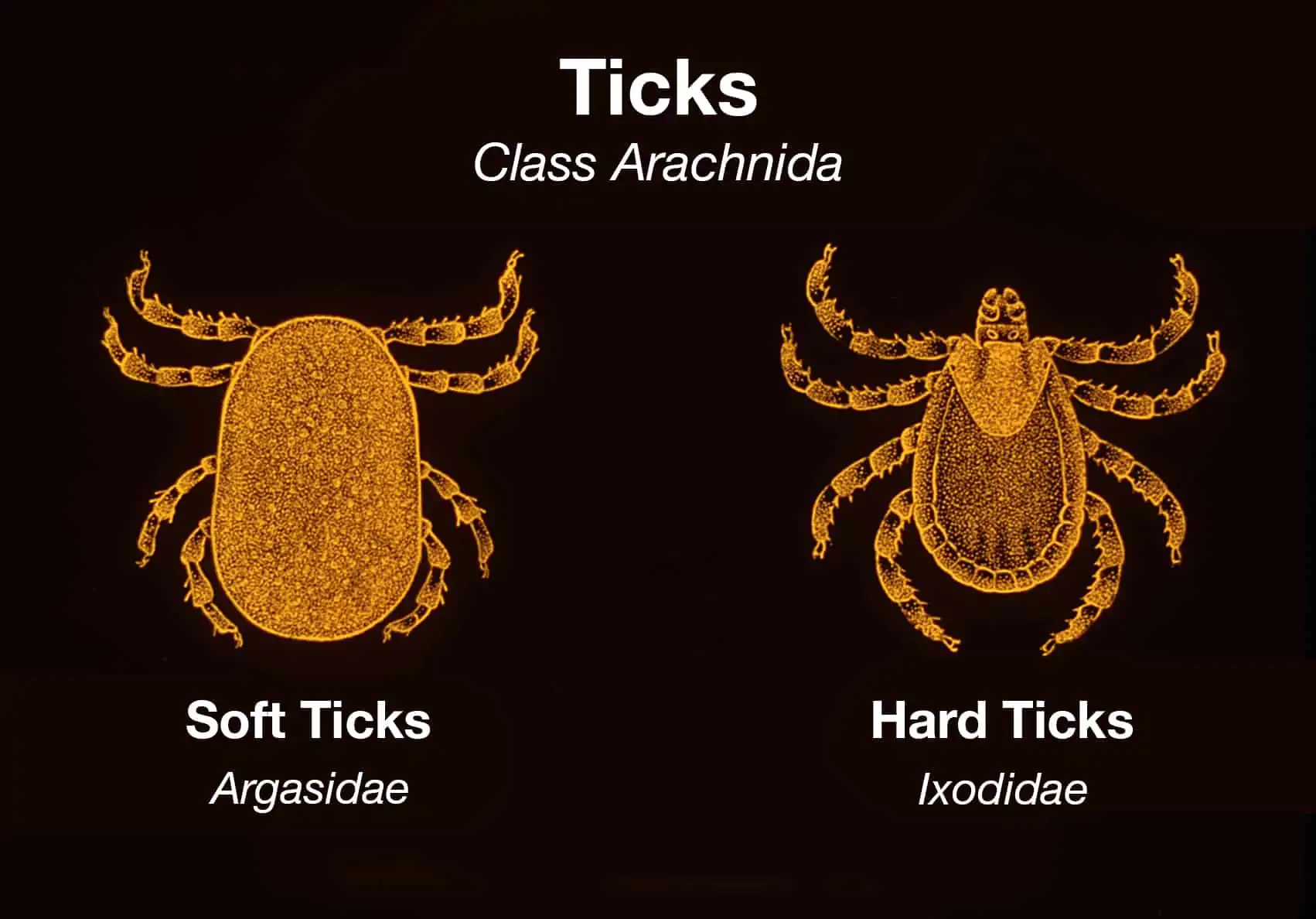
In general, ticks can be divided into two main families: hard ticks (Ixodidae) and soft ticks (Argasidae).
HARD TICKS (IXODIDAE) Hard ticks all share the distinguishing trait of a hard outer shield or black plate, known as a scutum.
SOFT TICKS (ARGASIDAE) Soft ticks do not have a scutum but instead have more rounded bodies.
Both of these families of ticks have species that can transmit diseases to humans; however, the typical length of time required to do so differs just like their feeding habits. Certain hard ticks that carry Lyme disease, for example, typically must be attached for 36 to 48 hours to infect a host, according to the Centers for Disease Control (CDC). Certain soft ticks that transmit Tick-Borne Relapsing Fever (TBRF), however, feed very quickly and can cause disease in humans.
What is the Typical Lifecycle of a Tick?
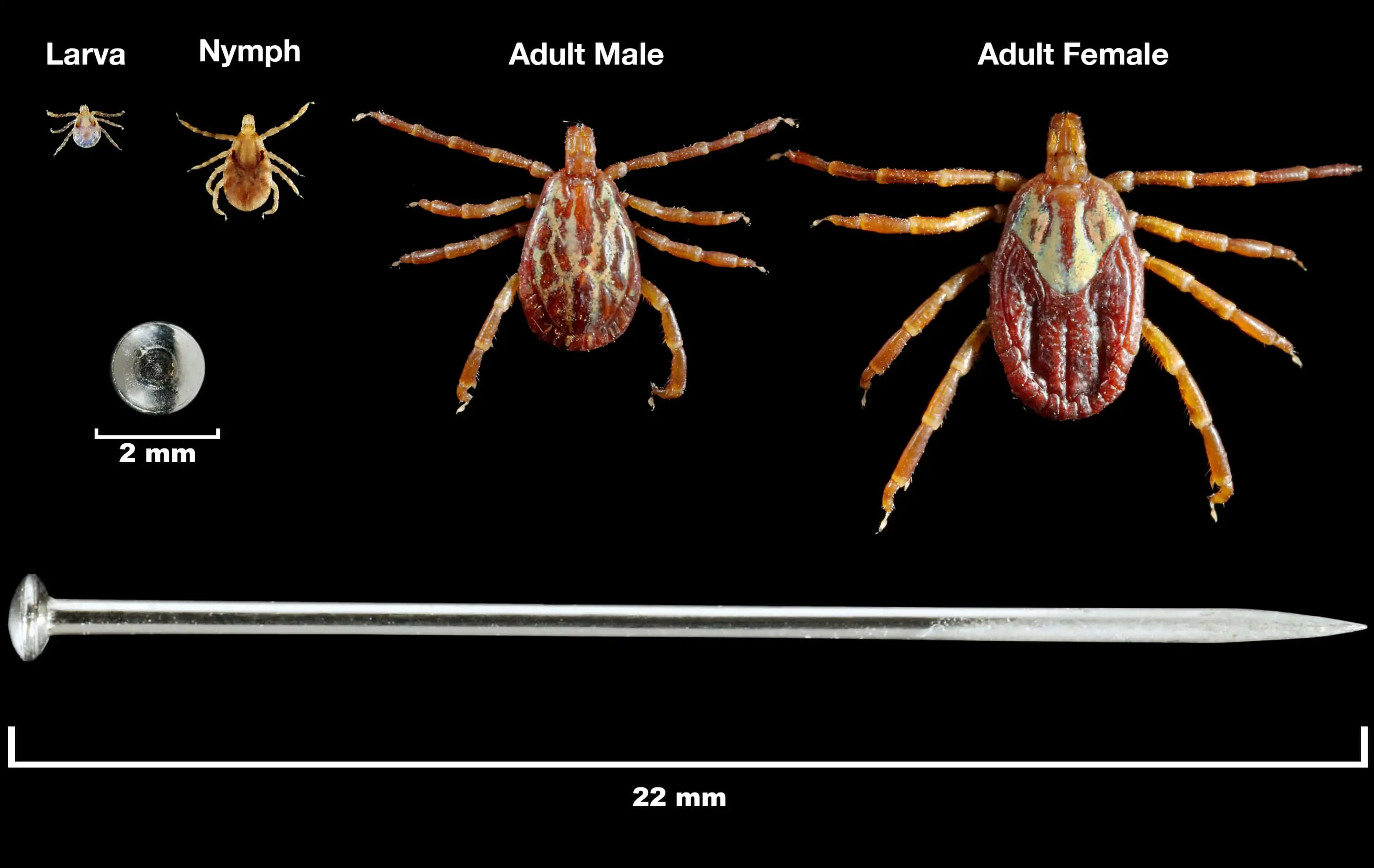
Ticks generally have four stages of life: egg, larvae, nymph and adult.
Eggs, which can number into the thousands, are laid by the female tick. These eggs hatch into larvae, which are also known as “seed ticks.” The larvae typically attach to smaller animals, such as mice and birds.
After several days of feeding, the larvae develop into nymphs, which can then attach to larger hosts and then ultimately turn into adult ticks. Most tick-borne diseases are transmitted by nymphs, which are so small that hosts often don’t see them.
Ticks advance through each of these stages by molting, a process during which they shed their outer skin.
What to Do After a Tick Bite
If you find a tick on you during a tick check, the most important thing to do is remove it immediately. The longer the tick remains attached to the skin, the higher the chances are that it will transmit a disease.
The CDC recommends using fine-tipped tweezers to grasp the tick by the head and pull up with steady, even pressure. They also recommend avoiding folk remedies like burning matches or petroleum jelly, which can cause the tick to regurgitate more pathogens into the bloodstream. As mentioned, you should try to save the tick for testing if possible.
For more information on what to do after a tick bite, read the Tick Talk blog What to Do After You’ve Been Bitten by a Tick.
How to Treat a Tick Bite
Tick bites are an unfortunate occurrence since, once you’ve been bitten, any potential pathogens have already been transmitted.
However, in addition to removing all ticks, saving them for testing, and watching carefully for symptoms of tick-borne diseases, you can perform basic first aid on the bite. Wash the bite site with warm water and soap, rubbing alcohol, or an iodine scrub. You can also watch the site carefully for any rashes, but remember that rash is only a symptom of some tick-borne diseases, and it doesn’t always occur. Even with Lyme disease, the bull’s eye rash only shows up in some patients.
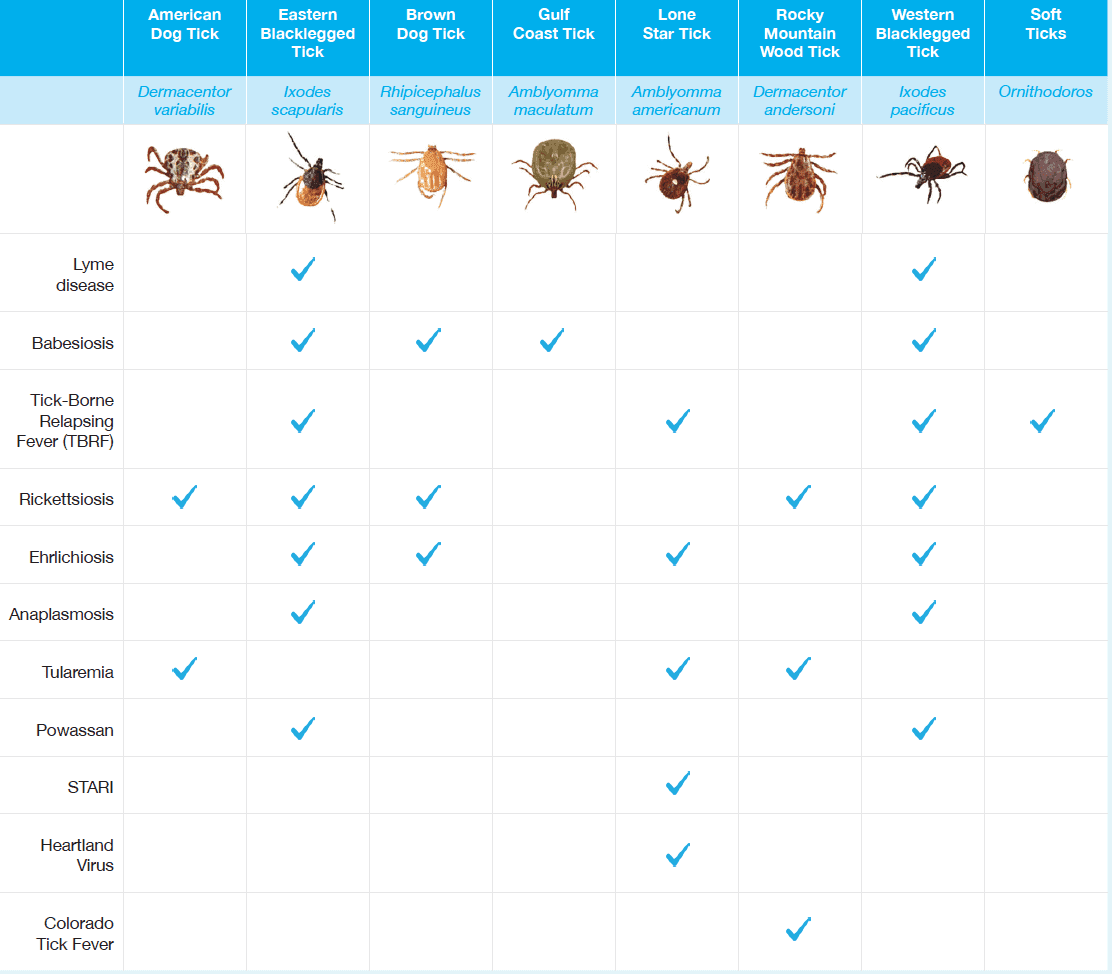
Of the nearly 900 species of ticks that exist in the world, only a select number bite and transmit disease to humans within the United States. The following descriptions provide key facts about each of these different types of ticks, including what each tick looks like at various stages of the lifecycle, some distinguishing characteristics, regions where they’re typically found, and what kinds of ticks carry Lyme disease and other illnesses that can infect both people and pets.
Distinguishing Characteristics of the American Dog Tick:
Sometimes called wood ticks, American dog ticks are a type of hard tick that is most often found in tall grass, as well as low-lying brush and twigs. At both adult and nymph stages, these ticks can feed on a variety of mammals, but adult females are most likely to bite humans. The adult females are most easily identified by the large, off-white scutum that starkly contrasts with the rest of their dark-brown bodies. Diseases Transmitted by the American Dog Tick:
Both nymphs and adults can transmit Rickettsia rickettsia, which causes Rocky Mountain Spotted Fever, and the bacteria that causes Tularemia. Where the American Dog Tick is Found in the U.S.:
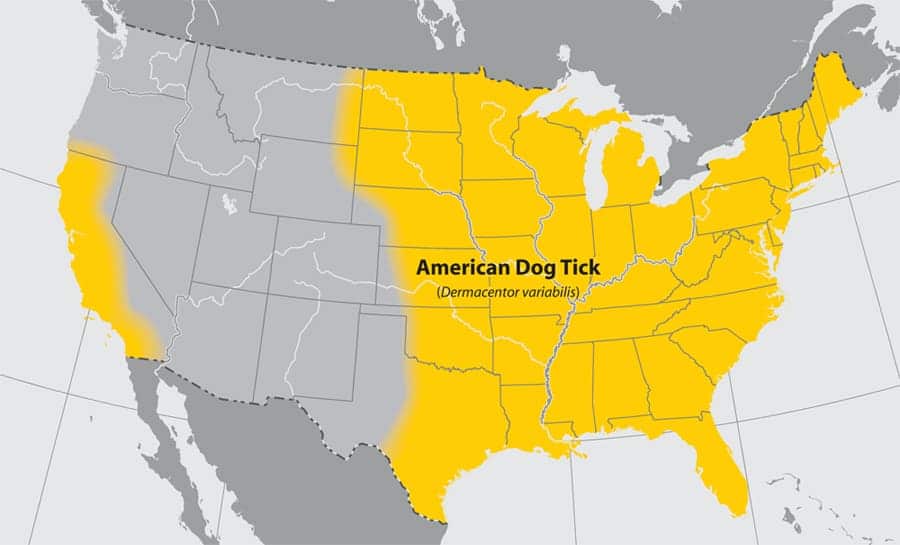
American dog ticks are primarily found east of the Rocky Mountains, although they can also be found in certain areas along the Pacific Coast.Summary These days, ticks are more than just an annoyance. One bite can make you sick, even change your life. Taking protective measures is important in order to prevent a tick bite. Reducing tick abundance in your yard, wearing protective clothing, and scanning your body for ticks are all great actions for preventing tick bites. Fortunately, the best way to prevent bites remains the same: Know your ticks and how to avoid them. Here are the most common ticks in the United States.
I think the most important thing to remember is that ticks move around on other animals and birds. They are finding tropical ticks in Ontario and vice versa. A patient should NEVER be told they aren’t infected with something solely because a doctor looked at a geographical map. These maps are guides that are constantly changing.
I would also like to point out one other fact – Mycoplasma (even the bioweaponized one) is found and transmitted by the deer tick. Mycoplasma isn’t even acknowledged by mainstream medicine, yet, is a formidable foe: https://madisonarealymesupportgroup.com/2016/02/07/mycoplasma-treatment/
Ticks Acari:Ixodida transmit a greater variety of pathogens than any other blood-feeding group of arthropods. While numerous microbes have been identified inhabiting Australian Ixodidae, some of which are related to globally important tick-borne pathogens, little is known about the bacterial communities within ticks collected from Australian wildlife.
In this study, 1,019 ticks were identified on 221 hosts spanning 27 wildlife species. Next-generation sequencing was used to amplify the V1-2 hypervariable region of the bacterial 16S rRNA gene from 238 ticks; Amblyomma triguttatum (n = 6), Bothriocroton auruginans (n = 11), Bothriocroton concolor (n = 20), Haemaphysalis bancrofti (n = 10), Haemaphysalis bremneri (n = 4), Haemaphysalis humerosa (n = 13), Haemaphysalis longicornis (n = 4), Ixodes antechini (n = 29), Ixodes australiensis (n = 26), Ixodes fecialis (n = 13), Ixodes holocyclus (n = 37), Ixodes myrmecobii (n = 1), Ixodes ornithorhynchi (n = 10), Ixodes tasmani (n = 51) and Ixodes trichosuri (n = 3).
After bioinformatic analyses, over 14 million assigned bacterial sequences revealed the presence of recently described bacteria ‘Candidatus Borrelia tachyglossi’, ‘Candidatus Neoehrlichia australis’, ‘Candidatus Neoehrlichia arcana’ and ‘Candidatus Ehrlichia ornithorhynchi’. Furthermore, three novel Anaplasmataceae species were identified in the present study including; a Neoehrlichia sp. in I. australiensis and I. fecialis collected from quenda (Isoodon fusciventer) (Western Australia), an Anaplasma sp. from one B. concolor from echidna (Tachyglossus aculeatus) (New South Wales), and an Ehrlichia sp. from a single I. fecialis parasitising a quenda (WA).
This study highlights the diversity of bacterial genera harboured within wildlife ticks, which may prove to be of medical and/or veterinary importance in the future.
Candidatus Neoehrlichia australis as of 2016 is also a sister genus to Anaplasmaand Ehrlichia and is of unknown pathogenicity.
Candidates Ehrlichia ornithorhynchi as of 2018 is widespread in Australia, and is associated with platypuses but they state there is no evidence that it causes disease, but I will add that there’s no evidence it doesn’t!
This article clearly shows that so much more needs to be done in the area of pathogen transmission. Thousands of Australian patients are suffering with a Lyme-like illness but are told Lyme doesn’t exist there. Well, they have something! Figure it out!
Brian Wilson reveals how U.S. biological warfare programs led to the proliferation of disease carrying ticks, causing a health crisis of epic proportions.
Much of the research presented in this investigative report can be found in Kris Newby’s acclaimed book: “Bitten: The Secret History of Lyme Disease and Biological Weapons.”
Important to note: US laboratories don’t test for the Swiss Agent.
**Correction** Wilson called Rickettsia a virus – when it’s a bacteria that is often pleomorphic (shape-shifts). Rickettsia helvetica or the ‘Swiss Agent’ is in the spotted fever family along with Rocky Mountain Spotted Fever. That’s not to say viruses aren’t involved, just that Rickettsia is a bacteria:https://www.bayarealyme.org/about-lyme/what-causes-lyme-disease/rickettsia-helvetica/
Interestingly, Dr. Steere, first on the Lyme, Connecticut scene initially thought the cause of the juvenile arthritis was viral.
An ironic quote for sure considering the fact this man has denied the possibility of chronic/persistent Lyme disease, yet when it was his work in question he was willing to entertain something he couldn’t find or see.
Please note another important quote in the same article by Steere:
Also important: when I spoke with Dr. Hoffman (deceased), probably the most experienced Lyme doctor in Wisconsin, he told me that as a medical resident in Illinois he treated patients with something he called a “rickettsial-like” illness before it was given the label of Lyme disease.
We never hear about the polymicrobial issue in mainstream research. They avoid it with a 10-foot pole. If one adds in flawed testing based on antibodies, coinfection involvement (mycoplasma and others), pleomorphism/persisters, as well as the bioweaponization aspect, you begin to understand that the very definition of “designed” microbes means they are difficult to detect as well as treat.
Until these issues are acknowledged and resolved, many people will remain ill.
Study shows 40% of deer tick samples tested positive for Lyme disease
The first-of-its-kind study by the University of Maine’s Cooperative Extension Tick Lab included more than 2,000 ticks submitted last year by residents of all 16 counties.
A first-of-its-kind report on ticks and tick-borne diseases in Maine found that about 40 percent of almost 2,000 deer ticks submitted by volunteers and tested last year were infected with Lyme disease.
Incidences of Lyme disease increased in Maine in 2019 to a record 2,079 reported cases, eclipsing the previous high of 1,852 in 2017.
Researchers with the University of Maine Cooperative Extension Tick Lab, which conducted the survey, said spring and summer featured near-ideal conditions for ticks – they survive well in moist, damp conditions and go into a hibernation-like state or perish in extremely dry conditions. Lyme disease is a bacterial infection transmitted by the bite of a deer tick… (See link for article)
________________
**Comment**
The online tick submission program will be shut-down until March; however, ticks can still be submitted by Maine residents by contacting the lab at tickID@maine.edu or by calling 207-581-3880. It costs $15 to have a tick tested for disease. The Tick Lab does not offer medical advice and recommends that anyone bitten by a tick contact their doctor.