Archive for the ‘Ticks’ Category

Vector-borne Causes of Fever in Cats Demand Year-Round Preventive Therapy

https://phys.org/news/2020-01-vector-borne-fever-cats-demand-year-round.html

Vector-borne causes of fever in cats demand year-round preventive therapy

Vector-borne causes of fever in cats demand year-round preventive therapy

Increased body temperature is the single-most commonly noted abnormal finding for the medical practitioner. While it may be a sign of something relatively innocuous, it can also be an indication of underlying critical illness. In cats, an elevated body temperature equates to a reading in excess of 39.2°C or 102.5°F and, as in humans, it can arise as a result of two major mechanisms: hyperthermia and fever. Hyperthermia refers to a sudden and uncontrolled increase in temperature owing to failure of the body’s thermoregulatory mechanism. By contrast, in fever (or pyrexia, from the Greek for ‘fire’ or ‘burning heat’), the body’s hypothalamic set-point is increased, secondary to the release of pyrogens, as the body’s adaptive response to a pathological state.

In cats, fever typically presents with associated signs of depression and loss of appetite. For the veterinarian getting to the root of the problem in order that appropriate therapy can be implemented, there is a long list of differential diagnoses to consider, including infectious disease agents, neoplasia and immune-mediated diseases, among others. Based on a recent study of over 100 cats presenting to second-opinion veterinarians for investigation of fever, infectious causes are thought to be the most common.

Writing for an international audience of veterinary practitioners and feline researchers, an expert group of feline internists from the USA, Spain and the UK, led by Professor Michael Lappin of Colorado State University, provide an update on associated with fever in cats that are transmitted by arthropod vectors. Published in the Journal of Feline Medicine and Surgery, their two-part state-of-the-art review article focuses on common clinical and laboratory findings, and optimal diagnostic tests, treatments and strategies for prevention of a range of disease agents known or suspected to be transmitted by fleas, ticks and sandflies. Throughout, they stress that prevention of vector-borne infections is always preferable to treating clinically ill cats, and note that there is mounting evidence to show that consistent use of products that either rapidly kill vectors or, preferably, prevent vectors from biting a cat, is desirable.

Links between specific disease agents and fever in cats are not always clear-cut. For example, evidence of exposure to Bartonella species bacteria has been found in cats in many countries around the world, particularly in regions with high humidity and fleas. Well-documented manifestations of bartonellosis in cats include cardiac (endocarditis and myocarditis) and ocular (uveitis) disease, but whether fever will occur is likely influenced by a complex interaction involving both host and organism factors. Nevertheless, Bartonella henselae is common in fleas and known to survive at least 9 days in flea dirt. Professor Lappin stresses that adequate flea control is imperative to lessen the risk of infection in other cats, dogs and, indeed, people, in whom this agent is the cause of cat-scratch disease.

Among the tick-borne agents associated with feline fever are Ehrlichia species. Less is known about the particular causal agents of ehrlichiosis in cats compared with canine ehrlichiosis, but , together with lethargy and inappetence, is a commonly reported clinical abnormality in cats with suspected . Professor Lappin suggests that testing for these intracellular pathogenic bacteria might be indicated for cats with such signs and points to the importance of using preventive products that either rapidly kill attached ticks or, ideally, stop ticks from biting in the first place since it is known that, in dogs, Ehrlichia canis may be transmitted as early as 3 hours after tick attachment.

Commenting on the rationale for these two articles, the authors write: “We hope that these pieces of work will help answer many of the questions faced by veterinary clinicians regarding vector-borne pathogens in our feline patients. They represent a to try to ensure the information is relevant to all readers in order to help combat diseases in that have traditionally been overlooked.”


Explore further

AAFP releases updated feline retrovirus guidelines to the veterinary community


More information: Michael R Lappin et al, Role of vector-borne pathogens in the development of fever in cats: 1. Flea-associated diseases, Journal of Feline Medicine and Surgery (2020). DOI: 10.1177/1098612X19895941

A Vote Against Lyme Disease

https://now.tufts.edu/articles/vote-against-lyme-disease

A Vote Against Lyme Disease

Cast your ballot for the best new ideas in fighting a growing health problem
A deer tick lurking on a grass stem. Tufts students are competing to find the best new ideas for fighting the tick-borne illness Lyme disease.
Participants in the challenge have come up with some creative ways to keep deer ticks like this one from spreading illness. Photo: Shutterstock
By Julie Flaherty
January 9, 2020

In the video, Kobe the German Shepherd is getting his check-up at the veterinarian’s office. His owner says the dog is doing well, but she does mention,

“We’re starting to see a lot of ticks on him after his walks.”

After sharing some tips on keeping Kobe tick-free, the veterinarian adds:

Do you think about doing tick checks on yourself?” It’s a good practice, the vet says, along with wearing insect repellant and treating clothes and shoes with the pesticide permethrin.

Dog owners already talk with vets about preventing ticks on their pets, so why not have vets share some info on protecting the rest of the family from tick bites?

The short video is one of four proposals that students developed as part of the Tufts Lyme Disease Challenge. The competition, the brainchild of Tufts trustee Hugh Roome, A74, F77, AG74, FG80, FG80, A11P, F15P, A18P, seeks to build on Tufts University’s long history of leadership in Lyme disease research. It draws on the broad scope of research at Tufts to develop novel approaches to preventing, diagnosing, treating and eradicating one of the fastest growing infectious diseases in the United States. Each year, an estimated 300,000 new cases are diagnosed.

Check out the video proposals and vote for your favorites. The top vote-getting team will receive $1,000.

The competition kicked off on November 1 with expert talks, panel discussions and brainstorming sessions to discuss what’s most needed in the fight against Lyme, from educational outreach to basic knowledge of the bacteria that causes the disease. Over 100 Tufts students, post-doctoral fellows, faculty and staff participated in the half-day event commented,

“It was great to have so much energy in the room and hear so many terrific ideas,” said Linden Hu, a Lyme disease researcher at Tufts University School of Medicine. “The goal now is to keep the momentum going and really have Tufts make a difference in eradicating Lyme disease.”

Since the event, smaller teams of students have worked with Lyme disease researchers at Tufts to develop their proposals. The four students from Cummings School of Veterinary Medicine at Tufts who submitted the Kobe video say that well visits with the vet could be a new way to spread education about Lyme Disease prevention.

In another video, a group of medical and biomedical engineering students propose a way to prevent tick bites from turning into disease. Lyme bacteria are amazingly cagey in their ability to avoid detection by the immune system. The students propose using nanoparticle infused therapeutics to boost a person’s immunity, essentially preventing the bacteria that cause Lyme Disease from starting a full-blown infection in the body.

The videos are impressive in their wide range of approaches. A group of biomedical engineering students suggest using the power of pheromones to create a tick-attracting trap; the first step would be enhancing tick pheromones so they last longer and can spread over a larger area.

The fourth video aims at one of the significant gaps in Lyme research: a thorough understanding of Borrelia, the bacteria that causes it. Borrelia is difficult to grow in a lab. One solution, the video offers, is to use a drug printing robot to make dozens of growth media with different combinations of nutrients, to quickly see which recipe is the best for culturing the bacteria.

You can vote once per email per day. Voting closes at midnight on February 24.

Julie Flaherty can be reached at julie.flaherty@tufts.edu.

____________________

**Comment**

When you click onto the link called “Video Proposals,” you will be sent to a page where four videos explain the different research topics.

They include:

  • Vets Against Lyme: Combating Lyme Disease by harnessing the human animal bond


  • Team Diamond: Finding a growth media for borrelia & high throughput screening techniques  To me this appears very important because if researchers can’t culture Bb, nothing else really matters.


  • Team HMK: Nanoparticle and immunotherapy: Paradigm shifting Lyme treatments.  Please be aware that the researchers claim 70% of patients get the EM rash, which is untrue.  It varies from 25-80% and may even be lower than that. Research to date has required patients to test positive on antibody testing that misses over half of all cases and have the EM rash, despite many never getting the rash. They also only mention the Bull’s eye rash when many patients have a variety of rashes. They also push the PTLDS paradigm (post treatment Lyme disease syndrome) but at least present the two opposing viewpoints (hay-wire immune system vs. persistent infection)


  • Sour to Sweet: Tick prevention – using pheromone to attract ticks so they can be killed. I appreciate the presenter’s statement that ticks can fall out of trees.  This is denied by most authorities, yet patients commonly report becoming infected this way.

Tales of the Tick Patrol: Scientists Track Deadly Lyme Disease Across Connecticut

https://www.courant.com/health/hc-chit-ticks-disease-20200120-

Tales of the tick patrol: Scientists track deadly Lyme Disease across Connecticut

Connecticut Agricultural Experiment Station research assistant Jamie Cantori checks the ticks that have attached to the white cloth she has dragged through the underbrush at Lord Creek Farm in Lyme. Christine Woodside Photo.

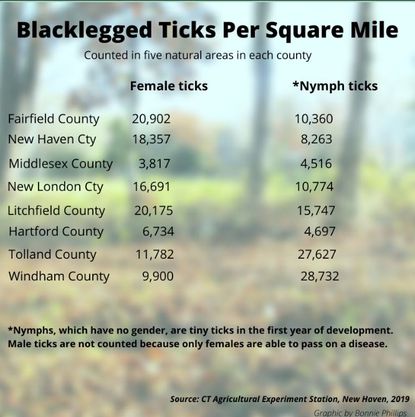
On a sunny, cool day as fall gave way to winter, a team of biologists and technicians dragged white cloths through the underbrush at Lord Creek Farm in Lyme. They were looking for blacklegged ticks, which carry Lyme disease and four other deadly illnesses.

As ticks attached to the cloth, the team counted them and put them in jars for further study at their lab at the Connecticut Agricultural Experiment Station in New Haven. Japanese barberry bushes grew thickly beneath the trees at this private horse farm that for years has cooperated with Lyme disease researchers….(See link for full article)

4AAJJYZDRRDALNUBNIYUJ52OSU

House Confirms Fiscal Year Spending 2020 For Lyme & Other Vector-Borne Diseases

https://lymediseaseassociation.org/government/federal-government/house-confirms-fiscal-year-spending-2020-for-lyme-and-other-vector-borne-diseases/

House Confirms Fiscal Year Spending 2020 for Lyme & Other Vector-Borne Diseases

The 116th Congress House Committee on Appropriations submitted a report in explanation of bill H.R. 2740, the Omnibus that funds Health and Human Services (HHS) including the National Institute of Health (NIH) and the Centers for Disease Control (CDC), and outlines the final legislative language and designation of funds for vector-borne diseases, including Lyme disease, for fiscal year ending September 30, 2020.

Highlights from the House Explanatory Statement include:

  • The Committee encourages NIAID to intensify research and development on Lyme and other tick-borne diseases, including research that will increase understanding of the full range of processes that cause Lyme disease infection. This should include research on the physiology of Borrelia burgdorferi and Borrelia mayonii, including the mechanisms of possible persistent infection, potential treatment protocols for extended or long-term symptoms attributed to Lyme and other tick-borne diseases, and development of more sensitive and accurate diagnostic tests for Lyme and tick-borne diseases, including next generation polymerase chain reaction (PCR) and new testing methodologies such as proteomics and metabolomics. The Committee directs NIAID to support research on the heightened incidence of Lyme Disease and vector-borne diseases due to global warming.
  • The Committee encourages NIH to improve early diagnosis and treatment of Lyme and other tick-borne diseases (TBD) to prevent the development of late stage disease and more serious and longer-term disability, but also intensify research on diagnosis and treatment of late stage and chronic disease. In addition to development of highly sensitive and specific diagnostics for all stages of disease, a goal should be to develop diagnostics with appropriate sensitivity and specificity for the detection of infection. Treatments also should be developed for all stages of Lyme and other TBD, determining optimal combinations of new candidate or older drugs and exploring novel combinations.

A statement from a Congressional spokesperson further clarifies that, “The agreement includes an increase and encourages CDC, in coordination with NINDS and NIMH, to include in its surveillance the long-term effects. CDC is also encouraged to coordinate with NIH on publishing reports that assess prevention, treatment, diagnostic advancements, and links between tick-borne disease and psychiatric illnesses. CDC is encouraged to focus efforts in endemic areas as well as areas not yet considered endemic.”

Thank you to Congressman Chris Smith (NJ-4) for working with LDA to get some of this language included. Thank you to other advocates and legislators who also provided input into the process.

The CDC received a $2,000,000 increase for Lyme disease.

Click here to view the full H. Rept. 116-62 Explanatory Statement

Click here to view HR 1865 Division A

_________________

**Comment**

The heightened incidence of Lyme disease has nothing to do with “global warming”according to independent Canadian tick researcher John Scott, and is a red herring being used to divert our attention from important issues:  https://madisonarealymesupportgroup.com/2018/11/07/ticks-on-the-move-due-to-migrating-birds-and-photoperiod-not-climate-change/

https://madisonarealymesupportgroup.com/2018/08/13/study-shows-lyme-not-propelled-by-climate-change/

“For blacklegged ticks, climate change is an apocryphal issue.” -John Scott

PLEASE SPREAD THE WORD THAT CLIMATE DATA WILL NOT HELP PATIENTS ONE IOTA.

For an excellent interview with John Scott:  https://madisonarealymesupportgroup.com/2017/08/14/canadian-tick-expert-climate-change-is-not-behind-lyme-disease/ (He also explains the bogus Lyme vaccine as well)

Excerpt:

John explains, “The climate change range expansion model is what the authorities have been using to rationalize how they have done nothing for more than thirty years. It’s a huge cover-up scheme that goes back to the 1980’s. The grandiose scheme was a nefarious plot to let doctors off the hook from having to deal with this debilitating disease. I caught onto it very quickly. Most people have been victims of it ever since.”

This climate change ‘theory’ is all part of a well-planned scheme. Even the ticks are smarter than the people who’ve concocted this thing, he says.

Climate change has nothing to do with tick movement. Blacklegged ticks are ecoadaptive, and tolerate wide temperature fluctuations. On hot summer days, these ticks descend into the cool, moist leaf litter and rehydrate. In winter, they descend into the leaf litter, and are comfortable under an insulating blanket of snow. Ticks have antifreeze-like compounds in their bodies, and can tolerate a wide range of temperatures. For instance, at Kenora, Ontario, the air temperature peaks at 36°C and dips to –44°C, and blacklegged ticks survive successfully.

“Ticks are marvellous eco-adaptors. They will be the last species on the planet. Do you see how silly this theory of climate change is as a way to rationalize what’s happening. It’s all a red herring to divert your attention,” he explains.

Please know that Lyme advocates can also fall prey to the draw of power and money and for some reason good, independent research is being ignored to the peril of patients. Diverting research dollars away from issues like transmission studies, studies for more sensitive and accurate testing, as well as effective treatments has been a ploy of authorities since the beginning. Research has been run by a Cabal who have rife conflicts of interest, controlling the narrative and setting faulty study parameters for a predesignated outcome:  https://madisonarealymesupportgroup.com/2017/01/13/lyme-science-owned-by-good-ol-boys/

https://madisonarealymesupportgroup.com/2019/02/22/why-mainstream-lyme-msids-research-remains-in-the-dark-ages/

Lyme patient and advocate Carl Tuttle writes about this diversion of funds away from important issues needing study such as borrelia persistence and appropriate treatment:  https://www.change.org/p/the-us-senate-calling-for-a-congressional-investigation-of-the-cdc-idsa-and-aldf/u/25690522?

Excerpt:

Per my email below which you were carbon copied on January 31st, wouldn’t it make better sense to fund research into finding a cure for this antibiotic resistant/tolerant superbug instead of financing those with a bias (racketeering scheme) against persistent infection?

NIH Funding: RO1 CK 000152 has been used to suppress evidence of persistent infection while avoiding the horribly disabled Lyme patient community. Isn’t this fraudulent use of taxpayer dollars? So why does it continue under the support of the Centers for Disease Control; an agency under your direct supervision?

https://www.change.org/p/the-us-senate-calling-for-a-congressional-investigation-of-the-cdc-idsa-and-aldf/u/25681241?

Excerpt:

One again we see Dr. Wormser unethically fixated on the acute stage of disease after bulls-eye rash. This does not represent the entire Lyme patient population!

Patients who have had a prolonged exposure to the pathogen and advance to late stage are almost always incapacitated. By avoiding the late stage horribly disabled Lyme patient population, you can perpetuate a forty year racketeering scheme to deny persistent infection.

Patient testimony all across America is describing a disease that is destroying lives, ending careers while leaving its victim in financial ruin.

https://www.change.org/p/the-us-senate-calling-for-a-congressional-investigation-of-the-cdc-idsa-and-aldf/u/25671214?

Excerpt:

The continuous stalling keeps the current dogma and direction intact because a chronic relapsing seronegative disease does not fit the vaccine model.

Direct detection methods have been avoided because they have the potential to identify chronic Lyme.

It’s all about the VACCINE!!!!!! Nothing has changed and the five year NIH STRATEGIC PLAN FOR TICKBORNE DISEASE RESEARCH is written by the same government agency responsible for funding all of the Junk Science aimed at suppressing evidence of persistent infection.
https://www.niaid.nih.gov/sites/default/files/NIH-Strategic-Plan-Tickborne-Disease-Research-2019.pdf

Time to become extremely focused and demand research for issues that will help patients. We don’t need more climate data.


Non-Anticoagulant Heparin As A Pre-Exposure Prophylaxis Prevents Lyme Disease Infection

https://www.ncbi.nlm.nih.gov/pubmed/31961652/

2020 Jan 30. doi: 10.1021/acsinfecdis.9b00425. [Epub ahead of print]

Non-anticoagulant Heparin as a Pre-exposure Prophylaxis Prevents Lyme Disease Infection.

Abstract

Lyme disease (LD) is caused by the spirochete Borrelia burgdorferi sensu lato (Bbsl). After transmission to humans by ticks, Bbsl spreads to multiple organs, leading to arthritis, carditis, and neuroborreliosis. No effective prophylaxis against human LD prior to tick exposure is currently available. Thus, a pre-exposure prophylaxis (PrEP) against LD is needed. The establishment of LD bacteria at diverse sites is dictated partly by the binding of Bbsl to proteoglycans (PGs) and glycosaminoglycans (GAGs) in tissues. The drug heparin is structurally similar to these GAGs and inhibits Bbsl attachment to PGs, GAGs, cells, and tissues, suggesting its potential to prevent LD. However, the anticoagulant activity of heparin often results in hemorrhage, hampering the development of this compound as LD PrEP.

We have previously synthesized a non-anticoagulant version of heparin (NACH), which was verified for safety in mice and humans. Here, we showed that NACH blocks Bbsl attachment to PGs, GAGs, and mammalian cells. We also found that

  • treating mice with NACH prior to the exposure of ticks carrying Bbslfollowed by continuous administration of this compound prevents tissue colonization by Bbsl.
  • Furthermore, NACH-treated mice develop greater levels of IgG and IgM against Bbsl  at early stages of infection, suggesting that the upregulation of antibody immune responses may be one of the mechanisms for NACH-mediated LD prevention.

This is one of the first studies examining the ability of a heparin-based compound to prevent LD prior to tick exposure. The information presented might also be extended to prevent other infectious diseases agents.

__________________

**Comment**

I found this study fascinating on multiple levels and have had my thoughts on heparin for years due to it helping my husband’s Lyme/MSIDS case substantially.

For whatever reason he developed hyper coagulation (thick blood) after he became infected with tick-borne illness.  I’ve found that many other patients have experienced this as well.  Heparin is used as an anti-coagulant and is often the drug of choice for such patients.  My husband immediately improved on it due hyper coagulation’s ability to make you sluggish and tired as blood flow and oxygen delivery are impeded.  On top of that, thick blood impedes treatment, nutrients from food, and supplements from being distributed and utilized.  It’s a big deal.

The reason we even suspected hyper coagulation in the first place was due to visually seeing it clog blood catheters when he received blood ozone therapy and gave blood.  It looked like bloody snot and caused his blood to be a deep burgundy instead of a bright red.

After years of being on heparin and subsequently needing iron sucrose infusions due to low ferritin, he decided to try going off of it and taking systemic enzymes and fish oil instead.  He’s had no problem going off the heparin.  Read about enzymes here: https://madisonarealymesupportgroup.com/2019/11/18/link-between-inflammation-mental-sluggishness-shown-how-msm-systemic-enzymes-and-melatonin-can-help/  Please read comment section as I explain and have other links to enzymes and other substances which directly help inflammation. Enzymes are known to:

  • mop up debris within the blood
  • prevent and dissolve blood clots by dissolving fibrin
  • break down and remove circulating immune complexes
  • kill pathogens
  • control inflammation
  • improve alkalinity
  • help with detoxification

FYI: fish oil makes the blood more slippery:  https://heartmdinstitute.com/heart-health/is-it-safe-to-mix-fish-oil-and-blood-thinners/

Excerpt & warning when used with other blood thinners and anti-coagulants:

The omega-3 fatty acids in fish oil help make blood platelets less likely to clot; antiplatelet blood thinners do the same thing. Too much of both can increase the risk for excessive bleeding from minor, everyday cuts or from the gastrointestinal side effects of drugs like aspirin or NSAIDs, as well as bruising or injuries that may occur as the result of a fall. Blood that is too thin also raises the risk of hemorrhagic stroke, especially in patients over age 85.

Modest amounts of fish oil, say 1–2 grams daily, generally can be tolerated even if you are taking prescription blood thinners. However, doing this is not without some risk—so it’s absolutely essential that you be up front with your doctor about the fish oil products you’re taking and how much, to avoid unsafe drug interactions. I cannot emphasize this enough. You must work collaboratively with your physician and regularly monitor the clotting agents in your blood.

To read more about heparin:  https://www.mayoclinic.org/drugs-supplements/heparin-intravenous-route-subcutaneous-route/description/drg-20068726  He started out with self-injecting but it’s very painful and causes bruising.  He then used it sub-lingually with similar success and without the negative side effects of injections.