
Powassan Virus in Children
https://danielcameronmd.com/powassan-virus-in-children/
CASE REPORTS: POWASSAN VIRUS IN CHILDREN
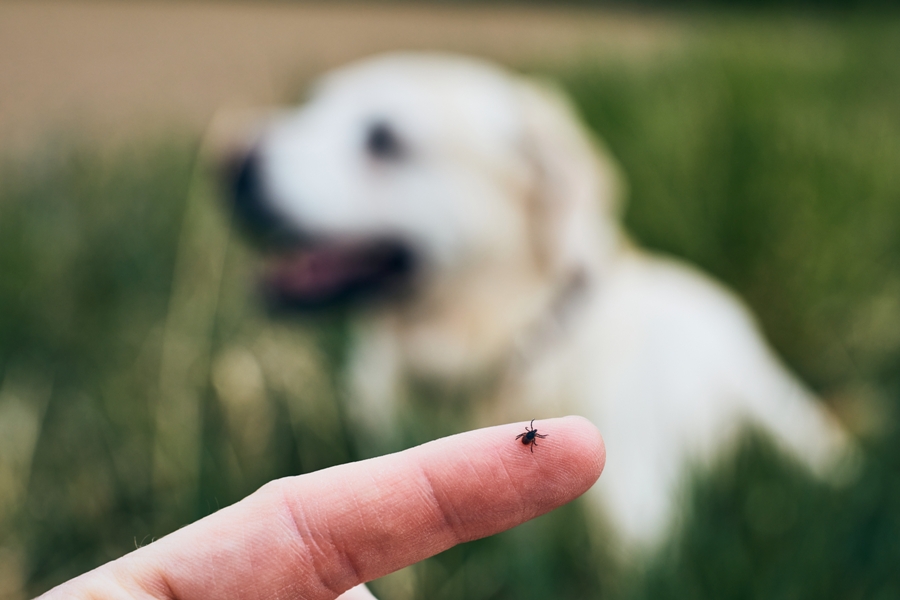
Powassan virus (POWV) is a tick-borne illness that can cause severe encephalitis. Animal studies have shown the virus can be transmitted to humans following a tick bite within 15 minutes. However, the cases described in a recent article “Powassan Virus Encephalitis Following Brief Attachment of Connecticut Deer Ticks” by Feder et al. “strongly suggest that infected ticks may also rapidly transmit POWV to people.” [1]
Powassan virus in children is not often reported. In this article, the authors describe two cases involving infants with tick bites who developed Powassan virus encephalitis. As the authors point out, their case report not only demonstrates that rapid transmission of POWV can occur, but it highlights the importance for parents/caregivers to follow tick bite prevention methods. In these cases, adults unknowingly exposed their children to ticks infected with Powassan virus.
Powassan virus encephalitis in two children
A 5-month-old child was hospitalized after experiencing fevers for two days, along with vomiting and facial twitching which progressed to seizures. Two weeks prior to the onset of symptoms, a tick was removed from the infant’s forehead. Test results for the Powassan virus were positive.
The second case involved a 2-month-old child who presented with a fever and listlessness for one day. “He then developed left sided focal seizures (rhythmic left arm twitching, facial deviation to the left, and tongue thrusting with lip smacking),” the authors write.
A tick was removed from the infant’s arm approximately two weeks before he was hospitalized. The parents believed the father or dog had brought a tick into the house following a walk outside. The tick was not engorged and had not fed for more than 24 hours, the authors report.
READ MORE: No neurologic damage in 3 children with Lyme disease and Powassan virus
“POWV infection was confirmed by a positive PRNT on both serum and CSF,” the authors explain.
“POWV infection of humans has been notable for the severity of both the acute disease and the long-term sequelae.” In fact, chronic illness occurs in approximately 50% of patients, the authors report, with symptoms including hemiplegia [paralysis on one side of the body], wasting, personality changes, and headaches.
Adults unknowingly expose children
“The circumstances under which the 2 children reported here acquired infection require some comments that are pertinent to prevention of future cases,” the authors write.
Infants typically would not be exposed to tick bites. These cases demonstrate the importance in adopting tick bite prevention methods. Feder points out, “in both of our cases, parents presumably brought ticks into their homes after outdoor activities.”
In the first case, the father had been out walking in the woods and brushed off multiple ticks outside. He presumably brought a tick into the home. In the second case, a father had been walking outside with a dog. The family believed either the father or dog had brought the tick into the house.
Parents/caregivers should be educated about several preventative measures:
- “Outdoor clothing may prevent access to skin, but the ticks may remain undetected and will crawl off the person when body heat is reduced, such as when a coat is removed.”
- Parents should check for ticks more than once. “Because of searching for an optimal skin site, ticks will not immediately attach to a person.”
- “Parents should be educated about the need to treat outdoor clothing with Permethrin, an effective mode of preventing tick bites … Contact with treated fabric will kill all ticks within 2 hours.”
- “Parents should also be educated about the possibility that dogs could bring ticks into homes, and that these animals should be inspected after every outdoor exposure.”
- “Most anti-tick preventives only work after a tick has attached to a dog [the tick needs to ingest the chemical], although there are collars that are impregnated with Permethrin or similar products that might repel or kill ticks.”
Editor’s Note: Although the authors did not discuss treatment of the two infants, both recovered.
Related Articles:
Podcast: 6-week-old boy with Babesia
Podcast: 5-week-old girl with Lyme disease
Case report: Fatal Powassan virus infection: a.k.a deer tick virus
References:
- Feder HM, Telford S, Goethert HK, Wormser GP. Powassan Virus Encephalitis Following Brief Attachment of Connecticut Deer Ticks. Clin Infect Dis. 2020.
_____________________
**Comment**
Despite being told that all of this is “rare,” please remember that Powassan, along with numerous other tick-borne infections are not reportable illnesses; therefore, nobody has a clue about prevalence. Coppe Lab out of Wisconsin emphatically states Powassan is NOT rare:
For the last two years, Coppe Laboratories has dedicated a significant amount of time and resources to dispelling the myth that infection with Powassan virus, a virus transmitted by tick bite, is rare. The Centers for Disease Prevention and Control (CDC) reports only 100 cases of Powassan virus infection in the United States in the last 10 years. Indeed, that statistic gives the illusion that Powassan infection is rare. However, did you know that the only infections reported to CDC are those that are life-threatening, particularly cases causing severe inflammation of the brain like the case reported in LiveScience? Coppe has published three new papers in the last year that clearly show Powassan virus infection is not rare are at all,and until testing for this virus is included as part of tick-borne disease screening panels infections will continue to be underreported. Coppe’s Powassan Guide, which can be downloaded from the website, summarizes the findings from both tick and human Powassan prevalence studies, as well as defining the patient populations that would benefit most from Powassan testing.
For more:
- https://madisonarealymesupportgroup.com/2016/02/21/powassan-virus/
- https://madisonarealymesupportgroup.com/2017/06/28/powassan-can-kill/
- https://madisonarealymesupportgroup.com/2017/05/18/powassan-and-bb-infection-in-wisconsin-and-u-s-tick-populations/ Wisconsin ticks:
Nearly 80% of adult female I. scapularis ticks analyzed were collected from the northern half of the state (QNW and QNE) and accounted for 85% of POWV-positive ticks. While only 90 I. scapularis ticks were collected from the southern two quadrants, POWV-positive ticks were identified in both QSE and QSW. QNW I. scapularis ticks revealed the highest MLE of infection for both POWV and B. burgdorferi (4.67% and 23.42%, respectively).
- https://madisonarealymesupportgroup.com/2019/10/29/former-u-s-senator-dies-of-powassan-virus/
- https://madisonarealymesupportgroup.com/2019/08/19/new-hampshire-man-tests-positive-for-jamestown-canyon-powassan-viruses/
- https://madisonarealymesupportgroup.com/2019/11/24/powassan-virus-encephalitis-severe-bbesiosis-lyme-carditis-in-a-single-patient/
- https://madisonarealymesupportgroup.com/2019/07/02/polio-like-manifestation-of-powassan-virus-with-anterior-horn-cell-involvement-canada/
Tick prevention:
https://madisonarealymesupportgroup.com/2019/04/12/tick-prevention-2019/
https://madisonarealymesupportgroup.com/2020/07/20/ticks-lyme-disease-information-for-families/
Remember, pets are called “Tick taxies” for a reason: https://madisonarealymesupportgroup.com/2017/08/12/pet-owners-have-nearly-2-times-the-risk-of-finding-ticks/


Rapid Response:
Re: Tick bite
Dear Editor
Razai et al, in their consultation on tick bite, missed an important message to learners (1).
The most common infectious agents transmitted by Ixodes species ticks in North America that have the potential for co-infection with B burgdorferi are Anaplasma phagocytophilum, Babesia species, deer tick (Powassan) virus, Borrelia miyamotoi, and the Ehrlichia muris–like agent (2).
A phagocytophilum is transmitted by the same Ixodes ticks as B burgdorferi in the United States and causes fever, chills, headache, myalgia, and fatigue arising 1 to 3 weeks following tick exposure. Most cases are mild and self-limited. However, severe manifestations may include respiratory failure, adult respiratory distress syndrome, peripheral neuropathy, rhabdomyolysis, acute renal failure, pancreatitis, and coagulopathies.
It has been found that in Wisconsin, approximately 3% of I scapularis ticks examined were co-infected with B burgdorferi and A phagocytophilum (3). A similar study in 11,000 ticks in public parks of New York State’s Hudson Valley Region found that co-infection rates of nymphs and adults were 0.5% and 6.3%, respectively (4).
The frequency of humans with Lyme disease simultaneously co-infected with A phagocytophilum from various studies ranges from 2% to 10% (5,6). Similirly, Babesiosis is transmitted through the bite of infected I scapularis and I pacificus ticks. Most patients are asymptomatic or have mild, self-limited disease but may be complicated by renal failure, acute respiratory distress, and shock.
In a study of patients with Lyme disease from southern New England, approximately 10% were co-infected with babesiosis (7).
Unlike Lyme disease and Anaplasmosis, doxycycline is not an effective treatment of babesiosis and requires atovaquone and azithromycin or combination of clindamycin with quinine, making it imperitive to consider this diagnosis in mind in patients with tick bite.
Of the 3 species of Ehrlichia in United States, only E muris–like (EML) agent is transmitted by I scapularis is the vector of this emerging pathogen(8).
Possible co-infections should be considered in any patients who are diagnosed with tick bite or Lyme disease, especially those who have unexplained leukopenia, thrombocytopenia, or anemia, or who fail to respond to treatment for Lyme’s disease.
References:
1- Razai MS, Doerholt K, Galiza E, Oakeshott P. Tick bite. BMJ 2020;370:m3029
2- Caulfield AJ, Pritt BS. Lyme disease Coinfections in the United States. Clin Lab Med 2015;35:827–846.
3- Lee, X, Coyle DR, Johnson DK, et al. Prevalence of Borrelia burgdorferi and Anaplasma phagocytophilum in Ixodes scapularis (Acari: Ixodidae) nymphs collected in managed red pine forests in Wisconsin. J Med Entomol 2014;51:694-701.
4- Prusinski MA, Kokas JE, Hukey KT, et al. Prevalence of Borrelia burgdorferi (Spoirochets: Spirochaetaceae), Anaplasma phagocytophilum (Rickettsiales: Anaplasmataceae), and Babesia microti (Piroplasmida: Babesiidae) in Ixodes scapularis (Acari: Ixodidae) collected from recreational lands in the Hudson Valley Region, New York State. J Med Entomol 2014;51:226-36.
5- Horowitz HW, Aguero-Rosenfeld ME, Holmgren D, et al. Lyme disease and human granulocytic anaplasmosis coinfection: impact of case definition on coinfection rates and illness severity. Clin Infect Dis 2013;56;93-9.
6- Steere AC, McHugh G, Suarez C, et al. Prospective study of coinfection in patients with erythema migrans. Clin Infect Dis 2003;36:1078-81.
7- Krause PJ, Telford SR, Spielman A, et al. Concurrent Lyme disease and babesiosis – evidence for increased severity and duration of illness. JAMA 1996;275:1657-60.
8- Pritt BS, McFadden JD, Stromdah E, et al. Emergence of a novel Ehrlichia sp. agent
pathogenic for humans in the Midwestern United States. 6th International Meeting
on Rickettsiae and Rickettsial Diseases. Heraklion (Greece), June 5–7, 2011.
_______________________
**Comment**
This important letter to the editor highlights many contentious issues Lyme/MSIDS patients have to muddle through. From where I sit, I disagree with the author’s statements that these infections are ‘mild and self-limited’, but I deal with sick people – not healthy. If there’s one thing I DO know, it’s that these infections have been downplayed for far too long, and it’s been a real problem. Patients haven’t been taken seriously for over 40 years!
The consideration of coinfections; unfortunately, is not common in mainstream medicine regarding Lyme/MSIDS. They still treat this as a one germ disease with doxycycline curing it, when nothing could be further from the truth: https://madisonarealymesupportgroup.com/2018/10/30/study-shows-lyme-msids-patients-infected-with-many-pathogens-and-explains-why-we-are-so-sick/