Archive for the ‘research’ Category

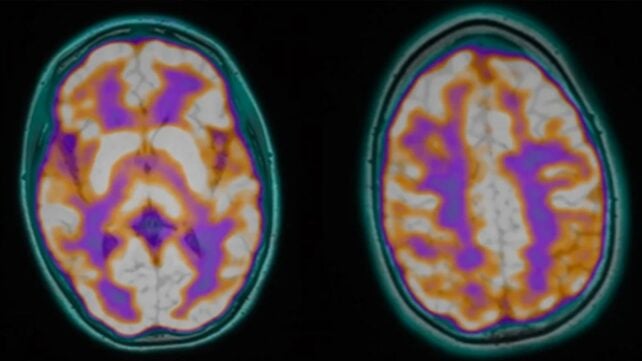
Study Identifies 86 Serious Neuropsychiatric Safety Signals Linked to COVID-19 Shots

https://www.thefocalpoints.com/p/breaking-study-identifies-86-serious

BREAKING: Study Identifies 86 Serious Neuropsychiatric Safety Signals Linked to COVID-19 Vaccination

CDC/FDA safety thresholds breached for 86 adverse events including dementia, schizophrenia, suicidal and homicidal thoughts, stroke, psychosis, depression, cognitive impairment, delusions, and more.

By Nicolas Hulscher, MPH

The study by Thorp et al titled, Association between COVID-19 Vaccination and Neuropsychiatric Conditions, was just uploaded to the Preprints.org preprint server. They analyzed VAERS data from January 1990 through December 2024 and identified alarming increases in 86 adverse events related to brain function, behavior, and cognition following COVID-19 mRNA injection:

Introduction: COVID-19 mRNA vaccines are known to penetrate the blood-brain barrier and could potentially cause a myriad of unintended adverse effects. The purpose of this study is to explore potential associations between vaccination and neuropsychiatric conditions.

Methods: Data were collected from the U.S. Centers for Disease Control and Prevention (CDC) and the U.S. Food and Drug Administration (FDA). The CDC/FDA Vaccine Adverse Event Reporting System (VAERS) was queried from January 1, 1990, to December 27, 2024, for adverse events (AEs) involving neuropsychiatric complications following COVID-19 vaccination. The timeframe included 420 months for all vaccines except COVID-19 vaccines which have been available to the public for only 48 of the 420 months (from January 1, 2021, to December 27, 2024). Proportional reporting ratios (PRRs) were calculated by time comparing AEs after COVID-19 vaccination to those after influenza vaccination and to those after all other vaccines. The CDC/FDA stipulates a safety concern if a PRR is ≥ 2.

Results: Comparing COVID-19 vaccination to influenza vaccinations, the CDC/FDA’s safety signals (PRR, 95% confidence interval, p-value, Z-score) were breached for the following combinations: 47 AEs associated with cognitive impairment (PRR: 118, 95% CI: 87.2-160, p < 0.0001, Z-score: 30.9); 28 AEs associated with general psychiatric illness (PRR: 115, 95% CI: 85.1-156, p < 0.0001, Z-score: 30.8); and 11 AEs associated with suicide/homicide (PRR: 80.1, 95% CI: 57.3-112, p < 0.0001, Z-score: 25.7). Likewise, when comparing COVID-19 vaccination to all other vaccines except COVID-19, the safety signals were also breached for the following: 47 AEs associated with cognitive impairment (PRR: 26.8, 95% CI: 19.8-36.1, p < 0.0001, Z-score: 21.5); 28 AEs associated with general psychiatric illness (PRR: 28.6, 95% CI: 21.2-38.6, p < 0.0001, Z-score: 21.9); and 11 AEs associated with suicide/homicide (PRR: 14.0, 95% CI: 10.3-19.0, p < 0.0001, Z-score: 16.8).

Conclusions: There are alarming safety signals regarding neuropsychiatric conditions following COVID-19 vaccination, compared to the influenza vaccinations alone and to all other vaccinations combined. These data raise concerns about long-term consequences, including continued cognitive decline, dementia, and neuropsychiatric morbidity and mortality. An immediate global moratorium on COVID-19 vaccination is warranted.  (See link for article)

______________

**Comment**

Psychosis, schizophrenia, delusion, delirium, and brain injury, along with Alzheimer’s depression, sleep disorders, and hemorrhagic stroke all listed…..

Why these kill shots are still on the market defies ALL logic and sanity.

For more:


Best Herbal Antibiotic Plans for Lyme, Bartonella, and Babesia

https://treatlyme.com/guide/best-herbal-antibiotics-for-lyme-bartonella-babesia/

Best Herbal Antibiotic Plans for Lyme, Bartonella, and Babesia

By Dr. Marty Ross

best-herbal-antibiotics-for-lyme-bartonella-babesia
Updated: January 24, 2025

Science Meets Buhner for Best Herbal Antibiotic Options

History Speaks

Historically, most herbal antibiotic regimens for used tick-borne infections are based on the writings and experience of master herbalist Stephen Buhner. His work is science related. However, most of the herbal antibiotics he recommends do not have actual studies showing they work in the lab or in humans for killing specific tick-borne infections. For instance, he recommends Andrographis to kill Borrelia based on science showing it kills another spirochete called Leptospirosis. And Buhner recommends Sida Acuta to address Babesia because it is used as an antimalarial, even though there is no research showing it works for Babesia.

Buhner’s writings occurred before the discovery of persister Borrelia (Lyme) and Bartonella which I describe below. So, his writings did not specifically address how to deal with these hibernation forms of germs.

Enter Science

Over the last few years, researchers are rushing to find new ways to kill the terrible Bs (Borrelia, Bartonella, and Babesia). Some of the interest in looking at herbal medicine options is the discovery of hibernating persister growth states of Borrelia and Bartonella that do not respond to classic herbal medicines or prescription regimens that target growing states of these germs. Out of this laboratory work, we now know that Buhner’s Andrographis does not work against Borrelia, but many other agents do.

In 2023 Shor and Schweig published their review of newer laboratory studies showing which herbal medicines work in the lab to kill the growing, persister, and biofilm states of Borrelia and Bartonella. This work also reveals numerous agents that can kill Babesia. Table 1. below is drawn from the Shor-Schwieg article. My table is more limited than the one published in their paper but focuses on what I have found clinically to be the most relevant herbal antibiotics.

Table 1. Herbal Antibiotic Actions

How to Interpret Table 1
  • About G P B. Borrelia and Bartonella exist in growing states, hibernation states, and biofilm communities. The growing states are also called active states. The hibernators are also called persisters or stationary states. Biofilms are mostly known as biofilms. I prefer to use the terms growing (G), persister (P) and biofilms (B) while Shor and Schweig refer to active, stationary, and biofilm states. Keep this in mind if you review their article and more extensive table.
  • About Blank. In some instances, a blank space in the table means the research did not look to see if an herbal agent actually addresses the identified problem. For instance, Zhang and colleagues showed that cinnamon, clove, and oregano oils kill Borrelia biofilms, but their research did not look at whether these herbal oils help Bartonella biofilm. Given the similarity of biofilm structures, cinnamon, clove and oregano oils may actually be good agents against Bartonella biofilms.
  • About Sida Acuta and Houttuynia. Buhner recommends Sida Acuta and Houttuynia to address Bartonella. He also recommends Sida Acuta for Babesia. These key herbal antibiotics are not included in my table or the work of Shor-Schweig because there was no research conducted looking at these agents. This does not mean they do not work, but based on science, we do not know.  (See link for article)

_____________

**Comment**

The article gives numerous treatment options for each pathogen.  We can be extremely thankful to have all of this information in an easy to find and use format which is supported by science.

For more:

COVID Vaxxed 34X More Likely to Contract Meningitis

https://expose-news.com/2026/03/26/vaccinated-are-34x-more-likely-to-contract-meningitis/

Covid-vaccinated people are 34x more likely to contract meningitis


In November 2025, a study investigating the possible association between the central nervous system infection rate and covid vaccination was published in the International Journal of Research in Medical Sciences.

What is relevant to the UK’s recent meningitis “outbreak” is that the study found covid vaccinated people were 34 times more likely to succumb to meningitis than after the flu vaccination.

Broken down into the types, covid-vaccinated people are 53x more likely to contract Aseptic meningitis and 36x more likely to contract bacterial meningitis.


Peer-Reviewed Study Finds Covid-19 “Vaccines” Linked to 63 Serious Brain and Spinal Cord Adverse Events

By Nicolas Hulscher, as published by Focal Points on 6 November 2025

The study titled covid-19 mRNA Vaccination: Implications for the Central Nervous System’, authored by Kirstin Cosgrove, BM, CCRA; James A. Thorp, MD; Claire Rogers, MSPAS, PA-C; Steven Hatfill, MD; Nicolas Hulscher, MPH; and Peter A. McCullough, MD, MPH, was just published after successful peer-review in the International Journal of Research in Medical Sciences.

Using VAERS data from January 1990 through November 2024, we compared adverse events reported after covid-19 vaccination to those after influenza vaccination and all other vaccines combined. We focused specifically on the central nervous system (“CNS”) – the brain and spinal cord – which control everything from memory and thought to movement and vital body functions. In total, we identified 63 serious safety signals involving the brain and nervous system, ranging from meningitis and encephalitis to brain abscesses, herpesvirus reactivations, demyelinating syndromes, and even prion diseases – each breaching US Centres for Disease Control and Prevention (“CDC”) and Food and Drug Administration (“FDA”) thresholds that are supposed to trigger immediate safety investigations. (See link for article)

______________

For more:

GMO Risk – Who’s Watching?

https://regenerationinternational.org/2026/03/16/genetically-modified-microorganisms-what-are-the-risks-and-whos-watching/

Genetically Modified Microorganisms: What Are the Risks, and Who’s Watching?

A summary of: Lerner et al., “Genetically Modified Microorganisms: Risks and Regulatory Considerations for Human and Environmental Health,” Microorganisms, 2026. https://doi.org/10.3390/microorganisms14020467

This summary is based on a peer-reviewed paper co-authored by Andre Leu, International Director of Regeneration International, a global nonprofit network dedicated to promoting regenerative agriculture and land management practices. Leu is a longtime advocate for organic farming and soil health, and has written extensively on the risks of pesticides and industrial agriculture. His involvement in this paper reflects Regeneration International’s broader mission to protect the biological integrity of soils and ecosystems, concerns that are central to the study’s findings on GMMs and the soil microbiome.

The Big Picture

When most people hear “GMO,” they think of crops – corn or soybeans engineered to resist pests. But scientists have been quietly engineering something far smaller and potentially far more consequential: microorganisms. Bacteria, yeasts, and fungi have been genetically modified and, in some cases, released into the environment on a massive scale, sometimes without the public even knowing.

A new review article published in the journal Microorganisms by a team of eight scientists and physicians argues that we are moving too fast. The technology to create genetically modified microorganisms (GMMs) has outpaced the regulations designed to keep them in check, and the potential consequences, for human health, for soil, and for the climate, deserve urgent attention.

What Is a Genetically Modified Microorganism?

A microorganism (or “microbe”) is any living thing too small to see with the naked eye: bacteria, viruses, fungi, and more. A genetically modified microorganism is one whose DNA has been intentionally altered in a lab, often using tools like CRISPR-Cas9, a kind of molecular “cut and paste” that can add, remove, or rewrite genetic instructions.

GMMs are not new. Since the 1980s, engineered bacteria have been used to produce human insulin, which transformed diabetes treatment. But the technology has become dramatically cheaper and more accessible. Today, CRISPR kits are available online, and high school students are creating novel microbes in classroom experiments.

The global market for GMMs used in agriculture alone was valued at over $10 billion in 2021 and is expected to nearly triple by 2029.

Why Microbes Are Different, and Potentially More Risky

The authors point out five features of microbes that make them uniquely challenging to regulate compared to genetically modified plants or animals:

  1. They reproduce extremely fast. Under ideal conditions, a single bacterium can double its numbers every 20 minutes. An engineered trait can spread through billions of organisms in hours.
  2. They’re nearly impossible to contain. Microbes travel on wind, water, animals, and people, reaching distant ecosystems and hosts.
  3. They share genes with each other. Through a process called horizontal gene transfer, microbes can pass genetic material to other, completely unrelated, microbes. An engineered gene could end up in microbes that were never modified in the first place.
  4. Microbiomes are essential to life. The communities of microbes living in and around humans, animals, plants, and soils are not just passengers, they are vital to health, immunity, and ecological balance.
  5. We know very little about them. Scientists estimate there are roughly one trillion different microbial species on Earth. We’ve only identified and characterized about 1% of them.

What Could Go Wrong? Key Risk Scenarios

The paper walks through several concrete scenarios where GMMs could cause harm.

Your Baby’s First Microbiome

The first three years of a child’s life are a critical window for establishing the gut microbiome, the community of microbes that shapes immune development, brain development, and lifelong health. A baby’s microbiome is seeded from the mother: through vaginal birth, breastfeeding, and skin contact.

The authors raise concern that GMMs could interfere with this delicate transfer. A genetically modified microbe could colonize a mother’s gut, mouth, vagina, or breast tissue, and then pass to her infant. The authors note that babies born by C-section, who miss out on vaginal microbiome transfer,  already face higher rates of asthma, allergies, celiac disease, and diabetes. Anything that further disrupts microbial inheritance could have lasting consequences. Yet there is currently no research on how GMMs might affect breast milk, pregnancy outcomes, or infant microbiome development.

Your Mouth: A Highway for Gene Transfer

The oral microbiome, the 770-plus species of microbes living in your mouth, plays a surprising role in whole-body health. Friendly oral bacteria contribute up to 25% of your daily production of nitric oxide, a molecule essential for healthy blood pressure. An imbalanced oral microbiome has been linked to increased risk of heart attack, brain inflammation, diabetes, lung infections, and even preterm birth.

The mouth is also a prime location for horizontal gene transfer, meaning it’s a place where engineered genes could easily spread to other microbes. If a GMM displaced beneficial bacteria or shared genes with harmful ones, the downstream effects could be significant and very difficult to reverse.

An Industrial Yeast That Could Trigger Gut Infections

One of the more detailed examples in the paper involves a yeast called Yarrowia lipolytica, which has been widely engineered in industrial settings to produce various compounds. In one application, it was modified to consume a common sugar (xylose, found in fruits, bread, and many processed foods) and produce large amounts of succinate, a chemical normally present only in small quantities in the gut.

The problem: high succinate levels are known to trigger overgrowth of Clostridium difficile (C. diff), a bacterium responsible for severe, potentially life-threatening diarrhea. If engineered Y. lipolytica were to accidentally escape containment and colonize the human gut, particularly in vulnerable people like newborns, premature infants, or immunocompromised patients — it could set the stage for dangerous infections.

A Food Additive Enzyme That May Trigger Autoimmune Disease

An enzyme called microbial transglutaminase (mTg) is widely used in the food industry to improve the texture of processed meats, dairy, and baked goods, essentially acting as a “protein glue.” It’s produced using genetically modified bacteria and is present in countless processed foods worldwide. The global market for mTg was valued at $136 million in 2024, growing rapidly.

The authors argue the safety status of this enzyme deserves serious reconsideration. Unlike the human body’s own transglutaminase enzyme, mTg lacks the usual biological “off switches.” It can operate across a wider range of conditions, penetrate tissue more readily, and form chemical bonds that are highly resistant to the body’s normal breakdown processes.

Research has linked mTg to increased intestinal permeability (sometimes called “leaky gut”), celiac disease, autoimmune conditions, and potentially neurodegenerative diseases. Regulatory bodies in Switzerland, Germany, and Canada have already issued warnings, yet mTg continues to be used in processed foods globally with limited oversight.

Soil Microbes: The Foundation of All Life, and Climate Stability

Perhaps the most sweeping concern in the paper is about soil. One teaspoon of healthy soil contains billions of microbes. These microbes break down organic matter, cycle nutrients, and, critically, sequester carbon dioxide from the atmosphere. Soils hold more carbon than all plants and the atmosphere combined.

GMMs are already being released into agricultural soils at enormous scale. One company has spread its genetically engineered bacteria across nearly 5 million acres of farmland, releasing as many as 5 trillion microbes per acre. Another product covers 10 million acres and counting.

The authors warn that introducing engineered microbes into soil ecosystems, which are already stressed by climate change and industrial agriculture, could have cascading effects. Genetically engineered microbes could transfer their genes to native soil bacteria, creating new organisms with unpredictable traits. They could disrupt the delicate microbial processes that stabilize carbon in the soil. They could pave the way for “super bugs”,  highly adapted, resistant microbes — just as herbicide-resistant “super weeds” emerged after widespread use of GM crops.

The Regulatory Gap

In the United States, GMMs used commercially are primarily regulated by the Environmental Protection Agency (EPA), under laws designed for toxic chemicals, not living, self-replicating organisms. Most GMMs not intended for commercial sale are effectively unregulated and untracked.

Meanwhile, many countries including the US, UK, Canada, and Australia have been deregulating gene-edited organisms, particularly those that don’t introduce DNA from another species. The authors argue this creates a dangerous blind spot, since gene editing can still cause unpredictable genetic changes, large deletions, chromosomal rearrangements, and unintended mutations, whether or not foreign genes are introduced.

As the U.S. Department of Homeland Security has acknowledged, the speed of innovation has outpaced American regulatory policy, and that gap needs to close.

What the Authors Are Calling For

The researchers propose a structured “biosafety workflow”, essentially a checklist of questions that should be answered before any GMM is created or released:

  • What is the GMM’s intended function, and are there safer alternatives?
  • What are the potential routes of escape or spread?
  • How might the GMM interact with human microbiomes?
  • What are the risks to soil, water, and wild ecosystems?
  • What monitoring will occur after release?

Above all, they urge regulators to adopt the precautionary principle, the idea that when something carries significant potential for irreversible harm, the burden of proof should fall on demonstrating safety before release, not after.  (See link for article)

For more:


The Lyme Lie: How Hidden Infections Sabotage Immunity & Cancer Healing

http://  Approx. 18 Min

The Lyme Lie

How Hidden Infections Sabotage Immunity & Cancer Healing

Dr. Dio Prato

What You’ll Learn in This Episode:

  • Why Lyme disease is frequently missed
  • What “chronic Lyme disease complex” really means
  • How co-infections suppress immunity and drive inflammation
  • The link between infections, autoimmunity, and cancer recurrence
  • Why false-negative Lyme tests are common
  • How neuroborreliosis affects the brain and nervous system
  • Why infections must be treated before repair and recovery
  • The right questions to ask your doctor about testing

📍 Envita Medical Centers – Scottsdale, AZ 🌐 Learn more: https://www.envita.com/?utm_source=Dr… 📞 Speak with a care coordinator: 866-830-4576

Chapters:

0:00 – Understanding Lyme Disease and Its Hidden Dangers

2:00 – The Complexity of Tick-Borne Infections

4:45 – Testing and Diagnosis Lyme Disease

6:47 – The Link Between Lyme Disease and Cancer

9:10 – Real Patient Cases and Treatment Success

14:00 – Questions to Ask Your Doctor

For more: