Archive for the ‘research’ Category

Lyme Disease and Bell’s Palsy: New Considerations For Differential Diagnosis

https://www.globallymealliance.org/blog/lyme-disease-and-bells-palsy-new-considerations-for-differential-diagnosis

Neurological disorder resulting from COVID-19 may confound Lyme disease diagnosis.

Bell’s palsy is a non-progressive neurological disorder of one of the facial nerves (7th cranial nerve). Bell’s palsy is fundamentally a clinical diagnosis with no specific laboratory test to confirm the disorder.1 This disorder is characterized by the sudden onset of facial paralysis that may be preceded by a slight fever, pain behind the ear on the affected side, a stiff neck, and weakness and/or stiffness on one side of the face. Paralysis results from decreased blood supply and/or compression of the 7th cranial nerve. This compression can be caused by inflammation of the tissue around the nerve. Approximately 40,000 individuals are diagnosed with Bell’s palsy in the US each year, affecting males and females in equal numbers.

The exact cause of Bell’s palsy is not known, however, bacterial infections (like Lyme disease),1 and viral infections (like Herpes and Epstein-bar virus),2 immune disorders (like Guillain-Barre syndrome) and neuropathies (like brain tumors), are frequently implicated as a cause.

Neurological Lyme Disease and Bell’s Palsy

Bell’s palsy is the most common manifestation of Lyme neuroborreliosis (or neurological Lyme disease) in the US.Clues pointing toward Lyme neuroborreliosis include a history of rash compatible with a bull’s-eye erythema migrans (EM) rash or fever in the weks preceding the palsy. Treatment with antibiotic therapy is highly effective, and most patients will fully recover facial nerve function.1 According to Dr. Nate Jowett, M.D. (Massachusetts General Brigham) ~5% of patients with Lyme disease will develop some degree of sudden facial weakness, where one or both sides of the face droop. This tends to occur seven- to 21-days after tick exposure in infected patients.

COVID-19 and Bell’s Palsy

More recently, though a rare occurrence, Bell’s palsy has also been associated with COVID-193 and adverse drug reactions following mRNA-based vaccination for COVID-19.4-7 A recent systematic review found 20 COVID-19 patients whose only major neurological manifestation was Bell’s palsy. In a separate report, according to Colella et al.,an otherwise healthy 37-year-old white Caucasian male developed Bell’s palsy within days after COVID-19 vaccination. Of note, there was no history of trauma, cold or other identifiable triggers reported and no other signs or symptoms were present. Specifically, no history of a preceding infection, including recent SARS-CoV-2 infection, was reported and there was no evidence of a cutaneous rash suggestive of Herpes zoster infection.6 Lack of a cutaneous rash (e.g., EM) might also rule out Lyme disease, though it should be noted that EM may be missed or not develop in some Lyme disease cases.8

Bell’s palsy associated with SARS-CoV-2 infection was either the first neurological manifestation or appeared two to 28 days after the appearance of other clinical manifestations.3 When associated with COVID-19 vaccination Bell’s palsy developed between three and 30 days post second-dose vaccination.6 The FDA points out that cases of Bell’s palsy in vaccine groups did not represent a frequency above that expected in the general population and concluded that currently available information was insufficient to determine a causal relationship with the vaccine. Nevertheless, they also recommend surveillance for cases of Bell’s palsy with deployment of the vaccine into larger populations.6

Since the time frames for onset of Bell’s palsy associated with Lyme disease and SARS-CoV-2 infection or COVID-19 vaccination overlaps, it is important for front-line physicians to be aware that when faced with differentially diagnosing a patient that presents with Bell’s palsy they should consider:

  1. The prevalence of ticks and Lyme disease in the geographic area in which the patient resides
  2. Case history of the individual that may increase the risk of coming into contact with ticks and contracting Lyme disease (time of year, outdoor activities, pets, ), finding a tick on themselves, and/or travel to a Lyme-endemic area to name a few
  3. Other symptoms consistent with Lyme disease (g., EM, arthritis, carditis, other neurological complications, etc.)
  4. Timing of the onset of Bell’s palsy and when they contracted COVID-19 or underwent vaccination for COVID-19

In conclusion, the COVID-19 pandemic, in addition to causing a whole new set of public health challenges associated with SARS-CoV-2 infections, has also further confounded physicians’ efforts to distinguish Lyme neuroborreliosis from other disorders that cause neurological disease. It is recognition of these complexities that leads GLA to invest financial resources and support research that will ensure rapid and accurate diagnosis and effective treatment of Lyme neuroborreliosis.

REFERENCES

1          Marques, A., Okpali, G., Liepshutz, K. & Ortega-Villa, A. M. Characteristics and outcome of facial nerve palsy from Lyme neuroborreliosis in the United States. Ann Clin Transl Neurol 9, 41-49, doi:10.1002/acn3.51488 (2022).

2          Zhang, W. et al. The etiology of Bell’s palsy: a review. J Neurol 267, 1896-1905, doi:10.1007/s00415-019-09282-4 (2020).

3          Gupta, S., Jawanda, M. K., Taneja, N. & Taneja, T. A systematic review of Bell’s Palsy as the only major neurological manifestation in COVID-19 patients. J Clin Neurosci 90, 284-292, doi:10.1016/j.jocn.2021.06.016 (2021).

4          Cirillo, N. & Doan, R. The association between COVID-19 vaccination and Bell’s palsy. Lancet Infect Dis 22, 5-6, doi:10.1016/S1473-3099(21)00467-9 (2022).

5          Cirillo, N. & Doan, R. Bell’s palsy and SARS-CoV-2 vaccines-an unfolding story. Lancet Infect Dis 21, 1210-1211, doi:10.1016/S1473-3099(21)00273-5 (2021).

6          Colella, G., Orlandi, M. & Cirillo, N. Bell’s palsy following COVID-19 vaccination. J Neurol 268, 3589-3591, doi:10.1007/s00415-021-10462-4 (2021).

7          Cirillo, N. Reported orofacial adverse effects of COVID-19 vaccines: The knowns and the unknowns. J Oral Pathol Med 50, 424-427, doi:10.1111/jop.13165 (2021).

8          Schutzer, S. E. et al. Atypical erythema migrans in patients with PCR-positive Lyme disease. Emerg Infect Dis19, 815-817, doi:10.3201/eid1905.120796 (2013).

__________________
For more:

Inhaled CO2 Concentration While Wearing Face Masks: A Pilot Study Using Capnography

Eleven month old DIES from mask asphyxiation in Taiwan.

https://www.medrxiv.org/content/10.1101/2022.05.10.22274813v1

Inhaled CO2 concentration while wearing face masks: a pilot study using capnography

ABSTRACT

None of the available evaluations of the inhaled air carbon dioxide (CO2) concentration, while wearing face masks, used professional, real-time capnography with water-removal tubing. We measured the end-tidal CO2 using professional side-stream capnography, with water-removing tubing (Rad-97™ capnograph), at rest, (1) without masks, (2) wearing a surgical mask, and (3) wearing a FFP2 respirator, in 102 healthy volunteers aged 10-90 years, from the general population of Ferrara province, Italy. The inhaled air CO2 concentration was then computed as: ((mask volume × end-tidal CO2) + ((tidal volume – mask volume) × ambient air CO2)) / tidal volume).

The mean CO2 concentration was 4965±1047 ppm with surgical masks, and 9396±2254 ppm with FFP2 respirators. The proportion of the sample showing a CO2 concentration higher than the 5000 ppm acceptable exposure threshold recommended for workers was 40.2% while wearing surgical masks and 99.0% while wearing FFP2 respirators

The mean blood oxygen saturation remained >96%, and the mean end-tidal CO2 <33 mmHg. Adjusting for age, gender, BMI, and smoking, the inhaled air CO2 concentration significantly increased with increasing respiratory rate (with a mean of 10,143±2782 ppm among the participants taking 18 or more breaths per minute, while wearing FFP2 respirators), and was higher among the minors, who showed a mean CO2 concentration of 12,847±2898 ppm, while wearing FFP2 respirators. If these results will be confirmed, the current guidelines on mask-wearing could be updated to integrate recommendations for slow breathing and a more targeted use when contagion risk is low.

https://thehighwire.com/videos/new-science-shows-mask-harms/  Video Here  (Approx. 13 Min)

NEW SCIENCE SHOWS MASK HARMS

The mask insanity may have reached its peak this week when unmasked stage actress, Patti LuPone, unleashed a tirade on an audience member for letting her mask slide below her nose, despite the lack of studies from the CDC proving mask efficacy against the spread of Covid-19. In fact, a new study out of Italy concluded that wearing a mask increases levels of inhaled CO2.

A study called “Correlation Between Mask Compliance & COVID-19 Outcomes in Europe found:

  • masks were unable to reduce COVID transmission 
  • countries with high levels of mask usage did not perform better than those with low usage
  • there was moderate positive correlation between mask usage and DEATHS

For more:

What nobody is touching with a 10-foot-pole is the 80 fold increase in mask-littering due to mask mandates and the impact on animal life as well as the environment.  But none of that matters in the topsy-turvy world of COVID.

Cat Ownership and Rural Residence Are Associated With Lyme Disease Prevalence in the Northeastern United States

https://www.mdpi.com/1660-4601/19/9/5618/htm

Cat Ownership and Rural Residence Are Associated with Lyme Disease Prevalence in the Northeastern United States

1Bassett Research Institute, Mary Imogene Bassett Hospital, Cooperstown, NY 13326, USA
2Department of Anthropology, Binghamton University (State University of New York), Binghamton, NY 13902, USA
*Author to whom correspondence should be addressed.
Academic Editor: Paul B. Tchounwou
Int. J. Environ. Res. Public Health 2022, 19(9), 5618; https://doi.org/10.3390/ijerph19095618
Received: 14 March 2022 / Revised: 22 April 2022 / Accepted: 27 April 2022 / Published: 5 May 2022
(This article belongs to the Section Infectious Disease Epidemiology)
Abstract

Lyme disease (LD) is the most common vector-borne disease in the USA. Beyond its tick-borne nature, however, risk factors for LD are poorly understood. We used an online questionnaire to compare LD patients and non-LD counterparts and elucidate factors associated with LD. We investigated demographic, lifestyle, and household characteristics and use of prevention measures. Associations with LD were modeled using logistic regression, and average marginal effects were estimated. In total, 185 active or past LD patients and 139 non-patients participated. The majority of respondents were white (95%) and female (65%). Controlling for age, sex, and type of residential area, pet ownership was associated with an 11.1% (p = 0.038) increase in the probability of LD. This effect was limited to cat owners (OR: 2.143, p = 0.007; dog owners, OR: 1.398, p = 0.221). Living in rural areas was associated with a 36% (p = 0.001) increase in the probability of LD compared to living in an urban area. Participants who reported knowing someone with Lyme Disease were more likely to wear insect repellant and perform tick checks. This study suggests opportunities for improved LD prevention, including advising cat owners of their increased risk. Although patterns in adoption of LD prevention methods remain poorly understood, concern about LD risk does motivate their use.
__________________
For more:

Prior Trauma May Worsen Symptom Severity of Lyme Disease

https://danielcameronmd.com/trauma-worsen-symptom-severity-lyme-disease/

Prior trauma may worsen symptom severity of Lyme disease

trauma-lyme-disease

Lyme disease can lead to severe symptoms in some individuals. In their study, “Psychological factors in the prediction of Lyme disease course,” Mustafiz and colleagues examined whether prior trauma may worsen the severity of symptoms for Lyme disease. [1]

The authors cited earlier research by Solomon and colleagues on the role of prior trauma in Lyme disease.²  “The investigators noted that patients who reported a higher number of lifetime traumatic events (i.e., a higher trauma score) at initial presentation were more likely to report a painful, disabling symptom course at follow-up.”

Mustafiz and colleagues described the history of prior trauma in 60 individuals with Post-Treatment Lyme Disease Syndrome (PTLDS). Twenty-five patients met the criteria for highly probable PTLDS and 35 for definite PTLDS.

PTLDS is a term used to describe individuals who fail initial treatment for Lyme disease and remain ill with impaired cognitive function, pain, fatigue, and poor function.

The history of trauma life events was assessed by The Trauma History Screen (THS). “This self-report assesses exposure to 14 types of high-magnitude stressor events that could be traumatic (e.g., natural disasters, sexual or physical abuse, military trauma, loss of a loved one),” wrote the authors.²

They observed that prior trauma may worsen symptom severity of Lyme disease on every measure except for pain and fatigue. “A greater number of traumatic events were significantly associated with greater symptom severity on the scales of mood (stress, depression, and anxiety), cognition, multisystem symptom burden, and functional status (mental and physical), but not on measures of pain and fatigue,” wrote the authors.

“The investigators concluded that traumatic psychologic experiences predating disease onset may play an important etiologic role in symptom severity for chronic conditions like Lyme disease.”¹

The impact of prior trauma on the symptom severity of Lyme disease was modest. Therefore, the authors suspected that other factors were responsible for the symptom severity of Lyme disease. “These factors range from characteristics of the Borrelia strain to the biological characteristics and clinical history of the human host.”

Editor’s note: Some doctors have used PTLDS for individuals with Lyme disease who remain ill despite antibiotic treatment. I have not used the term PTLDS until they have a validated test to rule out a persistent infection.

References:
  1. Mustafiz F, Moeller J, Kuvaldina M, Bennett C, Fallon BA. Persistent Symptoms, Lyme Disease, and Prior Trauma. J Nerv Ment Dis. May 1 2022;210(5):359-364. doi:10.1097/NMD.0000000000001452
  2. Solomon SP, Hilton E, Weinschel BS, Pollack S, Grolnick E. Psychological factors in the prediction of Lyme disease course. Arthritis Care Res. Oct 1998;11(5):419-26. doi:10.1002/art.1790110514

____________________

**Comment**

I have seen this personally with patients and it’s an important aspect to consider.  For far too long we have separated the mental & spiritual from the physical when they are all interconnected. 

I also appreciate Dr. Cameron’s refusal to call these PTLDS patients until there is a validated test to rule out persistent infection because that is also crucial to address – persistent infection(s).

Ticks Killed Nearly 90% of Moose Calves & Maine Farmer is Burning Her Property to Rid it of Ticks

https://bangordailynews.com/2022/05/18/news/piscataquis/ticks-killed-nearly-90-percent-of-moose-calves-tracked-by-scientists-in-2-maine-counties-last-year/

Ticks killed nearly 90 percent of moose calves tracked by scientists in 2 Maine counties last year

Maine is home to the largest moose population in the lower 48 states. But in one of the moosiest corners of the state, nearly 90 percent of the calves tracked by biologists last winter didn’t survive their first year.

And the culprit? A tiny critter that is thriving in parts of Maine as the climate warms.

“You look at one data sheet after another of what we found in the woods on these moose and it’s the same profile every time: it is winter tick,” said Lee Kantar, the lead moose biologist with the Maine Department of Inland Fisheries and Wildlife.

Winter ticks, which are sometimes called moose ticks, have been pestering Maine moose for about a century and likely longer. But their numbers have exploded in parts of Maine, New Hampshire, Minnesota and southern Canada. It’s not uncommon for biologists or hunters to find moose infested with 40,000, 75,000 or even 90,000 ticks. Some infested moose rub themselves virtually bald trying to scrape off the irritating ticks, creating the phenomenon known as “ghost moose.”

Many adult cows can survive such a massive tick load. Calves are another story, however. (See link for article)

__________________

SUMMARY:

  • Winter or moose ticks hunt in packs unlike deer and dog ticks.  Another tick that is becoming more of a problem and also forms clusters is the Asian Longhorned tick.
  • While the article focuses on shortened winters and longer falls and calls this “climate change,” an independent tick researcher has shown that ticks are virtually impervious to weather conditions.  Further, nobody wants to discuss the very real climate engineering our government and nefarious players are doing that is to blame.
  • They are studying whether reducing the adult moose populations in the same areas where the calves were collared can improve overall health by lowering tick numbers.
  • Research suggests ticks are leading to fewer moose births.
  • One moose Kantar did a field necropsy on showed bony hips, patches of missing hair, bone marrow devoid of fat, and white organs suggesting severe anemia caused by the lack of blood due to tick infestation.  Even while being dead 4 days, the carcass is covered with ticks. Her unborn calf never would have made it due to being malnourished.

A Maine Farmer’s Tick Is So Bad, She’s Going to Burn Up Her Property

After relocating from Florida last year to start an organic farm in Maine, Elizabeth Jimenez is on a mission to rid her land of ticks.

Part of his tick management plan is getting scorched.

Jimenez, along with Guy Johnson and Adrian Sotropa, are turning the three-acre farm in Friendship into organic parks and orchards. She and a team of volunteers are also starting a Karuna Healing Center on the property. (See link for article)

__________________

SUMMARY:

  • Jimenez stated he was surprised from the amount and the aggressiveness of ticks.
  • He decided to conduct a series of controlled burns using a propane torch as he wanted to avoid chemicals.
  • The manager of The University of Maine’s tick lab states that it was even worse last year.
  • Local farmers are talking to fire department officials on how to safely and effectively burn.
  • After the burn, Jimenez plans to build a wide buffer of wood chips to discourage them from going back inside. The wood chips are not tick deterrents; however, and really only serve as a visual cue to humans.
  • Research shows that burning underbrush in woodland settings to be very effective in reducing tick populations short term.  The problem is once vegetation reproduces it creates a perfect tick habitat, requiring ongoing tick management techniques
  • Once winter arrives Jimenez plans to keep the field plowed and snow free so the ticks are exposed to the cold which may kill dog ticks but will probably have little to no effect on deer ticks that tend to be in more woodland areas.
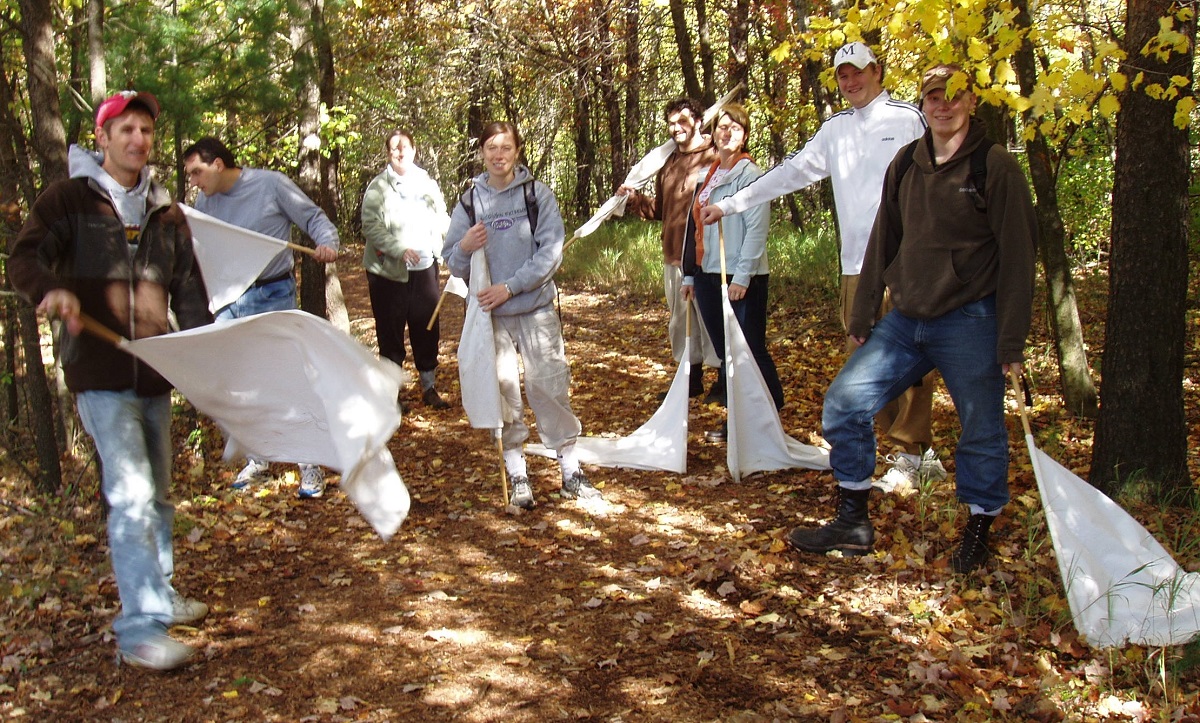
  • The best way to target ticks is a multidisciplinary approach using multiple methods.