Archive for the ‘Lyme’ Category

More Ticks, Risk of Lyme Disease in Wisconsin

https://waow.com/2020/04/30/more-ticks-risk-of-lyme-disease-in-wisconsin/ (News Video Here)

More ticks, risk of Lyme disease in Wisconsin

WAUSAU, Wis. (WAOW) — A mild winter combined with a larger population of deer in Wisconsin this year could mean more ticks to look out for.

Experts at the Tick-Borne Illness Center of Excellence in Woodruff treat people from across the country, but they say Northern Wisconsin stands out.

“It is a highly prevalent area for wood tick diseases and deer tick diseases,” said center manager Kathy McCaughan.

This year, experts say they’re seeing the impact of a mild winter.

“The ticks really don’t go away in the winter they just go underneath the leaves and the snow kind of insulates them and the first tick that we had reported here was the beginning of March already,” said Clinic Program Director Connie Campbell.

Combine that with a higher deer population and more people outside, there could be a higher risk of spreading lyme disease.

“Now with COVID, everyone is out and about a little bit trying to get fresh air, just kinda be vigilant,” said Campbell. “You wear light-colored clothing so that you can spot them really easily, deet helps but you don’t spray it on your skin you spray it on your clothes.”

The Centers for Disease Control and Prevention also says to tuck your pants into your socks when you’re going out and perform a tick check when you get back home.

You can learn more about Lyme disease on the State’s Health Department Website.

You can also download an app from UW-Madison to track ticks and learn about removal/prevention.

__________________

**Comment**

We really have no idea why there are more ticks. Blaming the weather isn’t prudent considering ticks are ecoadaptive and survive about anything but fire. Research shows it’s migrating birds and photoperiod (light required for ticks to molt) that propagates ticks and the diseases they carry: https://madisonarealymesupportgroup.com/2018/11/07/ticks-on-the-move-due-to-migrating-birds-and-photoperiod-not-climate-change/ (research conducted by an independent researcher)

But this doesn’t fit the climate change narrative that keeps being pushed upon us. Right now, climate change is a popular topic so if researchers want grant money they put that moniker in their work so they obtain money.  Even if it’s untrue.

Please see:  https://madisonarealymesupportgroup.com/2019/06/17/ontario-public-health-officials-called-out-on-shoddy-biased-research-utilizing-an-erroneous-climate-change-model-to-program-a-futuristic-tick-problem/

This is just another example of how finances dictate the science being done.  Sad but true.

“For blacklegged ticks, climate change is an apocryphal issue.” -John Scott

Chronic Neurological Lyme Disease Or Co-Morbid Conditions?

https://danielcameronmd.com/chronic-neurological-lyme-disease-dismissed-for-co-morbid-conditions/

CHRONIC NEUROLOGICAL LYME DISEASE OR CO-MORBID CONDITIONS?

man with fatigue holding head

Some patients with chronic neurological Lyme disease continue to have persistent, debilitating symptoms following treatment.

A recent study confirmed the severity of chronic symptoms in this patient population but unfortunately dismissed the symptoms, attributing them to various co-morbid conditions, rather than Lyme disease. [1]


The study, “Patient-reported outcome after treatment for definite Lyme neuroborreliosis” by Eikeland and colleagues, describes 258 patients treated for definite Neurologic Lyme disease. Many of them remained symptomatic an average of 5 years after their initial treatment.

According to the authors, a higher proportion of their chronic neurological Lyme disease patients reported severe fatigue. Furthermore, “Mental health-related quality of life was poorer among [neuroborreliosis] NB-treated patients than in normative data.”

Although many of the patients’ symptoms are consistent with those found in chronic neurological Lyme disease, the authors attributed the symptoms to co-morbid illnesses, based on a retrospective review of the medical records.

READ MORE: Six cases of neuroinvasive Lyme disease

The symptoms included: radiating pain, general pain, fatigue, facial palsy, malaise, dizziness and/or unsteadiness, headache, numbness in arm and/or leg, memory and/or concentration problems, paresis in arm and/or leg, and diplopia.

Symptoms due to chronic neurological Lyme disease or co-morbid conditions? CLICK TO TWEET 

Co-morbid conditions listed for these patients included: fibromyalgia, allergies, depression or anxiety, multiple sclerosis, systemic disease sarcoidosis, systemic lupus erythematosus, Sjögren’s syndrome, rheumatoid arthritis, chronic fatigue syndrome, Parkinson’s disease, thyroid dysfunctions, and cancer.

Note: The study was not designed to assess whether the patient, in fact, had the co-morbidity listed in their records or instead had complications of chronic neurological Lyme disease.
References:
  1. Eikeland R, Ljostad U, Helgeland G, et al. Patient-reported outcome after treatment for definite Lyme neuroborreliosis. Brain Behav. 2020:e01595.

____________________

**Comment**

Another worthless study to add to the ever increasing pile of trash.

These poor, sick people were given all sorts of labels: fibromyalgia, lupus, Sjogren’s, RA, CFS, Parkinson’s, cancer – the typical “bad guys,” but ALL were infected with Lyme disease which can cause symptoms indicative of those labels.

It’s very interesting that with Lyme disease, “authorities” want to blame anything other than a persistent borrelia infection, but with COVID-19, those same “authorities” want to blame everything on COVID-19.  This should smell bad to you.  This is not science – it’s biased, narrative-driven propaganda.

For more: Peer-Reviewed Evidence of Persistence of Lyme:MSIDS copy

https://madisonarealymesupportgroup.com/2020/03/09/the-long-term-persistence-of-borrelia-burgdorferi-antigens-dna-in-the-tissues-of-lyme-disease-patient/

https://madisonarealymesupportgroup.com/2017/05/10/body-of-research-showing-borrelia-persists/

https://madisonarealymesupportgroup.com/2020/04/08/how-do-lyme-disease-symptoms-persist-long-term/

https://madisonarealymesupportgroup.com/2019/07/31/post-lyme-disease-syndrome-vs-chronic-lyme-disease-syndrome/

https://madisonarealymesupportgroup.com/2018/04/13/chronic-lyme-post-mortem-study-needed-to-end-the-lyme-wars/


Lyme Disease Awareness Month: Kris Kristofferson Was Misdiagnosed With Alzheimer’s, Memory Loss Was Due to Ticks

https://meaww.com/kris-kristofferson-lyme-disease-awareness-misdiagnosed-with-alzheimers-memory-loss-ticks-symptoms

Lyme Disease Awareness Month: Kris Kristofferson was misdiagnosed with Alzheimer’s, memory loss was due to ticks

Kris had been complaining to doctors about memory loss said his wife Lisa Meyers in 2016, ‘That was a big clue to me that maybe it was not really Alzheimer’s’


                            Lyme Disease Awareness Month: Kris Kristofferson was misdiagnosed with Alzheimer's, memory loss was due to ticksKris Kristofferson (Getty Images)


The tick-borne illness affects many people but isn’t easily or efficiently diagnosed, with its array of symptoms, it can also be misdiagnosed.

Renowned songwriter and actor and country legend Kris Kristofferson contracted the disease and it went undiagnosed for years. Kristofferson is known for his roles as Rudy Martin in ‘Fast Food Nation’ and songs like ‘Me and Bobby McGee,’ and his suffering shocked many people. (See link for article)

__________________

**Comment**

Kristofferson had a laundry-list of symptoms indicative of tick-borne illness.

What’s truly unfortunate is that there are plenty more out there suffering from the exact same thing to this day who could get better but doctors are woefully ignorant.

For more:  

The Most Common Lyme Disease Symptoms You Shouldn’t Ignore, According to Doctors

https://www.prevention.com/health/health-conditions/a21097669/lyme-disease-symptoms/

The Most Common Lyme Disease Symptoms You Shouldn’t Ignore, According to Doctors

The signs of this common tick-borne illness go beyond a red rash.
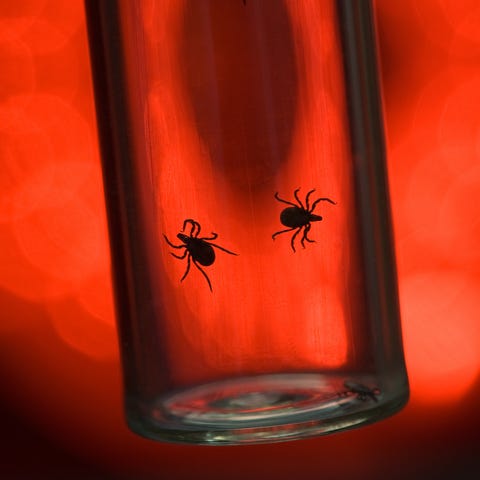
ticks that cause lyme disease in vial on red background

ZILLIGETTY IMAGES


Lyme disease is the most common tick-borne illness in the United States, affecting up to 300,000 people a year, according to estimates from the Centers For Disease Control and Prevention (CDC). In certain parts of the country (particularly the Northeast or upper Midwest), checking for ticks is practically a summertime rite of passage. (See link for article)

____________________

**Comment**

Corrections:

Another crappy article regurgitating ancient dogma.

Babesia Infection 3 Weeks After Lyme Treatment

https://danielcameronmd.com/lyme-podcast-a-babesia-infection-3-weeks-after-treatment-for-lyme-disease/

LYME PODCAST: A BABESIA INFECTION 3 WEEKS AFTER TREATMENT FOR LYME DISEASE.

A Babesia infection 3 weeks after treatment for Lyme disease.

I will discuss a 67-year-old woman with a Babesia infection 3 weeks after treatment for Lyme disease. Could this delay explain why some patients remain ill or relapse?

Podcast:

https://podcasts.google.com/feed/aHR0cHM6Ly9mZWVkcy5idXp6c3Byb3V0LmNvbS83NzI

Hoversten and her colleague first discussed this case in the British Medical Journal Case Reports  in 2018.

One would expect that tick-borne infections would all occur at the same time.

One would be wrong, as this case illustrates.

A 67-year-old woman from Wisconsin had extensive exposure as an avid gardener and spent a considerable amount of time outdoors.

She did not see a tick. She did see a rash consistent with an erythema migrans rash.

A delay in onset of Babesia may explain why some Lyme disease patients relapse after initially improving with doxycycline or amoxicillin. CLICK TO TWEET

She was prescribed amoxicillin for three-weeks as she was allergic to doxycycline.

Near the end of three-week of amoxicillin, she became ill. Her fever rose to 102.9 F0. She complained of myalgias, dizziness, and fatigue.

Her blood test showed mild anemia, a low platelet count and neutrophil count, and a very high C-reactive protein.

  • neutrophil is a type of white blood cell that helps resolve infections and heal damaged tissues. A low neutrophil count can be seen in tick-borne diseases.
  • A high C-reactive protein is a marker for inflammation but cannot be used to determine what type of inflammation.

She was admitted to the hospital. The doctors thought she might be suffering from sepsis or a tick-borne infection.

  • Sepsis is a life-threatening illness caused by your body’s response to an infection.
  • Her red blood count and platelets continued to drop.
  • She was transferred to a second hospital.
  • There was no evidence of sepsis. The blood cultures were negative after five days.

BABESIA INFECTION

She was diagnosed with the parasite Babesia microti by PCR and by a thin smear of her red blood cells. Typically, Babesia microti is seen on a thick smear of blood. In her case, 0.4% of her red blood cells showed the parasite Babesia microti on a thin smear.

Babesia infections can be severe and, in rare cases, life-threatening. Babesia infections can also be mild or without symptoms. Babesia was more likely to be severe in this woman as she was over 50-years of age and had a history of colon cancer.

She was prescribed a 10-day course of azithromycin and atovaquone. By 5th day of treatment, her fever had resolved, and her platelet count had more than doubled from a low of 17,000 per dl to 42, 000 per dl.

The authors report that the woman remains fatigued after completing treatment.

The authors discussed the nearly three-week gap in time between the woman’s erythema migrans rash and her diagnosis of Babesia. This is not the first case where the onset of Babesia was delayed.

The authors cited two papers describing a 3 to 4-week delay in the onset of Babesia. I described a paper in an earlier podcast where two babies contracted Babesia from their mothers. They did not present with Babesia until after being discharged from the hospital. You can read more about these babies in the article by Saetre and colleagues or listen to my Inside Lyme podcast titled. “Two children who contacted Babesia from their mother.”

This delay may explain why some Lyme disease patients relapse after initially improving with doxycycline or amoxicillin. Treatment for Lyme disease with doxycycline or amoxicillin is not effective for the treatment of Babesia.

What can we learn from this cases?

  1. Babesia infections can occur weeks after the onset of Lyme disease.

What questions does these cases raise?

  1. Should the woman have been evaluated for Babesia infection at the time of the erythema migrans?
  2. Would a Babesia infection have been recognized if the woman had not been diagnosed with Lyme disease?
  3. Should Lyme disease patients be advised to return for follow-up?
  4. Would earlier treatment have avoided the need for hospitalization?
  5. What is the long-term outcome for this woman with a Babesia infection

TREATING TICK-BORNE DISEASE IN MY PRACTICE

In my practice, each individual requires a careful assessment. That is why I order a broad range of blood tests for other illnesses in addition to tick-borne infections. I also arrange consultations with specialists as needed.

Many patients are complex, as highlighted in this Inside Lyme Podcast series.

We need more doctors with skills recognizing Babesia in a patient with Lyme disease. We hope that professionals evaluating individuals with Lyme disease can use this case to remind them to look for Babesia with Lyme disease.

Inside Lyme Podcast Series

This Inside Lyme case series will be discussed on my Facebook and made available on podcast and YouTube.  As always, it is your likes, comments, and shares that help spread the word about this series and our work. If you can, please leave a review on iTunes or wherever else you get your podcasts.

Sign up for our newsletter to keep up with our cases.

_____________________

For more: