Archive for the ‘Lyme’ Category

Things I Didn’t Know About Lyme Disease Until I Got It

https://www.globallymealliance.org/blog/things-i-didnt-know-about-lyme-disease-until-i-got-it
Here is some important information about Lyme disease that I only learned after having contracted it.

Before I was accurately diagnosed with Lyme disease (and other tick-borne infections)—eight years after being bitten by a tick and developing symptoms—my basic understanding of the illness was that it was transmitted by ticks, it caused a bulls-eye rash, and you got it in the woods. Some of what I knew turned out to be only partially true. When I got diagnosed, began treatment, and started really living as a Lyme patient, I realized there was much more to Lyme disease than I thought. Here are some things I learned that surprised me and might surprise you, too:

1. Not everyone gets a rash.

An Erythema Migrans (EM) rash is a hallmark sign of Lyme disease, but unfortunately, less than 50% of patients develop or see one. If you get one, you unequivocally have Lyme disease and should be diagnosed and treated immediately. If you don’t get one, though, it doesn’t mean you don’t have Lyme; you might just have other symptoms.

2. Not all Lyme rashes look like a bulls-eye.

While EM rashes often present in a bulls-eye shape, they don’t always. Some are red and circular; some are blotchy or spotted; some get crusty. The rashes can look different depending on the shade of your skin, and can be harder to detect on darker skin. If you get a rash that isn’t a bulls-eye, it still may very well be from a tick bite.

3. You don’t just get Lyme disease in the woods.

Ticks are indeed prevalent in the woods, and you should absolutely be Tick AWARE if you are going hiking or if you or your children and pets are spending time in a wooded area. But ticks live other places, too. They’re on playgrounds, on playing fields, in gardens, in long grasses, in beach dunes, in leaf litter, and on stone walls. If you spend time outdoors, you should take precautions against ticks.

4. You can get Lyme disease outside of New England.

Along with the myth that you can only get Lyme disease in the woods, I used to think that you could only get it in New England. In fact, Lyme disease has been documented in all 50 U.S. states except Hawaii, and there are other strains of Lyme disease in other parts of the world.

5. Lyme can come with co-infections.

Lyme is not the only disease transmitted by ticks. Black-legged ticks can transmit other diseases like babesiosis, anaplasmosis, Powassan virus, and possibly Bartonella, some of which require different treatment than Lyme disease (for more information, see my post “Is it Lyme or a Coinfection? Knowing the Difference Can Make a Difference”). There are also other types of ticks that can transmit other diseases (see GLA’s Tick Table). Before I was diagnosed with Lyme disease, babesiosis, and ehrlichiosis, I had never heard of the last two, but they significantly impacted my health. I still struggle with babesiosis symptoms today.

6. No two cases of Lyme disease are alike.

Some people who notice a bullseye rash and get treated immediately get better in a few weeks, which is what’s known as a “typical” or “standard” case of Lyme disease—the only kind I knew of before I got it myself. In actuality, 10-20% of those people go on to experience persistent symptoms—different ones for different patients—and in long-haul cases like mine, Lyme can be much more difficult to treat. Some people experience more neurological symptoms, some experience cardiac symptoms, and others experience joint and muscle pain. Each person’s case is affected by their own immune system, how long it took them to get diagnosed, and whether they have co-infections. There is no set protocol for Lyme disease.

7. There is controversy around Lyme disease diagnosis and treatment.

Before getting diagnosed with Lyme disease, I had maybe heard of the Infectious Diseases Society of America (IDSA) in passing. I had no idea that IDSA represents one “camp” of Lyme disease diagnosis and treatment, while the International Lyme and Associated Diseases Society (ILADS) represents another. I never would have guessed that as a result of this dispute, I would struggle to get insurance coverage for treatment. I was shocked to find that that some doctors would “believe in” my illnesses, and some wouldn’t. I learned quickly that I needed to find a Lyme Literate Medical Doctor (LLMD), explore resources, and be my own best advocate.

Knowledge is power. The more you learn about Lyme disease, the better chance you will have of preventing a tick bite or getting appropriate treatment if you do get one

Writer

Jennifer Crystal

Opinions expressed by contributors are their own. Jennifer Crystal is a writer and educator in Boston. Her work has appeared in local and national publications including Harvard Health Publishing and The Boston Globe. As a GLA columnist for over six years, her work on GLA.org has received mention in publications such as The New Yorker, weatherchannel.com, CQ Researcher, and ProHealth.com. Jennifer is a patient advocate who has dealt with chronic illness, including Lyme and other tick-borne infections. Her memoir about her medical journey is forthcoming. Contact her via email below.

Email: lymewarriorjennifercrystal@gmail.com

For more:

Caudwell on Son’s Fight With Lyme: ‘Many Times We Thought We’d Lost Him’

https://www.express.co.uk/life-style/health/1597999/phones4u-john-caudwell-lyme-disease

‘Many times we thought we’d lost him’ Phones4u’s John Caudwell on son’s Lyme disease fight

THE BILLIONAIRE founder of Phones4U John Caudwell tried to hold back tears as he opened up about his family’s battle with Lyme disease.

The entrepreneur from Birmingham is estimated to be worth over one and a half billion pounds. Despite the family’s immense wealth, the Caudwells have been just as vulnerable to the tick-borne illness as anybody else. In a recent interview, he said he felt “powerless to help” his son who suffered severely from the condition. Caudwell himself was infected with the disease as well.  (See link for article & video)

_________________

For more:

Pfizer and Valneva Move on to Lyme Vaccine

https://apnews.com/article/science-health-ticks-

Major test of first possible Lyme vaccine in 20 years begins

August 8, 2022
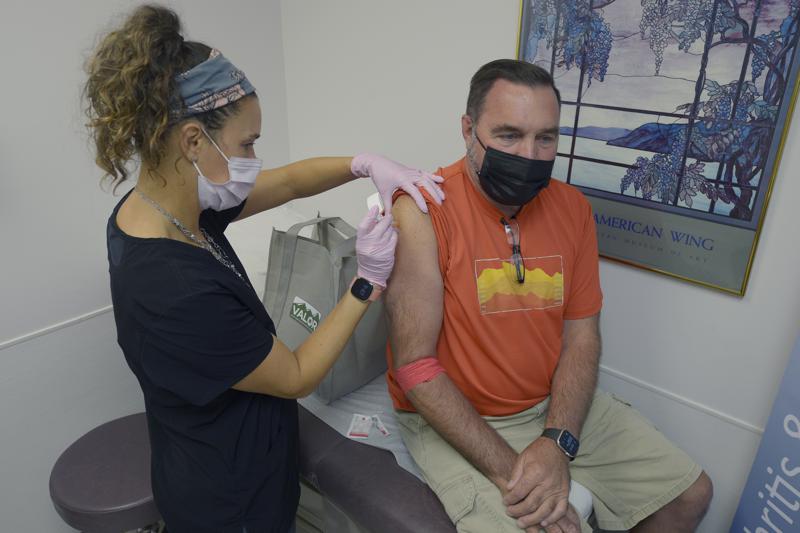
Robert Terwilliger, right, of Williamsburg, Pa., who is participating in a Lyme disease vaccine trial at the Altoona Center for Clinical Research, is injected with either the new vaccine or a placebo, by registered nurse Janae Roland, Friday, Aug. 5, 2022, in Duncansville, Pa. Lyme is a growing problem, with cases steadily rising and warming weather helping ticks expand their habitat. (AP Photo/Gary M. Baranec)

DUNCANSVILLE, Pa. (AP) — Researchers are seeking thousands of volunteers in the U.S. and Europe to test the first potential vaccine against Lyme disease in 20 years — in hopes of better fighting the tick-borne threat.

Lyme is a growing problem, with cases rising and warming weather helping ticks expand their habitat. While a vaccine for dogs has long been available, the only Lyme vaccine for humans was pulled off the U.S. market in 2002 from lack of demand, leaving people to rely on bug spray and tick checks.

Now Pfizer and French biotech Valneva are aiming to avoid previous pitfalls in developing a new vaccine to protect both adults and kids as young as 5 from the most common Lyme strains on two continents.

(See link for article)

_________________

**Comment**

Here we go again…..

  • True to form, the only time ‘the powers that be’ bring up the fact Lyme/MSIDS is a growing problem is when there’s a vaccine in the pipeline.
  • This “vaccine” targets OspA, the same protein in Lymerix that caused Lyme-like symptoms in many that was supposedly pulled due to “lack of demand.”
  • The 36 hours for transmission is foolishly regurgitated as transmission can and often occurs much quicker, raising the question of whether or not there is even enough time for antibodies to do their supposed magic.
  • Please notice that Pfizer and Valneva are behind this.
    • French pharmaceutical company Valneva joined up with Pfizer (a company which has been fined over 3.5 billion for safety violations, false medical claims, corruption, bribery and has demanded countries put up sovereign assets, bank reserves, military bases and embassy buildings as collateral for expected lawsuits from COVID shots.  This article outlines the fraud and corruption and questions how Pfizer managed to rebrand itself as savior of humanity (one could ask the same question about Bill Gates). If you still trust these companies I have land in Siberia I’d like to sell you.
  • They aim to recruit 6,000 people, including kids as young as five, from endemic areas. Those who enroll will get three shots of either the vaccine or a placebo. It remains to be seen if it is truly a placebo – which should be an inert substance, or another vaccine, which they often do in trials to muddy the waters and make it impossible to truly determine safety.  A year later they will get a booster.
  • They consider this a seasonal vaccine and people will need to continue getting them.
  • They state Lymerix drew “unsubstantiated reports of joint-related side effects.”  I talk to these “unsubstantiated” patients regularly who are still suffering from the effects of Lymerix. Trust me when I say the damage is real, but don’t take my word for it, read about examples here and here.  Hopefully by now it’s become clear that those who suffer vaccine damage are gaslit just like Lyme/MSIDS patients.
    • The dirty little secret is LYMErix was given “permissive” recommendation by the CDC (the injection was only advised for those ‘at risk’, not the whole population). This designation allowed those suffering with adverse reactions to sue the manufacturer, which they did.  I assure you, no such designation will be given this new jab and you will be SOL if you are injured from it.
  • While this vaccine targets 6 Lyme strains, there are other strains out there, and this doesn’t touch coinfections which are often a part of the picture.  Please note the continued singular attention to Lyme with no regard to other infections ticks carry.  This one-microbe, one treatment, one vaccine paradigm is completely wrong but drives nearly all mainstream research.
  • The article mentions the University of Massachusetts work on a “vaccine alternative” – shots of pre-made Lyme-fighting antibodies.
    • Dr. Mark Klempner’s lucrative jab – Lyme PrEP, is now in Phase 1 trials. Please know the backstory on Klempner. He claims this new shot isn’t a “vaccine;” however, according to this,  OspA is still in it, and this study states a wide range of neurological complications have been reported to VAERS after vaccination with OspA including cerebral ischemia, transient ischemic attacks, demyelinating events, optic neuritis, transverse myelitis and non-specific demyelination.
    • Here’s what Dr. Stricker has to say:

OspA:  Another Lyme OspA Vaccine Whitewash 

“The meta-analysis by Zhao and colleagues comes to the conclusion that “the OspA vaccine against Lyme disease is safe and its immunogenicity and efficacy have been verified.” The authors arrive at this sunny conclusion by excluding 99.6% of published articles that demonstrate potential problems with the OspA vaccine. Furthermore, the authors ignore peer-reviewed studies, FDA regulatory meetings and legal proceedings that point to major problems with OspA vaccine safety (1-3). This whitewash bodes ill for future Lyme vaccine candidates because it fosters disregard for vaccine safety among Lyme vaccine manufacturers and mistrust among potential Lyme vaccinees.” ~ Dr. Stricker

  • The article also mentions Yale’s work designing a vaccine that recognizes tick saliva — which in animal testing sparked a skin reaction that made it harder for ticks to hang on and feed.
    • John Aucott is “cloning a bunch of proteins in tick saliva” to replicate tick resistance.  He’s also an adviser to Tarsus Pharmaceuticals, a biopharmaceutical company which is authorized by the F.D.A. to develop an oral preventative in humans using lotilaner, the active ingredient in Credelio, a veterinary medication prescribed for dogs and cats to prevent fleas and ticks which is targeted to the parasite’s nervous system but supposedly doesn’t have any effect on mammals.
  • This is where the money is – vaccines and seasonal treatments people will purchase time and again.  Notice that nothing is ever said about an accurate test and effective treatments for suffering patients.  Many, including yours truly believe Lyme was pigeonholed by the two principal investigators of the previous Lyme vaccines to fit a simplistic one pathogen paradigm for vaccine development.  This is why they continue to deny chronic/persistent infection despite research to the contrary.

And speaking of money:

    • The FDA in July 2017 issued Valneva a fast-track designation that specifically allows for expedited review of “drugs to treat serious conditions and fill an unmet medical need.”
    • Valneva sold the rights to VLA15 to Pfizer for an upfront cost of $130 million in 2020, at which time the two companies announced a collaboration for the continued development and commercialization of the vaccine.
    • Under the terms of the two companies’ agreement, the first dose in the Phase 2 study triggered an additional $10 million payment from Pfizer to Valneva.
    • According to Fierce Biotech, a successful Phase 3 trial “could give Pfizer a clear run at a growing opportunity” and “offers Pfizer the chance to add a growth driver to its mammoth vaccine unit,” as the number of reported Lyme disease cases in the U.S. has increased threefold since the late 1990s.  Source
  • Mark Crispin Miller, a professor of media studies at New York University who has experienced the symptoms of Lyme disease, drew comparisons between the experimental Lyme disease vaccine and the COVID-19 vaccines.

“No doubt the CDC/FDA will bless this Lyme vaccine, regardless of its risks, just as they’ve pushed the COVID ‘vaccines’ for the last two years.

“And their support for this new vaccine is especially perverse, since the CDC et al. have long denied that ‘chronic Lyme’ exists, because its proper treatment would cost more than the insurance carriers want to pay.”

“As one who has been battling Lyme for more than 10 years, and at enormous cost, I see no reason to put any trust at all in those authorities, whose long denial of the reality of this condition has done me, and countless others, grievous harm.” ~ Mark Crispin Miller

I couldn’t agree more.
And I’m with Lyme Advocate Carl Tuttle:  No Lyme Vaccine Until persistent infection is acknowledged and fully addressed.

Child With Lyme Diagnosed With Radiculopathy

https://danielcameronmd.com/child-with-lyme-disease-diagnosed-with-radiculopathy/

Child with Lyme disease diagnosed with radiculopathy

lyme-disease-radiculopathy

“Among the signs and the symptoms connected to the presence of neuropathic pain are allodynia (pain due to a stimulus that does not normally provoke pain), hyperalgesia (an increase in the perception of pain generated by a stimulus that causes pain), and paresthesia (a condition that determines the perception of anomalous sensations comparable to needle bites, tingling, itching, reduced, or even loss of sensitivity),” wrote Cavalli and colleagues in the International Journal of Immunopathology and Pharmacology. [1]

A 10-year-old boy presented with fatigue, posterior lower neck pain, and a low-grade fever of 100.8. “The soft tissues of the posterior neck and upper back were tender with allodynia,” wrote Baker and colleagues in the American Journal of Emergency Medicine.²

They added, the Magnetic Resonance Imaging (MRI) of the cervical spine showed “questionable” nerve root enhancement at levels C5-C6 and C6-C7 consistent with radiculitis. The child was discharged from the emergency room with a diagnosis of cervical radiculitis due to viral infection.

Two days later, the child was diagnosed with Lyme disease with a positive IgM and IgG western blot test. The patient’s symptoms resolved following treatment with oral doxycycline.

The authors pointed out that radiculoneuritis due to Lyme disease is not new. “In US children, meningitis and cranial nerve palsy are relatively common in neuroborreliosis, while radiculoneuritis is rare,” wrote the authors.²

They added, “Neuroborreliosis is easier to recognize when facial nerve palsy or meningitis are present with radiculitis since these are classically associated with Lyme.”

“Any patient with painful radiculitis and plausible exposure to potentially infected ticks should have Lyme testing,” the authors concluded.

US Insurance Claims Data Shows Explosive Growth of Lyme Disease

https://www.lymedisease.org/fair-health-lyme-insurance-data/

US insurance claims data shows explosive growth of Lyme disease

From 2007 to 2021, private insurance claim lines with Lyme disease diagnoses rose 357 percent in rural areas and 65 percent in urban areas.

[Editor’s note: “claim lines” are not the same as individual Lyme cases. A claim line is a request for insurance reimbursement. One Lyme patient may have several claim lines, for lab tests, x-rays, etc.]

These and other findings on this tick-borne, bacterial illness were captured in an infographic just released by FAIR Health. The national, independent organization used its database of over 36 billion privately billed healthcare claims to conduct its 15-year analysis of Lyme disease.

This analysis builds upon a previous FAIR Health infographic that studied 10 years of Lyme disease data. Click here for the infographic released today.

Rural and urban differences

The infographic reveals key differences in prevalence of Lyme disease when comparing rural and urban areas. From 2016 to 2021, claim lines with Lyme disease diagnoses increased 60 percent in rural areas and 19 percent in urban areas, with diagnoses peaking nationally in June and July of each year.

During these summer months, rural areas, on average, had a greater share of claim lines associated with Lyme disease diagnoses than urban areas. From November to April, however, claim lines with Lyme disease diagnoses occurred more often in urban than rural areas.

Geographic distribution

In 2017, the states with the greatest proportion of claim lines with Lyme disease diagnoses as a percentage of all diagnoses in the state, from highest to lowest, were New Jersey, Connecticut, North Carolina, Rhode Island and Vermont.

Given that Lyme disease has been historically associated with the Northeast and upper Midwest, the status of North Carolina as the state with the third highest percentage of Lyme disease claim lines in 2017 suggested marked expansion to a new region. By 2021, however, North Carolina had dropped from the list.

The top states in 2021, from highest to lowest, were New Jersey, Vermont, Maine, Rhode Island and Connecticut. Maine, which was not previously on the list of top five states for Lyme disease claim lines, assumed third place in 2021, suggesting a growing presence of the tick-borne illness in the state. Connecticut and Vermont switched places, with Vermont emerging as number two and Connecticut dropping to number five.

Long-term symptoms of Lyme disease

Although Lyme disease is treatable with antibiotics, some Lyme patients later develop conditions with long-term symptoms, such as fatigue, muscle and joint pain and cognitive issues. Such conditions have been linked to post-treatment Lyme disease syndrome, sometimes called chronic Lyme disease.

To identify later diagnoses associated with Lyme disease, FAIR Health examined a statistically significant cohort of individuals in its private insurance claims database from 2017 to 2021, comparing the prevalence of certain diagnoses among Lyme patients to all patients in the cohort.

The analysis found that diagnoses such as malaise and fatigue and soft-tissue-related issues were more common among Lyme patients than among the total patient population. Across all age groups, patients with Lyme disease were generally more likely to have these apparently associated diagnoses than all patients in the cohort.

FAIR Health President Robin Gelburd stated, “Lyme disease remains a growing public health concern. FAIR Health will continue to use its repository of claims data to provide actionable and relevant insights to healthcare stakeholders seeking to better understand the ongoing rise of Lyme disease cases.”

This is the third study FAIR Health has conducted on Lyme disease, the first appearing in an infographic released in 2017 and the second in a white paper published in 2019.

About FAIR Health

FAIR Health is a national, independent nonprofit organization. It possesses the nation’s largest collection of private healthcare claims data, which includes over 36 billion claim records and is growing at a rate of over 2 billion claim records a year.

SOURCE OF PRESS RELEASE:  fairhealth.org

______________

For more: