Archive for the ‘Lyme’ Category

Chlamydia Trachomatis & Lyme Disease

https://natemat.pl/blogi/borelioza/120559,borelioza-objawy-koinfekcji-boreliozy-cz-3-chmamydia-trachomatis

The following is taken from the above website and translated by a Lyme/MSIDS patient.

Chlamydia Trachomatis

Today on the blog about Lyme disease, a text about another co-infection to Lyme disease – chlamydia trachomatis. From the experience of our Center, it appears more and more often among our clients as “accompanying” Lyme disease. Its symptoms cause a number of female ailments, but the male gender is also not free from them. All the time on our blog, readers may notice that the catalog of symptoms that may indicate Lyme disease is growing dynamically and at the same time the catalog of symptoms that may indicate specific co-infections to Lyme disease is also growing dynamically. A natural question may arise: Is it possible to realistically have so many different symptoms? Answer: yes, it is possible.
 
Chlamydia trachomatis (bacteria), like other co-infections to Lyme disease, which we wrote about earlier on the blog, can be transmitted, among others, by a tick. Infection can also occur through intimate contact.

At the initial stage, such an infection does not show any clinical symptoms, which does not mean that such an infection does not develop in the body. At this point, our common belief bows – no symptoms, e.g. no pain – no disease. In many cases, then we are dealing with an asymptomatic infection.
The characteristic symptoms of an infection – chlamydia trachomatis – mainly concern the genitourinary system, including:
  • urethritis
  • epididymitis
  • prostatitis
In contrast, the symptoms that affect women are increased
  • vaginal discharge
  • vaginal bleeding
  • bleeding after intercourse
  • cervical erosion
  • cyst formation
  • secondary infertility
The occurrence of the infection in question and its symptoms causes a significant decrease in the comfort of life, including the comfort of intimate contacts. That is why it is so important to recognize it properly and early. Then there is a chance to use the right therapy – about which we will write on our blog.
An important point worth mentioning here is that the occurrence of chlamydia trachomatis with Lyme disease is not an “absolute relationship”. This means that the presence of this infection is not an automatic indication that we are also dealing with a Lyme infection.
Intimate infections in men and women related to specific pathogens are a wide issue that goes far beyond the scope of the blog. By presenting the problem of tick-borne disease – Lyme disease, or rather the problem of tick-borne diseases – Lyme Disease – on our blog, we want to draw the attention of natemat.pl readers that you need to look at specific symptoms and disease states in a much wider perspective. Only in this way are we able to more effectively counteract infections that attack us and our loved ones.
Finally, I would like to point out one more symptom that, based on the experience of our Center, can and does cause chlamydia trachomatis – eye problems:
  • burning
  • itching
  • tearing
  • feeling of sand in the eyes

These symptoms can last for months and no drops can solve the problem.

_________________

For more:

Co-infecting agents can be transmitted together with Borrelia burgdorferi by tick bite resulting in multiple infections but a fraction of co-infections occur independently of tick bite. Clinically relevant co-infections are caused by Bartonella species, Yersinia enterocolitica, Chlamydophila pneumoniae, Chlamydia trachomatis, and Mycoplasma pneumoniae…..Chlamydia trachomatis primarily causes polyarthritis.  Chlamydophila pneumoniae not only causes arthritis but also affects the nervous system and the heart, which renders the differential diagnosis difficult.

Fluorescent immunohistochemical and in situ hybridization methods demonstrated the presence of Chlamydia antigen and DNA in 84% of Borrelia biofilms. Confocal microscopy revealed that Chlamydia locates in the center of Borrelia biofilms, and together, they form a well-organized mixed patho-
genic structure.

Why Chronic Lyme Treatment Fails – A Review With Strategies

https://www.treatlyme.net/guide/why-chronic-lyme-treatment-fails

Why Chronic Lyme Treatment Fails – A Review with Strategies

By Dr. Marty Ross

Why Lyme Disease Treatment Fails Image

About Fifteen Percent of People with Chronic Lyme

This article is about the reasons people remain ill with chronic Lyme disease even after taking one to two or even more years of herbal or prescription antibiotics. In my experience, this seems to be about 15 percent of people with chronic Lyme disease. The other 85 percent of people do have various degrees of recovery – most getting very well.

Lyme literate medical doctors (LLMDs) have very limited science to guide us about why treatment works or fails – and what the best treatment options are. The last United States National Institutes of Health funded human trials looking at treating Lyme were nearly 20 years ago. We do know from a study conducted by the MyLymeData project of LymeDisease.org that the best chance of recovery is provided by a year or more of antibiotics and working with an LLMD. You can read more about the MyLymeData studies, including those on alternative medicine outcomes versus antibiotic outcomes in What Works? Navigating Prescription & Alternative Medicine Lyme Treatments.

With the lack of human studies, most of the science I use to guide my treatment decisions comes from laboratory, non-human experiments. Fortunately, these experiments provide insights about herbal and prescription treatment options that can work in many. These experiments also provide a number of theories about what can work for treatment and why people do not recover even with long-term antibiotics.

How to Avoid Chronic Lyme Treatment Failure

Before I review the treatment failure theories, let’s discuss what steps you should take to have a successful Lyme recovery.

Kill Germs AND Correct All Body Wide Imbalances

Treating Lyme is complicated. The infection triggers an immune system cytokine reaction that affects most organs and systems of the body. In my experience, the great majority of people can recover if they address each of the steps in The Ross Lyme Support Protocol. This protocol is designed to kill Lyme and coinfection germs and to correct all of the sleep, immune system, detoxification, inflammation and hormonal imbalances created by Lyme. If your treatment did not work, but you only took herbal or prescription antibiotics alone, look at The Ross Lyme Support Protocol to see all of the areas you should have addressed that provide the best chance of recovery.

Find and Treat Mold Toxicity

Chronic mold toxicity looks just like chronic Lyme disease. Make sure you do not have this problem. And if you do – correct it. See Mold and Lyme Toxin Illness for more information.

Theories & Strategies About Lyme Treatment Failure

There are a number of theories why people remain ill even after getting rid of mold toxins and treating with a comprehensive regimen that kills germs and addresses all imbalances identified in The Ross Lyme Support Protocol. The reasons include:

  • Borrelia (Lyme) persisters
  • autoimmune disease triggered by the Lyme infection
  • disruption of a healthy gut microbiome
  • germ debris
  • limbic system brain holding of the illness
  • tissue damage from the infection
  • chronic inflammation and immune dysfunction
  • learned illness behavior and/or somatic disorder
Persisters

The Borrelia persisters theory is an in-vogue and relatively new idea about why treatments do not work. The idea is: under assault from antibiotics (RX or herbal) some of the Lyme germs go into a persister hibernation state. These persisters do not respond to regular antibiotics. We will have to see in time if addressing persisters does help to prevent or correct treatment failures. In my practice, all of my current treatments include antimicrobial approaches to address persisters.

For more information about persisters and how to address them see How to Treat Persister Lyme & Bartonella.

Autoimmune Disease

Through a process known as molecular mimicry, the immune system may attack tissues with protein and molecular parts that look just like parts of Lyme. At this time there is not a Lyme specific way to address this. But for some – using Low Dose Naltrexone (LDN) can regulate or reverse the autoimmune attack.

For more information about LDN see Low Dose Naltrexone (LDN) & Lyme.

Disruption of Healthy Gut Microbiome

Treating Lyme with herbal or prescription antibiotics disturbs the healthy balance of good germs and microbes in the gut. The germs that live in the intestines are called the gut microbiome. These include healthy bacteria, viruses, parasites, yeasts and fungae. To put the amount of microbes in perspective, over 90 percent of the genetic material in human bodies come from the microbes in the gut!

We allow these germs to live in us because they serve a purpose. Studies show these microbes regulate the immune system, signal healthy brain function, digest food, remove toxins and things we are allergic to and provide many other healthy body regulating functions.

The theory is antibiotics disturb the healthy gut microbiome leading to ongoing body-wide illness. It is not clear yet how best to address this issue or if the gut disruption really does cause ongoing illness.

One treatment option is to create a healthy gut microbiome using probiotics. Another one is to replace the dysfunctional microbiome through a stool transplant – also called fecal microbiota transplant (FMT). However, FMT is regulated by the US Food and Drug Administration (FDA). At present it is only allowed for treatment of C. difficile bacteria overgrowth in the intestines. And there has not been any research done about whether it could change the outcome of those with chronic Lyme disease.

Treating Lyme is about balancing risks and benefits. The benefit of using herbal and prescription antibiotics is decreasing or eliminating the Lyme or coinfection (like Bartonella or Babesia) germs leading to improved health. But the risk of doing so is disturbing the gut microbiome.

See Probiotic Strategies in Lyme Disease Treatment for information about probiotics and C. Difficile Diarrhea: Prevention & Treatment for more information about FMT.

Germ Debris

The immune system is supposed to break down and get rid of dead germs and their parts including DNA, RNA, proteins and fats. One theory why people remain ill is that the immune system does not get rid of all the borrelia germ debris. The debris triggers an ongoing immune inflammatory response. At this time there is not a treatment I am aware of for this possible problem.

Limbic System Brain Holding of The Illness

The limbic system is a part of the brain that regulates our emotional responses and behaviors. This includes fight-or-flight responses, fear, and survival behaviors like feeding the young and reproduction.

For some in Lyme the limbic system becomes overly reactive leading to a brain holding of illness. This causes some of the ongoing symptoms like pain or even fatigue. Much of this is unconscious.

There are a number of programs that can help reprogram the limbic system brain holding of the illness. Two of the more popular programs are the Gupta Program and Annie Hopper Dynamic Neural Retraining System. Many of my patients have found benefit from these practices. Short of doing these programs, developing a meditative mindfulness practice can help too. Counseling may also help to decrease emotional reactivity.

Tissue Damage

Another theory is Lyme and the immune reaction to it lead to ongoing tissue damage and injury even when the infection is gone or under control. This leads to pain, neurologic and brain dysfunction, mitochondria cell energy factory dysfunction and even immune dysfunction.

My current approach to repairing muskuloskeletal tissue injury and peripheral nerve injury is to use the peptide BPC-157. For brain injury I also add the peptide Cerebrolysin. See Repair & Restore with Peptides in Lyme Disease or Mold Toxin Illness for more information about peptides and BPC-157. For people with low energy I work to repair the mitochondria. See How to Fix Mitochondria & Get Energy in Lyme Disease.

Chronic Inflammation and Immune Dysfunction

Under this theory, Lyme infection sets off an ongoing immune inflammation reaction that takes on a life of its own – causing more inflammation and immune dysfunction. One reason this could happen is due to an imbalance between what is known as Th1 and Th2/Th17 parts of the immune system. Th1 is made up of immune cells that attack germs like T white blood cells and macrophages. Th1 is the immune system offense squad. Th2/Th17 is made up of B white blood cells that make antibodies, mast cells involved in allergies and histamine production, and immune barrier cells that line the mucous and skin membranes designed to keep germs out. Think of Th2/Th17 as the immune system defensive squad. If Th2 and Th17 get too active they release inflammatory cytokines that lead to many ongoing Lyme type symptoms and they can suppress Th1 and its germ fighting abilities.

In my practice I work with LDN I mentioned above to increase TReg cells that create balance between Th1 and Th2/Th17. Another option is to use the peptide TB4 Frag. For more information about these treatment options see Repair & Restore with Peptides in Lyme Disease or Mold Toxin Illness and Low Dose Naltrexone (LDN) & Lyme.

Learned Illness Behavior and/or Somatic Illness

These are two psychological conditions. I list them here to be thorough, but I am concerned that many non-LLMDs use these diagnoses to say Lyme disease is in a person’s head instead of acknowledging and treating them for a physical illness. In my experience, it is a rare person with chronic Lyme that has one of these conditions contributing to their illness. Counseling is helpful if one of these occurs.

Disclaimer

The ideas and recommendations on this website and in this article are for informational purposes only. For more information about this, review the sitewide Terms & Conditions.

References

  1. Bobe JR, Jutras BL, Horn EJ, et al. Recent Progress in Lyme Disease and Remaining Challenges. Front Med (Lausanne). 2021;8:666554. Published 2021 Aug 18. doi:10.3389/fmed.2021.666554 (View)
  2. Cabello FC, Embers ME, Newman SA, Godfrey HP. Borreliella burgdorferi Antimicrobial-Tolerant Persistence in Lyme Disease and Posttreatment Lyme Disease Syndromes. mBio. 2022;13(3):e0344021. doi:10.1128/mbio.03440-21 (View)
  3. Fallon BA, Sotsky J. Conquering Lyme Disease: Science Bridges the Great Divide. New York: Columbia University Press; 2018.
  4. Sanabria-Mazo JP, Montero-Marin J, Feliu-Soler A, et al. Mindfulness-Based Program Plus Amygdala and Insula Retraining (MAIR) for the Treatment of Women with Fibromyalgia: A Pilot Randomized Controlled Trial. J Clin Med. 2020;9(10):3246. Published 2020 Oct 11. doi:10.3390/jcm9103246 (View)

About the Author

Marty Ross, MD is a passionate Lyme disease educator and clinical expert. He helps Lyme sufferers and their physicians see what really works based on his review of the science and extensive real-world experience. Dr. Ross is licensed to practice medicine in Washington State (License: MD00033296) where he has treated thousands of Lyme disease patients in his Seattle practice. 

Marty Ross, MD is a graduate of Indiana University School of Medicine and Georgetown University Family Medicine Residency. He is a member of the International Lyme and Associated Disease Society (ILADS) and The Institute for Functional Medicine.

For more:

Lyme & Depression – A Personal Story

https://www.axiomllc.com/blog/lyme-disease-and-depression

Lyme Disease and Depression – A Personal Story

by | Jul 13, 2022

Studies show that the incidence of Lyme disease in the USA has nearly doubled since 1991. While the disease is associated with many physical symptoms, there is a correlation between Lyme disease and depression. In fact, Lyme can have a significant psychological affect as much as physical ones on infected individuals. Axiom Medical’s Communication Director, Autumn Brennan, had a rough experience with Lyme. In this blog, we share her heart-felt story as well as tips and tricks to manage Lyme’s physical and mental challenges.

Lyme Disease and Depression – Autumn’s Story

It was a gorgeous fall day in Southwest Wisconsin, warm and sunny with a gentle breeze. I packed up my daughters and headed to a local organic apple orchard, where we had harvested apples every year for over a decade.  (See link for article)

____________________

Great excerpt:

There is no magical one-size-fits-all cure for chronic pain, mental health challenges, or substance use. But there is pure magic in our human connection. If you see someone struggling:

  • approach them kindly with your care, concerns, and a listening ear
  • if they are open to support, offer professional resources for assistance
  • schedule regular time to check in on their progress and catch up on hugs

For more:

Send a Letter to Your Rep About the Lyme Disease Epidemic – Just One Click

https://www.change.org/p/the-us-senate-calling-for-a-congressional-investigation-of-the-cdc-idsa-and-aldf

With One Click: Send a Letter to Your Representatives About the Lyme Disease Epidemic

Carl Tuttle

Hudson, NH, United States

Oct 18, 2022 — 

The most important area when increasing research funding for Lyme disease is oversight into who receives the grants and up to this point I haven’t seen an emphasis on this subject. Let’s change that!

The Co-directors of “The Quiet Epidemic” have made it easy for us to reach out to our legislators with a single click.

The link below will take you to their site so you can participate:

https://www.thequietepidemic.com/create-change

The following is an excerpt from the letter which will be addressed to your state legislators:

“The HHS Tick-borne Disease Working Group has provided detailed recommendations to address this epidemic in its 2018 and 2020 reports to Congress. Increases in funding have recently been appropriated for CDC and NIH programs for Lyme and associated tick-borne diseases.

This is a start, but we need Congress to exercise its responsibility for oversight to monitor the performance of these agencies and ensure that taxpayer money is used wisely and most of the funding goes towards programs and research that have measurable benefits for patients.

Top priorities include research to develop better tests and clinical trials to evaluate treatments for Chronic Lyme disease. We also need research to investigate connections between tick-borne diseases and psychiatric illnesses, and research into the maternal-fetal transmission of Lyme disease and resulting developmental disorders and deaths.”

________________________________________

The Quiet Epidemic Website:

https://www.thequietepidemic.com/

Carl Tuttle
Hudson, NH

Tick bites bond local filmmakers at Adirondack Film Festival
The 7th annual Adirondack Film Festival in Glens Falls runs from Thursday-Saturday. Among…

Thanks to your support this petition has a chance at winning! We only need 51,433 more signatures to reach the next goal – can you help?  Take the next step!


Proof Working With The Government Hasn’t Helped Lyme/MSIDS Patients

https://www.lymedisease.org/still-stuck-with-idsa-guidelines/

After 6 years of TBDWG, are we still stuck with IDSA guidelines?

By Dorothy Kupcha Leland

Oct. 11, 2022

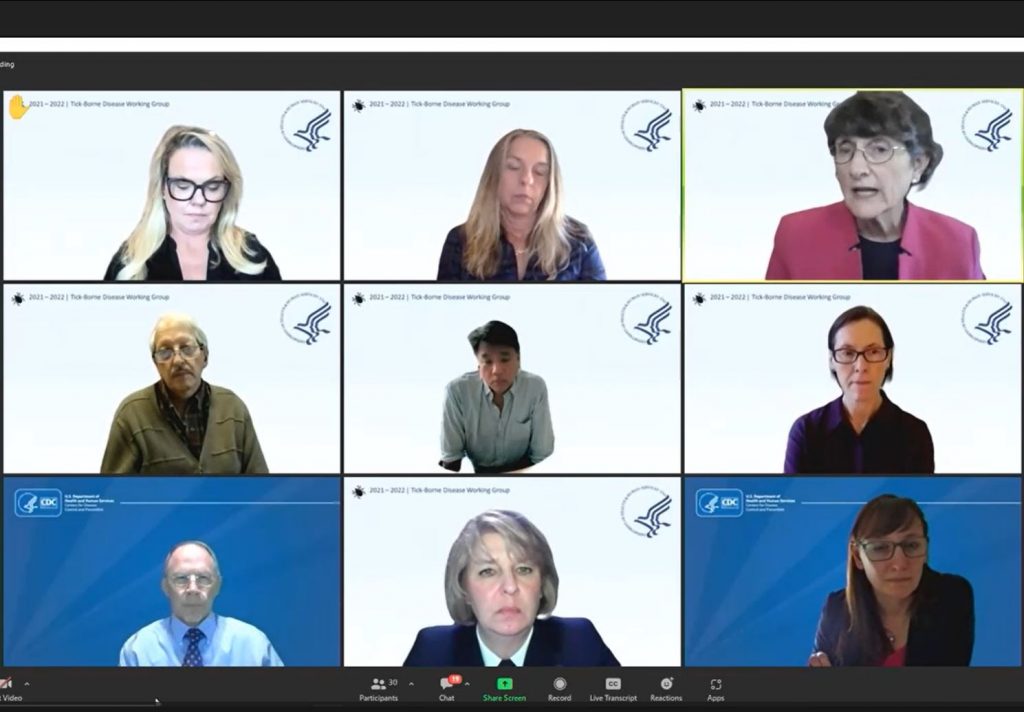
When I was watching last week’s online Tick-Borne Disease Working Group meetings, I got a sick feeling in my stomach.

It came at the end of the first day, when after hours of watching this stuff on my computer screen, my brain was turning to mush anyway.

Then, my ears perked up. Dr. Elizabeth Maloney—who ably represents the interests of Lyme patients and their treating doctors on this panel—asked a question of the CDC’s Sue Visser.

Earlier in the meeting, Visser had given a presentation about the US Department of Health and Human Services’ national strategy to combat vector-borne diseases (which the CDC plays a big role in).

Vector-borne diseases (VBD) include those carried by mosquitoes, fleas and ticks—so Lyme disease is part of that mix.

Maloney wanted to know more about the role of medical guidelines in the VBD strategy. Specifically, she asked if the agencies included public stakeholders in the process of developing guidelines.

“Yes, we do,” Visser answered firmly.

(Let me emphasize how important public input is to the Lyme community. For years, the CDC and other federal entities have endorsed the IDSA’s Lyme guidelines—which allow no meaningful input from public stakeholders while at the same time actively HARMING Lyme patients. The need for public input was a driving force in the Lyme community’s push for the formation of the TBDWG in the first place.)

When Maloney asked Visser to elaborate on the public input process, the CDC employee said:

There’s certain guidance that’s developed by other professional organizations and we rely upon them because they have convened the experts and they publish guidance and then we reference that guidance. In the area where there is not development by appropriate clinical professional society, for example, Rocky Mountain spotted fever, we waited and we put out clinical guidance for that…If we are developing from scratch the guidance, there’s actually a protocol for patient involvement, external feedback, external participation in the process…but in the case of an issue or disease where there is already lots of clinical interest and leadership, then we defer.

“Then we defer…”

That’s kind of wordy, don’t you think? Let me drill down to what she’s basically saying: The VBD national strategy will use the IDSA Lyme guidelines, period. Because, hey, they’re the experts. When they speak, then we defer…

Maloney tried to press the point about the IDSA guidelines not following accepted guidelines development practices (for example, allowing public input). But Visser sidestepped the question, and for the moment, the subject was dropped.

Getting back to that queasy feeling in my stomach: Have we really slogged through six years of Working Group effort, only to be stuck with the dangerous, anti-patient IDSA Lyme guidelines? (See: 10 things you should know about the IDSA Lyme guidelines.)

The CDC and its sister agencies have deferred to the IDSA’s Lyme guidelines for years now. That’s a huge factor in why Lyme patients can’t get the care they need. And a big reason that the CDC website continues to have inaccurate, damaging information on its Lyme-related web pages.

The Tick-Borne Disease Working Group is nearing the end of its run. As the current (third) iteration of the panel prepares to submit its Report to Congress in December, the big question is “what happens next?”

The TBDWG still has decisions to make. It convenes again on October 25.

Stay tuned.

TOUCHED BY LYME is written by Dorothy Kupcha Leland, Board President of LymeDisease.org. She is co-author of When Your Child Has Lyme Disease: A Parent’s Survival Guide. Contact her at dleland@lymedisease.org.

____________________

**Comment**

I really wish I was wrong.  I desperately want to believe that working with government agencies will yield positive results, but I’m a pragmatist and the proof truly is in the pudding.

Six years is long enough to determine outcome.

And yes, advocates have slogged through 6 years of working group effort only to be stuck with antiquated, unscientific, damaging IDSA guidelines.

Time to move on and choose another avenue for change.

Insanity is doing the same thing over and over and expecting different results.