Archive for the ‘Candida’ Category

Hottest Lyme Disease Treatment Update 2022

https://www.treatlyme.net/guide/hottest-lyme-treatment-updates-2022  Video Here (Approx. 11 Min)

Hottest Lyme Disease Treatment Updates in 2022

Marty Ross MD on Top Lyme Treatment Updates of 2022

In the video in the link above Marty Ross MD describes the latest Lyme disease treatment updates in his integrative medicine practice. For more information about the topics discussed in the video article see the following resources:

Dr. Ross’s new book, Hacking Lyme Disease: An Action Guide to Wellness, will be released by early December 2022.

Disclaimer

The ideas and recommendations on this website and in this article are for informational purposes only. For more information about this, see the sitewide Terms & Conditions.

________________

**Comment**

Dr. Ross discusses peptides. These are not antimicrobials but help the body in fighting off infections and restoring the issues infections cause.  Ross as well as Dr. Holtdorf is evidently having a lot of success with them.

Ross also discusses biofilm busters such as lumbrokinase, which helps improve circulation, decrease muscle pain, and improve medicine delivery deep into tissues.  Those with hypercoagulation would also do well to check it out.  

A golden nugget he discussed was the finding that cryptolepis, a drug normally given for Babesia, also has action against Lyme (in vitro – or the lab, which may not transfer over to the human body or in vivo) This study also found that black walnut, Japanese knotweed, sweet wormwood, ccat’s claw, Cistus incanus, and Chinese skullcap at 1% extracts had good activity against Bb’s stationary phase compared to control antibiotics doxycycline and cefuroxime.

Important note: The minimum inibitory concentration (MIC) values of Artemisia annua, Juglans nigra, and Uncaria tomentosa were quite high for the growing phase of Bb, despite their strong activity against the non-growing stationary phase. On the other hand, the top two active herbs, Cryptolepis and Japanese Knotweed showed strong activity against both growing Bb and non-growing stationary phase.  In subculture studies, only 1% Cryptolepis extract caused complete eradication, while doxycycline and cefuroxime and other active herbs could not eradicate B. burgdorferi stationary phase cells as many spirochetes were visible after 21-day subculture.

Ross states both herbs are helpful for Bartonella as well as diflucan/fluconazole.  My LLMD had us pulse diflucan twice a week throughout our entire treatment (5 years).  I can say with experience we herxed on this drug, often.  It is a known anti-fungal; however, Dr. Hoffman (RIP) stated he believed it did far more than that, and I tend to agree having taken it.

In contrast, the study showed that Stevia rebaudiana, Andrographis paniculata, Grapefruit seed extract, colloidal silver, monolaurin, and antimicrobial peptide LL37 had little or no activity against stationary phase B. burgdorferi A few years ago all kinds of headlines came out that stevia cured Lyme. Nothing could be further from the truth.  Per usual, if something seems too good to be true, it usually is.

Dr. Klinghardt uses a sublingual form of Hyaluronic Acid to fool the cyst forms to open and become spirochetes so they can be killed by antimicrobials.  For more on Klinghardt’s treatment:  Klinghardt Lyme Protocol.

Hyaluronic Acid is a type of sugar molecule.  Many other Lyme literate doctors also use forms of sugar such as Stevia or Erythritol as “cyst busters,” in their treatment regimens.  Look for reputable sources of Erythritol as it is most commonly made with GMO cornstarch.

For more:

Minerals and Their Effect On The Immune System

https://soundcloud.com/user-467428748/minerals-and-their-effect-on-immune-system?in=user-467428748/sets/the-candida-chronicles-podcast  Approx. 30 Min.

Podcast with Michael Biamonte, CCN and others

This lecture explores how minerals like selenium, zinc & copper work with your immune system to help regulate it. It also explains the interactions between candida, viruses, and other infections with these minerals.

For more:

Effectiveness of Antibiotics Reduced When Multiple Bugs Present

https://phys.org/news/2022-03-effectiveness-antibiotics-significantly-multiple-bugs.html

Effectiveness of antibiotics significantly reduced when multiple bugs present

March 19, 2022

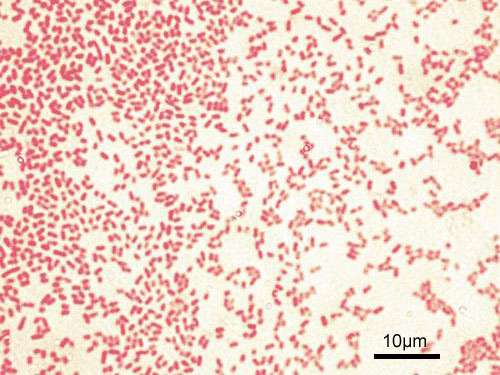
Gram-stained P. aeruginosa bacteria (pink-red rods) Credit: Wikipedia

A study has found that much higher doses of antibiotics are needed to eliminate a bacterial infection of the airways when other microbes are present. It helps explain why respiratory infections often persist in people with lung diseases such as cystic fibrosis despite treatment.

In the study, published today in The ISME Journal, researchers say that even a low level of one type of microbe in the airways can have a profound effect on the way other microbes respond to antibiotics.

The results highlight the need to consider the interaction between different species of microbe when treating infections with antibiotics—and to adjust dosage accordingly.

“People with often have co-infection with several pathogens, but the problem is we don’t take that into account in deciding how much of a particular antibiotic to treat them with. Our results might help explain why, in these people, the antibiotics just don’t work as well as they should,” said Thomas O’Brien, who carried out the research for his Ph.D. in the University of Cambridge’s Department of Biochemistry and is joint first author of the paper.

Chronic bacterial infections such as those in the human airways are very difficult to cure using antibiotics. Although these types of infection are often associated with a single pathogenic species, the infection site is frequently co-colonized by a number of other microbes, most of which are not usually pathogenic in their own right.

Treatment options usually revolve around targeting the pathogen, and take little account of the co-habiting species. However, these treatments often fail to resolve the infection. Until now scientists have had little insight into why this is.

To get their results the team developed a simplified model of the human airways, containing artificial sputum (‘phlegm’) designed to chemically resemble the real phlegm coughed up during an infection, packed with bacteria.

The model allowed them to grow a mixture of different microbes, including pathogens, in a stable way for weeks at a time. This is novel, because usually one pathogen will outgrow the others very quickly and spoil the experiment. It enabled the researchers to replicate and study infections with multiple species of microbe, called ‘poly-microbial infections’, in the laboratory.

The three microbes used in the experiment were the bacteria Pseudomonas aeruginosa and Staphylococcus aureus, and the fungus Candida albicans—a combination commonly present in the airways of people with cystic fibrosis.

The researchers treated this microbial mix with an antibiotic called colistin, which is very effective in killing Pseudomonas aeruginosa. But when the other pathogens were present alongside Pseudomonas aeruginosa, the antibiotic didn’t work.

“We were surprised to find that an antibiotic that we know should clear an infection of Pseudomonas effectively just didn’t work in our lab model when other bugs were present,” said Wendy Figueroa-Chavez in the University of Cambridge’s Department of Biochemistry, joint first author of the paper.

The same effect happened when the microbial mix was treated with fusidic acid—an antibiotic that specifically targets Staphylococcus aureus, and with fluconazole—an antibiotic that specifically targets Candida albicans.

The researchers found that significantly higher doses of each antibiotic were needed to kill bacteria when it was part of poly-microbial infection, compared to when no other pathogens were present.

“All three species-specific antibiotics were less effective against their target when three pathogens were present together,” said Martin Welch, Professor of Microbial Physiology and Metabolism in the University of Cambridge’s Department of Biochemistry and senior author of the paper.

At present antibiotics are usually only laboratory tested against the main pathogen they are designed to target, to determine the lowest effective dose. But when the same dose is used to treat infection in a person it often doesn’t work, and this study helps to explain why. The new model system will enable the effectiveness of potential new antibiotics to be tested against a mixture of microbe species together.

Poly-microbial infections are common in the airways of people with cystic fibrosis. Despite treatment with strong doses of antibiotics, these infections often persist long-term. Chronic infections of the airways in people with asthma and chronic obstructive pulmonary disorder (COPD) are also often poly-microbial.

By looking at the genetic code of the Pseudomonas bacteria in their lab-grown mix, the researchers were able to pinpoint specific mutations that give rise to this antibiotic resistance. The mutations were found to arise more frequently when other pathogens were also present.

Comparison with the genetic code of 800 samples of Pseudomonas from around the world revealed that these mutations have also occurred in human patients who had been infected with Pseudomonas and treated with colistin.

“The problem is that as soon as you use an antibiotic to treat a microbial , the microbe will start to evolve resistance to that antibiotic. That’s what has happened since colistin started to be used in the early 1990’s. This is another reminder of the vital need to find new antibiotics to treat human infections,” said Welch.

___________________

**Comment**

Hopefully it’s clear why I would post this cystic fibrosis research on a Lyme/MSIDS website.  Lyme/MSIDS is also often a polymicrobial illness involving numerous pathogens. Logic would then follow that this complex illness would also be impossible to eradicate using a singular antibiotic against multiple infections that not only require different medications individually but that synergistically would also necessitate higher doses for a longer period of time. 

This is known, appreciated, and utilized by Lyme literate doctors when treating patients, and Lyme/MSIDS patients, researchers, and doctors alike have been screaming bloody murder about this topic for decades.  But they are laughed at and ridiculed, and written off as tin-foil hat wearing nut-jobs.

Mainstream research and medicine barely even acknowledge coinfection, a fact that is seen not only in ticks but daily in humans living in the real world.  They also deny pleomorphism – or the ability of borrelia, and other pathogens to shape-shift into different forms.  Research has shown borrelia shape-shifts when threatened so it can survive.

The current simplistic view of Lyme/MSIDS is killing people, and the sooner it is recognized and addressed the better.

One would hope that research showing the very real complexities and failure of standard treatment on patients with multiple infections simultaneously would cause even the most entrenched to consider the same possibility with Lyme/MSIDS.

One can only continue to hope.

Clinical Considerations of Clostridia Bacterial Concerns – Part 1

Clostridium difficile is labeled as one of the organisms of greatest concern for antibiotic resistance by the National Institutes of Health. 

Most healthcare practitioners associate it with acute colitis and diarrhea. However, it can also colonize the gastrointestinal tract, creating chronic symptoms that are harder to recognize.

Colonization of a number of problematic Clostridia species (and the metabolites they produce) can create neurological irritation and neurotransmitter imbalances, and has been implicated in:

  • Attention issues
  • Mood disorders
  • Neurological conditions

In this three-part series, Dr. Kurt Woeller delivers clinically relevant information that comes from years of working with neurologically symptomatic patients, his experience in specialized testing, and from a place of commitment to excellent patient care.

Dive into Part 1 where Dr. Woeller introduces the breadth of alternative symptoms that can manifest with Clostridium difficile (C. diff) and other pathogenic species.Stay tuned for upcoming Parts 2 and 3 where Dr. Woeller identifies methods most effective for detecting C. diff and discusses his most trusted therapeutics for addressing positive test results.Best for your health,
image

Kurt N. Woeller, DO, has been a functional and integrative medicine physician and a biomedical autism treatment specialist for over two decades. A respected author, international lecturer, and educator, he provides healthcare practitioner education through his online Integrative Medicine Academy.

Dr. Woeller serves as a clinical consultant and educator for both BioHealth Laboratory and Great Plains Laboratory (GPL). At GPL, he teaches the Organic Acid Test (OAT) interpretation and implementation course.

At his private practice in Bend, OR, he focuses on specialized diagnostic testing and treatment for individuals with complex medical conditions like autism, autoimmune and neurological disorders.

_____________________

For more:

 
  •  

Clinical Considerations of Clostridia Bacterial Concerns

https://biocidin.wistia.com/medias/wxusy0cfns Go here for presentation (Approx 22 Min)

Part 1: Clinical Considerations of Clostridia Bacterial Concerns – Pathogenicity Mechanisms

Biocidin Education Series

For more: