Archive for the ‘Candida’ Category

Candida & Lyme

https://www.globallymealliance.org/blog/candida-and-lyme

Strategies and treatments for Lyme patients to avoid Candida overgrowth

When I was a teenager, I used to get yeast infections during the summers because I was always in a wet bathing suit. At least, that was the rationale I was given by doctors and other females, and it made sense. What I didn’t know then was that recurring yeast infections can also be a sign of a weakened immune system, something that would come back to haunt me in college when I started wrestling mysterious flu-like symptoms. The yeast infections persisted then, too.

People generally don’t talk about yeast infections because they seem like a private topic. But we should, because candidiasis—a fungal infection caused by yeast (Candida) overgrowth—is not exclusive to females or the vagina. In fact, many men and women alike suffer from Candida overgrowth and may not even know it. Candidiasis often occurs in the gut, causing symptoms typically associated with the gastrointestinal tract such as bloating, constipation, diarrhea, gas, blood sugar swings, and cravings for sweets; and those that aren’t, such as fatigue, depression, dizziness, itching, and hives. Candida can also manifest in the mouth as thrush, causing bad breath, a funny taste, soreness, white lesions, or a pasty white tongue.

I was first diagnosed with intestinal yeast overgrowth when I was wrestling a bad case of mononucleosis that slipped into chronic active Epstein-Barr virus. The naturopathic physician I was seeing told me excessive Candida could cause fatigue, inflammation, and headaches. In more serious cases, systemic candidiasis can, according to the Centers for Disease Control and Prevention (CDC) affect the blood, brain, heart, eyes, bones, and other parts of the body.

So, what does this have to do with Lyme disease? Many Lyme patients may already be dealing with candidiasis infections that are exacerbating or causing some of their symptoms. Coupled with Lyme disease, these symptoms become overwhelming. Moreover, antibiotics, a standard and critical treatment for Lyme, cause Candida overgrowth because they kill off the good bacteria in the gut. As Richard Horowitz, M.D. explains in Why Can’t I Get Better? Solving the Mystery of Lyme & Chronic Disease, “Although we all normally have Candida organisms present in our gastrointestinal tract in limited amounts, taking antibiotics for bacterial infections will encourage an overgrowth of Candida…Furthermore, many Americans have diets high in sugar and refined carbohydrates, which help promote yeast overgrowth.” Immune suppression due to stress—common for Lyme patients—and other factors such as medications that decrease the acidity of the gastrointestinal tract can also lead to Candida issues.

What can Lyme patients do to avoid and/or treat Candida overgrowth?

Diet: We often hear of the “Lyme diet” to treat inflammation, which it does. It also combats Candida overgrowth. I have had success by eliminating simple sugars, gluten and wheat, and alcohol. In his book, Dr. Horowitz also recommends eliminating malt, vinegar, carbohydrates (including fruit early in treatment), all yeast-containing foods (most bread and cheeses, mushrooms), and fermented foods. How extreme you need to be with this diet depends on how acute your infection is. Because I am still on low-dose antibiotics, I have stuck to a gluten-free, low-sugar, alcohol-free diet while in remission. I avoid mushrooms and most yeasty foods but do eat dark chocolate, cheese, and whole grains. Talk to your Lyme Literate Medical Doctor (LLMD) about the best dietary changes for you.

Probiotics: When you’re on antibiotics, you must take probiotics to replenish your system with good yeast. However, you must take the probiotics at least two hours before or after the antibiotics, or the antibiotics will kill the probiotics.

Anti-fungal medication: For persistent candidiasis, some LLMDs prescribe anti-fungal medication, some of which have also been known to be effective against Lyme bacteria. They are not without side effects (some can cause liver or heart damage), so doctors use these sparingly and in low and/or pulsed doses, and you should have regular bloodwork to test your liver and other functions while you’re on these medications.

Monitor symptoms and adjust accordingly: I can tell when yeast levels are getting high because I get a pasty tongue, have vaginal symptoms, or feel some gastrointestinal discomfort. This usually happens after I’ve cheated by eating several gluten-free brownies (naturally sweetened, but the sugars still add up). I will then be extra-careful with my diet in the following days, and it sometimes helps to eat something that tastes acidic, like grapefruit or tomato but is alkaline once digested (you’re trying to keep a healthy pH balance).

Don’t cheat: With some diets, especially those that are just about losing or maintain weight, having a “cheat” day once in a while won’t have too many adverse effects. That’s not true with Lyme disease, especially if you are dealing with an acute infection. Eating a regular pizza or a chocolate chip cookie will probably make you feel horrible for a few days, and that’s not worth it. There are plenty of great alternative foods available.

If you find yourself craving sweets or experiencing unexplained fatigue or digestive symptoms, talk to your doctor about Candida, especially if you are being treated for Lyme disease.

For more blog posts, click here.


jennifer crystal_2

Opinions expressed by contributors are their own.

Jennifer Crystal is a writer and educator in Boston. Her memoir about her medical journey is forthcoming. Contact her at lymewarriorjennifercrystal@gmail.com.


Opinions expressed by contributors are their own. Jennifer Crystal is a writer and educator in Boston. Her memoir about her medical journey is forthcoming. Contact her using her email.

Email: lymewarriorjennifercrystal@gmail.com

______________________

For more:

Both my husband and I took diflucan, an anti-fungal medication twice a week throughout our entire treatment journey (over 5 years).  I believe this saved us from many problems antibiotics can cause.  We also tried to limit sugar.  We also took a strong, refrigerated probiotic daily as well as a prebiotic (feeds the good guy bacteria), specially formulated for Lyme/MSIDS patients with many and varied strains of bacteria.  
Co-infections Among COVID-19 Patients: The Need for Combination Therapy With Non-Anti-SARS-CoV-2 Agents?

https://www.sciencedirect.com/science/article/pii/S1684118220301274

Co-infections among patients with COVID-19: The need for combination therapy with non-anti-SARS-CoV-2 agents?

Under a Creative Commons license
open access

Abstract

Co-infection has been reported in patients with severe acute respiratory syndrome (SARS) and Middle East respiratory syndrome, but there is limited knowledge on co-infection among patients with coronavirus disease 2019 (COVID-19). The prevalence of co-infection was variable among COVID-19 patients in different studies, however, it could be up to 50% among non-survivors. Co-pathogens included bacteria, such as

  • Streptococcus pneumoniae
  • Staphylococcus aureus
  • Klebsiella pneumoniae
  • Mycoplasma pneumoniae
  • Chlamydia pneumonia
  • Legionella pneumophila
  • Acinetobacter baumannii
  • Candida species
  • Aspergillus flavus
  • viruses such as influenza, coronavirus, rhinovirus/enterovirus, parainfluenza, metapneumovirus, influenza B virus, and human immunodeficiency virus

Influenza A was one of the most common co-infective viruses, which may have caused initial false-negative results of real-time reverse-transcriptase polymerase chain reaction for severe acute respiratory syndrome coronavirus 2 (SARS-CoV-2).

Laboratory and imaging findings alone cannot help distinguish co-infection from SARS-CoV-2 infection. Newly developed syndromic multiplex panels that incorporate SARS-CoV-2 may facilitate the early detection of co-infection among COVID-19 patients. By contrast, clinicians cannot rule out SARS-CoV-2 infection by ruling in other respiratory pathogens through old syndromic multiplex panels at this stage of the COVID-19 pandemic. Therefore, clinicians must have a high index of suspicion for coinfection among COVID-19 patients. Clinicians can neither rule out other co-infections caused by respiratory pathogens by diagnosing SARS-CoV-2 infection nor rule out COVID-19 by detection of non-SARS-CoV-2 respiratory pathogens.

After recognizing the possible pathogens causing co-infection among COVID-19 patients, appropriate antimicrobial agents can be recommended.

_____________________

**Comment**

This would explain why COVID-19 does not resemble a simple virus, just as Lyme disease doesn’t present identically from individual to individual. Lyme/MSIDS is also best treated with combination therapy; however, most regular practitioners follow the antiquated and unscientific CDC treatment guidelines which haven’t worked for over 40 years (which in a nutshell is 21 days of doxycycline for all despite body weight and coinfections).

With each day there seems to be more and more similarities to Lyme/MSIDS in that cases are complex and individual. Medicine needs to acknowledge and embrace this complexity:  https://madisonarealymesupportgroup.com/2020/04/26/cdc-playbook-learning-from-lyme/

This also explains why things like antibiotics and anti-parasitics work.  The pathogen list did not include tick-borne pathogens but should, as undoubtedly many of these people could very well have undiagnosed infections that COVID-19, much like vaccines, can reactivate latent infections: https://madisonarealymesupportgroup.com/2017/12/02/scottish-doctor-gives-insight-on-lyme-msids/

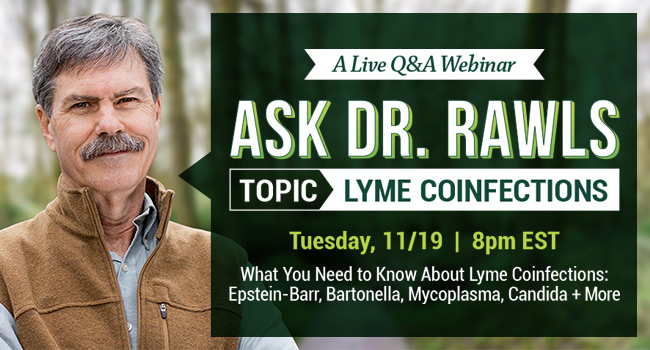
Live Q & A Webinar: Lyme Coinfections 11/19

Live Webinar: Ask Dr. Rawls
Join Dr. Bill Rawls for this new LIVE WEBINAR on Tuesday, November 19th, at 8pm ESTfor a new LIVE Q&A webinar about Lyme Disease Coinfections.

If you have questions about diagnosing and treating common Lyme coinfections including Epstein-Barr, Bartonella, Mycoplasma, Babesia, and Candida, you don’t want to miss this webinar.

Topics covered by Dr. Rawls during the webinar will include:

  • What are the telltale signs of a Lyme coinfection?
  • Do you need to know which coinfection(s) you have before seeking treatment?
  • Are there any reliable tests for Lyme and coinfections?
  • What are the best herbal and natural remedies for Lyme coinfections?
  • How can you tell for certain when Lyme and coinfections are gone?
  • Numerous other insights and answers throughout the live Q&A with Dr. Rawls

Submit your top Lyme coinfection questions after you register, and Dr. Rawls will try to answer as many as possible.

Plus, we will announce an exclusive offer for webinar attendees.

Reserve Your Seat Now »
We look forward to seeing you there!

P.S. If you have questions about the webinar, please reply to this email or call us at 800-951-2414.


The Candida Chronicles

https://www.amazon.com/Candida-Chronicles-Mannual-Yeast-infections/dp/0692756191/ref=cm_cr_arp_d_product_top?ie=UTF8

51+apfubrsl._sx331_bo1,204,203,200_

Finally the long awaited first book on Candida and Yeast infections by Michael C Biamonte CCN. This is the 1st of a series of 5 books on what has been called “The scourge of the 21st century”. Candida in an intestinal yeast infection that is often undiagnosed. It causes dozens of symptoms that are often unrelated. Michael C.Biamonte is a New York State certified clinical nutritionist who has dedicated his professional life to understanding this syndrome and aiding those suffering with it for over 30 years. He is considered by many the worlds authority not only on the subject of Candida, but also how one can help themselves who have this condition.

Dr. Biamonte is the ONLY doctor who has actually cracked the code on how to heal the digestive tract and balance the mind and body without using prescriptions. The proof is in the thousands of patients he has successfully treated, including my son and I . This book is life changing and I strongly recommend it to anyone who suffers from candida, chronic fatigue or imbalances that cause illness. This book is the only prescription you’ll need.
– Jenny McCarthy

For more:  https://www.newyorkcitycandidadoctor.com/treatment.html#140908590964765370  (Go to link for more details on each phase)

PHASE: 0
Remove some of the candida on the surface of your intestinal track through supplements.
PHASE: 1
With natural & herbal substances, kill or eliminate candida from most of your body.
PHASE: 2
Cleanse the whole body of candida through a regimen of supplements & remove poisons from your system.
PHASE: 3
Using blood & hair testing, identify and correct nutritional deficiencies through vitamins and diet changes.
PHASE: 4
Build, repair & stimulate your immune system to make sure it can keep candida in check.


For Free Podcasts from Biamonte:  http://mixlr.com/dr-michael-biamonte/showreel/

More on Candida:

https://madisonarealymesupportgroup.com/2014/10/17/candida-the-chameleon/

https://madisonarealymesupportgroup.com/2018/08/10/the-facts-about-candida-overgrowth-how-to-overcome-it/

https://madisonarealymesupportgroup.com/2018/07/16/understanding-candida-overgrowth-natural-solutions-for-yeast-infection/

https://madisonarealymesupportgroup.com/2018/08/02/can-these-essential-oils-help-lyme-patients-overcome-chronic-candida/

https://madisonarealymesupportgroup.com/2019/01/12/sibo-clinical-implications-natural-therapeutic-options/

The Facts About Candida Overgrowth & How to Overcome It

https://www.wakingtimes.com/2018/06/28/the-facts-about-candida-overgrowth-and-how-to-overcome-it/

The Facts About Candida Overgrowth and How to Overcome It

June 28, 2018
candida overgrowth

Anna Hunt, Staff Writer
Waking Times

Candida is an essential fungus, a form of yeast, that lives in the human body. You can find it in the mouth and the intestines. Although it is normal to have some of this fungus in the body, candida can also invade the body beyond what is acceptable. This is called candida overgrowth, and it can have some detrimental health effects.

Candida Overgrowth

Having too much candida in the body can result in several health problems. This includes all types of digestive issues because too much candida can break down the walls of the intestines. In addition, candida overgrowth may cause problems such as depression, lack of energy, and a whole lot of annoying ailments.

When the production of candida in the body is out of control, it can manifest the following problems:

  • Allergies, sensitivities and intolerance to anything or any place that’s damp or moldy.
  • Hay fever and asthma.
  • Higher sensitivity to typical allergens, such as perfumes, smoke, odors, pets, dust, molds, pollen, and other airborne substances.
  • Athletes’ foot or fungus growth on other parts of the body.
  • Low body temperature, resulting on cold hands and feet.
  • Cold-like symptoms, including excessive mucus, as well as flu-like symptoms.
  • Digestive problems, such as constipation, abdominal bloating or pain, acid reflux, and gas.
  • Ringing in the ears (tinnitus), ear infections, ear aches, and abnormal wax build-up.
  • Fatigue, chronic fatigue and general feeling of being drained of energy.
  • Swollen salivary glands, dryness in the mouth, and swollen lymph nodes.
  • Dry or itchy scalp, dandruff, scalp sores, and hair loss.
  • Headaches, migraines, brain fog, and dizziness.
  • Fungal infections of the skin or nails.
  • Joint stiffness, swelling or pain.
  • Lack of appetite.
  • Nasal congestion, postnasal drip, sinus inflammation or infections.
  • Muscle aches and pains, including numbness and tingling, as well as lack of strength and coordination.
  • Dry skin, acne, hives, itching skin, and rashes, including eczema and psoriasis.
  • Sleep problems, such as frequent waking up and restless sleep, as well as insomnia.

FREE ONLINE EVENT: The Candida Summit – register today

The sad part is that candida overgrowth may be easily mistaken for other illnesses. Therefore, medical professionals often treat the symptoms of candida overgrowth, and not the actual problem of candida.

Why Does Candida Get Out of Control?

One of the biggest culprits in candida overgrowth are antibiotics. These medications wipe out all bacteria, including beneficial bacteria in the digestive system. On the other hand, antibiotics do not affect candida, because it is a fungus. As a result, taking antibiotics can create an imbalance in the body.

Now, if the immune system is strong, it can usually handle the effects of candida overgrowth. Unfortunately, many people have a weakened immune system because the typical western diet lacks the nutrients necessary to maintain strong immune function.

The standard diet consists of lots of carbohydrates, hydrogenated oils, trans-fats, sugar, white flour products, and processed foods. In addition, food growers often treat live foods with pesticides and herbicides. As well, they grow these foods in nutrient-depleted soil and radiate them to extend shelf-live.

Consequently, mainstream food choices do not give us the nutrients and healthy probiotic properties necessary to maintain a healthy immune system. As a result, when candida overgrowth happens, the body frequently starts to break down.

Some other factors that may contribute to candida population growing beyond what is healthy are:

  • A diet high in sugar and refined carbohydrates,
  • Drinking too much alcohol, and
  • A stressful lifestyle.

Simple Home Test

The best way to know for sure if you have candida overgrowth is to see a holistic practitioner. However, you can try the following test at home:

  1. Make sure you conduct this test first thing in the morning, before you eat or drink anything.
  2. Fill a glass with room-temperature, filtered water.
  3. Work up some saliva and spit it into the glass of water.
  4. Wait 30 minutes (you may need to wait up to 60 minutes) and check the saliva. If you see string traveling down into the water from the saliva, or if cloudy saliva has sunk to the bottom of the glass, you may have a candida problem.
What You Should Do to Help with Candida Overgrowth

There is a process that you can follow to control candida overgrowth. The important thing is that you execute the following five steps simultaneously:

1. Eliminate sugary foods that feed candida.

These include foods with sweeteners such as honey and fructose. In addition, you may want to limit the intake of fruits because they are high in sugar.

When buying processed meats, always read the ingredients because many contain sugar. In fact, read the ingredients list for all processed foods. You’ll be surprised just how many contain sweeteners. Of course, don’t forget that alcohol and many drinks, like a chai latte and coffee drinks, also have lots of sugar.

2. Strengthen your immune system.

This requires a healthy diet, high in lean proteins, good fats and low carbohydrates. All the foods you eat should be fresh and as natural as possible. This means limit processed foods so you eat fewer additives, heavy metals, pesticides and other food industry chemicals.

Another step in supporting a healthy immune system is to supplement with essential vitamins and minerals. The best way to understand what supplements you need is to ask your healthcare practitioner to administer a blood test. Some typical supplements that typically help fortify the immune system are:

  • Chlorella, a whole food that has many vitamins and minerals. It helps the body purge heavy metals and pesticides.
  • Vitamin C, one of the biggest immune system boosters. Since we get lots of Vitamin C from fruit, you are more likely to be Vitamin C deficient when limiting fruit intake to eliminate sugar from your diet. Vegetables rich in Vitamin C include kale, spinach, and broccoli.
  • Vitamin E, a powerful antioxidant that helps the body fight off infection. Foods rich in vitamin E include nuts, seeds and spinach.

3. Kill off candida overgrowth.

The most effective way to start getting rid of excess candida is to fortify your diet with anti-fungal foods. These include the following:

  • Raw garlic, which contains Sulfur compounds with anti-fungal properties. Fresh garlic is most potent, especially if you first crush it and wait about 10 minutes before consuming it. Of course, you can eat the garlic with a meal to conceal the taste. Just keep it raw.
  • Raw unfiltered apple cider vinegar, preferably Bragg brand. It is best to dilute 1 tablespoon of apple cider vinegar in a glass of room temperature water. Then, drink 30-60 minutes before a meal.
  • Olive leaf extract, which contains a phenolic compound with antiviral and anti-fungal properties.
  • Pau d’arco, which is sold as a tea or as a capsule supplement.

Remember that taking too many supplements can be a strain on the liver, so always check with your healthcare provider if you plan to take several supplements at one time. The ideal way to supplement is to eat a large variety of organic raw vegetables.

4. Introduce more good bacteria into the digestive system.

It is essential that you re-establish the balance of candida and good bacteria in your body. The best way to do this is by eating foods rich in probiotics, or “friendly” bacteria. These are also called probiotics.

Probiotics are present in foods such as yogurt, sauerkraut, kimchi and kombucha. The best way to get high quality probiotics into your system is to make fermented vegetables at home. Probiotic drinks are also very easy to make at home.

As well, you can buy probiotic supplements with a minimum of 50 billion CFUs (colony forming units). If possible, purchase probiotic supplements that require refrigeration.

5. Stay calm and expect the best results from your healing process.

When your body is already compromised, the last thing you need is stress. Stress on its own can make all the other previous four steps ineffective. In fact, it may have been a culprit in candida overgrowth in the first place.

It is important to utilize several stress relieving techniques during your healing process to help you stay calm. These include exercise, meditation and yoga. Also, don’t forget to have some fun!

Another important aspect of staying stress-free is to take it easy on yourself. Do your best following the steps above, and always be patient and kind to yourself.

Finally, having the right mindset is just as important as following a healthy diet. If you believe that your self-care efforts will pay off in improved health, then that will be your end result. There is a reason why the placebo effect works! The mind is one of the most powerful healing tools, so don’t forget to use it.

About the Author
Anna Hunt is writer, yoga instructor, mother of three, and lover of healthy food. She’s the founder of Awareness Junkie, an online community paving the way for better health and personal transformation. She’s also the co-editor at Waking Times, where she writes about optimal health and wellness. Anna spent 6 years in Costa Rica as a teacher of Hatha and therapeutic yoga. She now teaches at Asheville Yoga Center and is pursuing her Yoga Therapy certification. During her free time, you’ll find her on the mat or in the kitchen, creating new kid-friendly superfood recipes.

Sources: 

mindbodygreen.com
nourishedmagazine.com
thecandidadiet.com
preventdisease.com

This article (The Facts About Candida Overgrowth and How to Overcome It) was originally created and published by Waking Times and is published here under a Creative Commonslicense with attribution to Anna Hunt and WakingTimes.com. It may be re-posted freely with proper attribution, author bio, and this copyright statement.

Disclaimer: This article is not intended to provide medical advice, diagnosis or treatment. Views expressed here do not necessarily reflect those of Waking Times or its staff.

Jen Springer, 2016

3 Reasons You Can’t Get Rid Of Candida Yeast : HCL, estrogen, thyroid.
  1. The first thing most people miss is restoring the pH to the proper level in the stomach. pH of 2-4. If you don’t get to that level your stomach doesn’t catalyze the pancreas to make enzymes, the gallbladder to make bile, and the proper growth of acid loving good bacteria: acidophilus. Betaine HCL is what you need before any other supplements. SIBO is caused by low stomach HCL. Low good bacteria is from low stomach HCL. The right pH needs to be first before anything else.
  2. Estrogen dominance / imbalance. Many people have estrogen higher than testosterone and progesterone. Even excess environmental estrogenic toxins. This causes high insulin and blood sugar levels. High blood sugar is YEAST FOOD!!! Yeast loves sugar. You be come a puffy loaf of bread.
  3. The thyroid!!! The candida likes to grow when the body is not operating at 98.6. When the body is low, like 97.5, the body can’t cook off the pathogens and keep them in check.
________________________________________
In my search for answers I found this:
This chiropractor resolved her candida with this treatment:
  • 1 drop clove essential oil mixed with olive or coconut oil in a capsule in the am and pm (so twice a day)  
  • Increase to a maximum dose of 6 drops of clove in oil per capsule twice a day
  • Use for 14 days then take a break for a week or two
  • It might take a few cycles to resolve
  • She noticed a “yeast dump” on day 8 of the first cycle
  • Clove oil is supposedly 75% more effective than Nystatin
  • Make sure you use reputable sources for all ingredients
Please work with your medical practitioner on all treatment suggestions.

For more:  https://madisonarealymesupportgroup.com/2018/08/02/can-these-essential-oils-help-lyme-patients-overcome-chronic-candida/

https://madisonarealymesupportgroup.com/2018/07/16/understanding-candida-overgrowth-natural-solutions-for-yeast-infection/

https://madisonarealymesupportgroup.com/2018/07/05/candid-signs-you-have-it-what-to-do-the-candida-summit-online-free-july-9-15-2018/

https://madisonarealymesupportgroup.com/2014/10/17/candida-the-chameleon/