Archive for the ‘Babesia’ Category

Bartonella and Babesia Detected in Patients With Chronic Illness

https://news.ncsu.edu/2024/07/bartonella-and-babesia-co-infection-detected-in-patients-with-chronic-illness/

Bartonella and Babesia Co-Infection Detected in Patients with Chronic Illness

For Immediate Release
Edward Breitschwerdt

A small pilot study has found evidence of human co-infections from Bartonella and Babesia odocoilei, a protozoal tick-borne infection primarily found in deer, moose and other cervids. The co-infections were detected in six of seven patients suffering from chronic, non-specific illness, who were enrolled in a Bartonella study at North Carolina State University. The work presents some of the first definitive DNA evidence of this strain of Babesia infection in humans, and could impact treatments for patients with Bartonella, Borrelia or Babesia infections.

Bartonella are a group of vector-borne bacteria transmitted primarily via arthropods like fleas, lice and potentially ticks, but also by the animals that harbor them. There are at least 45 different known Bartonella species, of which 18 have been found to infect humans. Improved methods for detecting Bartonella infection in animals and humans have led to the diagnosis of bartonelloses in patients with a host of chronic illnesses, as well as in some patients with psychiatric symptoms.

In the U.S., the main Babesia species that infect humans are B. microti, B. duncani and B. divergens-like. Transmission occurs mainly by tick bite, but there are reports of transmission by transfusion of contaminated blood, organ transplantation and transplacental transmission. In addition to asymptomatic infection, babesiosis can be associated with non-specific symptoms such as fever, chills and night sweats, or with severe, life-threatening hemolytic anemia.

Babesia and Bartonella are often suspected as co-infections with Lyme disease, caused by the bacterium Borrelia burgdorferi.

“Doctors who work with Lyme patients often suspect co-infection with Babesia most often based on serology data and symptoms,” says Edward Breitschwerdt, Melanie S. Steele Distinguished Professor of Internal Medicine at NC State’s College of Veterinary Medicine and corresponding author of a paper describing the work. “So we decided to test for potential co-infections with this subset of our Bartonella study participants.”

The seven patients in the pilot study were already enrolled in a larger study aimed at detecting Bartonella in the blood of people with chronic illness and extensive animal contact. The participants’ ages ranged from two-and-a-half to 62 years old. Four were veterinary workers, one was a student and veterinary technician, one was a veterinarian’s daughter and one was a pre-school aged child. All submitted blood and tissue samples for testing.

Using digital droplet PCR testing, which identifies pathogens by their DNA sequences, the researchers discovered that all seven participants were infected with Babesia odocoilei, and that six of the seven were co-infected with at least one, and sometimes two or more, species of Bartonella.

“We were surprised by these findings for several reasons,” Breitschwerdt says. “First, this strain of Babesia – B. odocoilei – isn’t currently considered a cause of human infection. Second, these patients reside in locations around the U.S. and in Mexico, so the distribution may be geographically widespread. Finally, we were able to identify these seven infected individuals within a one-year time period, suggesting that this may be a more prevalent infection than currently appreciated.”

The findings could have implications for how patients with symptoms of vector-borne illnesses such as Lyme, babesiosis, or bartonellosis are tested and treated.

“The main symptom associated with babesiosis is acute, severe hemolytic anemia. None of these patients reported any such illness, a factor that could limit a doctor’s decision to test for Babesia infection,” Breitschwerdt says.

“This study primarily focused on patients with chronic illnesses and suspected bartonelloses. Most often, doctors don’t look for Babesia in these patients, but we now have good evidence that people can be infected by this organism, evidence that should be pursued in larger studies. Physicians who treat Lyme disease have often suspected co-infections with these pathogens, and it looks like their suspicions are correct, at least in a subset of patients.”

“We are committed to providing the best vector borne infectious disease testing results possible,” says Ricardo Maggi, research professor at NC State and first author of the study. “The cases presented in this manuscript reflect our team’s efforts to develop better approaches and diagnostic tools that can give answers to both patients and their doctors.”

The study appears in Parasites and Vectors and was supported by NC State’s Bartonella/Vector-Borne Diseases Research Fund and the Steven & Alexandra Cohen Foundation. NC State Ph.D. student Charlotte Moore, São Paulo State University Ph.D. student Ana Cláudia Calchi, and NC State research specialist Emily Kingston also contributed to the work.

For more:

One Unit of Blood Led to Babesia Infection

https://danielcameronmd.com/blood-transfusion-babesia/

One Unit of Blood Led to a Babesia Infection

April 22, 2025

When we think of tick-borne illnesses like Babesia, we often picture outdoor exposure in wooded, high-risk areas. But what happens when Babesia shows up in someone who hasn’t been outdoors—and hasn’t been bitten by a tick? One recent case reminds us that Babesia can travel silently through the bloodstream, sometimes delivered unintentionally through a blood transfusion.

A 30-year-old man with sickle cell disease (SCD) required regular red blood cell exchanges—about 10 units every 3 to 4 weeks since childhood. Two months after a routine blood transfusion, he developed symptoms that initially seemed vague: fever, neck pain, and photophobia.

But within days, his condition worsened. He experienced:

  1. Persistent fever and chills
  2. Headache
  3. Fatigue
  4. Loss of appetite

It was clear something serious was unfolding.

A Surprising Diagnosis – Babesia via a blood transfusion

Lab work confirmed the presence of Babesia parasites in his red blood cells, and serologic testing came back positive. He was also borderline positive for Anaplasma phagocytophilum and Ehrlichia chaffeensis, though not treated for those due to a lack of supportive symptoms.

Babesia is a malaria-like parasite typically spread by ticks, but this patient hadn’t been outdoors or hiking recently. So, where had it come from?

Tracing the Source: A Lookback Investigation

A donor lookback investigation revealed the answer. Over six months, the patient had received blood transfusions including 65 units of blood—58 of which were screened for Babesia. One of the 7 unscreened units came from a donor who tested positive for Babesia microti.

This donor lived in Ohio, a state not considered endemic for Babesia and thus not required to screen blood donors for the parasite. The donor reported no symptoms and had been active outdoors, hiking and camping in Ohio, Tennessee, and North Carolina—states with potential but under-recognized risk for tick exposure.

Why This Matters: A Vulnerable Blood Supply

This case, published by Costa and colleagues,¹ highlights a critical issue: transfusion-transmitted babesiosis (TTB) remains a real and preventable risk—especially in patients with chronic blood transfusion needs, like those with sickle cell disease.

“Prior to laboratory-based blood donor screening for Babesia, TTB was a leading infectious risk to the blood supply in the United States,” the authors note.

In 2019, the FDA implemented Babesia screening requirements for blood donors in 14 high-incidence states, including Connecticut, Massachusetts, New York, and Minnesota. But states like Ohio—where this case originated—are not yet on that list.

A Simple Treatment, a Critical Delay

Fortunately, this patient was promptly treated with a 10-day course of azithromycin and atovaquone, and his symptoms resolved. But in many cases, particularly in non-endemic states, the delay in diagnosis can lead to more severe disease, especially in vulnerable populations.

Lessons for Clinicians and Policymakers

This case reminds us of a few important lessons:

🩸 1. Babesia Isn’t Just Tick-Borne

Yes, it’s a tick-borne disease—but it’s also transmissible via blood transfusions. That means even patients without outdoor exposure can be at risk.

🌎 2. “Non-Endemic” Doesn’t Mean No Risk

Donors may travel, camp, or hike in high-risk areas—even if their home state isn’t considered endemic. Geographic assumptions can lead to blind spots in our screening systems.

⏳ 3. Delays in Diagnosis Can Be Deadly

In places where clinicians aren’t used to seeing Babesia, diagnosis can be delayed. For immunocompromised or chronically transfused patients, that delay can be critical.

📋 4. Screening Policies May Need Expansion

We must reconsider whether the current state-specific Babesia screening recommendations are sufficient. This case suggests a broader approach may be warranted.

Final Thoughts

For patients like this young man with sickle cell disease, a single unscreened unit of blood changed everything. His case is a powerful reminder that Babesia is no longer just a disease of the woods—it’s also a disease of the blood bank.

As we continue to evolve our understanding of blood transfusion safety, infectious disease spread, and vector-borne illnesses, we must remain open to adjusting our protocols and awareness—even in states not currently labeled “high risk.”

Because in medicine, what we don’t test for can still hurt our patients.

Related Articles:

Podcast: Two mothers transmit Babesia to their babies

Geriatric cases of Babesia are rising and may require longer treatment

Reference:

Costa B, et al. Transfusion-transmitted babesiosis in a patient with sickle cell disease undergoing chronic red cell exchange. International Medical Case Reports Journal, 2020.

The Three Bs – Borrelia, What, and What? Co-infections & Chronic Illness

https://www.lymedisease.org/the-three-bs-borrelia-what/

The three Bs – Borrelia, What, and What? Co-infections and chronic illness

By Nicole Bell, Galaxy Diagnostics CEO

3/10/25

While many people in the Lyme community are familiar with the three Bs – Borrelia, Bartonella, and Babesia – most people outside the community look confused when I mention these top flea and tick-borne pathogens. I understand their puzzled looks because back in 2017, I was confused too.

Even after my husband, Russ, was diagnosed with these three stealthy invaders, I focused all my research on Borrelia, the bacteria causing Lyme disease.

It ended up taking a tragic journey followed by years of studying the research to gain an appreciation for the complexities of all three pathogens – and that research is still unfolding.

In complex cases, co-infections are the rule, not the exception.

The first thing to understand when considering the three Bs, is that in complex cases, co-infections are common. In a survey of over 3,000 chronic Lyme disease patients published by LymeDisease.org, over 50% had co-infections, and 30% had two or more co-infections. Babesia and Bartonella top the co-infection list, each presenting in about 30% of chronic Lyme cases.
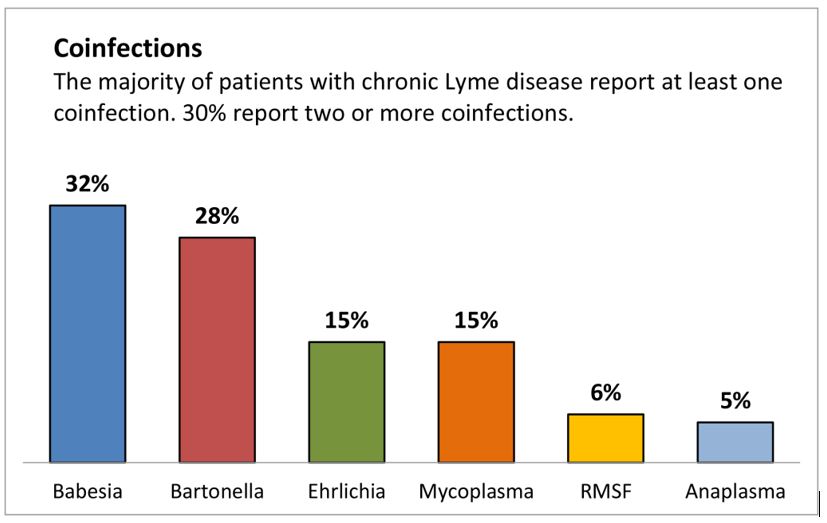
Source: About Lyme Disease Co-infections, LymeDisease.org

The second thing to understand about these pathogens is that calling them “Lyme co-infections” is misleading. All these pathogens – the other Bs and beyond – can be present without a Borrelia  infection (past or present).

The problem is that many doctors don’t have these invaders on their differential – and it’s easy for a pathogen to be considered rare if you never test for it. 

Rare disease? Or inadequate testing and data?

To understand the true prevalence of these pathogens, we need to dig into the details of each pathogen and how we count and test for them. For example, before 2013, Lyme incidence in the U.S. was estimated to be approximately 30,000 cases per year. Then, in 2013, the CDC looked at clinical records, laboratory reports, and public surveys and increased this estimate 10-fold.

In 2021, an analysis of insurance records increased the estimates again, and current data shows that approximately 500,000 Americans are diagnosed and treated annually. And since the standard of care test for Lyme leading to diagnosis and treatment is 40-60% accurate, even this number is likely underestimating the extent of the problem.

So, the question looms – what is the prevalence of the other two Bs? Are they destined for a similar exponential increase as we dig into the data? Emerging research points to yes.

Bartonella – The Hidden Pandemic

Bartonella is a genus of gram-negative bacteria that can infect humans and a wide range of animals. Googling the bacteria shows that it is the pathogen causing cat scratch disease or CSD, an acute form of the infection. But like Lyme, this pathogen has been associated with complex chronic conditions spanning multiple body systems, including the joints, eyes, heart, and brain.

Lyme disease has made people fearful of ticks, but Bartonella can be transmitted by a long list of biting insects – or vectors – including fleas, body lice, sand flies, and even spiders. Also, an underappreciated risk factor for bartonellosis is animal exposure, particularly exposure to cats, which are natural reservoirs of the bacteria.

In a study of veterinary workers, 44% were positive for Bartonella antibodies, and 28% had DNA of the pathogen detected directly from their blood. With approximately 66% of U.S. households owning at least one pet, the pathogen has the potential to be more widespread than generally thought.

Dr. Ed Breitschwerdt from North Carolina State University’s veterinary school has studied Bartonella since the 1990s. The advanced testing methods developed in his lab by collaborator Dr. Ricardo Maggi have uncovered key links between the pathogen and complex illnesses, such as arthritis, chronic fatigue, and fibromyalgia.

Neuropsychiatric conditions

Recently, using innovations in advanced PCR technology, the lab has made groundbreaking discoveries linking Bartonella and neuropsychiatric conditions, such as schizophrenia.

The investigation into schizophrenia started the way many discoveries in medicine do, with one case. A 14-year-old boy – who we will call Michael – suffered from sudden onset psychosis and received a formal diagnosis of schizophrenia. Michael was referred to Dr. B’s lab because he had marks on his skin, called striae, consistent with a Bartonella infection.

Dr. B and his team used their advanced test methods to confirm that Michael was infected with Bartonella. Upon treatment with the appropriate antibiotics, his symptoms evaporated.

The case inspired Dr. Breitschwerdt to consider a hypothesis – what if other patients were experiencing psychosis because of a Bartonella infection? Bartonella can cross the blood-brain barrier and infect endothelial cells, contributing to neuroinflammation.

The hypothesis had merit. His lab partnered with the University of North Carolina to test 17 schizophrenia patients. Sixty-five percent of those patients tested PCR positive for the pathogen, compared to 8% in healthy controls.

A subsequent study with Columbia University on over 100 patients found that people affected with psychosis were over three times more likely to have direct evidence of Bartonella in their blood than unaffected controls.

PANS

And schizophrenia isn’t the only neuropsychiatric condition linked to the pathogen. Pediatric patients with Bartonella infections have been reported to develop Pediatric Acute-onset Neuropsychiatric Syndrome (PANS) and symptoms like anxiety, obsessive-compulsive disorder, and cognitive dysfunction. Case studies have shown improvement in neuropsychiatric symptoms following treatment of the underlying infections.

With over 3 million Americans battling schizophrenia and 1 in 200 children in the U.S. affected by PANS, Bartonella may emerge as the great hidden pandemic.

Babesia – the tip of the iceberg

Babesia is a tick-borne parasitic infection, often touted as similar to malaria, because both parasites infect and replicate within red blood cells and can cause fever, chills, sweats, headache, muscle aches, fatigue, and hemolytic anemia.

Researching Babesia on the CDC Website shows that under 2000 cases were reported nationwide in 2020. The CDC notes that most Babesia cases in the U.S. are caused by Babesia microti, with occasional cases caused by other Babesia species.

Using the same advanced PCR technology that drove clinical discovery in Bartonella, Dr. B and his team turned their attention to Babesia. They found that what we “know” about Babesia may only be the tip of the iceberg.

In 82 individuals the lab was studying for Bartonella infection, 22 (27%) were also infected with Babesia. Furthermore, the top Babesia species identified was not Babesia microti, as expected from CDC data, but rather Babesia divergens (considered rare in the U.S.) and then Babesia odocoilei (considered rare in humans).

Before Dr. B’s work, only a handful of case reports in the U.S. have ever been reported for Babesia divergens. Their best-in-class assay turned up 12 new cases in a group that wasn’t even targeted for Babesia studies.

Dr. B’s team also recently published a paper where an entire family – all five members and one of their dogs – tested positive for a Babesia-divergens-like species. Similar new case discoveries have been made for Babesia odocoilei. His work poses the question – are the pathogens really rare, or are we just not testing for them properly?

Genus versus species – why it matters

Genus and species are terms commonly used by microbiologists, but when I first entered the world of tick-borne disease, I didn’t fully understand their significance. The “genus” is akin to a family name, grouping related individuals – think Hatfields and McCoys. The “species” is like the first name, identifying a specific individual in the family.

Translating this to Lyme disease, Borrelia is the genus or family name, and Borrelia burgdorferi is the species name identifying the particular pathogen.

So why does it matter? The current commercial test methods for all three Bs generally use serology or antibody testing. These assays measure antibodies created by the host’s immune response to the pathogen. The problem is that antibodies react to proteins on the surface of the pathogen, and these proteins can vary depending on the particular species.

In other words, the patriarch of the Hatfield family, Anderson Hatfield, looked and dressed differently than his son Cap Hatfield. Thus, sending out a warrant and a picture of Anderson is unlikely to lead to Cap’s arrest.

Antibody testing is similar, and testing for Babesia microti, may not accurately diagnose a case of Babesia odocoilei or Babesia divergens. There are over 100 known Babesia species, with 15 of those confirmed in human cases.

There are over 50 species of Bartonella, at least 20 of which have been documented to infect humans and other mammalian hosts. Dr. B’s research and testing technology is redefining what we know about these pathogens. And until these tests are launched commercially, millions have the potential to be misdiagnosed.

Direct Detection for BBB is Launching at Galaxy Diagnostics

Fortunately, Galaxy Diagnostics was founded by Dr. Breitschwerdt, Dr. Maggi, and Dr. Amanda Elam to bring these diagnostic advancements to market. This month, Galaxy is launching its digital PCR, direct detection assay for BBB.

This assay has been instrumental in driving clinical discovery in Dr. B’s lab and will now be commercially available to practitioners. Top features of the assay include:

  • Genus level detection, detecting each pathogen regardless of species.
  • Ultra-sensitive, digital PCR, which increases detectability for low abundance pathogens.
  • Multiplexed detection to provide three results in a single test.

The BBB assay is a blood-based assay that detects the DNA of each pathogen. The approach has previously been used only in a research setting, but the team at Galaxy has now validated the assay for commercial use.

Bartonella and Babesia – but what about Borrelia?

The BBB assay is a blood-based approach, and it is essential to note that blood is NOT the best matrix for Lyme Borrelia, as I have discussed previously.

Galaxy recommends its urine antigen test for Lyme since the concentrations of Lyme Borrelia are so low in the blood that a blood draw is unlikely to capture the pathogen in the test tube. And no matter how sensitive the technique is, if the pathogen isn’t in the tube, there is no way to detect it.

So then, why is Borrelia included in the BBB assay? The answer goes back to the genus versus species issue. While the species associated with Lyme Borrelia often hide in tissues and don’t free-circulate in high copy numbers in blood, the species associated with Relapsing Fever Borrelia do replicate to high numbers in the blood.

As a result, combining the BBB assay with Galaxy’s Nanotrap urine antigen test for Lyme provides optimal coverage for the top flea and tick-borne infections at the genus level.

Coming Full Circle – Avoiding Cases like Russ

After my husband Russ passed, the engineer in me knew there had to be better options. I immersed myself in the research and found Dr. B’s published peer-reviewed results. I introduced myself to the Galaxy team, and as I dug in, I became even more convinced that their technology would provide the clarity I craved as a caregiver.

In June 2024, I became Galaxy’s CEO to bring these advanced testing techniques to a broader market. We crystallized our mission to provide a new standard of care for diagnosing these devastating flea and tick-borne diseases. With the commercial launch of the BBB assay, we are one step closer to that goal. I know that Russ is watching – and smiling.

Nicole Bell, CEO of Galaxy Diagnostics, is also the author of What Lurks in the Woods and The State of Lyme Disease Research. 

For more:

Complex Role of Bartonella in Chronic Illness #1

https://www.lymedisease.org/med-detective-bartonella-part-1/

MEDICAL DETECTIVE: The complex role of Bartonella in chronic illness, part 1

This article was originally posted on Dr. Richard Horowitz’s Medical Detective Substack. It is Part 1 of a 5-part series. You can find more helpful content by subscribing here. 

Bartonella is the third “B” of the triad found in the vast majority of my chronically ill patients who suffer from chronic Lyme disease/PTLDS, along with Borrelia and Babesia.

A gram-negative intracellular bacteria, it’s controversial and misunderstood and has been throwing a monkey wrench into my treatments for decades.

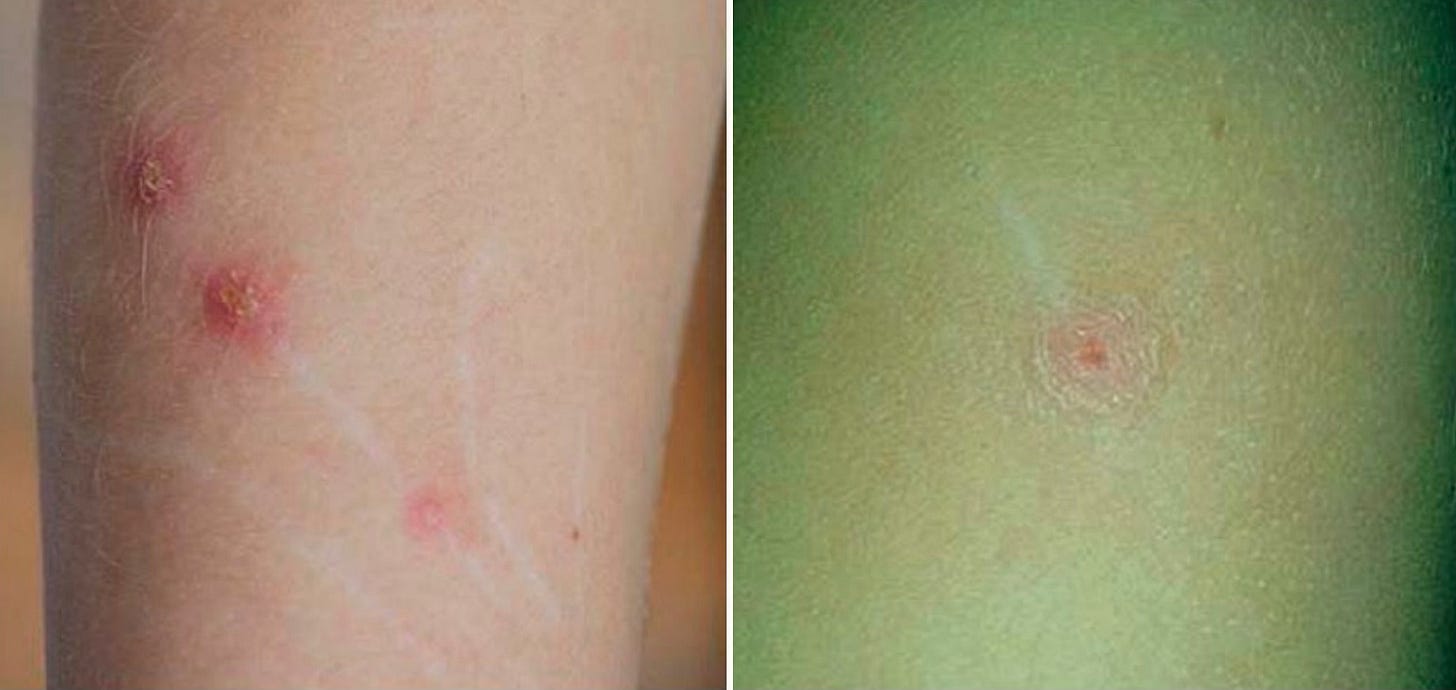
I barely remember learning about it in medical school, except when they were teaching me about cat scratch fever in children that would cause small, localized rashes (papules) at the site of the scratch with swollen lymph nodes and fevers.

It would be treated with a short course of antibiotics like azithromycin. These images show classical cat scratch disease before and after treatment when the lesions are starting to crust up.

[From: Mazur-Melewska K, Mania A, Kemnitz P, Figlerowicz M, Służewski W. Cat-scratch disease: a wide spectrum of clinical pictures. Postepy Dermatol Alergol. 2015 Jun;32(3):216-20. doi: 10.5114/pdia.2014.44014. Epub 2015 Jun 15. PMID: 26161064; PMCID: PMC4495109.]

Unfortunately, Bartonella infections rarely resemble this one particular manifestation, or the general medical community would be diagnosing and treating it a lot more often.

It is a very tricky bacteria, and, like Lyme disease, has found a way to not only avoid immune recognition, but change its clinical characteristics so it resembles a broad range of other diseases.

Immune Evasion by Bartonella

Bartonella is referred to as a “stealth bacteria” because it evades the immune system by living inside red blood cells (intraerythrocytic persistence), blood vessel walls (inflaming them, causing vasculitis), endothelial cells, fibroblasts, epithelial cells of the skin (causing the classic Bartonella rashes described below), macrophages (immune cells that play a critical role of initiating and maintaining an inflammatory response, as well as potentially resolving inflammation) and bone marrow cells.

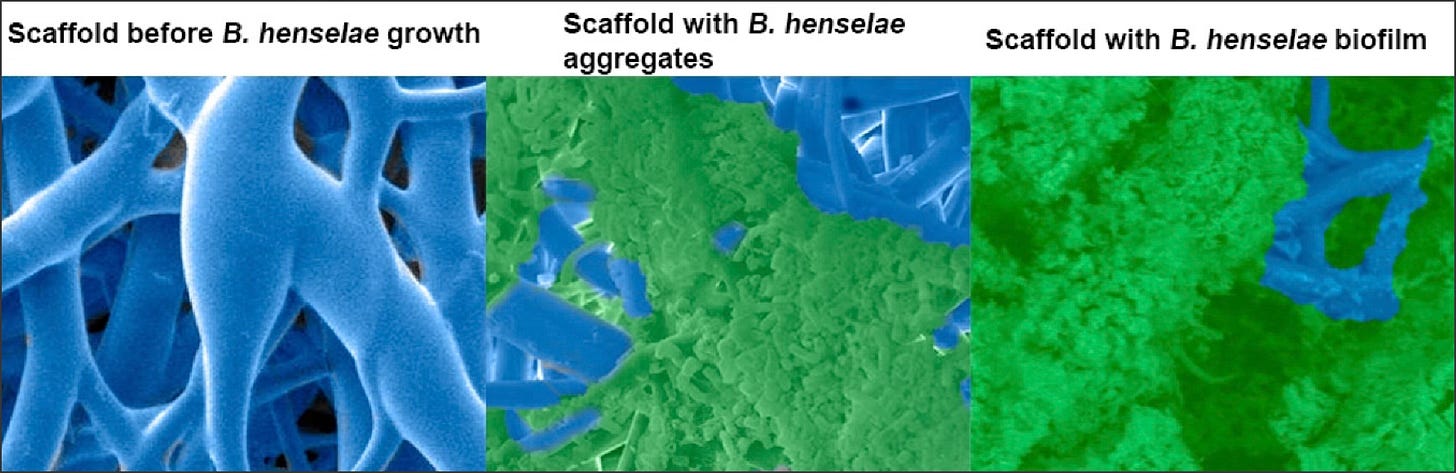
So it can hide throughout the body in areas where the immune system doesn’t easily penetrate and recognize the bacteria, not to mention, it can exist under biofilms in persister forms like Borrelia. Biofilms protect the bacteria from immune recognition and the effects of antibiotics.

[From: Okaro, U.; George, S.; Anderson, B. What Is in a Cat Scratch? Growth of Bartonella henselae in a Biofilm. Microorganisms 2021, 9, 835. https://doi.org/10.3390/microorganisms9040835%5D

Bartonella can manipulate host cell interactions to hide from immune detection by altering its surface proteins to avoid recognition (like Lyme disease), and possesses unique fat and sugar molecules (lipopolysaccharides) that minimize immune response activation; this often leads to prolonged, asymptomatic infections that can be difficult to diagnose with standard tests (it can hide in the body for years in some patients without symptoms), and then reactivate under certain conditions.

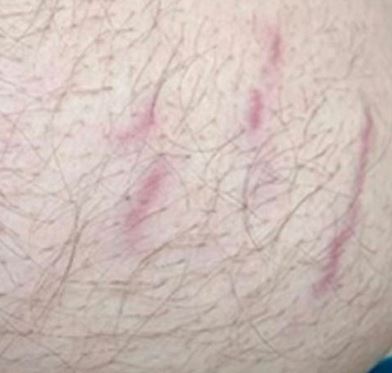
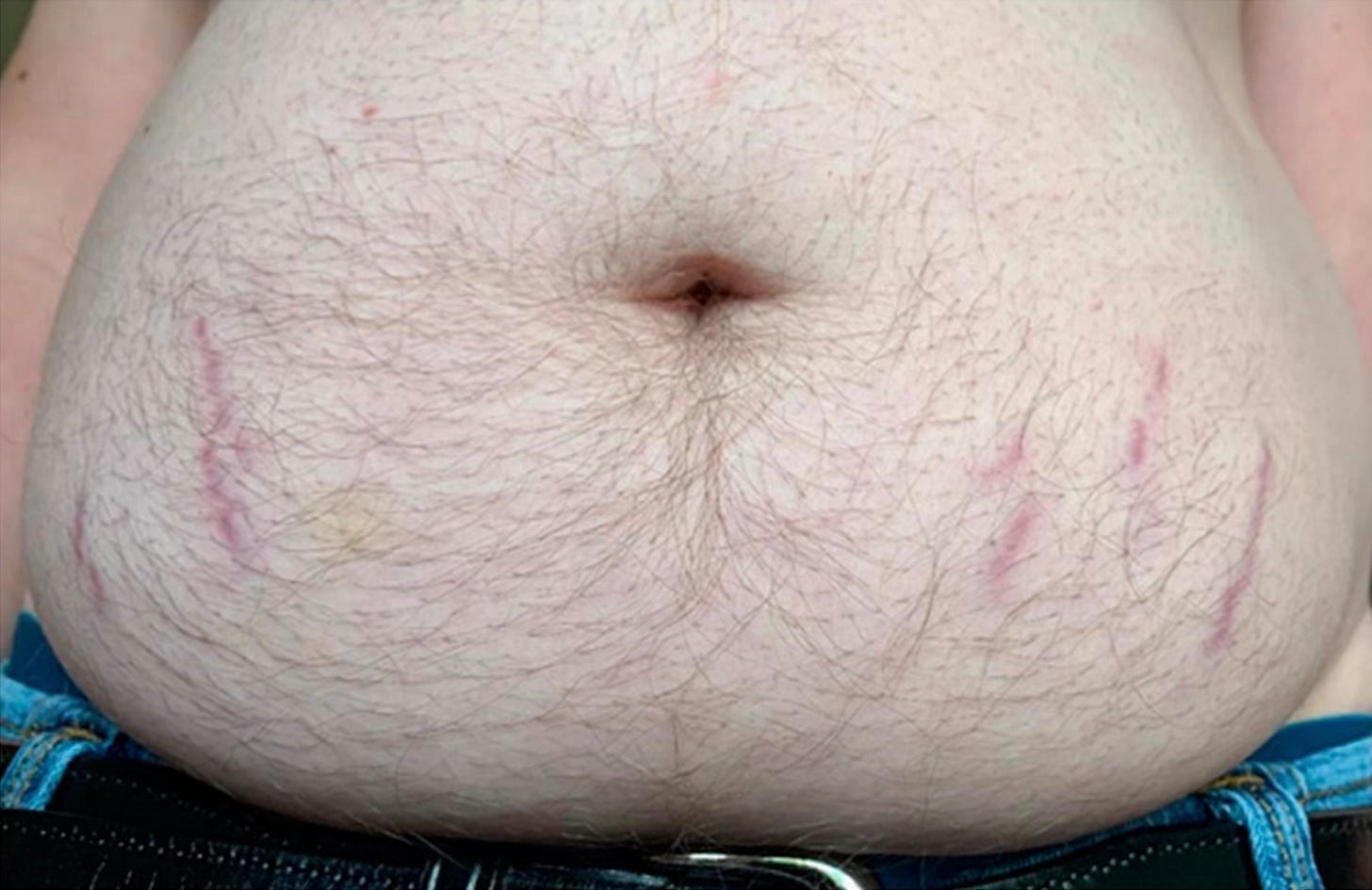
The patient below was in remission for one year after doing an 8-week course of double dose dapsone combination therapy (DDDCT), and then reactivated after being treated with antibiotics for a skin infection. This skin rash emerged when he got treated for cellulitis, which had nothing to do with his initial Lyme infection. You can see the classical Bartonella “stretch marks.”

[From: Horowitz, R.I.; Fallon, J.; Freeman, P.R. Comparison of the Efficacy of Longer versus Shorter Pulsed High Dose Dapsone Combination Therapy in the Treatment of Chronic Lyme Disease/Post Treatment Lyme Disease Syndrome with Bartonellosis and Associated Coinfections. Microorganisms 2023, 11, 2301. https://doi.org/10.3390/microorganisms11092301%5D

Reactivation often happens when the immune system is unable to control the infection, due in part to the immunosuppressive nature of the bacteria.

I’ve found multiple species of Bartonella in our sickest patients leading to chronic variable immune deficiency (CVID), just as I’ve found Borrelia causing immune suppression, along with mold toxicity and Long Covid affecting immune functioning.

The multisystemic nature of Bartonella infections

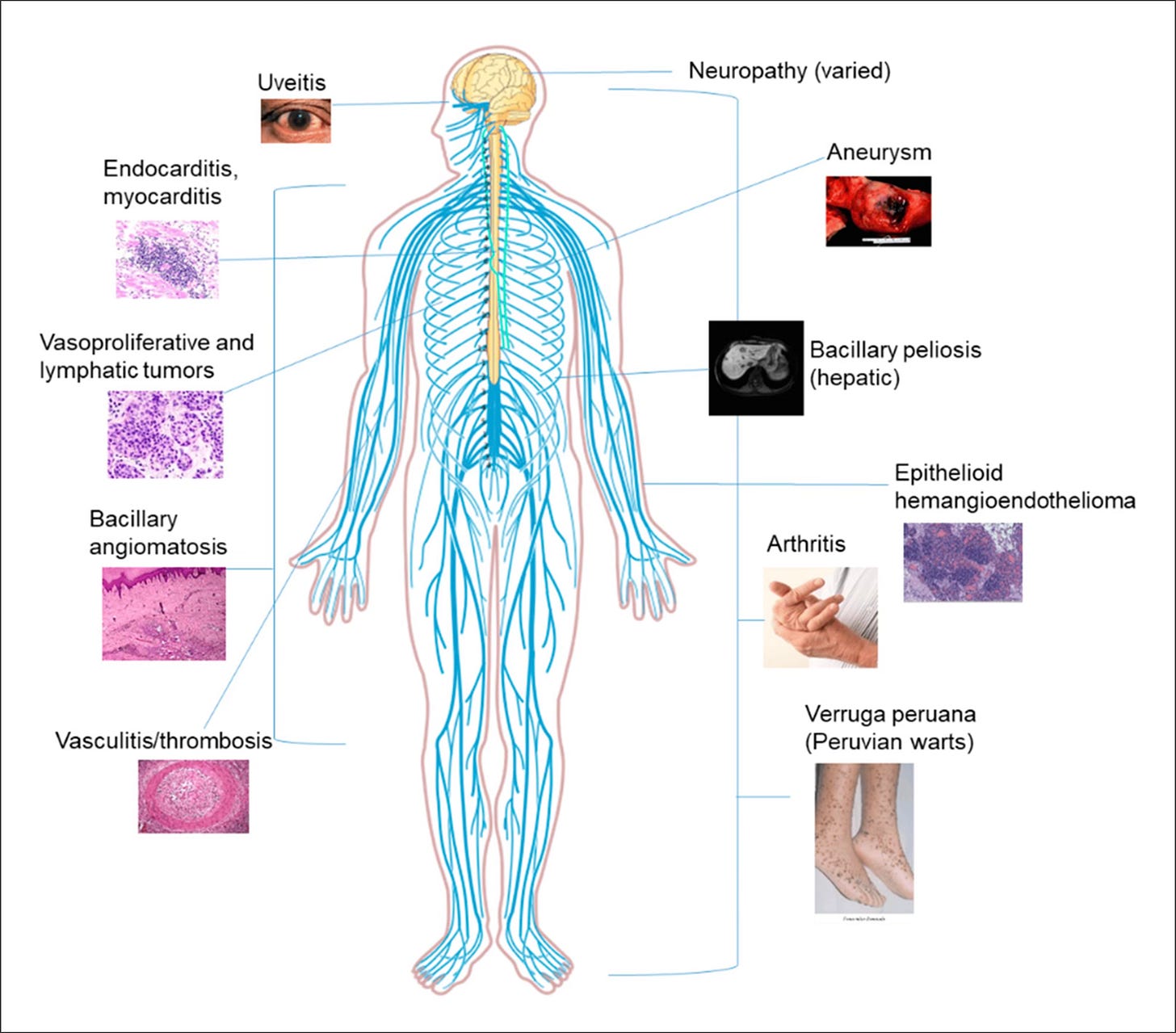
When we see patients with Bartonella, as I mentioned, it has no resemblance whatsoever with the classical cat-scratch disease I learned about in medical school. Bacteria like Bartonella cause similar symptoms to those seen in chronic Lyme disease, presenting as a “great imitator.”

It can result in chronic fatiguing, musculoskeletal, cardiopulmonary, neuropsychiatric illness and can cause fevers, chills, fatigue, headaches, muscle/joint and nerve pain, cognitive difficulties, insomnia, depression, anxiety, and cause inflammation in every body system imaginable, just like Lyme disease, Borrelia burgdorferi, does.

There can also be inflammation in the eyes (optic neuritis, conjunctivitis, uveitis, arterial and venous occlusions); the brain, surrounding structures and spinal cord (meningitis, encephalitis, transverse myelitis, seizure disorders), with associated Bartonella “rage” and psychosis (Bartonella, like Lyme disease, can cause a broad range of psychiatric manifestations, including but not limited to severe depression, anxiety, Obsessive Compulsive Disorder, Bipolar disorder and schizophrenia with psychosis).

It also can cause inflammation in the muscles (myalgias), joints (arthritis, osteomyelitis), nerves (neuropathy) and blood vessels (vasculitis), as well as the heart valves (endocarditis, including culture negative endocarditis), heart muscle (myocarditis), and sac surrounding the heart (pericarditis) causing chest pain with masses in the chest (mediastinum) and lymph nodes resembling non-Hodgkins lymphoma.

Even the gastrointestinal tract can be affected (nausea, vomiting, weight loss, bleeding), as can the liver (hepatitis), spleen (splenitis, enlargement), and skin, which oftentimes shows signs of inflammation (stretch marks, i.e. striae; granulomas, hard fibrous areas over the knuckles, elbows, and Bacillary angiomatosis, which are tumor-like masses, raised dark areas, papules, nodules, and lesions in the skin, bones, and organs).

Bartonella is a frequently found infection in those suffering from chronic Lyme disease—I’ve seen it in up to 80-90% of all of my chronically ill patients these days and should be considered in any and all cases of FUO (fever of unknown origin).

[From: Cheslock, M.A.; Embers, M.E. Human Bartonellosis: An Underappreciated Public Health Problem? Trop. Med. Infect. Dis. 2019, 4, 69. https://doi.org/10.3390/tropicalmed4020069%5D

Transmission of Bartonella

Part of the reason Bartonella has been a controversial topic in the Lyme community–at least among certain physicians and researchers–is because there has only been one study to date regarding tick transmission of the bacteria, and this was in European species of deer ticks (Ixodes ricinus) with one species, called Bartonella birtlesii.

The bacteria is, however, being found in ticks throughout the world, and other studies have shown the bacteria in different ticks and in chronic Lyme disease patients.

When I was co-chair of the HHS Tick-borne Disease Working Group (TBDWG) back in 2018, I had to fight to get Bartonella included as a co-infection of importance; whether all species are able to be transmitted by ticks or not, makes no difference.

Why? To date, the number of species able to transmit Bartonella keeps increasing over the years, and most of us are exposed to these vectors on a regular basis. The most common vectors transmitting the bacteria are fleas, mites, lice, keds (not the sneakers!), spiders, red ants, ticks (probable), sand flies, black and yellow flies, and mosquitoes.

Bartonella is showing up in a broad range of vectors, so it’s possible to get exposed from many different sources. That is why the vast majority of my sick patients are testing positive for it. In fact, for most of us living on this planet, I daresay we’ll all likely be exposed to Bartonella at some point during our lives. How we handle it, and whether we get symptoms, will depend on how our immune system is functioning.

Testing for multiple Bartonella species

The table below shows some of the most common species of Bartonella seen in human disease. This is not comprehensive, as there are now at least 45 species of Bartonella, and 18 of them or more are pathogenic [capable of causing disease].

Some of the most common ones are: B. henselae (Cat scratch disease, CSD; endocarditis, neuroretinitis, lymphadenopathy), B. quintana (Trench fever, endocarditis, bacillary angiomatosis [BA]), B. clarridgeiae (bacteremia, endocarditis, CSD, chest wall abscess), B. elizabethae (endocarditis, neuroretinitis),  B. bacilliformis (Carrion’s disease), B. koehlerae (endocarditis, including culture negative endocarditis), B. vinsonii subsp (bacteremia, endocarditis, fevers, neurological symptoms), B. berkhoffi (endocarditis, bacteremia, neurological symptoms), and B. grahamii  (neuroretinitis).

[From: Rebekah L. Bullard, Emily L. Olsen, Mercedes A. Cheslock, Monica E. Embers, Evaluation of the available animal models for Bartonella infections, One Health, Volume 18, 2024,100665, ISSN 2352-7714, https://doi.org/10.1016/j.onehlt.2023.100665.%5D

How do we test for Bartonella?

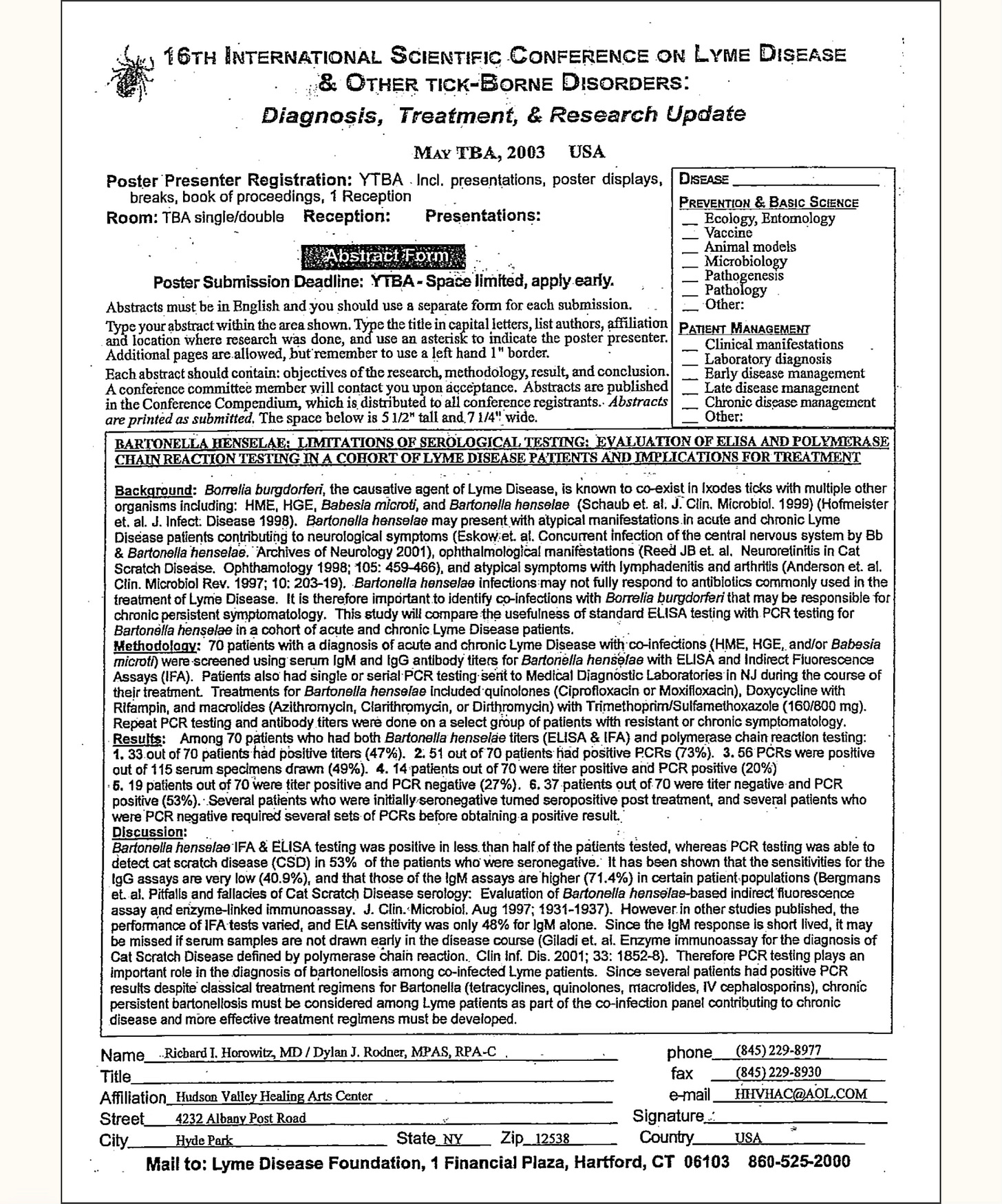
As you can see from the above table, testing for just one species makes no sense, because we can be exposed to a broad range of Bartonella species during our lifetime. I started to test for Bartonella over two decades ago. This is from an abstract I presented at the 16th International Scientific Conference on Lyme disease in 2003:

You can see from this abstract, even 22 years ago, by just testing for Bartonella henselae, one of the most common species, we found that using an ELISA and IFA (Immunofluorescent Assay) was positive in less than 50% of patients–but using DNA analysis with a PCR (Polymerase Chain Reaction) in the blood, we found 53% were positive when standard antibody assays were negative.

Which means the rule of thumb when testing for Bartonella is go as broad as you can. It is fine to start with local lab testing.

Level 1 testing

Using local labs like Quest, Labcorp, or Bioreference, you can send off antibody titers to B. henselae, B. quintana and B. bacilliformis, as well as PCRs and even a VEGF (vascular endothelial growth factor), an indirect marker of Bartonella exposure, indicating inflammation in the blood vessels (vasculitis). Often, however, you’ll want to use several specialty labs to prove infection.

Level 2 testing

If the above testing is negative, as it usually is, but you clinically suspect Bartonella, move on to the next level of tests. The three specialty labs include IgeneX laboratory (Bartonella IgM/IgG Immunoblots, Bartonella FISH [Fluorescent In-Situ-Hybridization test, an RNA test], T Labs (Bartonella FISH) with confocal microscopy, and Galaxy Laboratories, using their 4 species IFA antibody panel (for the most common species), and their ddPCR (direct droplet PCR) tests. The Bartonella Digital ePCR™ platform combines highly sensitive ddPCR technology with culture enrichment (BAPGM™).

I usually start with IgeneX laboratory and find that most of my patients have indeterminate or positive Immunoblots. Many times a negative Bartonella FISH test will turn positive later on during treatment, after the bacteria has been flushed out from the intracellular compartments where it’s been hiding.

I follow VEGF levels over time, as an indirect marker of Bartonella, when reactivation of infection is suspected. Keep in mind VEGF can be positive for other reasons (including Long Covid or cancer with metastases).

Level 3 testing

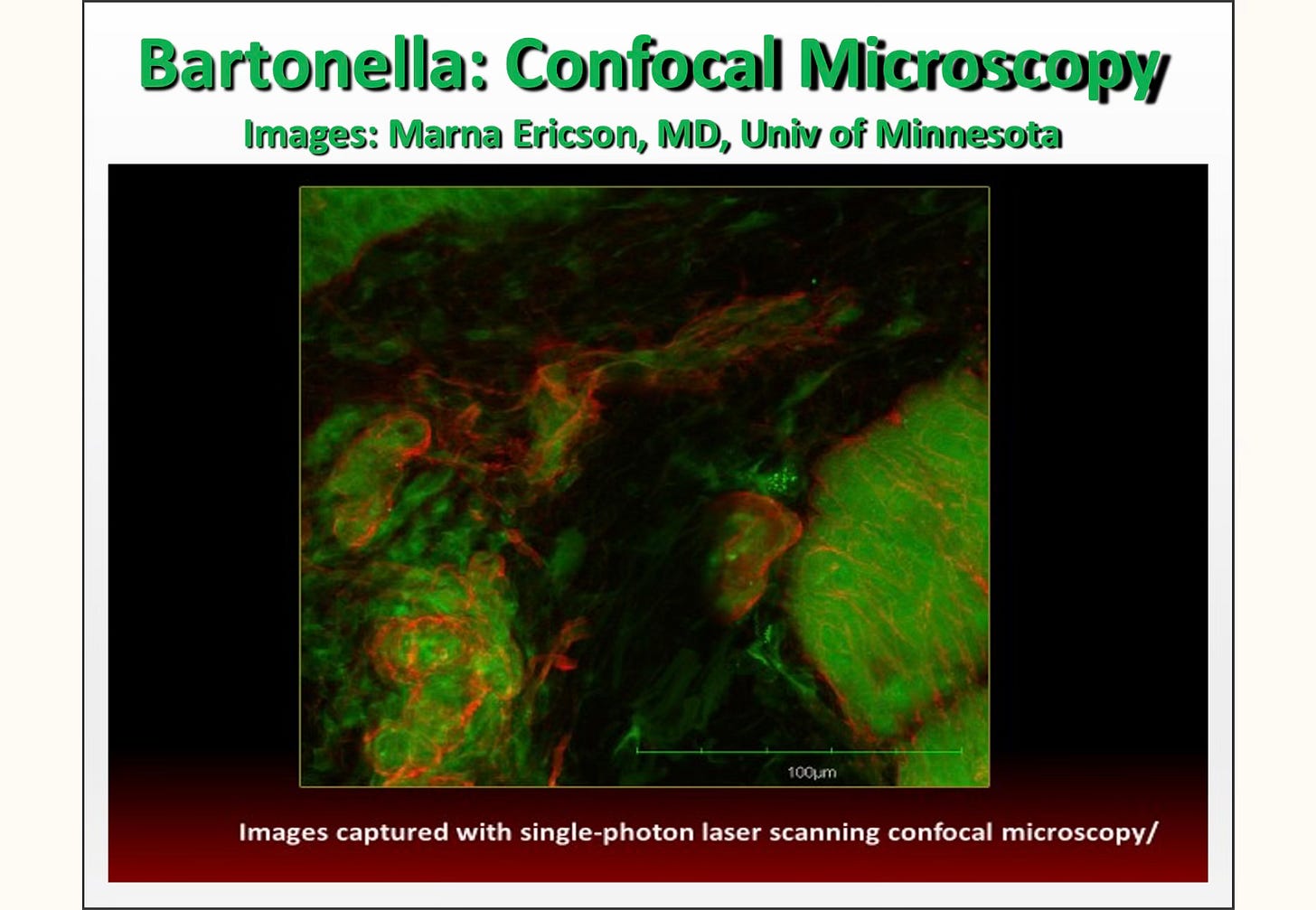
Skin biopsies can be done of the classical Bartonella rashes. Dr. Marna Ericson from T Labs has done this for me several times, and she found positive Bartonella in the skin, under biofilms, when it couldn’t be found through other methods.

I suspected Bartonella in two of my patients, but despite all classical testing, couldn’t prove exposure. The Bartonella fluoresces red under the microscope with this technique. I don’t suggest it as first level testing, but it can be very useful if you have looked for Bartonella using any and all of the above laboratories and methodologies.

Stay tuned for parts 2, 3, 4 and 5

In Part 2, I’ll discuss more about establishing a diagnosis as well as an overview of how other co-infections may overlap and affect Bartonella symptoms. Part 3 will discuss effective treatments, and Parts 4 and 5 go into more detail about these treatments.

Dr. Richard Horowitz has treated 13,000 Lyme and tick-borne disease patients over the last 40 years and is the best-selling author of  How Can I Get Better? and Why Can’t I Get Better? You can subscribe to read more of his work on Substack or join his Lyme-based newsletter for regular insights, tips, and advice

For more:

Lyme Questions Answered and Mighty Methylene Blue

https://mailchi.mp/3e52484072a9/4i7vbuaut5-4797205

Conversations with Marty Ross MD: 1/9/25

Good Morning,

I enjoyed answering your questions on Wednesday night.

We discussed:

  1. Introduction and Webinar Format. Dr. Marty Ross explained the structure of his Lyme disease webinar, outlining guidelines for participation, including the use of the chat box for submitting questions, and detailed plans to provide session recordings and summaries.
  2. Addressing Sleep Jerks and Neurological Symptoms. Severe sleep jerks occurring when falling asleep were attributed to neurological irritation caused by infections like Bartonella, Borrelia, or mold toxicity, and potential remedies including curcumin, glutathione, and GABA-boosting supplements were discussed.
  3. Managing Nervous System Agitation. Strategies to calm the nervous system included treating infections, detoxifying mold, using anti-inflammatory supplements like curcumin and glutathione, and calming nerves directly via GABA enhancers such as L-theanine.
  4. Ozone and IV Vitamin C may Cause Nerve Damage. The use of oxidizing agents like IV vitamin C and UV ozone can worsen oxidation injury in tick-borne infection patients, with Dr. Ross warning against their potential nerve-damaging effects.
  5. Role of Hyperbaric Oxygen Therapy. While hyperbaric oxygen therapy (HBOT) may aid in neurological healing and support mitochondria, it is often ineffective for directly killing infections based on clinical experiences.
  6. Exploring White Blood Cell Counts in Tick-Borne Infections. Chronic infections like Borrelia, Bartonella, or Babesia often cause reduced neutrophil counts, which may normalize over time with effective treatment.
  7. Pregnancy Considerations and Tick-Borne Disease Testing. Pregnancy planning was addressed with recommendations for comprehensive infection testing, symptom-tracking, and considerations for treatment strategies that align with maternal and fetal health.
  8. Re-testing for Infections to See Where Your Are Is Not Accurate. Retesting for tick-borne infections was deemed unreliable as antibodies can fluctuate; instead, tracking symptoms was suggested as a better measure of disease progression.
  9. Indirect vs Direct Testing for Borrelia. Dr. Ross explained the differences in sensitivity between indirect (antibody-based) and direct (PCR or culture) testing methods, emphasizing the limitations of direct tests in chronic infections.
  10. Babesia Treatment Length before Pregnancy. Recommendations for treating Babesia included maintaining a five-month treatment course, balanced with probiotics and potential yeast management, to optimize health before pregnancy.
  11. Addressing Gastrointestinal Symptoms during Treatment. GI symptoms during antimicrobial treatment were linked to gut flora disturbance and potential yeast overgrowth, calling for probiotics and antifungal options like Nystatin or CapriPlus.
  12. Management of Cytokines and Herx Reactions. Elevated cytokines causing inflammation and herx reactions were addressed with anti-inflammatory interventions, including quercetin or curcumin, and glutathione supplementation.
  13. Best Ways to Lower Cytokines and to Control Herx. Suggestions to lessen herx reactions included increasing glutathione levels and using quercetin for both anti-inflammatory and mast cell-stabilizing effects.
  14. Meaning of a Single White Brain Lesion on MRI. A single white lesion on MRI is typically attributed to aging or limited blood flow rather than Lyme disease, which usually exhibits diffuse demyelination patterns.
  15. You Don’t Have to Herx to Make Progress. Not all patients experience herx reactions during treatment, yet progress is still possible, particularly as the germ load decreases over time.
  16. Methylene Blue and Its Uses. Methylene blue was recognized as a therapy for both Borrelia and Bartonella due to its efficacy against persister cells, as well as for its FDA-approved use in addressing methemoglobinemia. Go here for a sound warning of methylene blue, which is a man-made monoamine oxidase inhibitor.  Animal and human studies have shown that when monoamine neurotransmitters are over-activated it eventually makes those taking it subdued, apathetic and disengaged from their own feelings, those around them, and life itself.
  17. Methylene Blue for Improved Thinking and Mitochondria Function. Beyond pathogen-killing properties, methylene blue improves mitochondrial function, aids ATP production, and has shown promise for reducing brain fog and increasing energy.
  18. Potential Risks and Side Effects of Methylene Blue. Risks of methylene blue include bladder irritation, intestinal discomfort, and staining issues, though real-world human risks are minimal when dosed properly.
  19. Mitochondrial Function and Repair. Recommendations for repairing mitochondrial damage included supplements like glutathione and ATP 360 to enhance cellular energy production.
  20. Exploring Histamine Reactions. Unusual reactions like hives or hyperactive histamine levels during treatment were linked to mast cell activation, which can be managed with stabilizers and antihistamines.
  21. Taking Enzymes and EDTA. Potential interactions between enzymes and EDTA supplements were addressed, with Dr. Ross advising additional research to confirm compatibility.
  22. Impact of Biocidin on Direct Testing Results. Biocidin, containing antimicrobial ingredients like oregano oil and garlic, may reduce the accuracy of direct tests like PCR by lowering pathogen levels in the blood.
  23. Causes of Visual Issues. Neuropathic visual challenges like light sensitivity and convergence insufficiency were discussed as possible symptoms of Bartonella, Borrelia, or mold toxicity.
  24. Causes of Air Hunger. Air hunger, frequently caused by Babesia or Bartonella, results from disrupted oxygen delivery due to inflamed red blood cells or reduced red blood cell quantity.
  25. Muscle Contractions and Spasms. Severe muscle spasms were linked to magnesium deficiency or neurological irritation, with treatment approaches including supplements and anti-inflammatory support.
  26. Thoughts on Steps if You Are Not Getting Better. Persistent illness despite treatment prompted considerations for comprehensive reviews of treatment history and potential alternative strategies like addressing limbic system dysregulation.
  27. Role of Limbic System Retraining for Chronic Symptoms. Limbic system retraining methods such as dynamic neural retraining (DNRS) were recommended for addressing chronic illness patterns after addressing active infections.
  28. Senescent Cells may Cause Ongoing Inflammation and Chronic Symptoms. Cell senescence caused by infections may perpetuate inflammation, with solutions including senolytics, fasting mimicking diets, and autophagy-promoting supplements.
  29. Timing of Limbic System Retraining and Physical Medicine. Brain retraining exercises and somatic therapies are best initiated after active infections are controlled to avoid exacerbating symptoms.
  30. Evaluating ZenMen for Bartonella. The herbal formula ZenMen showed promise in addressing Bartonella but lacked sufficient evidence on effectiveness or ingredient concentrations for strong recommendations.
  31. Role of Ketotifen for Mast Cell Activation. Ketotifen was highlighted as an effective option for calming histamine-driven nervous system agitation by blocking histamines and stabilizing mast cells

Sign Up for the January Lyme Q&A Series Through LymeUNITED

We’ve Moved. Conversations with Marty Ross MD is located inside the LymeUNITED membership support community. LymeUNITED is now FREE. But you will need to join LymeUNITED and then RSVP to participate in the Wednesday webinar.

  • Step 1. Join LymeUNITED for Free
  • Step 2. Click “Dr. Ross Q&A Webinar” in the left column navigation menu
  • Step 3. Click on the title of the event you want to attend to RSVP and to learn all about Conversations with Marty Ross MD using the live Zoom Room through LymeUNITED.

Join LymeUNITED Now.

Watch Webinar Recordings

You have two options to watch Conversations with Marty Ross, MD Recordings.

  1. With Recording Headings and Time Stamp. In LymeUNITED you can watch the recording which includes time stamps and headings to find what you are looking for more easily. Once you are in LymeUNITED go to the “Zoom Event Recordings” located in the left hand navigation menu. Watch on LymeUNITED.(Note: if you are not a member, you will need to join first to watch from the video link above. Join LymeUNITED Now.)
  2. No Headings or Time Stamps. Watch on YouTube. This version does not require you sign up for a Free LymeUNITED membership. But, it does not include time stamps or section headings. Watch on YouTube.

Get Help and Support

If you have questions, there are three ways that we can help you.

  1. Join LymeUNITED: A Community Powering Health for FREE. This is our online support community hosted by Marty Ross, MD with an active group of supporting members. You don’t have to do it alone.
  2. Participate in our free weekly Lyme Q&A webinar called Conversations with Marty Ross MD.
  3. Read, or watch our helpful articles in the online Lyme Guide at Treat Lyme by Marty Ross MD.

In Health,

Marty Ross MD

*Comment*

I’ve never heard of ozone and IV C causing nerve damage.  Ever.  My LLMD uses this as a mainstay in treatment and would never use them if they in fact caused nerve damage. Of course the toxin is always in the dose.