Archive for the ‘Babesia’ Category

Anaplasma, Babesia odocoilei, and Lyme in Ticks – Found Widely Across Eastern Canada

https://www.jelsciences.com/articles/jbres1586.pdf

Tick-Borne Pathogens Anaplasma phagocytophilum, Babesia odocoilei, and Borrelia burgdorferi Sensu Lato in Blacklegged Ticks Widespread across Eastern Canada

John D Scott1 *, Elena McGoey2 and Risa R Pesapane2,3*

Corresponding author(s) John D Scott, Upper Grand Tick Centre, 365 St. David Street South, Fergus, Ontario N1M 2L7, Canada E-mail: jkscott@bserv.com DOI: 10.37871/jbres1586 Submitted: 13 October 2022 Accepted: 26 October 2022 Published: 27 October 2022 Copyright: © 2022 Scott JD, et al. Distributed under Creative Commons CC-BY 4.0

Abstract

Blacklegged ticks, Ixodes scapularis, can transmit single or multiple infections during a tick bite. These tick-borne, zoonotic infections can become chronic and cause insidious diseases in patients.

In the present tick-pathogen study, 138 (48.9%) of 282 ticks collected from 17 sites in 6 geographic area in eastern Canada harbored various combinations of Borrelia burgdorferi sensu lato (Lyme disease), Anaplasma phagocytophilum (human anaplasmosis), and Babesia spp. (human babesiosis). Overall, 167 microbial infections were detected and, of these, 25 ticks had co-infections and two ticks had polymicrobial infections.

  • the prevalence of Babesia spp. was 15.2%
  • the ratio of Babesia odocoilei to Babesia microti was 41 to 1 with this sole B. microti being detected in Nova Scotia
  • we provide the first documentation of B. odocoilei in the Maritimes
  • Eastern Ontario had an infection prevalence for B. odocoilei of 25%―the highest among the areas surveyed in this study
  • the predominant Babesia sp. was B. odocoilei

Based on our findings, health-care practitioners need to recognize that I. scapularis ticks removed from patients may be carrying multiple tick-borne pathogens.  (See link for article)

_____________

For more:

  • https://madisonarealymesupportgroup.com/2021/05/28/study-shows-babesia-odocoilei-is-pathogenic-to-humans/  Study found B. odocoilei in two of 19 participants. DNA amplicons from these two patients are almost identical matches with the type strains of B. odocoilei in GenBank. In addition, the same two human subjects had the hallmark symptoms of human babesiosis, including night sweats, chills, fevers, and profound fatigue. Based on symptoms and molecular identification, we provide substantive evidence that B. odocoilei is pathogenic to humans. Dataset reveals that B. odocoilei serologically cross-reacts with Babesia duncani.

9 EpiPens in a Month: The Burden of Lyme, AGS, & More

https://www.lymedisease.org/9-epi-pen-a-month-mccord/

“Nine EpiPens in a month.” The burdens of Lyme, AGS, and more.

Cortney McCord delivered the following public comment at the Oct. 25 meeting of the federal Tick-Borne Disease Working Group.

I’m Cortney McCord, a registered nurse from Tupelo, Mississippi. Since May 8, 2021, I have been in a battle for my life against alpha-gal syndrome, Lyme borreliosis, bartonellosis, babesiosis, and mast cell activation syndrome.

I developed the most severe clinical presentation of alpha-gal syndrome: I react to airborne and contact exposures as well as dietary exposures to alpha-gal.

For me, it’s way more than just a meat allergy.

In January 2022, my infectious burden grew after I contracted COVID. COVID sent me into full-blown mast cell activation syndrome and made asthma and chronic urticaria a part of my daily life.

After being gaslighted by a local allergist who was ignorant of mast cell activation syndrome and airborne alpha-gal reactions, I made an appointment with expert allergist and former Working Group member Dr. Scott Commins. I am thankful to have him in my corner even if it takes a 12-hour drive to see him..

Patients like me do not have the luxury of time to sift through a myriad of ignorant doctors to find someone familiar with their condition. Because symptoms of tick-borne infections, alpha-gal syndrome, and mast cell activation syndrome are manifested in every organ system, physicians in every medical discipline should be literate in these conditions. Nobody deserves to be gaslighted because of a lack of physician education.

Another tick bite

I was bitten by another larval lone star tick at the end of this past August. In September alone, I had to use nine EpiPens. All of this from a tick the size of a speck of dirt.

In addition to long Lyme, I believe I have long COVID complicating my clinical picture.

Long COVID and long Lyme are very similar. Both Sars-CoV-2 and Borrelia burgdorferi are persistent in tissues. Both affect the host’s immune system. Both can cause mast cell activation syndrome. The medical world has no problem saying that COVID is a persistent “long” disease. Why is that not the case for persistent ‘long” Lyme borreliosis? There are stacks of good science supporting persistent “long” Lyme infection–some of which was done by current working group member Dr. Monica Embers.

I refuse to believe that this is the best that our medical and scientific community can do. Testing for both mast cell activation syndrome and tick-borne diseases is abysmal. That has to change. There should be a law requiring alpha-gal to be listed as a major allergen on every medicine, food, and consumable product that Americans have contact with. We need the Tick-borne Disease Working Group to continue in perpetuity because tick-borne conditions will affect more and more Americans as our planet warms.

Please help me. Ask Congress to address these needs. Thank you.

_________________

**Comment**

This is truly a complicated case, but most are in my experience.

While all patients deserve to be heard and treated properly, throwing yet more money at the TBDWG which is filled with people who do not believe in chronic infection, and which has done ZERO to help  patients is not helpful.  IF, and I mean IF any money is appropriated to study this, IMO – whoever is doing the work needs needs to be independently funded.  Researchers can not be the regular cast of characters – receiving grants from corrupt public health agencies, that is literally a Cabal regurgitating old, outdated, highly myopic work which is designed for a pre-determined outcome and completely ignores a huge subset of people.

Unfortunately many patients and even advocates are oblivious to the sordid backstory of the corrupt agencies controlling research and funding.  Insanity truly is doing the same thing over and over and expecting different results.  Time to ditch the public health monopoly and public health agencies controlling research, funding, doctors, testing, treatments, and “vaccines.”

For more:

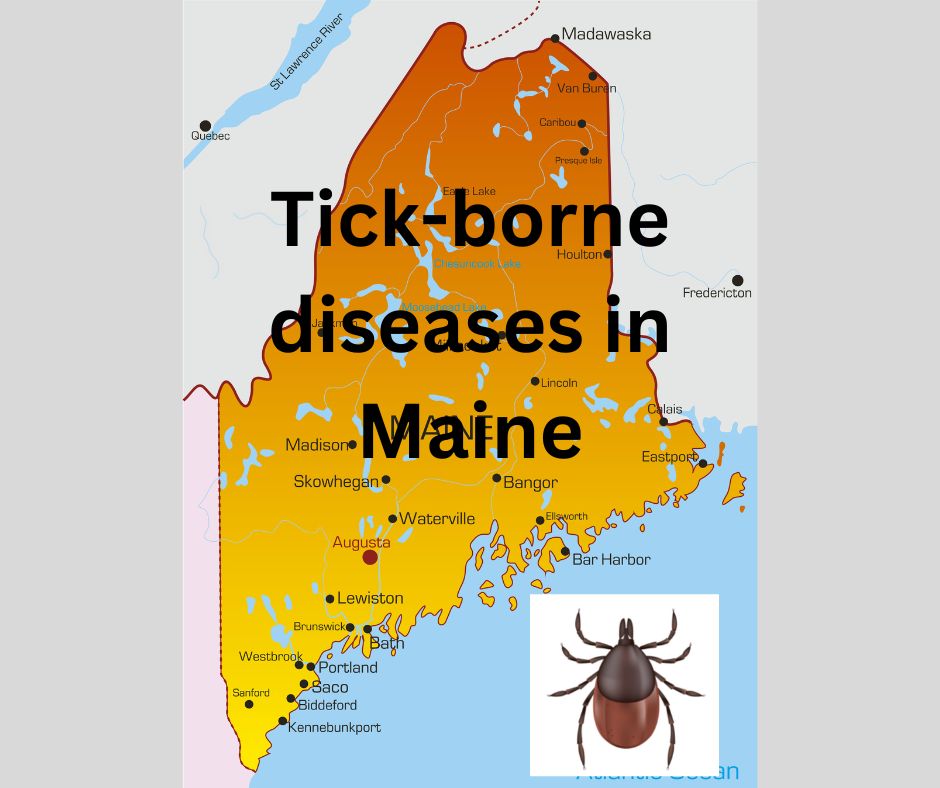
Record Numbers of Tick-borne Diseases in Maine This Year

https://www.lymedisease.org/tick-borne-diseases-in-maine/

Record numbers of tick-borne diseases in Maine this year

Sept. 30, 2022

Maine is on track to break records for several tick-borne diseases this year.

In a news release this week, the Maine Center for Disease Control and Prevention reported more than 1,900 cases of Lyme disease so far in 2022. This compares to about 1,500 last year.

The agency also recorded nearly 700 cases of anaplasmosis, over 160 cases of babesiosis, 10 cases of hard tick relapsing fever and four cases of Powassan encephalitis.

“This is a record high for Powassan encephalitis cases,” the agency said. “Maine is also on track to break records for anaplasmosis, babesiosis and Lyme disease cases this year.”

For more:

Disulfiram for Lyme Update #2

https://www.treatlyme.net/guide/antabuse-disulfiram-chronic-lyme-disease-treatment  Video and Article Here

Updated: 5/9/2022

About Disulfiram and Lyme Disease

By Dr. Marty Ross

For 30 percent of people with chronic Lyme disease, disulfiram is a game changer. This is a medicine historically used to treat people with alcoholism. Ground-breaking research from Dr. Rajadas’ Stanford University lab in 2016 showed disulfiram kills persister and growing forms of Lyme germs. Based on Rajada’s research, disulfiram is being repurposed as a Lyme antibiotic.

In alcoholism, disulfiram prevents the breakdown of a toxic alcohol by-product called acetaldehyde. As acetaldehyde builds up, it makes a person sick with severe abdominal pains and even headaches. In alcoholism, a person takes this medicine daily to prevent them from drinking out of fear it will cause severe illness if they drink alcohol.

In Lyme disease, we do not know the mechanism of how disulfiram works. But we do know in the laboratory that it kills Lyme persisters and is moderately effective at treating growing Lyme too. We also theorize that it breaks up biofilm slime layers that protect the germs.

(See link for article and 7 Min video)

____________________

**Comment**

Please read Dr. Ross’s article in full as well as watch the video.  He gives dosages as well as supportive supplements.

SUMMARY of effectiveness:

Dr. Liegner’s review of his patient’s charts shows:

  • 92.5 percent of people have varying degrees of improvements
  • 36.4 percent – enduring remission (clinically well for 6 months without anti-infectives)
  • 49.3 percent – fatigue as a side effect
  • 31.3 percent – psychiatric problems like anxiety, depression, hallucinations
  • 14.9 percent – neuropathy
  • 14.9 percent – liver enzyme elevation
  • 50 percent – unable to reach the target dose due to side effects (see dosing section below)

Dr. Ross states: Even if a person cannot reach the target dose, in my experience many get benefit by staying at a dose they can tolerate for at least 4 months.

Dr. Ross also states that Disulfiram doesn’t work for Bartonella but may help Babesia.

Please also see:

If you are a single person, please educate yourself about the psychiatric issues.  Never take this drug without a plan in place to have people checking in on you daily.  Take it from me – you can go mad as a hatter and be completely oblivious to your madness.  Been there, done that.  Neuropathy can also be a real side effect problem.

I’m still glad I tried it!

Emerging Tick Borne Diseases in Australia

http://

Emerging Tick Borne Diseases in Australia

Aug. 1, 2022

Dr. Peter Mayne

This recently uploaded video is about a 2011 paper found here:  https://www.researchgate.net/publication/221768948_Emerging_incidence_of_Lyme_borreliosis_babesiosis_bartonellosis_and_granulocytic_ehrlichiosis_in_Australia

Abstract

Borrelia burgdorferi, the causative agent of Lyme disease (LD), and Babesia, Bartonella, and Ehrlichia species (spp.) are recognized tick-borne pathogens in humans worldwide. Using serology and molecular testing, the incidence of these pathogens was investigated in symptomatic patients from Australia. Sera were analyzed by an immunofluorescent antibody assay (IFA) followed by immunoglobulin (Ig)G and IgM Western blot (WB) assays. Both whole blood and sera were analyzed for detection of specific Borrelia spp. DNA using multiplex polymerase chain reaction (PCR) testing. Simultaneously, patients were tested for Babesia microti, Babesia duncani, Anaplasma phagocytophilum, Ehrlichia chaffeensis, and Bartonella henselae infection by IgG and IgM IFA serology, PCR, and fluorescent in situ hybridization (FISH). Most patients reported symptom onset in Australia without recent overseas travel.
  • 28 of 51 (55%) tested positive for LD
  • Of 41 patients tested for tick-borne coinfections, 13 (32%) were positive for Babesia spp
  • nine (22%) were positive for Bartonella spp
  • Twenty-five patients were tested for Ehrlichia spp. and (16%) were positive for Anaplasma phagocytophilum while none were positive for Ehrlichia chaffeensis.
  • Among the 51 patients tested for LD, 21 (41%) had evidence of more than one tick-borne infection.
  • Positive tests for LD, Babesia duncani, Babesia microti, and Bartonella henselae were demonstrated in an individual who had never left the state of Queensland.
  • Positive testing for these pathogens was found in three others whose movements were restricted to the east coast of Australia.

The study identified a much larger tick-borne disease (TBD) burden within the Australian community than hitherto reported. In particular, the first cases of endemic human Babesia and Bartonella disease in Australia with coexisting Borrelia infection are described, thus defining current hidden and unrecognized components of TBD and demonstrating local acquisition in patients who have never been abroad.

_________________

**Comment**

I repost this because “the powers that be” in Australia continue to downplay and deny that Lyme exists in Australia, despite the plethora of suffering patients and many doctors who state otherwise.  (Remember, there are many, many strains of borrelia or Lyme)

Please see this recent article, “Growing evidence of an emerging tick-borne disease that causes a Lyme-like
illness for many Australia patients,” by 
Professor Noel. Campbell

It appears Mayne has also been disciplined for his stance on Lyme, like many other LLMDs.

Mayne states he has absolute proof that Lyme is in Australia as tissue samples at the bite sites that he took from two patients were positive for Lyme from DNA analysis.