The first local human case of anaplasmosis, a tick-borne disease, was reported this month in Washington state.
The case was discovered on Aug. 8 after a Whatcom County man in his 80s was hospitalized with severe disease after working in the brush in Mason County, according to the Washington State Department of Health. The man, likely bitten by an infected tick, is recovering.
While human cases of anaplasmosis have been identified in the state before, this is the first case that did not involve travel outside of Washington. There have been cases of dogs diagnosed with anaplasmosis after being bit within the state, DOH said.
In humans, symptoms include fever, headache, muscle aches and nausea and typically begin within one to two weeks of a tick bite. There is no vaccine to prevent the disease, which is treatable with antibiotics, according to DOH.
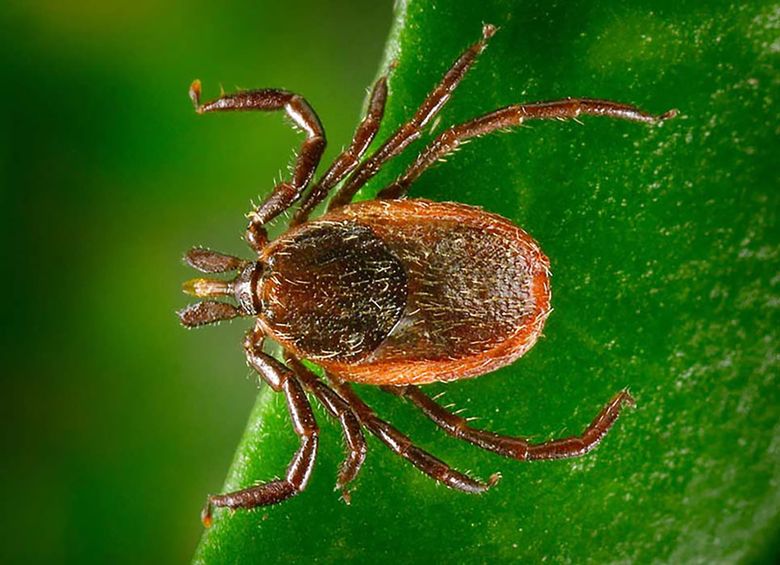
The disease is spread by the western blacklegged tick, which is found in the western parts of the state and along the eastern slopes of the Cascades.
“Not all tick bites will cause disease,” said Washington state epidemiologist Scott Lindquist in a news release. “However, people across Washington are at risk for tick-borne illnesses and should take precautions to prevent tick bites.”
Ticks can cause similar problems amongst humans, spreading diseases like tick-borne encephalitis (TBE) and Lyme disease, as well as some other, lesser-known diseases like babesiosis and boutonneuse fever. In 2019, a Hyalomma tick even infected a man in North Rhine-Westphalia with typhus.
Beware of “flying ticks”
Between July and October, the deer louse fly is also active in Germany. Sometimes known as a “flying tick”, these critters make a beeline for their target and then shed their wings when they land, burrowing down, biting and sucking blood from their victims. The ticks usually target animals, but attacks on humans have been recorded. They prefer to bite humans on the scalp or neck and can cause allergic reactions and even heart infections.
Deer louse flies are usually found in forests in the summer and autumn. It is recommended to thoroughly check any pets after walks in case they have been bitten by ticks. Ticks can be located using a flea comb and removed with adhesive tape or washed away. Any animal that has been infested with ticks should be bathed and washed.
(See link for article)
_____________________
The deer ked(Lipoptena cervi) mainly parasitize elk and deer but also bite humans. It is unknown whether it serves as a vector for transmission but the following have been detected:
While male deer flies collect pollen, female deer flies feed on blood, which they require to produce eggs.[4] Females feed primarily on mammals. They are attracted to prey by sight, smell, or the detection of carbon dioxide. Other attractants are body heat, movement, dark colours, and lights in the night. They are active under direct sunshine and hours when the temperature is above 22 °C (71.6°).[4] When feeding, the females use scissor-like mandibles and maxillae to make a cross-shaped incision and then lap up the blood. Their bite can be painful. Anti-coagulants in the saliva of the fly prevents blood from clotting and may cause severe allergic reactions. Parasites and diseases transmitted by the deer fly include tularemia, anthrax, anaplasmosis, equine infectious anemia, hog cholera, and filiariasis. DEET is not an effective repellent.[2]
New records show spread of parasitic deer flies across the United States
Date:
May 31, 2019
Source:
Penn State
Summary:
With flattened bodies, grabbing forelegs and deciduous wings, deer keds do not look like your typical fly. These parasites of deer — which occasionally bite humans — are more widely distributed across the US than previously thought, according to entomologists, who caution that deer keds may transmit disease-causing bacteria.
With flattened bodies, grabbing forelegs and deciduous wings, deer keds do not look like your typical fly. These parasites of deer — which occasionally bite humans — are more widely distributed across the U.S. than previously thought, according to Penn State entomologists, who caution that deer keds may transmit disease-causing bacteria.
“It was more or less known where deer keds are found, but very broadly,” said Michael Skvarla, extension educator and director of the Insect Identification Lab in the Department of Entomology at Penn State. “We don’t know if deer keds transmit pathogens (disease-causing microorganisms), but if they do, then knowing where they are at more precisely could be important in terms of telling people to watch out for them.”
The researchers collated records of the four North American deer ked species and produced the most detailed locality map of these flies to date, documenting ten new state and 122 new county records. The researchers published their results in a recent issue of the Journal of Medical Entomology. They also provided an illustrated species-identification key.
The team harnessed citizen science — collection of data by the public — to gather deer ked records from the U.S. and Canada. In addition to scouring museum databases and community websites like BugGuide and iNaturalist, the team distributed deer ked collection kits to hunters as part of the Pennsylvania Parasite Hunters community project. The researchers also collected flies directly from carcasses at Pennsylvanian deer butcheries.
“I really like using citizen science information,” said Skvarla. “It often fills in a lot of gaps because people are taking photographs in places that entomologists may not be going. Deer keds are the perfect candidate for citizen science. They’re easy to identify because there’s only four species in the country and because they’re mostly geographically separated. And as flat, parasitic flies, they’re really distinctive. You couldn’t do this with a lot of insect groups because they’d be too difficult to identify from photographs.”
The European deer ked, Lipoptena cervi, thought to have been introduced from Europe, previously was reported to occur throughout the Northeast region. The researchers newly report this species from Connecticut, Rhode Island, Vermont, and as far south as Virginia. In Pennsylvania, it occurs throughout the state, with 26 new county records.
The researchers also describe new records of the neotropical deer ked, L. mazamae, from North Carolina, Tennessee and Missouri — increasing its range further north and east than had previously been reported.
In western North America, two deer ked species, L. depressa and Neolipoptena ferrisi, are found from British Columbia through the U.S. and into Mexico — and as far east as South Dakota. The researchers newly report these species from Nevada and Idaho.
Deer keds are usually found on deer, elk and moose, but occasionally bite humans and domestic mammals. Although several tick-borne pathogens — including bacteria that cause Lyme disease, cat scratch fever and anaplasmosis — have been detected in deer keds, it is unknown whether they can be transmitted through bites.
“In Pennsylvania you have a lot of hunters,” said Skvarla.
“Deer keds can run up your arm while you’re field dressing a deer and bite you. If these insects are picking up pathogens from deer, they could transmit them to hunters. With two million hunters in the state, that’s not an insignificant portion of the population. We don’t want to scare people, but people should be aware there is the potential for deer keds to transmit pathogens that can cause disease.”
The researchers will next screen hundreds of deer keds for pathogens. They will also dissect some insects to screen the salivary glands and guts separately. According to Skvarla, this approach will give a good indication of whether deer keds could transmit pathogens through bites, or whether the bacteria are merely passed through the gut after a blood meal.
In Pennsylvania, after deer keds emerge from the soil each fall, they fly to a host and immediately shed their wings, usually remaining on the same host for life. Females produce just one egg at a time — it hatches inside her, and she feeds the growing larva with a milk-like substance. When the larva is almost fully developed, it drops to the soil and forms a pupa, eventually emerging as a winged adult. If disease-causing bacteria are transmitted from mother to offspring, newly emerged flies could pass on pathogens to hosts. Pathogens could also be spread when bacteria-harboring flies jump between animals in close contact.
The other researcher working on this project was Erika Machtinger, assistant professor of entomology at Penn State.
Lipoptena cervi, known as the deer ked, is an ectoparasite of cervids traditionally found in northern European countries such as Norway, Sweden, and Finland. Although rarely reported in the United States, this vector recently has been shown to carry Borrelia burgdorferi and Anaplasma phagocytophylum from specimens collected domestically. Importantly, it has been suggested that deer keds are one of the many disease-carrying vectors that are now found in more expansive regions of the world due to climate change. We report a rare sighting of L cervi in Connecticut. Additionally, we captured a high-resolution photograph of a deer ked that can be used by dermatologists to help identify this disease-carrying ectoparasite.
Practice Points
There are many more disease-carrying arthropods than are routinely studied by scientists and physicians.
Even if the insect cannot be identified, it is important to monitor patients who have experienced arthropod assault for signs of clinical diseases.
Case Report
A 31-year-old man presented to the dermatology clinic 1 day after mountain biking in the woods in Hartford County, Connecticut. He stated that he found a tick attached to his shirt after riding (Figure). Careful examination of the patient showed no signs of a bite reaction. The insect was identified via microscopy as the deer ked Lipoptena cervi.
Comment
Lipoptena cervi, known as the deer ked, is an ectoparasite of cervids traditionally found in Norway, Sweden, and Finland.1 The deer ked was first reported in American deer in 2 independent sightings in Pennsylvania and New Hampshire in 1907.2 More recently deer keds have been reported in Massachusetts, New York, Pennsylvania, and New Hampshire.3 In the United States, L cervi is thought to be an invasive species transported from Europe in the 1800s.4,5 The main host is thought to be the white-tailed deer (Odocoileus viginianus). Once a suitable host is found, the deer ked sheds its wings and crawls into the fur. After engorging on a blood meal, it deposits prepupae that fall from the host and mature into winged adults during the late summer into the autumn. Adults may exhibit swarming behavior, and it is during this host-seeking activity that they land on humans.3
Following the bite of a deer ked, there are reports of long-lasting dermatitis in both humans and dogs.1,4,6 One case series involving 19 patients following deer ked bites reported pruritic bite papules.4 The reaction appeared to be treatment resistant and lasted from 2 weeks to 12 months. Histologic examination was typical for arthropod assault. Of 11 papules that were biopsied, most (7/11) showed C3 deposition in dermal vessel walls under direct immunofluorescence. Of 19 patients, 57% had elevated serum IgE levels.4
In addition to the associated dermatologic findings, the deer ked is a vector of various infectious agents. Bartonella schoenbuchensis has been isolated from deer ked in Massachusettes.7 A recent study found a 75% prevalence of Bartonella species in 217 deer keds collected from red deer in Poland.5 The first incidence of Borrelia burgdorferi and Anaplasma phagocytophylum in deer keds was reported in the United States in 2016. Of 48 adult deer keds collected from an unknown number of deer, 19 (40%), 14 (29%), and 3 (6%) were positive for B burgdorferi, A phagocytophylum,and both on polymerase chain reaction, respectively.3
A recent study from Europe showed deer keds are now more frequently found in regions where they had not previously been observed.8 It stands to reason that with climate change, L cervi and other disease-carrying vectors are likely to migrate to and inhabit new regions of the country. Even in the current climate, there are more disease-carrying arthropods than are routinely studied in medicine, and all patients who experience an arthropod assault should be monitored for signs of systemic disease.
Uptick: UWSP researchers use DNA to link Lyme disease, infected ticks
May 26, 2022
Diane Caporale has collected thousands of ticks during her career as a biology professor and researcher. Since moving to Wisconsin 1999, she has had help. Nearly 500 students in her molecular biology courses at UW-Stevens Point have collected ticks each year from 2000-2020.
Tick surveillance is useful for predicting human disease risk. What’s especially significant about Caporale’s research is its duration. This is the first continuous surveillance of tick-borne pathogens for two decades in the nation. “It’s been quite an enormous, exciting project,” she said.
“It was started in 2000 — before I was born — so it’s kind of crazy the amount of time this has been going on,” said Cody Korth, a student researcher in her lab.
Caporale first began collecting ticks in the Northeast, where she grew up.
When she was asked to develop a molecular biology course at UW-Stevens Point, it was an opportunity to broaden her research into tick-borne diseases. During the first week of October each year since 2000, her molecular biology students collect blacklegged ticks (Ixodes scapularis). It gives students the opportunity to use DNA as a tool to forecast the incidence of disease.
Blacklegged (or deer) ticks carry three pathogens that can cause human disease. Caporale’s students analyzed all three: Borrelia burgdorferi, the bacterium responsible for Lyme disease; Anaplasma phagocytophilum, a bacterium that causes Anaplasmosis; and Babesia microti, a protozoan that causes Babesiosis. The latter presents with malaria-like symptoms, while the others have flu-like symptoms.
Caporale and her students conducted research in what is known as a microgeographic region that is also convenient to campus: the Schmeeckle Reserve trail around Lake Joanis. They use white flannel flags to collect the ticks – a total of 2,008 in 21 years.
The students extracted DNA and analyzed it for the presence of three pathogens that cause human diseases, then sequenced the DNA to learn what percentage of ticks were infected with one, two or all three pathogens, said McKenzi Fernholz, who took molecular biology in 2019.
Cody Korth and McKenzi Fernholz are student researchers in Biology Professor Diane Caporale’s lab at UW-Stevens Point, analyzing 20 years of data on ticks.
They found each pathogen became more prevalent over time. In 2000, Borrelia burgdorferi, which causes Lyme disease, was found in just the northwest segment of the trail. Seven years later, it reached detectable levels around the perimeter of the lake. The number of ticks with Borrelia peaked in 2015, which was also a year when a high number of ticks were infected with more than one pathogen.
Anaplasma was first detected in 2004 in the southeast segment. It reached detectable levels all around the lake within four years. Babesia was first detected in 2007 in the southwest region. It took eight years to reach detectable levels around the lake.
The highest number of infected ticks – 56% — was recorded in 2014.
An increase in the number of infected ticks in one year was related to an increase in tick-borne illness, notably Lyme disease, the following year, Korth said. The students compared their data with human disease statistics from Portage County and state public health units.
“If it’s increasing here, it’s increasing elsewhere,” said Caporale, who has also researched ticks in the Kettle Moraine area, Colfax and Whitewater. Overall, cases of Lyme disease oscillate, she said.
Caporale’s students also monitored rainfall each June, average winter temperature in December through February and snow depth for conditions that favor ticks. More eggs hatched when rainfall was higher the prior year, and more snow increased the chance of winter survival, Caporale said.
Tick numbers around Lake Joanis dropped significantly in 2017. That summer, strong winds downed numerous trees on the north end of the trail. When trees were removed, so was refuge for white-footed mice, the main reservoir for these pathogens. Also, invasive buckthorn – a preferred vegetation for ticks – was removed or treated with herbicide. In fall 2021 no ticks were found along the lake trail where extensive restoration occurred. Students did find ticks around the Schmeeckle Reserve Visitor Center carrying Borrelia and Anaplasma.
As independent study researchers in Caporale’s lab, Fernholz and Korth analyzed all the sequenced DNA data collected over the 21 years and determined trends in tick infection rates. They developed graphs and charts to display the results and presented them at the College of Letters and Science research symposium earlier this month. The results will be submitted for publication this summer.
It’s interesting to observe the correlation between infection rates in ticks and humans, Korth said, which means that tick surveillance may be able to predict Lyme disease trends in the following year. “It’s worth the time to take the samples every year because when we compared our tick infection rates to the cases of Lyme disease in humans in Portage County, we saw a one-year difference consistently with pathogen emergence.”
Korth, a biochemistry major from Marshfield, enjoys doing research independently in the lab and said it’s helped him develop critical thinking and problem-solving skills outside of the classroom. “Research is why I came to UW-Stevens Point. I was pleased with how easy it was to get involved.”
Doing undergraduate research with Caporale helped Fernholz, of West Salem, realize she wants to pursue a career in research. “It allowed me to get a sense of what a career in molecular biology research would be like.” A biochemistry and Spanish major, she graduated in May.
Helping students learn research techniques and be inspired to pursue research careers is a proud legacy for Caporale, who will retire in August.
Birds vs. rodents in transmitting tick-borne pathogens
While white-footed mice are considered to be the primary reservoir for tick-borne pathogens, the role of birds as hosts in transmitting such infectious agents is not fully understood. A new study examines the transmission patterns in Canada between the two groups.
Researchers collected ticks and rodents from the Mont Saint-Bruno National Park in Quebec, an area endemic for Lyme disease. They aimed to identify:
Distribution of tick-borne pathogens B. burgdorferi, B. miyamotoi, and A. phagocytophylum in ticks and tick hosts;
Evaluate the contribution of birds as hosts to B. burgdorferi transmission compared with white-footed mice;
Determine risk factors for tick infestation and B. burgdorferi infectivity among hosts.
They collected 25,150 larvae, 4,177 nymphs and 232 adult blacklegged ticks. And trapped 665 mice, 13 Eastern chipmunks, 15 Northern short-tailed shrew and one Red-backed vole.
The team found 470 (70.68%) mice, 12 (92.31%) chipmunks and 2 (13.33%) shrews infested with at least one tick. Ticks were not found on the only vole captured. Ticks collected from these small mammals were predominantly attached to the ears.
Approximately 70% of mice and 92% of chipmunks were infested with at least one tick, compared with 29% of captured birds.
Additionally, 849 birds belonging to 50 different species were captured. Researchers found ticks on 28.86% of the birds, “with the majority of these ticks removed from members of the Passerellidae (37.41%), Turdidae (31.11%) and Parulidae (17.04%) families,” writes Dumas.
How many hosts were infected with tick-borne pathogens?
When reviewing tick-borne pathogens detected in hosts tissue, the authors found 33.92% of mice were positive for B. burgdorferi, 0.48% for B. miyamotoi and none for A. phagocytophilum.
Meanwhile, 84.62% of chipmunks were positive for B. burgdorferi, 15.38% for B. miyamotoi and 7.69% for A. phagocytophilum.
“Pathogens were not detected in any of the bird biopsies (n = 262),” the authors point out. However, birds may not be infected but they are responsible for carrying the ticks to new areas. They also supply a much needed meal for the ticks.
“Our results support the relevance of considering the role of hosts other than the white-footed mouse in eco-epidemiological studies of tick-borne diseases,” the authors suggest.
Dumas A, Bouchard C, Dibernardo A, et al. Transmission patterns of tick-borne pathogens among birds and rodents in a forested park in southeastern Canada. PLoS One. 2022;17(4):e0266527. Published 2022 Apr 7. doi:10.1371/journal.pone.0266527
For far too long, the white-footed mouse has been given too much credit for the spread of ticks and TBIs. Many do not know that reptiles are also reservoirs. And birds can travel great distances dropping ticks along the way that are from other parts of the globe.
Odocoileus virginianus (white-tailed deer) is the primary host of adult Ixodes scapularis (deer tick). Most of the research into I. scapularis has been geographically restricted to the northeastern United States, with limited interest in Oklahoma until recently as the I. scapularis populations spread due to climate change. Ticks serve as a vector for pathogenic bacteria, protozoans, and viruses that pose a significant human health risk. To date, there has been limited research to determine what potential tick-borne pathogens are present in I. scapularis in central Oklahoma. Using a one-step multiplex real-time reverse transcription-PCR, I. scapularis collected from white-tailed deer was screened for Anaplasma phagocytophilum, Borrelia burgdorferi, Borrelia miyamotoi, Babesia microti, and deer tick virus (DTV). Ticks (n = 394) were pooled by gender and life stage into 117 samples. Three pooled samples were positive for B. miyamotoiand five pooled samples were positive for DTV. This represents a minimum infection rate of 0.8% and 1.2%, respectively. A. phagocytophilum, B. burgdorferi, and B. microti were not detected in any samples. This is the first report of B. miyamotoi and DTV detection in Oklahoma I. scapularis ticks. This demonstrates that I. scapularis pathogens are present in Oklahoma and that further surveillance of I. scapularis is warranted.
____________________
**Comment**
A few points:
This article is based upon the faulty premise that somehow “climate change” is causing tick and disease proliferation. This has been proven to be false yet is continually regurgitated as truth. This; however, does not mean “the powers that be” are not committing heinous acts of “climate engineering” which IS causing very real destruction of life.
This recent article proves Spain has admitted recently spraying deadly chemtrails as part of a secret UN program to fight COVID.
Four state meteorological agency whistleblowers announced in 2015 that planes were regularly spraying lead dioxide, silver iodide, and diatomite throughout Spain to ward off rain and allow temperatures to riseto create a summery climate for tourism as well as the agricultural sector – producing cold drops of great intensity.
We’ve also been told ad nauseum that Lyme doesn’t exist in Oklahoma and while this research also didn’t find it, it did discover B miyamotoi which symptoms are similar to Lyme. But again, just because they didn’t find it, doesn’t mean it isn’t there. The black legged tick is abundant in Oklahoma.