https://danielcameronmd.com/patient-facial-palsy-from-lyme-disease-fails-treatment/

PATIENT WITH FACIAL PALSY FROM LYME DISEASE FAILS TREATMENT

facial palsy from lyme disease in elderly man

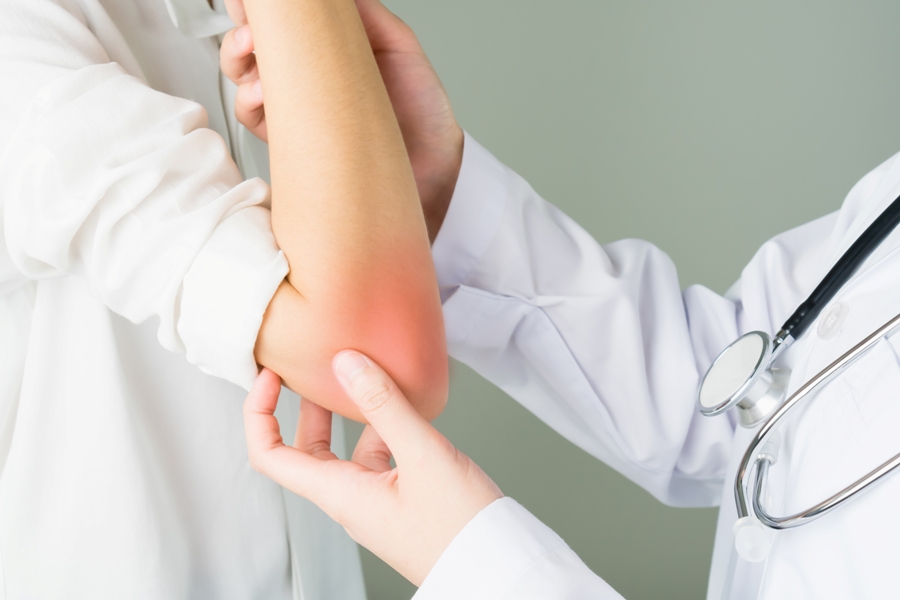
Facial palsy, sometimes referred to as Bell’s palsy, is considered an early sign of Lyme disease. When the infection is diagnosed in the early stage it is typically easier to treat. However, this case report features an elderly patient with facial palsy from Lyme disease who remained ill following treatment.

In this case report, Hareem and colleagues describe a 71-year-old man with facial palsy from Lyme disease who failed treatment. The authors offer an inside look at what led up to the failed treatment.¹

Steroids associated with treatment failure?

The man was initially treated in August 2017 for an upper respiratory tract infection and prescribed the steroid dexamethasone. The previous year, he had a tick bite but no rash. One week later he was seen for a sore throat, right-sided ear pain, headache, dizziness, nausea, neck pain, and tinnitus. He had slight asymmetry of his smile.

Lyme disease Western blot test results were positive and the patient was prescribed doxycycline. However, several days later, the man returned with a complete facial palsy from Lyme disease. His condition had worsened.

“On his next visit, he complained of continuing right-sided headache and neck pain along with right-sided hearing loss, right-sided otalgia, dizziness, and nausea,” wrote the authors. His treatment was changed to cefuroxime.

Gait problems, hearing loss

Two weeks later his condition was even worse. “He continued to complain of gait instability and otalgia with hearing loss and neck pain,” wrote the authors. His treatment was changed to 30 days of doxycycline. He had an 80% hearing loss in the right ear and 25% in the left ear on audiology testing.

Authors’ conclusion

The man was diagnosed with “chronic Lyme disease from failed antibiotic therapy with simultaneous unilateral involvement of the seventh and eighth cranial nerves.”  He was prescribed an additional 4 weeks of doxycycline but remained ill. 

Wormer and colleagues previously discussed treatment failures in Lyme disease patients treated with steroids.2

Editor’s Note:  The 71-year-man never received a course of intravenous ceftriaxone. The authors did not discuss other diagnostic or treatment options.

References:
  1. Hareem A, Dabiri I, Zaheer N, Burakgazi AZ. Medically Refractory Neuroborreliosis Case Presented with Coexistance Involvements of Cranial 7 and 8 Nerves. Neurol Int. Mar 18 2021;13(1):125-129. doi:10.3390/neurolint13010012
  2. Wormser GP, Brady KC, Cho MS, Scavarda CA, McKenna D. Efficacy of a 14-day course of amoxicillin for patients with erythema migrans. Diagn Microbiol Infect Dis. Jun 2019;94(2):192-194. doi:10.1016/j.diagmicrobio.2019.01.003

____________________

For more:

https://childrenshealthdefense.org/defender/fda-warning-jj-vaccine-serious-rare-autoimmune-disorder/?

FDA to Add Warning to J&J Vaccine of ‘Serious But Rare’ Autoimmune Disorder

The U.S. Food and Drug Administration will announce a new warning on Johnson & Johnson’s COVID vaccine saying the shot is linked to Guillain–Barré syndrome. In April, the agency added a warning about blood clotting disorders to the J&J shot.

The U.S. Food and Drug Administration (FDA) will announce a new warning on Johnson & Johnson’s (J&J) COVID vaccine saying the shot has been linked to Guillain–Barré syndrome (GBS), a “serious but rare” autoimmune disorder. The Washington Post attributed the news to “four individuals familiar with the situation.”

According to The New York Times, the chances of developing GBS after receiving the J&J shot is three to five times higher than would be expected in the general population in the U.S.

About 100 preliminary reports in the U.S. of GBS have been detected after receiving J&J’s vaccine, the Centers for Disease Control and Prevention (CDC) said in a statement to CNN today. Most cases were reported about two weeks after vaccination, mostly in men 50 and older.

The CDC’s Advisory Committee on Immunization Practices (ACIP) is expected to discuss the GBS cases during an upcoming meeting, the CDC said.

GBS is a rare neurological disorder in which the body’s immune system mistakenly attacks part of its peripheral nervous system — the network of nerves located outside of the brain and spinal cord — and can range from a very mild case with brief weakness to paralysis, leaving the person unable to breathe independently.

While the cause of GBS is not fully known, it often follows infection with a virus and has been linked to other vaccines.

The FDA has concluded the benefits of the vaccine outweigh any danger, but will include the proviso in fact sheets about the drug for providers and patients.

“It’s not surprising to find these types of adverse events associated with vaccination,” said Dr. Luciana Borio, former acting chief scientist at the FDA. The data collected so far by the FDA, Borio said, suggest the vaccine’s benefits “continue to vastly outweigh the risks.”

Reports of GBS are rare, the CDC said, “but do likely indicate a small possible risk of this side effect following” the J&J vaccine.

Federal officials identified the 100 suspected cases of GBS among recipients of the J&J shot through the CDC’s Vaccine Adverse Events Reporting System (VAERS) — a federal monitoring system that relies on patients and health care providers to report adverse effects of vaccines.

According to the most recent data from VAERS, between Dec. 14, 2020 and July 2, there were 398 reports of GBS with 187 of cases attributed to Pfizer, 159 to Moderna and 76 cases to J&J.

No link has been found between GBS and mRNA COVID vaccines developed by Pfizer-BioNTech or Moderna despite reports in VAERS.

The VAERS database indicates onset of GBS symptoms after the J&J vaccine within about three weeks of vaccination, The New York Times reported. One recipient, a 57-year-old man from Delaware who had suffered both a heart attack and a stroke within the last four years, died in early April after he was vaccinated and developed GBS.

As The Defender reported July 8, a third grade teacher developed GBS three weeks after receiving J&J’s COVID vaccine. Stacie [last name unknown] went to the emergency room several times after getting the shot because she was experiencing numbness of the lower extremities, but was sent home when tests were inconclusive.

The numbness continued to progress and Stacie eventually lost her ability to stand and walk. She was then hospitalized and diagnosed with GBS.

Gary Spaulding was an active landscaper who experienced a severe headache after receiving J&J’s COVID vaccine, causing him to go to the emergency room. Doctors immediately diagnosed Spaulding with Lyme Disease. Treatment was started, but numbness and tingling in his extremities progressed. After doctors initiated tests to determine the cause of the escalating series of symptoms, Spaulding was diagnosed with GBS.

Doctors believe Spaulding’s immune system, which was fighting Lyme Disease, was overstimulated by the COVID vaccine causing it to attack the myelin — the protective insulation that surrounds nerves, including those in the brain and spinal cord.

Treatment was immediate and successful in arresting the progression of the disease, but not before Spaulding was almost completely paralyzed.

In April, The Defender reported on a Texas teenager diagnosed with GBS a few weeks after his first dose of the COVID-19 vaccine. The teen said he believed the vaccine was to blame, according to a local Houston news channel KPRC2 report.

“I wanted to get the vaccine,” said Wyatt McGlaun, a high school senior from The Woodlands. “I felt it was the right thing to do. I wanted to travel and enjoy my last summer before college.”

A few weeks after receiving the vaccine, McGlaun became weak and had difficulty walking. He was admitted to CHI St. Luke’s Health where he was diagnosed with GBS. News reports did not disclose which vaccine the teen received.

J&J linked to blood-clotting disorders

This is the second time J&J’s COVID vaccine has been linked to a severe adverse reaction. On April 13, federal officials temporarily paused the J&J shot after confirming health officials were investigating six cases of blood clots in the U.S.

During the April 23 meeting, the ACIP said it had found 15 women diagnosed with rare blood clots, including three who died. Only two of the women were older than 50, with the risk highest in women ages 30 to 39.

The CDC advisory safety committee said the link between blood clots and J&J’s COVID vaccine was “plausible,” but concluded the vaccine’s benefits still outweigh the risks and recommended the vaccine for persons 18 years of age and older in the U.S. under the FDA’s Emergency Use Authorization (EUA).

On April 26, the FDA amended it’s EUA for the J&J vaccine to reflect the risk of rare blood clots and said vaccinations could resume immediately.

© [7/12/21] Children’s Health Defense, Inc. This work is reproduced and distributed with the permission of Children’s Health Defense, Inc. Want to learn more from Children’s Health Defense? Sign up for free news and updates from Robert F. Kennedy, Jr. and the Children’s Health Defense. Your donation will help to support us in our efforts.

____________________

**Comment**

Please note the case mentioned involving Lyme disease.  In cast you missed it:

Gary Spaulding was an active landscaper who experienced a severe headache after receiving J&J’s COVID vaccine, causing him to go to the emergency room. Doctors immediately diagnosed Spaulding with Lyme Disease. Treatment was started, but numbness and tingling in his extremities progressed. After doctors initiated tests to determine the cause of the escalating series of symptoms, Spaulding was diagnosed with GBS.

Doctors believe Spaulding’s immune system, which was fighting Lyme Disease, was overstimulated by the COVID vaccine causing it to attack the myelin — the protective insulation that surrounds nerves, including those in the brain and spinal cord.

Treatment was immediate and successful in arresting the progression of the disease, but not before Spaulding was almost completely paralyzed.

Please notice the important issue of the immune system – OVERSTIMULATED BY THE COVID “VACCINE”. This has been my premise from get-go, yet even some LLMD’s are recommending the COVID “vaccine” to severely ill Lyme//MSIDS patients.

You are duly warned.

Please see the mounting injuries and deaths here.

Lastly, labeling something as “rare” is the CDC/FDA’s MO. They’ve been doing this for decades. It’s rare until you are the sorry-sucker affected. How many cases are unreported?

For a little history lesson, please see that the Swine Flu vaccine was dumped after just a few (3) deaths!: https://www.nytimes.com/1976/10/13/archives/swine-flu-prograrm-is-halted-in-9-states-as-3-die-after-shots.html

The reason for this is simple: it was before vaccine manufacturers got a free pass.

According to 42 U.S. Code § 300aa–22, “No vaccine manufacturer shall be liable in a civil action for damages arising from a vaccine-related injury or death associated with the administration of a vaccine after October 1, 1988, if the injury or death resulted from side effects that were unavoidable even though the vaccine was properly prepared and was accompanied by proper directions and warnings.”

In other words, companies that manufacture vaccines are not liable if someone has an allergic reaction or injury after being vaccinated.  Source

https://www.betterhealthguy.com/nathancrista2021

I had the opportunity to attend “A Comprehensive & Practical Review of Mold Toxicity and its Complications” held online on April 24-25, 2021.  This event was a wonderful collaboration between Neil Nathan, MD and Jill Crista, ND.
Disclaimer: Nothing in this text is intended to serve as medical advice. All medical decisions should be made only with the guidance of your own personal licensed medical authority.

Disclaimer: This information was taken as notes during the training course and may not represent the exact statements of the speakers. Errors and/or omissions may be present.

Note: As this information may be updated as any errors are found, I kindly request that you link to this single source of information rather than copying the content below. If any updates or corrections are made, this will help to ensure that anyone reading this is getting the most current and accurate information available.

Go to top link for article and notes

____________________

For more:

Mold toxicity is a big deal and needs to be addressed before some Lyme/MSIDS patients experience improvement.  Again, Lyme literate doctors are educated in these issues.

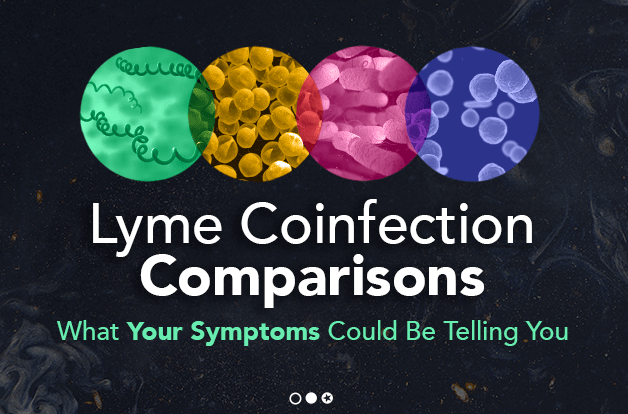
https://rawlsmd.com/health-articles/lyme-coinfection-comparisons-what-your-symptoms-could-be-telling-you

lyme-coinfection-comparisons-what-symptoms-could-be-telling-you

Lyme Coinfection Comparisons Charts: What Your Symptoms Could Be Telling You

by Jenny Lelwica Buttaccio and Mark Casey
Posted 5/14/21

One of the most challenging aspects of reclaiming your health from chronic Lyme disease is knowing where to turn when new or different symptoms pop up. “My perception after studying a variety of intracellular microbes for years is that each microbe has a preference for different types of cells in the body,” says Dr. Bill Rawls, Medical Director of RawlsMD and Vital Plan.

For example, Borrelia burgdorferi, the predominant bacteria that causes Lyme disease in the United States, has an affinity for collagenous tissues in the body. Therefore, the symptoms that come with borrelia infection tend to impact those areas with high concentrations of collagen: the brain, joints, muscles, etc. But some additional, unexpected symptoms can arise from Lyme coinfections (simultaneous infections), and it’s not always easy to figure out which microbe is the chief, problem-causing culprit, especially since testing for Lyme disease and coinfections is woefully inaccurate.

Coinfections at a Glance

Though the symptoms of borrelia often get top billing when it comes to Lyme disease, there’s rarely a single microbe at play when you’re dealing with persistent symptoms. Besides Lyme, the main coinfections that patients often contend with include babesia, bartonella, and mycoplasma. Below is a brief description of each one:

  • Babesia: A distant cousin of malaria, babesia is a protozoan and parasite most commonly transmitted by blacklegged ticks.
  • Bartonella: Typically spread by biting insects (fleas, ticks, mosquitoes, sandflies, lice, chiggers, biting flies, scabies, mites, and louse-eating spiders), there are more than a dozen species of bartonella that can impact human health, giving rise to the broader-named category called bartonella-like organisms (BLO).
  • Mycoplasma: Mycoplasma is the smallest of all bacteria, and because it lacks a cell wall, it can alter its shape and travel to areas of the body where other microbes can’t go. It’s spread by biting insects (ticks, mosquitoes, fleas, biting flies), sexual contact, contaminated food, and airborne droplets. The majority of people will have exposure to some form of mycoplasma in their lifetime.

“The reason you’re having symptoms from Lyme and coinfections is that each of these microbes is affecting certain cells in the body, and it could be either one microbe or several microbes contributing to the problem,” says Dr. Rawls. “Every person’s symptoms are a little bit different because the spectrum of microbes they carry is different.”

Thus, understanding key characteristics of these more common Lyme disease coinfections can serve as a guide for you and your physician to best target your treatment. “Knowing if you have, say, bartonella or babesia can help you figure out if you need to add on additional herbal therapies or remedies to support your recovery efforts,” explains Dr. Rawls.

So to assist you, we’ve put together seven coinfection comparison graphics, highlighting the similarities, differences, and telltale signs between borrelia, babesia, bartonella, and mycoplasma, frequent infections that often go hand in hand.

Lyme Disease Coinfection Comparisons

The following two graphics demonstrate the telltale and shared signs and symptoms of borrelia, babesia, bartonella, and mycoplasma that you might not be aware of. Having information about which symptoms are distinct to a particular infection and which ones overlap with others can aid you in identifying the various pathogens you might be dealing with or may have overlooked in your current treatment regimen.

Telltale and Shared Signs and Symptoms

circle chart of telltale symptoms. Borrelia: stiff neck, lyme carditis, eye floaters, bulls eye rash, bells palsy, migrating arthritis, joint welling. Mycoplasma: respiratory infection, sinus problems. Babesia: chest or rib pain, drenching night sweats, body temperature fluctuations, air hunger. Bartonella: rage, swollen lymph nodes, unexplained cough, stretch-mark like rash, pain in shins, pain in soles of feet
overlapping circle chart os shared symptoms: depression, anxiety, headache, cognitive difficulties, brain fog, sleep problems, fatigue, fever, chills, autoimmunity, gastrointestinal function, bladder irritation, muscle pain, joint pain

Borrelia and Beyond

Here, we’ve detailed a more complete snapshot of the range of symptoms borrelia, babesia, bartonella, and mycoplasma infections can cause. Bear in mind that many symptoms are similar, so it’s crucial to evaluate your overall symptom profile to get a more accurate diagnosis of what might be going on with you.

The next four graphics allow you to see how Lyme and coinfections could be affecting different systems of the body and influencing how you feel:

Borrelia

symptoms of borrelia infection: depression, anxiety, headache, cognitive difficulties, brain fog, sleep problems, dizziness, visual changes, eye floaters, sound sensitivity, ringing in ears, bells palsy, stiff neck, heart symptoms, lyme cariditis, fatigue, fever, chills, autoimmunity, migrating arthritis, burning or tingling hands, tremors, gastrointestinal dysfunction, bladder irritation, bulls eye rash, muscle pain, joint pain, joint swelling, muscle twitching

Babesia

symptoms of babesia infection: depression, anxiety, headache, cognitive difficulties, brain fog, sleep problems, dizziness, heart symptoms, anemia, chest or rib pain, air hunger, fatigue, fever, chills, autoimmunity, drenching night sweats, body temperature fluctuations, gastrointestinal dysfunction, bladder irritation, petechiae, jaundice, dark urine, muscle pain, joint pain

Bartonella

symptoms of bartonella infection: depression, anxiety, rage, headache, cognitive difficulties, brain fog, sleep problems, eye infection and eye problems, tooth pain, swollen lymph nodes, heart symptoms, anemia, unexplained cough, fatigue, fever, chills, autoimmunity, gastrointestinal dysfunction, bladder irritation, stretchmark-like rash, muscle pain, joint pain, pain in shins, pain in soles of feet

Mycoplasma

symptoms of mycoplasma, depression, anxiety, headache, cognitive difficulties, brain fog, sleep problems, eye infection and eye problems, ringing in ears, sinus problems, heart symptoms, respiratory infection, fatigue, fever, chills, autoimmunity, burning or tingling hands, gastrointestinal dysfunction, bladder irritation, muscle pain, joint pain

The Takeaway

chart marking borrelia, babesia, bartonella, and mycoplasma for general, neurological, visual, lymphatic, cardiovascular, respiratory, immune, urogenital, gastrointestinal, musculoskeletal, or integumentary symptoms

Final Thoughts

When it comes to overcoming chronic Lyme disease, gauging what to treat can sometimes be confusing due to the widespread set of symptoms you may be experiencing. However, you can use these graphics to help distinguish between overlapping symptoms and those that are distinct to specific pathogens. Combine this information with a comprehensive natural protocol and work your way through potential coinfections to move toward better, more vibrant health again.

Dr. Rawls is a physician who overcame Lyme disease through natural herbal therapy. You can learn more about Lyme disease in Dr. Rawls’ new best selling book, Unlocking Lyme.

You can also learn about Dr. Rawls’ personal journey in overcoming Lyme disease and fibromyalgia in his popular blog post, My Chronic Lyme Journey.

______________________

For more:

Unfortunately, MSM still believes this is a one pathogen, one drug disease when nothing could be further from the truth.  Dealing with coinfections is a must and they are just as severe and dangerous as Lyme.  Treating this complex illness is like peeling back the layers of an onion.  Symptoms will wax and wane and new ones will crop up.  Understanding how to treat this requires a Lyme literate doctor.  Don’t mess around with MSM.  All it will do is take your money, abuse you, and cause you more suffering and pain.

To date, there are 19 and counting pathogens that could be transmitted by the singular bite of a tick.

Lyme is just the rock star we know by name. Also, it’s important to understand this complex illness does a number on the immune system. You are essentially a host and these pathogens deplete many important hormones, minerals, etc., requiring you to supplement and address these deficiencies.

To read of one man’s experience being infected with multiple pathogens go here.

Unfortunately, the article erroneously states this is rare. Everyone I work with is infected with at least 3 pathogens, and many have more than that. This makes cases more severe and harder to treat.

https://danielcameronmd.com/what-does-a-lyme-disease-rash-look-like/  Podcast Here

WHAT DOES A LYME DISEASE RASH LOOK LIKE?

what does a lyme disease rash look like

Welcome to another Inside Lyme Podcast. I am your host Dr. Daniel Cameron. In this episode, I will be discussing a question I’m asked frequently: What does a Lyme disease rash look like? As a new study has found, the erythma migrans rash can appear differently based on several factors.

The study by Rebman and colleagues, entitled “The presenting characteristics of erythema migrans vary by age, sex, duration, and body location,” was published in Infection in March 2021.¹ It addressed a frequently asked question: What does a Lyme disease rash look like?

The erythema migrans (EM) rash (or Bull’s-eye rash), considered a definitive sign of Lyme disease, is often mistakenly thought to appear similar in all individuals – a circular red lesion which expands to at least 2 inches.

But as Rebman and colleagues report, a Lyme disease rash can look different based on several factors and does not always appear as the familiar Bull’s-eye rash. In fact, the authors suggest that relying solely on a Bull’s-eye appearance, when evaluating a rash for possible Lyme disease can lead to delays in diagnosis and treatment.

Diverse characteristics of Lyme disease rash

The authors examined 271 Lyme disease patients who had an erythema migrans rash to determine what does a Lyme disease rash look like? ¹

“We studied associations between these presenting characteristics [of EM rashes], as well as whether they were associated with age, sex, EM duration, body location, and initiation of antibiotics,” the authors write.

The patients were part of a longitudinal cohort study from 3 sites in Maryland and southeastern Pennsylvania. They were not enrolled if their rash was under 5 cm in diameter (2 inches) or their acute illness was longer than 3 months.

The study found that:

  • EM size increased over time with the EM duration peaking at 14 days.
  • Males had larger rashes than females (an average of 2.8 cm larger).
  • Males were more likely to have a blue/red rash. In fact, the odds of a red rash in males was 65% lower than in females.
  • Age was a significant predictor of central clearing. For every 10-year increase in age, the odds of central clearing decreased 25%. As age increased, there was a greater likelihood of a solid rash.
  • EM rashes were more likely to occur in harder to see body locations (i.e.,  behind the thigh and behind the knees). The authors assumed that ticks had an opportunity to attach longer in these areas before being discovered.
  • Nearly 1 in 3 patients had multiple rashes on examination.
  • Approximately 1 in 3 patients reported pain at the site of the rash.  
  • Just over 50% of the EM rashes were itchy.
  • Rash shapes were varied ─ 50.9% were round; 39.1% were oval. The remaining rashes were irregular.
  • Rash colors were varied ─ about 3 out of 4 were red. The remaining rashes were blue/red.
  • Rash patterns were varied ─  only 28% appeared as a Bull’s-eye rash (a ring within the rash). Central lightness (17.3%), central darkness (28.8%) and uniform rashes (25.8%) were also described.
  • Over 90% of the rashes were homogeneous. The remaining rashes were uneven.
  • Nearly 9% presented with vesicles. 

Concerns with limiting size of Lyme disease rash

The authors raised concerns with following a 5 cm (or less than 2 inches) cutoff for EM rashes in determining the presence of a Lyme disease infection.

“Applying a 5 cm size cutoff in research or surveillance settings may thus exclude a higher proportion of females with otherwise suggestive clinical histories and epidemiological risk,” the authors write.

They also raised concerns about recognizing an EM rash in darker skinned patients. “95.9% of our final sample self-identified as non-Hispanic white.”

The authors suggest that the variation in EM rash presentations in males vs. females and among various ages may be related to an immune response to the Borrelia infection.

Authors’ Conclusion

“Given that EM remains a clinical diagnosis, it is essential that both physicians and the general public are aware of its varied manifestations.”

Editor’s note

Unfortunately, fewer than half of Lyme disease patients present with an erythema migrans rash. This case series merely reflects the diversity of rashes in Lyme disease patients fortunate enough to present with a rash.

The following questions are addressed in this episode:

  • What is an erythema migrans rash?
  • How often do Lyme disease patients have an erythema migrans rash?
  • Can you culture Lyme disease from a rash?
  • How long do erythema migrans rashes last?
  • What other rashes resemble an erythema migrans rash?
  • What color rashes have you seen?
  • Where are rashes located?
  • What is the significance of multiple rashes on examination?
  • Have you seen itchy erythema migrans rashes?
  • Can you discuss diversity of erythema migrans rashes that were described?
  • Could a rash less than 2 inches in diameter be important?
  • What do we know about the appearance of rashes in people of color?
  • What is the importance of a smaller rash in women?

    Thanks for listening to another Inside Lyme Podcast. You can read more about these cases in my show notes and on my website @DanielCameronMD.com. As always, it is your likes, comments, reviews, and shares that help spread the word about Lyme disease. Until next time on Inside Lyme.

Please remember that the advice given is general and not intended as specific advice to any particular patient. If you require specific advice, then please seek that advice from an experienced professional.

Inside Lyme Podcast Series

This Inside Lyme case series will be discussed on my Facebook page and made available on podcast and YouTube.  As always, it is your likes, comments, and shares that help spread the word about this series and our work. If you can, please leave a review on iTunes or wherever else you get your podcasts.

To be clear, having the EM rash is diagnostic for Lyme. You are infected. On the other hand, NOT having the rash doesn’t mean you aren’t infected.

Also, EM rashes wax and wane despite treatment. Treating the EM rash is illogical because borrelia becomes systemic (all over the body) within hours. It means nothing if the EM rash disappears. This is why it’s critical to get to a Lyme literate doctor (LLMD) who is educated on such matters.