COVID-19 erased the regulatory and trial-related hurdles that Moderna could never surmount before. Yet, how did Moderna know that COVID-19 would create those conditions months before anyone else, and why did they later claim that their vaccine being tested in NIH trials was different than their commercial candidate?
In late 2019, the biopharmaceutical company Moderna was facing a series of challenges that not only threatened its ability to ever take a product to market, and thus turn a profit, but its very existence as a company.
There were multiple warning signs that Moderna was essentially another Theranos-style fraud, with many of these signs growing in frequency and severity as the decade drew to a close. Part I of this three-part series explored the disastrous circumstances in which Moderna found itself at that time, with the company’s salvation hinging on the hope of a divine miracle, a “Hail Mary” save of sorts, as stated by one former Moderna employee.
While the COVID-19 crisis that emerged in the first part of 2020 can hardly be described as an act of benevolent divine intervention for most, it certainly can be seen that way from Moderna’s perspective. Key issues for the company, including seemingly insurmountable regulatory hurdles and its inability to advance beyond animal trials with its most promising — and profitable — products, were conveniently wiped away, and not a moment too soon.
Since January 2020, the value of Moderna’s stock — which had embarked on a steady decline since its IPO — grew from $18.89 per share to its current value of $339.57 per share, thanks to the success of its COVID-19 vaccine.
Yet, how exactly was Moderna’s “Hail Mary” moment realized, and what were the forces and events that ensured it would make it through the FDA’s emergency use authorization (EUA) process? In examining that question, it becomes quickly apparent that Moderna’s journey of saving grace involved much more than just cutting corners in animal and human trials and federal regulations.
Indeed, if we are to believe Moderna executives, it involved supplying formulations for some trial studies that were not the same as their COVID-19 vaccine commercial candidate, despite the data resulting from the former being used to sell Moderna’s vaccine to the public and federal health authorities.
Such data was also selectively released at times to align with preplanned stock trades by Moderna executives, turning many of Moderna’s highest-ranking employees into millionaires, and even billionaires, while the COVID-19 crisis meant economic calamity for most Americans.
Not only that, but — as Part II of this three-part series will show, Moderna and a handful of its collaborators at the National Institutes of Health (NIH) seemed to know that Moderna’s miracle had arrived — well before anyone else knew or could have known.
Was it really a coincidental mix of “foresight” and “serendipity” that led Moderna and the NIH to plan to develop a COVID-19 vaccine days before the viral sequence was even published and months before a vaccine was even considered necessary for a still unknown disease? If so, why would Moderna — a company clearly on the brink — throw everything into and gamble the entire company on a vaccine project that had no demonstrated need at the time?
The Serendipitous Origins of Moderna’s COVID-19 Vaccine
When early January 2020 brought news of a novel coronavirus outbreak originating in Wuhan, China, Moderna’s CEO Stéphane Bancel immediately emailed Barney Graham, deputy director of the Vaccine Research Center at the National Institutes of Health, and asked to be sent the genetic sequence for what would become known as SAR-CoV-2, allegedly because media reports on the outbreak “troubled” him.
The date of that email varies according to different media reports, though most place it as having been sent on either January 6th or 7th. A few weeks before Bancel’s email to Graham, Moderna was quickly approaching the end of the line, their desperately needed “Hail Mary” still not having materialized.
“We were freaked out about money,” Stephen Hoge would later remember of Moderna’s late 2019 circumstances.
Not only were executives “cutting back on research and other expenditures” like never before, but – as STAT News would later report – “cash from investors had stopped pouring in and partnerships with some drug makers had been discontinued. In meetings at Moderna, Bancel emphasized the need to stretch every dollar and employees were told to reduce travel and other expenses, a frugality there were advised would last several years.”
At the tail end of 2019, Graham was in a very different mood than Bancel, having emailed the leader of the coronavirus team at his NIH lab saying, “Get ready for 2020,” apparently viewing the news out of Wuhan in late 2019 as a harbinger of something significant.
He went on, in the days before he was contacted by Bancel, to “run a drill he had been turning over in his mind for years” and called his long-time colleague Jason McLellan “to talk about the game plan” for getting a head start on producing a vaccine the world did not yet know it needed.
When Bancel called Graham soon afterward and asked about this new virus, Graham responded that he didn’t know yet but that “they were ready if it turned out to be a coronavirus.” The Washington Post claimed that Graham’s apparent foreknowledge that a coronavirus vaccine would be needed before anyone officially knew what type of disease was circulating in Wuhan was a fortunate mix of “serendipity and foresight.”
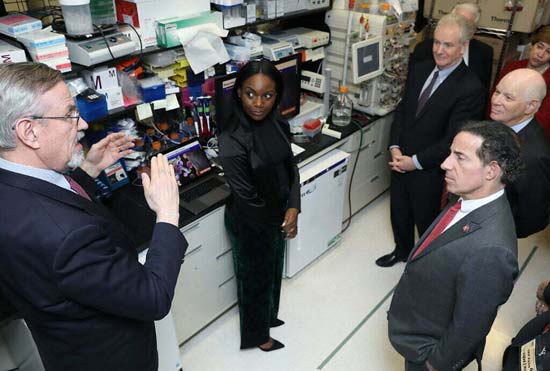
Dr. Barney Graham and Dr. Kizzmekia Corbett, VRC coronavirus vaccine lead, discuss COVID-19 research with U.S. legislators Sen. Chris Van Hollen, Sen. Benjamin Cardin and Rep. Jamie Raskin, March 6, 2020; Source: NIH
A report in Boston magazine offers a slightly different account than that reported by the Washington Post. Per that article, Graham had told Bancel, “If [the virus] is a coronavirus, we know what to do and have proven mRNA is effective.”
Per that report, this assertion of efficacy from Graham referred to Moderna’s early stage human-trial data published in September 2019 regarding its chikungunya vaccine candidate, which was funded by the Defense Advanced Research Projects Agency (DARPA), as well as its cytomegalovirus (CMV) vaccine candidate.
As mentioned in Part I of this series, the chikungunya vaccine study data released at that time included the participation of just four subjects, three of whom developed significant side effects that led Moderna to state that they would reformulate the vaccine in question and would pause trials on that vaccine candidate.
In the case of the CMV vaccine candidate, the data was largely positive, but it was widely noted that the vaccine still needed to pass through larger and longer clinical trials before its efficacy was in fact “proven,” as Graham later claimed.
In addition, Graham implied that this early stage trial of Moderna’s CMV vaccine candidate was somehow proof that an mRNA vaccine would be effective against coronaviruses, which makes little sense since CMV is not a coronavirus but instead hails from the family of viruses that includes chickenpox, herpes, and shingles.
Bancel apparently had reached out to Graham because Graham and his team at the NIH had been working in direct partnership with Moderna on vaccines since 2017, soon after Moderna had delayed its Crigler-Najjar and related therapies in favor of vaccines.
According to Boston magazine, Moderna had been working closely with Graham specifically “on [Moderna’s] quest to bring a whole new class of vaccines to market” and Graham had personally visited Moderna’s facilities in November 2019. Dr. Anthony Fauci, the director of the NIH’s infectious-disease division NIAID, has called his unit’s collaboration with Moderna, in the years prior to and also during the COVID-19 crisis, “most extraordinary.”
The year 2017, besides being the year when Moderna made its pivot to vaccines (due to its inability to produce safe multidose therapies, see Part I), was also a big year for Graham.
That year he and his lab filed a patent for the “2P mutation” technique whereby recombinant coronavirus spike proteins can be stabilized in a prefusion state and used as more effective immunogens. If a coronavirus vaccine were to be produced using this patent, Graham’s team would financially benefit, though federal law caps their annual royalties. Nonetheless, it would still yield a considerable sum for the named researchers, including Graham.
However, due to the well-known difficulties with coronavirus vaccine development, including antibody dependent enhancement risk, it seemed that commercial use of Graham’s patent was a pipe dream. Yet, today, the 2P mutation patent, also known as the ‘070 patent, is not just in use in Moderna’s COVID-19 vaccine, but also in the COVID-19 vaccines produced by Johnson & Johnson, Novavax, Pfizer/BioNTech, and CureVac.
Experts at New York University School of Law have noted that the 2P mutation patent first filed in 2016 “sounds remarkably prescient” in light of the COVID crisis that emerged a few years later while later publications from the NIH (still pre-COVID) revealed that the NIH’s view on “the breadth and importance of the ‘070 patent” as well as its potential commercial applications was also quite prescient, given that there was little justification at the time to hold such a view.
On January 10, three days after the reported initial conversation between Bancel and Graham on the novel coronavirus outbreak in Wuhan, China, Graham met with Hamilton Bennett, the program leader for Moderna’s vaccine portfolio.
Graham asked Bennett “if Moderna would be interested in using the new [novel coronavirus] to test the company’s accelerated vaccine-making capabilities.” According to Boston, Graham then mused, “That way … if ever there came a day when a new virus emerged that threatened global public health, Moderna and the NIH could know how long it would take them to respond.”
Graham’s “musings” to Bennett are interesting considering his earlier statements made to others, such as “Get ready for 2020” and his team, in collaboration with Moderna, would be “ready if [the virus then circulating in Wuhan, China] turned out to be a coronavirus.” Is this merely “serendipity” and “foresight”, as the Washington Post suggested, or was it something else?
It is worth noting that the above accounts are those that have been given by Bancel and Graham themselves, as the actual contents of these critical January 2020 emails have not been publicly released.
When the genetic sequence of SARS-CoV-2 was published on January 11, NIH scientists and Moderna researchers got to work determining which targeted genetic sequence would be used in their vaccine candidate. Later reports, however, claimed that this initial work toward a COVID-19 vaccine was merely intended to be a “demonstration project.”
Other odd features of the Moderna-NIH COVID-19 vaccine-development story emerged with Bancel’s account of the role the World Economic Forum played in shaping his “foresight” when it came to the development of a COVID-19 vaccine back in January 2020.
On January 21, 2020, Bancel reportedly began to hear about “a far darker version of the future” at the World Economic Forum (WEF) annual meeting in Davos, Switzerland, where he spent time with “two [anonymous] prominent infectious-disease experts from Europe” who shared with him data from “their contacts on the ground in China, including Wuhan.”
That data, per Bancel, showed a dire situation that left his mind “reeling” and led him to conclude, that very day, that “this isn’t going to be SARS. It’s going to be the 1918 flu pandemic.”

Stéphane Bancel speaks at the Breakthroughs in Cancer Care session at WEF annual meeting, January 24, 2020; Source: WEF
This realization is allegedly what led Bancel to contact Moderna cofounder and chairman, as well as a WEF technology pioneer, Noubar Afeyan. Bancel reportedly interrupted Afeyan’s celebration of his daughter’s birthday to tell him “what he’d learned about the virus” and to suggest that “Moderna begin to build the vaccine — for real.”
The next day, Moderna held an executive meeting, which Bancel attended remotely, and there was considerable internal debate about whether a vaccine for the novel coronavirus would be needed.
To Bancel, the “sheer act of debating” pursuing a vaccine for the virus was “absurd” given that he was now convinced, after a single day at Davos, that “a global pandemic was about to descend like a biblical plague, and whatever distractions the vaccine caused internally at Moderna were irrelevant.”
Bancel spent the rest of his time at the Davos annual meeting “building partnerships, generating excitement, and securing funding,” which led to the Moderna collaboration agreement with the Coalition for Epidemic Preparedness Innovations — a project largely funded by Bill Gates.
(Bancel and Moderna’s cozy relationship with the WEF, dating back to 2013, was discussed in Part I as were the Forum’s efforts, beginning well before COVID-19, to promote mRNA-based therapies as essential to the remaking of the health-care sector in the age of the so-called Fourth Industrial Revolution).
At the 2020 annual meeting attended by Bancel and others it was noted that a major barrier to the widespread adoption of these and other related “health-care” technologies was “public distrust.” The panel where that issue was specifically discussed was entitled “When Humankind Overrides Evolution.”
As also noted in Part I of this series, a few months earlier, in October 2019, major players in what would become the Moderna COVID-19 vaccine, particularly Rick Bright and Anthony Fauci, had discussed during a Milken Institute panel on vaccines how a “disruptive” event would be needed to push the public to accept “nontraditional” vaccines such as mRNA vaccines; to convince the public that flu-like illnesses are scarier than traditionally believed; and to remove existing bureaucratic safeguards in the vaccine development-and-approval processes.
That panel took place less than two weeks after the Event 201 simulation, jointly hosted by the World Economic Forum, the Bill & Melinda Gates Foundation, and the Johns Hopkins Center for Health Security.
Event 201 simulated “an outbreak of a novel zoonotic coronavirus” that was “modeled largely on SARS but … more transmissible in the community setting by people with mild symptoms.” The recommendations of the simulation panel were to considerably increase investment in new vaccine technologies and industrial approaches, favoring rapid vaccine development and manufacturing.
As mentioned in Part I, the Johns Hopkins Center for Health Security had also conducted the June 2001 Dark Winter simulation that briefly preceded and predicted major aspects of the 2001 anthrax attacks, and some of its participants had apparent foreknowledge of those attacks. Other Dark Winter participants later worked to sabotage the FBI investigation into those attacks after their origin was traced back to a US military source.
It is hard to imagine that Bancel, whose company had long been closely partnered with the World Economic Forum and the Gates Foundation, was unaware of the exercise and surprised by the closely analogous event that transpired within three months.
Given the accounts given by Bancel, Graham, and others, it seems likely there is more to the story regarding the origins of Moderna’s early and “serendipitous” push to develop a COVID-19 vaccine.
In addition, given that Moderna was in dire financial circumstances at the time, it seems odd that the company would gamble everything on a vaccine project that was opposed by the few investors that were still willing to fund Moderna in January/February 2020.
Why would they divert their scant resources towards a project born only out of Barney Graham’s “musings” that Moderna could try to test the speed of its vaccine development capabilities and Bancel’s doomsday view that a “biblical plague” was imminent, especially when their investors opposed the idea?
Moderna Gets to Bypass Its Long-Standing Issues With R & D
Moderna produced the first batch of its COVID-19 vaccine candidate on February 7, one month after Bancel and Graham’s initial conversation. After a sterility test and other mandatory tests, the first batch of its vaccine candidate, called mRNA-1273, shipped to the NIH on February 24. For the first time in a long time, Moderna’s stock price surged. NIH researchers administered the first dose of the candidate into a human volunteer less than a month later, on March 16.
Controversially, in order to begin its human trial on March 16, regulatory agencies had to allow Moderna to bypass major aspects of traditional animal trials, which many experts and commentators noted was highly unusual but was now deemed necessary due to the urgency of the crisis. Instead of developing the vaccine in distinct sequential stages, as is the custom, Moderna “decided to do all of the steps [relating to animal trials] simultaneously.”
In other words, confirming that the candidate is working before manufacturing an animal-grade vaccine, conducting animal trials, analyzing the animal-trial data, manufacturing a vaccine for use in human trials, and beginning human trials were all conducted simultaneously by Moderna. Thus, the design of human trials for the Moderna vaccine candidate was not informed by animal-trial data.
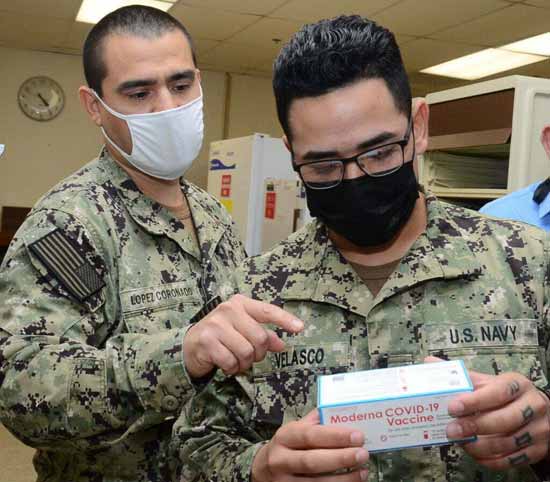
Lt. Javier Lopez Coronado and Hospitalman Francisco Velasco inspect a box of COVID-19 vaccine vials at the Naval Health Clinic in Corpus Christi, TX, December 2020; Source: Wikimedia
This should have been a major red flag, given Moderna’s persistent difficulties in getting its products past animal trials. As noted in Part I, up until the COVID-19 crisis, most of Moderna’s experiments and products had only been tested in animals, with only a handful able to make it to human trials.
In the case of the Crigler-Najjar therapy that it was forced to indefinitely delay, toxicity concerns related to the mRNA delivery system being used had emerged in the animal trials, which Moderna was now greenlighted to largely skip. Given that Moderna had subsequently been forced to abandon all multidose products because of poor results in animal trials, being allowed to skip this formerly insurmountable obstacle was likely seen as a boon to some at the company.
It is also astounding that, given Moderna’s history with problematic animal trials, more scrutiny was not devoted to the regulatory decision to allow Moderna to essentially skip such trials. Animal studies conducted on Moderna’s COVID-19 vaccine did identify problems that should have informed human trials, but this did not happen because of the regulatory decision.
For example, animal reproductive toxicity studies on the Moderna COVID-19 vaccine that are cited by the European Medicines Agency found that there was reduced fertility in rats that received the vaccine (e. g., overall pregnancy index of 84.1% in vaccinated rats versus 93.2% in the unvaccinated) as well as an increased proportion of aberrant bone development in their fetuses.
That study has been criticized for failing to report on the accumulation of vaccine in the placenta as well as failing to investigate the effect of vaccine doses administered during key pregnancy milestones, such as embryonic organogenesis. In addition, the number of animals tested is unstated, making the statistical power of the study unknown.
At the very least, the 9 percent drop in the fertility index among vaccinated rats should have prompted expanded animal trials to investigate concerns of reproductive toxicity before testing in humans.
Yet, Moderna declined to further investigate reproductive toxicity in animal trials and entirely excluded reproductive toxicity studies from its simultaneous human trials, as pregnant women were excluded from participation in the clinical trials of its vaccine. Despite this, pregnant women were labeled a priority group for receiving the vaccine after Emergency Use Authorization (EUA) was granted for the Moderna and Pfizer/BioNTech vaccines.
Per the New England Journal of Medicine, this meant that “pregnant women and their clinicians were left to weigh the documented risks of Covid-19 infection against the unknown safety risks of vaccination in deciding whether to receive the vaccine.”
Moderna only began recruiting for an “observational pregnancy outcome study” of its COVID-19 vaccine in humans in mid-July 2021, and that study is projected to conclude in early 2024. Nevertheless, the Centers for Disease Control recommends the use of Moderna’s COVID-19 vaccine in “people who are pregnant, breastfeeding, trying to get pregnant now, or might become pregnant in the future.”
This recommendation is largely based on the CDC’s publication of preliminary data on mRNA COVID-19 vaccine safety in pregnant women in June 2021, which is based on passive reporting systems in use within the United States (i. e., VAERS and v-safe).
Even in the limited scope of this study, 115 of the 827 women who had a completed pregnancy during the study lost the baby, 104 of which were spontaneous abortions before 20 weeks of gestation. Of these 827 pregnant women, only 127 had received a mRNA vaccine before the 3rd trimester.
This appears to suggest an increased risk among those women who took the vaccine before the 3rd trimester, but the selective nature of the data makes it difficult to draw any definitive conclusions.
Despite claims from the New England Journal of Medicine that the study’s data was “reassuring”, the study’s authors ultimately stated that their study, which mainly looked at women who began vaccination in the third trimester, was unable to draw “conclusions about spontaneous abortions, congenital anomalies, and other potential rare neonatal outcomes.”
This is just one example of the problems caused by “cutting corners” with respect to Moderna’s COVID-19 vaccine trials in humans and animals, including those conducted by the NIH.
Meanwhile, throughout February, March and April, Bancel was “begging for money” as Moderna reportedly lacked “enough money to buy essential ingredients for the shots” and “needed hundreds of millions of dollars, perhaps even more than a billion dollars” to manufacture its vaccine, which had only recently begun trials. Bancel, whose tenure at Moderna had long been marked by his ability to charm investors, kept coming up empty-handed.
Then, in mid-April 2020, Moderna’s long-time cooperation with the US government again paid off when Health and Human Services Biomedical Advanced Research and Development Authority (BARDA) awarded the company $483 million to “accelerate the development of its vaccine candidate for the novel coronavirus.”
A year later, the amount invested in Moderna’s COVID-19 vaccine by the US government had grown to about $6 billion dollars, just $1.5 billion short of the company’s entire value at the time of its pre-COVID IPO.
BARDA, throughout 2020, was directly overseen by the HHS Office of the Assistant Secretary for Preparedness and Response (ASPR), led by the extremely corrupt Robert Kadlec, who had spent roughly the last two decades designing BARDA and helping shape legislation that concentrated many of the emergency powers of HHS under the Office of the ASPR.
Conveniently, Kadlec occupied the powerful role of ASPR that he had spent years sculpting at the exact moment when the pandemic, which he had simulated the previous year via Crimson Contagion, took place. As mentioned in Part I, he was also a key participant in the June 2001 Dark Winter exercise.
In his capacity as ASPR during 2020, Kadlec oversaw nearly all major aspects of the HHS COVID-19 response and had a key role in BARDA’s funding decisions during that period, as well as in the affairs of the NIH and the Food and Drug Administration as they related to COVID-19 medical countermeasures, including vaccines.
On May 1, 2020, Moderna announced a ten-year manufacturing agreement with the Lonza Group, a multinational chemical and biotech company based in Switzerland. Per the agreement, Lonza would build out vaccine production sites for Moderna’s COVID-19 vaccine, first in the US and Switzerland, before expanding to Lonza’s facilities in other countries.
The scale of production discussed in the agreement was to produce 1 billion doses of Moderna’s COVID-19 vaccine annually. It was claimed that the ten-year agreement would also focus on other products, even though it was well known at the time that other Moderna products were “nowhere close to being ready for the market.”
Moderna executives would later state that they were still scrambling for the cash to manufacture doses at the time the agreement with Lonza was made.
The decision to forge a partnership to produce that quantity of doses annually suggests marvelous foresight on the part of Moderna and Lonza that the COVID-19 vaccine would become an annual or semiannual affair, given that current claims of waning immunity could not have been known back then because initial trials of the Moderna vaccine had begun less than two months earlier and there was still no published data on its efficacy or safety.
However, as will be discussed Part III of this series, Moderna needs to sell “pandemic level” quantities of its COVID-19 vaccine every year in order to avoid a return of the existential crises it faced before COVID-19 (for more on those crises, see Part I).
The implications of this, given Moderna’s previous inability to produce a safe product for multidosing and lack of evidence that past issues were addressed in the development of its COVID-19 vaccine, will also be discussed in Part III of this series.
It is also noteworthy that, like Moderna, Lonza as a company and its leaders are closely affiliated with the World Economic Forum. In addition, at the time the agreement was reached in May 2020, Moncef Slaoui, the former GlaxoSmithKline executive, served on the boards of both Moderna and Lonza.
Slaoui withdrew from the boards of both companies two weeks after the agreement was reached to become the head of the US-led vaccination-development drive Operation Warp Speed. Moderna praised Slaoui’s appointment to head the vaccination project.
By mid-May, Moderna’s stock price — whose steady decline before COVID-19 was detailed in Part I — had tripled since late February 2020, all on high hopes for its COVID-19 vaccine.
Since Moderna’s stock had begun to surge in February, media reports noted that “nearly every progress update — or media appearance by Moderna CEO Stephane Bancel — has been gobbled up by investors, who seem to have an insatiable appetite for the stock.”
Bancel’s tried-and-tested method of keeping Moderna afloat on pure hype, though it was faltering before COVID-19, was again paying off for the company thanks to the global crisis and related panic.
Some critics did emerge, however, calling Moderna’s now $23 billion valuation “insane,” especially considering that the company had posted a net loss of $514 million the previous year and had yet to produce a safe or effective medicine since its founding a decade earlier.
In January 2020, Moderna had been worth a mere $5 billion, $2 billion less than its valuation at its December 2018 IPO. If it hadn’t been for the onset of the COVID crisis and a fresh injection of hype, it seems that Moderna’s valuation would have continued to shrink.
Yet, thankfully for Moderna, investors were valuing Moderna’s COVID-19 vaccine even before the release of any clinical data. Market analysts at the time were forecasting Moderna’s 2022 revenue at about $1 billion, a figure based almost entirely on coronavirus vaccine sales, since all other Moderna products were years away from a market debut.
Yet, even with this forecasted revenue, Moderna’s stock value in mid-May 2020 was trading at twenty-three times its projected sales, a phenomenon unique to Moderna among biotech stocks at the time. For comparison, the other highest multiples in biotech at the time were Vertex Pharmaceutical and Seattle Genetics, which were then trading at nine and twelve times their projected revenue, respectively.
Now, with the implementation of booster shot policies around the world, revenue forecasts for Moderna now predict the company will make a staggering $35 billion in COVID-19 vaccine sales through next year.
Moderna’s surging stock price went into overdrive when, on May 18, 2020, the company published “positive” interim data for a phase 1 trial of its COVID-19 vaccine. The results generated great press, public enthusiasm, and a 20 percent boost in Moderna’s stock price.
Just hours after the press release, Moderna announced a new effort to raise $1.3 billion by selling more stock. It has since been revealed that that Moderna had hired Morgan Stanley to manage that stock sale on May 15.
However, left largely unmentioned by the press or Moderna itself was that the ostensibly “scientific study” only provided data from 8 of the 45 volunteers — 4 volunteers each from the 15- and 100-microgram dose cohorts — regarding the development of neutralizing antibodies.
The age of these mysteriously selected 8 volunteers was also not published, and other key data was missing, making it “impossible to know whether mRNA-1273 [Moderna’s COVID-19 vaccine] was ineffective [in the remaining 37 volunteers whose antibody data was not disclosed], or whether the results were not available at this point.”
Meanwhile, in the highest-dose cohort, in which volunteers received 250 micrograms, 21 percent of volunteers experienced a grade 3 adverse event, which is defined by the FDA as “preventing daily activity and requiring medical intervention.”
STAT published a report the next day that was skeptical of Moderna’s press release and seemed to imply the data release was aimed at boosting the company’s stock valuation, which hit $29 billion after the news. STAT reporter Helen Branswell called this jump in valuation “an astonishing feat for a company that currently sells zero products.”
Branswell’s report noted several things, including that several vaccine experts had noted that “based on the information made available [by Moderna], there’s really no way to know how impressive — or not — the vaccine may be.”
Moderna later defended its withholding of key data in the press release, claiming that it was done to respect “federal securities laws and the rules of scientific journals” and to prevent a potential leak of the data from insiders at the NIH.
Moderna executives have more recently claimed that the “timely” release of these selective data had been linked to their “desperate” fundraising efforts at the time and ultimately prevented them from “losing” the COVID-19 vaccine race.
The STAT report also noted that the National Institute of Allergy and Infectious Diseases (NIAID), which was running the trial referenced by Moderna in the press release, was completely silent on the matter, declining to put out a press release that day and declining to comment on Moderna’s announcement.
This was described as uncharacteristic for NIAID, especially considering they were the part of the NIH co-developing the vaccine with Moderna and running the trial. STAT noted that, normally, “NIAID doesn’t hide its light under a bushel. The institute generally trumpets its findings.” In this case, however, they declined to do so.
It emerged in early June 2020 that Dr. Anthony Fauci, who leads NIAID, had been displeased with Moderna’s decision to publish incomplete data on the trial, telling STAT that he would have preferred “to wait until we had the data from the entire Phase 1 … and publish it in a reputable journal and show all the data.”

Tal Zaks, Chief Scientific Officer at Moderna; Source: The Forward
It subsequently emerged that Moderna’s top executives, including chief financial officer Lorence Kim and chief scientific officer Tal Zaks, had used their insider knowledge of the coming press release to trade company stock that netted them several million each following the jump in Moderna’s stock that resulted from the press release’s positive buzz.
A little over a week after the press release had been published, STAT reported that the top five Moderna executives had cashed out $89 million in shares since the company’s stock price had begun to soar earlier in the year.
Per that report, the amount of trades by these five executives alone between January and May 2020 was “nearly three times as many stock transactions than in all of 2019.” By September 2020, the amount of stock shed by Moderna executives amounted to $236 million. Less criticized or even mentioned by the press was Moderna’s move, less than a month later, to create a tax haven in Europe for its European COVID-19 vaccine sales.
Though the trades were deemed slimy but legal, mainstream media reports essentially confirmed that the early release of the interim data was planned to “raise the share price of Moderna’s stock so that executives could cash in during the period of euphoria” that followed. Some watchdog groups called on the SEC to investigate Moderna executives for manipulating the stock market.
The critical reporting on executive stock trades and Moderna’s release of incomplete data led the company’s stock to temporarily trend downward throughout the rest of May. As previously mentioned, Moderna has repeatedly attempted to explain away the timing of this particular press release, offering new explanations as recently as this week.
Moderna’s Shocking Claim About Its Vaccine Candidate
In mid-June 2020, researchers at the NIH and Moderna published a manuscript preprint of preclinical data for Moderna’s COVID-19 vaccine. This preprint described the vaccine as employing a delivery system covered in a patent owned by the company Arbutus Biopharma and described the results of that vaccine in tests on mice.
As discussed in Part I, Moderna has long been locked in a bitter legal dispute with Arbutus, which has threatened Moderna’s ability to ever turn a profit on any product that relies on Arbutus-patented technology regarding lipid nanoparticle (LNP) delivery systems for its mRNA products. Moderna has claimed for years it was no longer using the Arbutus-derived system on which it once entirely relied, with Bancel even going so far as to publicly call it “not very good.”
However, Moderna has provided no real evidence that it no longer relies on the technology covered in the Arbutus patents. The June 2020 manuscript preprint from the NIH and Moderna provided evidence indicating that the same Arbutus-derived technology that had caused major toxicity issues in multidose products Moderna had previously attempted to develop was also being used in Moderna’s COVID-19 vaccine candidate.
Yet, when Moderna’s chief corporate affairs officer, Ray Jordan, was challenged on this point by Forbes, Jordan asserted that the preprint’s data had been generated using a formulation of a COVID-19 vaccine that is not the same as the vaccine itself, stating, “while the authors of the preprint used the term ‘mRNA-1273’ for convenience of the reader, the preprint does not describe the cGMP process by which we make our messenger RNA and LNP or the final drug product composition in our commercial candidate (mRNA-1273).”
When Forbes asked Jordan if he could provide any specifics, including the LNP molar ratio of the new LNP technology to prove that the LNPs in use in the COVID-19 vaccine were in fact different from those covered by the Arbutus patent, Jordan flat out refused.
Despite Jordan’s claims, a Moderna preclinical study regarding its COVID-19 vaccine was published a month later, and that July study noted that the Moderna vaccine used LNPs as described in a 2019 paper, which in turn reveals that the LNPs in question were the same as those used in the June study. This paper included the results from the study originally promoted by Moderna in May that led to a jump in Moderna’s stock price.
Now published in full, the study generated lots of positive press, including a statement from the NIAID’s Fauci that “no matter how you slice this, this is good news.” A jump in US government funding of Moderna’s COVID-19 vaccine also shortly followed the study’s publication.
At the time, CBS News remarked that Moderna’s stock price, which had been sliding since its late 2018 IPO, had been essentially rescued by the COVID-19 crisis, as “shares of Moderna — which has never brought a product to market over its ten-year existence — have soared as much as 380 percent since the start of the year as news emerged [in January] of its promising potential for producing a vaccine.
[Moderna’s] stock price was less than $20 in early January and around $95 on Friday [July 17, 2020].” Today, by comparison, Moderna has consistently been trading above $300 a share.
Yet, if we take Ray Jordan at his word with respect to the preprint published in June, Moderna appears to have been engaged in rather slimy behavior. If Jordan was telling the truth, it appears that this July study, which appears to use the vaccine candidate containing the same LNPs as those described in the June 2020 preprint, also used a formulation not consistent with the company’s commercial vaccine candidate.
If so, given that the July study was the same study referenced by Moderna’s controversial May press release tied to insider stock trades, Moderna appears to have used “positive” data generated by a vaccine candidate other than its commercial vaccine candidate to boost stock prices and ameliorate the company’s financial situation while also generating millions for executives.
This, of course, says nothing about the separate but critically important issue that the vaccine candidate used in these studies, including the NIH study, is not necessarily the same as the commercial candidate used in clinical trials.
It seems that the only reason that Moderna would make such an outrageous claim to Forbes would be to distance its COVID-19 vaccine from its past controversies that largely have their root in Moderna’s LNP-related problems, which it had claimed to have already resolved. It is not clear if the motive behind such a gambit is principally related to the legal dispute with Arbutus or the past safety issues Moderna encountered with multidose therapies.
Adding to the confusion about the LNPs in use in Moderna’s products is that, a few days earlier in July, Moderna had published results on a separate vaccine candidate, this one for HIV, that appeared to use the exact same LNP technology that is covered by the Arbutus patent. The LNPs described in that study included the same components as those described in the Arbutus patent and the same molar ratio.
Moderna appeared to be referencing this issue in their August 6, 2020, SEC filing, which states: “There are many issued and pending third-party patents that claim aspects of oligonucleotide delivery technologies that we may need for our mRNA therapeutic and vaccine candidates or marketed products, including mRNA-1273, if approved.”
By the end of 2020, Moderna claimed in a December filing with the SEC that, while it had “initially used LNP formulations that were based on known lipid systems,” that is, the Arbutus LNPs, it had “invested heavily in delivery science and ha[s] developed LNP technologies, as well as alternative nanoparticle approaches.”
Despite the claims it made in this filing, however, it remained unclear as to whether the company’s COVID-19 vaccine was using Arbutus technology or the technology it purported to have developed on its own without infringing on Arbutus’s intellectual property.
Moderna’s claims that it now uses a different LNP system than the one that caused such major issues is based on the company’s development and implementation of a lipid structure now known as SM-102. This lipid structure was first revealed by Moderna in a 2019 publication under the name Lipid H, and, in that paper and since, Moderna has claimed that its LNP system is now superior to that which it previously used because it is using SM-102 instead of the original Arbutus lipids.
However, it is critical to note that Moderna’s use of SM-102 does not necessarily mean the company is not violating the Arbutus patents, which cover the use of LNPs that combine cationic and PEGylated lipids in specific proportions.
Despite claims from Moderna that SM-102 resolved both the company’s patent-related and toxicity issues with its LNP system (as discussed in Part I), Moderna has declined to disclose SM-102’s exact structure or whether it carries a net positive charge at physiological pH, the latter of which could lead to proof of continued infringement on the Arbutus patent.
In addition, there are no studies on the distribution, degradation, and/or elimination of SM-102 from the body, meaning that the accumulation of the lipids or their capacity to damage organs is not documented.
The obvious lack of study of SM-102’s properties and effects on the human body was largely circumvented by public health authorities during the emergency approval process by using the same criteria for the Moderna vaccine candidate that is used for traditional vaccines that do not utilize the novel mRNA approach. These “traditional” criteria therefore do not include any requirements for data on LNP safety.
Overall, the evidence seems to point toward Moderna’s claims that its COVID-19 vaccine doesn’t use Arbutus-derived LNPs as being false. The other possibility is that Moderna attempted to modify the LNP system but only slightly so that potential identifiers, such as the molar ratio, remained the same.
In this case, Arbutus could still claim that the LNPs currently in use by Moderna and in its COVID-19 vaccine infringe on their patent. It is also thus likely that the safety issues Moderna had acknowledged with this LNP system were largely unaffected if the potential modifications were indeed minor.
Yet, if either of these scenarios is correct, the question becomes – Why wouldn’t Arbutus challenge Moderna once again to obtain royalty payments stemming from its COVID-19 vaccine?
The answer seems to lie mostly in optics and public relations. As STAT wrote last July, were Arbutus to sue Moderna over patent infringement in the midst of the COVID-19 crisis, “that would mean taking the substantial risk that it would be perceived as a company holding up a desperately needed medicine out of concern for its bottom line.”
This also seemed to be part of the motive behind Moderna’s altruistically framed promise not to enforce its own COVID-19–related patents until the pandemic is declared over.
Observers have noted that this move by Moderna was not only a public relations boon for the company but also “set a disarming tone in the space that may serve to deter others in the space [e.g., Arbutus] from acting too defensively or aggressively,” largely due to “fear of the potential public relations backlash.”
While July 2020 brought a surge in valuation and positive press for Moderna and its COVID-19 vaccine candidate, it also brought an unfavorable ruling for Moderna in its long-running dispute with Arbutus, one that opened the door for Arbutus to file an injunction against Moderna’s COVID-19 vaccine, if they chose, to force the negotiation of a license with Moderna.
The news led to Moderna’s stock price falling by 10 percent, wiping out $3 billion in value. However, most likely for the reasons outlined above, Arbutus ultimately declined to jump on the decision to block Moderna’s COVID-19 vaccine from advancing in the hopes of securing royalties. Yet, they reserve the ability to do so, if and when the perceived urgency of the COVID-19 crisis fades.

Ray Jordan, Chief Corporate Affairs Officer at Moderna; Source: PRSA
Moderna has asserted that the decision would not affect its COVID-19 vaccine as the company was “not aware of any significant intellectual property impediments for any products we intend to commercialize.”
Thus, Ray Jordan’s assertions and the lack of “clear and convincing” evidence that Moderna’s COVID-19 vaccine relies on Arbutus-patented technology appears to have been sufficient for Moderna to make this claim.
This seems to be due to a lack of interest by the mainstream media or federal agencies/regulators in demanding concrete evidence that Moderna’s LNP system used in its COVID-19 vaccine does not rely on Arbutus-patented technology.
Despite the issues raised above in relation to the vaccine study data published in June and July, the positive press attention — particularly after the July publication — translated just a month later into the US government entering into a significant supply agreement with Moderna on August 11, 2020.
Per that agreement, the government would pay $1.525 billion for 100 million doses with the option to purchase an additional 400 million doses in the future, all of which it has since purchased. Per Moderna’s press release, the agreement meant that the US government had, by that point, paid $2.48 billion for “early access” to Moderna’s COVID-19 vaccine.
Roughly a month later, it was revealed that the US government had been paying for much more. On September 10, 2020, BARDA joined long-time Moderna funder and “strategic ally” DARPA in scrutinizing contracts that had been awarded to the company due to Moderna’s failure to disclose the role government support had played in its numerous patent applications.
The announcement came after Knowledge Ecology International (KEI), which advocates for protecting taxpayer investments in patents, found that none of the patents or applications assigned to Moderna in the company’s entire history had disclosed the considerable US government funding it had received at the time those patents were filed, which is required by the 1980 Bayh-Doyle Act and by the regulations of the Patent and Trademark Office.
Per KEI, this translates into the US government owning certain rights over the patents, and thus US taxpayers may have an ownership stake in vaccines made and sold by Moderna.
Despite the clear evidence that Moderna failed to disclose the considerable amount of US government funding prior to and during the COVID crisis in its patent applications, Moderna responded to KEI and the BARDA/DARPA “scrutiny” by stating that it was “aware of and consults with our agency collaborators regarding our contractual obligations under each of these agreements, including those with respect to IP [intellectual property], and believe we comply with those obligations.”
As of the writing of this article, BARDA and DARPA have taken no action against Moderna for their illegal omission about having received substantial government funding in their patent applications and filings.
Instead, a month after DARPA claimed to be “scrutinizing” Moderna’s patent applications, it awarded the company up to $56 million to develop small-scale mobile means of manufacturing its products — namely, its COVID-19 vaccine and its personalized cancer vaccine.
Moderna: “Just Trust Us”
What quickly stands out about Moderna’s COVID-19 vaccine candidate over the course of its rapid development in 2020 was the willingness of federal agencies like NIH, BARDA, and others, as well as the mainstream press, to take Moderna at its word concerning critical aspects of its vaccine and its development, even when the evidence appeared to contradict its claims.
This is particularly evident in Moderna claiming that it resolved its LNP issues, both in terms of toxicity and patent infringement, and those claims — despite the company’s refusal to release clear supporting evidence — being taken at face value.
This is even more striking when one considers the multiple factors that Moderna was facing before COVID-19 and how the company faced collapse without the success of its COVID-19 vaccine, as this means Moderna was under considerable pressure to have its vaccine succeed.
While the controversial simultaneous conducting of animal and human trials was publicly justified in the name of the urgency of the COVID-19 crisis, can the other examples explored in this article be similarly justified in the name of urgency? Instead, several issues explored above appear to have been driven by conflicts of interest and corruption.
Adding to the ridiculousness is that Moderna got away with claiming that the NIH was conducting safety tests on a COVID-19 vaccine product different from their commercial candidate, without causing a major backlash in either the mainstream media or from the NIH itself.
This is particularly telling as the May 2020 press release and suspiciously timed stock trading by Moderna executives and insiders did garner negative press attention.
However, the subsequent revelation, per Moderna, that its press release was based on the study of a vaccine candidate that was not “necessarily the same” as their commercial COVID-19 vaccine candidate received essentially no coverage, despite raising the unsettling possibility that Moderna could have used another product to essentially rig preliminary data to be positive in order to advance their product to market and make millions through insider stock sales.
How can the claims made by such a company be trusted at face value without independent verification? Furthermore, how can NIH studies of Moderna be trusted when Moderna has claimed that some of the studies that were ultimately factors in the vaccine’s emergency use authorization approval by the FDA utilized a different product than that which Moderna later successfully commercialized?
Moderna and the NIH were, nevertheless, taken at their word in November 2020 when they said that their COVID-19 vaccine candidate was 94.5 percent effective. At the time, the main promoters of this claim were Moderna’s Bancel and NIAID’s Fauci.
The claim came shortly after Pfizer’s press release claiming its COVID-19 vaccine candidate was 90 percent effective. Not to be outdone by Moderna, Pfizer revised the reported efficacy of its vaccine just two days after Moderna’s November press release, stating that their vaccine was actually 95% effective to Moderna’s 94.5%.
In the case of these claims, it was indicative of the now-established yet troubling practice of “science by press release” when it comes to touting the benefit of certain COVID-19 vaccines currently on the market. Since then, real-world data has shattered the efficacy claims that were used to secure emergency use authorization, for which Moderna applied at the end of November 2020 and received only a few weeks later in mid-December of that year.
As Part III of this series will explore, the EUA for the Moderna vaccine got around the issues raised in this article by treating the entire Moderna formulation as a traditional vaccine, which it is not, as traditional vaccines do not utilize mRNA for inducing immunity, and their safety and efficacy depend on several criteria that are entirely different from those of the more novel mRNA.
Thus, the LNP issue, a perpetually sticky one for Moderna that it struggled to circumvent before the onset of the COVID-19 crisis, was largely evaded when it came down to, not just research and development, but receiving EUA.
It appears that this sleight-of-hand by federal regulators was necessary for Moderna, after ten years, to finally get its first product on the market. As noted in Part I, were it not for the COVID-19 crisis and its fortuitous timing, Moderna might not have survived the severe challenges that threatened its entire existence as a company.
Part III will also examine how Moderna‘s “Hail Mary” moment in the COVID-19 crisis was only the beginning of its miraculous rescue from a Theranos-like fate, as the company has not only expanded its partnership with the government but now with a CIA-linked firm.
This shows that Moderna and key power players in Big Pharma and the US national-security state envision Moderna’s COVID-19 vaccine being sold in massive quantities for several years to come. As previously noted, without annual or semiannual sales of booster doses, Moderna’s pre-COVID crisis will inevitably return.
The push for Moderna booster-dose approval has advanced despite real-world data not supporting Moderna’s past claims of safety and efficacy for its COVID-19 vaccine, the recent decision of several European governments to halt the vaccine’s use, and the FDA’s own infighting and recent admissions that the Moderna COVID-19 vaccine is one of the more dangerous currently in use, particularly in terms of adverse effects on the cardiovascular system.
The obvious question here then becomes – How costly will Moderna’s “Hail Mary” save ultimately be, not just in terms of the $6 billion US taxpayer money already spent on it, but also in terms of public health?