Human Borrelia miyamotoi infection in California: Serodiagnosis is complicated by multiple endemic Borrelia species

Krause PJ, Carroll M, Fedorova N, Brancato J, Dumouchel C, Akosa F, Narasimhan S, Fikrig E, Lane RS.
PLoS One. 2018 Feb 8;13(2):e0191725. eCollection 2018.

https://doi.org/10.1371/journal.pone.0191725

Abstract

To determine whether human Borrelia miyamotoi infection occurs in the far-western United States, we tested archived sera from northwestern California residents for antibodies to this emerging relapsing fever spirochete. These residents frequently were exposed to I. pacificus ticks in a region where B. miyamotoi tick infection has been reported.

We used a two-step B. miyamotoi rGlpQ assay and a B. miyamotoi whole-cell lysate (WCL) assay to detect B. miyamotoi antibody. We also employed Borrelia hermsii and Borrelia burgdorferi WCL assays to examine if these Borrelia induce cross reacting antibody to B. miyamotoi. Sera were collected from 101 residents in each of two consecutive years.

The sera of 12 and 14 residents in years one and two, respectively, were B. miyamotoirGlpQ seroreactive. Sufficient sera were available to test 15 of the 26 seropositive samples using B. miyamotoi and B. hermsii WCL assays. Two residents in year one and seven residents in year two were seroreactive to both Borrelia antigens.

Although discernible differences in seroreactivity were evident between the B. miyamotoi and B. hermsii WCL assays, infection with one or the other could not be determined with certainty. Sera from two Borrelia burgdorferi /B. miyamotoi seropositive subjects reacted strongly against B. miyamotoi and B. hermsii WCL antigens. Ecological, epidemiological, and clinical data implicated B. miyamotoi as the probable cause of infection among those whose sera reacted against both antigens.

Our findings suggest that human B. miyamotoi infection occurs in northern California and that B. hermsii and B. burgdorferi infections produce antibodies that cross-react with B. miyamotoi antigens. Health care professionals in the far-western United States should be aware that B. miyamotoi disease may occur throughout the geographic distribution of I.pacificus and that improved relapsing fever group spirochete antibody assays are urgently needed.


_____________

**Comment**

This study points out one the biggest reasons we are in this quagmire:  poor testing and cross reactivity of antigens.  Remember, testing for miyamotoi is new so folks could have been infected with this pathogen for a long time and it flew under the radar. They got tested for borrelia burgdorferi (Lyme) with a test that misses over half of all cases, and are sent home and told, “Go home and be well.”  

There very probably are other strains and pathogens we don’t have testing for yet.

It also demonstrates Tick borne illness is everywhere, despite Speilman’s maps:  https://madisonarealymesupportgroup.com/2018/01/19/how-ticks-find-you/  (Scroll down to comment section after article)


https://www.lymedisease.org/tbdwg-third-meeting/

Third meeting of TBD Working Group was mostly procedural

The third meeting of the federal Tick-Borne Disease Working Group was held February 12. This was a virtual meeting–an online webinar that the public could participate in.

Most of the session dealt with procedural items–how the various subcommittees would meet (by phone), how often (variable) and what their work product would be (reports to the whole committee).

There were a few people who made public comments. (Pre-registration was necessary, and eight people were selected.)

For Tweets of the proceedings go to blue link above.

__________

**Comment**

I was thrilled to see Dr. Michael Farris (JD) at the meeting for a number of reasons.  He recently stepped down from ParentalRights.org, an organization dedicated to protecting the rights of parents regarding their children.  Prior to that he was Founder and current chairman of Home School Legal Defense Association, an organization dedicated to protecting the rights of parents in their choice of home schooling.  He is also the founding president and Chancellor of Patrick Henry College in Virginia, teaching Constitutional Law and coaching the PHC Moot Court Team which won the national ACMA championships in 2005, 2006, 2009, and 2010 and defeated Oxford before two of he highest judges in Britain and in a repeat match before the Supreme Court of Virginia.  He is the founding pastor for Blue Ridge Bible church.

Farris chaired the Governor’s Lyme Disease Task Force in VA and organized public hearings.

He and his wife have ten children, seven of which have Lyme.

For more on the Parental Rights Amendment:  https://madisonarealymesupportgroup.com/2017/04/20/why-we-need-the-parental-rights-amendment/

https://madisonarealymesupportgroup.com/2017/02/21/parental-rights-in-medical-settings/

https://madisonarealymesupportgroup.com/2017/10/10/refusal-to-vaccinate-child-gets-mom-jail-time-a-deeper-analysis/

https://madisonarealymesupportgroup.com/2017/10/12/parental-rights-come-from-the-state-says-law-professor-james-dwyer/

https://madisonarealymesupportgroup.com/2017/11/17/parental-rights-amendment-introduced-in-u-s-house/


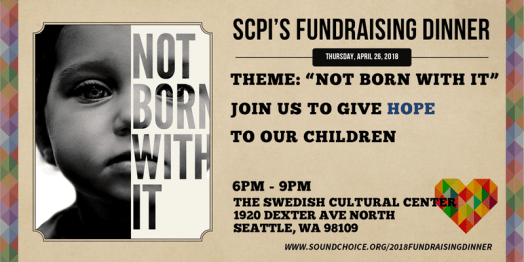
flyer

Every April, which is Autism Awareness Month, Sound Choice scientists gather to celebrate and share our work with parents, doctors, leaders and organizations who believe in practicing science with a conscience.

This year’s event will focus on ethical stem cell treatments and their ability to offer REAL HOPE for families with autistic children. Dr Deisher and her staff of scientists will share the recent news on their support of a non-toxic drug that can optimize stem cell treatment outcomes for those affected by autism.

Recently published clinical studies have confirmed Sound Choice’s research that there is an ecological factor involved in onset illnesses such as autism and cancer.  https://madisonarealymesupportgroup.com/2017/10/26/clinical-trial-shows-most-kids-with-autism-are-not-born-with-it/  With these new data we are planning a strategic study on vaccine safety delving further into the dangers of vaccines manufactured in human cell lines. Studies such as these are expensive and time-consuming. Please come learn how you can partner with us to be a part of a cure.

Guest Speaker: Matthew “Del” Bigtree

This year we are excited to welcome our guest speaker, Matthew “Del” Bigtree, an Emmy Award-winning producer and investigative journalist. Del was a co-producer of the controversial documentary, Vaxxed: From Cover-Up To Catastrophe. His investigational journalism is conducted by efforts to “demand the formation of a genuine independent research [bodies] conducting legitimate science.”

We genuinely need your involvement to provide the world with this critical research. Please join us this year. There will be open bar with food and fund-raising activities, such as a raffle, silent auction and dessert dash. To register, please follow the link below or contact us at info@soundchoice.orginfo@soundchoice.org or call us at (206) 906-9922.

Buy Tickets Here:  https://www.eventbrite.com/e/sound-choice-5th-annual-fundraising-dinner-registration-42728706712

Sound Choice Pharmaceutical Institute, 1749 Dexter Ave North, Seattle, WA, 98109


borrelia_burgdorferi

Looking through history with knowledgable eyes, historian M.M. Drymon underscores how tick-borne illness has been with us since the beginning of time, and that many prominent historical figures showed signs of it in her latest book, The Persistent Spiral – The Ancient History of Lyme Disease and Tick-borne Infections.

First, she gives details of Ozti, the ancient man discovered in 1991 who represents the earliest documented case of Lyme Disease. Evidently, Ozti was carrying mushrooms with antibiotic qualities. He walked the forested area now located between Italy and Austria – one of the highest rates of modern LD in Europe. They even know he died in the Spring due to the intact pollen cells in his stomach.

Interestingly, from many standpoints, he had 57 tattoos – many in places that coincide with acupuncture points used to treat Lyme and pain relief – some 2,000 years before their documented use in China.  https://www.huffingtonpost.com/2015/01/26/otzi-iceman-new-tattoo_n_6546884.html

And while all these intimate details of a fellow sufferer are intriguing, the recent discovery of what Drymon calls the pot smoking, dispersed living, individualistic Bronze Age Cowboys, enlightens for sure. The discovery of the Yamnaya helps explain old Chinese books describing people of great height, deep-set blue or green eyes, long noses, full beards,and red or blonde hair. These nomadic horse breeding and cattle and sheep herding people contributed to many ancestries and very well may relate to how modern patients handle Lyme Disease (LD).  For more on the Yamnaya:  https://dna-explained.com/2015/06/15/yamnaya-light-skinned-brown-eyed-ancestors/

Drymon and many others believe genetics to be one reason some become so ill with tick-borne illnesses.

The Yamnaya were grassland inhabiters who eventually migrated into Northern Europe and may be the reason most of us can tolerate lactose, which was rare previously. They also might be a reason we don’t handle tick illness well. Since they lived outside tick infested areas, they most probably had immune systems inexperienced with Tick borne illness (TBI’s) and when exposed suffered with autoimmune illness.

Drymon states the Chinese had more experience treating LD due to historically inhabiting temperate forests which harbor ticks. Traditional Chinese medicine indicates this fact by having treatments for spirochetal diseases and specific herbs for Bell’s palsy, joint pain, inflammation, heart problems, fever and skin diseases, and convulsions – all of which are TBI symptoms.

Fast forward to the Crusades and the fact both King Richard I and Philippe Augustus II became ill and nearly succumbed to Trench Mouth which is caused by Bacillus fasiformis & Borrelia vincenti (a strain of borrelia, and also a spirochete). Richard apparently became ill again later with Autumnal Fever which has a relapsing nature and is proposed to be tick-borne.

Then there’s Catherine of Aragon, lover of the hunt, who after staying at a hunting lodge, survived The Sweat and was periodically ill from that point on. A physician of the time described The Sweat as a pestilence with copious sweating, stinking, redness of face and body, continual thirst, with a great headache.  Symptoms followed a pattern – sudden flu-like symptoms, apprehension, headaches, shivering, with muscle aches, and fatigue. Then came gut pain, vomiting, a hot and sweaty stage followed by headaches and delirium. There were also chest pains and difficulty breathing with great fatigue. (Sound familiar?)  If patients didn’t die, they were repeatedly afflicted. It seemed to be a summer illness found in rural families.  It also made many chronically affected for life.

There is no record of The Sweat until the landing of Henry Tudor’s soldiers in Wales after camping in forest edge environments. After that there were periodic outbreaks and two hundred and fifty years later an identical illness appeared in the exact same region. Another physician noted that black marks were sometimes on the skin.

Drymon lists the symptoms of numerous tick borne infections and how they look precisely like The Sweat. Symptoms of Borrelia miyamotoi cause high relapsing fevers, vomiting, nausea, diarrhea, heart problems, shortness of breath, and a whole slew of neurological symptoms. Babesia is known to cause drenching sweats, anxiety, fatigue, headache, muscle, chest, and hip pain, and the ever lovely shortness of breath.

Poor Catherine struggled through seven pregnancies and her confessor reported that one knee pained her. If the babies weren’t still-born, they all died young except one daughter who became Queen Mary I. After Catherine was put to death by Henry, his next wife, Anne Boleyn battled The Sweat as well, and after marrying Henry also had a series of miscarriages with the only surviving heir being a daughter who became Queen Elizabeth I.  Catherine and Anne had a lot in common, including the same husband, and while Drymon didn’t go over the probability of sexual transmission, there is evidence:  https://madisonarealymesupportgroup.com/2017/02/24/pcos-lyme-my-story/ and https://madisonarealymesupportgroup.com/2018/02/06/lyme-in-the-southern-hemisphere-sexual-transmission/

Regarding pregnancy and TBI’s, fertility problems, miscarriages, birth defects and still births, are all possibilities.  https://madisonarealymesupportgroup.com/2017/10/15/pregnancy-in-lyme-dr-ann-corson/  Autopsy’s have revealed borrelia in the placenta, spleen, fetal myocardium, kidneys, liver, arachnoid space of fetal mid brain, and bone marrow.  https://durayresearch.wordpress.com/about-2/seven-provocative-p2/

After Anne was put to death by Henry, and all likenesses of her were ordered to be destroyed, one of the few surviving pictures show a protruding lymph node below her jaw – another common TBI symptom.

Drymon goes through the various theories of what caused The Sweat, and logically refutes them all except for tick-borne illness. One telling quote by John Josselyn in the early seventeenth century states,

“there be infinite numbers of tikes hanging upon the bushes in summer time that will cleave to a man’s garments and creep into his breeches eating themselves in a short time into the very flesh of a man. I have seen the stockins of those that have gone through the woods covered with them.”

Evidently ticks were a problem then too.

Dr. John Caius who treated patients with The Sweat recommended regular burnings of fields and forest understory, as well as insect repellents and herbal treatments such as enula root and wormwood, herbs that are known even today to have action against borrelia and Babesia.

Drymon also discusses burnings in her other book, Disguised as the Devil,
https://madisonarealymesupportgroup.com/2016/10/08/did-lyme-create-witches/, another fascinating read about TBI’s and the witchcraft hysteria. She draws a connection between the fact that burnings were often abandoned in times of war due to upheaval and the absence of men to do the job. This in turn allowed ticks to propagate which in turn probably meant more people got infected – particularly women of that era who wore long dresses that essentially became tick drags.

Unfortunately, this effective method of reducing the tick population is frowned upon today due to the fear of pollution. Drymon states the ramifications of burning should quantified to determine its seriousness and if accommodations could be made.

While the entire book is fascinating, and frankly a lot of fun to read, one of the most important take-aways for me is the ever present issue of reducing ticks safely, effectively, and economically.

Burning is such a simple yet brilliant method that it begs to be used.

Being a Lyme patient and advocate, I’ve read about burning before. In fact, when I asked an older Wisconsin Representative who has lived here his whole life why this practice was abandoned, he repeated precisely what Drymon said about folks being concerned about pollution. He also said burnings worked and he wished they were still being done.

When I asked well known and respected entomologists in Integrated Pest Management, they assured me that burnings weren’t successful and gave me a 1998 study conducted in Connecticut using a single controlled burn on two different days with varying burn intensities. The results state that in both burns ticks were reduced substantially (74% and 97%). What the authors felt made it unsuccessful was an abundance of ticks in the fall – meaning, they felt it was temporary.  

I detect much more excitement from those in the field when you mention releasing GMO mice, lacing pellets with pesticides for rodents to eat, and high powered acaricides.  All things that cost a lot of money and have significant blow-back to the environment and humans.  https://madisonarealymesupportgroup.com/2016/06/21/first-frankenbugs-now-frankinmice/ and https://madisonarealymesupportgroup.com/2017/07/10/wolbachia-the-next-frankenstein/

I was thankful for Drymon’s usage of a 2014 burn study performed in Georgia and Florida over a two year time period that indicates regular prescribed burning is an effective tool for reducing ticks and probably reduces disease as well.
http://journals.plos.org/plosone/article?id=10.1371/journal.pone.0112174

I think we need to seriously revisit burning.

Drymon’s book reminds us that tick borne illness is as old as time and if we are going to get well it would behoove us to learn from the past.  


 Inside Edition Published Feb. 11, 2018

https://www.naturalnews.com/2018-02-11-mosquitoes-infected-with-natural-bacteria-prevent-reproduction-released-in-miami.html

The Miami-Dade Country Mosquito Reduction Test Program, a collaboration between the University of Kentucky and biotech company MosquitoMate, is releasing lab-bred mosquitoes infected with Wolbachia into the wild to supposedly depopulate Aedes aegypti mosquitos that carry dengue fever, yellow fever, and Zika. They are conducting an initial test phase to see if it can become operational.

Wolbachia stops mosquitoes from reproducing.  The eggs die before they hatch.

Here are some potential problems:

  1. What if Wolbachia causes mutations?
  2. Evidently, consent has not been given.  Humans live here.
  3. Dogs treated for Heart Worm have severe inflammation due to released Wolbachia in the blood stream
  4. Wolbachia enhances other pathogens

https://madisonarealymesupportgroup.com/2017/07/10/wolbachia-the-next-frankenstein/  Wolbachia, a Gram-negative bacterium of the family Rickettsiales first found in 1924 and in 60% of all the insects, including some mosquitoes, crustaceans, and nematodes (worms). It was largely unknown until the 90’s due to its evasion tactics.  It has been used in human diseases such as elephantiasis and River Blindness, both caused by filiarial nematodes.

Wolbachia’s favorite hosts are filarial nematodes and arthropods.

Here’s where it gets tricky.  It is commonly known that nematodes (worms) are often a part of the Lyme/MSIDS patient picture & explains the importance of the following animal study.

Dogs treated for heart worm (D. immitis) have trouble due to the heart worm medication causing Wolbachia to be released into the blood and tissues causing severe Inflammation in pulmonary artery endothelium which may form thrombi and interstitial inflammation. Wolbachia also activates pro inflammatory cytokines. Pets treated with tetracycline a month prior to heart worm treatment will kill some D. immitis as well as suppress worm production. When given after heart worm medication, it may decrease the inflammation from Wolbachia kill off.  http://www.critterology.com/articles/wolbachia-and-their-role-heartworm-disease-and-treatment
The words worms and inflammation should cause every Lyme/MSIDS patient to pause. Many of us are put on expensive anthelmintics like albendazole, ivermectin, Pin X, and praziquantel to get rid of worms and are told to avoid anything causing inflammation due to the fact we have enough of it already. We go on special anti-inflammatory diets and take systemic enzymes and herbs to try and lower inflammation. https://madisonarealymesupportgroup.com/2016/04/22/systemic-enzymes/

Seems to me, many MSIDS/LYME patients when treated with anthelmintics, will have Wolbachia released into their blood and tissues causing wide spread inflammation, similarly to dogs.

And that’s not all.

According to a study by Penn State, mosquitoes infected with Wolbachia are more likely to become infected with West Nile – which will then be transmitted to humans.“This is the first study to demonstrate that Wolbachia can enhance a human pathogen in a mosquito,“ one researcher said. “The results suggest that caution should be used when releasing Wolbachia-infected mosquitoes into nature to control vector-borne diseases of humans.” “Multiple studies suggest that Wolbachia may enhance some Plasmodium parasites in mosquitoes, thus increasing the frequency of malaria transmission to rodents and birds,” he said. https://www.sciencedaily.com/releases/2014/07/140710141628.htm

So besides very probable wide spread inflammation, and that other diseases may become more prevalent due to Wolbachia laced mosquitoes, studies show Wolbachia enhances Malaria in mosquitos.

Lyme/MSIDS patients are often co-infected with Babesia, a malarial-like parasite that requires similar treatment and has been found to make Lyme (borrelia) much worse.

Lastly, with Brazil’s recent explosion of microcephaly, the introduction of yet another man-made intervention (Wolbachia laced mosquitos) should be considered in evaluating potential causes and cofactors. And while the CDC is bound and determined to blame the benign virus, Zika, there are numerous other factors that few are considering – as well as the synergistic effect of all the variables combined. Microcephaly could very well be a perfect storm of events.
https://madisonarealymesupportgroup.com/2016/12/21/how-zika-got-the-blame/, https://madisonarealymesupportgroup.com/2016/03/04/health-policy-recap/, https://madisonarealymesupportgroup.com/2016/03/08/fixation-on-zikapolio/

I hate bugs as much as the next person, but careful long-term studies of Wolbachia are required here.

Hopefully it is evident that many man-made interventions have been introduced into the environment causing important health ramifications: Wolbachia laced mosquitoes and eggs, GMO mosquitoes including CRISPR, and in the case of Zika in Brazil, whole-cell pertussis vaccinations (DTap) for pregnant women up to 20 days prior to expected date of birth, a pyriproxyfen based pesticide applied by the State in Brazil on drinking water, as well as aerial sprays of the insect growth regulators Altosid and VectoBac (Aquabac, Teknar, and LarvX, along with 25 other Bti products registered for use in the U.S.) in New York (Brooklyn, Queens, Staten Island, and The Bronx) to combat Zika. “We feel it’s critical that the scientific community consider the potential hazards of all off-target mutations caused by CRISPR, including single nucleotide mutations and mutations in non-coding regions of the genome … Researchers who aren’t using whole genome sequencing to find off-target effects may be missing potentially important mutations. Even a single nucleotide change can have a huge impact.” http://articles.mercola.com/sites/articles/archive/2017/06/13/crispr-gene-editing-dangers.aspx?utm_source=dnl&utm_medium=email&utm_content=art3&utm_campaign=20170613Z1_UCM&et_cid=DM147520&et_rid=2042753642

All of this is big, BIG business.

Is the introduction of Wolbachia another puzzle piece in the perfect storm of events causing or exacerbating human health issues?
The jury’s still out, but it’s not looking good – particularly for the chronically ill.

https://articles.mercola.com/sites/articles/archive/2018/02/13/lab-made-mosquitoes-released-in-miami.aspx?  “If preventing Zika was their aim, government officials missed the boat on this one; although Miami-Dade County was previously designated as a Zika cautionary area, that designation was removed June 2, 2017.  No Zika virus disease cases have been reported with illness onset in 2018 in the U.S., while in 2017 there were only four cases of Zika virus reported that were presumably acquired via local mosquitoes (two in Florida and two in Texas).  There is a major push to combat mosquito-borne diseases in the continental U.S. with the use of lab-made and GE mosquitoes, even though in the U.S. mosquito-borne illnesses are not a grave threat, especially compared to other major public health crises like the opioid epidemic.”

And I will add the tick borne illness crisis, which truly is a pandemic.

https://www.ncipmc.org/connection/?p=4065  Excerpt:

On Nov. 3, 2017, the Environmental Protection Agency registered a new mosquito biopesticide – ZAP Males® – that can reduce local populations of the type of mosquito (Aedes albopictus, or Asian Tiger Mosquitoes) that can spread numerous diseases of significant human health concern, including the Zika virus.

ZAP Males® are live male mosquitoes that are infected with the ZAP strain, a particular strain of the Wolbachia bacterium. Infected males mate with females, which then produce offspring that do not survive. (Male mosquitoes do not bite people.) With continued releases of the ZAP Males®, local Aedes albopictus populations decrease. Wolbachia are naturally occurring bacteria commonly found in most insect species.

This time-limited registration allows MosquitoMate, Inc. to sell the Wolbachia-infected male mosquitoes for five years in the District of Columbia and the following states: California, Connecticut, Delaware, Illinois, Indiana, Kentucky, Massachusetts, Maine, Maryland, Missouri, New Hampshire, New Jersey, Nevada, New York, Ohio, Pennsylvania, Rhode Island, Tennessee, Vermont, and West Virginia. Before the ZAP Males® can be used in each of those jurisdictions, it must be registered in the state or district.

When the five-year time limit ends, the registration will expire unless the registrant requests further action from EPA.