https://www.linkedin.com/pulse/anti-patient-bias-embedded-tickborne-disease-working-its-jenna/? by Jenna Luche-Thayer

Anti-patient Bias Embedded in Tickborne Disease Working Group and its Subcommittees

According to the HHS website on the Tick-Borne Working Group(TBDWG), ‘the TBDWG is committed to openness and transparency in its work, and to providing impartial, evidence-based recommendations to the HHS Secretary and Congress. This commitment aligns with requirements in the Federal Advisory Committee Act (FACA) and the Sunshine Act. These requirements stipulate that: a balance in points of views be represented by the committee and committee recommendations be objective and accessible to the public.’

However, the selection of the 51 members for the TBDWG Subcommittees give evidence these requirements are not being met. The following information and analysis highlights these deficiencies.

FACT ONE: Lyme patients share three core concerns and priorities.

1.  Current serology tests are unreliable, leaving many undiagnosed and untreated. Diagnostic tests need be improved to capture early and late infection and presence of pathogen in seronegative persons.

2.  In the absence of reliable tests, clinical diagnosis is sufficient to begin treatment with antibiotics.

3.  Many Lyme patients have symptoms and complications from ongoing and persistent infection. These symptoms and complications can be debilitating, disabling and lead to death. Treatment options for these symptoms and complications should include those that have been vetted through internationally accepted standards for clinical practice guidelines. This would mean that long term antimicrobial treatments are part of the options available to patients.

FACT TWO: Infectious Diseases Society of America (IDSA) opinions regarding Lyme disease oppose patient priorities. The IDSA opines that:

§ Current serology tests are reliable and should be used to reconfirm clinical diagnosis. Treatments should begin when results of recommended serology tests are both positive.

§ There is lack of evidence of persistent infection and therefore no long-term treatment options are necessary for Lyme patients.

FACT THREE: There are many hundreds of peer-reviewed publications that support the patients’ concerns and priorities, including many publications co-authored by IDSA members.

FACT FOUR: The CDC’s and NIH’s bias for IDSA Lyme opinions is demonstrated. (There are numerous examples, just one listed below – viewed February 8, 2018)

On the CDC website (www.cdc.gov/lyme/treatment/index.html) it says go to this link “For details on research into “chronic Lyme disease” and long-term treatment trials sponsored by NIH, visit the [hyperlink –>] National Institutes of Health Lyme Disease web site.

On that NIH link (www.niaid.nih.gov/diseases-conditions/lyme-disease) it says: “To learn about risk factors for Lyme Disease and current prevention and treatment strategies visit the MedlinePlus Lyme Disease site (link is external). This direct is to the 2006 IDSA Lyme Guidelines.”

FACT FIVE: All federal government employees participating in the TBDWG [1] and its subcommittees, are by law, expected to uphold the priorities and objectives for Lyme and tick-borne diseases (TBDs) of their federal agencies.

From HHS website, “Federal members are appointed by their respective offices or agencies. Five of the federal members are from the Department of Health and Human Services. They represent the Centers for Disease Control and Prevention; the Centers for Medicare and Medicaid Services; the Food and Drug Administration; the National Institutes of Health; and the Office of the Assistant Secretary for Health. The two remaining federal members represent the Department of Defense and the Office of Management and Budget, Executive Office of the President.”

FACT SIX: All private citizens participating in the TBDWG and its subcommittees whose careers are supported by federal grants, e.g. grants from the CDC and NIH, will be under pressure to support these federal agencies’ priorities and objectives for Lyme and TBDs.

FACT SEVEN: There is significant public record that many of the government employees and private citizens participating in TBDWG and its subcommittees share and promote the bias of the IDSA opinions regarding Lyme disease that counter Lyme patients three concerns and priorities.

FACT EIGHT: Based on the previously stated facts, out of the 14 voting members, the following 5 of the TBDWG’s voting members will support the opinions of the IDSA and two others may be required to do so.

§ Subcommittee on Disease Vectors, Surveillance & Prevention Co-Chair Ben Beard —based on evidence that CDC supports IDSA opinions regarding Lyme disease and historically has shown little concern for Lyme/TBD patient priorities

§ Subcommittee on Pathogenesis, Transmission and Treatment Co-Chair Captain Estella Jones —based on evidence that FDA supports IDSA opinions regarding Lyme disease and historically has shown little concern for Lyme/TBD patient priorities

§ Subcommittee on Testing and Diagnostics Co-Chair Lise Nigrovic —public records regarding her and her institutions’ views in support of IDSA opinions regarding Lyme disease. The second Co-Chair has yet to be selected

§ Subcommittee on Vaccine and Therapeutics Co-Chairs Robert Smith and Dennis Dixon both support IDSA bias —shown with public records of their institutions and evidence that historically NIH has shown little concern for Lyme/TBD patient priorities

§ Subcommittee on Access to Care Services and Support to Patients Co-Chair Commander Scott Cooper is a federal employee and required to support federal priorities for Lyme and TBDs

§ Vice Chair Kristen Honey is a federal employee and required to support federal priorities for Lyme and TBDs.

FACT NINE: The three pediatric Lyme doctors involved in this process show bias for IDSA opinions and against patient priorities.

FACT TEN: One Lyme organization holds one third of the seats held by those representing Lyme organizations focused on patient priorities (as identified by HHS website).

FACT ELEVEN: Both Co-Chairs Subcommittee on Vaccine and Therapeutics show IDSA bias and may therefore influence all subcommittee proceedings for vaccines and therapeutics toward IDSA Lyme bias.

FACT TWELVE: 35.7 to 50 percent of the TBDWG voting members show IDSA Lyme bias or under influence to support IDSA Lyme bias. (Another voting member is still to be appointed and will change this percentage.)    

Out of the 51 subcommittee members (apart from Co-Chairs), there is a clear majority of 28 members with IDSA Lyme bias/under influence to support IDSA Lyme bias —this is 54.9 percent of the subcommittee members.

FACT THIRTEEN: All but one member of the Subcommittee on Tick-Borne Diseases and Co-Infections (excludes Co-Chairs) are pro-IDSA Lyme opinions or under influence to support IDSA Lyme opinions against patient priorities.

###

[1] This does not include those citizens given ‘special government employee’ status; the influence of the SGE status remains unclear.

contact: jennaluche@gmail.com

_____________

For more: https://madisonarealymesupportgroup.com/2017/11/14/thayer-interview-commentary-on-tick-borne-disease-working-group/

https://madisonarealymesupportgroup.com/2017/10/13/1st-officially-recognized-report-on-violations-of-lyme-patients-human-rights-is-released-updating-borreliosis-diagnostic-codes/

https://madisonarealymesupportgroup.com/2017/06/28/human-rights-violations-of-relapsing-fever-and-lyme-disease-patients-under-internal-investigation/

https://madisonarealymesupportgroup.com/2017/08/28/metlife-discrimination-against-chronic-lyme-patient/

https://madisonarealymesupportgroup.com/2017/12/13/public-comment-at-tbi-working-group-meeting/

https://madisonarealymesupportgroup.com/2017/10/16/corruption-in-the-lyme-caucus/
 

The most recent subcommittee appointees are:

Member for Other Tick-Borne Diseases and Co-infections:  Garth Nicolson, MD, PhD, President, Chief Scientific Officer and Emeritus Professor of Molecular Pathology, The Institute for Molecular Medicine

Member for Vaccine and Therapeutics:  Felipe C. Cabello, MD. Professor of Microbiology and Immunology, New York Medical College

Entire list of members found here:  https://www.hhs.gov/ash/advisory-committees/tickbornedisease/notices/index.html

http://www.courant.com/news/connecticut/hc-tick-bite-verdict-stands-20180209-story.html  by Edmund H. Mahony, Contact Reporter

Court Upholds $41 Million Verdict In Tick Bite Case

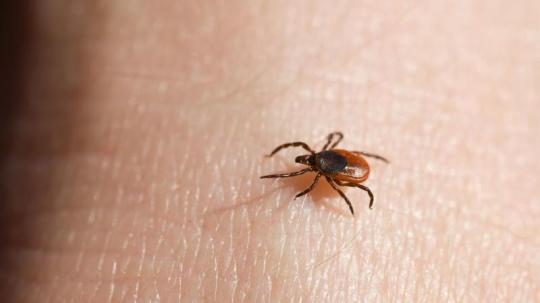
hc-1518201066-z9tit7vaqh-snap-image-2Numerous locations in the United States are home to a number of tick species, with the best known being the deer tick. (Aleksei Ruzhin/Dreamstime / TNS)

A federal appeals court has upheld a $41.7 million jury verdict for a Connecticut private school student who was severely and permanently disabled after developing encephalitis from a tick bite while on a class trip to China.

The case, which has been litigated for nine years, established that schools in Connecticut are obligated to protect children in their care, a conclusion that insurers, schools and other groups have warned could reduce educational travel opportunities for students.

The suit was brought in federal court in Bridgeport in 2009 by the parents of Cara Munn of New York, who at age 15 and at the conclusion of her freshman year at the private Hotchkiss School in Salisbury, was bitten by a tick and developed encephalitis while hiking in a remote, mountainous area of China during a school study program.

“She is gratified that the justice system worked,” her lawyer, Antonio Ponvert said Friday. “She is also happy and proud that her case might encourage custodians of minor children to be more careful.”

As a result of the insect bite, Munn suffered permanent brain damage and became seriously disabled. She has lost control over some movement, has lost problem-solving ability and is unable to speak. Her condition is expected to worsen with age.

She and her family sued the school for negligence and her jury returned the staggering verdict in 2013, ordering the school to pay her and her family $10.25 million in economic damages and $31.5 million for pain and suffering.

Lawyers for Hotchkiss argued that the school had no duty to warn Munn and her parents against contracting tick-borne encephalitis on 2007 trip because such an event could not have been foreseen.

The U.S. Court of appeals for the Second Circuit, which took the appeal, sent the case the the state Supreme Court for the resolution of two, central questions: Are Connecticut schools obligated by state policy and law to warn of the danger of contracting an insect-borne illness on field trips? And was a $41.7 million verdict excessive?

The state’s high court said last summer there is an “affirmative duty” to warn and upheld the verdict.

The case returned to the second circuit, where a panel of three judges published an unsigned summary order Tuesday dismissing the school’s remaining appellate claims and affirming the verdict.

The Hotchkiss lawyers were not immediately available Friday. If the school chooses to press its appeal further, it could ask the entire second circuit bench to hear the case or petition the U.S. Supreme Court.

For more:  https://madisonarealymesupportgroup.com/2017/04/02/lyme-court-case-41-7-million/


https://www.hhs.gov/ash/advisory-committees/tickbornedisease/meetings/2018-02-12/index.html

February 12, 2018 – Public Meeting

The Third Meeting of the Tick-borne Disease Working Group will be from from 12 pm to 4pm (Eastern).

This is an ONLINE meeting that is open to the public. It will be recorded. You must be registered to participate in the meeting and download or run the free Adobe Connect software:  https://events.kauffmaninc.com/events/tbdworkinggroup/register/?t=16

The focus of this meeting will be the work of the six subcommittees that will inform the writing of the Working Group’s Report to Congress and the Secretary of Health and Human Services. A full agenda will be posted on the website prior to the meeting.

The Working Group invites public comment on issues related to its charge. You will be asked if you would like to provide public comment when you register for this meeting.

Public comment may be provided verbally (by phone) or in writing. Thirty minutes has been set aside for verbal comments. Each speaker will be limited to 3 minutes. If more requests are received than can be accommodated, speakers will be randomly selected. Written comments should be no more than 2,000 words or 4 pages. Please send your written comments to the Tick-Borne Disease Working Group at tickbornedisease@hhs.gov. (subject line: written public comment)

Written comments and requests to make verbal comments must be received by February 7, 2018. Additional guidance will be sent by email to everyone who signs up for public comment.

For additional information, please visit the Tick-Borne Disease Working Group website or email us at tickbornedisease@hhs.gov.

Agenda

Noon – 12:05 pm
Call to Order and Welcome

John Aucott, Kristen Honey, and Rich Wolitski
12:05 pm -12:10 pm
Recap of Meetings One and Two
Purpose and Goals of Today’s meeting

John
12:10 pm – 12:20 pm
Report to Congress and the HHS Secretary: Overview

Rich
12:20 pm – 12:40 pm
Vote: Mission/Vision/Values of the TBDWG

Kristen
12:40 pm – 12:55 pm
Report on the Internal HHS Staff TBDWG
– Anna Perea, CDC Division of Vector-Borne Disease

Anna Perea
12:55 pm – 1:10 pm
Report on One State’s Experience: What was learned in Virginia – example of a successful collaboration
– Michael Farris, JD, LLM, President, CEO and General Council Alliance Defending Freedom

Michael Farris
1:10 pm – 1:30 pm
Review of roles and tasks of subcommittees and subcommittee members, including Town Hall

John, Kristen, and Rich
1:30 pm – 2:00 pm
Public Comment

Operator Assisted
2:00 pm – 2:05 pm
Break/Transition to Subcommittee Sessions

2:05 pm – 3:05 pm
Individual Subcommittees Meet—Members of the public are welcome to observe

1. Introductions

2. Inventory of Federal Actions
a, Does anything need to be changed or added this year to address important subcommittee issues?

3. Town Hall
a. What are the 2-3 key issues that the subcommittee would like to receive input in the form of public comment?

Subcommittee Co-Chairs
3:05 pm – 3:10 pm
Break to allow transition back to main webinar

3:10 pm – 3:40 pm Subcommittees Report Back
John and Kristen
Subcommittee Co-Chairs

3:40 pm – 4:00 pm
Meeting Recap and Next Steps

John and Kristen

Ticks and salt: an atypical case of neuroborreliosis
Siddiqui N, St Peter DM, Marur S.
Journal of Community Hospital Internal Medicine Perspectives, 7(6):358-362.

https://doi.org/10.1080/20009666.2017.1407209

Abstract

It is well documented that central nervous system (CNS) infections may lead to syndrome of inappropriate anti-diuretic hormone secretion (SIADH), but diagnosing these can prove difficult in patients with atypical presentations. We present a case of SIADH and muscle weakness in a patient without typical signs of CNS infection who was tested and diagnosed with neuroborreliosis based largely on her likelihood of exposure. This case indicates the need for Lyme testing in patients with unexplained SIADH who live in endemic areas.

The patient was an 83-year-old female with a history of type 2 diabetes and hypertension, who presented from her primary care physician’s office when her sodium was found to be 123 mEq/L (normal range is 135-145mEq/L). Her sole symptom was proximal muscle weakness. The diagnosis of SIADH was reached based on laboratory data.

A trial of fluid restriction was initiated, but neither her sodium nor her muscle weakness improved. Lyme testing was performed as the patient lived in an endemic area and was positive. Lumbar puncture showed evidence of neurologic involvement.

After realizing the appropriate treatment for hyponatremia (low sodium) in this case, intravenous ceftriaxone was started, and patient’s sodium levels improved and muscle weakness resolved. Studies show that SIADH is associated with CNS infections, likely related to the inflammatory cascade. However, the atypical presentation of neuroborreliosis for our patient delayed the appropriate diagnosis and treatment.

Our case demonstrates the need to screen for Lyme disease in endemic areas in patients presenting with neurologic symptoms and SIADH.

____________

**Comment**

Again, researchers need to be extremely cautious in reporting anything regarding tick borne illness as “rare,” or “atypical.”  The truth of the matter is nobody’s keeping score.  The medical profession at large has denied the connection between TBI’s and the myriad of symptoms they can mimic.

I’ve posted so many articles this year on “rare” manifestations that I’ve lost count.

One of the most experienced Lyme docs in Wisconsin states,

“Not everything is Lyme, but Lyme CAN be anything.”  

Truer words were never spoken.

And, of course, there’s a whole lot more at play than Lyme.  The coinfections aren’t on anyone’s radar except Lyme literate medical professionals and veterinarians.  These coinfections are so wide and variable in how they present that coupled with Lyme, it’s a one, two, punch and you are out.

A lot of educating on TBI’s needs to start happening in medical schools!

For more rare manifestations:  https://madisonarealymesupportgroup.com/2017/11/24/dr-frid-lyme-parkinsons-autoimmunity/

https://madisonarealymesupportgroup.com/2017/10/10/lyme-or-fibromyalgia/

https://madisonarealymesupportgroup.com/2017/06/10/the-coming-pandemic-of-lyme-dementia/

https://madisonarealymesupportgroup.com/2018/02/07/cluster-of-lyme-cases-manifesting-as-bannwarth-syndrome/

https://madisonarealymesupportgroup.com/2017/07/16/mycoplasma-and-other-intracellular-bacterial-infections-in-rheumatic-diseases-comorbid-condition-or-cause/

https://madisonarealymesupportgroup.com/2017/08/26/interstitial-cystitis-and-lyme-disease/

https://madisonarealymesupportgroup.com/2017/10/23/opthalmic-manifestations-of-bartonella-infection/

https://madisonarealymesupportgroup.com/2017/05/20/bartonella-endocarditis-opportunistic-infection-in-cancer-patients-and-eye-inflammation/

https://madisonarealymesupportgroup.com/2018/02/08/anemic-dog-found-to-have-bartonella-resolved-with-prolonged-antibiotics/

https://madisonarealymesupportgroup.com/2017/05/11/bartonella-henselae-in-children-with-congenital-heart-disease/

https://madisonarealymesupportgroup.com/2017/01/04/endocarditis-consider-bartonella/

https://madisonarealymesupportgroup.com/2017/11/07/congenital-babesiosis-in-two-infants/

https://madisonarealymesupportgroup.com/2017/08/06/transfusion-transmitted-babesiosis-leading-to-severe-hemolysis-in-sickle-cell-anemia-patients/


I literally could go on and on to infinity……