https://www.bustle.com/p/current-lyme-disease-research-shows-these-6-new-developments-17140501

Current Lyme Disease Research Shows These 6 New Developments

Vitalii Matokha/Shutterstock

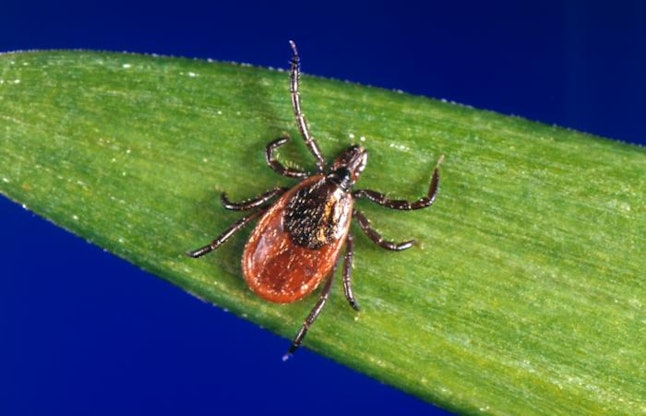
Lyme disease is carried by ticks, and is a pretty well-known problem — around 300,000 cases are likely diagnosed in the US every year, according to the Center for Disease Control and Prevention — but there’s still a lot we don’t know about it. Lyme disease is more complex than it looks, and the first few months of 2019 have brought some studies that are changing our understanding of tick-borne diseases and Lyme.

People with Lyme disease contract it from the bite of a tick infected with a particular bacterium, often after traveling through tick-friendly areas like forests and prairies, and it can cause issues like joint pain, flu-like symptoms and a distinctive bulls-eye rash (though you can have Lyme even if you don’t see a rash). It’s treated with antibiotics. However, between 10 and 20% of people who are bitten suffer from symptoms long after the disease has been treated, and scientists aren’t entirely sure why.

“Some scientists believe the bacterium can persist in the body, but others dismiss the idea. This dispute, combined with patients whom doctors often can’t help, has created a fractious field unlike almost any other,” noted Science in a review of Lyme disease research funding in 2019.

New science is helping to solve this conundrum, and cast more light on Lyme in general. Here’s where Lyme research stands right now.

1. We Know More About Post-Lyme Disorder — And How We Might Cure It
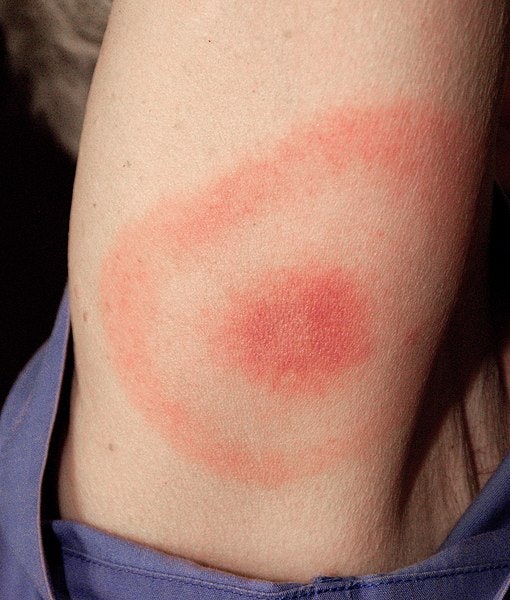
Center for Disease Control & Prevention/Wikimedia Commons

One of the biggest mysteries of Lyme disease is what’s called post-treatment Lyme disease syndrome (PTLDS). Why does treatment work on some people and not others? What makes PTLDS patients particularly vulnerable, and how can you treat it?

2019 has brought a few answers. Research by Johns Hopkins Medicine has revealed that people with PTLDS have a particular kind of brain inflammation, and that it’s probably the source of their high inflammation levels in general — and the cause of a host of symptoms. This is a new discovery; before this study, nobody knew what was causing people with PTLDS to have elevated inflammation.

There’s hope for treatment of PTLDS too; a three-antibiotic ‘cocktail’, also formulated by scientists at Johns Hopkins, has shown some serious promise for treating slow-growing Lyme bacteria. These ‘persister’ bacteria, according to their theory, might be missed in the first treatment of Lyme disease and cause symptoms to last for months and years — but the cocktail, when it was given to infected mice, cleared up the problem totally. It needs to be given human trials, but it’s a promising lead.

2. Lyme Disease Is Expected To Increase Due To Climate Change

Lyme disease research is accelerating, and that’s good news — because experts in 2019 warned that as climates warm worldwide, it’ll become more common. The European Congress of Clinical Microbiology & Infectious Diseases noted that mosquito- and tick-borne illnesses worldwide, from Lyme to malaria, will probably infect more people worldwide. Dr Giovanni Rezza, Director of the Department of Infectious Diseases at the Istituto Superiore di Sanitá in Rome, said in a press release:

“The stark reality is that longer hot seasons will enlarge the seasonal window for the potential spread of vector-borne diseases and favor larger outbreaks.”

3. We Now Know The Grass Length In Your Garden Doesn’t Matter
Center for Disease Control & Prevention/Wikimedia Commons

Concerned that your backyard is a breeding-ground for dangerous ticks bearing Lyme bites — because you don’t mow it often enough? Research published in PLOS One in 2019 found that it might not actually matter. “We tested the hypothesis thatlawn mowing frequency influences tick occurrence,” the scientists explain in the study. They studied tick levels in 16 yards with varying mowing frequency in a region known for ticks, and found that there were no ticks at all. None. Zero.

“Promoting frequent mowing (i.e., shorter lawns) and the removal of grass clippings could have minimal impacts on tick microhabitats, but is consequential for beneficial wildlife and other ecosystem services associated with urban biodiversity,” they explain. Many species of endangered bee, for instance, like longer grass, so a bit of length is actually preferable.

4. Machine Learning Is Helping Us Diagnose Lyme Disease

Research published in Nature in 2019 reveals that machine learning — the principle behind artificial intelligence — can help understand Lyme disease, given that its symptoms in individuals can be radically different. The study tracked the medical records of Lyme disease patients at Mount Sinai hospital in New York, and found that using machine learning, it could predict comorbidities — illnesses that showed up at the same time – and what conditions and disorders might show up in certain people and not others as they recovered (or, in the case of PTLDS patients, didn’t). The aim, the study said, was to create a framework that could help individual treatment plans for Lyme disease patients, rather than going for a one-size-fits-all approach.

5. We Know More About How The Bacteria Itself Survives
National Institute of Allergy and Infectious Diseases/Wikimedia Commons

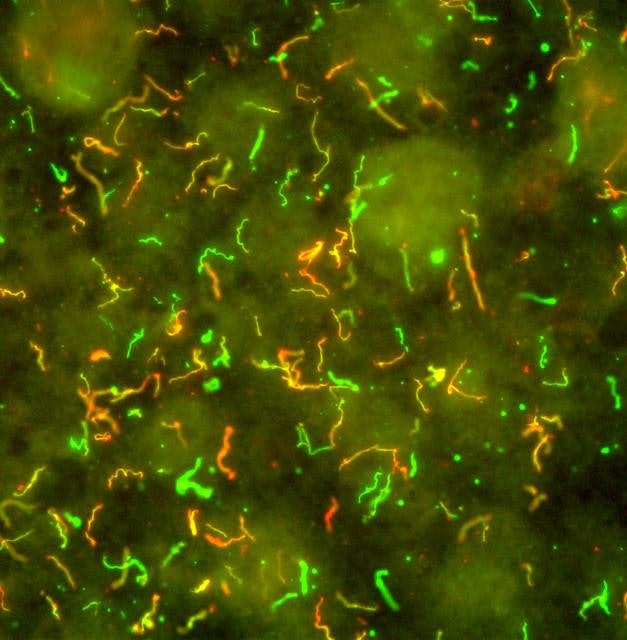
The bacterium behind Lyme disease is called Borrelia burgdorferi, and it’s what’s transmitted into your system by an infected tick when it bites you. Research in 2019 by Connecticut scientists has found that Lyme disease bacteria have a very particular shape and structure that makes them dependent on peptides to function. They obtain these peptides from animal hosts like mammals, including, yes, humans. Without them, a Lyme disease bacterium doesn’t survive; with them, it thrives. Figuring out how to disable that mechanism might mean that one day, in the future, we can stop Lyme bacteria in their tracks.

6. ‘Persister’ Bacteria Might Be Killed By Plant-Based Treatments

In the future, we may be treating Lyme disease with treatments derived from garlic, cinnamon and cumin. That’s the interesting conclusion from a groundbreaking study from Johns Hopkins, one of the most important Lyme disease research centers worldwide. In late 2018 they published results showing that, in petri dishes in their labs, essential oils derived from 11 different natural sources — garlic, pimento, cumin, palm rose, cinnamon bark, myrrh, hedychium ginger flowers, torchwood, thyme, mountain pepper, and lemon eucalyptus — that were hugely effective against Lyme disease bacteria. More effective, in fact, than standard antibiotics.

“We found that these essential oils were even better at killing the ‘persister’ forms of Lyme bacteria than standard Lyme antibiotics,” lead study author Ying Zhang said in a press release. This doesn’t mean that Lyme disease patients should give up their antibiotics for inhaling or swallowing natural oils; for one thing, that’s likely dangerous, and for another, exposure in a petri dish is very different to life in the human body. It will take a long time before we know whether this can be replicated in medication form; right now, antibiotics are still the best way forward.

The mysteries surrounding Lyme disease and its persistent form are still complex, but there’s hope that new treatments will be developed — and that we’ll finally get ahead of this disease as it becomes more common worldwide.

____________________

**Comment**

The science isn’t settled on ALL the ways Lyme can be transmitted, despite what authorities say:  https://madisonarealymesupportgroup.com/2019/04/02/transmission-of-lyme-disease-lida-mattman-phd/

While the rash means you HAVE Lyme, not having the rash means nothing.  Anywhere from 27-80% get the rash depending upon who’s counting:  https://madisonarealymesupportgroup.com/2019/02/21/lyme-disease-dont-wait-for-blood-tests-where-patients-have-bullseye-rash/  See comment after article.

This 10-20% with continuing symptoms is a falsely skewed number.  A microbiologist explains in this article that it’s actually around 60%:  https://madisonarealymesupportgroup.com/2019/02/25/medical-stalemate-what-causes-continuing-symptoms-after-lyme-treatment/

Key quote:

10-20% of Lyme disease patients who are promptly diagnosed and treated with an antibiotic within the first few weeks of infection, still end up with chronic disease. This is PTLDS.

30-40% of Lyme disease patients who have been infected for weeks to months before getting diagnosed, and THEN treated with an antibiotic, still end up with a chronic disease. This subgroup has no specific label but it has been referred to as “chronic Lyme disease,” or CLD.

Combining these two subgroups implies that up to 60% of people with Lyme disease will experience chronic illness as a result of this tick-borne disease.

Climate change has been disproven regarding tick and pathogen proliferation:  https://madisonarealymesupportgroup.com/2018/08/13/study-shows-lyme-not-propelled-by-climate-change/

https://madisonarealymesupportgroup.com/2018/11/07/ticks-on-the-move-due-to-migrating-birds-and-photoperiod-not-climate-change/

Studying the mowing patterns of 16 laws in ONE area of the country does not mean the science is settled.  Mow your lawn. It just makes logical sense when you understand ticks love humidity. I seriously wish they’d take this type of research funding and apply it to testing, treatments, and transmission studies for practical information patients & doctors.

We don’t need the help of machines as much as we need doctors to pull their heads out of the sand.

Regarding ‘we know more about the bacterium’ – not until you deal with the pleomorphism (shape shifting) ability of Bb, as well as the fact many are polymicrobially (numerous pathogens) infected.  These issues change the entire scope of this illness.  For more background on this: https://madisonarealymesupportgroup.com/2019/04/29/is-the-sky-truly-going-to-fall-for-patients-with-the-untreatable-form-of-lyme-disease/

Many desperate patients out here in Lyme-land have tried a number of plant-based treatments on our own. While I’ve personally taken internal essential oils (plant based concentrates of herbs), they did NOT tackle this beast.  I relapsed on them. They may work for a select subset of patients and they very well may be a great choice once a person has reached remission, but don’t bank on them for front-line treatment.

Just being real.


https://www.independent.ie/life/health-wellbeing/doctors-discover-irish-student-who-was-admitted-to-hospital-for-depression-actually-had-a-deadly-brain-infection-38075556.html

Doctors discover Irish student who was admitted to hospital for depression actually had a deadly brain infection

Hannah Farrell
Hannah Farrell

Erin Cardiff

A Dublin student who was admitted to a psychiatric hospital after doctors thought she was having a mental breakdown has told how tests revealed she actually had a deadly brain infection.

When 22-year-old Hannah Farrell’s behaviour changed dramatically – making her forgetful and causing her to sleep more often – she thought she was burnt out after sitting stressful exams, then working around the clock in a deli.

But in time, the Dublin woman’s behaviour grew more and more strange, prompting a diagnosis of depression, which led to her being admitted to a psychiatric hospital in August 2017, following a rapid decline.

She said:

“I didn’t feel depressed. Deep down, I knew something more sinister was going on, but I felt as if doctors were assuming I just didn’t want to accept help for a mental health condition.

“To this day, I have nightmares about being in a psychiatric hospital. My memories are very hazy, almost like it was a dream.

I can remember odd details, like all the couches being green, and falling asleep there on the first night – and then, nothing. For three months after that, it’s just blank.”

Hannah Farrell was hospitalised in 2017

Piecing together what happened next by speaking to doctors and relatives, Hannah, who has now recovered and is completing a psychology degree at Dublin’s National College of Ireland, has been told that, two days after arriving at the psychiatric hospital, a medic became concerned that her problem was neurological, not psychological.

An MRI scan then revealed that she was suffering from encephalitis – a rare but serious inflammation of the brain.

Referred to Dublin’s St Vincent’s Hospital, her life hung in the balance as she was pumped full of antibiotics and given 13 different plasma transfusions.

Then, on 12 November 2017, she suddenly “woke up” and began responding to her family – a poignant moment which they caught on camera – after months of being unable to walk or talk.

“I had been almost catatonic,” she explained. “I couldn’t speak and had lost so much weight.”

“I was on a feeding tube and had to have my saliva sucked away every few minutes to stop me choking. My family had been by my bedside, talking to me throughout, even though I couldn’t respond.”

“Then, that November day, my mum said, ‘I’m so tired, are you?’ and I just replied ‘Yes.’  It was like I’d suddenly woken up.”

Hannah told how her nightmare began back in the summer of 2017 when, having just finished her second-year exams, she started working long hours in a deli and was under a lot of stress.

An MRI of Hannah's brain, which shows a pineal brain cyst
An MRI of Hannah’s brain, which shows a pineal brain cyst

So, when she initially developed flu-like symptoms, both she and her GP thought she was simply run down.

Then, three weeks later, she woke with her glands so swollen that she was in agony, prompting medics to prescribe her a course of antibiotics.

“I was supposed to be visiting my brother in London two weeks later, so I took the antibiotics and hoped for the best,” she said. “Looking back, it wasn’t the wisest decision to go, but I really didn’t want to miss out on seeing him.

“The first warning sign came when I was packing and couldn’t find the €200 I had changed up into pounds. Ordinarily, I’d be really stressed, but I just didn’t care and didn’t see it as a big deal.

“Then, when I got to London, my brother took one look at me and said I seemed really out of sorts. The whole trip, I basically stayed in his apartment sleeping. We never went sightseeing or did any of the other things we had planned.”

Back home, Hannah’s behaviour grew more and more chaotic. She recalls not looking after herself and struggling to perform everyday tasks like showering and tidying up.

Increasingly forgetful, she would often lose things and, to this day, has no memory of her grandmother passing away on 17 July.

She added: “I don’t remember the funeral, but apparently I was acting really strangely and couldn’t comprehend what had happened.

“My speech also began to be affected, and would be very slurred and slow. I have no idea how, but I kept working right up until I was admitted to hospital.

“I have vague memories of customers getting angry with me when I couldn’t answer them, or gave them the wrong change as I got confused.”

Eventually, she was diagnosed with depression and referred to a therapist – but during the session, her speech became so slurred she could barely be understood, prompting her to return to the doctor.

She continued: “I took my mum into the room with me, as I could barely speak. Whenever I tried to, the words just wouldn’t come out.

“I think the doctors thought I just wasn’t accepting help, and so I was referred to a psychiatric hospital.”

There, medics became concerned Hannah’s problem was neurological and, two days after she arrived, she was booked in for an MRI scan.

While waiting for the MRI, her condition deteriorated to the point where she could hardly move and her eyes became extremely sensitive to light.

And, when the scan revealed a cyst measuring around 1.5cm in the centre of her brain, she was whisked to St Vincent’s Hospital.

“That actually turned out to be unconnected to the encephalitis, but in a way, it was almost lucky as it flagged me up to neurologists and meant they leapt into action,” she said.

Following blood tests and another MRI scan, Hannah had a lumbar puncture to test the fluid around her brain and spinal cord – the results of which revealed she had anti-nmda receptor encephalitis, an autoimmune version of the condition.

According to the charity The Encephalitis Society, who have been of invaluable support to Hannah, this is caused by the immune system attacking the brain in error, resulting in symptoms including confusion, altered personality or behaviour, psychosis, hallucinations and memory loss.

Following her official diagnosis, which came in September 2017, Hannah was on the brink of death, as medics tried everything to save her.

When 13 different plasma exchanges – a procedure that removes plasma from the blood and replaces it with new plasma fluid – failed to make any difference, things looked grave.

But then, on 12 November, she suddenly roused and began to respond to her parents.

From there, she went from strength to strength and was walking again in just two weeks, although her memory was greatly affected.

“My mind was stuck back in the summer, months earlier,” she said, adding that her speech was also very slurred at first. “I would get very confused, and have a 10-15 minute memory before it would be wiped, then I’d ask again why I was in hospital, with no clue of what had happened.

“I missed out on a lot, like my nephew saying his first word and taking his first steps. When I saw photos of him, he was suddenly older.

“People I’ve known for years would come and visit me, and I wouldn’t recognise them.”

Finally, in December 2017, after 105 days, Hannah was discharged from hospital.

In February 2018 she started speech therapy, occupational therapy and physiotherapy at the National Rehabilitation Hospital, Dublin.

Slowly, her speech returned to normal, her memory began to improve and she even returned to her studies, which she had put on hold.

“Now, I am more forgetful than I was before, but my memory has improved a lot from when I first came round in November 2017,” she said. “I’ve learnt to cope by being organised. I set loads of alarms and reminders, and have sticky notes all over my room.”

After returning to university, Hannah submitted her final thesis – poignantly written on brain injuries – in April this year, and is now gearing up to take her third year exams.

By speaking out, she hopes to both thank The Encephalitis Society, who have helped her feel less alone, as well as the medical staff in St Vincent’s and the National Rehabilitation Hospital, and to raise awareness of the condition that has claimed months of her memories.

Adding that she also wants to praise her boyfriend Ross, 22, for his unwavering support, she said:

“Encephalitis is often misdiagnosed, and it’s scary how many people haven’t heard of it. Even doctors need to be better informed, as reading about something in a medical book is very different to coming up against it in real life.

“If people are more aware of the symptoms, they can look out for those changes in behaviour like I had.

“Mentally, this has been very overwhelming. At first, I cried every day, but then survival mode kicked in and I realised it won’t help me to dwell – I have to keep going.

“I do worry about relapsing and getting sick again, but I don’t want to become my illness. This isn’t me – it’s something that happened to me, and I am so lucky to have survived.”

For information, visit www.encephalitis.info

Press Association

____________________

**Comment*

Where to even start…..

Thank God for the medics who spoke up for this poor girl!

Notice the patient was quite aware she didn’t feel depressed, yet the doctors assumed.  (Assuming makes an ass out of u and me & doctors).

Sudden change in behavior should be a red-flag to everyone – especially trained doctors!

This is happening more and more, yet is considered to be rare:  https://madisonarealymesupportgroup.com/2017/10/01/panspandas-steroids-autoimmune-disease-lymemsids-the-need-for-medical-collaboration/  Two stories are presented in this link – Susannah Cahalan’s story from the book, “Brain on Fire,” who had a similar auto-immune brain issue, and then the story of Patrik who had Lyme disease which morphed into Autoimmune encephalopathy.

Lyme/MSIDS, PANS, PANDAS, & autoimmune encephalopathy can all be interconnected and we need knowledgable practitioners who can recognize this as it’s not going away anytime soon.

https://madisonarealymesupportgroup.com/2019/01/27/pans-pandas-autoimmune-encephalitis-rickert-hong/

https://madisonarealymesupportgroup.com/2019/01/24/toddler-suffering-from-hallucinations-seizures-diagnosed-with-rare-brain-disease/

How many people have to get this before they quit saying it’s rare?  https://www.reliasmedia.com/articles/142440-autoimmune-encephalitis-not-rare-and-increasing  Many clinicians still consider autoimmune encephalitis to be a “diagnosis of exclusion” or “rare” when compared to infectious encephalitis. Results of this study contradict that presumption and serve as an eye-opener.  Detection of autoimmune encephalitis is increasing over time. According to the results from this population-based study, its prevalence and incidence are comparable to infectious encephalitis.

Also, Lyme/MSIDS can clearly be a part of this picture:   https://madisonarealymesupportgroup.com/2018/11/06/diagnosing-treating-autoimmune-encephalitis-in-patients-with-persistent-lyme-symptoms/

https://madisonarealymesupportgroup.com/2018/12/05/brain-on-fire-cases-epitomize-benefits-of-dual-trained-doctors/

https://madisonarealymesupportgroup.com/2019/03/16/brain-under-attack-pans-pandas-related-developmental-disorders/

Here, LLMD Dr. Cameron gives a rebuttal to Wormer’s statement that no such thing as Lyme encephalitis exists:  http://danielcameronmd.com/patients-should-be-warned-of-lyme-disease-complications-including-lyme-encephalopathy/

Key quote:  Lyme encephalopathy has repeatedly been described in the literature.

Then he goes on to list many cases.  Wormser lives in a different reality.

More on Anti-nmda receptor encephalitis:  https://www.antinmdafoundation.org/the-illness/what-is-anti-nmda-receptor-encephalitis/

To read one doctor’s advice concerning patients with Lyme/MSIDS & autoimmune encephalitis:  https://lymemd.blogspot.com/2017/08/autoimmune-encephalitis-and-lyme.html

Key information from link:

The dogma that Lyme patients should never receive steroids or immunosuppressive agents is not always true…With antibiotic therapy there may be a dramatic response: they get much worse.  This is even more the case with therapy directed at Babesia and Bartonella….This is not a Herxheimer reaction.  This is the most crucial point of this post.  Continued therapy will not lead to improvement.  A Herxheimer reaction is caused by a mini-cytokine-storm.  It is normal, although exaggerated response to killing germs. This other reaction is caused by exacerbation of an autoimmune response: the production of self-directed antibodies. This is very troublesome and difficult to manage….The disease is very complex and multifaceted. Something to keep in mind when patients do not respond to standard therapy as expected.


Tick App Complete Flyer (2019)

Details in link

  1. Download the app (>18 years-old)
  2. Complete consent form & enrollment questions
  3. Log daily activities

You will get:

  1. Free tick reminders
  2. Report a tick at any time. Send a pic and they will identify it
  3. Find out tick activity in your area
  4. Learn how to prevent tick bites
  5. Info on tick removal
  6. Info & FAQS


https://environment.yale.edu/news/article/ecosystem-disservice-lyme-disease-imposes-large-cost-on-the-northeast-united-states/

Lyme Disease Imposes Large Cost On the Northeast United States

lyme disease tick warning
Kyle Besler via Shutterstock

As people across the northeastern U.S. begin venturing back into the outdoors with the arrival of spring, they will make 1 billion fewer trips than they otherwise would have if Lyme disease didn’t exist, a new Yale study concludes.

In an analysis published in the journal Environmental and Resource Economics, researchers found that perceived risks of contracting Lyme disease on average cause a person in the Northeast to forego eight 73-minute outdoor trips per year, costing them about nine hours of outdoor time per year. Although the cost of individual lost trips is small — about $2.75 to $5 — the total cost roughly $2.8 billion to $5 billion annually due to the large number of people in the region.

“Lyme disease has been around for a few decades but it still has a big cost to society,” said Eli Fenichel, an assistant professor at the Yale School of Forestry & Environmental Studies (F&ES) and senior author of the paper. “But the cost is not what people spend on doctors, or medicine, or even bug spray. These are costs that everybody incurs because we’re all choosing second-choice activities to avoid getting Lyme disease.”

“It’s a lot of people making very small changes, but in such a densely populated region that has major impacts.”

Lyme disease is caused by the bacterium Borrelia burgdorferi and is transmitted to humans through the bite of an infected blacklegged tick, according to the U.S. Centers for Disease Control and Prevention (CDC). Prevalent across the northeastern U.S. and the Great Lakes region, the disease causes fever, headaches, fatigue, and skin rash. It can be prevented by use of repellents and removing ticks, as well as costly steps to remove tick habitat.

Or, as the researchers illustrate, individuals can simply find alternative activities to avoid tick habitat altogether.

To evaluate how the risk of Lyme disease impacts human behavior, the researchers analyzed data from the American Time Use Survey — a U.S. Bureau of Labor Statistics-based project that provides nationally representative estimates on how, when, and with whom people spend their time — and CDC data from 2003 to 2012.

After comparing those datasets, they found that the average individual in the average county spent 1.54 fewer minutes outside per day in response to an average of 72.17 Lyme disease cases reported to the CDC. This amounts to about 9.41 hours annually.

The research team say that though it is difficult to put a monetary cost on these lost opportunities, they calculate welfare loss based on the amount individuals are willing to spend to travel to recreate outdoors relative to spending leisure time at home — the location of most indoor leisure.

“People are giving up trips, and it’s not just hiking and camping in the woods,” said Kevin Berry, a former postdoctoral scholar at F&ES and the lead author of the study. “It’s trips to the park, soccer games, or walks and bike rides in places where there are stands of trees and tall grasses… a wide variety of activities pretty much anywhere in this part of the Northeast that’s outdoors.”

The findings illustrate the importance of careful evaluation when evaluating the ecosystem services and, in some cases, ecosystem “disservices” of nature.  Indeed, though the historical notion that forests are places for humans to fear has largely been replaced by recognition that these spaces provide important services — including recreational opportunities — there remain some risks that can undermine these potential benefits, including the threat of tick-borne Lyme disease.

Lyme disease is representative of many environmental problems, Fenichel said; environmental risks and harms can have seemingly minor impacts on individuals, but can impose profound costs on society.

“It’s an issue that affects all of us, but it’s one of those environmental challenges that are so difficult to handle as a society,” Fenichel said. “It’s a big issue in aggregate — up to $5 billion in this case — but to anyone of us it’s not a big issue. Everybody cares a little bit, but perhaps not enough to take action. Though, in aggregate we’d be much better off if we cooperate to deal with Lyme disease.”

The study was a collaboration between Fenichel and three former postdoctoral scholars at F&ES: Berry, who is now at the University of Alaska, Anchorage; Jude Bayham, who is now at California State University at Chico; and Spencer Meyer, a senior conservationist at the Highstead Foundation.

– Kevin Dennehy    kevin.dennehy@yale.edu    203 436-4842
___________________
A few points:
  1. Lyme has been around since the beginning of time:  https://www.utoronto.ca/news/u-t-researchers-find-ancient-iceman-s-infection-helps-lyme-disease-bone-loss-discovery
  2. The science is not settled regarding ALL the methods of transmission but it’s highly likely the Deer tick is NOT the sole perp:  https://madisonarealymesupportgroup.com/2019/04/02/transmission-of-lyme-disease-lida-mattman-phd/
  3. While this is interesting data, I wish research would be done on truly important matters like transmission, testing, treatments, and cost to the sick people having to pay out of pocket for this plague.


Microbiome analysis of Ixodes scapularis ticks from New York and Connecticut

*Tokarz R, Tagliafierro T, Sameroff S, Cucura DM, Oleynik A, Che X, Jain K, Lipkin WI./Ticks and Tick-borne Diseases/, 2019 Apr 15. pii: S1877-959X(19)30033-0.https://doi.org/10.1016/j.ttbdis.2019.04.011

Abstract

We employed high throughput sequencing to survey the microbiomes of
Ixodes scapularis collected in New York and Connecticut. We examined 197
individual I. scapularis adults and pools from 132 adults and 197 nymphs.
We detected:

  • Borrelia burgdorferi sensu stricto in 56.3%
  • A filarial nematode was found in 13.7% of adult ticks
  • Anaplasma phagocytophilum in 10.6%
  • Babesia microti in 7.6%
  • Borrelia miyamotoi in 5%
  • Powassan virus in 3.6%
  • Fourteen viruses were detected including South Bay virus (22%) and blacklegged tick phlebovirus 1 and 2 (73%)

We did not detect Borrelia mayonii, Ehrlichia muris eauclairensis, Bartonella spp. or pathogenic  Babesia species other than B. microti.

The most abundant bacterium(65%), and only rickettsial species identified, was the endosymbiont Rickettsia buchneri.

This study provides insight into the microbial diversity of I.scapularis in New York State and Connecticut.
https://doi.org/10.1016/j.ttbdis.2019.04.011

__________________

**Comment**

Nematodes (worms) have been found to hide borrelia spirochetes:  https://madisonarealymesupportgroup.com/2016/06/03/borrelia-hiding-in-worms-causing-chronic-brain-diseases/  This is important from the standpoint that it shows anthelmintics may be helpful in some patients.

https://madisonarealymesupportgroup.com/2016/08/09/dr-paul-duray-research-fellowship-foundation-some-great-research-being-done-on-lyme-disease/