Archive for the ‘Transmission’ Category

Are Mosquitoes Transmitting Lyme Disease?

https://dermagicexpress.blogspot.com/2018/10/are-mosquitoes-involved-in-transmission.html?m=1

ARE THE MOSQUITOES INVOLVED IN THE TRANSMISSION OF LYME DISEASE?

November, 2018

Dr. José Lapenta Dermatologist
Dr. José M. Lapenta MD
 
EDITORIAL ENGLISH
===================
Hello friends of the network, DERMAGIC EXPRESS with a super hot topic:
ARE THE MOSQUITOES INVOLVED IN THE TRANSMISSION OF LYME  DISEASE?
A few years after the discovery of the Borrelia Burgorferi in 1981 by Willy Burgdorfer, some scientists began to suspect that mosquitoes and other insects could be involved in the spread of Lyme borreliosis; and specifically in 1985-1987 studies began to appear on this subject, some controversial, others more convincing of the fact that mosquitoes that feed on blood from animals contaminated with Borrelia, could be vectors of the disease and contribute to the epidemic that attacks the whole world today by this spirochete.
Ticks are always spoken of as the only and great vector, but today I bring you some references that will make you think that there is something “hidden” and perhaps not revealed about Lyme Borreliosis: mosquitoes as transmitting vectors.
Not to make it long I’m going to name the most outstanding aspects of some studies and I’ll leave the references of the facts:
  • Historically in the year 1961 Robert J.A. I first proved the experimental transmission of Borrelia, in this case Borrelia anserina, (discovered by Saknarof in the year 1891) by the hematophagous insect Aedes aegypti in geese of the Caucasus, since then it has been isolated from the blood of infected geese, turkeys, ducks, fowls, partridges, crows and sparrows from all parts of Africa, Australia, Austria, Bulgaria, Brazil, Egypt, East Indies, Germany, Greece, Hungary, India, the U.S.S.R., Rumania and Turkey.
  • In 1985 Dolby et al. published in France a work of 4 Chronic Erythema Migrans (ECM) cases, where only 1 could be checked the sting by ticks, and raise the possibility that the transmission could have been by mosquitoes and flies (horseflies,  tabanid).
  • In 1987 Magnareli et al.  conducted a study in Connecticut, United States collecting mosquitoes, horse flies and deer flies, in total 18 species, which were tested for Borrelia Burgdorferi finding a percentage of positivity that varied between 2.9 and 14.3% for blood-sucking insects. They also placed in cages insects with hamsters not contaminated with Borrelia; 11 species of females contaminated with Borrelia Burgdorferi fed on the blood of the hamsters. The spirochete was not found in the hamsters, but one of them presented positive titers of anti-Borrelia antibodies.
From these years they continued publishing works in relation to this subject where it is demonstrated that in a low percentage the Borrelia Burgdorferi can be transmitted by mosquitoes, horse flies, deer flies, and others.
It is important to note that most of the studies were conducted in Europe, being perhaps the most relevant those made in the Czech Republic, where among them, in one study 5% of the mosquitoes studied were shown contaminated with spirochetes and one of them corresponded to the strain (BR-84) identified as Borrelia Afzelii.
 
Another detail to highlight is that the CDC does not mention these blood-sucking insects as a possible transmitter of Lyme borreliosis, which, although being low in the percentage shown in the studies, could be a factor in the spread of this disease by the world.
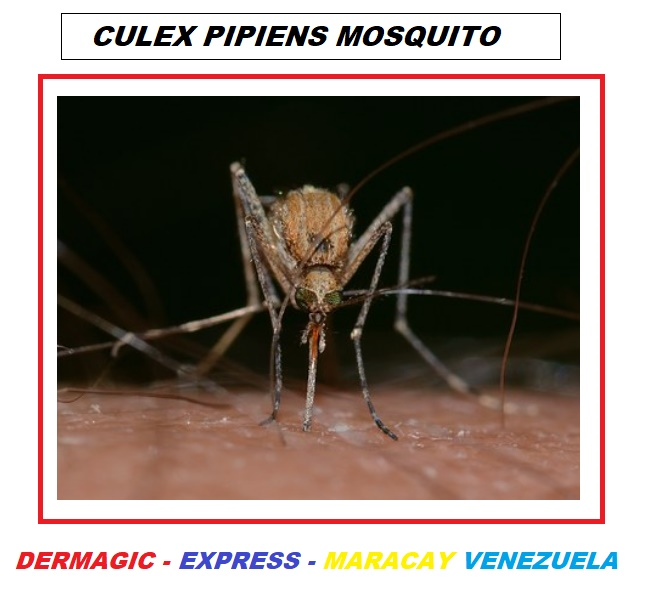
Here I leave the bibliographical references that prove these facts and in the attach one of the species of mosquitoes in which the Borrelia Burgdorferi was found.
“Under the sun there is nothing hidden, and sooner or later the evidence appears that shows that what you tried to hide, became the evidence that became a truth”
================================================================
BIBLIOGRPHICAL REFERENCES / REFERENCIAS BIBLOGRAFICAS
================================================================

1.) Doby JM , Chastel C , Couatarmanac’h A , Cousanca C , Chevrant-Breton J , Martin A , Legay B , Guiguen C .  [Etiologic and epidemiologic questions posed by erythema chronicum migrans and Lyme disease. Apropos of 4 cases at the Regional Hospital Center, Rennes]. Bull Soc Pathol Exot Filiales. 1985;78(4):512-25.b[Article in French]

2.) Magnarelli LA1, Anderson JF. Ticks and biting insects infected with the etiologic agent of Lyme disease, Borrelia burgdorferi. J Clin Microbiol. 1988 Aug;26(8):1482-6.

3.) J.H. (Han) van der Kolk. Borrelia burgdorferi seeks vectors. Page 119 | Taylor and Francsi online. Published online: 15 Dec 2014.
Source:https://www.tandfonline.com/doi/full/10.1080/01652176.2014.972609?scroll=top&needAccess=true

4.) Chang YF, Novosel V, Chang CF, Summers BA, Ma DP, Chiang YW, Acree WM, Chu HJ, Shin S, Lein DH. 2001 Jul. Experimental induction of chronic borreliosis in adult dogs exposed to Borrelia burgdorferi-infected ticks and treated with dexamethasone. Am J Vet Res. 62:1104–1112.[Crossref], [PubMed], [Web of Science ®], [Google Scholar]

5.) Chang YF, Novosol V, McDonough SP, Chang CF, Jacobson RH, Divers T, Quimby FW, Shin S, Lein DH. 2000. Experimental infection of ponies with Borrelia burgdorferi by exposure to Ixodid ticks. Vet Pathol. 37:68–76.[Crossref], [PubMed], [Web of Science ®], [Google Scholar]

6.) Fernando SS. 1983. The giant kidney worm (Dioctophyma renale) infection in man in Australia. Am J Surg Pathol. 7:281–284.[Crossref], [PubMed], [Web of Science ®], [Google Scholar]

7.) Halouzka J, Postic D, Hubálek Z. 1998. Isolation of the spirochaete Borrelia afzelii from the mosquito Aedes vexans in the Czech Republic. Med Vet Entomol. 12:103–105.[Crossref], [PubMed], [Web of Science ®], [Google Scholar]

8.) Halouzka J, Wilske B, Stünzner D, Sanogo YO, Hubálek Z. 1999. Isolation of Borrelia afzelii from overwintering Culex pipiens biotype molestus mosquitoes. Infection. 27(4-5):275–277.[Crossref], [PubMed], [Web of Science ®], [Google Scholar]

9.) Liu D. 2012. Dioctophyme. In: Liu D, editor. Molecular detection of human parasitic pathogens. Boca Raton (FL): Taylor & Francis; p. 535–538.[Crossref], [Google Scholar]

10.) Qiu WG, Schutzer SE, Bruno JF, Attie O, Xu Y, Dunn JJ, Fraser CM, Casjens SR, Luft BJ. 2004. Genetic exchange and plasmid transfers in Borrelia burgdorferi sensu stricto revealed by three-way genome comparisons and multilocus sequence typing. Proc Natl Acad Sci USA. 101:14150–14155.[Crossref], [PubMed], [Web of Science ®], [Google Scholar]

11.) Stricker RB, Lautin A, Burrascano JJ. 2005. Lyme disease: point/counterpoint. Expert Rev Anti Infect Ther. 3:155–165.[Crossref], [PubMed], [Google Scholar]

12.) Wagner B, Erb HN. Dogs and horses with antibodies to outer-surface protein C as on-time sentinels for ticks infected with Borrelia burgdorferi in New York State in 2011. 2012. Prev Vet Med. 107:275–279.[Crossref], [PubMed], [Web of Science ®], [Google Scholar]

13.) Zákovská A, Nejedla P, Holíková A, Dendis M. 2002. Positive findings of Borrelia burgdorferi in Culex (Culex) pipiens pipiens larvae in the surrounding of Brno city determined by the PCR method. Ann Agric Environ Med. 9:257–259.[PubMed], [Web of Science ®], [Google Scholar]

14.) J. A. ROBERTS. Experimental Transmission of Borrelia anserine (Sakharoff 1891) by Aedes aegypti. Letter | Published: 16 September 1961. Nature volume 191, page 1225 (16 September 1961)

15.) Hubálek Z1, Halouzka J, Juricová Z. Investigation of haematophagous arthropods for borreliae–summarized data, 1988-1996. Folia Parasitol (Praha). 1998;45(1):67-72.

16.) Petr Zeman. Borrelia-infection rates in tick and insect vectors accompanying human risk of acquiring Lyme borreliosis in a highly endemic region in Central Europe. Folia Parasitologica 45[4] 319-325 (1998). Regional Center of Hygiene, Dittrichova 17, 120 07 Prague 2, Czech Republic

17.) Zákovská A1, Nejedla P, Holíková A, Dendis M. Positive findings of Borrelia burgdorferi in Culex (Culex) pipiens pipiens larvae in the surrounding of Brno city determined by the PCR method. Ann Agric Environ Med. 2002;9(2):257-9.

18.) Kosik-Bogacka D1, Bukowska K, Kuźna-Grygiel W. Detection of Borrelia burgdorferi sensu lato in mosquitoes (Culicidae) in recreational areas of the city of Szczecin. Ann Agric Environ Med. 2002;9(1):55-7.

19.) Kosik-Bogacka D1, Kuźna-Grygiel W, Bukowska K. The prevalence of spirochete Borrelia burgdorferi sensu lato in ticks Ixodes ricinus and mosquitoes Aedes spp. within a selected recreational area in the city of Szczecin. Ann Agric Environ Med. 2004;11(1):105-8.

20.) Zákovská A1, Capková L, Serý O, Halouzka J, Dendis M. Isolation of Borrelia afzelii from overwintering Culex pipiens biotype molestus mosquitoes. Ann Agric Environ Med. 2006;13(2):345-8.

21.) Kosik-Bogacka DI1, Kuźna-Grygiel W, Górnik K. Borrelia burgdorferi sensu lato infection in mosquitoes from Szczecin area. Folia Biol (Krakow). 2006;54(1-2):55-9.

22.) Alexandre C.Atalibaa. José S.Resendeb. NatalinoYoshinaric. Marcelo B.Labrunaa. Isolation and molecular characterization of a Brazilian strain of Borrelia anserina, the agent of fowl spirochaetosis.Research in Veterinary Science. Volume 83, Issue 2, October 2007, Pages 145-149https://doi.org/10.1016/j.rvsc.2006.11.014

23.) Nejedla P1, Norek A, Vostal K, Zakovska A. What is the percentage of pathogenic borreliae in spirochaetal findings of mosquito larvae? Ann Agric Environ Med. 2009;16(2):273-6.

24.) Petra Nejedla 1,   Adam Norek 1,   Karel Vostal 1,   Alena Žákovská 1. What is the percentage of pathogenic borreliae in spirochaetal findings of mosquito larvae?. Ann Agric Environ Med. 2009;16(2):273–276

25.) Sikutová S1, Halouzka J, Mendel J, Knoz J, Rudolf I. Novel spirochetes isolated from mosquitoes and black flies in the Czech Republic. J Vector Ecol. 2010 Jun;35(1):50-5. doi: 10.1111/j.1948-7134.2010.00027.x.

26.) Melaun C1, Zotzmann S1, Santaella VG1, Werblow A1, Zumkowski-Xylander H2, Kraiczy P3, Klimpel S4. Occurrence of Borrelia burgdorferi s.l. in different genera of mosquitoes (Culicidae) in Central Europe. Ticks Tick Borne Dis. 2016 Mar;7(2):256-63. doi: 10.1016/j.ttbdis.2015.10.018. Epub 2015 Nov 12.

__________________

For more:  

https://madisonarealymesupportgroup.com/2016/07/23/german-study-finds-borrelia-in-mosquitos/

https://madisonarealymesupportgroup.com/2018/10/04/deer-fly-lyme-carrying-ectoparasite-on-the-move/

Zoonotic Implications of Changing Tick Populations

https://www.americanveterinarian.com/news/zoonotic-implications-of-changing-tick-populations

October 25, 2018

Zoonotic Implications of Changing Tick Populations

As environmental changes allow tick populations to spread, the zoonotic risk of tickborne diseases increases.

By Kate Boatright, VMD

Between 1940 and 2004, the majority of emerging human infectious diseases worldwide were zoonotic. Of these, nearly one-quarter were arthropod vector-borne diseases, with ticks being the most common vector. In the United States, tickborne diseases account for about 95% of vector-borne diseases.

A recent review article in Veterinary Sciences examined many factors of tick biology, including the changing geographic distribution of tick populations and the impact of this change on associated tickborne diseases.

Ixodes Ticks and Associated Pathogens

Ixodid ticks exist worldwide. Warmer temperatures and changing humidity have allowed for northern expansion in North America, Europe, and Russia. Many significant zoonotic pathogens are carried by these ticks:

  • Borrelia burgdorferi, the causative agent of Lyme disease, is now seen throughout the United States, Canada, and Europe.
  • New Borrelia species identified worldwide have been implicated as additional causative agents of Lyme disease (Borrelia mayonii) and a relapsing fever (Borrelia miyamotoi).
  • Babesiosis, caused by over 100 different Babesia species, is especially significant for cattle and humans. Human babesiosis cases are expected to be seen in Canada due to the increased number of Ixodes scapularis ticks, and new Babesia species are now seen in regions not previously known to have babesiosis.
  • Anaplasma phagocytophilum is the causative agent of human granulocytic anaplasmosis (HGA), equine anaplasmosis, and febrile diseases in ruminants, cats, and dogs. Reports of HGA in the United States increased by a factor of 12 between 2001 and 2011.
  • Co-infections are common in individuals exhibiting disease from an Ixodes tick vector. Ten percent of individuals infected with Anaplasma also had antibodies to B burgdorferi or Babesia microti.
Ambylomma Ticks and Ehrlichia

In the United States, Amblyomma americanum ticks have expanded both north and west as white-tailed deer populations have increased in these regions. All life stages of this tick species can feed on humans and deer, increasing the potential for transmission of Ehrlichia chaffeensis and Ehrlichia ewingii, the most common causes of human monocytic ehrlichiosis.

In the rest of the world, other Amblyomma ticks serve as vectors for multiple species of Ehrlichia, including new genetic variants classified as Candidatus Neoehrlichia species in Europe and Asia. For veterinarians, heartwater disease, caused by Ehrlichia ruminantium, is an increasingly important reportable disease of ruminants in Africa and the Caribbean.

Viral Vector-Borne Diseases

Vector-borne viruses are another emerging global zoonotic threat. Many tick species carry viruses of increasing public health importance:

  • Rhipicephalus microplus and Haemaphysalis longicornis ticks in China and Amblyomma americanum in the United States are known vectors of closely related viruses causing severe fever and thrombocytopenia. In the United States, this virus is known as heartland virus.
  • Bourbon virus was recently discovered in the United States.
  • Powassan virus is reemerging in North America.
  • Tickborne encephalitis viruses are broadening in range throughout Europe as reforestation and movement of dogs allows the range of their vector, Dermacentor reticulatus, to expand into Germany, the Netherlands, and Poland.
  • Crimean-Congo hemorrhagic fever virus is spreading to multiple countries in the Mediterranean, likely due to the transportation of its tick vector, Hyalomma marginatum, by birds from Africa, Asia, and Eastern Europe to Central Europe.
Take-Home Message

Practitioners in both veterinary and human medicine must remain aware of the changing geography of ticks and associated vector-borne diseases. The discovery of the Asian tick H longicornis in New Jersey and Virginia should be an important reminder of the fact that

“ticks and tickborne pathogens do not recognize international boundaries.”

Thus, “a robust international disease monitoring network” is needed to protect both human and animal health from both known and emerging tick-borne diseases.
Dr. Boatright, a 2013 graduate of the University of Pennsylvania, is an associate veterinarian in western Pennsylvania. She is actively involved in her state and local veterinary medical associations and is a former national officer of the Veterinary Business Management Association.

________________

**Comment**

Independent Canadian tick researcher states it’s migrating birds and photoperiod allowing tick populations to spread, not climate issues:  https://madisonarealymesupportgroup.com/2018/08/13/study-shows-lyme-not-propelled-by-climate-change/

This groundbreaking study:  https://madisonarealymesupportgroup.com/2018/10/30/study-shows-lyme-msids-patients-infected-with-many-pathogens-and-explains-why-we-are-so-sick/ shows a 85% probability for multiple infections in patients suffering from tick borne disease, including not only tick-borne pathogens but also opportunistic microbes such as EBV and other viruses.

Key Quote:

“Our findings recognize that microbial infections in patients suffering from TBDs do not follow the one microbe, one disease Germ Theory as 65% of the TBD patients produce immune responses to various microbes.”

Eighty three percent of all commercial tests focus only on Lyme (borrelia), despite the fact we are infected with more than one microbe. It takes 11 different visits to 11 different doctors, utilizing 11 different tests to be properly diagnosed. https://www.news-medical.net/news/20181101/Tick-borne-disease-is-multiple-microbial-in-nature.aspx?

Time for things to change.


Hawk Found Carrying Asian Long-horned Tick – the One that Drains Cattle of all Their Blood

https://www.localdvm.com/news/virginia/virginia-hawk-first-bird-in-north-america-found-carrying-invasive-tick/1560920669  (News story found here)

It’s confirmed.  The tick from hell has been found on a hawk in Virginia.  

This Asian “dracula” tick causes SFTS (severe fever with thrombocytopenia syndrome), “an emerging hemorrhagic fever,” causing  fever, fatigue, headache, nausea, muscle pain, diarrhea, vomiting, abdominal pain, disease of the lymph nodes, and conjunctival congestion, but the potential impact of this tick on tickborne illness is not yet known. In other parts of the world, this Longhorned tick, also called the East Asian or bush tick, and has been associated with several tickborne diseases, such as spotted fever rickettsioses, Anaplasma, Ehrlichia, and Borrelia, the causative agent of Lyme Disease.  https://madisonarealymesupportgroup.com/2018/06/12/first-longhorned-tick-confirmed-in-arkansas/

Main concerns:

  1. IT CLONES ITSELF & MULTIPLIES QUICKLY…..
  2. It can drain cattle of their blood: https://madisonarealymesupportgroup.com/2018/03/12/asian-tick-found-in-new-jersey-can-kill-cattle-by-draining-them-of-blood/
  3. It’s been known to cause disease in Asia
  4. A top ecologist wonders if infection by this tick has gone undetected in the past.
  5. There isn’t a systematic national method to look for invasive ticks.
  6. It’s quickly showing up in other states: https://madisonarealymesupportgroup.com/2018/05/26/tick-from-hell-now-sited-in-west-virginia/
  7. It survives cold temps: https://madisonarealymesupportgroup.com/2018/04/21/ticks-from-hell-survived-the-winter/ (Again, the spread if ticks and infection has ZIPPO to do with climate change)

https://madisonarealymesupportgroup.com/2018/09/12/three-surprising-things-i-learned-about-asian-longhorned-ticks-the-tick-guy-tom-mather/  Tick guy, Tom Mather, found that this particular tick, which reproduces by cloning itself, lines up on a single blade of grass motionless, tightly knitted together like the scales on a snake.  Once they found one glad of grass like this, they started seeing this every couple of feet.  He quickly realized this is NOT a rare tick.

LIKE A BOMB, THEY EXPLODE WHEN SOMETHING BRUSHES BY.

three_surprising_4.png

https://madisonarealymesupportgroup.com/2018/07/19/rutgers-racing-to-contain-asian-longhorned-tick/

https://madisonarealymesupportgroup.com/2017/08/17/of-birds-and-ticks/

https://madisonarealymesupportgroup.com/2018/06/08/hemorrhagic-fever-virus-found-on-ticks-on-migratory-birds/

https://madisonarealymesupportgroup.com/2016/10/02/the-role-of-birds-in-tickborne-illness/

Tick Project Takes a Deeper Look at Disease

http://www.wboi.org/post/tick-project-takes-deeper-look-disease#stream/0

Tick Project Takes A Deeper Look At Disease

Oct 19, 2018

A project to track ticks in Indiana hosted student scientists at Purdue University last week. The students have been involved in the statewide collection of ticks to better understand what diseases they carry.

Purdue University entomology professor Catherine Hill leads the project. She says a better understanding of what else is inside a tick influences diagnosis and treatment.

“We always think about one tick bite, one pathogen, one disease and that’s not really the case,” says Hill.

The Tick INsider project was created because so many Hoosiers reported difficulty getting an accurate right diagnosis.

“What we’re beginning to understand is that ticks are filled with lots of different bacteria and probably some parasites and protozoa and viruses,” says Hill.

These factors are influenced by what animal the tick feeds on.

The students visited the Purdue labs to learn about how the analysis works.

Hill says students are drawn to this opportunity because of the intersection of environment, entomology and health. Another class of student scientists will be recruited next year.

Nine different diseases have been identified in ticks in Indiana including Rocky Mountain spotted fever and Lyme disease.
**Comment**
Don’t forget nematodes (worms), eggs, & larvae:  https://madisonarealymesupportgroup.com/2016/06/03/borrelia-hiding-in-worms-causing-chronic-brain-diseases/  Lyme discoverer, Willy Burgdorfer, wrote of finding nematodes in tick guts way back in 1984 and in 2014 University of New Haven researcher, Eva Sapi, found 22% of nymphs and 30% of adult Ixodes ticks carried nematodes.

One thing is for sure, the idea of numerous pathogens working symbiotically is not even on The Cabal’s radar.  No research exists.  No treatments are offered – just a “one-size fit’s all”  21 days of doxy to “cure” you of this complex monster, which if you ponder that for just 1 solitary second would be a joke if it wasn’t so deadly.


Transmission of Borrelia Miyamotoi By Tranovarially-Infected Larval Ticks

https://www.ncbi.nlm.nih.gov/m/pubmed/30007502/

Transmission of the relapsing fever spirochete, Borrelia miyamotoi, by single transovarially-infected larval Ixodes scapularis ticks.

Breuner NE, et al. Ticks Tick Borne Dis. 2018.

Abstract

The relapsing fever spirochete, Borrelia miyamotoi, is increasingly recognized as a cause of human illness (hard tick-borne relapsing fever) in the United States. We previously demonstrated that single nymphs of the blacklegged tick, Ixodes scapularis, can transmit B. miyamotoi to experimental hosts. However, two recent epidemiological studies from the Northeastern United States indicate that human cases of hard tick-borne relapsing fever peak during late summer, after the spring peak for nymphal tick activity but coincident with the peak seasonal activity period of larval ticks in the Northeast. These epidemiological findings, together with evidence that B. miyamotoi can be passed from infected I. scapularis females to their offspring, suggest that bites by transovarially-infected larval ticks can be an important source of human infection. To demonstrate experimentally that transovarially-infected larval I. scapularis ticks can transmit B. miyamotoi, outbred Mus musculus CD1 mice were exposed to 1 or 2 potentially infected larvae. Individual fed larvae and mouse blood taken 10 d after larvae attached were tested for presence of B. miyamotoi DNA, and mice also were examined for seroreactivity to B. miyamotoi 8 wk after tick feeding.

We documented B. miyamotoi DNA in blood from 13 (57%) of 23 mice exposed to a single transovarially-infected larva and in 5 (83%) of 6 mice exposed to two infected larvae feeding simultaneously. All 18 positive mice also demonstrated seroreactivity to B. miyamotoi. Of the 11 remaining mice without detectable B. miyamotoi DNA in their blood 10 d after infected larvae attached, 7 (64%) had evidence of spirochete exposure by serology 8 wk later.

Because public health messaging for risk of exposure to Lyme disease spirochetes focuses on nymphal and female I. scapularis ticks, our finding that transovarially-infected larvae effectively transmit B. miyamotoi should lead to refined tick-bite prevention messages.

______________


**Comment**

A mother tick CAN transmit to her own children.  (Just as human mothers can):  https://madisonarealymesupportgroup.com/2018/06/19/33-years-of-documentation-of-maternal-child-transmission-of-lyme-disease-and-congenital-lyme-borreliosis-a-review/

This is why it is unwise to focus on months of the year regarding when you can and can not become infected.  First, ticks are marvelous ecoadaptors and can survive the harshest environments:  https://madisonarealymesupportgroup.com/2018/08/13/study-shows-lyme-not-propelled-by-climate-change/.  Second, we can’t just be concerned with one stage of the tick but recognize the potential transmission of ALL stages to infect.

There’s a high probability more than ticks can transmit:  https://madisonarealymesupportgroup.com/2017/02/24/pcos-lyme-my-story/

Then, there’s the added complexity of being able to transmit many things simultaneously:  https://madisonarealymesupportgroup.com/2017/07/01/one-tick-bite-could-put-you-at-risk-for-at-least-6-different-diseases/

They are finding ticks in places they shouldn’t be making geographical maps virtually useless:  https://madisonarealymesupportgroup.com/2018/07/16/ticks-that-carry-lyme-disease-are-spreading-fast/  (Please also read my comment at end of article)

Time for researchers to quit sounding so “all knowing,” and write research articles carefully, making sure to remember that what they write will and has been used against patients in every possible way imaginable.
Plus, everything they thought they knew is constantly changing.