Archive for the ‘Transmission’ Category

Rarely Infected Not Infectious: How Dogs & Cats Have Become Victims of COVID-19

https://www.icam-coalition.org/infected-not-infectious-how-dogs-and-cats-have-become-the-victims-of-covid-19/

Excerpts:

Infected: Can dogs and cats be infected by SARS-CoV-2?

Since the outbreak of the COVID-19 pandemic we have seen a number of positive cases in companion animals (see our blog on why testing in companion animals should be limited). But equally as important, are the negative results.

Infectious: Can dogs and cats transmit SARS-CoV-2 to people? 

“Currently, there is no evidence that animals are playing a significant epidemiological role in the spread of human infections with SARS-CoV-2.” OIE. Evidence of transmission from dogs or cats to people would require clarity on two factors; timing and other transmission routes. A person would need to become sick with COVID-19 after their dog or cat had shown signs of infection AND all other possible routes of transmission from people would need to be excluded. Because they are in contact with many more dogs and cats than most people, veterinarians and shelter workers would be most at risk for this kind of transmission. Thankfully, there appears to be no greater prevalence of COVID-19 in these workforces.

With over 4 million human cases worldwide we have an abundance of complex, uncontrolled but undeniably valuable epidemiological evidence about transmission. The extremely small number of infections from people to dogs and cats, and the lack of any examples of transmission to people, is meaningful.

Dogs and cats are not playing a role in transmission of SARS-CoV-2 to people.

These companion animals are the victims of this reverse zoonosis; they are (rarely) infected but not infectious.

(See link for article)


Researcher: ‘No Viable SARS-CoV-2 Detected On Surfaces’ in Real Life Situations

https://www.thelancet.com/pdfs/journals/laninf/PIIS1473-3099(20)30561-2.pdf

Exaggerated risk of transmission of COVID-19 by fomites

Published Online July 3, 2020 https://doi.org/10.1016/ S1473-3099(20)30561-2

Emanuel Goldman

egoldman@njms.rutgers.edu

Professor of Microbiology, Biochemistry and Molecular Genetics, New Jersey Medical School – Rutgers University, Newark, NJ 07103, USA

In my opinion, the chance of transmission through inanimate surfaces is very small, and only in instances where an infected person coughs or sneezes on the surface, and someone else touches that surface soon after the cough or sneeze (within 1–2 h). I do not disagree with erring on the side of caution, but this can go to extremes not justified by the data. Although periodically disinfecting surfaces and use of gloves

are reasonable precautions especially in hospitals, I believe that fomites that have not been in contact with an infected carrier for many hours do not pose a measurable risk of transmission in non-hospital settings.

A more balanced perspective is needed to curb excesses that become counterproductive.

___________________

**Comment**

Earlier studies did not use real life situations.

In this video, Dr. Popper discusses a study that showed passive contact with bleach (what they are wiping shopping carts and everything else down with) was associated with a major increase in self-reported influenza.  https://madisonarealymesupportgroup.com/2020/07/30/breaking-down-covid-19-face-masks-do-not-work/


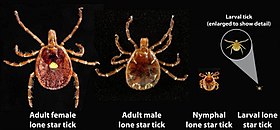
Health Officials Warn Lone Star Ticks Multiplying In Connecticut

https://www.newtownbee.com/06282020/health-officials-warn-lone-star-ticks-multiplying-in-state/

Health Officials Warn Lone Star Ticks Multiplying In State

280px-Lone-star-tick-stages-cdc CDChttp://www.cidrap.umn.edu/news-perspective/2013/07/researchers-trace-novel-heartland-virus-missouri-ticks Public Domain

As if Newtown Health District Director Donna Culbert was not busy enough handling coronavirus issues, she is now grappling with the news that the aggressive lone star tick is proliferating in the region.

Culbert, who has made tickborne disease education a hallmark of her administration, told The Newtown Bee this week that the latest news from colleague Goudarz Molaei, PhD, at the Connecticut Agricultural Experiment Station (CAES) is disturbing considering how many local residents are already suffering from related illnesses.

“The Newtown Health District is always concerned about tick bites and tick-borne disease, and news of the lone star tick becoming established in the region adds to the concern,” Culbert said. “Although our office has not yet received a lone star tick submitted to our office for identification yet this year, I am not naive enough to think that they aren’t out there.”

Review Connecticut’s latest information about the lone star tick by CLICKING HERE  (See link for article)

____________________

**Comment**

Key Quote:  

Previously limited to the southeastern US, lone star ticks have been detected in areas with no previous record of activity….

And that includes Wisconsin:

Excerpt:

….he diagnoses approximately 1 patient per month with Alpha-gal allergy and that the reactions can be severe, from passing out to life-threatening reactions.

The lone star tick is an aggressive biter that gives highly irritating bites.  It’s known to transmit:


Can I Catch Lyme Disease Without a Tick Bite? 3 Alternative Ways of Transmission

https://www.bca-clinic.com/can-i-catch-lyme-disease-without-a-tick-bite-3-alternative-ways-of-transmission/

Can I Catch Lyme Disease Without A Tick Bite? 3 Alternative Ways Of Transmission

As awareness of Lyme disease as a public health threat increases, so does the concern around its transmission and treatment. People are starting to realise the very real danger of Lyme infection, and they have a lot of questions, especially around alternative ways Lyme disease is transmitted.

Understanding the basics of Lyme transmission, diagnosis and treatment can go a long way in helping allay fears around this increasingly common disease. Let’s break down some of the most popular questions people have about Lyme disease.

How do you catch Lyme disease?

Lyme disease is a bacterial infection caused by a corkscrew-shaped bacterium known as Borrelia burgdorferi. It is typically transmitted to humans by Ixodes ticks, also known as black-legged or deer ticks. When ticks feed on rodents, other small mammals or certain birds that are infected with Borrelia burgdorferi, the ticks themselves become infected. When a tick carrying Borrelia burgdorferi bites a human, the bacterium spreads from the tick to the bitten human, leading to Lyme disease.

Can you catch Lyme disease without a tick bite?

Although far less common than tick bites, there are some additional ways that Lyme is transmitted. Here are three alternative ways of transmission:

  1. During pregnancy

There is some evidence that Lyme disease can spread from a woman who is pregnant to her placenta, leading to potential complications. However, it appears that these problems can be avoided when the Lyme-infected mother receives antibiotic treatment for her Lyme disease. Lyme disease has not been found to be transmitted through breast milk.

  1. Through a blood transfusion

Scientists have determined that the bacteria responsible for Lyme disease can live in the blood of an actively infected person even after it has been drawn and placed in storage. Although there are no known cases of Lyme infection through a blood transfusion, a person with Lyme disease who is receiving treatment should not give blood. After antibiotic treatment has been completed, however, Lyme patients may be eligible blood donors.

  1. During sex

Scientists are very much at odds over whether Lyme disease can be transmitted sexually. While some research indicates that Lyme bacteria may be passed from person to person during sex, the Centers for Disease Control (CDC) states that there is no credible evidence supporting the claim that Lyme disease can be transmitted through sexual contact.

What should you do if you’ve been bitten by a tick?

Because tick bites are the main way that Lyme disease is transmitted, taking precautions to avoid being bitten can be your first line of defence. Some of the ways to protect yourself from ticks are:

  • Avoid wooded areas, long grass, fallen logs and other tick habitats.
  • If you’re going to be in an area where you may be exposed to ticks, dress protectively. Wear a hat, long-sleeved shirt and long trousers tucked into your socks. If you have long hair, pull it back.
  • Use tick repellent. Active ingredients that have been shown to repel ticks include DEET, picaridin and lemon eucalyptus.
  • Check for ticks periodically while outdoors, and take a shower as soon as you get home.

If you’ve been bitten by a tick, do your best to remain calm. Avoid methods like smearing Vaseline on the tick or burning it with a match, as neither of these works to remove the tick. Instead, follow these steps:

  • Take care to avoid squeezing or squashing the tick.
  • Using a tweezers with a fine point or a special tool designed to remove ticks, grasp the tick as close to your skin as possible.
  • Steadily and firmly pull the tick straight out.
  • Once the tick is out, disinfect the bite area and wash your hands thoroughly.
  • Place the tick in a small bottle or plastic bag. If it’s still alive (which is preferable for identification purposes), add a small green leaf or damp tissue to the container.
  • Explore your options for having the tick tested.

    How do you know if you have Lyme disease?

    After you’ve been bitten for a tick, it’s important to watch for symptoms of Lyme disease so you can seek treatment as soon as possible. Symptoms of early Lyme disease include:

    • An expanding red rash that sometimes resembles a bullseye or target
    • Headaches and neck stiffness
    • Fever
    • Fatigue
    • Joint pain and swelling
    • Weakness or paralysis of facial muscles
    • Lightheadedness or fainting
    • Heart palpitations or chest pain

    Seek medical attention immediately if you experience any or all of these symptoms of Lyme disease. The sooner the disease is diagnosed and treated, the better the chances of treating it successfully.

    Knowing you’re at risk for Lyme disease can be scary, especially when the disease seems to be spreading so rapidly. But arming yourself with knowledge about Lyme disease and the different ways it’s transmitted can help you be more aware of what you need to do to protect yourself.

___________________

**Comment**

The same CDC that is spreading misinformation about COVID-19 has been spreading misinformation about Lyme/MSIDS for 40 years.  

A nurse uncovered 33 years of congenital transmission in the research:    https://madisonarealymesupportgroup.com/2018/06/19/33-years-of-documentation-of-maternal-child-transmission-of-lyme-disease-and-congenital-lyme-borreliosis-a-review/

A dermatologist from South American took it upon himself to document evidence for sexual transmission:   https://madisonarealymesupportgroup.com/2018/02/06/lyme-in-the-southern-hemisphere-sexual-transmission/

A gynecologist‘s perspective:  https://madisonarealymesupportgroup.com/2020/07/12/can-lyme-be-sexually-transmitted-or-passed-on-to-a-fetus/

My story – initially symptoms were all gynecological: https://madisonarealymesupportgroup.com/2017/02/24/pcos-lyme-my-story/

A recent study showing strong evidence for sexual/congenital transmission:  https://madisonarealymesupportgroup.com/2020/06/12/formidable-evidence-for-sexual-transmission-of-lyme-disease-first-study-to-document-aca-rashes-in-canadian-patients/

Pilot study demonstrates sexual transmission:  https://madisonarealymesupportgroup.com/2019/05/11/lyme-found-in-genital-lesion-sexual-transmission-studies-screaming-to-be-done/

Phd’s, with a specialty in cell-wall deficient form of Bb, believes Lyme is sexually transmitted:  https://madisonarealymesupportgroup.com/2019/04/02/transmission-of-lyme-disease-lida-mattman-phd/

https://madisonarealymesupportgroup.com/2019/05/24/microbiology-professor-im-convinced-lyme-disease-is-transmittable-from-person-to-person/

A microbiologist’s perspective:  https://madisonarealymesupportgroup.com/2020/04/19/letter-to-chronic-lyme-denialists-from-a-microbiologist/

Bartonella Rochalimae and Canine Heart Infections

https://news.ncsu.edu/2020/07/bartonella-rochalimae/

Bartonella rochalimae and Canine Heart Infections

Cute Dog
Image by Chen Vision, licensed under CC BY-NC 2.0

In a recently published paper, NC State researchers looked at 18 dogs infected with a strain of the bacteria Bartonella called Bartonella rochalimae. They documented the health effects of the bacteria, which included infectious endocarditis – an inflammation of the heart’s inner lining and valves – as well as more general chronic illness. The work is further evidence of the connection between B. rochalimae and both endocarditis and chronic health effects in dogs and may have implications for human health. Lead author Ed Breitschwerdt, Melanie S. Steele Distinguished Professor of Internal Medicine and Bartonella expert, sat down with The Abstract to answer some questions about the new findings.

The Abstract (TA): It looks as though the dogs in the study show evidence that this particular strain is associated not just with infectious endocarditis (IE), but also with the persistent health problems we see with infections from more common Bartonella (B. henselae, etc) species?

Breitschwerdt: That is correct. The association with endocarditis was very recent as well. So this manuscript provides further support for this species as a pathogen in dogs and humans.

Bartonella is now a well-recognized cause of what was historically culture-negative endocarditis; that is, patients (dogs and humans) with echocardiographic evidence of endocarditis and no bacterial growth using conventional blood cultures.

TA: How many strains of Bartonella have been identified to date? How is B. rochalimae different from other strains of Bartonella? Do different types of fleas or insect vectors carry particular strains, is it geography-based, or is it just luck of the draw?

Breitschwerdt: We are currently at around 40 named Bartonella species or subspecies, 10 of which have caused IE in a dog or human. Unfortunately, we have very little information in veterinary or human medicine regarding potential differences in how we should be most effectively diagnosing and treating specific Bartonella species or subspecies. Thus, most diagnostic and treatment considerations are based upon experiences with the most common Bartonella species (Bartonella henselae) that infect dogs and humans.

The genus Bartonella is unique among vector borne pathogens in the context of the wide spectrum of arthropod vectors that are known or suspected to transmit these bacteria. Yes, there are definitive geographical localizations, such as Bartonella bacilliformis, transmitted by a specific sandfly species in the mountainous Andes in Peru and Ecuador.

Alternatively, Bartonella henselae is transmitted to cats by a specific flea species throughout much of the world. Rodents and small mammals are frequently infected with specific Bartonella species in specific geographic locations by an evolutionarily adapted flea species that tends to selectively infest specific hosts or a narrow host range.

Most recently bats, infected by bat flies, have become another important reservoir for newly discovered Bartonella species. Importantly, a bat-associated Bartonella species (Candidatus Bartonella mayotenensis) was first identified as a cause of culture-negative endocarditis in a patient at the Mayo Clinic by amplification and sequencing of the bacterial DNA from the patient’s heart valve. It was several years later when bats were found to be reservoirs for this new species.

TA: Are there strains of Bartonella that aren’t associated with what we think of when we think of bartonellosis: the mimicking of chronic diseases like multiple sclerosis, migraines, seizures, etc?

Breitschwerdt: The diagnosis of infection with a Bartonella species remains challenging despite improvements in microbiological isolation and DNA detection methodologies. A polymerase chain reaction (PCR) primer set used in our laboratory to detect other Bartonella species with a high degree of sensitivity did not find B. rochalimae DNA. This is only one of many examples of the need for more comprehensive (sensitive and specific) diagnostic tests that will clarify the role of Bartonella species in patients with migraines and seizures. We continue to work on improvements in diagnostic testing modalities, while attempting to clarify the role of Bartonella species in a spectrum of chronic diseases.

TA: Does this particular strain really “like” the aortic valve, or is that true of Bartonella generally?

Breitschwerdt: In both dogs and humans, approximately 75% of Bartonella IE cases involve the aortic valve. The remaining 20-25% involve the mitral valve or both the mitral and aortic valves. Thus it is clear that all Bartonella species to date have a predilection to localize to the aortic valve.

TA: How prevalent is IE in dogs? Is it always fatal?

Breitschwerdt: IE is a relatively uncommon disease. Depending upon the study, Bartonella can be the cause of over 1/3 of IE cases in dogs, which is remarkable as we did not know this genus infected dogs until 1993, when the first case of IE bartonellosis was documented at NC State’s College of Veterinary Medicine. That is the first case of bartonellosis in a dog worldwide.

TA: Is this something that veterinarians should be taking into consideration when treating dogs with infectious endocarditis? Would it change the treatment regimen in terms of type or dosage of antibiotics?

Breitschwerdt: Yes, there are special antibiotic selection considerations when Bartonella is the suspected or confirmed cause of endocarditis. Not a good infection to have or an easy infection to treat.

____________________

**Comment**

Again, we owe Dr. Breitschwerdt a world of gratitude for his work with Bartonella.  He has single-handedly studied and brought forth research on this elusive organism that can make life miserable.

For more:  https://madisonarealymesupportgroup.com/category/bartonella-treatment/

https://madisonarealymesupportgroup.com/2019/05/05/good-news-for-bartonella-patients-identification-of-fda-approved-drugs-with-higher-activity-than-current-front-line-drugs/

https://madisonarealymesupportgroup.com/2017/05/11/bartonella-henselae-in-children-with-congenital-heart-disease/

https://madisonarealymesupportgroup.com/2020/02/26/zoonotic-diseases-why-we-are-so-interested-in-bats-bartonella-mycoplasma-coronavirus/

https://madisonarealymesupportgroup.com/2019/06/04/how-vector-borne-diseases-impact-heart-health/

https://www.envita.com/lyme-disease/bartonella-a-chronic-lyme-disease-coinfection-is-more-causing-chronic-fatigue-problems