A total of 127 Amblyomma ticks (A. helvolum, A. varanense and A. geoemydae) were collected from reptiles: water monitors (Varanus salvator), Bengal monitors (Varanus bengalensis), Burmese pythons (Python bivittatus), yellow-spotted keelbacks (Xenochrophis flavipunctatus), keeled rat snakes (Ptyas carinata) and elongated tortoises (Indotestudo elongata) from nine provinces in Thailand. The presence of Borrelia spp. of the 16S rRNA, flaB, glpQ, groEL and gyrB genes was examined by conventional, semi-nested and nested PCR. Phylogenetic analyses using maximum likelihood method of housekeeping genes showed that most sequences of Borrelia spp. in these Amblyomma ticks belonged to the clade of reptile-associated (REP) borreliae. Interestingly, one Borrelia sp. in an A. geoemydae tick collected from an elongated tortoise clustered in the same clade as a Borrelia sp. detected from an A. geoemydae-infested turtle in Japan (it may belong to the same species given the identical sequences of their 16S rRNA, flaB and glpQ genes) and formed the same group with tick-borne relapsing fever (RF) borreliae of B. miyamotoi and B. theileri.
Our findings are the first report on the presence of Borrelia spp. in A. helvolum and A. geoemydae ticks from reptiles in Thailand adding to the geographic distribution of Borrelia spp. in Asia.
________________
**Comment**
Please note the turtle found with a relapsing fever borrelia in the same group as B. miyamotoi and B. theileri – both pathogens that infect humans as well as animals.
RESEARCHERS WORKING AT FORT MCCOY NEAR SPARTA, AS PART OF A MULTI-UNIVERSITY PROJECT MICHIGAN STATE ECOLOGIST JEAN TSAO LEADS, HAVE COLLECTED DEER TICKS FROM FIVE-LINED SKINKS AND SNAKES.
Minimal Duration of Tick Attachment Sufficient for Transmission of Infectious Rickettsia rickettsii (Rickettsiales: Rickettsiaceae) by Its Primary Vector Dermacentor variabilis(Acari: Ixodidae): Duration of Rickettsial Reactivation in the Vector Revisited
It has been reported that starving ticks do not transmit spotted fever group Rickettsia immediately upon attachment because pathogenic bacteria exist in a dormant, uninfectious state and require time for ‘reactivation’ before transmission to a susceptible host. To clarify the length of reactivation period, we exposed guinea pigs to bites of Rickettsia rickettsii-infected Dermacentor variabilis (Say) and allowed ticks to remain attached for predetermined time periods from 0 to 48 h. Following removal of attached ticks, salivary glands were immediately tested by PCR, while guinea pigs were observed for 10–12 d post-exposure. Guinea pigs in a control group were subcutaneously inoculated with salivary glands from unfed D. variabilis from the same cohort. In a parallel experiment, skin at the location of tick bite was also excised at the time of tick removal to ascertain dissemination of pathogen from the inoculation site. Animals in every exposure group developed clinical and pathological signs of infection.The severity of rickettsial infection in animals increased with the length of tick attachment, but even attachments for less than 8 h resulted in clinically identifiable infection in some guinea pigs.Guinea pigs inoculated with salivary glands from unfed ticks also became severely ill.Results of our study indicate that R. rickettsii residing in salivary glands of unfed questing ticks does not necessarily require a period of reactivation to precede the salivary transmission and ticks can transmit infectious Rickettsia virtually as soon as they attach to the host.
________________
**Comment**
For far too long authorities have told us that there’s something called a “grace period,” in which ticks supposedly delay transmitting pathogens to us and that a period of 24-48 hours is required before we can become infected.
There is only one study which they base that information upon, and there’s never been a study on the minimum time for transmission.
This study blows the “grace period” theory out of the water and proves what we all know to happen in reality. People can become infected in mere hours upon attachment. It also proves another point as well: that some ticks have the pathogens already in their salivary glands making transmission times even shorter.
How many have been sent home with a false sense of security after a doctor, going by information authorities have proliferated, told them they can’t be infected because the tick wasn’t attached for a long enough period of time? Thousands?
Please spread the word. There shouldn’t be any more patients falling through the cracks.
Rickettsial diseases or rickettsioses are infections caused by various bacteria belonging to the genus Rickettsia. These bacteria are transmitted through the bites of certain hard-bodied ticks and some other arthropods. Rickettsial diseases are not to be confused with rickets, which is a condition affecting the bones and resulting from vitamin D deficiency.
The infections caused by Rickettsia bacteria have traditionally been classified into two groups: spotted fever and typhus. However, they’re sometimes divided into further categories. Either way, all groups include species of pathogens that can infect humans. Although Rickettsia bacteria can be found worldwide, the most common rickettsial illnesses are normally contracted in Africa and Asia.
Lyme disease is also transmitted to humans by ticks. It’s the most common tick-borne illness in the northern hemisphere. However, Lyme isn’t a rickettsial disease, since it’s caused by a bacterium of a different genus: Borrelia burgdorferi.
However, the same tick that carries Rickettsia bacteria might also be infected with Borrelia burgdorferi. Therefore, it’s possible to contract both illnesses via one tick bite. Therefore, the answer to question ‘is Rickettsia a Lyme co-infection?’ is that yes – rickettsiosis can be a potential co-infection of Lyme disease.
What Are The Symptoms of Rickettsia Diseases?
Some of the most common rickettsial diseases are Rocky Mountain spotted fever, anaplasmosis, ehrlichiosis and typhus. All of these are generally difficult to diagnose. Some of them rarely cause symptoms, and most of them only cause moderate illness even when symptomatic. However, certain forms of spotted fever and typhus may be fatal if left unrecognised and untreated. The sooner these illnesses are diagnosed, the easier they are to treat using antibiotics.
The clinical presentation of rickettsial diseases varies greatly. Even infections caused by the same species of bacteria may produce different symptoms in different patients. Nonetheless, the most common symptoms include
fever
headache
fatigue
malaise
nausea
vomiting
rashes and eschar (a piece of dry and dark dead skin at the site of the bite). These tend to develop within two weeks after the bacteria have entered the body.
African tick bite fever is one of the mildest forms of rickettsiosis. Patients usually present with fever, headache, muscle pain and an eschar shortly after contracting the disease during a visit to southern Africa.
Fever is a common symptom of all rickettsial diseases.
Mediterranean spotted fever is a serious and potentially life-threatening illness. It’s prevalent in the Mediterranean region, including northern Africa. In addition to fever, rashes and an eschar are typical signs of the illness.
Patients with Rocky Mountain spotted fever often experience fever, headache, nausea, and stomach pain. A rash at the site of the bite is also commonly seen, but eschars aren’t usually present.
The only common symptom of murine or endemic typhus is fever. About half of all patients also develop a rash. Scrub typhus can be contracted in Asia, and it’s characterised by a severe fever, headache and muscle pain. An eschar, cough, enlarged lymph nodes and encephalitis (inflammation of the brain) may also occur in some patients.
The symptoms of ehrlichiosis and anaplasmosis are similar to those of other rickettsial diseases. However, they’re also known to significantly reduce white blood cell count in affected people.
Is Rickettsia The Same As Lyme Disease?
Rickettsiosis and Lyme disease share several symptoms in their early stages, such as fever, headache, fatigue, malaise and muscle pain. Moreover, all of these symptoms also overlap with those of the flu and other non-specific viral infections, making diagnosis even more challenging.
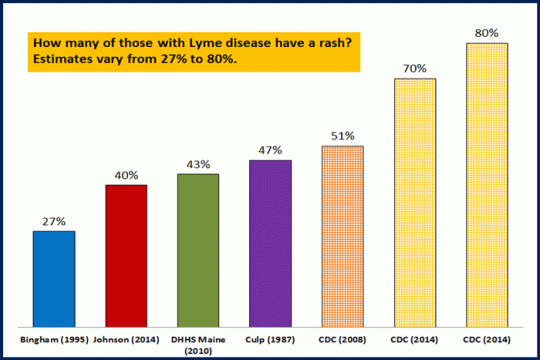
The only distinctive sign of Lyme disease is the circular bull’s eye rash that develops around the tick bite within a few weeks. However, the rash can also appear elsewhere on the body, and in 20-30% of patients it’s not seen at all.
The diagnosis of Lyme and rickettsial diseases is usually based on a combination of factors, including signs, symptoms, patient history and laboratory tests. Unfortunately, currently there aren’t any completely reliable diagnostic tests available for Lyme disease: in the first weeks after infection, there’s a 60% rate of false negative results. Serological assays for rickettsiosis are more reliable, but these can take 10–12 days to provide a decisive result.
Tests such as serological assays are required to identify rickettsiosis.
What To Do If You Think You’ve Been Infected With Rickettsia
Ticks are very tiny, and their bites aren’t painful. Many people don’t even realise they’ve been bitten.
It’s important to note that being bitten by a tick doesn’t mean you’ve contracted an illness. In fact, out of the approximately 800 different tick species in the world, less than 60 can transmit infections to humans and animals. Most types of tick also have to be attached to the host’s body for an extended period of time in order to pass on any bacteria.
Nevertheless, you must see your doctor if you have a fever and any other flu-like symptoms or a rash shortly after being bitten by a tick. You should also arrange a medical appointment if you don’t recall being bitten but you do experience some suspicious symptoms within a few weeks of returning from a high-risk area. Be sure to tell your doctor about your recent travels, so that they can evaluate the probability of a tick-borne infection and order any appropriate diagnostic tests.
_______________
**Comment**
According to information written in Carl Tuttle’s petition against the IDSA, he mentions an article that indicates the persistent form of Lyme disease might be caused by another organism altogether.
“The STAT article reports that both Jorge Benach and Allen Steere now say it is time to take a closer look at Rickettsia helvetica’s role in Lyme disease. Benach says the research “should be done” because public health concerns warrant a closer look.”
“Dr. Willy Burgdorfer reviewed and tested patient blood samples from Dr. Anderson for C9P09, which is a rickettsial helical Mycoplasma; P09 being a Rickettsia bellii and C9 being a Mycoplasma (FIG. 2).35 This is further supported by the theory that an endosymbiotic infection produces spirochetes that are uncultivable Mycoplasmas, which are also called spirochetes. 1, 22, 31, 32
The “Swiss Agent” is documented by Dr. Willy Burgdorfer (FIG. 3),25 who also wrote a speech on “Pandora’s Box”.5 Although the Swiss Agent paper is associated with the suspected African Swine Flu, Dr. Willy Burgdorfer appears to be famous for leaving clues throughout his work regarding Lyme disease. Upon reviewing the structure of the Lyme disease “Swiss Agent” and the “Pandora Giant Virus”, there is a striking resemblance that deserves further examination.”
I don’t think we actually know precisely what the agent(s) causing Lyme disease is. This would explain why it can’t be picked up in current testing and why many fail treatment.
While it’s true that the early stages can often yield unspecific symptoms, an experienced eye will be able to diagnose a patient with tick borne illness. Also, please remember that in some patients their only symptoms are psychological: https://madisonarealymesupportgroup.com/2015/10/18/psychiatric-lymemsids/Any acute onset behavior changes should be suspect. Please don’t mess around with mainstream medicine should this occur. Get to an experienced and recommended ILADS practitioner who understands the mental illness aspect of tick borne disease.
The article’s statement that 20-30% of patients don’t get the rash must be taken from the inaccurate CDC count which is always abysmally low. No one I work with gets the rash. No one!
Please read this well written article on why we need to stop treating tick-borne illness like a typical infectious disease:
Seventeen (6.8%) samples were seropositive for antibodies against at least one pathogen: five for A. phagocytophilum, eight for B. burgdorferi, and four for Rickettsia spp.
Ticks carry a multitude of bacteria that can harm human health, and a College of Medicine doctoral student is identifying all of them, in hopes of giving physicians ammunition against Lyme disease.
Lying inside a freezer in Drexel’s College of Medicine are 500 dead, mourned by no one.
The deer ticks, dog ticks, lone star ticks and other tiny parasites in the diminutive morgue traveled from nearly every state in the country to reach this resting place. They arrived in baggies or cookie tins or what-have-you, scooped from meadows and forests by helpful volunteers responding to a “call for specimens” on Drexel’s website that was posted by Kayla Socarrás, a doctoral student studying microbiology and immunology. Each tick contains multitudes of smaller organisms — a grab-bag of the pathogenic bacteria that make tick bites so hazardous.
Throughout 2018, Socarrás studied what makes these critters tick…..
________________
**Comment**
Great article worth reading on researchers who admit the following:
A single tick bite can infect you with numerous pathogens capable of persistent infection resulting in permanent illness that can mimic other diseases like MS.
Current testing utilizes “one strain of borrelia that was isolated 30 years ago — based on science that hasn’t kept up with contemporary understandings of how bacteria evolve.”
The classic EM rash is only present in less than half of all cases. The ranges actually go from 27-80%, yet we’ve been told for decades you must have it to have Lyme.
Lyme is extremely pernicious due to its ability to evade antibiotics and the immune system through creating biofilms and by “swapping genes or going dormant.” “A single strain of bacteria might have 1,200 genes out of a possible 5,400 genes available at the species level.”
Borrelia burgdorferi, the causative agent of Lyme disease can’t be cultured. And “Once the spirochete gains a foothold in the brain or other organs, it’s almost impossible to defeat.”
The article states, “One physician was able to reverse Alzheimer’s dementia in three patients who he determined had Lyme disease, by putting them on high-dose antibiotics. A psychiatrist noticed that some of the children referred to her had both bipolar disorder and Lyme disease; on a hunch, she tested all of her bipolar patients and determined that 90 percent were Lyme positive — she began treating them with antibiotics. Ehrlich recounts a case of a famous Duke oncologist with congestive heart failure; after he received a heart transplant, he was able to determine that the muscles of his heart had been massively infected with Borrelia burgdorferi.”
NIH strategic research plan addresses growing tickborne diseases threat
This image shows how the design of the mouth makes ticks generally difficult to remove once they’ve attached for a blood meal.NIAID
NEWS RELEASE
What
The incidence of reported cases of tickborne diseases in the United States has significantly increased in recent years. It is expected to continue to grow as tick species expand their geographical reach and new tick-transmitted pathogens emerge, raising the potential for serious human illness and death. A new strategic research plan from the National Institutes of Health aims to build on — and accelerate — new and existing research initiatives to improve scientific understanding of ticks and the pathogens they may transmit and to develop the necessary tools and strategies to better diagnose, prevent and treat tickborne diseases.
According to the U.S. Centers for Disease Control and Prevention, 59,349 cases of tickborne disease were reported in 2017 compared to 48,610 cases in 2016. Lyme disease accounted for the bulk (82%) of the cases. Recent CDC estimates suggest that Lyme disease is underreported and that the true incidence is likely 10 times higher. At least 20 different disease-causing bacteria, viruses and parasites are known to be transmitted from ticks to people. Depending on the disease, patients can experience symptoms that range from mild infections that resolve on their own to serious illness, extended disability, or death.
Many tickborne diseases have been discovered only recently. For example, in 2009, scientists reported a red-meat allergy, known as “alpha gal syndrome.” Growing evidence suggests that this reaction may be associated with the bite of a tick, but further research is needed to understand this connection. Newly identified tick-transmitted pathogens continue to be reported, raising concerns about missed diagnoses, inadequate treatment, and knowledge gaps related to tickborne diseases.
The new NIH Strategic Plan for Tickborne Disease Research focuses on five scientific priorities for advancing research and development over the next five years.
First, the plan calls for improving fundamental knowledge of tickborne diseases, including the biology of tickborne pathogens; how they are transmitted to humans, evade the immune system, and spread within the body. This area also includes determining the cause of persistent symptoms in some people infected with tickborne diseases, such as Lyme disease, and furthering the understanding of how tick-derived factors contribute to the establishment and severity of disease.
Second, the plan calls for improving detection and diagnosis of tickborne diseases by developing rapid diagnostic tests that can detect a pathogen both early and late in infection and distinguish between active and past infections.
Third, NIH will support the development of diagnostics capable of predicting treatment success and identifying human biomarkers of infection and persistent symptoms. The new plan also prioritizes the acceleration of research designed to prevent tickborne disease infection, including vaccines, and immune-based treatments, as well as strategies to reduce the transmission of tickborne pathogens to animal populations that serve as hosts.
Fourth, the plan focuses on research to develop new treatments for tickborne diseases and techniques to reduce disease complications.
Fifth, the plan prioritizes the development of tools and resources to advance tickborne disease research by improving scientists’ access to biological samples, tickborne disease genetic data, and supporting preclinical development of promising products.
NIH intends to expand collaborations across its institutes and centers to promote a multidisciplinary approach to tickborne disease research, answer complex biological questions and encourage the application of state-of-the-art technologies used successfully in a range of scientific disciplines.
The new NIH strategic plan builds on the activities of the Department of Health and Human Services Tick-Borne Diseases Working Group, which issued a 2018 report to Congress outlining research recommendations. NIH sought input from the research and medical communities, patient advocacy groups, pharmaceutical industry, and the general public in developing this strategic plan.
Anthony S. Fauci, M.D., director of the National Institute of Allergy and Infectious Diseases, and Robert H. Carter, M.D., director of the National Institute of Arthritis and Musculoskeletal and Skin Diseases, both part of the NIH, are available to comment on the strategic plan.
NIAID conducts and supports research — at NIH, throughout the United States, and worldwide — to study the causes of infectious and immune-mediated diseases, and to develop better means of preventing, diagnosing and treating these illnesses. News releases, fact sheets and other NIAID-related materials are available on the NIAID website.
About the National Institutes of Health (NIH): NIH, the nation’s medical research agency, includes 27 Institutes and Centers and is a component of the U.S. Department of Health and Human Services. NIH is the primary federal agency conducting and supporting basic, clinical, and translational medical research, and is investigating the causes, treatments, and cures for both common and rare diseases. For more information about NIH and its programs, visit www.nih.gov.
__________________
**Comment**
I had to read this about twice in disbelief. I just hope it’s all true. Remember, these are the people that for 40 years have told us it’s “all in your head,” and to just take an anti-depressant.