Archive for the ‘Ticks’ Category

When Do Ticks Quest, Waiting For Their Next Blood Meal? (Hint: It Has Nothing To Do With the Climate)

https://danielcameronmd.com/when-do-ticks-quest-next-meal/

WHEN DO TICKS QUEST, WAITING FOR THEIR NEXT MEAL?

By

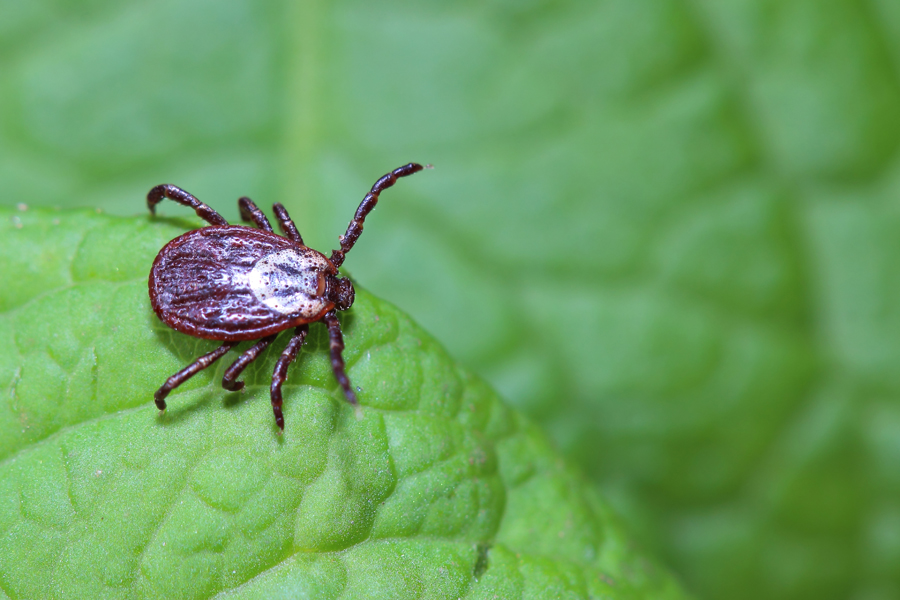
When ticks are questing, they hold onto leaves, grass and other objects with their third and fourth pair of legs. They hold their front legs outstretched, waiting to climb onto the host as it passes by. But, when do ticks quest?

So far, research has focused on questing behavior primarily in the laboratory.

“Ticks must balance the need to quest for blood meal hosts with the risk of desiccation, all on a fixed energy budget,” writes Thomas from Washington State University. ¹

But Thomas and his team wanted to investigate questing patterns in a natural habitat.

“We measured questing activity of nymphs and larvae throughout the day and night and over several weeks in enclosures across a range of suitable tick habitats within a site in the Northeast,” he writes.

A new study finds some ticks quest most of the time, regardless of weather conditions or time of day. 

They found that the activity of nymphs increased slightly during dawn and dusk, the opposite of larvae. But their findings could not be replicated at other sites. Questing behavior was also not impacted by temperature, relative humidity, light-dark cycles and energy reserves.
“Rather it appears a fraction of ticks were questing most of the time, regardless of conditions,” he writes. “Our study suggests neither climatic conditions or light-dark cycles have appreciable influence on tick questing behavior.”

___________________

For more:  https://madisonarealymesupportgroup.com/2018/08/13/study-shows-lyme-not-propelled-by-climate-change/

https://madisonarealymesupportgroup.com/2018/11/07/ticks-on-the-move-due-to-migrating-birds-and-photoperiod-not-climate-change/

https://madisonarealymesupportgroup.com/2019/06/17/ontario-public-health-officials-called-out-on-shoddy-biased-research-utilizing-an-erroneous-climate-change-model-to-program-a-futuristic-tick-problem/

https://madisonarealymesupportgroup.com/2018/11/17/uw-madison-phd-in-ecological-climatology-climate-change-computer-models-fudged-except-russian-model/

Ticks Carrying Multiple Diseases Are ‘Taking Over’ Long Island

https://nypost.com/2019/09/17/ticks-carrying-multiple-diseases-are-taking-over-long-island/

Ticks carrying multiple diseases are ‘taking over’ Long Island

Lyme disease isn’t the only awful illness ticks are capable of transmitting.

Superticks can carry up to four different diseases at a time, including Lyme disease. And these insects of mass destruction are becoming especially abundant in Long Island, according to a study published this month in the journal mBio.

“They’ve kind of taken over,” co-author Rafal Tokarz tells The Post.

It means that one bite could potentially give a person Lyme disease as well as illnesses such as potentially life-threatening babesiosis and anaplasmosis. A quarter of the ticks examined in the study had the ability to transmit more than one disease.

“Most people think of Lyme disease when they think of [tick-borne illnesses], and that’s justified, but in Suffolk County alone, ticks can carry four other pathogens,” says Tokarz, an assistant professor of epidemiology at the Center for Infection and Immunity at Columbia’s Mailman School of Public Health.

“Very often, we find sometimes two, even three, of these pathogens [in the same tick],” he says.

He and his fellow researchers are also growing increasingly worried about the Lone Star tick, a species whose saliva can cause an allergic reaction to meat. The tick has migrated in recent years from the southern part of the United States up to Long Island and New England.

One woman in Missouri developed the allergy after a tick bite four years ago — and only just learned it was due to the Lone Star tick.

“It got to the point where my stomach would swell up; I was vomiting,” Kristie Downen said. “The rashes were real bad. It was getting to the point [I told doctors], ‘You’re missing something — I’m still dying.’ ”

There’s currently no treatment for the meat allergy the Lone Star tick can cause, Tokarz says. But, he adds, doctors now need to start testing people who were recently bitten for multiple tick-borne diseases.

“This tick, in particular, has become very troublesome,” Tokarz says. “Thirty, 40 years ago, you hardly ever found them on Long Island. Now they’ve become extremely abundant.”

__________________

**Comment**

The number of diseases currently transmitted by ticks is 20 and counting. This article states it’s 16 within the U.S. but these numbers are continually influx with new pathogens continually being discovered:

https://madisonarealymesupportgroup.com/2019/08/09/ticks-are-worldwide-we-all-need-to-learn-more-about-them/

https://madisonarealymesupportgroup.com/2019/07/27/ticks-spread-plenty-more-for-you-to-worry-about-beyond-lyme-disease/

https://madisonarealymesupportgroup.com/2017/05/01/co-infection-of-ticks-the-rule-rather-than-the-exception/

https://madisonarealymesupportgroup.com/2019/09/18/more-than-lyme-tick-study-finds-multiple-agents-of-tick-borne-diseases/

https://madisonarealymesupportgroup.com/2018/10/30/study-shows-lyme-msids-patients-infected-with-many-pathogens-and-explains-why-we-are-so-sick/

Excerpt:

For the first time, Garg et al. show a 85% probability for multiple infections including not only tick-borne pathogens but also opportunistic microbes such as EBV and other viruses.

“Our findings recognize that microbial infections in patients suffering from TBDs do not follow the one microbe, one disease Germ Theory as 65% of the TBD patients produce immune responses to various microbes.”

The poly microbial issue isn’t even on the radar of most doctors, and this is why the CDC recommendation of 21 days of doxycycline is an absolute farce.

According to this review, 83% of all commercial tests focus only on Lyme (borrelia), despite the fact most of us are infected with more than one microbe.  The review also states it takes 11 different visits to 11 different doctors, utilizing 11 different tests to be properly diagnosed.  https://www.news-medical.net/news/20181101/Tick-borne-disease-is-multiple-microbial-in-nature.aspx?

When will things change?


Update on Wisconsin Lyme Bills – Please Contact Your Representative on AB 313

The following Wisconsin Assembly Bills passed the Senate and Committees in the Assembly:

AB 315, previously LRBs 1758 and 3360 – Requires the DNR to post signs to raise awareness of Lyme Disease, inform on how to prevent tick bites, and encourage visitors to check for ticks after visits to be posted in a common area, such as the park entrance, a trailhead or in a campground, in all State Parks, Forests, Recreational Areas, and Trails 

AB 316, previously LRBs 1759 and 3359 – Requires the DNR to sell bug spray with DEET, which can help to repeal ticks, in all State Parks and Forests when their Park or Forest Office or other location in the Park or Forest, such as a concession stand, is open

AB 317, previously LRBs 2738 and 3358 – Requires the DNR to post information in certain Parks brochures to raise awareness of Lyme Disease, inform on how to prevent tick bites, and encourage visitors to check for ticks after visiting a State Park, and requires the DNR to complete an annual awareness campaign in May of each year, which is Lyme Disease Awareness Month, on digital and print platforms to raise awareness of Lyme Disease, inform on how to prevent tick bites, and encourage visitors to check for ticks after spending time outdoors

AB 313, previously LRBs 1652 and 3362Establishes a sixteen-member Tick-Borne Disease Study Committee to create a report for the legislature on consensus-based recommendations for policy changes on awareness, prevention, surveillance, diagnosis, reporting, and treatment of Lyme Disease

This last bill would allow Governor Evers to appoint a 16 member advisory panel to offer recommendations on how doctors treat Lyme disease.

Many of us have explained to our representatives about the potential for that bill to go side-ways since nothing about Lyme/MSIDS is agreed upon.

There is still polarity in mainstream medicine on how to diagnose and treat this with many doctors completely ignorant. They continue to tell patients it’s all in their head.

It is also serious government over reach – telling doctors how to treat patients. Imagine for a moment telling doctors how to treat diabetes, cancer, or a broken bone.  It just isn’t done.

Please continue to let your representative know we are NOT in favor of such a bill.

Right now the state of Wisconsin has a good handful of doctors treating this appropriately.

We do not want to make things worse for them with a bill that could literally mandate how they treat patients.


Brain Illness Spread by Ticks Has Reached UK

https://www-bbc-co-uk.cdn.ampproject.org/c/s/www.bbc.co.uk/news/amp/health-50206382

Brain illness spread by ticks has reached UK

By Michelle Roberts
Health editor, BBC News online

_109428589_gettyimages-1076602744
Image copyright GETTY IMAGES Tick

An infectious disease that can harm the brain and is spread to people by tick bites has been identified in ticks in the UK for the first time.

Public Health England (PHE) says it has confirmed cases of tick-borne encephalitis virus in ticks from two parts of England – Thetford Forest and an area on the Hampshire-Dorset border.

PHE says the risk to people is still “very low”.

It is monitoring the situation to check how common the infected ticks may be.

What is it?

A tick is a tiny, spider-like creature that lives in undergrowth and on animals, including deer and dogs.

People who spend time walking in countryside areas where infected ticks can be found are at risk of being bitten and catching diseases they carry.

Tick-borne encephalitis virus is already circulating in mainland Europe and Scandinavia, as well as Asia.

Evidence now shows it has reached the UK.

How it got here is less clear. Experts say infected ticks may have hitched a ride on migratory birds.

Earlier this year, a European visitor, who has since recovered, became ill after being bitten by a tick while in the New Forest area, Public Health England says.

Further investigations revealed infected ticks were present in two locations in England.

Should I worry?

Ticks are becoming more common across many parts of the UK, largely due to increasing deer numbers. Being bitten by one doesn’t necessarily mean you will get sick.

Dr Nick Phin, from Public Health England, said:

”These are early research findings and indicate the need for further work. However, the risk to the general public is currently assessed to be very low.”

Most people who catch the virus will have no or only mild flu-like symptoms. But the disease can progress to affect the brain and central nervous system and can sometimes be fatal.

Ticks can also carry other diseases that can make people ill including Lyme disease.

Dr Phin said:

“We are reminding people to be ‘tick aware’ and take tick precautions, particularly when visiting or working in areas with long grass such as woodlands, moorlands and parks.”

What should I do?

  • To reduce the risk of being bitten, cover your skin, tuck your trousers into your socks, use insect repellent and stick to paths
  • If you are bitten, remove the tick with fine-tipped tweezers or a tick-removal tool found in chemists
  • Clean the bite with antiseptic or soap and water
  • You should go to your GP if you think you may have been bitten by a tick in the past month and develop flu-like symptoms or a circular red rash
    Ticks feed on the blood of animals and people.

They cannot jump or fly but live in vegetation and wait for a passing animal or human to climb on to.

__________________

**Comment**

They can’t jump or fly but they can BLOW IN THE WIND.  One advocate told me ticks blew into her swimming pool. I’ve had others tell me they somehow blow or drop from trees onto clothes on laundry lines.  Tick researchers are often so myopic in their work they don’t believe real life stories of people.  It’s truly a shame as people are being bitten in ways they are told is impossible, yet it’s happening all the time and is far from rare.

For more:  https://madisonarealymesupportgroup.com/2019/05/29/czechs-record-most-tick-borne-encephalitis-cases-in-entire-eu/

https://madisonarealymesupportgroup.com/2017/10/30/tick-borne-encephalitis-found-in-serbian-dogs-horses-wild-boar-and-roe-deer/

Here in the U.S. Powassan Virus is mainly responsible for encephalitis; however, this stuff is moving around unabated.  It is underreported and has caused numerous deaths.  

For more on Powassan:   https://madisonarealymesupportgroup.com/2016/02/21/powassan-virus/

It recently killed a former U.S. Senator:  https://madisonarealymesupportgroup.com/2019/10/29/former-u-s-senator-dies-of-powassan-virus/

Coppe Lab out of Wisconsin emphatically states Powassan is NOT rare:

http://www.coppelabs.com/blog/why-is-powassan-virus-infection-still-described-as-rare-and-mysterious/  Please read the following excerpt by Coppe Lab here in Wisconsin,

For the last two years, Coppe Laboratories has dedicated a significant amount of time and resources to dispelling the myth that infection with Powassan virus, a virus transmitted by tick bite, is rare. The Centers for Disease Prevention and Control (CDC) reports only 100 cases of Powassan virus infection in the United States in the last 10 years. Indeed, that statistic gives the illusion that Powassan infection is rare. However, did you know that the only infections reported to CDC are those that are life-threatening, particularly cases causing severe inflammation of the brain like the case reported in LiveScience? Coppe has published three new papers in the last year that clearly show Powassan virus infection is not rare are at all,and until testing for this virus is included as part of tick-borne disease screening panels infections will continue to be underreported. Coppe’s Powassan Guide, which can be downloaded from the website, summarizes the findings from both tick and human Powassan prevalence studies, as well as defining the patient populations that would benefit most from Powassan testing.


Giving Ticks Drymouth to Prevent Lyme Disease

 Approx. 2.5 Min

Researchers at Louisiana State University are working on a way to kill ticks by targeting their saliva. Using a potassium channel inhibitor they developed, the ticks drank dramatically less blood and died within twelve hours, which prevents ticks from transmitting pathogens like Lyme disease. These research findings were presented at the American Chemical Society’s Fall 2019 National Meeting and Exposition in San Diego.
Produced by the American Chemical Society, the world’s largest scientific society. ACS is a global leader in providing access to chemistry-related information and research through its multiple databases, peer-reviewed journals and scientific conferences.
This article in Forbes explains more: