Archive for the ‘Ticks’ Category

NPMA Emphasizes Tick Prevention Amidst New CDC Lyme Disease Estimates

https://pestworldmag.npmapestworld.org/2021/02/01/npma-emphasizes-tick-prevention-amidst-new-cdc-lyme-disease-estimates/

NPMA Emphasizes Tick Prevention Amidst New CDC Lyme Disease Estimates

The National Pest Management Association shares everything the public should know to guard against the serious tickborne disease

According to new research released by the Centers for Disease Control and Prevention (CDC), human cases of tickborne Lyme disease are more common in the U.S. than previously thought. Based on insurance records from 2010 to 2018, the CDC estimates that approximately 476,000 people were diagnosed with and treated for Lyme disease each year in the U.S., representing a staggering 44 percent increase compared to the previous annual estimate of about 329,000 people from 2005 to 2010. In the wake of this alarming uptick, the National Pest Management Association (NPMA) is reminding the public about the serious health threats posed by ticks and the safety precautions people should practice when spending time outdoors.

Blacklegged ticks, also known as deer ticks, are predominantly found in the Northeast region of the U.S.; however, human cases of Lyme disease, transmitted through the bite of infected blacklegged ticks, have been detected in all 50 states,” said Cindy Mannes, senior vice president of public affairs for the NPMA. “Proper tick prevention is crucial to our health and wellbeing, especially now as outdoor excursions like hikes have become the preferred socially-distanced activities amidst the ongoing pandemic.”

Although Lyme disease is treatable, it can easily be confused for other conditions and cases of the disease are vastly underreported. The CDC receives about 30,000 to 40,000 reported cases each year, much less than the 476,000 annual cases estimated in the agency’s recent report. Knowing the telltale signs of Lyme disease, such as a “bull’s-eye” rash that can appear in some cases, is essential to early detection and receiving proper care. However, the disease can present flu-like symptoms similar to those caused by the common cold or even COVID-19, so anyone experiencing these issues should alert their medical provider and be sure to note if they’ve recently been bitten by a tick.

“Lyme disease can cause a number of different symptoms, from fever and headaches to heart palpitations and brain inflammation,” explained Dr. Jorge Parada, M.D., M.P.H., F.A.C.P., F.I.D.S.A., F.S.H.E.A., medical advisor for the National Pest Management Association. “In addition to aiding in Lyme disease diagnosis, regular tick checks can actually help prevent disease transmission in the first place. Lyme disease can be transmitted into a person’s bloodstream in as little as 36-48 hours after the initial tick bite, making prompt detection and proper tick removal key to disease prevention.”

While peak tick season typically takes place during the warmer months, these pests can still pose serious threats even when the weather outside is cold. According to the CDC’s National Syndromic Surveillance Program, emergency department visits for tick bites typically experience a secondary spike during October and November. To stay safe and tick-free, follow these year-round prevention methods:

  • Wear long-sleeved shirts, long pants and closed-toed shoes
  • Wear insect repellent containing at least 20 percent DEET when outdoors
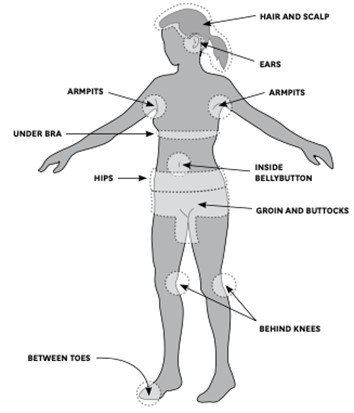
  • Inspect yourself, your family and pets for ticks after spending time outdoors

Wild animals such as deer can bring ticks onto personal property, where they can detach and hide amongst overgrown grass and vegetation. Regularly remove weeds and cut grass low to keep your yard tick-free, and contact a licensed pest control professional if you suspect or discover a tick infestation.

For more information about tick prevention and tickborne diseases, visit www.PestWorld.org.

https://pestworldmag.npmapestworld.org/2021/03/16/ppma-calls-for-industry-participation-during-inaugural-tick-awareness-week/

PPMA Calls for Industry Participation During Inaugural Tick Awareness Week

Pest control companies urged to help spread consumer awareness of the dangers associated with ticksIn recognition of its inaugural Tick Awareness Week

PPMA will also be unveiling an exciting new consumer campaign: TickTalk. The campaign will kick off during Tick Awareness Week with a comprehensive digital and media relations plan as well as a new microsite complete with never-before-seen photos and videos! PPMA also created an exclusive toolkit available for Mainframe subscribers to download on PPMAMainframe.org. The toolkit includes a customizable press release, suggested social media content, “Tick Talk” logos to be used as website badges, high-resolution photography and video content, and more.

About the National Pest Management Association 

The NPMA, a non-profit organization with more than 5,500 members, was established in 1933 to support the pest management industry’s commitment to the protection of public health, food and property from the diseases and dangers of pests. For more information, visit PestWorld.org or follow @PestWorld on Facebook, Twitter, Pinterest and YouTube.

_____________________

**Comment**

Ticks are already active.

Also, there are cases where transmission occurred much faster than the often quoted 36-48 hours, and minimum time has never been established.  

Speaking of transmission, ticks aren’t the only thing you must be concerned with (although authorities want to squash this intel like a June Bug): 

More on prevention:

Take Steps Now To Protect You & Your Family From Tick Bites

https://www.lymedisease.org/protect-tick-bite-alexis-chesney/

Take steps now to protect you and your family from tick bites

New Study Predicts Changing Lyme Disease Habitat Across the West Coast

https://www.eurekalert.org/pub_releases/2021-03/ttgr-nsp031621.php

NEWS RELEASE 

New study predicts changing Lyme disease habitat across the West Coast

Army of ‘citizen scientists’ collect more than 18,000 tick samples for analysis in study funded by Bay Area Lyme Foundation

THE TRANSLATIONAL GENOMICS RESEARCH INSTITUTE

FLAGSTAFF, Ariz. — March 16, 2021 — The findings of a recent analysis conducted by the Translational Genomics Research Institute (TGen), an affiliate of City of Hope, suggest that ecosystems suitable for harboring ticks that carry debilitating Lyme disease could be more widespread than previously thought in California, Oregon and Washington.

Bolstering the research were the efforts of an army of “citizen scientists” who collected and submitted 18,881 ticks over nearly three years through the Free Tick Testing Program created by the Bay Area Lyme Foundation, which funded the research, producing a wealth of data for scientists to analyze.

This new study builds on initial research led by the late Nate Nieto, Ph.D., at Northern Arizona University, and Daniel Salkeld, Ph.D., of Colorado State University.

This immense sample collection represented a multi-fold increase in the number of ticks that could be gathered by professional biologists conducting field surveys in far less time and at a fraction of the cost. This kind of citizen participation — which in the future could include smart-phone apps and photography — could become “a powerful tool” for tracking other animal- and insect-borne infectious diseases important for monitoring human and environmental health, according to study results published in the scientific journal PLOS ONE.

This study expands on previous work in California and is the first study to produce high resolution distributions of both actual and potential tick habitat in Oregon and Washington.

“This study is a great example of how citizen scientists can help — whether tracking climate change, fires, habitat changes or species distribution shifts — at a much finer scale than ever before,” said Tanner Porter, Ph.D., a TGen Research Associate and lead author of the study.

Specifically, Dr. Porter said the findings of this study could help raise awareness among physicians across the West, and throughout the nation, that tick-borne diseases are possible throughout a wider expanse than ever thought before.

Lyme disease is caused by a bacteria, Borrelia burgdorferi (sensu lato), which is carried by ticks, and in this study specifically, the western black-legged tick known as Ixodes pacificus. These ticks also carry pathogens associated with relapsing fever and anaplasmosis, which like Lyme disease can cause fever, headache, chills and muscle aches. Some patients with Lyme disease may experience a rash that may look like a red oval or bull’s-eye.

If not treated promptly, Lyme disease can progress to a debilitating stage, becoming difficult and sometimes impossible to cure. This may include inflammation of the heart and brain.

Lyme disease is the most common tickborne illness in the U.S., annually causing an estimated 500,000 infections, according to the CDC. However, even the most commonly-used diagnostic test for Lyme disease misses up to 70% of early stage cases. There is no treatment that works for all patients.

“We hope this study data encourages residents of California, Oregon and Washington to take precautions against ticks in the outdoors, and helps to ensure that local healthcare professionals will consider diagnoses of Lyme when patients present with symptoms,” said Linda Giampa, Executive Director of the Bay Area Lyme Foundation.

Citizen scientists were encouraged to mail in ticks collected off individuals’ bodies, pets and clothing. They noted the time and place where the ticks were discovered, and described activities involved, the surrounding environment, and in many cases specific GPS coordinates.

Field studies could take decades to produce the same amount of data, said Dr. Porter, adding, “this citizen science technique could allow for real-time distribution monitoring of ticks and other relevant species, an important consideration with emerging pathogens, changing land-use patterns, and climate change.”

###

This study builds on TGen’s “One Health Collaborative,” an initiative that uses a holistic approach to monitor the health of humans, animals and the environment, according to David Engelthaler, Ph.D., head of TGen’s infectious disease studies.

The study — Predicting the current and future distribution of the western black-legged tick, Ixodes pacificus, across the Western US using citizen science collections — was published Jan. 5 In PLOS ONE.

About TGen, an affiliate of City of Hope

Translational Genomics Research Institute (TGen) is a Phoenix, Arizona-based nonprofit organization dedicated to conducting groundbreaking research with life-changing results. TGen is affiliated with City of Hope, a world-renowned independent research and treatment center for cancer, diabetes and other life-threatening diseases: CityofHope.org. This precision medicine affiliation enables both institutes to complement each other in research and patient care, with City of Hope providing a significant clinical setting to advance scientific discoveries made by TGen. TGen is focused on helping patients with neurological disorders, cancer, diabetes and infectious diseases through cutting-edge translational research (the process of rapidly moving research toward patient benefit). TGen physicians and scientists work to unravel the genetic components of both common and complex rare diseases in adults and children. Working with collaborators in the scientific and medical communities worldwide, TGen makes a substantial contribution to help our patients through efficiency and effectiveness of the translational process. For more information, visit: tgen.org. Follow TGen on Facebook, LinkedIn and Twitter @TGen.

Media Contact:

Steve Yozwiak
TGen Senior Science Writer
602-343-8704
syozwiak@tgen.org

_______________________

For more: 

Wisconsin’s citizen research effort:  The Tick App

Babesia odocoilei Found in Canadian Black Legged Ticks

https://doi.org/10.3390/pathogens10030327

Detection of Babesia odocoilei in Ixodes scapularis Ticks Collected in Southern Ontario, Canada


Pathogens 2021, 10(3), 327; https://doi.org/10.3390/pathogens10030327
Received: 5 February 2021 / Revised: 2 March 2021 / Accepted: 4 March 2021 / Published: 10 March 2021
Tick-borne zoonotic diseases have an economic and societal impact on the well-being of people worldwide. In the present study, a high frequency of Babesia odocoilei, a red blood cell parasite, was observed in the Huronia area of Ontario, Canada. Notably, 71% (15/21) blacklegged ticks, Ixodes scapularis, collected from canine and feline hosts were infected with B. odocoilei. Consistent with U.S. studies, 12.5% (4/32) of questing I. scapularis adults collected by flagging in various parts of southwestern Ontario were positive for B. odocoilei. Our data show that all B. odocoilei strains in the present study have consistent genetic identity, and match type strains in the GenBank database. The high incidence of B. odocoilei in the Huronia area indicates that this babesial infection is established, and is cycling enzootically in the natural environment. Our data confirm that B. odocoilei has wide distribution in southern Ontario. View Full-Text
______________________
 
**Comment**
 
Just last year, for the first time, Scott et al. confirmed the transstadial passage of B. odocoilei in black legged ticks molting from larvae to nymphs, showing it is present in all mobile lifestages.  These ticks are widely dispersed from common song-birds.  The question begging to be asked of course is whether Babesia odocoilei is a human pathogen.  Once again it would explain why so many aren’t testing positive for Babesia.
These important transmission studies are ignored but piling up by the week with all the newly discovered strains of coinfections that will never in a thousand years be picked up by current testing.
Transmission isn’t a sexy topic; however, and money for research continues to be driven by the climate agenda.  


Mapping Tick-borne Disease Risk in Wisconsin

https://www.sph.umn.edu/news/mapping-tick-borne-disease-risk-in-wisconsin/

A deer tick on a leaf.

Mapping tick-borne disease risk in Wisconsin

PhD student Austin Rau analyzed the cases of three serious — but lesser-known — tick-borne diseases in Wisconsin and found that they are increasing, moving, and varying over time across the state.

CHARLIE PLAIN | SEPTEMBER 22, 2020

Lyme disease is easily the most well-known type of tick-borne infection, but there are others that make people sick as well. Recently, a new study from the School of Public Health analyzed the cases of three other serious — but lesser-known — tick-borne diseases in Wisconsin and found that they are increasing, moving, and varying over time.

Austin Rau smiling in front of a tree.
Study lead author and PhD student Austin Rau

“Compared to Lyme disease, less research has been completed on non-Lyme tick-borne infections and awareness of these diseases is lower,” says lead author and PhD student Austin Rau. “If you ask most people, they couldn’t name what the second most-common tick-borne disease is.”

The study was published in The International Journal of Environmental Research and Public Health and was co-authored by SPH Assistant Professors Jesse Berman and Jonathan Oliver and Associate Professor Claudia Muñoz-Zanzi.

For the study, Rau and his team examined patient data from the Marshfield Clinic Healthcare System, which serves north and central Wisconsin. They analyzed patient electronic medical records for the period of 2000-2016 for clinic laboratory results confirming or supporting cases of three non-Lyme diseases from ticks: anaplasmosis, babesiosis, and ehrlichiosis. All three diseases are bacterial or parasitic infections from the bite of deer ticks and can be difficult to diagnose. In most cases, the infections produce on-going flu-like symptoms. 

Rau used his specialized training in geographical information systems and spatial analysis to map where the nearly 3,000 patients diagnosed with the diseases lived in order to determine the risk of having a positive laboratory test result in those areas.

Anaplasmosis

  • 2,728 cases of anaplasmosis were identified. 
  • People in northern Wisconsin were at greatest risk for having a positive laboratory test result.
  • The risk area for anaplasmosis shifted from west to east the study years.
  • The years of greatest risk were 2010-2016.
  • June to August were found to be peak months for positive laboratory test results, with a five times greater risk compared to other months.

Babesiosis

  • 213 cases of babesiosis were identified.
  • People in northwest Wisconsin were at greatest risk for having a positive laboratory test result.
  • The area of greatest risk was in the southern part of the clinic’s territory at the start of the study period before shifting north and then west over time.
  • The years of greatest risk were 2011-2013.
  • July to August were peak months for positive laboratory test results, raising the risk for babesiosis by seven times compared to other months.

Ehrlichiosis

  • Only 15 cases of ehrlichiosis were identified.
  • The number of cases were too small to determine any significant trends.

“It’s interesting to see that the two diseases — anaplasmosis and babesiosis — had differentgeographic patterns of risk — why is that,” asks Rau. “It could be due to a difference in infection prevalence among the ticks for these two diseases. It could also be because of the movement of ticks and animals they attach onto, such as white-tailed deer.”

According to the researchers, the behaviors of people likely are an important factor as well, and activities, such as hiking and hunting, could increase their risk of being infected by a tick.

Rau says the study’s methods and findings can help healthcare providers in Wisconsin and other regions where ticks live to determine potential hot spots and better prepare for tick season.

“It’s helpful for physicians and public health workers to know the months and geographic areas that pose the highest risk so that they can expect and be on the lookout for cases,” says Rau. “It’s also good for people to know when and where their risk of possible infection is higher so they can take appropriate measures to prevent tick bites.”

_______________________

**Comment**

Updates:

Warmer temperatures mean that adult deer ticks are now active. Be sure to start tick checks whenever you have been outside.

https://www.wiscontext.org/encountering-backyard-bloodsuckers-tick-app-tracks

**Warning** There are a number of inaccuracies within the article.

Excerpt:

With peak tick season imminent in the upper Midwest, researchers at the University of Wisconsin-Madison are hopeful more people will download and use a free smartphone app that helps track and identify the tiny blood-sucking arachnids.

The Tick App launched in Wisconsin in time for the 2018 tick season, and more than 600 people in the state have downloaded it so far. The app is part of a behavioral study being carried out by researchers at UW-Madison and Columbia University in New York who are seeking to better understand where and how people encounter ticks. They’re particularly interested in finding out what activities people are doing (and where they’re doing them) when they encounter black-legged (or deer) ticks (Ixodes scapularis), which often carry the bacterium that causes Lyme disease.

About 20-30% of deer ticks can be infected with Borrelia burgdorferi, the disease-causing bacterium, explained Lyric Bartholomay, who studies diseases in ticks and other invertebrates in the Department of Pathobiological Sciences at the UW-Madison School of Veterinary Medicine. Bartholomay spoke about the Tick App and tick-borne diseases during a May 29, 2019 interview on Wisconsin Public Radio’s The Morning Show.

For more on Wisconsin ticks.