Archive for the ‘Ticks’ Category

Study Finds Half of Sampled Birds Have Competence for Lyme

https://onlinelibrary.wiley.com/doi/10.1111/geb.13256

RESEARCH PAPER

The macroecology and evolution of avian competence for Borrelia burgdorferi

First published: 21 January 2021

Flea Collars Linked to Thousands of Pet Deaths and Injuries to Pets AND Humans – EPA Still Won’t Warn Public

https://www.activistpost.com/2021/03/flea-collars-linked-to-thousands-of-pet-deaths-and-injuries-to-pets-and-humans-epa-still-wont-warn-public.

Flea Collars Linked to Thousands of Pet Deaths and Injuries to Pets AND Humans — EPA Still Won’t Warn Public

By B.N. Frank

If we can’t depend on the EPA to warn the public about something so thoroughly documented, should we depend on the agency to warn the public about anything at all?

From USA Today:


Popular flea collar linked to almost 1,700 pet deaths. The EPA has issued no warning.

Johnathan Hettinger

Midwest Center for Investigative Reporting

Rhonda Bomwell had never used a flea and tick collar before. Pierre, her 9-year-old Papillon service dog, was mostly an indoor animal.

Still, her veterinarian recommended she purchase one, so Bomwell went to the pet store near her home in Somerset, New Jersey, and selected Bayer’s Seresto collar.

A day later, on June 2, 2020, Pierre had a seizure, collapsing while Bomwell was making dinner. Lying on his back, the dog stopped breathing and his eyes rolled back. (See link for article)

_________________

For more:  

http://

This collar will tighten on its own but not loosen so if your dog pulls against it there is the potential for strangulation, which has occurred.

http://

After the Seresto Tick and Flea collar was put on, Billy the cat started began sleeping, stumbling around and wouldn’t use his litter box.  After removing the collar the symptoms went away.  When putting it back on, within 30 minutes he became lethargic and stumbled around again.

http://

Steve Lehto reads the USA Today article on how the Seresto tick and flea collar has killed nearly 1,700 pets.  He also states you should call the EPA if you suspect your pet’s death is due to a flea collar.

http://

Veterinarian Dr. Andrew Jones talks about flea and tick product side effects.  He also gives his receipe for a “natural” flea and tick spray for dogs here.  (He uses witch hazel, aloe vera juice, and essential oils)

For more on tick prevention:  https://madisonarealymesupportgroup.com/2019/04/12/tick-prevention-2019/  Please talk with your veterinarian for the best prevention products.  

Our own dog’s health spiraled down after we put a tick collar on him.  Despite our vet’s assurance it wasn’t due to the collar, I’ve always been unsettled by it.  The article in this post reignited my concerns about products that are supposed to be “safe and effective.”  Listen to your gut.  

RIP Bucky

16-Year-Old Boy With Lyme Disease Presenting as Depression

https://danielcameronmd.com/16-year-old-boy-lyme-disease-presenting-depression/

16-YEAR-OLD BOY WITH LYME DISEASE PRESENTING AS DEPRESSION

Adolescent with Lyme disease and depression holding his head

There has been increasing research linking COVID-19 with the development of neuropsychiatric symptoms, including depression and anxiety. But multiple studies have already found an association between other infections, such as Lyme disease, and the onset of depression.

 

One study found a high prevalence of depression in Lyme disease patients. Between January 2008 and December 2014, 1 in 5 patients treated at the Lyme Center Apeldoorn in the Netherlands was diagnosed with depression and Lyme disease. ¹

Meanwhile, Dr. Robert Bransfield, a psychiatrist specializing in the diagnosis and treatment of tick-borne illnesses, reports “In my database, depression is the most common psychiatric syndrome associated with late-stage Lyme dis­ease.

I estimate that there are at least 1,200 people per year who commit suicide as the result of Lyme disease,”  Bransfield writes in his article “Suicide, Lyme and Associated Diseases.” ²

Borrelia burgdorferi, the causative agent of Lyme disease, “may be diagnosed as a persistent infection with immune suppressant and evasive capabilities or there may be a postinfectious process,” Bransfield writes. “In either case, the psychiatric symptoms are associated with an immune-mediated process.

Brian Fallon, MD, director of the Lyme and Tick-Borne Diseases Research Center at Columbia University, describes the case of a 16-year-old adolescent who presented with long-standing depression, which suddenly worsened.³

Neuropsychiatric symptoms

He reported anger, frustration, insomnia, poor appetite, mild weight loss, and passive suicidal ideation. He would say, “I wish I could just die in my sleep.”

The boy complained of brain fog and had a steep decline in cognitive abilities. His symptoms were initially presumed to be caused by “either laziness or mild depression.” He suffered from ongoing knee pain and was forced to quit sports.

His grades dropped from “A’s” in 7th grade to nearly failing by 10th grade. He suffered from fatigue and forgetfulness. “He appeared lazy because he found it hard to get out of bed in the morning,” Fallon writes.

The boy’s symptoms were extensive and included:

• severe headaches
• facial fasciculations, myalgias
• stiff neck
• hyperacusis
• episodic paresthesias of his face and hands
• sudden sweating
• painful joints
• sore throats
• palpitations
• electric shock-like pains
• word-finding problems, such that it was hard to finish sentences
• semantic paraphasias
• short-term memory problems, such that he could not recall conversations
• testicular pain

Since he reported having embedded ticks in the past, Lyme disease was clinically diagnosed “given the suspicious clinical history.”

His Lyme ELISA results were negative twice in the prior 3 months, but his IgG Western blot revealed 4 of the 5 requisite CDC specific bands. A brain SPECT revealed findings consistent with encephalitis, vasculitis, and Lyme disease.

Treatment response

The boy was diagnosed with probable Lyme encephalopathy and treated with 12 weeks of intravenous ceftriaxone.

He improved on sleep, appetite, headaches, joint pains, numbness, distractibility, short-term memory, and emotional behavior. His depression cleared without the need for antidepressant medications. His IQ improved by 22 points, and his school performance markedly improved.

References:
  1. Zomer, T.P., et al., Depressive Symptoms in Patients Referred to a Tertiary Lyme Center: High Prevalence in Those Without Evidence of Lyme Borreliosis. Clin Infect Dis, 2017. 65(10): p. 1689-1694.
  2. Bransfield RC. Suicide and Lyme and associated diseases. Neuropsychiatr Dis Treat. 2017;13:1575-1587. Published 2017 Jun 16. doi:10.2147/NDT.S136137.
  3. Fallon BA, Kochevar JM, Gaito A, Nields JA. The underdiagnosis of neuropsychiatric Lyme disease in children and adults. Psychiatr Clin North Am. 1998;21(3):693-703, viii.

____________________

**Comment**

If there was ever a great example of the importance of Lyme/MSIDS being clinically diagnosed, this is it!

This poor teenager would have continued spiraling down until he might just have achieved his wish of dying.  

This study points out a number of things parents and doctors should be considering:

  1. The plethora of symptoms that suggest a systemic infection(s)
  2. The drop in grades
  3. The stiff neck (few things cause this – but it’s hallmark for Lyme)
  4. The fact antibiotics helped so many of the symptoms – including the depression – without any antidepressants
  5. He was seronegative – and so many are.  Doctors have to stop relying upon testing to diagnose this and must become more educated on tick-borne illness.
The CDC just upped numbers again from 300,000 to 476,000 new cases of Lyme diseases per year – highlighting the fact this plague is serious, isn’t going away, and something needs to be done about it.

For more:

We can be thankful he fell into the hands of Dr. Fallon or this young man would most probably not had a favorable outcome.

Spatial and Temporal Patterns of Borrelia Miyamotoi in NY Deer Ticks

https://parasitesandvectors.biomedcentral.com/articles/10.1186/s13071-020-04569-2

Spatial and temporal patterns of the emerging tick-borne pathogen Borrelia miyamotoi in blacklegged ticks (Ixodes scapularis) in New York

Abstract

Borrelia miyamotoi, a bacterium that causes relapsing fever, is found in ixodid ticks throughout the northern hemisphere. The first cases of human infection with B. miyamotoi were identified in 2011. In the eastern USA, blacklegged ticks (Ixodes scapularis) become infected by feeding on an infected vertebrate host, or through transovarial transmission. We surveyed B. miyamotoi prevalence in ticks within forested habitats in Dutchess County, New York, and identified possible reservoir hosts. To assess spatial variation in infection, we collected questing nymphal ticks at > 150 sites. To assess temporal variation in infection, we collected questing nymphs for 8 years at a single study site. We collected questing larval ticks from nine plots to estimate the amount of transovarial transmission. To evaluate potential reservoir hosts, we captured 14 species of mammal and bird hosts naturally infested with larval blacklegged ticks and held these hosts in the laboratory until ticks fed to repletion and molted to nymphs. We determined infection for all ticks using quantitative polymerase chain reaction.

  • The overall infection prevalence of questing nymphal ticks across all sites was ~ 1%, but prevalence at individual sites was as high as 9.1%.
  • We detected no significant increase in infection through time.
  • Only 0.4% of questing larval ticks were infected.
  • Ticks having fed as larvae from short-tailed shrews, red squirrels, and opossums tended to have higher infection prevalence than did ticks having fed on other hosts.

Further studies of the role of hosts in transmission are warranted. The locally high prevalence of B. miyamotoi in the New York/New England landscape suggests the importance of vigilance by health practitioners and the public.

______________________

**Comment**

A perfect example of how there can be high infection rates in humans but low infection rates in ticks.

New Study Identifies Bird Species That Could Spread Ticks & Lyme Disease

https://phys.org/news/2021-01-bird-species-lyme-disease.html

New study identifies bird species that could spread ticks and Lyme disease

New study identifies bird species that could spread ticks and Lyme disease

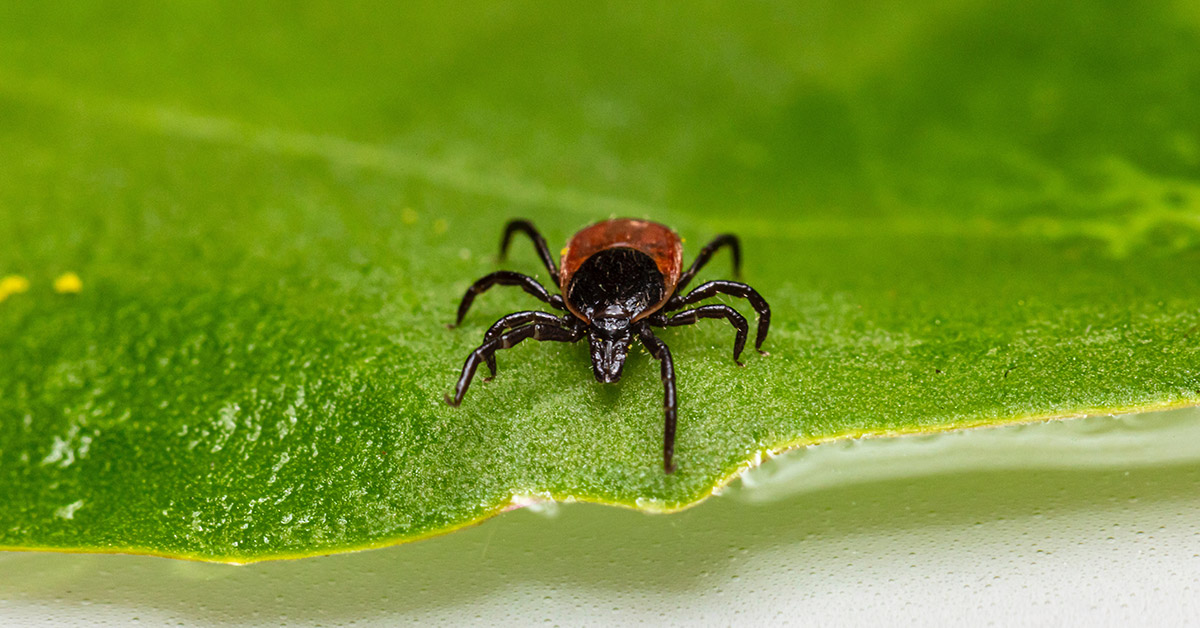
Birds play an underrecognized role in spreading tickborne disease due to their capacity for long-distance travel and tendency to split their time in different parts of the world—patterns that are shifting due to climate change. Knowing which bird species are able to infect ticks with pathogens can help scientists predict where tickborne diseases might emerge and pose a health risk to people.

A new study published in the journal Global Ecology and Biogeography used machine learning to identify bird species with the potential to transmit the Lyme disease bacterium (Borrelia burgdorferi) to feeding ticks. The team developed a model that identified birds known to spread Lyme disease with 80% accuracy and flagged 21 new species that should be prioritized for surveillance.

Lead author Daniel Becker, a Postdoctoral Fellow at Indiana University, says, “We know birds can infect ticks with the Lyme bacterium; however, until now, no one has systematically studied the ecological and evolutionary drivers that influence which bird species are most likely to host and spread Borrelia burgdorferi on a global scale. We set out to fill this gap by identifying traits of bird species that are most likely to pass Lyme to feeding ticks.”

Senior author Barbara Han, a disease ecologist at Cary Institute of Ecosystem Studies, says, “To predict and monitor species that could spread tickborne diseases to people, we first need to know which traits make certain animals good pathogen hosts. Here, we used machine learning to assess bird species traits, paired with Lyme infection data from ticks found on birds, to predict bird species that have the potential to spread Lyme.”

In this study, the team searched published literature to locate studies reporting Lyme infection of ticks found feeding on birds. The global search yielded 102 studies, including data from ticks found on 183 bird species; of these, 91 carried ticks that tested positive for Borrelia burgdorferi. These bird species are considered ‘competent’ reservoir species because they are known to infect feeding ticks with Borrelia burgdorferi. Species flagged have a broad range, reaching across the Americas, Africa, Asia, and Oceania.

Next, machine learning was used to compare traits of competent bird species with 4691 other bird species. Data included information on life history features like diet composition, foraging location, body size, lifespan, reproductive rate, and fledgling age, as well as geographical information like migration distance, global dispersal, and maximum elevation. They also looked at baseline corticosterone—the stress hormone in birds—which can influence susceptibility to infection.

New study identifies bird species that could spread ticks and Lyme disease

The model identified birds that were known to spread Lyme to ticks with 80% accuracy, and revealed 21 that should be prioritized for surveillance based on sharing traits with known competent species. High-risk species tend to have low baseline corticosterone, breed and winter at high latitudes and low elevations, are broadly distributed, and occur on either extreme of the pace-of-life continuum (species that breed early and die young, or breed late and are longer lived).

Species from the genus Turdus, commonly known as true thrushes, were found to have a significantly greater likelihood of competence compared to other taxa. This finding suggests that thrushes might be the riskiest bird species for Lyme transmission. Passerines, or perching birds, also tended to have higher competence, as did birds that primarily eat seeds and those that forage on the ground—a behavior that would put them in reach of questing ticks.

Identifying Lyme-competent bird species could have direct implications for our health. Tickborne diseases, especially Lyme disease, can be difficult to diagnose. Knowing where ticks and the diseases they carry are spreading can help medical practitioners prepare for diagnosis and treatment, improving health outcomes for patients.

Due to climate change, the breeding ranges of many birds are shifting north. As spread into higher latitudes, so do ticks and pathogens. Some have taken up full or part-time residence in cities and suburbs. Birds that can succeed in developed environments, especially those that are overwintering in these new places in close proximity to people, increase residents’ risk of contracting a tickborne disease.

Becker says, “Birds don’t spread Lyme directly to people, but they can carry infected ticks to new locations with no history of Lyme occurrence. A could drop off a bird and into a garden or yard, where it could later bite and infect a person. If local medical practitioners are unfamiliar with Lyme symptoms, proper diagnosis could be delayed. Identifying where ticks are spreading could improve medical response to Lyme and other tickborne diseases.”

Han concludes, “These findings remind us that pathogen competence varies tremendously, even among animals of the same family. Machine learning techniques allow us to analyze animal traits and help us predict risky species on a global scale—not only for Lyme, but for other tickborne and zoonotic diseases that involve multiple host . These predictions could provide crucial information to guide early interventions, prevent disease spillover, and protect our health.”