Archive for the ‘Ticks’ Category

Lyme Disease As War Weapon? Inside New Jersey Representative’s Push For Probe

https://news.yahoo.com/lyme-disease-war-weapon-inside-184904486.html

Lyme disease as war weapon? Inside New Jersey representative’s push for probe

Susanne Cervenk
USA TODAY

ASBURY PARK, N.J. – People suffering from Lyme disease could be closerto knowing whether the chronic illness impacting an estimated 300,000 or more people started off as a U.S. biological weapon.

U.S Rep. Chris Smith of New Jersey hopes that knowledge could lead not only to accountability, but also a potential cure and greater recognition of the disease.

“My hope is, this jump-starts a very aggressive effort to find a cure and see how this (Lyme disease) is growing. It’s pushing out into the Great Lakes area. It’s exploding everywhere,” said Smith, a longtime advocate for Lyme disease research.  His district is one of the hotbeds for the disease.

The House of Representatives added a Smith amendment to a federal defense spending bill that would require the Department of Defense’s Inspector General to investigate whether the military, between 1950 and 1975, experimented with ticks and other insects to be used as biological weapons.

US Congressman Chris Smith (R-NJ) opens a panel discussion about Lyme disease research held at the Wall Township Municipal building Wednesday, May 29, 2019.

US Congressman Chris Smith (R-NJ) opens a panel discussion about Lyme disease research held at the Wall Township Municipal building Wednesday, May 29, 2019.

Investigators will report back to the House and Senate Armed Services committees with the scope of any experiment it finds, including whether any ticks or insects were released into the environment, either by accident or on purpose.

The amendment was approved by voice vote. Now the House bill has to be reconciled with a Senate bill that does not include Smith’s amendment. Smith is working with senators to ensure the investigation survives the process.

Smith’s push for the federal investigation began after reading “Bitten: The Secret History of Lyme Disease and Biological Weapons,” by Stanford University-based science writer Kris Newby.

A longstanding theory is that Lyme disease was a Soviet-era biological weapon created in a U.S. government research center on Plum Island and released, either accidentally or intentionally.

A book about the history of Lyme disease was referenced by US Congressman Chris Smith (R-NJ) before a panel discussion about Lyme disease research held at the Wall Township Municipal building Wednesday, May 29, 2019.

Newby’s book, however, advances the theory with an interview with  late researcher Willy Burgdorfer, who claimed to have infected the ticks during U.S. military experiments.

“There needs to be significant accountability,” Smith said. “This should not be mired in secrecy.”

A federal probe could prove or disprove the theory. If the theory is proven correct, it would also give ammunition to individuals with chronic Lyme disease, who often face significant battles in getting treatment because it is not widely recognized by the medical community.

The Infectious Diseases Society of America has declined to recognize chronic Lyme disease in its clinical practice guidelines, leaving sufferers to find “Lyme-friendly” doctors, which is not easy.

Smith said knowing the truth about any experimentation would also help researchers reverse-engineer a cure for the tick-borne illness, which can often be misdiagnosed first as fibromyalgia or other conditions before patients learn they have Lyme disease.

Smith unsuccessfully attempted to add a second amendment to the bill that would have created a Lyme disease “national strategy,” a holistic approach for federal agencies to combat the disease.

The national strategy is a part of Smith’s TICK Act, federal legislation he has proposed for more than 20 years that would provide $180 million over six years for research.

Follow Susanne Cervenka on Twitter: @scervenka.

This article originally appeared on Asbury Park Press: Lyme disease a bioweapon? New Jersey rep’s call for U.S. probe

New Hampshire Man Tests Positive For Jamestown Canyon & Powassan Viruses

http://indepthnh.org/2019/08/08/dhhs-kingston-man-tests-positive-for-rare-viruses-carried-by-ticks-mosquitoes/

DHHS: Kingston Man Tests Positive for Rare Viruses Carried By Ticks, Mosquitoes

Public Domain photo

NH health officials say protect yourself from mosquito bites.
Concord, NH – The New Hampshire Department of Health and Human Services (DHHS) announced that an adult from Kingston, NH tested positive for both Jamestown Canyon virus (JCV) and Powassan virus (POW), the first time these vector-borne diseases have been identified in the State in 2019.JCV is transmitted by infected mosquitoes and POW is transmitted by infected ticks. There are no vaccines to prevent JCV or POW and treatment consists of supportive care.

“From spring until fall, New Hampshire residents and visitors are at risk for a number of different infections from the bite of mosquitoes and ticks, and this case highlights the risk from both,” said Dr. Benjamin Chan, State Epidemiologist.

“In addition to Jamestown Canyon virus and Powassan virus, there are a number of other viral and bacterial infections that can be transmitted by mosquitoes and ticks in New Hampshire, and we recommend that residents and visitors continue to take basic steps to prevent mosquito and tick bites in order to stay healthy.”

Jamestown Canyon virus is a mosquito-borne pathogen that circulates widely in North America primarily between deer and a variety of mosquito species, but it can also infect humans. First reported in the early 1970s, reports in humans are rare but have been increasing over the last several years. This is New Hampshire’s seventh case of JCV since the first report of the disease in 2013. Most reported illnesses caused by JCV have been mild, but moderate-to-severe central nervous system involvement has been reported.

Powassan virus infection is similar to mosquito-borne viruses like JCV, West Nile virus (WNV), and Eastern equine encephalitis (EEE), but is transmitted to people by infected ticks. POW was identified as a cause of human illness in the late 1950’s. In the last decade, 144 cases of POW have been detected in the United States. This is New Hampshire’s fourth case of POW, also since 2013. In New Hampshire, the blacklegged tick is the most likely to transmit this virus to people. A tick needs to be attached to a person for only 15 minutes to transmit POW. Some people who are infected may experience mild illness or no symptoms. Powassan virus can also infect the central nervous system causing brain inflammation, which may be disabling or fatal.

The Kingston resident had no recent history of travel outside our state and spent a great amount of time outdoors. Residents and visitors to New Hampshire should protect themselves and their family members by:

·         using an effective mosquito and tick repellant containing DEET (20-30%), Picaridin, or oil of lemon eucalyptus

·         wearing protective clothing, tucking shirts into pants and pants into socks

·         removing standing water from around your house so mosquitoes do not have a place to breed

·         being mindful of tick habitat keeping grass cut short, and

·         performing frequent and daily tick checks with immediate tick removal.

Vitamin B, ultrasonic devices, incense, and bug zappers have not been shown to be effective in preventing mosquito- or tick-borne diseases.

Other mosquito- and tick-borne illnesses that have been documented in New Hampshire include WNV and EEE from mosquitoes, and Lyme disease, anaplasmosis, babesiosis, and Borrelia miyamotoi from ticks. Biting mosquitoes will continue to be a disease concern until there are two, statewide, hard frosts. Risk of tick bites exists when temperatures are above freezing and ticks are not covered by snow.

People can be infected and not develop any symptoms, or only develop very mild symptoms. Early symptoms can include flu-like illness including fever, muscle aches, headaches, and fatigue. People infected with JCV, EEE, WNV, and Powassan can develop more serious central nervous system disease, including meningitis or encephalitis. If you or someone you know is experiencing flu-like symptoms, including fever and headache, contact your local medical provider.

Anyone with questions about vector-borne illnesses can call the DHHS Division of Public Health Services Bureau of Infectious Disease Control at (603) 271-4496 between 8 AM to 4:30 PM, Monday through Friday. More information can also be found online at www.dhhs.nh.gov and www.cdc.gov.

News story here:  https://www.wmur.com/article/new-hampshire-adult-infected-with-jamestown-canyon-virus-powassan-virus/28647142

________________

**Comment**

Pathogens have a certain proclivity for their vectors. It’s always interesting to me to entertain the possibility that perhaps there is cross over.

For instance, borrelia has been found in mosquitoes and many patients claim to have become infected with Lyme after a mosquito bite:

https://madisonarealymesupportgroup.com/2018/11/07/are-mosquitoes-transmitting-lyme-disease/

https://www.ncbi.nlm.nih.gov/m/pubmed/26631488/  Excerpt:

…results show that DNA of Borrelia afzelii, Borrelia bavariensis and Borrelia garinii could be detected in ten Culicidae species comprising four distinct genera (Aedes, Culiseta, Culex, and Ochlerotatus). Positive samples also include adult specimens raised in the laboratory from wild-caught larvae indicating that transstadial and/or transovarial transmission might occur within a given mosquito population.

BTW: THE LAST STUDY ON THE POTENTIAL OF OTHER BUGS TRANSMITTING LYME (MINUS THE GERMAN STUDY ON MOSQUITOS) WAS DONE OVER 30 YEARS AGO.  AND, WHILE NO SPIROCHETES WERE ISOLATED FROM THE HAMSTERS, ANTIBODIES WERE FOUND – EVEN BACK THEN.

Therein lies the hang up. The presence of antibodies does not prove infection. It’s interesting that the current CDC 2-tiered testing relies upon antibodies…..

The transmission of Bartonella from ticks is also still being quibbled about with some just stating emphatically that it is:  https://madisonarealymesupportgroup.com/2016/01/03/bartonella-treatment/ while others take a more conservative approach and say the science isn’t settled: https://madisonarealymesupportgroup.com/2019/07/13/suspected-insect-and-arthropod-vectors-for-bartonella-species-galaxy/

This issue of what is being transmitted by whom seems to me to be a very important and practical issue.  Why isn’t the science being done?

Also, while the media continues to inform us all of this is “rare,” please remember that many of these pathogens are not mandatorily reported, and we have no idea on prevalence. Coppe Lab out of Wisconsin emphatically states Powassan is NOT rare:

http://www.coppelabs.com/blog/why-is-powassan-virus-infection-still-described-as-rare-and-mysterious/  Please read the following excerpt by Coppe Lab here in Wisconsin,

For the last two years, Coppe Laboratories has dedicated a significant amount of time and resources to dispelling the myth that infection with Powassan virus, a virus transmitted by tick bite, is rare. The Centers for Disease Prevention and Control (CDC) reports only 100 cases of Powassan virus infection in the United States in the last 10 years. Indeed, that statistic gives the illusion that Powassan infection is rare. However, did you know that the only infections reported to CDC are those that are life-threatening, particularly cases causing severe inflammation of the brain like the case reported in LiveScience? Coppe has published three new papers in the last year that clearly show Powassan virus infection is not rare are at all,and until testing for this virus is included as part of tick-borne disease screening panels infections will continue to be underreported. Coppe’s Powassan Guide, which can be downloaded from the website, summarizes the findings from both tick and human Powassan prevalence studies, as well as defining the patient populations that would benefit most from Powassan testing.

To my knowledge, not only are there few current studies on what transmits what, but nothing has been done  on transmission time when multiple pathogens are being transmitted concurrently. Everyone’s stuck on climate change….


Seropositivity to Tick Endosymbiont As A Marker To Determine Tick Bite Exposure

https://www.ncbi.nlm.nih.gov/pubmed/31397213/

Seropositivity to Midichloria mitochondrii (order Rickettsiales) as a marker to determine the exposure of humans to tick bite.

Abstract

Ixodes ricinus is the most common tick species parasitizing humans in Europe, and the main vector of Borrelia burgdorferi sensu lato, the causative agent of Lyme disease in the continent. This tick species also harbors the endosymbiont Midichloria mitochondrii, and there is strong evidence that this bacterium is inoculated into the vertebrate host during the blood meal. A high proportion of tick bites remains unnoticed due to rarity of immediate symptoms, implying the risk of occult tick-borne infections in turn a potential risk factor for the onset of chronic-degenerative diseases. Since suitable tools to determine the previous exposure to I. ricinus bites are needed, this work investigated whether seropositivity toward a protein of M. mitochondrii (rFliD) could represent a marker for diagnosis of I. ricinus bite.

We screened 274 sera collected from patients from several European countries, at different risk of tick bite, using an ELISA protocol. Our results show a clear trend indicating that positivity to rFliD is higher where the tick bite can be regarded as certain/almost certain, and lower where there is an uncertainty on the bite, with the highest positivity in Lyme patients (47.30%) and the lowest (2.00%) in negative controls.

According to the obtained results, M. mitochondrii can be regarded as a useful source of antigens, with the potential to be used to assess the exposure to ticks harboring this bacterium. In prospect, additional antigens from M. mitochondrii and tick salivary glands should be investigated and incorporated in a multi-antigen test for tick bite diagnosis.

___________________

**Comment**

This is an interesting study with future potential. Essentially they are saying since Lyme is so hard to detect – find its friends and you may find Lyme.

I’ve written about endosymbionts before, particularly Wolbachia:

https://madisonarealymesupportgroup.com/2017/07/10/wolbachia-the-next-frankenstein/

Briefly, endosymbionts are organisms living in the body or cells of another organism in a symbiotic relationshipwhich isn’t always of mutual benefit. An example of a mutualistic relationship is the protozoan endosymbionts inside a termite which help it to break down the wood it eats.
However, in the case of Wolbachia, while the benefit between itself and the worms it lives in may be mutualistic, it’s caused harm in dogs being treated for heart worm. Heart worm medication causes Wolbachia to be released into the blood and tissues causing severe Inflammation in pulmonary artery endothelium which may form thrombi and interstitial inflammation. Wolbachia also activates pro inflammatory cytokines. For human Lyme/MSIDS patients this could translate out to a similar result when they are treated for worms, which ticks also carry.
What I find interesting here is that both Midichloria and Wolbachia are in the same subclass of Rickettsidae and order Rickettsiales. Guess who else is in these groups?
  • Rickettsia
  • Ehrlichia
Both of which cause a variety of human and animal illness.

The question of course is, could these supposedly harmless endosymbionts be responsible for more than they are given credit for? Testing for them may not only reveal that Lyme is present but in fact that they are contributing to the problem. Sounds like an exciting field of discovery.

Heartland Virus Detected in Ticks From Kankakee County, Illinois

http://outbreaknewstoday.com/heartland-virus-detected-in-ticks-from-kankakee-county-illinois-90991/

Heartland virus detected in ticks from Kankakee County, Illinois

August 17, 2019
By NewsDesk  @infectiousdiseasenews

In a follow-up on the report of a Heartland virus case reported in a Kankakee County, Illinois resident last year,  the Illinois Department of Public Health (IDPH) collaborated with the Illinois Natural History Survey Medical Entomology Laboratory (INHS MEL) and Kankakee County Health Department to conduct the first environmental health investigation to a novel tickborne disease case and found Heartland virus was detected in Lone Star ticks collected from Kankakee County.

Amblyomma americanum–The Lone Star Tick/CDC

Bites from Ticks can result in multiple types of infections, which can cause serious illness in some people,” said IDPH Director Dr. Ngozi Ezike. “It is important to take precautions and protect yourself from tick bites by using insect repellent and checking regularly for ticks when in wooded areas or high grass.”

Heartland virus was first identified in 2009 when two Missouri farmers who had been bitten by ticks were admitted to a hospital. Heartland virus is a viral disease that can be spread to people through the bite of an infected Lone Star tick. Reported cases of Heartland virus disease are relatively rare, however almost all individuals with Heartland virus have been hospitalized. Although most people infected have fully recovered, a few have died. There are no vaccines to prevent Heartland virus infections.

Signs and symptoms of infection are similar to those of other tickborne diseases and can include fever, headaches, fatigue, muscle aches, and diarrhea. Most people have reported becoming sick about two weeks after being bit by a tick. And while there is no treatment, doctors can treat some of the symptoms. If you have been bitten by a tick and think you may have Heartland virus or another tickborne illness, visit a health care provider. Other tickborne illnesses Illinois residents have been diagnosed with include Lyme disease, Rocky Mountain Spotted Fever, Ehrlichiosis, and tularemia. Health care providers should consider Heartland virus in patients who have compatible symptoms and are not responding to other treatments.

Ticks are commonly found on the tips of grasses and shrubs. Lone Star ticks are found throughout Illinois. Ticks crawl―they cannot fly or jump. The tick will wait on the grass or shrub for a person or animal to walk by and then quickly climb aboard. Some ticks will attach quickly and others will wander, looking for places like the ear, or other areas where the skin is thinner.

Simple tips to avoid tick bites include:

  • Wear light-colored, protective clothing—long-sleeved shirts, pants, boots or sturdy shoes, and a head covering. Treat clothing with products containing 0.5 percent permethrin.
  • Use Environmental Protection Agency (EPA)-registered insect repellents containing DEET, picaridin, IR3535, or Oil of Lemon Eucalyptus (OLE).
  • Walk in the center of trails so grass, shrubs, and weeds do not brush against you.
  • Check yourself, children, other family members, and pets for ticks every two to three hours.
  • Remove any tick promptly by grasping it with tweezers, as close to the skin as possible and gently, but firmly, pulling it straight out. Wash your hands and the tick bite site with soap and water.

___________________

For more:  https://madisonarealymesupportgroup.com/2016/11/01/heartland-virus-ravages-mans-body/

https://madisonarealymesupportgroup.com/2017/08/02/heartland-virus-in-arkansas/

https://madisonarealymesupportgroup.com/2018/07/01/surveillance-for-heartland-bourbon-viruses-in-eastern-kansas/

https://madisonarealymesupportgroup.com/2019/06/15/therapeutic-efficacy-of-favipiravir-against-bourbon-virus-in-mice/

Alpha-Gal Syndrome: How to Diagnose, Treat, and Prevent the Tick-Borne Red Meat Allergy

https://rawlsmd.com/health-articles/alpha-gal-syndrome-how-to-diagnose-treat-and-prevent-the-tick-borne-red-meat-allergy?

Alpha-Gal Syndrome: How to Diagnose, Treat, and Prevent the Tick-Borne Red Meat Allergy

Alpha-Gal Syndrome: How to Diagnose, Treat, and Prevent the Tick-Borne Red Meat Allergy

By Jenny Lelwica Buttaccio
Posted 8/6/19

Jennifer Burton lives in a subdivision in Northwest Arkansas on more than two acres of well-maintained land — all except for the one part which contains poison ivy that she can’t get rid of, she jokingly says. Burton loves to garden, and 1.5 acres of her property are fenced off for her plants and birds; she has fruit trees, berry vines, chickens, and guinea fowl.

“My husband Eric used to spray the yard with insect repellent, but once we got the chickens and guinea fowl, we stopped spraying,” says Burton. “They are great tick eaters, but they are also very noisy.”

Behind Burton’s subdivision is a heavily wooded area, so coming in contact with ticks — especially lone star ticks, which are widely distributed across the southeastern and eastern U.S. — isn’t uncommon for her. “Lone star ticks are the most aggressive ticks I’ve ever seen. They hunt in packs, crawling like a bunch of ants,” Burton describes.

lone star stick on finger, over white background

Burton is well-acquainted with the tactics lone star ticks use to seek out hosts. She’s been bitten many times over the past several years — first in 2011, then again in 2013, and most recently in 2016.

For Burton, 2016 also brought about an eight to nine-month assault of symptoms, including itchy hives, gastrointestinal issues, and vomiting. Doctors chalked up her escalating symptoms to an irritable bowel syndrome (IBS)diagnosis they found in her medical chart from years before, “possible” food allergies, or something she was eating.

By 2017, Burton had experienced four anaphylactic reactions approximately three weeks apart from one another. The last one brought her close to death. “It was almost like something was building up in my body,” she says.

Then, her husband, who’d been a consistent source of strength and support for her, got fed up with the lack of a diagnosis and effective treatment and hit a breaking point. “He insisted that our primary care doctor do something because he wasn’t going to watch me die,” Burton says. Finally, her doctor agreed to perform allergy testing; when the results came back, she learned she was highly allergic to beef and dairy, and mildly allergic to peanuts, despite having no history of such food allergies.

Her doctor was at a loss. Indeed, though news headlines about a dangerous meat allergy had begun to splash across the pages of nearly every major publication, most doctors knew little about it, its origins, or the severe, widespread symptoms it could induce.

Eventually, Burton saw allergist and immunologist, Tina Merritt, MD, an expert in alpha-gal syndrome (AGS) in Bentonville, Arkansas. Dr. Merritt was able to accurately diagnose Burton with AGS, and she traced the onset of the illness back to Burton’s history of lone star tick bites.

“Lone star ticks are the most aggressive ticks I’ve ever seen. They hunt in packs, crawling like a bunch of ants.”

Today, Burton runs the Alpha Gal Encouragers nonprofit, an advocacy, outreach, and support group for those diagnosed with AGS, and she estimates she feels about 90% most days. But her life is far from normal: On her wrist, she wears an emergency alert bracelet, which reads, “Anaphylaxis.” Everywhere she goes, she brings six EpiPens, two inhalers, and Unisom Sleep Melts because it’s a fast-acting antihistamine that doesn’t contain any mammal ingredients.

“I still have stomach issues. I’m not as active as I would like to be — my sweat makes my skin itchy. So, there are things I’m a little bit more restricted with, but I’m doing okay. Finally, I came to the realization that I have to live with this,” she says.

And with no cure in sight for AGS, Burton always has a flashlight and a tick key on hand for a swift tick removal if necessary. She knows that, for now, avoiding more tick bites is her best defense.

What is Alpha-Gal?

Alpha-gal is an abbreviated name for a sugar molecule that’s found in many mammals, with the exception of humans and primates like apes and monkeys. The sugar’s full name is galactose-α-1,3-galactose, and for most people, it doesn’t pose a health threat.

alpha gal chemical structure, scientific image

But for people like Burton, who have developed AGS, their bodies react to the molecule with an exaggerated immune response to red meat like beef, pork, venison, or lamb. (Burton suspects her mild reaction to peanuts might be linked to some manufacturers using gelatin — a mammalian ingredient — to preserve their peanuts.) Sometimes, the immune response produces mild, allergy-type symptoms. Other times, life-threatening, anaphylactic reactions can occur.

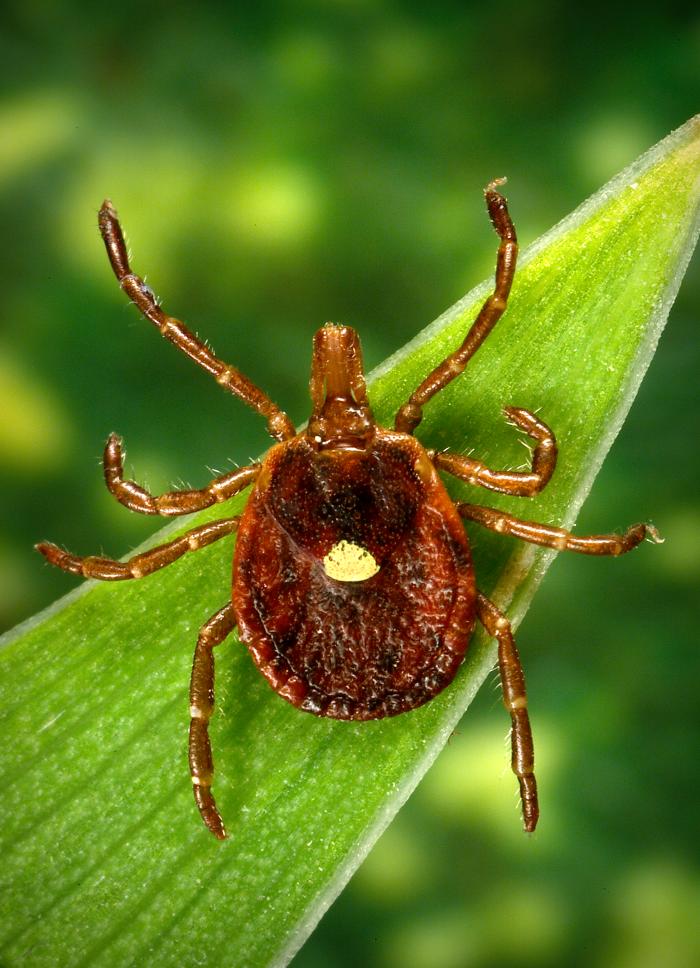
AGS is thought to be the result of a tick bite by the lone star tick, a bloodsucking arachnid that’s fairly easily recognized: Females have a single white dot in the center of a brown body, while males have white spots or streaks around the outer edge of the body.

“It was almost like something was building up in my body.”

Unlike with ticks that transmit Lyme disease and coinfections, however, a lone star tick doesn’t have to be attached to its human host for any length of time — alpha-gal is present in tick saliva, which means an immune response can be triggered right as the tick bites you. In addition to alpha-gal, lone star ticks can carry other tick-borne infections like Rocky Mountain Spotted Fever, Ehrlichiosis, Rickettsia, and more.

But as with all things tick-related, the lone star tick and alpha-gal are spreading across other parts of the country and beyond. Cases of the illness have also been reported in Australia, Asia, Central America, Europe, Japan, and South Korea, though the illness is likely to come from different tick species in other parts of the world.

Symptoms

skin rash across female back from food allergy

Many food allergies have a rapid onset — think shellfish or peanut allergies. But alpha-gal is different, which can complicate the process of getting a proper diagnosis. Typical reactions to the sugar were delayed by at least two hours, with the majority of people experiencing reactions three to six hours after consumption, suggests a review in the journal Current Allergy and Asthma Reports.

Allergy symptoms associated with alpha-gal include:

  • Skin rashes like hives or eczema
  • Itching
  • Facial swelling, especially the lips, eyelids, tongue, or throat
  • Swelling in other parts of the body
  • Difficulty breathing or shortness of breath
  • Wheezing or coughing
  • Digestive upset, including abdominal pain, cramping, and diarrhea
  • Nausea and vomiting
  • Nasal allergy symptoms like runny nose and sneezing
  • Feeling faint or dizzy
  • Headaches
  • Low blood pressure
  • Anaphylaxis (a severe and sudden allergic reaction that requires immediate treatment)

To further compound the problem, alpha-gal reactions may not be confined to red meat allergies alone. People can be allergic to a variety of mammalian products: dairy products, gelatin, lanolin (found in cosmetics and personal care products), magnesium stearate, and certain vaccines and medicationscan pose a serious problem to the community of people with AGS. With a delayed immune response, it can be difficult to pinpoint the culprit that’s making you sick.

Testing and Diagnosis

An allergist or other healthcare professional will gather your health history and information about your symptoms and potential exposure to ticks. They can diagnose AGS through a blood test, which looks at the IgE antibodies to alpha-gal in your blood. They can also use a skin prick test to determine if you’re allergic to specific foods like red meat found in beef, pork, or lamb.

Treatments

There is no cure for AGS, but avoiding red meat and other mammalian products can help reduce the incidence of reactions. Also, keep in mind that alpha-gal can be found in a variety of other products. It’s important to read labels on all the products you consume and use for ingredients that could be derived from red meat.

You may need to carry prescription epinephrine (like EpiPens) and other antihistamines with you at all times. Though the symptoms of AGS can wax and wane, you’ll need to try your best to avoid further tick bites and reduce the chances of worsening your immune system’s response to the molecule.

Prevention

man spraying natural tick repellant on his skin, outdoor background

Since there is no cure for AGS, the best way to avoid contracting it is through preventing tick bites. Ultimately, an aggressive approach to prevention is key to protecting you and your family from a multitude of tick-borne diseases. Here’s what you need to know:

  1. Familiarize yourself with your outdoor surroundings. Be on the lookout for tick-friendly habitats like tall grasses, overgrown or unkempt grass, areas covered in brush, piles of leaf litter, and your pets.
  2. Protect exposed skin with tick repellant. Repellents like DEET, picaridin, and oil of lemon eucalyptus (OLE) are safe to use on adult skin.
  3. Use permethrin on clothing and outdoor gear. Permethrin is an insecticide that kills ticks. The CDC recommends products that contain 0.5% of permethrin to help you protect yourself. Follow the instructions on the bottle, and use it on clothing, shoes, and outdoor gear.
  4. Protect your pets. To find the right products, consult with your veterinarian, and use the product according to the instructions. Regularly grooming your pet, finding the right flea and tick collar, and maintaining your lawn can help keep you and your pet safe.
  5. When you return from being outdoors, take a shower. Showering right away can wash away ticks that are crawling on you before they attach, and it can help you find and remove attached ticks, reducing your risk of contracting Lyme disease and other tick-borne infections that take longer to transmit.
  6. Look for ticks on yourself and your family. Perform tick checks on yourself, your family, and your pets when you come in from the outdoors. Remember to investigate more concealed areas of the body.
  7. Promptly remove any ticks that have latched on. Use a pair of fine-pointed tweezers to firmly pull the tick straight out of the skin, then disinfect the bite with soap and water. Watch for signs of any tick-borne infection and follow-up with your doctor.

For a more comprehensive guide, visit 7 Steps to Preventing Lyme and Other Tick-Borne Diseases.

“Ultimately, I wish people would take tick prevention seriously. Don’t get bit. Don’t get sick.”

Further Reading and Research to Help You Cope

Coping with alpha-gal is challenging, to say the least. But knowing where to look for help and advice when you’re forced to make abrupt lifestyle changes can be lifesaving. Fortunately, there are some organizations and resources available, so you don’t have to go at this alone.

  • Alpha Gal Encouragers: A faith-based 501(c)(3) founded by Jennifer Burton in Northwest Arkansas with a mission to encourage, empower, and educate others with and about alpha-gal
  • The AlphaGal Kitchen: A website dedicated to providing alpha-gal-safe recipes to the community
  • Alpha Gal Support: A Facebook group to discuss all things related to alpha-gal
  • Mosaic: Why are so many people getting a meat allergy?: An article that discusses the history behind this emerging tick-borne disease
  • Ticked Off Mast Cell: An organization devoted to compiling resources on mast cell activation syndrome (MCAS) and tick-borne diseases
  • ZeeMaps: Interested to know if alpha-gal is in your area? ZeeMaps tracks the growth of tick-borne disease around the world.

Final Thoughts

Often, articles on the subject of alpha-gal suggest that the syndrome may simply disappear in people after two to five years. However, Burton has a different take on the illness: “Some people think it just goes away on its own. But I try to refer to it as remission because it can come back, and when it does, it comes back with a fury,” she says. “Ultimately, I wish people would take tick prevention seriously. Don’t get bit. Don’t get sick.”

REFERENCES
1. Alpha-gal syndrome. Mayo Clinic website. https://www.mayoclinic.org/diseases-conditions/alpha-gal-syndrome/symptoms-causes/syc-20428608?fbclid=IwAR2XOuXrbynsDp18X-2CLcv01hIhCbZEMjmaZxzcF7_I5eLG3F57UOIPT2I
2. Alpha-Gal and Red Meat Allergy. American Academy of Allergy, Asthma, & Immunology website. https://www.aaaai.org/conditions-and-treatments/library/allergy-library/alpha-gal
3. Wilson JM, Schuyler AJ, Schroeder N, Platts-Mills TAE. Galactose-α-1,3-Galactose: Atypical Food Allergen or Model IgE Hypersensitivity? Current Allergy and Asthma Reports. 2017; 17(1): 8. doi: 10.1007/s11882-017-0672-7
___________________
For more: