Archive for the ‘research’ Category

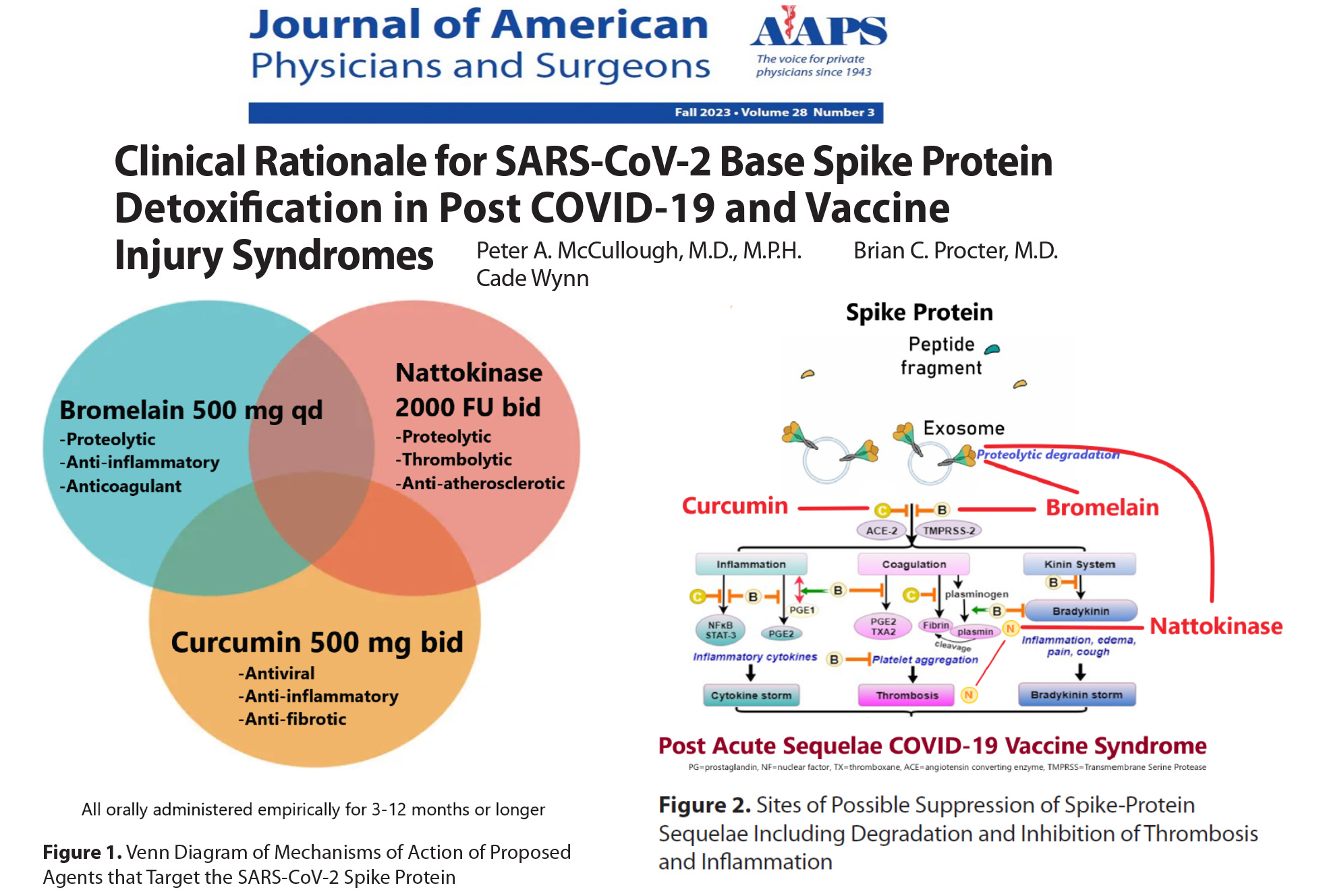
Baseline Protocol for Long-COVID & “Vaccine” Injury Syndromes

https://www.jpands.org/vol28no3/mccullough.pdf  Paper Here

Clinical Rational for SARS-SoV-2 Base Spike Protein Detoxification in Post COVID-19 and Vaccine Injury Syndromes

Publication of Baseline Protocol for Those Suffering from Long-COVID and Post-Acute Sequelae after COVID-19 Vaccination

Peter A. McCullough, M.D., H.P.H., Cade Wynn, Brian C. Procter, M.D.

For more:

Kratom : A Safer Opioid Alternative

https://www.paintreatmentdirectory.com/posts/kratom-as-an-opioid-alternative

Kratom as an Opioid Alternative


Kratom as an Opioid Alternative


Richard states, “I have suffered immense pain from fibromyalgia for 25 years, to the point of disability & early medical retirement from my job in government healthcare as a licensed psychiatric clinician at a county facility. I tried many medications to relieve my pain to no avail. I have also been a practicing herbalist for 22 years. It was recommended I try Kratom from another herbalist friend. I cannot begin to tell you of the immense relief immediately felt from the first dose of this amazing plant. I have been using kratom for several months now. I have no adverse effects, no withdrawal if not used, nor noticeable side effects. I can now go through the day with absolutely no pain! Period! This is one of the most valuable herbal remedies I have ever used.”

When Jason was 18 years old he broke his wrist and knuckles. He was given Vicodin and became addicted. He graduated to methadone and heroin. He had never used anything before but pot and alcohol occasionally. For the next seven years he was in and out of detox. All his plans went downhill. He had wanted to be a pro baseball player. He had trouble getting and keeping a job. He got a D.U.I. He watched eight of his friends die from heroin overdoses and he still couldn’t stop using. Then one day a friend posted on Facebook about kratom. Jason ordered a sample pack of a red vein strain, the most calming strain of Kratom. Since he started using kratom, he has not had the urge to use opioids again. Jason’s life is now back on track. He’s been clean for over eight months and is going to school to get a machinist certificate. He uses kratom for pain management,  anxiety, and depression. He doses twice a day and reports that it costs him $30-$40 a month. He’s now confident about his future. 

Millions of Americans now use kratom as an alternative to opioids. Many have similar stories.

Read other inspiring stories

What is Kratom?

Kratom is an herb that is native to tropical Southeast Asia and is part of the coffee family. Its scientific name is Mitragyna speciosa. The American Kratom Association says kratom is “more akin to tea and coffee than any other substances”. It has been used medicinally by the people of Southeast Asia for hundreds of years. More recently, millions of Americans have begun using kratom for pain management, anxiety, insomnia, as an energy booster, and to ease withdrawal from opioids. Many pain patients insist kratom has significantly improved their  quality of life and others, like Jason, say it has literally saved their lives.

The Johns Hopkins Kratom Study

The study, published online in the journal Drug and Alcohol Dependence in 2020, was an anonymous, online survey of 2798 kratom users. 59% of users reported taking kratom daily and the most common dosages were 1-3 grams.

Kratom was used by 91% of respondents for pain management, 67% for anxiety and 65% for depression, “with high ratings of effectiveness”. 41% reported using kratom as an opioid alternative. About a third of those using kratom for opioid withdrawal reported they were abstinent from opioids for over a year due to their kratom use.

About one third of respondents said they had adverse effects from kratom such as constipation, upset stomach or lethargy. They rated their adverse effects as mostly mild in severity and lasting less than 24 hours. A very small minority, .6%, sought treatment for adverse effects.

According to researchers, 2% of respondents met the diagnostic criteria for kratom-related substance abuse disorder. When asked how troubled they felt about their kratom use, the mean rating was 3.2 on a scale of 0 to 100.

A previous kratom study showed similar results

The results of this survey are similar to the 2016 online survey of 6150 kratom users by Pain News Network and the American Kratom Association. Nine out of ten respondents said kratom was “very effective” for pain management, depression, anxiety, insomnia, opioid addiction and alcoholism. Less than one percent said it didn’t help. The percentage of patients who rated kratom “very effective” for their pain condition:

  • Irritable bowel syndrome 94%
  • Migraine 93%
  • Fibromyalgia 93%
  • Rheumatoid arthritis 92%
  • Back pain 92%
  • Acute pain 92%
  • Lupus and other autoimmune diseases 91%
  • Osteoarthritis 90%
  • Neuropathy 90%
  • Trigeminal neuralgia 88%
  • CRPS 79% (Complex Regional Pain Syndrome)
  • Ehlers Danlos syndrome 76%

Is there any evidence that kratom has a high potential for abuse so that it would not be a good opioid alternative?

According to Dr. Jack Henningfield, a highly respected addiction specialist at Johns Hopkins, kratom is no more addictive than caffeine and “the factors that appear important in sustaining kratom consumption appear more similar to those that sustain dietary caffeine consumption, namely to better manage fatigue and daily life demands and provide mild effects considered enhancing to quality of life” including pain relief and enhanced work performance.

According to the National Institute on Drug Abuse, “Compared to deaths from other drugs, a very small number of deaths have been linked to kratom products and nearly all cases involved other drugs or contaminants.”

The federal government’s efforts to ban kratom

In 2016, the Drug Enforcement Administration proposed temporarily classifying kratom  as a Schedule I drug under the Controlled Substances Act, a drug with no known medical uses and a high potential for abuse. This would have made the use of kratom illegal. But the agency backtracked after a public outcry and pressure from some members of Congress. The DEA then asked the FDA to expedite scientific and medical evaluation instead.

In November 2017 the FDA issued a warning to consumers against using kratom, saying that there had been 36 deaths related to the herb. Scott Gottlieb, FDA Commissioner at the time, stated that kratom has similar risks of abuse, addiction, and death as opioids. This statement was ludicrous because the purported deaths from kratom occurred over a period of several years and were fewer than occurs in one day as a result of opioid overdoses. The National Institutes on Drug Abuse (NIDA) tested the FDA claims that kratom is associated with deaths, and they concluded those claimed deaths were actually caused by poly-drug users who abuse dangerous drugs or were caused by people who used an adulterated kratom product.

In 2018, the FDA published a report claiming that FDA scientists had “analyzed the chemical structures of the 25 most common compounds in kratom and concluded that all of the compounds share structural characteristics with controlled opioid analgesics, such as morphine derivatives. They also found that compounds in kratom that “bind strongly to mu-opioid receptors, comparable to opioid drugs”. This study and its conclusions have been widely criticized as misleading and unscientific. Other substances, such as Imodium, an over-the-counter remedy for diarrhea, also bind to opioid receptors but are not classified as opioids.

About 95% of kratom comes from Indonesia. The FDA reportedly played a role in the Indonesian government’s 2019 decision to ban the export of kratom as of 2022. Kratom advocates in Indonesia and the U.S. have convinced the Indonesian government to delay the export ban at least until 2024. There have been some restrictions placed on export by the Indonesian government that are negatively affecting supply and cost and hurting Indonesian farmers who were earning their living growing kratom.

In 2021, the FDA went to the World Health Organization and asked them for an international ban on kratom. In response, the WHO’s Executive Committee on Drug Dependency (ECDD) voted 11-1 to simply continue to monitor data on health impacts of kratom over the next two to three years, rather than institute strict controls. Members found “insufficient evidence” to warrant any action at the time. The committee based its decision on a scientific review of the benefits and risks of kratom. 80,000 people also submitted comments to the committee about their experiences with the herbal remedy.

The FDA continues to seize shipments of kratom to the United States  with no rationale other than that it is kratom The FDA’s continuous attempts to demonize kratom have also caused six states to criminalize kratom: Alabama, Arkansas, Indiana, Rhode Island, Vermont and Wisconsin.

These actions by the federal government and states have caused many consumers to be fearful of trying kratom. In my humble opinion, the FDA and DEA are more concerned about protecting pharmaceutical profits than protecting public health.

Conclusion: Kratom is a safe and effective alternative to opioids

Although extensive research is lacking on kratom, all indicators are that kratom is much safer than opioids and provides better pain relief, making it an excellent opioid alternative.

The author, Cindy Perlin, is a Licensed Clinical Social Worker, certified biofeedback practitioner and chronic pain survivor. She is the founder and CEO of the Alternative Pain Treatment Directory and the author of The Truth About Chronic Pain Treatments: The Best and Worst Strategies for Becoming Pain Free. She’s located in the Albany, NY area, where she has been helping people improve their health and emotional well-being for over 30 years. See her provider profile HERE. She is available for both in-office and virtual consultations.

_________________

**Comment**

Another perfect example of corrupt health “authorities’ banning anything that is considered a threat to Big Pharma and the medical monopoly.

For more:

Petition to Retract Fraudulent COVID Origin Paper in Nature Journal & Smoking Gun That Fauci Perjured Himself

https://www.change.org/p/retract-the-proximal-origin-of-sars-cov-2? (Go here to Sign)

Sign this petition to retract the fraudulent paper published in Nature Medicine. The virologists who published it, lied and this is now clear from their released email exchanges.

chng.it/VNVsKTtM via @ChangeGER

For more:

http://

We Now Have The Smoking Gun

Fauci perjured himself

Aug. 10, 2023

The GAO has admitted that funding to the Wuhan Lab came from the NIH.  The acting director of the NIH also admitted to this in writing.  While Fauci was adamantly told the public that the U.S. government did not fund this ‘gain of function’ research, his private correspondence stated he was suspicious of viral manipulation because he knew they were doing ‘gain of function’ research.

“Tony doesn’t want his fingerprints on any origins stories.”  (From the internal communications)

“There were mutations in the virus that would be most unusual to have evolved naturally in the bats and there was a suspicion that this mutation was intentionally inserted.  Dr. Anthony Fauci, internal communications

According to Rand Paul, partisanship is keeping this from being acted upon forcing him to seek help from a local U.S. attorney in D.C. to see if he act.  He also feels the current administration is keeping a tight grip on records he feels will clearly show that Fauci allowed this research that mixed viruses to make them more dangerous and more transmissible to be exempt from safety oversight from a committee.

“They are still funding this type of research.” Senator Dr. Rand Paul

First Case Report of Pancreatitis in Lyme Disease

https://researchopenworld.com/first-case-report-of-pancreatitis-in-lyme-disease/

First Case Report of Pancreatitis in Lyme Disease

Publication history

Received: November 14, 2019
Accepted: November 21, 2019
Published: November 25, 2019

Citation

A Baisse, S Parreau, A Abdeh, N Pichon (2019) First Case Report of Pancreatitis in Lyme disease. Internal Med Res Open J Volume 4 (2): 1–2. DOI: 10.31038/IMROJ.2019423

Short Abstract

We report a case of Lyme disease, revealed by pancreatic damage in a 49-year-old man without any medical history. The Lyme disease was revealed by repeated abdominal pain for 4 weeks, a skin lesion of quadricipital region, biological and radiological results showing pancreatic abnormalities.

Case Report

A 49-year-old man, non-alcoholic forest worker, with no past medical history, consulted to the Emergency Department for fever and persistent abdominal pain for a week. The biological results including, C – reactive protein (CRP), lipase, hepatic assessment were normal as well as contrast-enhanced abdominal Computed Tomography (CT). On the day after, the evolution was favorable under symptomatic treatment including nefopam and paracetamol and the patient was discharged from the hospital. One week later, the patient was admitted to the Emergency Department with an identical symptomatology. A posterior quadricipital peeling skin lesion, appeared two weeks earlier according to the patient, was observed (Figure 1a.) A gastroscopy, a colonoscopy, other abdominal CT and biological tests were performed. An inflammation biomarker elevation was observed (CRP: 180 mg/L and hyperleukocytosis: 13.3 G/L) without other biological abnormalities (lipase: 48 UI/L, ALAT: 48 UI/L). The endoscopic examinations and abdominal CT were normal. The patient was discharged from the hospital without any treatment. Half a month later, the patient was admitted to the Emergency Department for the third time and recurrence of the abdominal pain. The clinical examination found a hemodynamic stability, an abdominal pain of the left hypochondrium associated with a cutaneous ulcerative and non-progressive skin lesion in the same region as previously mentioned (Figure 1b.). The biological assessment found a very mild inflammatory syndrome (CRP 86 mg/L, Procalcitonin < 0.2 ng/mL, leukocytes 9.5 G/L), a high lipase level at 1714 IU/L without hepatocellular abnormalities. The third abdominal CT revealed an aspect of pancreatic necrosis with a pseudocyst (6 cm) at the tail of the pancreas, in contact with the splenic hile and the posterior wall of the stomach (Figure 1c.). The patient was hospitalized in Intensive Care Department with the diagnosis of pancreatitis.

On admission, the work-ups looking for the usual causes of pancreatitis (alcohol, gallstones, medications induced, hypercalcemia, traumatic, chemical exposures, hereditary diseases, infections) were negative. Regarding the skin patient’s lesion and anamnesis, the diagnosis of Lyme disease was evoked. His Lyme serology was strongly IgM positive and confirmed by Western Blot. He was treated with ceftriaxone associated with effective analgesic therapy. The clinical and biological course was uneventful and the patient was discharged from the hospital after 3 weeks. The relationship between Lyme disease and acute pancreatitis was strongly suspected.

Discussion

Lyme disease is an endemic zoonosis, transmitted to humans by a tick bite causing a multisystemic impairment due to a Gram-negative bacillus, Borrellia burgdorferi [1]. The disease schematically includes two phases and a polymorphism in clinical manifestations: a primary phase with chronical migrans erythema and articular signs (80% of cases), a secondary phase of heterogeneous and lymphatic dissemination, inaugurated by flu-like symptoms and associating neurological, cardiac or articular signs that could become chronic [2]. Each of these attacks could be inaugural or/and isolated [3]. Concerning the anamnesis, only 30% of patients remember a tick bite [4].

The heterogeneity of presentation in Lyme disease includes the serodiagnosis as a central investigation for confirmation [5]. Hepatic impairment due to Lyme disease, including hepatitis and hepatomegaly, is inconsistent, commonly found in early stage but often asymptomatic and with plasmatic manifestations [6]. A moderate hypertransaminasemia (2 to 3 N) could be noted, predominating on the ALAT. This hepatic biologic involvement is present in 27 to 66% of cases [7]. This can be explained by a systemic, lymphatic migration of the incriminated bacteria and a secondary hepatic sequestration [8]. To our knowledge, this physiopathological evolution to explain liver disorders has never been described for pancreas but is probably similar.

Regarding the treatment of Lyme disease, the cycline are recommended for the uncomplicated forms. An antibiotic treatment with cephalosporins could be considered for cardiac, neurological or complicated cases [2]. The evolution is favorable in 85% of patients, including hepatic acute injuries [9].

In our case, the skin lesion associated with a supposed tick bite, the anamnesis, the absence of other cause of pancreatitis, the favorable evolution under antibiotic treatment and especially the strong positivity of the serology are in favor of a Borrelia burgdoferi infection.

Conclusion

The authors report the first case of pancreatitis revealing a Lyme disease. Clinical, biological and evolutionary findings support the responsibility of Lyme disease in the pathogenesis of our pancreatitis case.  (See link for article and pictures)

_________________

**Comment**

How many patients have had this or similar issues but didn’t have the rash, had negative serology and didn’t fit the other arbitrary standards that mainstream medicine has imposed that thousands of other patients don’t fit?  God only knows.

Pandemic Preparedness & The Road to International Fascism

https://onlinelibrary.wiley.com/doi/10.1111/ajes.12531?

Pandemic preparedness and the road to international fascism

First published: 30 July 2023

Abstract

The World Health Organization’s broad definition of health embraces physical, mental and social well-being. Expressed in its 1946 constitution alongside concepts of community participation and national sovereignty, it reflected an understanding of a world emerging from centuries of colonialist oppression and the public health industry’s shameful facilitation of fascism. Health policy would be people-centered, closely tied to human rights and self-determination. The COVID-19 response has demonstrated how these ideals have been undone. Decades of increasing funding within public-private partnerships have corroded the basis of global public health. The COVID-19 response, intended for a virus that overwhelmingly targeted the elderly, ignored norms of epidemic management and human rights to institute a regime of suppression, censorship, and coercion reminiscent of the power systems and governance that were previously condemned. Without pausing to examine the costs, the public health industry is developing international instruments and processes that will entrench these destructive practices in international law. Public health, presented as a series of health emergencies, is being used once again to facilitate a fascist approach to societal management. The beneficiaries will be the corporations and investors whom the COVID-19 response served well. Human rights and individual freedom, as under previous fascist regimes, will lose. The public health industry must urgently awaken to the changing world in which it works, if it is to adopt a role in saving public health rather than contributing to its degradation.

For more: