Archive for the ‘research’ Category

LSU Obtains Grant to Synthesize Affordable Nootkatone

https://www.lsu.edu/eng/news/2024/03/che-nsf-pfi-grant-lyme-disease.php

Chemical Engineering, Biological Sciences Faculty Receive Largest NSF PFI Grant Ever Awarded to LSU

Mike Benton, Kerry Dooley, Roger Laine
Nootkatone Studies Could Lead to Prevention of Lyme Disease

March 25, 2024

BATON ROUGE, LA – Thanks to a $550,000 National Science Foundation Partnership for Innovation grant—the largest NSF PFI grant ever awarded to LSU—LSU Chemical Engineering (ChE) Professor Kerry Dooley, LSU ChE Department Chair and Professor Mike Benton, and LSU Department of Biological Sciences (Biol. Sci.) Professor Roger Laine will continue their work on a project that could bring affordable and effective insect repellent to the masses, possibly decreasing the number of Lyme disease, malaria, and West Nile virus cases around the world.

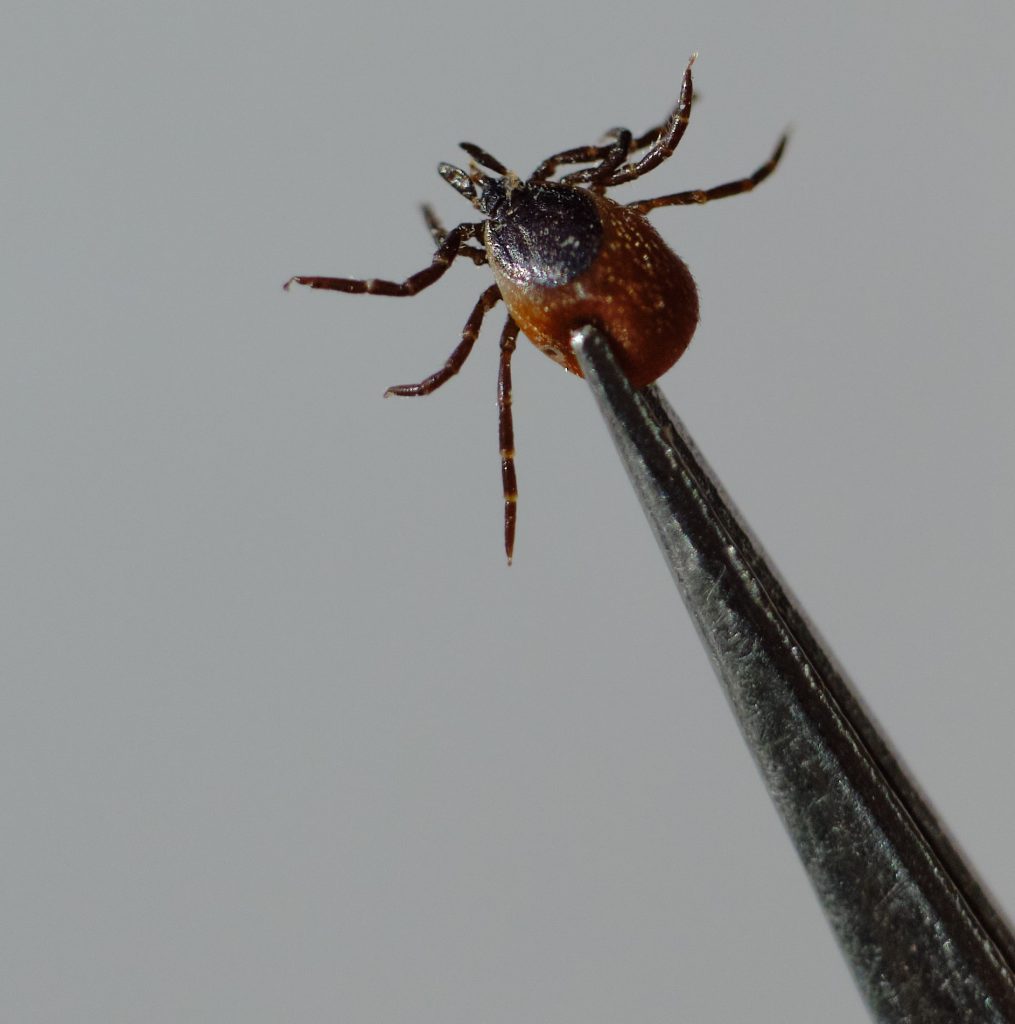
The project involves the use of nootkatone, an FDA-approved organic compound found in grapefruit skin and Alaska yellow cedar trees that is a natural deterrent for many insects, including the deer tick responsible for Lyme disease. The LSU researchers propose decreasing the cost of the nootkatone synthesis, making any products made with the compound affordable to the general public.

“The family of compounds that make up nootkatone is already proven to be both safer and more effective than existing commercial repellents,” principal investigator Dooley said. “However, it’s now too expensive for consumer insect repellents. We plan to greatly streamline, optimize, and reduce the costs associated with the synthesis.”

According to Laine, there have been few insect repellents on the market since DEET, which is found in most insect repellent sprays and creams currently available. However, a mosquito test showed that nootkatone at 5% in rubbing alcohol was superior to DEET, which usually needs to be administered at greater than 20% concentration, even six hours after application.

Years ago, Laine discovered the efficacy of nootkatone as an insect repellent while collaborating with retired LSU AgCenter Entomologist Gregg Henderson in Laine’s lab. They found that nootkatone repelled insects like mosquitos, gnats, wood ticks, fleas, termites, lice, and fire ants because the insects weren’t eating the vetivone grass that, unbeknownst to them, contained nootkatone. Former LSU Biol. Sci. Senior Research Associate Betty Zhu tested 15 other compounds that resembled the structure of the vetivone and discovered that nootkatone was the best repellent compound. Nootkatone had already been approved by the FDA at the time, with the CDC later discovering that it also repels deer ticks.

Though nootkatone was found to be the best repellent, the problem was the cost to buy it in pure form.

“Nootkatone costs $2,500/kg, which is too costly for insect repellent,” Laine said. “It should be $200-$300/kg, then you can add it to lotions and sunscreens.”

Dooley discovered that one important way to save on the cost would be to modify a step in the eight-step synthesis of nootkatone.

“I did a cost analysis of the synthesis process, and 70% of the cost is concentrated in the fourth step of the eight-step process,” Dooley said. “I decided this step in particular could be significantly reduced in cost.”

The eight-step synthesis was created in just two years by former LSU Chemistry Graduate Student Anne Sauer, who was working under retired professor William Crowe as a collaboration with Laine and Henderson. To simplify two oxidation steps in the eight-step synthesis, which is patented by LSU, Laine subsequently obtained a Board of Regents seed grant and hired synthetic chemist Xuefeng Gao to successfully modify the synthesis using ozone, now covered by new U.S. and Japanese LSU patents authored by Laine.

In the fourth step, the original paper and patent uses potassium hydride and 18-Crown-6 ether, along with tetrahydrofuran, as a solvent. Dooley read up on how people were trying to execute this step without using these expensive components and thought he and Benton should come up with a catalyst and solvent that could significantly reduce the cost of this step.

“It’s incredibly complicated and it takes a long, sustained effort to go from making a few grams of something to making kilograms or kilotons,” Dooley said. “There’s a lot of work on optimizing separations, minimizing the solvent use, getting certain impurities down, and getting yields slightly up. These things take a lot of time and effort.”

The LSU research team hopes to sell their synthesis process to a manufacturing company, who would then be able to mass produce affordable nootkatone products that could save people’s lives by preventing bites from infectious insects.

A 2024 CDC report states that there were 62,551 Lyme disease cases in 2022. Recent estimates using new data collection methods suggest approximately 476,000 people may be diagnosed with Lyme disease each year in the U.S.

“The deer tick is spreading throughout the U.S.,” Dooley said. “It’s not just prevalent in the Northeast.”

In other words, insects are going nowhere. A 2023 CDC report states there were 2,406 cases of West Nile virus across 43 states with the number of cases expected to increase in 2024. Per the World Health Organization, there were a reported 249 million cases of malaria worldwide last year.

“Sixty million people die of malaria each year,” Laine said. “It’s possible that if this eight-step synthesis process could produce nootkatone products that get to poorer countries, then WHO could possibly fund it. Mosquito nets could be covered with it, or they could have cloth ankle bands with nootkatone so ticks can’t crawl up your leg. The Department of Defense is also interested in ways to protect military personnel against tick-borne diseases. There are a lot of marketing niches with this.”

Contact: Libby Haydel
Communications Manager
225-578-4840
ehaydel1@lsu.edu

For more:

Adaptive Immune Response Investigation in Lyme Borreliosis

https://pubmed.ncbi.nlm.nih.gov/38165616/

Adaptive Immune Response Investigation in Lyme Borreliosis

Abstract

To diagnose Lyme Borreliosis, it is advised to use an enzyme-linked immunosorbent test to check for serum antibodies specific for Lyme and all tests with positive or ambiguous enzyme-linked immunosorbent assay (ELISA) results being confirmed by immunoblot. This method of measuring the humoral immunity in human fluids (e.g., by ELISA) has provided robust and reproducible results for decades and similar assays have been validated for monitoring of B cell immunity. These immunological tests that detect antibodies to Borrelia burgdorferi are useful in the diagnosis of Borreliosis on a routine basis. The variety of different Borrelia species and their different geographic distributions are the main reasons why standards and recommendations are not identical across all geographic regions of the world. In contrast to humoral immunity, the T cell reaction or cellular immunity to the Borrelia infection has not been well elucidated, but over time with more studies a novel T cell-based assay (EliSpot) has been developed and validated for the sensitive detection of antigen-specific T cell responses to B. burgdorferi. The EliSpot Lyme assay can be used to study the T cell response elicited by Borrelia infections, which bridges the gap between the ability to detect humoral immunity and cellular immunity in Lyme disease. In addition, detecting cellular immunity may be a helpful laboratory diagnostic test for Lyme disease, especially for seronegative Lyme patients. Since serodiagnostic methods of the Borrelia infection frequently provide false positive and negative results, this T cell-based diagnostic test (cellular assay) may help in confirming a Lyme diagnosis. Many clinical laboratories are convinced that the cellular assay is superior to the Western Blot assay in terms of sensitivity for detecting the underlying Borrelia infection. Research also suggests that there is a dissociation between the magnitude of the humoral and the T cell-mediated cellular immune responses in the Borrelia infection. Lastly, the data implies that the EliSpot Lyme assay may be helpful to identify Borrelia infected individuals when the serology-based diagnostic fails to do so. Here in this chapter the pairing of humoral and cellular immunity is employed to evaluate the adaptive response in patients.

For more:

Lyme Disease Leads to Muscle Weakness of the Leg & Constipation

https://danielcameronmd.com/lyme-disease-muscle-weakness-of-the-leg-and-constipation/

LYME DISEASE LEADS TO MUSCLE WEAKNESS OF THE LEG AND CONSTIPATION

lyme-disease-muscle-weakness

In their article, “Atypical Acute Neuroborreliosis With Leg Paresis and Constipation,” Ahrend and colleagues describe a case of Lyme disease presenting with neurological and autonomic manifestations in an elderly man. [1]

An 80-year-old man, later diagnosed with Lyme disease, was admitted to the hospital with left leg paresis [muscle weakness], along with pain and sensory disturbances in his left abdomen. He also had a rash on his left lower abdomen, severe abdominal pain and constipation. The symptoms had been ongoing for 4-5 weeks.

The patient had visited three other medical centers for evaluation of his abdominal pain. However, a colonoscopy and CT scan of the abdomen did not explain the severity of the patient’s symptoms.

The rash manifest as a “patchy, pruritic redness with pustules, which was particularly prominent on the left flank and abdomen,” the authors state.

Testing for Lyme disease revealed Borrelia-specific IgM and IgG antibodies, consistent with the symptomatology of neuroborreliosis.

“Finally, a diagnosis of [Lyme disease] was made, which initially manifested itself with autonomic symptoms (constipation) and severe abdominal pain, accompanied by a skin rash” and muscle weakness in his left leg that appeared later on, the authors state.

“The patient’s constipation is likely due to the autonomic involvement of the disease.”

The rash, characterized as a flat, itchy redness with pustules, was atypical for Lyme disease, the authors point out.

“… serological tests were finally conclusive for Lyme borreliosis, so that the abdominal pain and [constipation] were evaluated as autonomic, and the leg paresis as neurological involvement of neuroborreliosis.”

The patient’s symptoms resolved completely following a 21-day course of doxycycline.

After treatment for Lyme disease, the patient’s muscle weakness disappeared, as did his intestinal symptoms. And, he was able to “resume his home exercise program within two months and since then he has been on the same physical level as before,” the authors state.

References:
  1. Ahrend H, Fibbe C, Jasper D, Ahrend A, Woelfel M, Layer P, Rosien U, Stope MB. Atypical Acute Neuroborreliosis With Leg Paresis and Constipation. In Vivo. 2024 Mar-Apr;38(2):940-943. doi: 10.21873/invivo.13523. PMID: 38418126; PMCID: PMC10905454.
______________
**Comment**
This patient requires a follow-up.
For more:

A Protein Found in Human Sweat May Protect Against Lyme Disease

https://www.lymedisease.org/human-sweat-lyme-disease/

A protein found in human sweat may protect against Lyme disease

By Anne Trafton, MIT News

Lyme disease, a bacterial infection transmitted by ticks, affects nearly half a million people in the United States every year. In most cases, antibiotics effectively clear the infection, but for some patients, symptoms linger for months or years.

Researchers at MIT and the University of Helsinki have now discovered that human sweat contains a protein that can protect against Lyme disease. They also found that about one-third of the population carries a genetic variant of this protein that is associated with Lyme disease in genome-wide association studies.

It’s unknown exactly how the protein inhibits the growth of the bacteria that cause Lyme disease. However, the researchers hope to harness the protein’s protective abilities to create skin creams that could help prevent the disease, or to treat infections that don’t respond to antibiotics.

“This protein may provide some protection from Lyme disease, and we think there are real implications here for a preventative and possibly a therapeutic based on this protein,” says Michal Caspi Tal. She’s a principal research scientist in MIT’s Department of Biological Engineering and one of the senior authors of the new study.

Hanna Ollila, a senior researcher at the Institute for Molecular Medicine at the University of Helsinki and a researcher at the Broad Institute of MIT and Harvard, is also a senior author of the paper, which has been published in Nature Communications. The paper’s lead author is Satu Strausz, a postdoc at the Institute for Molecular Medicine at the University of Helsinki.

A surprising link

Lyme disease is most often caused by a bacterium called Borrelia burgdorferi. In the United States, this bacterium is spread by ticks that are carried by mice, deer, and other animals. Symptoms include fever, headache, fatigue, and a distinctive bull’s-eye rash.

Most patients receive doxycycline, an antibiotic that usually clears up the infection. In some patients, however, symptoms such as fatigue, memory problems, sleep disruption, and body aches can persist for months or years.

Tal and Ollila, who were postdocs together at Stanford University, began this study a few years ago in hopes of finding genetic markers of susceptibility to Lyme disease. To that end, they decided to run a genome-wide association study (GWAS) on a Finnish dataset that contains genome sequences for 410,000 people, along with detailed information on their medical histories.

This dataset includes about 7,000 people who had been diagnosed with Lyme disease, allowing the researchers to look for genetic variants that were more frequently found in people who had had Lyme disease, compared with those who hadn’t.

Secretoglobin

This analysis revealed three hits, including two found in immune molecules that had been previously linked with Lyme disease. However, their third hit was a complete surprise — a secretoglobin called SCGB1D2.

Secretoglobins are a family of proteins found in tissues that line the lungs and other organs, where they play a role in immune responses to infection. The researchers discovered that this particular secretoglobin is produced primarily by cells in the sweat glands.

To find out how this protein might influence Lyme disease, the researchers created normal and mutated versions of SCGB1D2 and exposed them to Borrelia burgdorferi grown in the lab.

They found that the normal version of the protein significantly inhibited the growth of Borrelia burgdorferi. However, when they exposed bacteria to the mutated version, twice as much protein was required to suppress bacterial growth.

The researchers then exposed bacteria to either the normal or mutated variant of SCGB1D2 and injected them into mice. Mice injected with the bacteria exposed to the mutant protein became infected with Lyme disease, but mice injected with bacteria exposed to the normal version of SCGB1D2 did not.

“In the paper we show they stayed healthy until day 10, but we followed the mice for over a month, and they never got infected. This wasn’t a delay, this was a full stop. That was really exciting,” Tal says.

Preventing infection

After the MIT and University of Helsinki researchers posted their initial findings on a preprint server, researchers in Estonia replicated the results of the genome-wide association study, using data from the Estonian Biobank. These data, from about 210,000 people, including 18,000 with Lyme disease, were later added to the final Nature Communications study.

The researchers aren’t sure yet how SCGB1D2 inhibits bacterial growth, or why the variant is less effective. However, they did find that the variant causes a shift from the amino acid proline to leucine, which may interfere with the formation of a helix found in the normal version.

They now plan to investigate whether applying the protein to the skin of mice, which do not naturally produce SCGB1D2, could prevent them from being infected by Borrelia burgdorferi. They also plan to explore the protein’s potential as a treatment for infections that don’t respond to antibiotics.

“We have fantastic antibiotics that work for 90 percent of people, but in the 40 years we’ve known about Lyme disease, we have not budged that,” Tal says. “Ten percent of people don’t recover after having antibiotics, and there’s no treatment for them.”

A new approach to Lyme prevention?

“This finding opens the door to a completely new approach to preventing Lyme disease in the first place, and it will be interesting to see if it could be useful for preventing other types of skin infections too,” says Kara Spiller, a professor of biomedical innovation in the School of Biomedical Engineering at Drexel University, who was not involved in the study.

The researchers note that people who have the protective version of SCGB1D2 can still develop Lyme disease, and they should not assume that they won’t. One factor that may play a role is whether the person happens to be sweating when they’re bitten by a tick carrying Borrelia burgdorferi.

SCGB1D2 is just one of 11 secretoglobin proteins produced by the human body. Tal also plans to study what some of those other secretoglobins may be doing in the body, especially in the lungs, where many of them are found.

“The thing I’m most excited about is this idea that secretoglobins might be a class of antimicrobial proteins that we haven’t thought about. As immunologists, we talk nonstop about immunoglobulins, but I had never heard of a secretoglobin before this popped up in our GWAS study. This is why it’s so fun for me now. I want to know what they all do,” she says.

The research was funded, in part, by Emily and Malcolm Fairbairn, the Instrumentarium Science Foundation, the Academy of Finland, the Finnish Medical Foundation, the Younger Family, and the Bay Area Lyme Foundation.

Click here to read the study.

SOURCE: Massachusetts Institute of Technology

_____________

**Comment**

These mice need to be observed for years, not 10 or even 30 days.

The most inaccurate statement in the article:

“We have fantastic antibiotics that work for 90 percent of people, but in the 40 years we’ve known about Lyme disease, we have not budged that,” Tal says. “Ten percent of people don’t recover after having antibiotics, and there’s no treatment for them.”

She’s right about not moving forward, but this 10% going onto suffer with chronic symptoms is flat-out wrong and needs to be corrected.  We also don’t have ‘fantastic antibiotics.’  We have a lot yet to learn about this complex illness due to a highly connected cabal with histories with biological weapons doing all the research utilizing faulty study designs.

For far too long this cabal has treated this as a mono-infection cured by a mono-therapy and nothing could be further from the truth.  There is absolutely nothing about this beast that is straight forward or easy, except the continued propaganda.

Concurrent Infection of the Human Brain With Multiple Borrelia Species

https://www.mdpi.com/1422-0067/24/23/16906

Concurrent Infection of the Human Brain with Multiple Borrelia Species

Authors to whom correspondence should be addressed.
Int. J. Mol. Sci. 202324(23), 16906; https://doi.org/10.3390/ijms242316906
Submission received: 10 October 2023 / Revised: 22 November 2023 / Accepted: 26 November 2023 / Published: 29 November 2023
(This article belongs to the Section Molecular Pathology, Diagnostics, and Therapeutics)

Abstract

Lyme disease (LD) spirochetes are well known to be able to disseminate into the tissues of infected hosts, including humans. The diverse strategies used by spirochetes to avoid the host immune system and persist in the host include active immune suppression, induction of immune tolerance, phase and antigenic variation, intracellular seclusion, changing of morphological and physiological state in varying environments, formation of biofilms and persistent forms, and, importantly, incursion into immune-privileged sites such as the brain. Invasion of immune-privileged sites allows the spirochetes to not only escape from the host immune system but can also reduce the efficacy of antibiotic therapy. Here we present a case of the detection of spirochetal DNA in multiple loci in a LD patient’s post-mortem brain. The presence of co-infection with Borrelia burgdorferi sensu stricto and Borrelia garinii in this LD patient’s brain was confirmed by PCR. Even though both spirochete species were simultaneously present in human brain tissue, the brain regions where the two species were detected were different and non-overlapping. The presence of atypical spirochete morphology was noted by immunohistochemistry of the brain samples. Atypical morphology was also found in the tissues of experimentally infected mice, which were used as a control.
For more:

‘The powers that be’ continue to ignore the issue of coinfection and concurrent infection.  This is a huge problem that partially explains why patients remain sick after the extremely unscientific and antiquated CDC Lyme treatment.