Archive for the ‘research’ Category

Heroic Mom Exposes Junk COVID Shot Data

https://thehighwire.com/videos/mom-exposes-bunk-covid-vax-data/  Video Here (Approx. 8 Min)

June, 28, 2022

Heroic Mom Fact Checks CDC, ACIP, Researchers and Media

Del BigTree and Jeffrey Jaxen break down a mom’s astute work showing that COVID is NOT the “leading cause of death” in children as well as dismantles fraudulent trial data being used by corrupt public health ‘authorities’ to push gene-therapy shots on children.

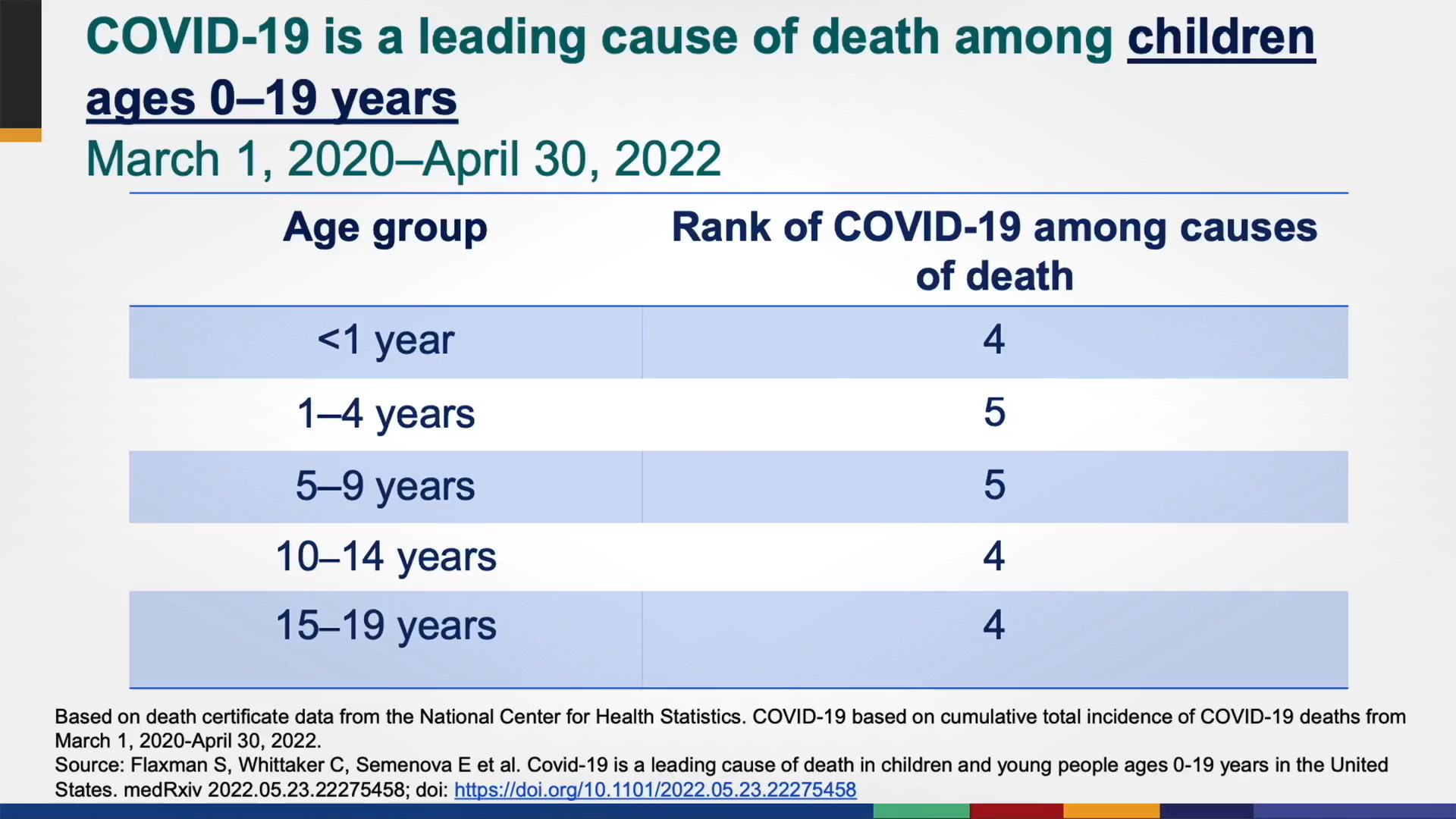
The following deceitful CDC slide, based upon a seriously flawed study has been used ad nauseum by “experts” and the media to push gene therapy injections upon children.
Go here for this savvy mom who fact-checks public health ‘experts’ and a bought-out media and believes this faulty study should be fully retracted. 

SUMMARY:

  • Their Covid numbers came from NCHS which includes deaths where Covid is listed anywhere on the death certificate which over counts Covid deaths because it includes death that had a different underlying cause.
  • While the pre-print article states “we only consider COVID-19 as an underlying (and not contributing) cause of death”, this is blatantly false. This same error was addressed previously where the author was called out and subsequently posted follow-up where he admitted it was wrong to compare multiple causes of death data with underlying causes of death data.
  • The time periods used are also faulty and end up being ranked TWICE for each age group.  This is completely misleading.
  • The CDC used the rankings for cumulative COVID deaths further overcounting deaths compared to other causes of death.  Please see the article for the corrected rankings and deaths.
  • Even corrected rankings overstate the impact of COVID because the top few causes of death far outweigh the causes further down the list.  For example:
    • Ages 1-4, accidents account for almost 25 times as many deaths as Covid-19 on an annualized basis
    • for each of the 4 age groups covered by the CDC slide, the very broad “accidents” is the leading cause of death. If we break that down further, causes of death like drownings, vehicle crashes, drug overdoses, would be individual causes of death greater than Covid in various age groups. Actuary Mary Pat Campbell explains this well in a couple of blog posts on pediatric Covid deaths.
  • Why did they use data from 2019 and not 2020 or 2021 when aspects of COVID response affected some of the leading causes of death?
  • Why did a group of UK researchers analyze US deaths instead of for their own country?  Could it possibly be due to the fact the US counts Covid deaths very generously, so our data made it easier to present Covid as a leading cause of death? And why did they inflate the counts by including 18 and 19 year olds in the data, when the pediatric population is generally accepted to be 0-17?
  • How did Dr. Katherine E. Fleming-Dutra, MD at the CDC and pediatrician and doctor of emergency medicine not realize this data was seriously flawed and out of line with all other data?
  • How did a preprint get used in an ACIP and FDA presentation with no oversight and without the quality of data being fully vetted? And how come a mother, on her own personal time, become more knowledgeable about COVID deaths in children than academics and public health ‘officials’ whose job it is and who are paid by tax-dollars?

Important excerpt:

We are forced to believe that the CDC researchers who put this data together are either incompetent or liars, and when all the mistakes go in the same direction, it certainly seems like the CDC uses whatever data they can find to push their agenda without any consideration to its veracity. ~ Kelley, Pediatric News

The author is completely correct when she states that this is an international and national disgrace, and that the CDC and much of the academic and pubic health community have utterly failed the American public.

BRAVO!  Thank God for moms!

https://rumble.com/v18s66i-bombshell-dr.-clare-craig-exposes-how-pfizer-twisted-their-clinical-trial  Video Here (Approx. 4 Min)

And another astute woman, Dr. Clare Craig a diagnostic pathologist, breaks down another horrific example of fraudulent COVID shot trials on children.

SUMMARY:

  • out of 4,526 children, (6 months to 4 years) 3,000 didn’t make it to the end of the trial!
    • this is often due to severe side-effects
    • for this reason alone, this trial should be deemed null and void
  • 6 of the children (2 to 4 years) in the “vaccinated” group were diagnosed with “severe COVID,” compared to just one in the placebo group
  • the only child requiring hospitalization was in the “vaccinated” group
  • in the 3 week follow-up, 34 “vaccinated” children were diagnosed with COVID compared to 13 of the unvaccinated
  • Between doses 2 &3 which had an 8-week gap, “vaccinated” children again experienced higher rates of COVID
  • After the 3rd dose, “vaccinated” children again experienced higher rates of COVID
  • They only counted 3 cases of COVID in the “vaccine” arm but 7 cases in the placebo group, literally ignoring 97% of all the COVID cases that occurred during the trial to conclude that the shots were “effective” in preventing COVID
  • While they claimed the 3-dose regimen reduced COVID, 12 kids actually caught COVID TWICE in the 2-month follow-up – 11 of which were “vaccinated”!
  • Confidence interval for Pfizer’s shot is -370% at the lower end of the 95% which suggests kids who get the shot are nearly FOUR times more likely to become ill with COVID than their unvaccinated peers

Robert F Kennedy explains the dirty little secret that it’s imperative the ‘powers that be’ get the COVID shots recommended for children because when that happens “vaccine” manufacturers are protected legally from any liability

This is the end-game.  Your children for their profit.

And this insightful interview with Dr. Tess Lawrie explains why the COVID shots should be recalled.

Three more perfect examples of getting straight, transparent answers outside corrupt research institutions and conflict riddled public health ‘authorities‘.

There is an urgent need to break the public health monopoly that has been used to enslave the public.

Non-Funded Study Shows LDN is a Broad-Spectrum Analgesic

https://www.futuremedicine.com/doi/10.2217/pmt-2021-0122

Low-dose naltrexone, an opioid-receptor antagonist, is a broad-spectrum analgesic: a retrospective cohort study

Samuel J Martin, Heath B McAnally, Paul Okediji and Moshe Rogosnitzky

Published Online:https://doi.org/10.2217/pmt-2021-0122

Aim: To evaluate the use of low-dose naltrexone (LDN) as a broad-spectrum analgesic. Methods: Retrospective cohort study from a single pain management practice using data from 2014 to 2020. Thirty-six patients using LDN for ≥2 months were matched to 42 controls. Pain scores were assessed at initial visit and at most recent/final documented visit using a 10-point scale. Results: Cases reported significantly greater pain reduction (-37.8%) than controls (-4.3%; p < 0.001). Whole sample multivariate modeling predicts 33% pain reduction with LDN, with number needed to treat (for 50% pain reduction) of 3.2. Patients with neuropathic pain appeared to benefit even more than those with ‘nociceptive’/inflammatory pain. Conclusion: LDN is effective in a variety of chronic pain states, likely mediated by TLR-4 antagonism.

Plain language summary

Naltrexone has historically been used to treat various substance use disorders, but recent discoveries have sparked interest in using low-dose naltrexone (LDN) to manage chronic pain. This study compared pain levels reported by patients before and after at least 2 months of LDN treatment to those reported by patients with the same painful diseases, who did not take LDN. Overall, patients who took LDN reported significantly more pain relief than patients who did not take LDN. How LDN alleviates pain seems complex, but apparently involves an anti-inflammatory effect on cells in the brain and spinal cord. LDN is extraordinarily safe, with no known risks (unlike most standard pain medications), and should be studied more in the treatment of chronic pain.

_________________

**Comment**

And this has been our personal findings as well.

I wish more offices did this internal research.  The data is all there begging to be collected, organized, and published.  This is a perfect example of how we can get answers without  corrupt, conflict riddled research institutions, government, and government collecting (bought out) researchers.

For more on this:  https://madisonarealymesupportgroup.com/2022/06/29/the-urgent-need-to-break-the-public-health-monopoly/

For more on LDN:

Case Report: Severe Back Pain in Child Caused by Lyme Disease

https://www.sciencedirect.com/science/article/abs/pii/S0735675722002297?via%3Dihub

Radiculoneuritis due to Lyme disease in a North American child

https://doi.org/10.1016/j.ajem.2022.03.063Get rights and content

Highlights

  • Peripheral nerve pain can be a presentation of early disseminated Lyme disease
  • Isolated neuroradiculits from Lyme is rare but important to recognize and treat
  • Patients with painful radiculitis should be tested for Borrelia infection

Abstract

Lyme disease is the most frequently reported vector-borne illness in the United States. It is caused by infection with Borrelia burgdorferi via the bite of an infected blacklegged tick (Ixodes spp.) Lyme disease has three stages: early localized, early disseminated, and late. Early disseminated Lyme disease may include neurologic manifestations such as cranial nerve palsy, meningitis, and radicular pain (also called radiculoneuritis). Isolated radiculoneuritis is a rare presentation of early disseminated Lyme disease and is likely underrecognized. We report a case of isolated Lyme radiculoneuritis in a child in Massachusetts characterized by fever and allodynia of the upper back that was treated in the emergency department. Laboratory investigation demonstrated elevated inflammatory markers and positive Lyme testing. Magnetic resonance imaging with gadolinium contrast revealed nerve root enhancement in C5-C6 and C6-C7. The symptoms resolved with oral doxycycline. Neuropathic pain should raise suspicion for neurologic manifestations of Lyme disease in North America even in the absence of meningitis and cranial nerve palsy. We report how timely recognition of this rare syndrome in North America is important and may prevent progression to late disease.

_________________

**Comment**

Again, this is not a “rare” syndrome, but is just “rarely” reported.  Big diff.  The authors even state that this syndrome is “likely underrecognized.”

3 Case Reports on Baker’s Cysts & Lyme Diagnosis

https://journals.lww.com/jbjscc/Abstract/2022/03000/Pediatric_Lyme_Disease_Presenting_as_a_Ruptured.61.aspx

Pediatric Lyme Disease Presenting as a Ruptured Popliteal Cyst

A Report of 3 Cases

Sager, Alora F. MS1; Carolan, Patrick L. MD2; Georgiadis, Andrew G. MD3,4,a; Laine, Jennifer C. MD3,4 Author Information

JBJS Case Connector: January-March 2022 – Volume 12 – Issue 1 – e21.00813

doi: 10.2106/JBJS.CC.21.00813

Abstract
Cases: 

This case report describes 3 pediatric patients presenting with acute calf or knee pain, calf swelling, and a ruptured popliteal cyst diagnosed by magnetic resonance imaging. Lyme disease was serologically confirmed in each case. In all instances, treatment was delayed because of atypical presentation. All patients responded favorably after antibiotic therapy.

Conclusion: 

The differential diagnosis of Lyme disease should be considered in the context of children presenting with atraumatic unilateral calf pain and a ruptured popliteal cyst. Otherwise, this unusual presentation could delay diagnosis or result in unnecessary surgical intervention, particularly in pediatric patients.

__________________

**Comment**

Again, I’m not sure just how “unusual” this presentation is. Remember that “rarely reported” is quite different that rarely occurs. I’ve had a Baker’s Cyst for a year and it’s not fun.

I have found the following to help tremendously:

  • https://madisonarealymesupportgroup.com/2022/05/04/why-do-some-people-develop-severe-lyme-arthritis-others-dont/  See comment section.  For me, getting rid of gluten was huge, as is drinking plenty of water, taking MSM, systemic enzymes, LDN, niacinamide & vitamin C daily.  All of these are anti-inflammatories.  While I do not have Lyme/MSIDS symptoms, I believe this Baker’s Cyst is damage done by the infections.  I also believe you can have an active infection cause a Baker’s Cyst directly.  While anti-inflammatories will help both, it’s imperative you treat the underlying infections as well if you are symptomatic.

This current research also shows CoQ10 to be a relevant antioxidant for preventing mitochondrial dysfunction in Lyme.

4 New Published Articles on Ticks

https://lymediseaseassociation.org/news/james-occi-phd-4-new-published-articles-on-ticks/

James L. Occi, PhD: 4 New Published Articles on Ticks

James L. Occi, PhD
James L. Occi, PhD

James L. Occi, PhD, is the lead author of four new published articles regarding ticks over the last three years that have added to the scientific data necessary to understand the spread of ticks and the diseases they carry and transmit in the Northeast and that have provided a basis for moving the field of tick-borne diseases forward.

Jim has been on the Lyme Disease Association’s (LDA) Scientific & Professional Advisory Board since its inception in 1999.  He has been an invaluable resource to the LDA providing lectures, blogs, tick images, and consultations on ticks and the diseases they carry.

LDA Congratulates James Occi (Jim), who recently received his PhD at Rutgers University, the Center for Vector Biology (New Brunswick), and wishes him every success with his future endeavors.  He studied tick-borne diseases in New Jersey tick populations under the direction of Dr. Dina Fonseca and co-authored the below four published research articles for his dissertation.


Annotated List of the Hard Ticks (Acari: Ixodida: Ixodidae) of New Jersey,” J Med Entomol., April 2019, examines documented cases of hard ticks found in NJ.  After a thorough review of the scientific literature, government documents, and evaluation of tick collections (vouchers) in museums and other repositories, the authors determined there were 11 verifiable species of ticks found in NJ.  Nine are native to North America, while two are invasive (Asian longhorned tick and brown dog tick).  In addition, there are seven tick species that may be present or become established in the future, but confirmation with existing NJ vouchers was not found.

Five tick species were reviewed that were reported in NJ but not found in NJ vouchers or that were found within neighboring states.  The importance of vouchers for tick research and surveillance is discussed.

A detailed statewide tick surveillance program would give public health professionals and physicians information to help protect the public from tick-borne diseases.  They would be knowledgeable about what tick species were present, what the principal hosts were and what pathogens the ticks carry and transmit.  (Click here for published article)


“New Jersey-Wide Survey of Rickettsia (Proteobacteria: Rickettsiaceae) in Dermacentor variabilis and Amblyomma americanum (Acari: Ixodida: Ixodidae)” was published in Am J Trop Med Hyg., Sept. 2020, and concludes the increase in Spotted Fever Group Rickettsioses (SFGR) in NJ is unlikely to come from D. variabilis.  Infection with the tick-borne R. rickettsia bacterium causes Rocky Mountain spotted fever (RMSF) which can be fatal if left untreated.

Two tick species, that are considered Rickettsia vectors, were collected from all 21 NJ counties.  560 Dermacentor variabilis Say, American dog tick; 245 Amblyomma americanum L., lone star tick; and an additional 394 D. variabilis were collected at different time periods.   Zero D. variabilis and zero A. americanum were found to be infected with Rickettsia rickettsia.  They detected R. montanensis in D. variabilis and R. amblyommatis in A. americanum.

Collaboration among medical doctors, public health professionals, medical entomologists, and diagnostic laboratories will be needed to understand the causes of SFGR east of the Mississippi. What is causing human cases of SFGR in NJ remains unanswered. (Click here for published article)


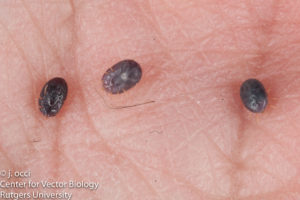
Carios kelleyi, tick vector, on hand (Photo Credit: J. Occi, Center for Vector Biology, Rutgers Univ.)
‘Carios kelleyi’ on hand (Photo Credit: J. Occi, Center for Vector Biology, Rutgers Univ.)

“First Record of Carios kelleyi (Acari: Ixodida: Argasidae) in New Jersey, United States and Implications for Public Health,” J Med Entomol., March 2021.  Carios kelleyi is a soft tick that is almost exclusively a parasite of bats and had been found in at least 29 states, Canada, Mexico, Costa Rica, Cuba, and now in New Jersey.  The nymphs and adults take several short blood meals (min. to hrs.), while the larvae remain attached for several days. Relapsing fever Borrelia is known to come from soft ticks that feed on small rodents, and when bats are removed, ticks begin to seek blood meals from humans.

C. kelleyi has been found infected with a novel spotted fever Rickettsia; a novel relapsing fever-related Borrelia;  Bartonella henselae; and a novel relapsing fever spirochete, identified as Borrelia johnsonii.

Although C. kelleyi is not thought to be an important vector of pathogens, its prevalence in bats in New Jersey is increasing.  This creates the possibility for transmission to humans, animals, and livestock.  New Jersey bats and the pathogens they carry should be monitored to assess the risk to the public. (Click here for published article)


“Ixodes scapularis (Ixodida: Ixodidae) Parasitizing an Unlikely Host: Big Brown Bats, Eptesicus fuscus (Chiroptera: Vespertilionidae), in New York State, USA,” was published in J Med Entomol, Jan. 2022.  I. scapularis is a three-host tick found throughout the Northeast, Southeast, and Upper Midwest in the U.S  and is the most common vector of tick-borne diseases to humans in North America.  It feeds on over 150 species of terrestrial vertebrates, yet it had not previously been reported to feed on bats.   During 2019 and 2020, injured big brown bats in four locations in rural NY had larvae and nymphs attached to them.  Bats are known to carry a large number of pathogens and these ticks could go from hosting on a bat to hosting on a human. This poses a significant epidemiological risk and should be investigated further.  It also threatens bat species that are at risk. (Click here for published article)